
Blog by Valerie
Many of us see money as a reflection of our individual worth. I think it’s more a reflection of how we are able to navigate our collective capitalist context, along with a dose of individual fortune and perspective.
Prayer is powerful. But that doesn’t mean we will necessarily ‘manifest money’ by doing it. Lack is also a powerful, though painful, teacher. An accepting and humble perspective of ‘why not me?’ instead of a victimised and entitled perspective of ‘why me?’ can make a huge difference to our lived experience.
Most of us organise our lives around money. Making enough of it to pay for a home, food, transport, electricity and water, clothing and some fun stuff too. It’s very understandable. We live in a collective capitalist culture and have to pay to play, especially in cities.
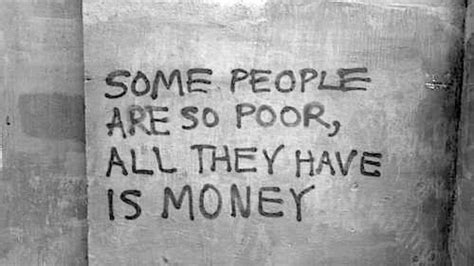
We do think about money, and we do work to get it, but we live in two worlds about it. A Western worldview in which we need to survive in the capitalist transactional economy, and an Indigenous worldview in which we need to revive the gift economy to survive to feed our spirits. (Image is a photo of graffiti on a building in the Amazon in Peru that I took years ago)
For years we have made choices to limit expenses and play with the number of hours of work we need to do to feel well about our survival. Sometimes our money has gotten too low and things were tough, and other times we have had more than enough and were able to save. We do our best to learn as we go and to go with the flow.
We currently live remotely with low rent off grid, drink rainwater, grow some food and keep chickens for eggs, frequent op shops and benefit from a friend working at the tip, and operate our retreats in a mixture of the capitalist and gift economies. We also organise and attend some free community activities each month.
We still buy things and experiences. It doesn’t help to remove ourselves so much from our communities that we feel disconnected, resentful, or left out. We see this struggle as part of embedding decolonisation and reindiginisation into daily life.
Our focus is on maintaining enough money and resources so that we can spend time together taking care of Country, each other, and our communities. That’s the core of being worthy humans to us.
My mother was obsessed with cleverly finding answers. Her job was applying math equations to business problems. At home she loved jigsaw puzzles and solvable mysteries. She had every book Agatha Christie book ever published.
My mother’s guidance was fear of a violent, judgmental, black and white god. Getting ‘the right answer’ seemed vital to her survival. And being efficient was a clever way to get the answers quickly. She accepted an objective world, and her bipolar rejected aspects of self lived dissociated in another. Those were her two worlds.
My father ensconced himself in computer science at work, and escaped into science fiction at home. He loved riding the edge of machines, humans and fantasy.
My father’s guidance came from a drive to create better tools to explore the Unknown. He did appreciate exploring earthly beauty, but his greatest awe was reserved for fantastical alternate realities, whether Tolkien’s Middle Earth or Asimov’s outer space. He was both practical and a dreamer. Those were his two worlds.
I remember my mother complaining that he never paid himself out of his grants, just his staff and students. He felt his salary was enough, but she didn’t agree. Money was security, and to her, one could never have enough of it. Even after six financial planners said they were doing well, she didn’t feel comfortable.
I remember one of my father’s PhD students telling me that when she went to start her first day of work, she found that my father was out of town but had left an envelope of cash with his secretary for her in case she needed it before her first paycheck. She was so moved, she kept working with him long after finishing her degree.
My father didn’t buy fancy things, but he did travel to fill his spirit with wonder when encountering the Unknown. My mother travelled with him, and she bought fancy things as well. She copied her wardrobe and home decor from magazines. And once my father died, accumulating money became more important than even being in relationship with me.
For years, I both resentfully rejected money and dreamily denied its importance. I survived by the seat of my pants.
When I began full time office work, I knew I could not do it forever. Surviving in the city left so little time for fulfilling my spiritual calling, that if I had a child in that context I feared that I’d become a dissociated zombie, or worse, that I’d resent the child for my survival choices.
We took jobs in a small town and lived with housemates, then moved to a smaller town and lived in a shed. We did ceremonies to connect and honour the land and allowed it, the ancestors, and our intuition to be our guides. Going on bush walks and to the beach was free and fulfilling. A cafe lunch was a treat.
Today we are fortunate to have some financial support from the government for caring for a young child. We are fortunate that our family has enough money, and that some of them support our life’s mission. Even more importantly, we feel fortunate that sacred mother mountain Gulaga supports our life’s mission. Every day I feel blessed to live in the presence of a mother figure who unconditionally loves me, and whom I love and honour in my limited human way in return. It’s a new and welcome feeling, and an ancient and known feeling at the same time. I feel connected to this piece of Yuin Country with a knowing that I do not intend to leave. That even if our house were to burn down, we would still endeavour to rebuild and remain. I feel at home.

I agree with my mother that money can buy security in the Western capitalist world. But money can’t buy unconditional love or feeling at peace and at home in the soul. Money can support me to fulfil my life’s purpose in our current context. We need enough money so that we do not to have to be focused on it, and not so much money that we are caught up in managing or hoarding it. Yet another paradox in our human world.

If you value this content, please engage in reciprocity by living, sharing and giving. You may be interested in Valerie’s book Healing through Indigenous Wisdom and Earth Ethos retreats on Yuin Country, far south coast NSW.