Blog by Lukas
Across the globe an increasingly dominant worldview sees reality as ultimately physical. There are various expressions of this worldview in Western philosophy, including: logical positivism, empiricism, physicalism, scientism, naturalism and causal closure. I would sum them up as follows: the only true reality is physical and material, and direct observation using the scientific method arranged into cohesive logic is the only way we can “know” and thus make statements about what is meaningfully and objectively “true.” The highest form of expressing a true statements is one that results in a “fact”, something that is “proven” true by evidence.
There are some been some big dissenters. Pragmatist philosopher William James, popular with a lot of Western Buddhists, asserted that something can only be said to be objectively true if there is subjective value to that being so. This is often misunderstood as saying something is true if it is subjectively valuable to someone, which is not the same. Commenting on the subjective value of truth itself, his idea of “radical empiricism” asserts that any philosophical worldview is flawed if it stops at the physical level and fails to explain how meaning, values and intentionality can arise from that.
There is no doubt that Western science is physically powerful, and this power seems to validate the worldview underpinning it. On a social level, Western science delivers great physical control into the hands of they who dominate physical resources. What we are left with is a very powerful confirmation bias that minimises the importance of other ways of being, and of experiencing and knowing reality. Far from seeing this kind of thinking as our saviour, I consider it responsible for much of the deepest suffering in the world today. Considering the medicine wheel, we have traded a lot of physical comfort and knowledge for much greater insecurity in emotional, psychological and spiritual realms. To me, the very existence of facts, and Western scientific epistemologies more broadly, can only ever be tools that exist in a complex relationship with subjective experiences that defy physical description. Core to understanding our experiences is an understanding of that which is meaningful in our lives, including how we materialise that meaning, both of which are based in values and worldview. Wise application of values can help us place logic and objectivity into proper relationship with our experiences.
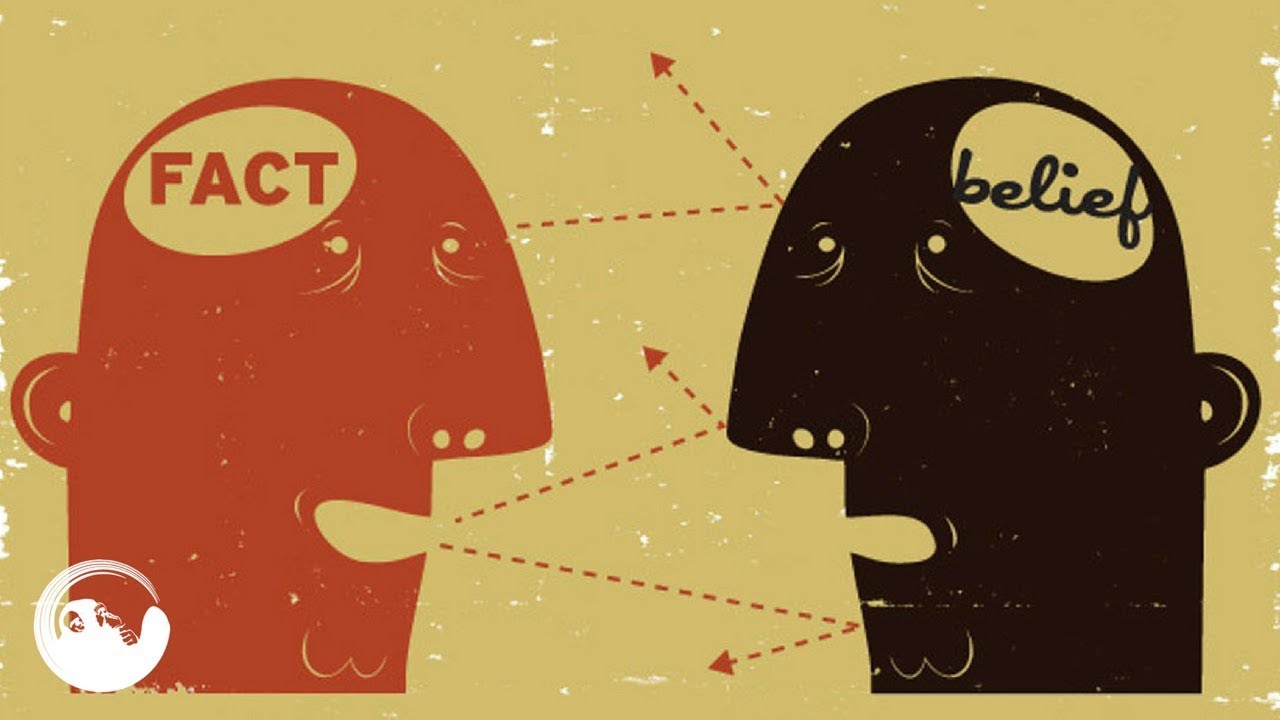 However much one tries to be “objective”, behind all science lies priorities and values, and this affects what ends up being considered real or true. Values inform priorities which help us develop meaningful goals as well as guide us how to err when faced with the inevitable uncertainty of complex systems. And, hard is it can be, values help us remain undistracted and unattached to the vicissitudes of life, and prioritise process over outcomes. By asserting the primacy of process, I am not rejecting consequences in favour of pure deontological “moral” frameworks. Rather, I am stressing that such frameworks are, amongst other things, methods for deciding how we ought err in uncertainty, to be used in combination with thought processes reliant on logic.
The wisdom, or dare I say the “truth”, of our values can be observed pragmatically over time and space in ways that are supra-rational as well as rational, relational and subjective as well as objective. Such dualities and the potential for them to be paradoxical are, I believe, intrinsic to the human experience. Their relationship to one another does not need to “make sense” intellectually. Subjectivity and supra-rationality are not antithetical to science or empiricism. Buddhist science is based on experience-based enquiries into the nature of mind and consciousness, and Indigenous science is based on people learning themselves and their land through subjective and relational ways of being. Whom would you rather ask questions about the nature of mind, a Buddhist lama or a cognitive scientist? And whom would you rather ask questions about sustainable land management, a Western-educated ecologist or a local Indigenous Elder? Your answers to these questions says a lot about you and your worldview.
 I think the most dangerous application of logical positivism, particularly when applied to complex social and ecological systems, is the predictive theoretical model. In modern society, it is often used instead of intuitive wisdom, Buddhist science, or Indigenous science to complement or replace Western scientific observation. A model, like anything, is ultimately uncertain, and decisions have to be made about what to assume and how to err. To demonstrate my point I am going to use to examples that come from a relatively closed and simple system, aeronautical engineering. I say “relatively”, because despite the ability of physical science to predict things like aerodynamics and metallurgy with a high degree of accuracy, when building an aircraft there is no “best” design, only “best effort” at matching design and engineering to values and priorities such as safety, fuel economy, speed, capacity, manufacturing cost, etc. The advantage of this field is that theoretical models can usually be tested, preferably before people fly on the plane! But not always. (Image from here)
Example 1.
A380 engineers used theoretical models to ascertain the wing strutting they hoped would meet wing strength certification regulations. Models were tested with wing stress tests (weights literally placed onto the wings), which determined that they needed to improve the struts. They added extra struts, thus increasing the weight of the aircraft and reducing fuel economy. This, along with incorrect modelling of the aviation market, led to a beautiful, safe, unprofitable plane. But the value of placing safety before profits shone through, and not a single person has died on an A380. (Image from here.)

Example 2.
Boeing wanted an updated fuel-efficient 737 model to compete with Airbus’s A320 NEO. The 737 has slightly shorter landing gear than the A320, and thus could not accommodate the latest generation of super fuel efficient turbo fan engines, which have a large diameter. To create a whole new airframe (the core of an aircraft) is a lot more expensive and time consuming than an incrementally new model, so the engineers were asked to “make it work.”
They ruled out re-designing the landing gear because it would be too heavy, bad for fuel economy. They changed the way the engine was positioned on the wing, but this altered aerodynamics and made the plane prone to stalling in certain circumstances (when close to the ground). To compensate, they installed software that would take control of the plane’s elevators and aggressively point the nose of the plane down in the event of a low altitude stall. This system took its cue from a single sensor.
You might think that such a system would require extra pilot training, but this would have raised the effective price of the plane, and Boeing were keen to sell it to budget airlines in the developing world, and besides, the system would only run in the background, and in the event of a failure could be disabled the same way pilots had been trained with other Boeing planes. The American regulators, by now more or less run by ex-industry workers with vested interest, approved the plane to fly.
We know what happened next. Two sets of pilots were so scared that their plane was trying to crash them into the ground that they were unable to work out that the problem was an automated system they knew how to shut down. A lot of people died as a consequence.
 There are numerous errors of logic identifiable in Example 2 without questioning values too deeply, and these should not be ignored. But I think those errors were proximate causes of flawed values. The aeronautical engineering profession must be based on a deeply held commitment to safety above profit. They, and their regulators, should err on the side of safety. I cannot help but think that government backing of the A380 project — considered a public interest project — had something to do with the values underpinning their decision-making. The risk of producing an unprofitable plane is not as catastrophic to the public purse as it might be to a purely private enterprise. But it also has something to do with the physical nature of the wing test showing a “fact” playing into biases in the Western world. Feelings of unease in the pit of Boeing engineers’ stomachs that I am confident was there were too easily rationalised and discounted within a worldview that puts physical knowing — or its poorer cousin, physical modelling — on a pedestal. (Image from here.)
My commitment to living a process- and values-driven life is why the Australian government’s response to the Corona virus did not align with my values, even if I am grateful for the outcomes we have had so far. In March I saw them erring based on certain values and priorities, but that was not at the centre of societal dialogues. Discussions about values seem increasingly missing in favour of myopic searches for evidence of “fact” or inter-group conflict. What I seek is dialogue based in values that utilise facts once people see and trust where each other is coming from. When we see someone like Trump acting the way he does, it is tempting to malign his refusal to listen to “facts.” But this is only part of the story. The problem for most of us is that we do not like Trump’s values. As physical “facts” continue to gain power both in terms of physical change in the world and as a dominant worldview, dialoguing on values will only become increasingly important. Facts are not the solution to bad leadership, and an increased emphasis on evidence-based “facts” can quickly become a vehicle for even greater trickery and corruption.
If you value this content, please engage in reciprocity by living, sharing and giving. 
 I have heard people of many cultures say the world we’re living in was created by trickster. Some cultural creation stories are explicit about this, such as
  My view is that we’re all somewhat tricked into thinking that the collective ways we’re living are working, when deep down we feel pain, grief, conflict, helplessness, etc. about changing. We may be aware that current systems and ways of being and acting are unsustainable, and we may already be taking active steps to change ourselves and to advocate for bigger visions of change. Individual action does matter, miracles do occur, and self discipline and personal perseverance only takes us so far. As Isaac Murdoch, an Anishinaabeg elder (Canada)

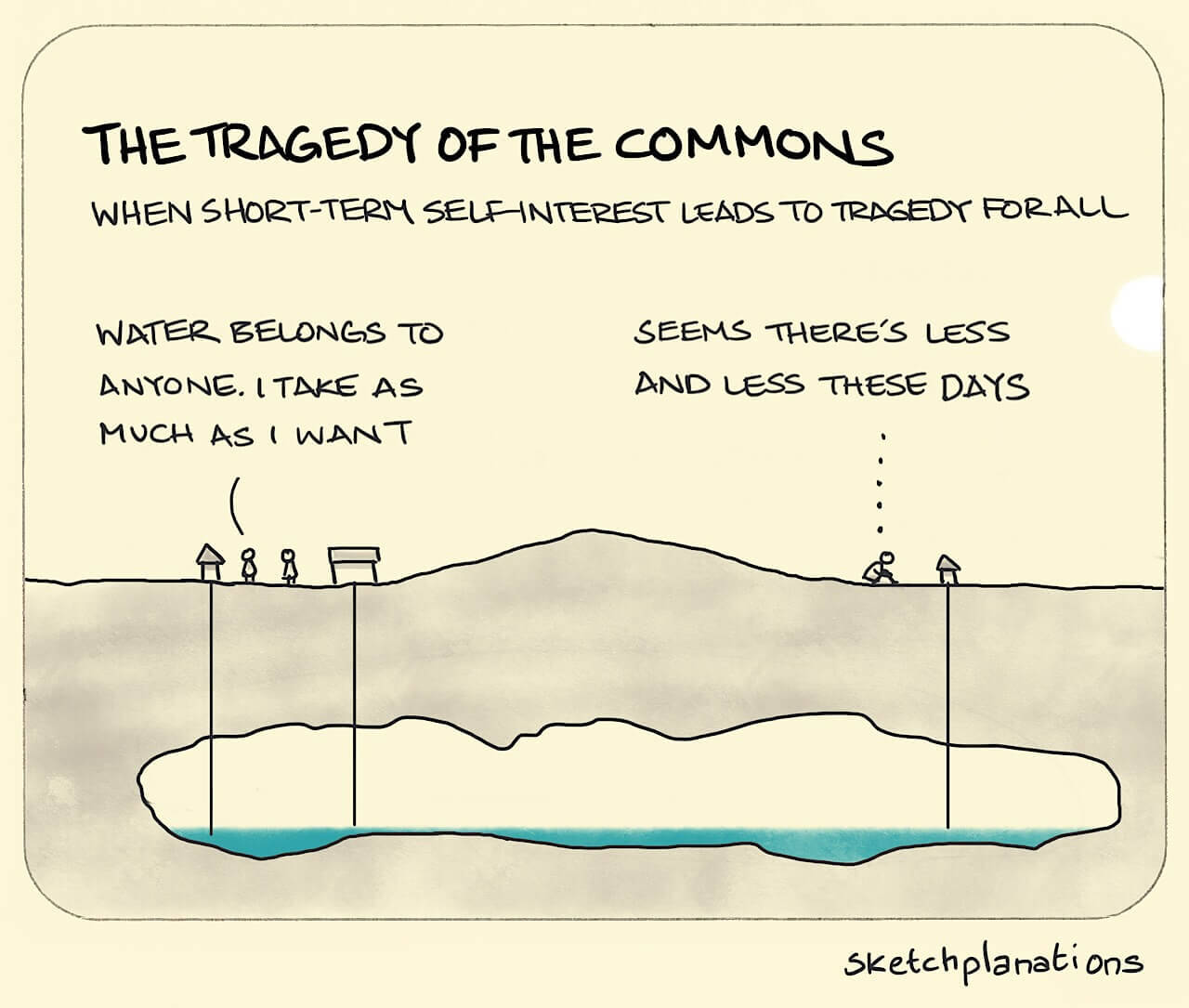 Another famous idea is the “
 A third framework of interest, and perhaps most relevant to our toilet paper dilemma, is the idea of
 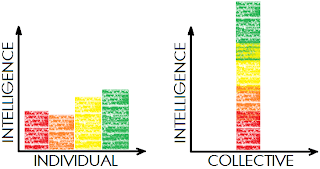 Looking at these articles on Wikipedia, it struck me how much that I think ought be deeply ingrained wisdom and self-evident knowledge has been studied intellectually and quantified as ‘evidence’. This is borne out by people acting like they need this kind authoritative guidance and advice before believing something is true. For example, the Tragedy of the Commons article mentions a



 If you value this content, please engage in reciprocity by
 If you value this content, please engage in reciprocity by
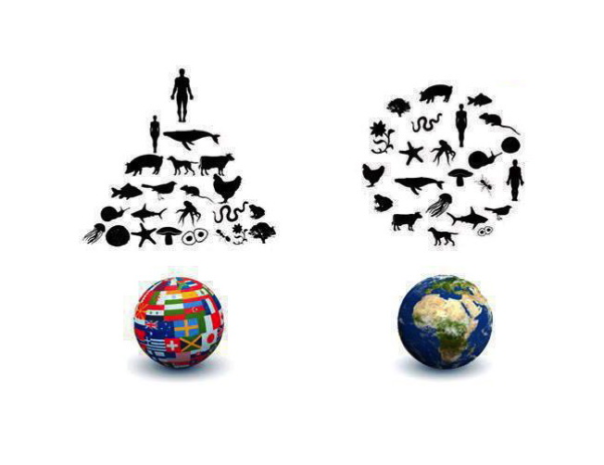
  In processing this resentment, I realised that when there is a lack/denial of reciprocity in a relationship, we dance between resentment and denial — resentment within the person who feels stifled/unseen because the other person isn’t holding them in wholeness, and lack/denial/not good enough within the other person who feels cut off from their wholeness (and may or may not want to heal that rift inside themself). Those of us who live with an Earth Ethos embody a knowing that we are all interconnected, and we are not lost playing out myths of superiority and inferiority based on existential judgement.
 Yet in Aboriginal cultures in Australia, the Emu is so highly regarded that people traditionally organised their lives around following the wisdom of the Dark Emu in the sky, which is the constellation of darkness within the Milky Way. The image is from
 If you value this content, please engage in reciprocity by

 If you value this content, please engage in reciprocity by
  Though much trauma is being acted out in the world right now that is sometimes referred to as ‘white privilege,’ no one is merely ‘white’, and I cringe when I am referred to as such. We all have cultural heritage with gifts to unpack and celebrate. My
 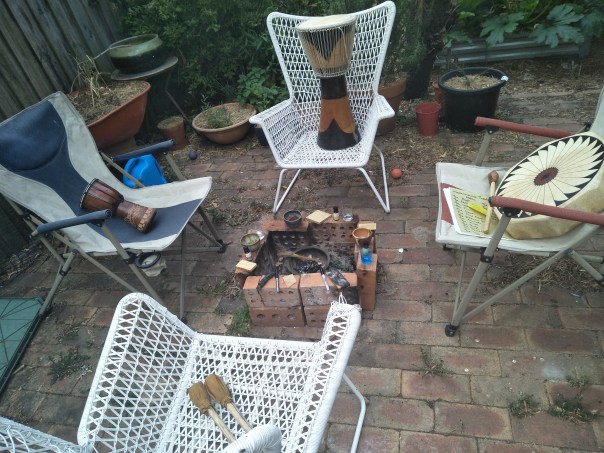 To honour my earth ethos, I celebrated a fiery summer solstice in ceremony with loved ones. (Literally, there were, and are, many
 If you value this content, please engage in reciprocity by
 purposely into trauma or danger, but not to the point of becoming a martyr and building resentment. It can be a challenging line to walk. It requires very high personal standards along with loads of compassion for self and others. It can be isolating and incredibly fulfilling. Instead of being outraged about whatever stupid action Trump did this week, I was in awe to learn that fish underwater
 If you value this content, please engage in reciprocity by
 Resilience is especially necessary when one’s path is based on existential judgment and conditional love. Without an earth ethos grounding us in our bodies, environments, and communities, we can’t experience unconditional love. And the Jewish identity I inherited is completely ungrounded–it is not even connected to Israel. Outsiders may laugh at Jewish neuroticism in a Woody Allen film, but I grew up with such people failing to take care of themselves or me, convinced there was something wrong with them that doctors’ pills could fix, and never satisfied no matter what they achieved. Having lived intimately with this addiction, abuse, and neuroticism, I’ve come to see it as based in self-betrayal, self-hatred and self-abandonment. I don’t know what set my ancestors on Jewish paths many generations ago. I know some of the traumas they and I have been through, and I feel that staying on the Jewish diaspora path has served to make our traumas bigger. For example, my grandmother told me as a child that I can’t trust anyone, and I asked with surprise, What about you?! It’s a much harder road to judge, confront, and forgive than to just accept in the first instance. I thank my Jewishness for this hard learned lesson. My current path is one of accepting unconditionally. I don’t feel this aligns with my Jewishness, so I seek to uncover what lies underneath that for me. I’m moved to close with this quote from someone else who has dug beneath the roots of her inherited identity:
 If you value this content, please engage in reciprocity by
  Earth Ethos