Blog by Valerie
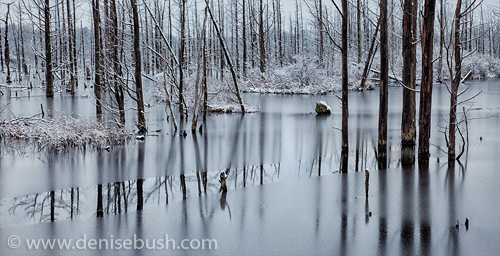
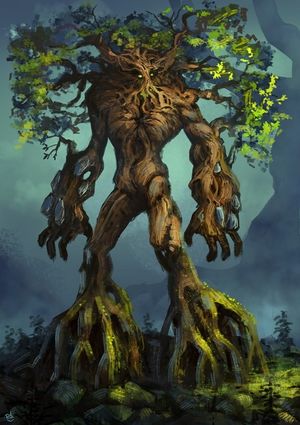
In the previous post I wrote about how complex it is to honour multiple cultural identities, ground ourselves where we are now and honour the ancestors of the land, forgive our ancestors’ mistakes and decolonise our everyday lives. This post is a step further, because cultural appropriation is different in the context of spiritual healing. I have learned through experience what cultural appropriation in a healing context is, and the destructiveness it brings. I have also gained valuable insight, lessons, and tools when some cultural appropriation was being done that added a layer of destruction to the person’s offering. We are human, and our healing work is inherently imperfect. (Image from here.)

In my experience, once we are out of crisis, healing within a market economy context is limited. There are different power dynamics, feelings and experience when meeting in a therapist’s office for 50 minutes for $100, and when with meeting a caring community member in a home, or while walking and talking with a friend in a park. As I wrote in a previous post, please RUN AWAY FROM people who say they are fully healed or ascended masters or anything like that unless you want to join a cult, because delusions of grandeur and beliefs around exceptionalism and/or superiority are not conducive to healing. Also from a previous post, keep in mind that:
“A common mistake when examining myths of other cultures is to interpret them with symbols and values of our own culture” (Gleiser, 2012). Common values of the dominant Western cosmology such as competition, hierarchy, individualism, and the primacy of the nuclear family greatly limit our ability to embody indigenous wisdom (Thibodeau & Nixon, 2013). When this happens, ceremonies can “become empty of their power” (Rael, 1998).
Consider the difference between participating in a plant medicine ceremony in the jungles of Peru with a shaman who spent decades apprenticing with a teacher and working with plants and spirits of the jungle deeply connected with the land and its ancestors, versus participating in a plant medicine ceremony in an apartment in a Western city facilitated by someone who got the medicine from such a shaman and perhaps studied with the shaman for a short period of time.
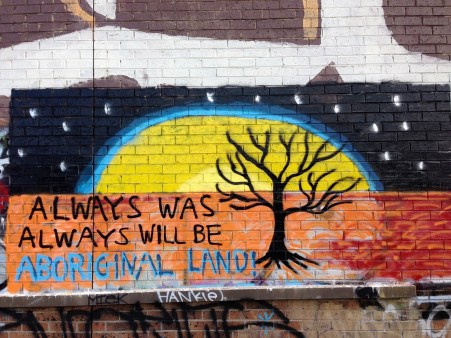
I don’t mean to say we should never participate in a ceremony in an apartment with a medicine from a foreign culture and land. But if we do, let’s do it with awareness and help it be as safe as possible. I ask for my own guidance in a form that resonates with me (either prayer or meditation usually). I acknowledge the limitations of the healing work I am considering participating in and ask if it is right for me. If I get signs and insight to move forward, then I ask what I need to do so that it is in balance. For example, when I offered an ancestral trauma healing workshop earlier this year on land with which I have limited cultural connection, I received guidance to donate participants’ gift economy offerings to an Aboriginal advocacy organisation. I also verbally thanked the ancestors of the land during the workshop for supporting our lives and the healing work.
I will share the following story to offer a contrast of an experience of cultural appropriation with a man who called himself a shaman and worked with indigenous people in the Amazon, Mexico, and the Southwestern U.S. He quit his day job to do healing work full time and did so within a gift economy and invited me to participate in a group healing ceremony supported by the tribe in the Amazon. He gave us all a protocol of how to prepare for for three weeks, which I followed. Two days before the ceremony, he said he had new information and changed some things, which I found strange. My husband said he had a bad feeling, but I still trusted the man. I got a sign there was danger ahead, and I felt shaken but kept going. The ceremony changed again the night it took place. At one point, the so-called shaman stood over me menacingly while I was laying on the floor, yelled at me and called me names. I told him I found the behaviour abusive, but I never heard from him again and did not see him after that. When I wrote the couple running a school for shamans in the Southwestern U.S. who recommended him on their website, they said that he had lost his mind, that he was threatening them and they were scared of him, and that putting his information on their website was not an endorsement. I later realised that the tribe was split in their support for his doing that ceremony within their lineage, with their healing tools, away from their land and culture, and that my own cultural heritage was so filled with conflict that I was able to provide the group with a reflection of this problem he was denying. What a messy, valuable lesson he gave me. Here are some less extreme examples of cultural appropriation I have experienced:
- People charging money for community healing ceremonies traditionally offered within a gift economy or by donation, and/or facilitating ceremonies without integrity:
- e.g. for a sweat lodge: charging a fixed fee, failing to configure the fire and lodge correctly, failing to honour the land and lineage ancestors, failing to clear the space and clean up the lodge before doing another ceremony
- e.g. calling oneself a spiritual counsellor in a modern city and charging $100/hour without any formal counselling training or supervision from another counsellor
- People of mixed cultural heritage identifying with only one ancestral blood lineage, denying their own complex wholeness, then projecting that dissociation onto others whom they are supposedly offering healing to:
- e.g. studying curanderoismo healing with someone from rural Mexico and identifying as an indigenous Aztec healer when the person did not know one of their birth parents, grew up in one U.S. state, and lived in another U.S. state.
- e.g. identifying only as an oppressed African-American, indigenous or Jewish person without acknowledging other blood lineages and cultural heritages
 I have a lot of compassion for the messiness of embodying Earth Ethos in modern multicultural cities. This is my life! And it is hard, messy work. It’s important to give ourselves and each other grace and trust that we all do our best. For a beautiful story from someone of mixed cultural heritage about honouring all of her complex heritage, read this by Lyla June. (Image from here.)
Since I have learned much of this stuff the hard way, I offer you the following suggestions of what to consider when seeking spiritual healing:
- Intention & Identity
- How do YOU see your role and identity in healing work done within the context of a human relationship? Are you looking for practical tools? Emotional support? Plant medicine? Ceremonial healing? A spiritual elder? Escapism? Adventure? Gratification of curiousity about an ‘other’ culture?
- How does the other person see their role? Do they call themselves a healer or shaman? Do they say they are healing you? Channeling healing energy? Facilitating healing? Holding space? Offering medicine? Helping you connect with your inner higher self? How does the other person identify themself?
- Cosmology & Culture
- What cosmology/cosmologies do you embody? What perspectives and beliefs do you want to learn more about and bring into your life? To let go of? How do you relate safely to people with different cosmologies and/or cultures?
- Is the other person’s cosmology related to (a) specific culture(s) or lineage(s)? How do you relate to the other person’s cosmology? What ancestry does the person have?
- Place & Form
- What physical place supports your healing (e.g. a sweat lodge, therapist’s office, church pew, a home, etc.)? Is the place relevant to the culture or lineage on which the work is based, or has it been adapted to your context in some way? What form supports your healing (e.g. talking and listening, music, dance, energy work, laying of hands, artistic expression, etc.)?
- Where is the person willing to meet with you, and what forms of support are available? How does the person honour multiculturalism, modern places and forms? What cultural and place-based relationships does the person bring? If the person is working within a specific cultural context, how has the person received those teachings?
 If you value this content, please engage in reciprocity by living, sharing and giving.

 If you value this content, please engage in reciprocity by





 If you value this content, please engage in reciprocity by
 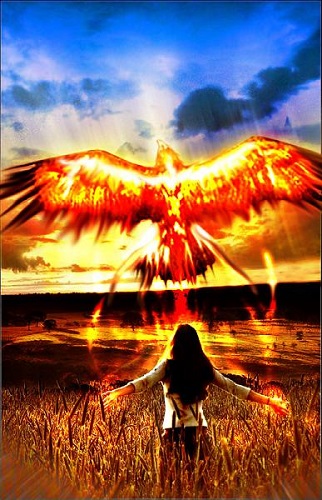 I have witnessed many people experiencing a shaman’s illness. When people reject or resist it, they usually end up dissociating the destructive energy and becoming very challenging externalising personalities (like narcissists or sociopaths), or internalising the destructive energy and creating diseases such as quickly metastasising cancers. I have witnessed multiple people do both of these things. When people accept the calling of the illness, there are different speeds of doing so, which impacts the way the illness plays out in a person’s life. I have seen some people slowly accept that they are experiencing shaman’s illness over many years and bit by bit change their paths so that over time more aspects of their lives are working. Some (including myself) dive directly into the fire and allow our lives to become incredibly chaotic as our identities are re-forged and often become overwhelmed at the amount of emotion that needs to be processed and the whirlwind pace of life changes that occur. (Image from
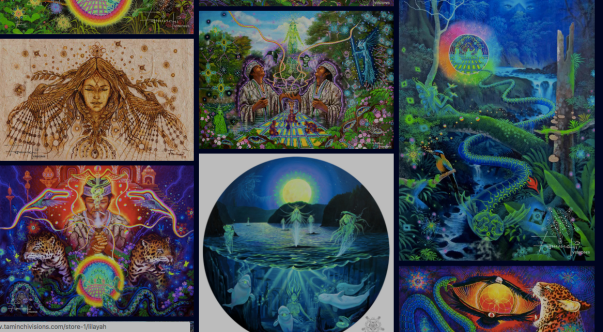
 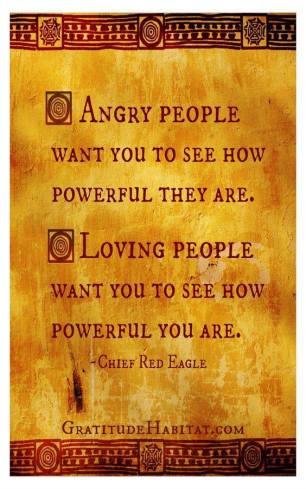 It is helpful, but not necessary, to seek support from someone who has been through similar things. Such people can give you compassion and empathy, guiding wisdom, and tools to process wounds and express energy. But it’s vitally important not to delude yourself that any human is a fully healed Jedi-master, all-knowing figure. If someone says they are, then RUN AWAY FROM THEM, because that person is dangerous and delusional and is on a path of becoming a cult leader or something else you don’t want to be involved with. It is important to think of illness and healing as processes, not finite endpoints. When someone says they have “healed” a wound as intense as sexual abuse or parental abandonment, I am suspicious; and when someone plays power games, disrespects, or in any way puts me down, then I know that person is ill and cannot support my healing anymore. I have no tolerance for these behaviours, even when people are unaware. I either change my boundary and create space or make someone aware of their transgression, and if they then don’t own it and work through it, I’m done with the relationship. (Image below from
 If you value this content, please engage in reciprocity by
  A Druid
 Second, “if you don’t have an ancestor altar,
  If you value this content, please engage in reciprocity by
 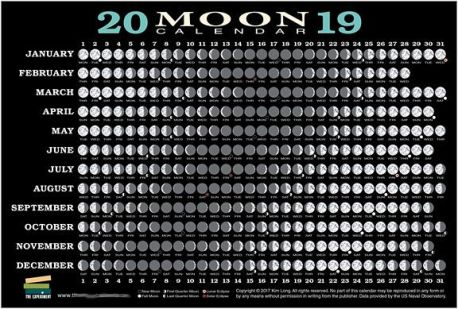 A lunar calendar follows the cycle of the moon only and may have 12 or 13 months in honour of the number of moons in a year. (e.g. Islam, Igbo & Yoruba of Nigeria)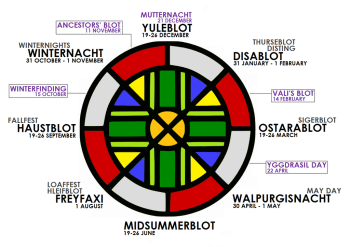

 In the template, cross-quarter days are marked as circles and lines mark equinoxes and solstices. Aspects of your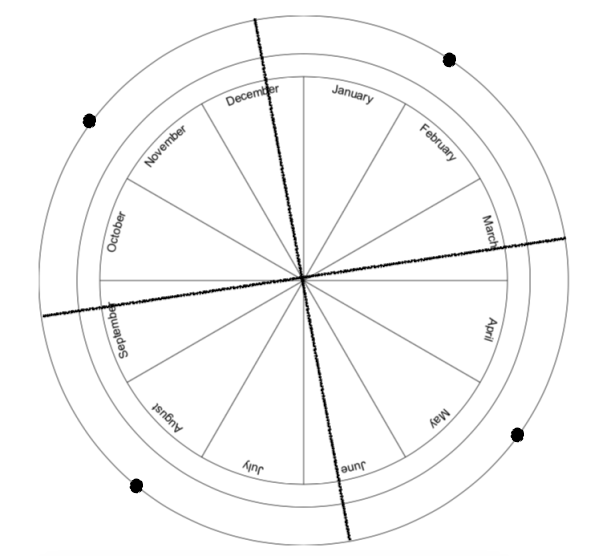
 If you value this content, please engage in reciprocity by
 (Image from
  If you value this content, please engage in reciprocity by
  Blog by Valerie
 The depth of relationships, and the experiences, feel quite different to participants. Similarly, instead of peace circles as a tool to help control behaviour or improve the way people speak and listen to each other as is common in westernised restorative justice practices based on a Judeo-Christian worldview, an Earth Ethos peace circle is an opportunity for a communal spiritual experience based on an indigenous cultural cosmology. Because of the intentional use of metaphor, it ought to feel different to participants (and certainly does to me) than simply sitting in a circle (or around a table where we are blocked from connecting with each other physically) and passing around a talking piece. Many indigenous peoples use oral traditions to preserve cultural wisdom. Verbal repetition and physical embodiment of teachings keeps them pure (
 Healing of, and prevention of, dis-ease requires ceremony. Ceremony is an important human practice connecting the visible material/physical world with the invisible, spiritual world. Life feels empty and unsatisfying when we do not do enough ceremony, and ceremonies are most powerful done regularly and intentionally in community (
 If you value this content, please engage in reciprocity by
  Earth Ethos