Blog by Lukas
There are many different ways to reflect upon the tumult of world right now. Indeed, the very sense that things are particularly tumultuous is in some ways a mirage, and like all mirages, is born of perspective.
Reflecting to a fellow millennial about the relative tranquility of the 1990s of my childhood, it didn’t take long to think of some examples that demonstrate the extent to which this was not true for everyone. The Rwandan genocide and the war in the Balkans immediately came to mind, as well as famine in Somalia, the Oklahoma City, Port Arthur, the Japanese death cult that released nerve gas on the subway. The 90s weren’t really that tranquil.
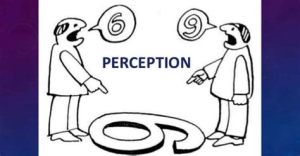 But like all things that feel deeply true, and therefore should not be dismissed outright, I can’t ignore the sense that there is something different about this moment in time. I think this is especially so for those of us who live in the Western world, but if we expand that out to people deeply impacted by the goings on in Western world, it seems pretty clear that everyone is affected to one degree or another.
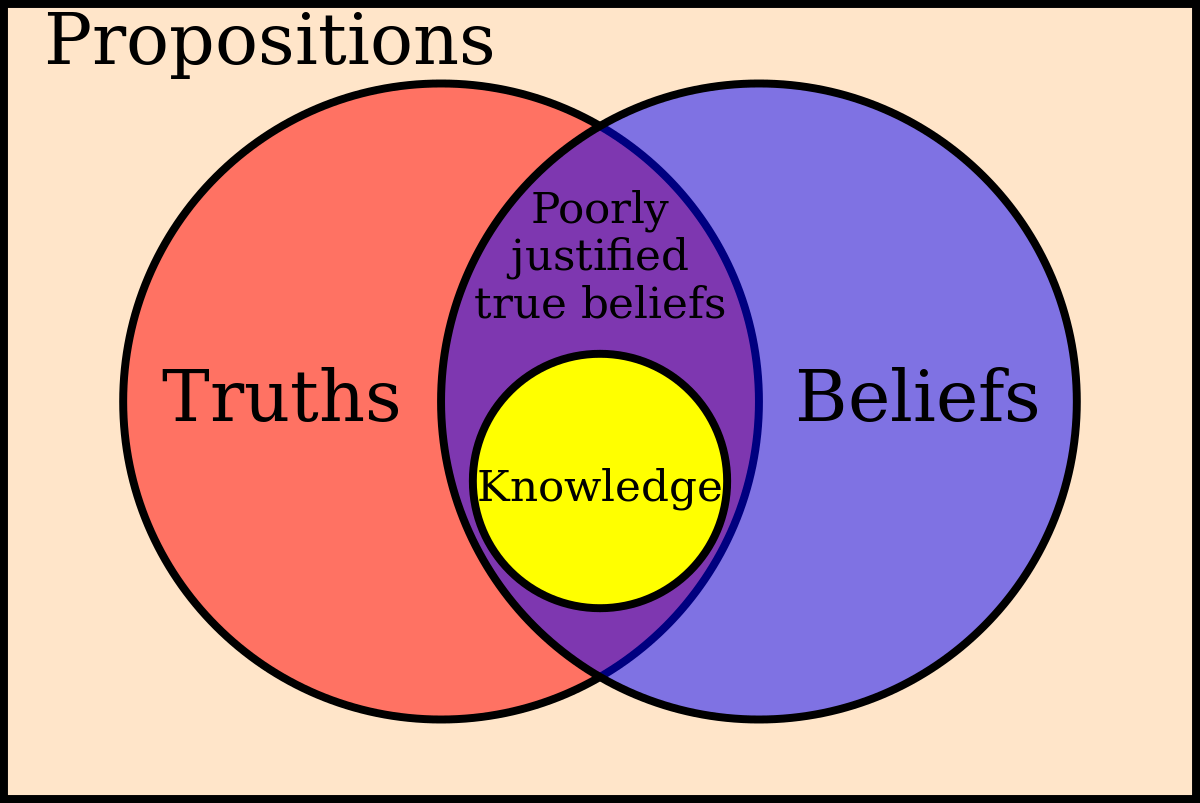
The key to making sense of all of this might be to open ourselves to the possibility or multiple truths, dualities and both/ands. This may need intentional nudging given that most of us have been socialised to believe in one overriding and logically derived ‘truth.’
Perhaps we can simply say that things are different, but also the same. In Indigenous science, the practicality of this might hinge on where we are, who we’re talking to or what we’re focusing on. In other words, truth as something fluid, and relational. Or it could just be a duality.
So what IS different about this moment?
Of late, I’ve been struck by the extent to which so many of the problems in the world can be put down to poor or unwise leadership, and by extension (though I’m not sure in which direction this flows), real eldership.

Bad leadership is of course not new. It is so not new that many people speaking from a modern perspective utterly saturated in bad leadership for hundreds of years, argue that it is more or less innate and inevitable. Such a perspective sees greed as omnipresent, force as the strongest power, and power inherently leading to domination and corruption. I cannot stress how wrongheaded and unwise these kinds of maximalist perspectives are in my opinion, but suffice to say, I do see it as useful to see this darkness as an inevitable part of human nature.
The potential to play host to the psycho-spiritual virus of greed (beautiful elucidated as a concept called Wetiko/Windigo in some Native American cultures ) and putting one’s own needs too far above those of fellow humans (and ultimately, the planet), is clearly endemic, and in a sense, a permanent potentiality of the human shadow. But it does not have to be so dominant as it is at present. Many cultures knew and understood this, and created environments to fortify against it by actively nurturing and fostering wiser ways of living (including of course good leadership), and also creating taboos that served to suppress it.
So again, what’s different about now compared with recent history? I feel the need to answer that question with other questions:
To what extent do the performative aspects of good leadership actually mean better leadership and less Wetiko? And is it better to have the symptoms and impact of bad leadership show themselves more subtlety and insidiously, inviting more trickery and deception into our lives, or is it better to have things boil over and fester openly, destructively and chaotically?
Here are two stark examples of these ways of being: the US President sending the Secretary of State to the UN Security Council to make the case for the 2003 Invasion of Iraq (and then doing it anyway when they said no) versus the US President not bothering with anything of the kind before taking the President of Venezuela; Israeli leaders throughout most of its history officially espousing a two state solution to the ongoing violence (even when actions belied this intention) versus the current Israeli Prime Minister declaring his open hostility to the idea, and arguably therefore, any hope of peace or freedom and self determination for Palestinians.
To me, of the many concepts that we can use as an easy synonym for ‘wise leadership’, the simple act of being graceful during hard times, especially with rivals or people who threaten you, is one of the better ones.
Grace is defined in the dictionary in two main ways:
-
- smoothness and elegance of movement, and
- courteous good will.
Its proto Indo European deep root is *gʷerH (don’t ask me to decode that!) and relates to praise and welcome. The possibilities for a rich tapestry of wise leadership and eldership under such a concept are profound. It means responding, not reacting. Welcoming not just people, but events, which means not rejecting things existentially. It means being grateful for hard things, not just easy things.

But back to the question. How much does what I’m going to call ‘performative grace’ indicate real grace, and how much do we need it?
To start with, ‘performative grace’ is on a continuum. Not as good as something more real, substantive and completely embodied, but meaningful, and better than no attempt at grace. And of course, we need to be on the lookout for genuine intentions versus pure trickery. Trying to do better versus merely pretending to care.
When the current US President was elected for the second time, I chided someone I know for saying “he’s no worse” than the other candidate. I had the benefit of a close up perspective of life in the United States as a social worker and knew that many vulnerable people were about to suffer even more.
But reflecting now, I think even beyond the direct impact of destructive actions, there is a clear difference between current leadership and what has come before in terms of the intention, or performance, of grace. And this matters.
To me it is clear that even a pretence of grace results in less short term suffering. The mechanisms for this are too innumerable and complex to be fully explained rationally. We just know it when we experience its impact, including in our own individual lives. Intention is an impactful force in and of itself.
So the more grace embodied in our leadership, even if it’s mostly intentional, the less short term suffering there’ll be in the world. But it’s beneath us — beneath our potential — to be forever stuck at only performative grace. Perhaps we need the most toxic and graceless leadership elements in our midst to dominate for a while in order to expose more vividly those blocks stopping us from having leaders that genuinely embody grace more fully.
We can grieve that we will all be hurt by this, and at the same time we must not only grieve, but allow ourselves the natural instinct of struggle to make things better right now. This might mean settling for genuine performative grace if that’s truly the best we can do. It often feels like the best I can do in my own individual life, with my own self-leadership, as depressing as that may feel.
However difficult, holding the paradox that we can both accept the need for harsh medicine whilst also striving to ease suffering along the journey is an important spiritual skill, for any person, culture or society.
Reflection: How can we be better at accepting where we’re at whilst also aiming for better, all from a place of grace?
 If you value this content, please engage in reciprocity by living, sharing and giving.


 If you value this content, please engage in reciprocity by
  Earth Ethos