Category Archives: Decolonising

Questioning Cosmology

christin-hume-482896-unsplash.jpg

Blog by Valerie

Stories are great teachers. They help us give meaning to events, teach core values, and inform our understandings of social order and individual identity (Engel, 1993). We each carry stories, personal mythologies, that form our core values and beliefs, help us understand our place, and guide us on our path. The concept of empathy, of deep listening and heartfelt storytelling, is central to oral-based cultures, and even in cultures that privilege the written word, such practices are considered deeply sacred, like the Catholic Confessional, or an important part of daily life, like meeting a friend or family member for a chat/yarn. (Free use photo by Christin Hume on Unsplash)

In practice, empathic listening, and the safe sharing stories, is limited by the cosmologies of participants. When we share a story with someone, and that person is in a state of being in denial/judgment about what we are saying, we experience rejection/lack. When we receive this reflection, we tend to feel shamed. And especially as children, or because we feel fear of being exiled from our family/tribe/community, we carry this shame in our own hearts and minds, fuelling feelings of low self-worth. Rejection is a deep pain to process, a lack of feeling whole. And most of us have inherited much of this due to ancestral trauma. An Earth Ethos suggests that those of us who are involved in violent behaviours, in whatever role (victim, offender, or bystander), carry elements of shame in our very senses of identity (Thibodeau & Nixon, 2013; Sawatsky, 2009). This shame, often referred to as “sin” creates feelings of lack of worth and dissociates us from fully being present. We fear social exile, and rightly so, because without connection with other people, it is hard to live. (Image from here)

exclude

When I did research with sex offenders, I heard a lot about the depth of social shame they felt. I heard about some men who were disturbed by sexual thoughts of children and were too terrified to seek help until they acted on it, and others who did seek professional help and were reported for abuse they had not committed. I felt an intensely painful energy in the space of social stigmatisation where so many of these people and their family members and friends, these fellow humans, live.

compromiseI encourage you to connect with your own cosmology and question rejecting/violent statements/thoughts like “He should have known better”, or “It serves her right.” Such words indicate an internalised denial/judgment and fuel shameful, painful feelings inside you, the person you are speaking/thinking about, and our collective culture. Even when we believe/think something is wrong, we can still hold that aspect of our cosmology with compassion and respect. These words are pointers to places of yourself that could be further explored, unpacked, and transformed. Dangers and fears come in many forms, including physical, emotional, psychological, and spiritual. Watching an interview with someone who has killed another person, for example, may trigger emotion you are carrying and show aspects of your cosmology that could be shifted from judgment or denial/lack into compassion and empathy, and gratitude that you did not need to learn such a lesson the hard way. (Free photo by Christin Hume on Unsplash)

Exercise: Reflect on how many compromises you make in the name of “social harmony”/fear of change, and when it is important to you to go against the grain. See if you can connect with an aspect of your own humanity that is unfamiliar, like your “inner prostitute,” “inner abusive parent,” or “inner murderer”, and be with the discomfort that comes up in order to hold people in that space, and yourself, in more compassion and gentleness.

giveheart If you value this content, please engage in reciprocity by living, sharing and giving.
Holiness

Blog by Valerie

Most of you reading this, like me, grew up a Judeo-Christian culture. And like many of you, I experienced conflicts and hypocrisies with aspects of those teachings. One such conflict is with the concept of “The Holy Land.” I have always known deep in my bones that all land is holy land, and that all bodies and beings are holy and sacred and worthy. To elevate a particular place as “Holy” is to demote other places as un-holy or less-holy. Not surprisingly, the etymology of the world “holy” is “healthy” and “whole.” If only one place on Earth is “The Holy Land”, and only about eight million people live there, then by definition, the rest of us 4+ billion people are in exile, cut off from our Motherland, not feeling whole.

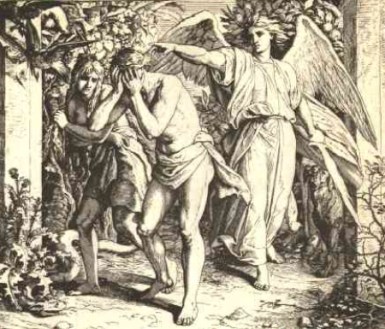
adameveThe foundation of Judeo-Christian mythology leaves us unconnected with environments where the vast majority of its followers live. The Biblical creation story of Adam and Eve’s exile from the Garden of Eden is not an embodied story connecting humans with nature inside and outside ourselves within a web of life. In fact, the entire Earth has not, for some time in Judeo-Christian culture, been portrayed as a home, as much as a place to endure or get through (Gustafson, 1997). Feeling rejected by the Sacred Feminine, we are collectively convinced we are in exile, and so it follows that many of us live in our heads and suffer from mental illness. (Image from here, altered for copyright from this image.)

Indigenous, Earth Ethos thinking challenges this vision. As Lee Standing Bear Moore and Takatoka of the Manataka American Indian Council say** (This is where I originally saw this quote, but that Council no longer exists, and I have since realised it is published verbatim in this book).

If God created the universe and countless universes beyond our own into infinity, it is clear that part of the master plan was to place God’s creatures in a place where everything they see and touch in nature is healing medicine.  What better place to care for the children of Creation?  Therefore, the Garden of Eden is symbolic for the Kingdom of God and it exists as we see it, and live in its midst, both physically and spiritually.   The Mother Earth is part of the Kingdom of God and thus humans and other creatures present in the garden were never expelled, but remain to live and evolve.   Eden is all around us, everything we see in nature and beyond is the garden and Kingdom of God.  We are here and never left. [emphasis added]

So the Christian fundamentalists asking us to repent because the Kingdom of Heaven is here now are onto something. repent(Image from here.) 

I invite you to imagine what your life would look and feel like if every land you walked upon was treated like holy land; if every human body you came into contact with including your own were treated like holy land; if every animal and plant you ate, every mineral and stone mined and built into your smartphone and car and house were treated like holy land. Indigenous thinking sees the Earth as the source of life, not a resource to be used for a period of time. The understanding that all land is holy, that all of us are wanted and held by Mother Earth where we are now regardless of our ancestor’s trauma of leaving their Motherland, is incredibly freeing. I first experienced this healing during an indigenous dance-fast ceremony in Colorado following teachings of Joseph Rael. I remember kneeling in front of a tree during the ceremony and weeping with the realisation of how much Mother Earth wanted and cared for me, how much pain I had been carrying disconnecting me from those feelings, and how much pressure that had been placing on other relationships, especially my birth mother.

Years ago I read a book whose central thesis really stuck with me written by Wilhelm Reich, a controversial former student of Freud. Reich said that more than anything, we are truly afraid of pleasure, joy, and the abundance of gifts always in our midst; that we have collectively, in Judeo-Christian/Western culture, grown used to identifying with a fundamental sense of rejection, so that we shy away from profound opportunities for acceptance. I remember too, years ago, reading about the origin and etymology of the word sin:

[T]he most common word translated as “sin” is chait. The “sin” of Adam and Eve was chait, a mistake. People don’t “sin.” People make mistakes. After all, we are human.

sinThis word “sin,” then, was meant to help us humans understand our nature: that we are powerful and able create wonders and also an innate capacity to blunder. What curious creatures we are! We have been believing and embodying an errant, mistaken thought and believing that we are exiled, unworthy, and that our sacred, earthly Mother doesn’t fully love us, and this sin/mistake/confusion has been defining the course of our collective history for multiple millennia, and is still going. If this isn’t Wetiko energy, I don’t know what is! (Image from here.)

Faced with so many reflections around us of our collective disconnection with Mother Earth, our bodies, fellow beings, and elements of our environment necessary for living like our water and air, it helps to have a sense of humour. Here’s a quote from George Carlin:

The earth doesn’t share our prejudice towards plastic. Plastic came out of the earth. The earth probably sees plastic as just another one of its children. Could be the only reason the earth allowed us to be spawned from it in the first place. It wanted plastic for itself. Didn’t know how to make it. Needed us. Could be the answer to our age-old egocentric philosophical question, “Why are we here?”

Exercise: I invite you to re-think the concept of “holiday” and “other” days, and generally how you carry and embody being holy.

giveheartIf you value this content, please engage in reciprocity by living, sharing and giving.

Gift Economy

Blog by Valerie

A market economy is based on exchange, how much we owe (based on lack) and are able to earn (based on social judgment). A gift economy is based on faith, how much we share (based on trust) and give away (based on abundance). To me a gift economy has always felt natural. Embodying this Earth Ethos of faith, trust and abundance has been a life-long challenge in a lack-based global market economy. It has taken me many years of barely eking out a living, as well as numerous failed personal and professional relationships, to navigate this philosophical conflict with popular culture. Today, many of the services we call “sharing,” like paying to be in a car pool, are still part of a market economy. Charles Eisenstein is an advocate for a gift economy in modern Western culture, and his description of it is as follows:

Many indigenous cultures embody the philosophy of a gift economy. For the Kwakwaka’wakw people of Canada, the wealthiest people are those who give away resources in a potlatch ceremony, which may be planned a year in advance and last for several days. During the ceremony the host distributes wealth amongst guests, including beaded jewellery, leather clothing, and lavish foods. As Elder Agnes Axu Alfred explains:

“When one’s heart is glad, he gives away gifts. Our Creator gave it to us, to be our way of doing things, to be our way of rejoicing, we who are. Everyone on earth is given something. The potlatch was given to us to be our way of expressing joy.” 

In Papa New Guinea, people work for years to be able to give a moka gift to another person, who then works to gather an even bigger moka gift to give, as explained in the following video:

(The full documentary entitled Ongka’s Big Moka is available here.)

While being part of a market economy is currently compulsory for most of us to survive, there are areas of life where we can embody a gift economy. The first principle of abundant giving is that we have to be filled up ourselves and have extra energy to give. We have all experienced someone brimming with kindness so that we feel it in their presence, and another person clearly intending to be kind only able to offer a sheepish smile. Being honest about what we are capable of abundantly giving helps us avoid being in a space of lack. Whether mentally, spiritually, emotionally, or physically, we can only give to another what we ourselves possess. Once we judge/expect ourselves, saying we “should” embody a certain state of being, we have lost the ability to embody what we intend. A strengths-based perspective is the starting point for a gift economy.

Simple acts of kindness without expectation of anything in return (not even a thank-you) embody a gift economy, as do larger acts like doing pro bono work or volunteer projects. Most spiritual traditions enshrine the philosophy of a gift economy into their teachings, such as Christian tithing or Buddhist dana. Some organisations such as Vipassana meditation centres and Brahma Kumaris talks and retreats operate entirely on participant donation. But I have observed an insidious tendency to create expectations for exchange. A “Suggested Donation” of a specific monetary amount carries an expectation of a specific exchange, and trying to prove you are “a good person”, alleviate guilt, or “create good karma” are lack-based intentions. (The image below is from here.)

abundance

In my experience, embodying a gift economy in modern Western culture requires firm boundaries, strong skills of discernment, compassion and deep self-knowledge. We need to be willing to receive no money or expressions of gratitude from the person we are serving, and to prevent abuse, we need to know when to say no, to stop giving when it is no longer a gift. I call this spiritual social work, and there are an abundance of opportunities for all of us to practice it daily, such as giving compassion to a person criticising our behaviour, empathising with a leader struggling with narcissism, or giving grace to an erratic driver. Instead of judging and placing someone in lack, which then requires us to forgive, we can practice accepting and holding both of us in abundance. In my life, the person in whose presence I felt the most abundance, who was a subsistence farm woman in rural Guatemala who had a condition causing her skin to change colour and peel off her face and body. She had such a strong, vibrant spirit she was emanating light and to be in her presence felt joyful. Though I have had dinner with billionaires, this lady remains the wealthiest woman I have seen.

If you value this content, please engage in reciprocity by living, sharing and giving. giveheart

Bridging identities

Blog by Valerie

There is increasingly a movement for recognising non-binary gender and sexual identities. I see how much relief it brings people to be able to call themselves bisexual, pansexual, gender non-conforming, etc. There is also increasingly a celebration of multi-cultural identities, which primarily means a celebration of people with different ancestral homelands, traditions, foods, clothing, etc. I see how much relief it brings people to be able to call themselves African-American, Greek-Australian, Russian-Jewish, etc. Something that is very dear to me is a recognition of non-dualist cultural identity.

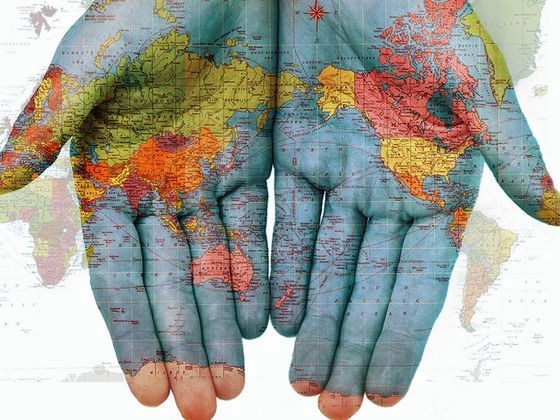
I see how indigenous and non-indigenous identities evolved from separating the colonised from the most recent coloniser, labelling one as wounded victim and the other as wounded offender. It is important to acknowledge historical trauma and the enduring wounds people carry who experienced colonial dispossession, as well as the wounds of those whose ancestors dispossessed others. I appreciate the modern Australian practice of acknowledging “traditional owners” of a place, though I think stewards would be a more apt word. (I do not know where this image is from and will link it if shown.)

earthhands

We are all humans indigenous to the Earth. We are all indigenous to a land of which we were born; we all have ancestors indigenous to at least one known place, often numerous ones; and we are all in a process of becoming indigenous to a place where we are now living and embodying ourselves and crafting our senses of identity. In fact, I venture that every single one of us on this Earth carries ancestral trauma of being dispossessed of or otherwise removed from a sacred homeland. And we all need support healing these wounds. Despite all of this, I see few people willing to identify as indigenous without being aware of their ancestral connection with a known, existing tribal group. And:

According to the UN the most fruitful approach is to identify, rather than define indigenous peoples. This is based on the fundamental criterion of self-identification as underlined in a number of human rights documents.”

If culture emerges from the Earth below, and I, for example, was born of the land we call North America, then my body, and to some extent my identity, is indigenous to that place. I mean no disrespect to people of cultures that have developed more intimate relationships with a place than I; such people, when willing, have much wisdom to share with those of us of born in or living in a place who are still learning how to live in harmony in our environments. If I, for example, live in Australia and am transplanting my body and being in this environment, I am learning how to be indigenous here and to connect with my husband who is of this land. (Image from here.)

Non-Dual-Thinking

I honour spiritual leaders who see people crying out in pain for lack of connection with place and offer basic tools to help us connect. I envision us all remembering that we are one big human family, that we all are indigenous to somewhere and so were our ancestors, and that to claim an exclusive indigenous or non-indigenous identities is to play a social game that perpetuates separation and pain. By all means, claim an identity with a tribe and be proud of it, please. For those of us who cannot do so because such identities were lost touch with long ago in our ancestral lineage, please find a way to hold us in heart and mind as also indigenous, newly learning how to honour the Earth, our collective Mother, where we are placed now and where we have come from. Here is a poem I wrote about the social conflict I experience:

Land bridge

My heart is indigenous
In sync with the seasons
My feet firmly grounded
In Mother Earth below me.

My spirit is indigenous
Interconnected with all that is
Flaming with animist passion
For peaceful coexistence.

My mind is indigenous
Built upon a cosmology
Of communal integrity,
Wholeness and ease.

My soul is indigenous
Ravished with pain
In States of mankind’s
Civilising war games.

My name is indigenous
Given during a spiritual journey
CloudClearer, who helps release
Dis-eased thinking.

I challenge cultural exclusion,
Indigenous and non-indigenous;
Living between identities
I cry out for community.

giveheart If you value this content, please engage in reciprocity by living, sharing and giving.
Confronting Colonialism

Blog by Valerie

Knowing that you love the earth changes you, activates you to defend and protect and celebrate. But when you feel that the earth loves you in return, that feeling transforms the relationship from a one-way street into a sacred bond.–Robin Wall Kimmerer

earthlove

Indigenous writers describe colonialism as “a violation of the psychological womb” and  “a great rupture with the Mother [Earth]” (Cervantes & McNeill, 2008). Colonialism has spiritual roots in our ideas about the meaning of life, our nature and place in the world. In Judeo-Christian culture the Earth is often seen less as our home, and more as a place to endure. An Earth Ethos sees the Earth as the source of life from which resources are continually re-cycled around, not a temporary playground for us to use for a period of time. The Earth’s health is reflective of our human health. In Australian aboriginal languages, “land” means “everlasting spirit” or “source of life” (Atkinson, 2002).  To say “I’m going for a walk in nature” shows our modern Western alienation with the Earth and the place where we live. Cities are highly cultivated environments, and a forest is wilderness, but both are aspects of nature–we cannot escape nature except in our own trickster minds!

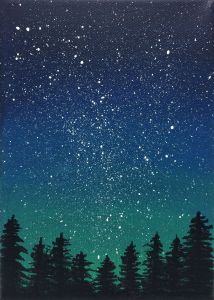
You know how when you walk into a room, and you can feel that people were just arguing in there? You feel some funny energy in the space. Similarly, places carry trauma and violent energy that reflect into our bodies and psyches, though we are not as conscious of this. We may not be aware that 100 years ago there was a massacre on land where a school is today, and we may wonder why that school has such problems, when a school a few blocks away does not. This is why art and ceremony on land of traditional cultural significance are vital to healing. “The land under each tribe’s feet is the [spiritual] source of its culture,” and is we are responsible for giving back to the Earthfrom which we came (Kimmerer, 2016). An aboriginal elder recently taught me that the night sky and the Earth in that place are exact mirrors of each other, and to live intimately with a particular place on Earth, we learn from our ancestors in the sky.

nightsky

Research on trees planted for commercial gain that are of the same species and lack connection with a network of older trees has found that they do not communicate well, and that they compete with each other more and suffer more ill health than when they grow wild in forests (Wohlleben, 2016). In cities full of commercial culture we often similarly experience spiritual lack. We spend a lot of time in rooms and vehicles shaped like rectangles, struggling to feel deeply connected with and nourished by our manufactured environments. We seek distraction (literally un-grounding, a loss of traction) and use substances such as alcohol, caffeine and marijuana that numb uncomfortable feelings or stifle unwanted thoughts in our minds.

According to indigenous thinking, colonisers previously experienced a trauma of disconnection from intimate, reciprocal relationships with their land of origin, and conquering and privatising land is a re-enactment of this trauma (Smith, 2005). Some indigenous cultures describe a psycho-spiritual virus as the root of this trauma. TheAnishinaabe in Canada describe Windingo as a hungry, destructive force that is never satisfied and even eats its own kind (Kimmerer, 2016). The Ojibway refer to Wetiko, “a cannibalistic spirit who embodies greed and excess…an autoimmune disease of the psyche… [in which] the immune system of the organism perversely attacks the very life it is trying to protect” (Levy, 2014). The Zar spiritual disease in northern Africa is described similarly (Monteiro & Wall, 2011). In indigenous Asian cultures, a poison in the mind makes us forget who we are, manifesting as anger, desire and ignorance (Kakar, 1982).

The understanding expressed across the world by such stories is that we humans naturally carry some destructive energy. It is part of nature to create and destroy. Just look at a volcano: it both births new land and destroys existing land. When we regularly purify ourselves, this natural destructive, cannibalistic energy does not grow out of control. But when this destructive energy grows too large, it penetrates our spiritual beliefs. Then we forget who we are, feel disconnected from ourselves, each other and the Earth, and engage in destructive behaviours. I have read an indigenous elder describe that when colonialists first arrived in his ancestor’s community, the amount of such a psycho-spiritual virus that those few men were carrying completely overwhelmed the entire community. We may frame this destructive energy as diseases such as smallpox and syphilis, or behaviours such as raping and pillaging, but the spiritual root of these is considered that destructive, cannibalistic energy.

Purify your Heart(1)Psycho-spiritual purification exercise: Reflect on a relationship where you are trying to make another person see your point of view, or trying to control their behaviour and tell them what to do. What is stopping you from living your own life, and letting them be who they are? What are you avoiding or denying in your life by focusing on them, or on controlling your environment? What do you need to be more nourished right now?

giveheart If you value this content, please engage in reciprocity by living, sharing and giving.
Earth Ethos: an embodied philosophy

Blog by Valerie

An Earth Ethos considers healing to be synonymous with justice. This philosophy is based on indigenous wisdom, where “indigenous” refers to cultures grown in connection to specific places such as aboriginal tribal members, as well as more generally a holistic worldview honouring the interconnection of all beings and viewing life as cyclical (Cervantes & McNeill, 2008). An Earth Ethos is evident in beliefs and practices of cultures around the world, and is being resurrected in modern Western culture through the work of indigenous peoples who share wisdom with non-members, as well as modern people who work to integrate such teachings and ways of being into modern life. Whoever you are, you were born of and on the Earth and are indigenous to some land and lineage(s).

prettytree

Understandings of justice grow out of cultural cosmologies. In indigenous cosmologies, there is no fall from grace in Heaven, no exile from abundance in the Garden of Eden, and no criminal action of eating a forbidden apple that a God has used to punish us humans. Because humans are firmly established in a particular space and time based on cultural mythology and birth, from an indigenous perspective, there is nothing to prove and no nature to discover. It is inherent (Rael, 1997). While feminism has challenged patriarchal perspectives, we still needed to challenge anthropocentric (human-centric) and ethnocentric perspectives in Western culture. We need to experience empathy with our entire human family and with all beings, to remember how to live in reciprocity with the Earth, deeply honouring our source of human life and re-evaluate core aspects of our cultural and individual identities (Ohiyesa, 2001).

The Western concept of authority is out of balance. Former philosopher Alan Bloom said, “The West is defined by its need for self-justification and to discover nature, and both philosophy, whether religious or secular, and science reflect this human quest to know nature (1986). Sharon Venne, a Cree lawyer said of First Nations that: “Our sovereignty is related to our connection to the earth and is inherent” (1999). Former Menominee activist Ingrid Washinawatok agreed that “Europeans relegated sovereignty to only one realm of existence: authority, supremacy and dominion. In the Indigenous realm, sovereignty encompasses responsibility, reciprocity, the land, life and much more” (1999).

cleanearth

In Western culture the Earth is often portrayed as a place to endure, whereas an Earth Ethos sees the Earth as the source of life, not a resource to be used for a period of time. The Earth’s health is intimately connected with and reflective of human health, because the Earth is a living Mother supporting us all. To consider a rock or tree as non-living or non-sentient places humans at the centre of the universe and devalues everyone. This results in “war to determine whose anthropocentric view is most valid” while “the earth and all its inhabitants []suffer” (Gustafson, 1997). Our bodies are made of the soil of this planet, and we are all united in our hearts. An Earth Ethos sees minerals, insects, plants, animals and other beings not only as ancestors, but as wise life forms that can teach us humans how to live in harmony with the rest of nature, since they have successfully survived on Earth a lot longer than we have. We humans are the new species on the block, and an Earth Ethos acknowledges with humility that as a species we are out of balance and in need of healing.

giveheart If you value this content, please engage in reciprocity by living, sharing and giving.