Blog by Lukas
At Earth Ethos retreats we’ll do our utmost to provide you with nourishing food that aligns with your personal needs. But I thought I’d provide a little more detail to give you a sense of what this means to us practically in terms of values and intention.
Food as decolonising and reindigenising
 Like everything we do, decolonising and reindigenising is at the heart of our food philosophy. We define it quite simply as: where possible, minimising our reliance on the transactional industrial food system, and where possible, consuming food that has been raised, caught, harvested, gathered, or traded in balance and harmony with nature. Practically, this might mean:
– Growing as much as we can right here on the property including fruit, vegetables, berries and eggs;
Food as decolonising and reindigenising
Like everything we do, decolonising and reindigenising is at the heart of our food philosophy. We define it quite simply as: where possible, minimising our reliance on the transactional industrial food system, and where possible, consuming food that has been raised, caught, harvested, gathered, or traded in balance and harmony with nature. Practically, this might mean:– Growing as much as we can right here on the property including fruit, vegetables, berries and eggs;
– Serving locally caught seafood (or better yet seafood we caught ourselves!);
– Sourcing meat from animals that are overpopulated and/or feral, like venison, or wild/indigenous, like kangaroo or wallaby; and
– Trading food for other goods and services with local people. 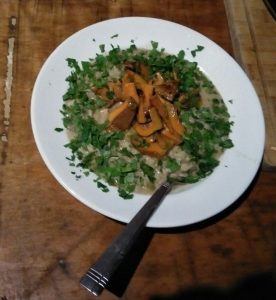
Clean
Clean is another concept that could mean a lot of things to a lot of people, but in our case it means food that is minimally processed, with as few industrial non-food additives (gums, fillers and the like) as possible.
Creative
I generally don’t comport to written recipes. I also find it fun to mirror our interconnected and global world (and retreat participants!) by playing with fusion flavours.
On the other hand, being in rural area with often limited access to certain products, being creative can mean being resourceful in cooking culturally authentic food with what’s available.
Hearty
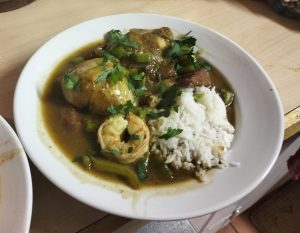 Doing hard spiritual work and ceremony is draining, and our retreats will usually involve a fast of some kind. It is therefore one of our food values to serve meals that I would describe as “hearty”, particularly at night when it’s cold for dinner. Think stews, curries and the like. We need to fill our bellies sometimes to sit back and process things and feel grounded. It is also a way of connecting with ideas of abundance.
A final note on the “middle way” and avoiding neuroticism.
Clean
Clean is another concept that could mean a lot of things to a lot of people, but in our case it means food that is minimally processed, with as few industrial non-food additives (gums, fillers and the like) as possible.
Creative
I generally don’t comport to written recipes. I also find it fun to mirror our interconnected and global world (and retreat participants!) by playing with fusion flavours.
On the other hand, being in rural area with often limited access to certain products, being creative can mean being resourceful in cooking culturally authentic food with what’s available.
Hearty
Doing hard spiritual work and ceremony is draining, and our retreats will usually involve a fast of some kind. It is therefore one of our food values to serve meals that I would describe as “hearty”, particularly at night when it’s cold for dinner. Think stews, curries and the like. We need to fill our bellies sometimes to sit back and process things and feel grounded. It is also a way of connecting with ideas of abundance. A final note on the “middle way” and avoiding neuroticism.
It is a faith and conviction of mine that despite some very clear ethical and practical dilemmas in the world — animal welfare, climate change, biodiversity loss and pollution etc — my best contribution to the world is to show up in my body and heart, and not get lost in grinding “fix-it” thoughts and neuroticism.
In short, this means that if I’m doing the shopping and I get overwhelmed looking for right cut of the most ethical chicken for a reasonable price, I might just grab whatever is there and move on. Whether we like it or not, the collective consciousness or karma is also ours, and putting ourselves into a state of overwhelm and neuroticism won’t change this. In practical terms, I will often default to the “middle way” when the ideal is not available, but as a buddhist lama once said, “the middle way is a 8 lane highway”!
Reach out
Please advise us of any food needs or preferences prior to retreat, and we’ll do everything we can to accomodate you and leave you feeling nourished. =)
In short, this means that if I’m doing the shopping and I get overwhelmed looking for right cut of the most ethical chicken for a reasonable price, I might just grab whatever is there and move on. Whether we like it or not, the collective consciousness or karma is also ours, and putting ourselves into a state of overwhelm and neuroticism won’t change this. In practical terms, I will often default to the “middle way” when the ideal is not available, but as a buddhist lama once said, “the middle way is a 8 lane highway”!
Reach out
Please advise us of any food needs or preferences prior to retreat, and we’ll do everything we can to accomodate you and leave you feeling nourished. =)
 If you value this content, please engage in reciprocity by living, sharing and giving.
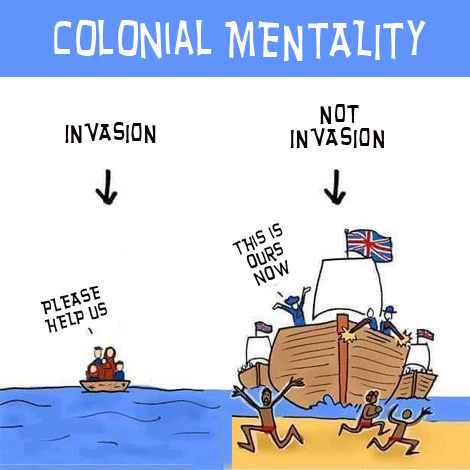 According to Nadal et al. (2016), colonial mentality refers to the internalisation of colonial values, beliefs and practices that devalue Filipino culture, language and identity. This can manifest as embarassment or feelings of inferiority over Filipino tradition and practices.
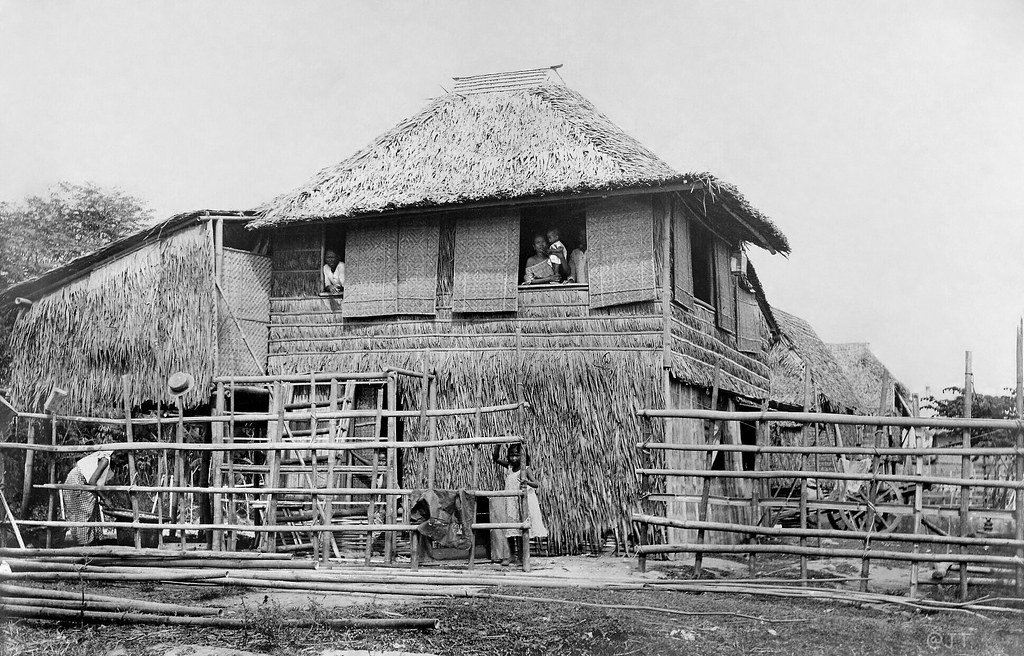 Constantino (1975) argued that Spanish colonialism and Catholicism had a profound impact on the Philippines, including the suppression of indigenous spirituality and cultural practices (which were largely based on animism), leading to the creation of a colonial and clerical elite. It also strongly impacted Filipino values and beliefs, how Filipino society is organised and the perpetuation of patriarchal and authoritarian structures of power, gender inequality and resistance to social and political change. (Image of pre-colonial Philippines house from


 Earth Ethos