Category Archives: Values

The cynicism trap

Blog by Valerie

If you’re reading this, chances are you are someone who walks willingly into uncomfortable feelings and values lessons gained through pain. Thank you. Your presence on the planet makes a difference when you walk such a path. I too have been on a hardcore heart-warrior journey for years with an understanding that energy is trans-form-able. I have trusted that being with and creatively expressing painful emotions is a valuable way to be of service. In some respects, this perception is misguided. Mary Shutan reminds us that certain primal energies related to survival are by their nature quite brutal. They are worthy of being with and expressing creatively, but they are not transformable. Most of us have witnessed a predatory animal stalk and eat its prey. Most of us have physically stood near an animal that humbled us and showed us our place in the food chain. (Who wants to swim near this guy?)

gator.jpg

Most of us have experienced forces of nature bigger than we are, such as tornadoes or flash floods. Some of us have faced homelessness or joblessness and been unsure how our basic physical needs will be met. Experiences like these challenge our individual survival and ask us to stand in faith. I define faith like Christina Pratt as “a liquid state of grace”, a free-fall, a letting go and allowing something bigger to steer us for a while.
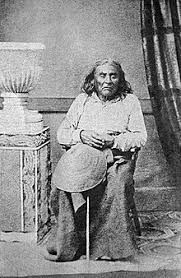
seattleIn his famous speech Chief Seattle foretold that the way U.S. settlers were treating Mother Earth was moving us collectively into “The end of living and the beginning of survival.” I find it helpful to think of survival as more complex than fight, flight or freeze. One researcher suggests the following survival strategies: rescuing, attaching, adapting, asserting, fighting, fleeing, competing, and cooperating (Valent, 1995). Knowing that a small proportion of people are controlling physical resources, and that through various ways of looking at inequalities physical survival fears are very real, and that legal systems are maintaining many of these imbalances, I can see why some say that trauma-induced behaviours such as hyper-vigilance are actually evolutionary protective mechanisms to help us survive modern life (Silove, 2007). (Image from Wikipedia.)

Across the planet species are going extinct, human languages and cultures are dying, polar ice caps are melting, and lands are disappearing underwater. In an Earth Ethos, we are all interconnected, so if we didn’t feel pain with those things going on, we wouldn’t be living! I think it is important to accept we live in a time filled with survival struggle energy that it is brutal by nature and often seems to have incredibly unfair impact. Accepting this does not mean that we give up, lose hope, renounce faith, or fall into the cynicism trap by giving up on a healthy, balanced future vision for generations to come. While we may not be able to transform primal survival energy, we can transform cynicism and question ourselves when we or others get caught up serving survival strategies. I say “serving” because, years ago Tom Lake said to me there is a difference between “being of service” and “being a servant.” When we are guided by rigid stories in our minds, we are servants blindly acting them out. Consider the “good person” story. We feel the need to do certain actions and avoid others to prove we are “good,” then we judge others’ behaviour as “bad” and justify acting on our righteous anger by punishing them, which is the basis of our criminal justice system. I find this story incredibly destructive, and I agree with Sadhguru that there are no good or bad people, only miserable and joyful people.

imwithher.jpgWhen we are miserable we are rejecting or rebelling against reality, which is destructive and results in existential crisis. When we are accepting we remain in the present moment, however painful. Many of us understandably feel overwhelmed by the depth of pain on the planet right now, so we numb ourselves with substances such as sugar, caffeine or alcohol; run away to our heads to avoid certain feelings; and seek out “light work” or “positive psychology” to create bubbles of security around ourselves. This is so common that a famous social psychology study published in the 80s suggesting that “overly positive self-evaluations, exaggerated perceptions of control or mastery, and unrealistic optimism…promote mental health” has yet to be refuted. So not only are we serving a story (like being a good or bad person) that doesn’t need to survive, we are avoiding the important responsibility creating a vision for future generations of a world we want them to live in, but the cynicism trap doesn’t even improving our mental health! The medicine I find works best when you catch yourself falling into the cynicism trap is to let go of that cynical vision and move into a graceful free-fall instead, living on faith for a while. The more I stand in faith, the more clearly I see that Mother Earth has a beautiful vision she’s desperately trying to communicate to us when we move through our survival fears and make space to listen and act on her guidance and wisdom. (Image from here.)

Exercise: What survival strategies do you most commonly use (rescuing, attaching, adapting, asserting, fighting, fleeing, competing, and cooperating)? Where are you serving a story that does not need to survive? What is preventing you from letting go of control and standing in faith?

giveheart If you value this content, please engage in reciprocity by living, sharing and giving.
Governance

Blog by Valerie

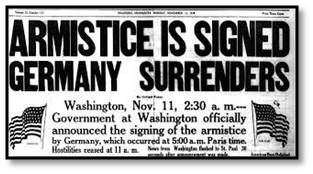
Today is 100 years since the armistice to end the “war of all wars,” which as we know did not do so. The word “armistice” comes from “arm” and “solstice,” where “solstice” means to stand still and firm, referring literally to the movement of the sun. You may wonder like me why the word “arm” refers to the part of our body and also to weapons. The etymology is from an ancient Proto-Indo-European root word meaning “to fit together,” referring to joints (Though that doesn’t explain why we refer to big biceps as “guns.”) The fact that we use the same word for our body and a weapon is interesting, and it is worth reflecting how we are embodying armistice today. A Bible study website says arms are “used to denote power” and “the omnipotence of God”, and a site linking body metaphysically with spirit suggests that arms are about “the ‘social embrace’ or how we reach out to other people.” (Image from here.)

Armistice-Signed

In an Earth Ethos, the way we reach out to others says a lot about how we govern ourselves, and how that is a reflection of our inner space (our capacity to be with and hold complexity), our values, character, and spiritual development. I have been noticing more and more how the Western archetype of “king” as ruler in control manifests in everyday life. To quote from a previous post:

“Europeans relegated sovereignty to only one realm of existence: authority, supremacy and dominion. In the Indigenous realm, sovereignty encompasses responsibility, reciprocity, the land, life and much more” (1999).

Critical_Thinking_Skills_Diagram

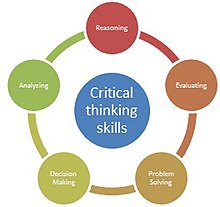
For most of us Westerners, the critical thinking/rational mind (we literally call it “executive functioning”) governs a lot of our actions. This is mirrored in society with complex hierarchies where power is concentrated in people we call “executives” who are higher up the “chain of command” (another military term). An executive is literally executing a vision (another word with a violent double meaning), but what is that vision based on? It’s based on a worldview: how we see ourselves, each other, and how we fit together. This makes up the “dreamtime” as Aboriginal Australians say, or the subconscious as social scientists say. Being governed by rational, executive functioning is destructive, because our human lives are not rational and reasonable. Many of us have faith in a “higher plan”, a destiny or fate to help us make sense of events we can’t understand or otherwise explain. (Image from Wikipedia.)

groundingimage2.jpg

We get so caught up in understanding, we lose touch with the ground we’re standing on. We want to know what caused the fire before we put it out and clean up the mess it left. Most of us are taught from a young age to think through our actions and analyse behaviours of others. But if we look at the path a river takes to flow to the sea, we may think it’s crazy and inefficient: it twists and turns, goes over rocks and down waterfalls. Our biggest computers cannot mathematically work out the best path for a river to flow even if we have detailed topographic maps, because our nature is not static enough for to understand. Weather, animals and plants can change topography in an instant, and we might joke about poor meteorology predictions, but it says a lot about science (the study of human knowledge) that we can’t understand the natural flow of earth, air, fire and water. (Image from here.)

carrying

A wise woman friend who has since passed on said to me that “all we humans do is carry things.” We carry ideas, stories, feelings, emotions, spiritual views that frame our worldview, and dreams. Most of us are carrying some stories based on black-and-white, right and wrong, judgmental thinking, which we often refer to as critical thinking. But this critical thinking for many of us has outgrown our ability to remember who we are and remain present in our hearts. How often you “know” what to say, or you have a strong instinct to do something, and you talk yourself out of it, later realising that feeling/knowing was a better path? Our want to know in our heads is plaguing us with doubt for other types of knowing that are really valuable as well. Critical thinking is literally preventing magic and creation from freely flowing in our lives. (Image from Wikipedia.)

Life tested me for many years until I made a commitment to stand for peace. It has cost me a lot of energy emotionally, psychologically, and physically, but spiritually it is my bedrock, and I feel lucky to know that. Each day I learn my limits and practice opening my arms more widely to embrace even more energy with loving compassion and graceful acceptance. Because my dreaming is a world filled with peace where terms for weapons and body parts are very distinctly different.

Exercise: How do you carry armistice? What do you stand for with arms open? What is the bedrock of energy that governs you?

giveheart If you value this content, please engage in reciprocity by living, sharing and giving.
Hope for Change

Blog by Valerie

In Old English, the word hopa, from which modern-day “hope” emerged, meant “confidence in the future.” For me, this requires trusting in natural forces more powerful than I, and a willingness to venture into unknown territory (inside and outside myself) with an open mind and heart. It requires me to set aside what I think I know in order to see what is and will be. Daily contemplative practices like meditation and prayer purify me so that there is space in my world for miracles to occur. In my experience, where I do such practices makes a difference.

hopeflower.jpgAmericans often say, “I went for a walk in nature.” This is crazy, because we are always in nature. A house, a church, an office, a car—these are natural, highly cultivated, environments. A forest, a desert, a seashore, a mountaintop—these are natural, wilderness environments. Think about a spectrum of highly cultivated environments such as New York City, to total wilderness environments such as Alaska, and think about how you feel and behave in different environments. In cities, we tend to cultivate our lives: we carefully groom our faces, clothe our bodies, decorate our houses, cook pre-packaged foods, and schedule our time. In wilderness, we tend to let go and flow more. (Image from here.)

Many of us think that wilderness is meant to be free from human impact. This is simply not so in indigenous cultures. I have heard indigenous environmental advocates say that once there is stronger cultural consensus about respecting wilderness, they will come into conflict with Western environmentalists who want to keep it pristine and virginal. The lyrebird in Australia is famous for mimicking sounds in its environment. In recent years as its environment has been impacted by us modern humans, it has learned not only to the songs of birds and sounds of other animals, but of chainsaws and car alarms. The lyrebird does not judge some sounds as more or less natural, so why do we?

In an Earth Ethos, we humans need to interact with our environment, and in fact we have a sacred responsibility to do so. Taking a few minutes to meditate, pray, or practice mindfulness is a simple way to give back to our environments and express gratitude for all the gifts the natural world gives us. A “sit spot” is a simple contemplative practice for being in wilderness. All that is involved is sitting still in a wilderness environment and being as present as you can. The best “sit spot” is one that you are easily able to access, such as a park or garden near your home or office. Even sitting for five minutes a day makes a difference in how we feel in our bodies and how connected we feel with our wild Mother Earth.

foraging

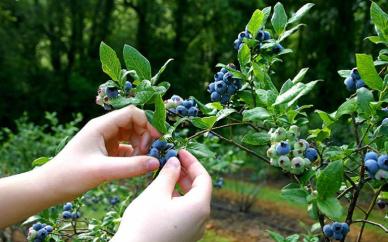
A Potawatomi elder and academic refers to modern humans as “species poor.” Most of us eat foods and use medicines bought in stores, and if we do grow our own, most of those plants originated in other places. Foraging enriches us by improving our connection with our environment and demonstrating our respect for the land. Indigenous wisdom says that plants emerge to offer the medicine and nutrition we need to survive in a specific environment. A simple practice is to learn some edible and medicinal plants in your current environment, gather and use them. (Image from here.)

organicWhen we change our perspectives, we change the world. When we recognise value in plants and animals in our environments, we act accordingly. Ten years ago few of us knew what “free range”, “grass fed” or “organic” food was. As an increasing number of people saw the destructive impacts of pesticides and other high-yield agricultural practices, collective modern culture began to change. Today, most of us are more aware of what we’re eating than we were ten or twenty years ago. That gives me hope that as we keep growing, more Earth Ethos changes will occur in our lifetimes. (Image from here).

Exercises: Start a “sit spot” practice. Learn to forage in your neighborhood.

giveheartIf you value this content, please engage in reciprocity by living, sharing and giving.
Holiness

Blog by Valerie

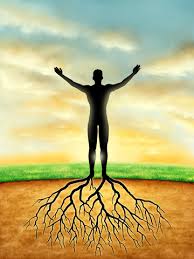
Most of you reading this, like me, grew up a Judeo-Christian culture. And like many of you, I experienced conflicts and hypocrisies with aspects of those teachings. One such conflict is with the concept of “The Holy Land.” I have always known deep in my bones that all land is holy land, and that all bodies and beings are holy and sacred and worthy. To elevate a particular place as “Holy” is to demote other places as un-holy or less-holy. Not surprisingly, the etymology of the world “holy” is “healthy” and “whole.” If only one place on Earth is “The Holy Land”, and only about eight million people live there, then by definition, the rest of us 4+ billion people are in exile, cut off from our Motherland, not feeling whole.

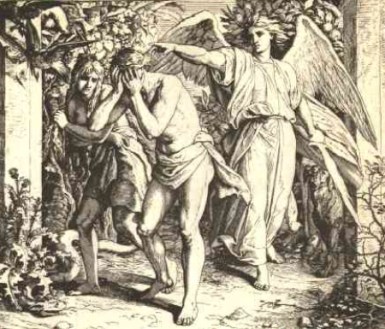
adameveThe foundation of Judeo-Christian mythology leaves us unconnected with environments where the vast majority of its followers live. The Biblical creation story of Adam and Eve’s exile from the Garden of Eden is not an embodied story connecting humans with nature inside and outside ourselves within a web of life. In fact, the entire Earth has not, for some time in Judeo-Christian culture, been portrayed as a home, as much as a place to endure or get through (Gustafson, 1997). Feeling rejected by the Sacred Feminine, we are collectively convinced we are in exile, and so it follows that many of us live in our heads and suffer from mental illness. (Image from here, altered for copyright from this image.)

Indigenous, Earth Ethos thinking challenges this vision. As Lee Standing Bear Moore and Takatoka of the Manataka American Indian Council say** (This is where I originally saw this quote, but that Council no longer exists, and I have since realised it is published verbatim in this book).

If God created the universe and countless universes beyond our own into infinity, it is clear that part of the master plan was to place God’s creatures in a place where everything they see and touch in nature is healing medicine.  What better place to care for the children of Creation?  Therefore, the Garden of Eden is symbolic for the Kingdom of God and it exists as we see it, and live in its midst, both physically and spiritually.   The Mother Earth is part of the Kingdom of God and thus humans and other creatures present in the garden were never expelled, but remain to live and evolve.   Eden is all around us, everything we see in nature and beyond is the garden and Kingdom of God.  We are here and never left. [emphasis added]

So the Christian fundamentalists asking us to repent because the Kingdom of Heaven is here now are onto something. repent(Image from here.) 

I invite you to imagine what your life would look and feel like if every land you walked upon was treated like holy land; if every human body you came into contact with including your own were treated like holy land; if every animal and plant you ate, every mineral and stone mined and built into your smartphone and car and house were treated like holy land. Indigenous thinking sees the Earth as the source of life, not a resource to be used for a period of time. The understanding that all land is holy, that all of us are wanted and held by Mother Earth where we are now regardless of our ancestor’s trauma of leaving their Motherland, is incredibly freeing. I first experienced this healing during an indigenous dance-fast ceremony in Colorado following teachings of Joseph Rael. I remember kneeling in front of a tree during the ceremony and weeping with the realisation of how much Mother Earth wanted and cared for me, how much pain I had been carrying disconnecting me from those feelings, and how much pressure that had been placing on other relationships, especially my birth mother.

Years ago I read a book whose central thesis really stuck with me written by Wilhelm Reich, a controversial former student of Freud. Reich said that more than anything, we are truly afraid of pleasure, joy, and the abundance of gifts always in our midst; that we have collectively, in Judeo-Christian/Western culture, grown used to identifying with a fundamental sense of rejection, so that we shy away from profound opportunities for acceptance. I remember too, years ago, reading about the origin and etymology of the word sin:

[T]he most common word translated as “sin” is chait. The “sin” of Adam and Eve was chait, a mistake. People don’t “sin.” People make mistakes. After all, we are human.

sinThis word “sin,” then, was meant to help us humans understand our nature: that we are powerful and able create wonders and also an innate capacity to blunder. What curious creatures we are! We have been believing and embodying an errant, mistaken thought and believing that we are exiled, unworthy, and that our sacred, earthly Mother doesn’t fully love us, and this sin/mistake/confusion has been defining the course of our collective history for multiple millennia, and is still going. If this isn’t Wetiko energy, I don’t know what is! (Image from here.)

Faced with so many reflections around us of our collective disconnection with Mother Earth, our bodies, fellow beings, and elements of our environment necessary for living like our water and air, it helps to have a sense of humour. Here’s a quote from George Carlin:

The earth doesn’t share our prejudice towards plastic. Plastic came out of the earth. The earth probably sees plastic as just another one of its children. Could be the only reason the earth allowed us to be spawned from it in the first place. It wanted plastic for itself. Didn’t know how to make it. Needed us. Could be the answer to our age-old egocentric philosophical question, “Why are we here?”

Exercise: I invite you to re-think the concept of “holiday” and “other” days, and generally how you carry and embody being holy.

giveheartIf you value this content, please engage in reciprocity by living, sharing and giving.

Gift Economy

Blog by Valerie

A market economy is based on exchange, how much we owe (based on lack) and are able to earn (based on social judgment). A gift economy is based on faith, how much we share (based on trust) and give away (based on abundance). To me a gift economy has always felt natural. Embodying this Earth Ethos of faith, trust and abundance has been a life-long challenge in a lack-based global market economy. It has taken me many years of barely eking out a living, as well as numerous failed personal and professional relationships, to navigate this philosophical conflict with popular culture. Today, many of the services we call “sharing,” like paying to be in a car pool, are still part of a market economy. Charles Eisenstein is an advocate for a gift economy in modern Western culture, and his description of it is as follows:

Many indigenous cultures embody the philosophy of a gift economy. For the Kwakwaka’wakw people of Canada, the wealthiest people are those who give away resources in a potlatch ceremony, which may be planned a year in advance and last for several days. During the ceremony the host distributes wealth amongst guests, including beaded jewellery, leather clothing, and lavish foods. As Elder Agnes Axu Alfred explains:

“When one’s heart is glad, he gives away gifts. Our Creator gave it to us, to be our way of doing things, to be our way of rejoicing, we who are. Everyone on earth is given something. The potlatch was given to us to be our way of expressing joy.” 

In Papa New Guinea, people work for years to be able to give a moka gift to another person, who then works to gather an even bigger moka gift to give, as explained in the following video:

(The full documentary entitled Ongka’s Big Moka is available here.)

While being part of a market economy is currently compulsory for most of us to survive, there are areas of life where we can embody a gift economy. The first principle of abundant giving is that we have to be filled up ourselves and have extra energy to give. We have all experienced someone brimming with kindness so that we feel it in their presence, and another person clearly intending to be kind only able to offer a sheepish smile. Being honest about what we are capable of abundantly giving helps us avoid being in a space of lack. Whether mentally, spiritually, emotionally, or physically, we can only give to another what we ourselves possess. Once we judge/expect ourselves, saying we “should” embody a certain state of being, we have lost the ability to embody what we intend. A strengths-based perspective is the starting point for a gift economy.

Simple acts of kindness without expectation of anything in return (not even a thank-you) embody a gift economy, as do larger acts like doing pro bono work or volunteer projects. Most spiritual traditions enshrine the philosophy of a gift economy into their teachings, such as Christian tithing or Buddhist dana. Some organisations such as Vipassana meditation centres and Brahma Kumaris talks and retreats operate entirely on participant donation. But I have observed an insidious tendency to create expectations for exchange. A “Suggested Donation” of a specific monetary amount carries an expectation of a specific exchange, and trying to prove you are “a good person”, alleviate guilt, or “create good karma” are lack-based intentions. (The image below is from here.)

abundance

In my experience, embodying a gift economy in modern Western culture requires firm boundaries, strong skills of discernment, compassion and deep self-knowledge. We need to be willing to receive no money or expressions of gratitude from the person we are serving, and to prevent abuse, we need to know when to say no, to stop giving when it is no longer a gift. I call this spiritual social work, and there are an abundance of opportunities for all of us to practice it daily, such as giving compassion to a person criticising our behaviour, empathising with a leader struggling with narcissism, or giving grace to an erratic driver. Instead of judging and placing someone in lack, which then requires us to forgive, we can practice accepting and holding both of us in abundance. In my life, the person in whose presence I felt the most abundance, who was a subsistence farm woman in rural Guatemala who had a condition causing her skin to change colour and peel off her face and body. She had such a strong, vibrant spirit she was emanating light and to be in her presence felt joyful. Though I have had dinner with billionaires, this lady remains the wealthiest woman I have seen.

If you value this content, please engage in reciprocity by living, sharing and giving. giveheart

Bridging identities

Blog by Valerie

There is increasingly a movement for recognising non-binary gender and sexual identities. I see how much relief it brings people to be able to call themselves bisexual, pansexual, gender non-conforming, etc. There is also increasingly a celebration of multi-cultural identities, which primarily means a celebration of people with different ancestral homelands, traditions, foods, clothing, etc. I see how much relief it brings people to be able to call themselves African-American, Greek-Australian, Russian-Jewish, etc. Something that is very dear to me is a recognition of non-dualist cultural identity.

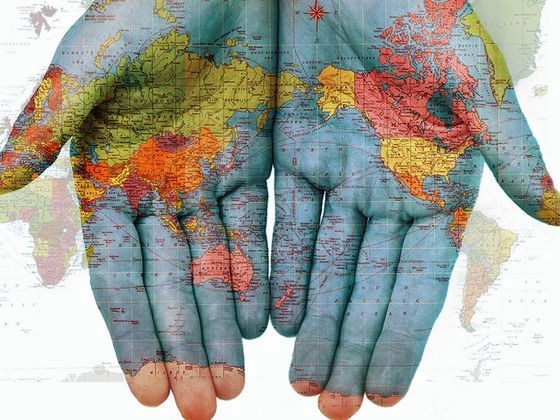
I see how indigenous and non-indigenous identities evolved from separating the colonised from the most recent coloniser, labelling one as wounded victim and the other as wounded offender. It is important to acknowledge historical trauma and the enduring wounds people carry who experienced colonial dispossession, as well as the wounds of those whose ancestors dispossessed others. I appreciate the modern Australian practice of acknowledging “traditional owners” of a place, though I think stewards would be a more apt word. (I do not know where this image is from and will link it if shown.)

earthhands

We are all humans indigenous to the Earth. We are all indigenous to a land of which we were born; we all have ancestors indigenous to at least one known place, often numerous ones; and we are all in a process of becoming indigenous to a place where we are now living and embodying ourselves and crafting our senses of identity. In fact, I venture that every single one of us on this Earth carries ancestral trauma of being dispossessed of or otherwise removed from a sacred homeland. And we all need support healing these wounds. Despite all of this, I see few people willing to identify as indigenous without being aware of their ancestral connection with a known, existing tribal group. And:

According to the UN the most fruitful approach is to identify, rather than define indigenous peoples. This is based on the fundamental criterion of self-identification as underlined in a number of human rights documents.”

If culture emerges from the Earth below, and I, for example, was born of the land we call North America, then my body, and to some extent my identity, is indigenous to that place. I mean no disrespect to people of cultures that have developed more intimate relationships with a place than I; such people, when willing, have much wisdom to share with those of us of born in or living in a place who are still learning how to live in harmony in our environments. If I, for example, live in Australia and am transplanting my body and being in this environment, I am learning how to be indigenous here and to connect with my husband who is of this land. (Image from here.)

Non-Dual-Thinking

I honour spiritual leaders who see people crying out in pain for lack of connection with place and offer basic tools to help us connect. I envision us all remembering that we are one big human family, that we all are indigenous to somewhere and so were our ancestors, and that to claim an exclusive indigenous or non-indigenous identities is to play a social game that perpetuates separation and pain. By all means, claim an identity with a tribe and be proud of it, please. For those of us who cannot do so because such identities were lost touch with long ago in our ancestral lineage, please find a way to hold us in heart and mind as also indigenous, newly learning how to honour the Earth, our collective Mother, where we are placed now and where we have come from. Here is a poem I wrote about the social conflict I experience:

Land bridge

My heart is indigenous
In sync with the seasons
My feet firmly grounded
In Mother Earth below me.

My spirit is indigenous
Interconnected with all that is
Flaming with animist passion
For peaceful coexistence.

My mind is indigenous
Built upon a cosmology
Of communal integrity,
Wholeness and ease.

My soul is indigenous
Ravished with pain
In States of mankind’s
Civilising war games.

My name is indigenous
Given during a spiritual journey
CloudClearer, who helps release
Dis-eased thinking.

I challenge cultural exclusion,
Indigenous and non-indigenous;
Living between identities
I cry out for community.

giveheart If you value this content, please engage in reciprocity by living, sharing and giving.

Flow

Blog by Valerie

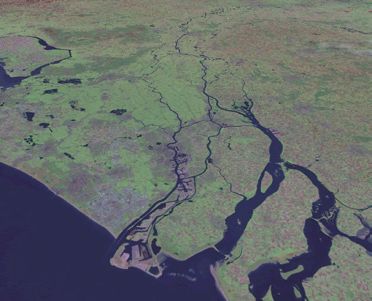
We often say “random” to refer to something unexpected happening. In English, “random” arose from the word “run”, which is related to the Rhein river in Germany, and refers to “flow.” When we have space for the unexpected, miracles flow. When we live in obligations and expectations and keeping up appearances, we feel dead inside. How well life works when let go of our traumas and projections and are able to trust and accept the natural flow of events. Judgment comes from existential black-and-white/right-and-wrong thinking; we dissociate part of life that we do not accept and carry that energy as guilt, shame, or hatred. Then we project these dissociations onto people, events, experience, etc. and judge our own projections. It’s a very destructive game. (Rhein delta image from: http://www.delta-alliance.org/deltas/rhine-meuse-delta)RhineMeuseDelta.jpg

There is a difference between seeing events and experiences as neutral and allowing meaning to emerge, and making meaning out of events and experiences by projecting our wounds (traumas, emotions, beliefs, etc.). There is a difference between carrying a dream, praying/wishing for it to come into being, and taking action to bring it into reality, and of forcing a dream to take form based on our own vision and desire. It’s the difference between being a dictator, and a co-creator or co-dreamer. As a co-creator or co-dreamer, we acknowledge that we are not in charge of the “how.” We may not even know “why” we have a particular dream, “where” it came from, or “who” will support its birth into being. We may only have a vague sense of “what” the dream is, because we know it needs to evolve in a context much bigger than our own mind can know.

For example, we may dream of being a parent, and we may carry a vision of what that looks like, such as: a stable romantic partnership, financial security, a safe home environment, and a caring community. But the events and experiences of our lives may be very different to our vision. We may struggle to become pregnant, lose our job and be unable to afford some things we wanted, or get pregnant in an uncommitted relationship. Why do these things happen? The best answer I have is, I don’t know! And that answer is so freeing. I help my mind be okay with not knowing, because I practice flowing and accepting. I also choose to trust that life is always helping me to awaken, evolve, and become a more authentic and present version of myself. So when I experience unexpected hardship, I feel alive, and I know I will learn something.

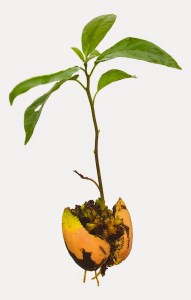
Trauma gets a bad rep. Sure it triggers pain and can be overwhelming. I have experienced a lot of that. But trauma is a powerful birth/death crisis-type of energy that has potential to teach us about ourselves and our world, to help us remember on a Avocado_Seedlingdeeper level who we are, and to offer us new life experiences. You can’t plant a seed in the ground without digging a hole and traumatising a small patch of earth. And a seed can’t begin its journey of growing into a tree without traumatising the seed encasing its energy and expanding into the soil. Trauma is part of the cycle of life, of birth-life-death-and rebirth. We can look at a tree and label it “dead” and forcibly chop it down. Or we can look at it and realise it’s decaying, and that there are numerous insects, animals, fungi and bacteria living in that environment who are helping transform the tree back into earth. It is a witnessing of energy changing form. We may also notice that even tree stumps may be “alive” through the interconnection of their roots with other trees in a forest, to keep a network of support and communication flowing between trees living above ground. Sometimes stumps even sprout new trunks and regrow themselves entirely.  (Image from: http://blog.daleysfruit.com.au/2014/03/grown-by-grafting-cutting-seedling.html)

Sometimes our minds are so full of stories, our lives so full and structured with meeting expectations and fulfilling desires that we lose touch with flowing energy. Rivers rarely flow in straight lines, and so flow energy tends to meander and take us into the unexpected and the unknown. We get surprised by “randomly” running into an old friend, rather than seeing that as a natural experience we could be choosing to make more space in our lives for. When we let go of controlling the “how” of our dreams and visions, and even let go of some of our dreams and visions altogether, we make space for flow to emerge. We experience interconnectedness in an organic way, and through the feelings of pain and pleasure of fulfilled and unfulfilled desires, something more precious starts to emerge: an understanding of a purposefulness to our journey, and a peaceful acceptance of the messy reality of being human.

christmasbush copy

Exercise: A simple practice is to regularly block off some time where you do not schedule anything or have any plans. Keeping some time sacred to allow flow energy to emerge demonstrates a commitment to making space for miracles. You then spend that time relaxing as best you can and doing whatever organically arises. You may be surprised to find yourself getting in the car and seeing where you end up. You may also do things that you do most days, but in a different sequence or at an unexpected time, or in a slightly different way than you’re accustomed to. When we honour flow energy in our lives, traumas that arise may seem less intense, because our psyches become used to the unexpected. Give it a try!

giveheart If you value this content, please engage in reciprocity by living, sharing and giving.
Earth Ethos: an embodied philosophy

Blog by Valerie

An Earth Ethos considers healing to be synonymous with justice. This philosophy is based on indigenous wisdom, where “indigenous” refers to cultures grown in connection to specific places such as aboriginal tribal members, as well as more generally a holistic worldview honouring the interconnection of all beings and viewing life as cyclical (Cervantes & McNeill, 2008). An Earth Ethos is evident in beliefs and practices of cultures around the world, and is being resurrected in modern Western culture through the work of indigenous peoples who share wisdom with non-members, as well as modern people who work to integrate such teachings and ways of being into modern life. Whoever you are, you were born of and on the Earth and are indigenous to some land and lineage(s).

prettytree

Understandings of justice grow out of cultural cosmologies. In indigenous cosmologies, there is no fall from grace in Heaven, no exile from abundance in the Garden of Eden, and no criminal action of eating a forbidden apple that a God has used to punish us humans. Because humans are firmly established in a particular space and time based on cultural mythology and birth, from an indigenous perspective, there is nothing to prove and no nature to discover. It is inherent (Rael, 1997). While feminism has challenged patriarchal perspectives, we still needed to challenge anthropocentric (human-centric) and ethnocentric perspectives in Western culture. We need to experience empathy with our entire human family and with all beings, to remember how to live in reciprocity with the Earth, deeply honouring our source of human life and re-evaluate core aspects of our cultural and individual identities (Ohiyesa, 2001).

The Western concept of authority is out of balance. Former philosopher Alan Bloom said, “The West is defined by its need for self-justification and to discover nature, and both philosophy, whether religious or secular, and science reflect this human quest to know nature (1986). Sharon Venne, a Cree lawyer said of First Nations that: “Our sovereignty is related to our connection to the earth and is inherent” (1999). Former Menominee activist Ingrid Washinawatok agreed that “Europeans relegated sovereignty to only one realm of existence: authority, supremacy and dominion. In the Indigenous realm, sovereignty encompasses responsibility, reciprocity, the land, life and much more” (1999).

cleanearth

In Western culture the Earth is often portrayed as a place to endure, whereas an Earth Ethos sees the Earth as the source of life, not a resource to be used for a period of time. The Earth’s health is intimately connected with and reflective of human health, because the Earth is a living Mother supporting us all. To consider a rock or tree as non-living or non-sentient places humans at the centre of the universe and devalues everyone. This results in “war to determine whose anthropocentric view is most valid” while “the earth and all its inhabitants []suffer” (Gustafson, 1997). Our bodies are made of the soil of this planet, and we are all united in our hearts. An Earth Ethos sees minerals, insects, plants, animals and other beings not only as ancestors, but as wise life forms that can teach us humans how to live in harmony with the rest of nature, since they have successfully survived on Earth a lot longer than we have. We humans are the new species on the block, and an Earth Ethos acknowledges with humility that as a species we are out of balance and in need of healing.

giveheart If you value this content, please engage in reciprocity by living, sharing and giving.