Tag Archives: boundaries

Clean & Dirty Pain

Blog by Valerie

I recently came across the concepts of clean and dirty pain. This is a well written deep dive if you want to read it before I share my perspective. I’ll describe it as follows:

    • Clean pain is when we accept and move through what life gives us in fullness of emotions and experience; and
    • Dirty pain it when we resist, deny, and layer shame, blame and guilt on top of the pain life has brought us so that we multiply our suffering and so as to punish or even torture ourselves. (Image from here)

It’s been my mission for some years now to honour all energies, feel all feelings, and witness all thoughts with acceptance, love and compassion. It’s been especially important this week as we’ve been a target of some online abuse, as well as rejection from a few people we care about who have become bogged down in shame. I am used to being a presence that some people find it hard to be with, but that doesn’t make it easy! I have purposely been to many dark spaces, and I have honed some fierceness through some soul-wrenching boundary-setting, and I understand that not everyone wants that mirror. Yet more and more of us seem called to move through intense pain, and it seems at times that our only choice is how clean or dirty will the path we take be.

I think about how those who are brave enough to share something soul-led, something real, in a world that is so often about superficial image and illusion, in a world that is so quick to judge, to dismiss, to be outraged and unkind, are those who will save this world…To be able [] to be ourselves, to share of ourselves, to have access to the dark parts of Self to bring forth what we will from our personal Underworld is perhaps the point of the human quest, or at least one of the main bullet points.–Mary Shutan on Facebook

I’ve written a few times about trauma being neurobiologically encoded in our brains at the intersection of disgust/aversion and terror. That Western science knowledge has really helped me to judge when I need to move through something painful and when I’m potentially re-traumatising myself. After many years, I now feel like my instincts and flow are trustworthy. It makes the pain a lot easier to be with when I trust that it’s valuable, and I trust when I feel moved to shy away or go into it directly.

Accepting clean pain might sting for a day or two, but it doesn’t linger or fester.

So, to the people who have been sharing disrespect and rage with us recently, we feel your pain and pray that by grounding your projections and reflecting compassion back as best we can, that you are able to feel something more than overwhelm.

And we want everyone to know that however overwhelmed you feel in a moment, you’re not carrying it alone. With thanks to Shannon of Providencia Waco for sending us this song by Alexandra Blakely, we invite you to close your eyes and receive this musical medicine:

giveheart If you value this content, please engage in reciprocity by living, sharing and giving.

Witnessing

Blog by Valerie

Witnessing is an important method of learning and healing. In a MOOC (massive open online course) I recently completed on indigenous early child development, witnessing was taught as one of the main ways indigenous children learn, to remind western educators to value it and not expect that learning needs to be in a lesson format. It seems to me, witnessing is how we all learn. We have to teach children how to behave in ‘lessons’ and other learning environments. But from when we’re tiny babies and can’t physically do much, we learn by witnessing the world without and our feelings within. (Image from here)

I’ve been doing a lot of witnessing lately with both political and social situations around me. ​Sometimes I feel grumpy and want to say, ‘Hey, don’t treat me that way!’, but I realise it isn’t about how someone is treating me, and I don’t need a boundary. They’re in pain and asking me for compassion, patience and grace. Other times I want to say, ‘Hey you don’t have to live in your hurt and believe that’s the way life is!’, but that rarely feels constructive with stuck and pained mindsets, and I don’t want to be unkind or lecture.

So I ask myself, what is my responsibility? 

I​n terms of larger social issues, I understand ​the appeal of ‘news fasts​’, because a lot of what’s reported on is hard to digest and happening physically far away​. But I feel it is my responsibility to maintain some awareness of struggles where I have a connection, and devote some of my time to witnessing reports from people there, feeling my feelings, and sending some prayers.

Witnessing can be incredibly healing​ because the other doesn’t feel invisible or judged. It can also be really hard work. I see it as an art, and part of the power of practices like s​acred circles, talk therapy, or confiding in someone. And it extends to our non human kin as well, as anyone who’s ignored their pet can attest. ​(Lukas and I had a cat called Marigold years ago who did what we referred to as ​’statement shits​’ outside her litter box to get her message across when she was unhappy with us​!)

Sometimes witnessing doesn’t feel like ​doing enough. I for one can’t take a photo or write a story ​about someone having a hard time and feel like I’ve done my job​ (but then I’m not a journalist​!). I tend to need to dialogue with someone or send prayers. Others might feel the need to donate money or time. One thing I’m wary about​, though, is rescuing. Sometimes we are in crisis and need to be saved from a bad situation. And yet, often the harder thing to do is to witness a struggle, wait ​to see if there is right timing ​for us to intervene, and accept that an intervention might just be a few gentle words or a reminder ​about a boundary. To overstep places us in drama we needn’t take on, and to avoid cuts us off from parts of ourselves and each other. 

That’s why witnessing is an art. ​And to all of you practicing it, I honour your work. Thank you very much for all of your unseen, valuable heart labour. (Image from here)

Exercise: Reflect on how you value witnessing. What do you tend to do when you witness something hard? What do you tend to avoid witnessing? What do you ask others to witness?

giveheart If you value this content, please engage in reciprocity by living, sharing and giving.

Boundaries & integrity

Blog by Valerie

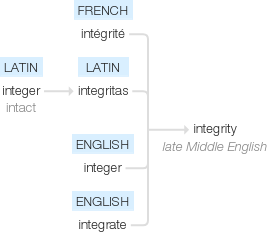
There’s a lot of rhetoric about boundaries, and setting healthy boundaries, and crossing boundaries, but in essence, we’re talking about integrity, or wholeness. From google, the etymology of integrity is:

When we are in integrity, we are boundaried. We do need to assert our boundaries at times, but most of the time they just are and don’t require work or thought. I find asserting boundaries arises quite involuntarily and naturally–if someone stomps on my foot, I say OW! or HEY! without thinking; and if someone is behaving disrespectfully repeatedly (3 times for me), my voice usually rises in volume and the words emerging from my mouth become harsher.

Boundaries and Confidentiality - ppt download

I see a lot of confusion around boundaries, and a lot of misguided effort to “set” them resulting in drama, mind games, and power plays. We can’t bypass healing through intellectual knowing. I see people deny themselves healing opportunities with justifications like “they know better” or they “don’t deserve” the pain they’re feeling.

Deserving has nothing to do with it; that’s a victim mentality that’s totally disempowering. And pretending we know better than to walk through the experiences life is presenting is an arrogant way to avoid reality. If you’re carrying pain or emotional charge, take the opportunity to free yourself by experiencing the pain fully, healing, and embodying its medicine. Boundaries will flow through your healing process the more you trust; you will realise when you are called to walk through an ordeal, which battles are not yours, and ‘yeses’ and ‘nos’ will flow.

In the medicine wheel, it’s easiest to agree on physical boundaries and integrity, though concepts such as consent and personal space differ by individual and culture. Spiritual integrity bounded by our faith, beliefs, and ritual and ceremonial practices, at individual and cultural levels. Emotional integrity has to do with self-knowledge and expressing our feelings fully in honest, healthful ways. Many people find psychological boundaries challenging to maintain, and many of us don’t think about psychological integrity because we are so used to our super busy minds. The more contemplation/meditation, grounding, and ancestral trauma healing work I do, the more integrous and embodied I become, and the lighter and more prescient my thoughts are.

Inspirational Quotes On Boundaries. QuotesGram

Traumas in our lineages, lives, and on our lands disconnect us from integrity, and we carry a lot of that trauma in our minds. Everyday tasks such as buying groceries can feel like minefields. Are we buying organic? local? from exploited workers? plastic packaging? We are all indigenous to this Earth and can experience profound interconnection and belonging with ourselves, other people, plants and animals, and even landforms.

Paul Young, a medicine man in Sydney, suggests a three-step healing model for mental integrity: (1) de-colonise and increase receptivity, (2) culturally strengthen and ground, and (3) alter your state to experience indigenous inter-connection through ceremony, meditation, prayer, etc. Similarly, in a conversation with Dr. Apela Colorado last week she suggested a healing process based on contemplating the following three questions:

  1. What were your traditional cultural ceremonies?
  2. How did you lose them?
  3. What losses do you need to process to stop perpetuating colonisation?

Exercise: What does integrity mean to you (spiritual, emotional, physical & psychological)? How would you start to answer Apela Colorado’s questions? Consider your answers in light of this quote from a Rwandan man:

“We had a lot of trouble with Western mental health workers who came here immediately after the genocide, and we had to ask some of them to leave. They came and their practice did not involve being outside in the sun where you begin to feel better, there was no music or drumming to get your blood flowing again, there was no sense that everyone had taken the day off so that the entire community could come together to try to lift you up and bring you back to joy, there was no acknowledgement of the depression as something invasive and external that could actually be cast out again. Instead they would take people one at a time into these dingy little rooms and have them sit around for an hour or so and talk about bad things that had happened to them. We had to ask them to leave.”

giveheart If you value this content, please engage in reciprocity by living, sharing and giving.