Blog by Valerie
You may have grown up, like me, steeped in multiculturalism in your home and city, eating foods from all over the world, making friends with others of totally different cultural heritages, travelling and living overseas, and honouring multiculturalism in your everyday lives. If you go back a few generations, how many of ancestors of your blood lineage spoke your language? Dressed in clothes like yours? Listened to similar music, or did similar dances or art? Were taught similar stories about the right ways to live? Did formal schooling? Worked indoors? Followed a similar faith tradition? Celebrated the same holidays? Lived on the same land where you live? Ate foods native to the land where you live? The hardest thing for most of us to fully accept is that in order to survive, we and our ancestors all appropriated from other cultures, and had our own cultures appropriated from. All earth beings move and trans-plant. For example, potatoes are native to the Andes, yet we often think of them in relation to Ireland. We are in living in a hopelessly multicultural world. Just think about the fact that one box of tea we buy for $3 is made from leaves grown in India, packaged in China from cardboard made in Bangladesh, then is shipped to England in a barge made in Denmark, and then distributed to our local supermarket chain owned by a German company. How complicated! (Image from here.)
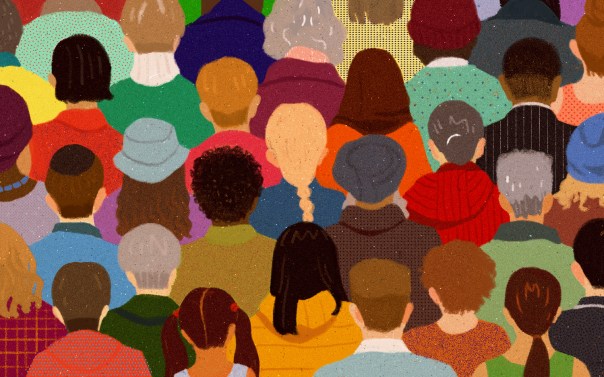
How do we practically honour the multicultural complexity of one product in our shopping cart? How do we honour the complexity of our lineages, in terms of relationships with food, place, land, and spiritual traditions? At what point does honouring multiculturalism become cultural appropriation? Here’s a perspective from a woman whose lineage was transplanted from the British Isles to North America in the 1700s:
I bring with me–in the very blood that flows through me–the DNA of my ancestors…for good or for ill, that cultural legacy and that history, the choices that they made, and I am living the benefits and consequences of those choices…I simply cannot hope to have the same kind of relationship that a Native person has on this land today–because relationships aren’t just about individuals, they are about cultures and generations of people…[Yet] the land, her spirits…even after all that has happened culturally, welcome relationships with white people…built upon acknowledging and honoring the past, building trust, and about reparations…[that will be] inherently different looking because of our own identities, cultures, and histories.
If we want to build deep, meaningful, and lasting relationships with the land here, we’ve got to do the work from the ground up. If we are appropriating someone else’s culture and spiritual practice, we aren’t doing the hard and necessary work of relationship building for our own tradition–hence, we are perpetuating more colonizing behavior.
I see colonising behaviour all over modern cities today. We talk about ‘gentrification’ when people of traditionally more dominant and resourced cultural groups displace traditionally oppressed groups in the parts of a city where the oppressed groups had been forced to live. I consider this micro-colonisation, akin to the term micro-aggression. What if that’s the only place you can afford to buy a house? Does that mean you ethically shouldn’t? Should people with white skin never move to Oakland, California or to Redfern in Sydney, Australia? I don’t think so. But if you choose to, you have the responsibility to be honest about what is happening, feel the pain of others’ displacement along with the joy of your new placement, make amends and build positive connections with the people and land as best you can.
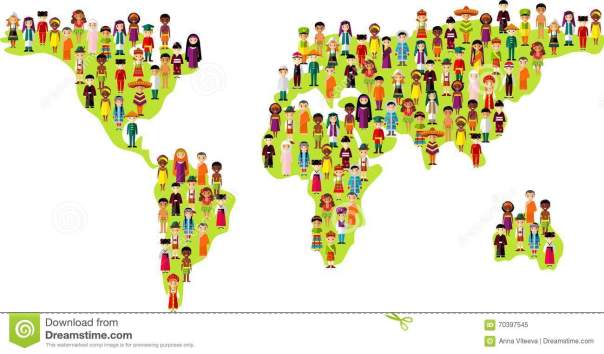
Acknowledging the peoples and lands from which traditions emerge is a way to deeply honour ancestors and keep wisdom alive, and allows you to be a cultural bridge in new lands. The respectful intent and humble, teachable spirit with which you approach such activities is the main difference between honouring multiculturalism in our modern world and a the colonial, oblivious, blind, entitled, and greedy and grabby spirit of cultural appropriation. If you are honest about where you stand today and are able to honour your ancestral journey, however many mistakes and sacrifices you and your ancestors have made, you will have a much easier time honouring others’ cultural traditions.

It also helps to keep in mind how fluid ancestry and identity is. Culture is so much more complicated than just tracing your blood lineage and labelling someone as indigenous or non-indigenous, black or white or brown-skinned. Just because you do not have a known ancestral lineage in Japan, for example, does not mean that you are culturally appropriating if you feel moved to practice aspects of Shintoism, learn to do a traditional tea ceremony, or how to brew your own sake. We multicultural moderns have much more similar journeys to drops of water that are re-cycled around the planet, evaporating from a lake into a cloud and flowing across the sky, falling as rain into a huge ocean, entering a jet stream that crashes as a wave against a rock across the world from where we started, and hanging out in a pool on that rock for a while. I personally think this modern mess we’re in is here to remind us that we’re all one big human family! (Image from here.)
Dreaming, meditation, and mindfulness practices are other great ways to connect with our ancestors, as well as donating time and money, building and tending ancestral altars, spiritual practices to heal unjust power dynamics and colonial wounds, supporting the revitalisation of indigenous languages, connecting with non-human ancestors of land and place, and reconnecting with languages and traditions of your ancestors.
Exercise: Modern people tend to use food and drink as the main tool for connecting with ancestry. Try branching out. If you have Gaelic ancestors, learn a few words and see how you feel speaking them, then put on music and see how your body naturally wants to move to it. You may have some moves burst out that you didn’t know about! Also, imagine how ancestors lived on the land where you are now. Did they used to fish by the river you walk along? Imagine how your ancestors used to live in faraway lands. Did they build a fire in the evening to heat their homes just like you are doing? One study found that just thinking about our ancestors and how they lived is beneficial to us!
 If you value this content, please engage in reciprocity by living, sharing and giving.


 If you value this content, please engage in reciprocity by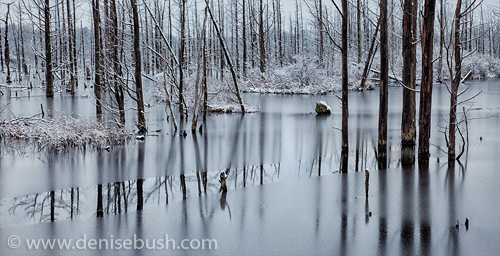
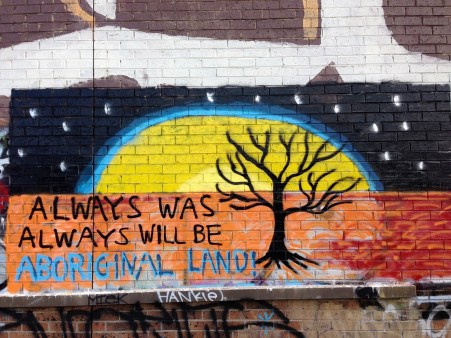

 I have witnessed many people experiencing a shaman’s illness. When people reject or resist it, they usually end up dissociating the destructive energy and becoming very challenging externalising personalities (like narcissists or sociopaths), or internalising the destructive energy and creating diseases such as quickly metastasising cancers. I have witnessed multiple people do both of these things. When people accept the calling of the illness, there are different speeds of doing so, which impacts the way the illness plays out in a person’s life. I have seen some people slowly accept that they are experiencing shaman’s illness over many years and bit by bit change their paths so that over time more aspects of their lives are working. Some (including myself) dive directly into the fire and allow our lives to become incredibly chaotic as our identities are re-forged and often become overwhelmed at the amount of emotion that needs to be processed and the whirlwind pace of life changes that occur. (Image from
 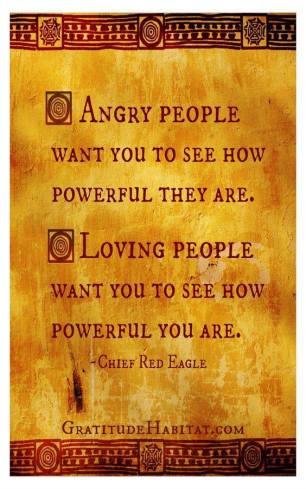 It is helpful, but not necessary, to seek support from someone who has been through similar things. Such people can give you compassion and empathy, guiding wisdom, and tools to process wounds and express energy. But it’s vitally important not to delude yourself that any human is a fully healed Jedi-master, all-knowing figure. If someone says they are, then RUN AWAY FROM THEM, because that person is dangerous and delusional and is on a path of becoming a cult leader or something else you don’t want to be involved with. It is important to think of illness and healing as processes, not finite endpoints. When someone says they have “healed” a wound as intense as sexual abuse or parental abandonment, I am suspicious; and when someone plays power games, disrespects, or in any way puts me down, then I know that person is ill and cannot support my healing anymore. I have no tolerance for these behaviours, even when people are unaware. I either change my boundary and create space or make someone aware of their transgression, and if they then don’t own it and work through it, I’m done with the relationship. (Image below from
 If you value this content, please engage in reciprocity by
 In his
  When we are miserable we are rejecting or rebelling against reality, which is destructive and results in existential crisis. When we are accepting we remain in the present moment, however painful. Many of us understandably feel overwhelmed by the depth of pain on the planet right now, so we numb ourselves with substances such as sugar, caffeine or alcohol; run away to our heads to avoid certain feelings; and seek out “light work” or “positive psychology” to create bubbles of security around ourselves. This is so common that a famous social psychology
  Earth Ethos