Blog by Valerie
In Old English, the word hopa, from which modern-day “hope” emerged, meant “confidence in the future.” For me, this requires trusting in natural forces more powerful than I, and a willingness to venture into unknown territory (inside and outside myself) with an open mind and heart. It requires me to set aside what I think I know in order to see what is and will be. Daily contemplative practices like meditation and prayer purify me so that there is space in my world for miracles to occur. In my experience, where I do such practices makes a difference.
 Americans often say, “I went for a walk in nature.” This is crazy, because we are always in nature. A house, a church, an office, a car—these are natural, highly cultivated, environments. A forest, a desert, a seashore, a mountaintop—these are natural, wilderness environments. Think about a spectrum of highly cultivated environments such as New York City, to total wilderness environments such as Alaska, and think about how you feel and behave in different environments. In cities, we tend to cultivate our lives: we carefully groom our faces, clothe our bodies, decorate our houses, cook pre-packaged foods, and schedule our time. In wilderness, we tend to let go and flow more. (Image from here.)
Many of us think that wilderness is meant to be free from human impact. This is simply not so in indigenous cultures. I have heard indigenous environmental advocates say that once there is stronger cultural consensus about respecting wilderness, they will come into conflict with Western environmentalists who want to keep it pristine and virginal. The lyrebird in Australia is famous for mimicking sounds in its environment. In recent years as its environment has been impacted by us modern humans, it has learned not only to the songs of birds and sounds of other animals, but of chainsaws and car alarms. The lyrebird does not judge some sounds as more or less natural, so why do we?
In an Earth Ethos, we humans need to interact with our environment, and in fact we have a sacred responsibility to do so. Taking a few minutes to meditate, pray, or practice mindfulness is a simple way to give back to our environments and express gratitude for all the gifts the natural world gives us. A “sit spot” is a simple contemplative practice for being in wilderness. All that is involved is sitting still in a wilderness environment and being as present as you can. The best “sit spot” is one that you are easily able to access, such as a park or garden near your home or office. Even sitting for five minutes a day makes a difference in how we feel in our bodies and how connected we feel with our wild Mother Earth.
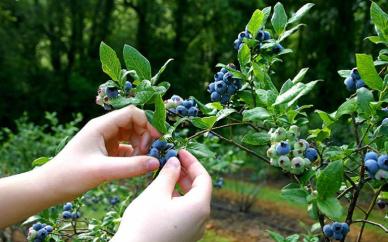
A Potawatomi elder and academic refers to modern humans as “species poor.” Most of us eat foods and use medicines bought in stores, and if we do grow our own, most of those plants originated in other places. Foraging enriches us by improving our connection with our environment and demonstrating our respect for the land. Indigenous wisdom says that plants emerge to offer the medicine and nutrition we need to survive in a specific environment. A simple practice is to learn some edible and medicinal plants in your current environment, gather and use them. (Image from here.)
 When we change our perspectives, we change the world. When we recognise value in plants and animals in our environments, we act accordingly. Ten years ago few of us knew what “free range”, “grass fed” or “organic” food was. As an increasing number of people saw the destructive impacts of pesticides and other high-yield agricultural practices, collective modern culture began to change. Today, most of us are more aware of what we’re eating than we were ten or twenty years ago. That gives me hope that as we keep growing, more Earth Ethos changes will occur in our lifetimes. (Image from here).
Exercises: Start a “sit spot” practice. Learn to forage in your neighborhood.
 If you value this content, please engage in reciprocity by living, sharing and giving.


 If you value this content, please engage in reciprocity by

 I encourage you to connect with your own cosmology and question rejecting/violent statements/thoughts like “He should have known better”, or “It serves her right.” Such words indicate an internalised denial/judgment and fuel shameful, painful feelings inside you, the person you are speaking/thinking about, and our collective culture. Even when we believe/think something is wrong, we can still hold that aspect of our cosmology with compassion and respect. These words are pointers to places of yourself that could be further explored, unpacked, and transformed. Dangers and fears come in many forms, including physical, emotional, psychological, and spiritual. Watching an interview with someone who has killed another person, for example, may trigger emotion you are carrying and show aspects of your cosmology that could be shifted from judgment or denial/lack into compassion and empathy, and gratitude that you did not need to learn such a lesson the hard way. (Free photo by
  If you value this content, please engage in reciprocity by
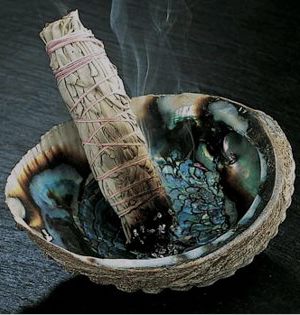
 Before you cleanse the space outside of you, it is important to smudge your body and walk through a spritz of the water you will use so you are as clear as the room! A full body smudge is often done in the shape of a cross going along one arm across the chest to the other, up above the head and down to the feet, and then the same around the back of the body.
  If you value this content, please engage in reciprocity by
 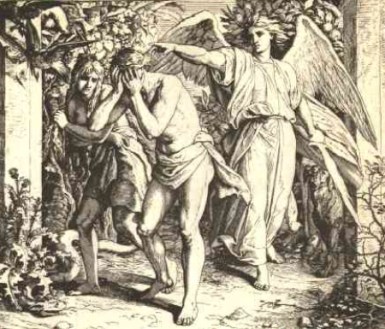 The foundation of Judeo-Christian mythology leaves us unconnected with environments where the vast majority of its followers live. The Biblical creation story of Adam and Eve’s exile from the Garden of Eden is not an embodied story connecting humans with nature inside and outside ourselves within a web of life. In fact, the entire
  (Image from
  This word “sin,” then, was meant to help us humans understand our nature: that we are powerful and able create wonders and also an innate capacity to blunder. What curious creatures we are! We have been believing and embodying an errant, mistaken thought and believing that we are exiled, unworthy, and that our sacred, earthly Mother doesn’t fully love us, and this sin/mistake/confusion has been defining the course of our collective history for multiple millennia, and is still going. If this isn’t
  If you value this content, please engage in reciprocity by


 If you value this content, please engage in reciprocity by


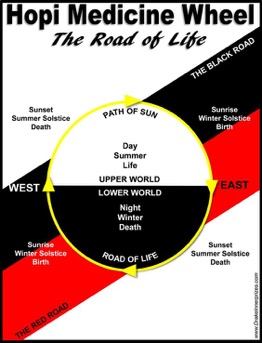


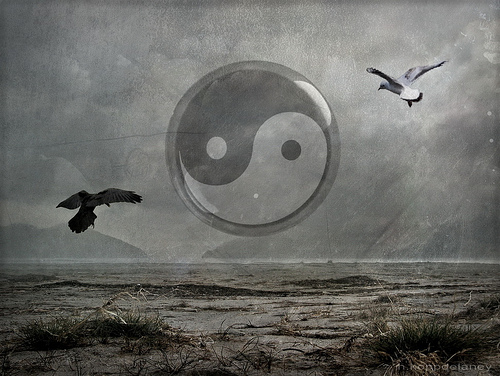
 What is outside the medicine wheel is without form, what we refer to as the unknown or the shadow, whereas inside the medicine are known aspects of a culture or individual’s world (
 Exercise: Consider where you may be in and/or out of balance by filling out this empty medicine wheel chart. Write down what is going on in your mind, what you are experiencing in your spiritual world (aka what is giving your life meaning and purpose), what emotions you are experiencing, what’s going on physically in your body and environment, and what keeps you centred/keeps your heart open. Notice if something is out of balance, and consider what area(s) of the medicine wheel might need some attention. This is a tool I developed that can be used periodically to check-in with yourself, or be given to friends or clients to do so to help notice progress and change.
 Earth Ethos