Blog by Valerie
A market economy is based on exchange, how much we owe (based on lack) and are able to earn (based on social judgment). A gift economy is based on faith, how much we share (based on trust) and give away (based on abundance). To me a gift economy has always felt natural. Embodying this Earth Ethos of faith, trust and abundance has been a life-long challenge in a lack-based global market economy. It has taken me many years of barely eking out a living, as well as numerous failed personal and professional relationships, to navigate this philosophical conflict with popular culture. Today, many of the services we call “sharing,” like paying to be in a car pool, are still part of a market economy. Charles Eisenstein is an advocate for a gift economy in modern Western culture, and his description of it is as follows:
Many indigenous cultures embody the philosophy of a gift economy. For the Kwakwaka’wakw people of Canada, the wealthiest people are those who give away resources in a potlatch ceremony, which may be planned a year in advance and last for several days. During the ceremony the host distributes wealth amongst guests, including beaded jewellery, leather clothing, and lavish foods. As Elder Agnes Axu Alfred explains:
“When one’s heart is glad, he gives away gifts. Our Creator gave it to us, to be our way of doing things, to be our way of rejoicing, we who are. Everyone on earth is given something. The potlatch was given to us to be our way of expressing joy.”
In Papa New Guinea, people work for years to be able to give a moka gift to another person, who then works to gather an even bigger moka gift to give, as explained in the following video:
(The full documentary entitled Ongka’s Big Moka is available here.)
While being part of a market economy is currently compulsory for most of us to survive, there are areas of life where we can embody a gift economy. The first principle of abundant giving is that we have to be filled up ourselves and have extra energy to give. We have all experienced someone brimming with kindness so that we feel it in their presence, and another person clearly intending to be kind only able to offer a sheepish smile. Being honest about what we are capable of abundantly giving helps us avoid being in a space of lack. Whether mentally, spiritually, emotionally, or physically, we can only give to another what we ourselves possess. Once we judge/expect ourselves, saying we “should” embody a certain state of being, we have lost the ability to embody what we intend. A strengths-based perspective is the starting point for a gift economy.
Simple acts of kindness without expectation of anything in return (not even a thank-you) embody a gift economy, as do larger acts like doing pro bono work or volunteer projects. Most spiritual traditions enshrine the philosophy of a gift economy into their teachings, such as Christian tithing or Buddhist dana. Some organisations such as Vipassana meditation centres and Brahma Kumaris talks and retreats operate entirely on participant donation. But I have observed an insidious tendency to create expectations for exchange. A “Suggested Donation” of a specific monetary amount carries an expectation of a specific exchange, and trying to prove you are “a good person”, alleviate guilt, or “create good karma” are lack-based intentions. (The image below is from here.)

In my experience, embodying a gift economy in modern Western culture requires firm boundaries, strong skills of discernment, compassion and deep self-knowledge. We need to be willing to receive no money or expressions of gratitude from the person we are serving, and to prevent abuse, we need to know when to say no, to stop giving when it is no longer a gift. I call this spiritual social work, and there are an abundance of opportunities for all of us to practice it daily, such as giving compassion to a person criticising our behaviour, empathising with a leader struggling with narcissism, or giving grace to an erratic driver. Instead of judging and placing someone in lack, which then requires us to forgive, we can practice accepting and holding both of us in abundance. In my life, the person in whose presence I felt the most abundance, who was a subsistence farm woman in rural Guatemala who had a condition causing her skin to change colour and peel off her face and body. She had such a strong, vibrant spirit she was emanating light and to be in her presence felt joyful. Though I have had dinner with billionaires, this lady remains the wealthiest woman I have seen.
If you value this content, please engage in reciprocity by living, sharing and giving. 


 If you value this content, please engage in reciprocity by
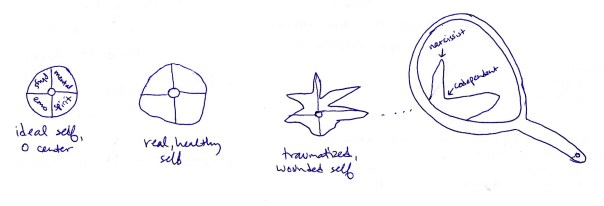
 What is outside the medicine wheel is without form, what we refer to as the unknown or the shadow, whereas inside the medicine are known aspects of a culture or individual’s world (
 Exercise: Consider where you may be in and/or out of balance by filling out this empty medicine wheel chart. Write down what is going on in your mind, what you are experiencing in your spiritual world (aka what is giving your life meaning and purpose), what emotions you are experiencing, what’s going on physically in your body and environment, and what keeps you centred/keeps your heart open. Notice if something is out of balance, and consider what area(s) of the medicine wheel might need some attention. This is a tool I developed that can be used periodically to check-in with yourself, or be given to friends or clients to do so to help notice progress and change.
 If you value this content, please engage in reciprocity by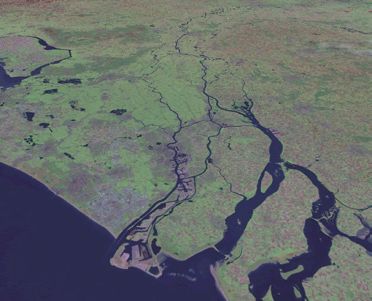
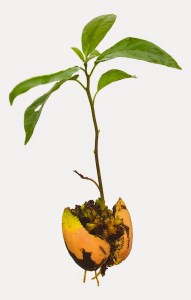 deeper level who we are, and to offer us new life experiences. You can’t plant a seed in the ground without digging a hole and traumatising a small patch of earth. And a seed can’t begin its journey of growing into a tree without traumatising the seed encasing its energy and expanding into the soil. Trauma is part of the cycle of life, of birth-life-death-and rebirth. We can look at a tree and label it “dead” and forcibly chop it down. Or we can look at it and realise it’s decaying, and that there are numerous insects, animals, fungi and bacteria living in that environment who are helping transform the tree back into earth. It is a witnessing of energy changing form. We may also notice that even tree stumps may be “alive” through the interconnection of their roots with other trees in a forest, to keep a network of support and communication flowing between trees living above ground. Sometimes stumps even sprout new trunks and regrow themselves entirely. (Image from:
 If you value this content, please engage in reciprocity by

 If you value this content, please engage in reciprocity by

 Psycho-spiritual purification exercise: Reflect on a relationship where you are trying to make another person see your point of view, or trying to control their behaviour and tell them what to do. What is stopping you from living your own life, and letting them be who they are? What are you avoiding or denying in your life by focusing on them, or on controlling your environment? What do you need to be more nourished right now?
 If you value this content, please engage in reciprocity by

 Earth Ethos