Blog by Valerie
If we want to honour our ancestors, who are they? As Dakota Earth Cloud Walker explains, our human ancestors are more than our blood lineage. They also include ancestors of land/place, past/present/future versions of you, and ancestors of traditions that are important to you such as leaders of religious movements or fields of study. Non-human ancestors are abundant too, from minerals that have been here millions of years which nourish our bodies and fuel our vehicles, to plants that feed us and animals that provide us with companionship. When participating in a sweat lodge ceremony, rocks that are heated and brought into the lodge are often referred to as grandfathers and grandmothers. This reverence is a reminder that our bodies are made up of atoms that came from these other beings’ forms and that we are all alive from an animistic Earth Ethos perspective.
 A Druid blogger points out that feeling our non-human ancestral connection during this time of rapid climate change and extinction is a painful opportunity to witness loss and engage in mourning. We all know of painful events that took place on lands near our homes, and we know of ancestors who behaved in ways that don’t align with our values. I grew up on land from which the Cherokee were forcibly removed, on which African Americans worked as slaves, I have known Nazis and rapists in my blood line, and my lifestyle is reliant on resource-rich technologies that disconnect me from the Earth so that I buy most of my food from grocery stores and spend 40 hours a week in an ungrounded office. As a Wiccan blogger said, “If you show me a family that has no problems and no family history of pain, abuse, and all the people in it have been and are kindly saints – I will show you either a fool or a liar.” (Image from here.)
Given this messy reality, how do we practically honour our ancestors in their fullness and complexity?
First, we honour ourselves. An Earth Ethos perspective is to set boundaries but not to completely block energies from our lives, because what we avoid tends to grow bigger and bring in more destructive energy than if we try to turn that “shit” into fertiliser. Keep in mind that you wouldn’t be here if not for your ancestors.
 Second, “if you don’t have an ancestor altar, you become the altar.” I spent most of my life in a lot of danger and had multiple near-death experiences. My ancestry is full of trauma, and I wanted to create space to show I was in relationship with my ancestry, rather than things happening to my body and in my everyday life. When I began an ancestral altar practice, I created one human and one non-human (tree) altar outside. Over the first few months, two human ancestral altars were completely destroyed during thunderstorms. I was so grateful that the trauma and violence had left my body! The human ancestors settled down after many offerings and ceremonies to make amends for wrongs they’d done. (Photos: the destroyed human ancestral altars from years ago)
Today I have the human ancestral altar inside, a non-human altar outside, and leave regular offerings at both. Some ancestors I honour directly; for example, last night I burned a candle to honour ancestors who offer me spiritual support, and I left a small glass of beer with gratitude for my Germanic blood lineage. Today at my non-human altar (a fern tree in the garden) I buried some jewelry. I have been doing that for some years, as I have many Jewish ancestors who were jewelers and were quite greedy and ungrounded, so giving jewelry back to the Earth is one way I make amends and heal that ancestral trauma energy. Whether you have an ancestral altar or not, our ancestors receive the intentions of our offerings. Honouring someone through dedicating a work of art or a good deed, or planting a tree on clear-cut land can honour ancestors and heal ancestral trauma. If you are interested in creating an ancestral altar, you can access guidance here.
 If you value this content, please engage in reciprocity by living, sharing and giving.

 (Image from
  If you value this content, please engage in reciprocity by
  Blog by Valerie
 The depth of relationships, and the experiences, feel quite different to participants. Similarly, instead of peace circles as a tool to help control behaviour or improve the way people speak and listen to each other as is common in westernised restorative justice practices based on a Judeo-Christian worldview, an Earth Ethos peace circle is an opportunity for a communal spiritual experience based on an indigenous cultural cosmology. Because of the intentional use of metaphor, it ought to feel different to participants (and certainly does to me) than simply sitting in a circle (or around a table where we are blocked from connecting with each other physically) and passing around a talking piece. Many indigenous peoples use oral traditions to preserve cultural wisdom. Verbal repetition and physical embodiment of teachings keeps them pure (
 Healing of, and prevention of, dis-ease requires ceremony. Ceremony is an important human practice connecting the visible material/physical world with the invisible, spiritual world. Life feels empty and unsatisfying when we do not do enough ceremony, and ceremonies are most powerful done regularly and intentionally in community (
 If you value this content, please engage in reciprocity by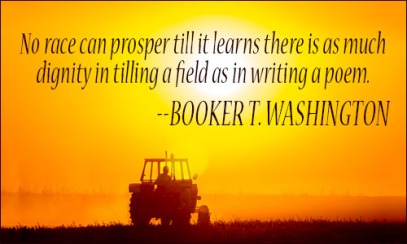


 materialist or a Christian, so I told people close to me I would focus on birthdays and important life events, and I stopped. I don’t want to deprive anyone of the joy of giving, but I don’t want to feel burdened receiving what is intended as a gift, so I told people close to me if they want to give me something, I prefer personal notes, meals, time together, and handmade art. I dislike expectations to behave a certain way on a day that is not especially meaningful to me, so Luke and I take short trips just the two of us over Christmas to enjoy Mother Nature instead. This all make it easier for me to stand in dignity because I am accepting me and not playing a victim by gracefully navigating a situation where my way of being is not socially privileged. Cultivating the discipline to deny ourselves that which brings us pain and suffering helps us stand in dignity and experience more joyful abundance.
 If you value this content, please engage in reciprocity by
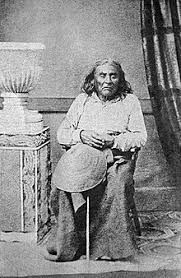 In his
  When we are miserable we are rejecting or rebelling against reality, which is destructive and results in existential crisis. When we are accepting we remain in the present moment, however painful. Many of us understandably feel overwhelmed by the depth of pain on the planet right now, so we numb ourselves with substances such as sugar, caffeine or alcohol; run away to our heads to avoid certain feelings; and seek out “light work” or “positive psychology” to create bubbles of security around ourselves. This is so common that a famous social psychology
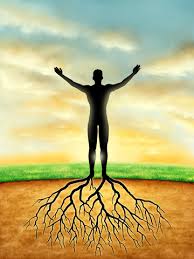

 If you value this content, please engage in reciprocity by
  Americans often say, “I went for a walk in nature.” This is crazy, because we are always in nature. A house, a church, an office, a car—these are natural, highly cultivated, environments. A forest, a desert, a seashore, a mountaintop—these are natural, wilderness environments. Think about a spectrum of highly cultivated environments such as New York City, to total wilderness environments such as Alaska, and think about how you feel and behave in different environments. In cities, we tend to cultivate our lives: we carefully groom our faces, clothe our bodies, decorate our houses, cook pre-packaged foods, and schedule our time. In wilderness, we tend to let go and flow more. (Image from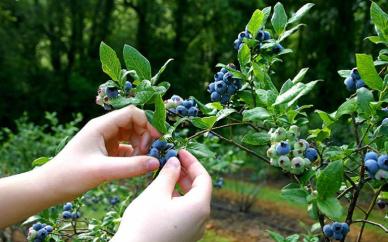
 When we change our perspectives, we change the world. When we recognise value in plants and animals in our environments, we act accordingly. Ten years ago few of us knew what “free range”, “grass fed” or “organic” food was. As an increasing number of people saw the destructive impacts of pesticides and other high-yield agricultural practices, collective modern culture began to change. Today, most of us are more aware of what we’re eating than we were ten or twenty years ago. That gives me hope that as we keep growing, more Earth Ethos changes will occur in our lifetimes. (Image from

 I encourage you to connect with your own cosmology and question rejecting/violent statements/thoughts like “He should have known better”, or “It serves her right.” Such words indicate an internalised denial/judgment and fuel shameful, painful feelings inside you, the person you are speaking/thinking about, and our collective culture. Even when we believe/think something is wrong, we can still hold that aspect of our cosmology with compassion and respect. These words are pointers to places of yourself that could be further explored, unpacked, and transformed. Dangers and fears come in many forms, including physical, emotional, psychological, and spiritual. Watching an interview with someone who has killed another person, for example, may trigger emotion you are carrying and show aspects of your cosmology that could be shifted from judgment or denial/lack into compassion and empathy, and gratitude that you did not need to learn such a lesson the hard way. (Free photo by
  If you value this content, please engage in reciprocity by
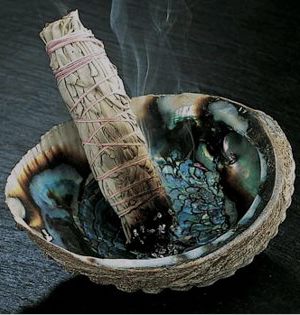
 Before you cleanse the space outside of you, it is important to smudge your body and walk through a spritz of the water you will use so you are as clear as the room! A full body smudge is often done in the shape of a cross going along one arm across the chest to the other, up above the head and down to the feet, and then the same around the back of the body.
 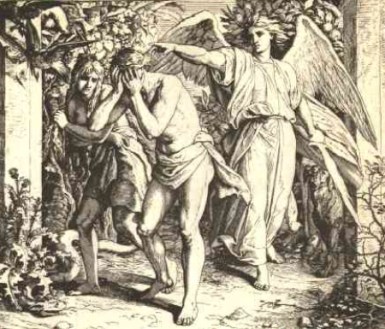 The foundation of Judeo-Christian mythology leaves us unconnected with environments where the vast majority of its followers live. The Biblical creation story of Adam and Eve’s exile from the Garden of Eden is not an embodied story connecting humans with nature inside and outside ourselves within a web of life. In fact, the entire
  (Image from
  This word “sin,” then, was meant to help us humans understand our nature: that we are powerful and able create wonders and also an innate capacity to blunder. What curious creatures we are! We have been believing and embodying an errant, mistaken thought and believing that we are exiled, unworthy, and that our sacred, earthly Mother doesn’t fully love us, and this sin/mistake/confusion has been defining the course of our collective history for multiple millennia, and is still going. If this isn’t
  If you value this content, please engage in reciprocity by
  Earth Ethos