Blog by Valerie
In a previous post I wrote about ancestry:
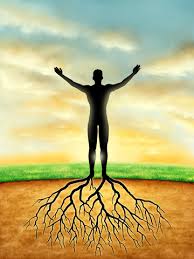
Through a Shipibo elder of the Amazon I learned that about 90% of the thought-loops that circulate our minds are not based in ego, but in ancestral trauma. I learned through Dakota Earth Cloud Walker that ancestry is defined in three ways: blood lineage, ancestry of place, and personal karma. Personal karma refers to past, present and future versions of ourselves, and all of the complex identities we take on during our lifetime (or multiple lifetimes if you see things like that). Blood lineage is the most common way we think about ancestry, reflected in a family tree. Ancestry of place includes places where the people in our family tree lived, as well as where we have lived and live now.

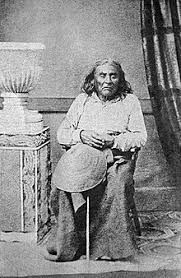
This blog and this short lecture about kinship from an Aboriginal Australian perspective are a reminder of the kinship relationship indigenous cultures traditionally have with animals, plants, landforms, and elements of nature. Aboriginal Australians and many First Nations in the northern US and Canada constructed totems (or tokens) as emblems of these relationships. (Image from here.) It’s a stark contrast to modern living, well said in a post of The Druid Garden’s Blog:
One of the great challenges of our age is that humans are radically disconnected from nature; our food comes from somewhere else, our products come from somewhere else; we don’t know the names of plants or animals in our local ecosystem, we don’t know what a healthy ecosystem looks like. We could not survive in our ecosystem without modern conveniences in place, as our ancestors once could. Through learning about nature, through nature study, wisdom, and experience–we learn how to be in nature. Once you begin seeing nature as sacred, you treat it as sacred.
Since an Earth Ethos is based on interconnectedness, it is important to honour non-human kinship relationships and ancestors. Most of us do this to some extent every day, through choices such as bringing a bag to the supermarket to be respectful of Mother Earth’s resources, but we could go a lot deeper. We may consider our pet dog or cat a member of our family, but we generally struggle to see non-humans as kin. In one of Peter Wohlleben’s books he asks if we humans are the most intelligent species on the planet, why we work so hard to teach other animals like parrots and chimps to speak our language, rather than learning to chirp or hoot in their languages. This is not as far-fetched as it might sound. For example, many hunters have tools that mimic bird or mammal calls, a few years ago I took a class on bird language in Texas, and Aboriginal Australians traditionally integrate animal calls and movement patterns into their music:
Something that helped me shift my thinking and ways of being was learning sweat lodge. In a sweat lodge, we refer to the rocks we use as our grandfathers, because they have been on Earth much, much longer than any of us. Many have broken off of mountains and been on long journeys before they become small enough for us to pick up. When we build the fire for sweat lodge, we ask which sticks and logs will give their lives for us and thank them for changing forms for our ceremony of purification. We ask which rocks will come into lodge and give their lives to us, meaning their life force energy and the wisdom of their long journeys, so that we can purify our hearts, minds, and bodies during the sweat. Often while we are preparing a bird will circle overhead or a mammal or reptile will visit a while, and we thank them for blessing our ceremony and ask what we may learn from them. This kind of thinking is a refreshing change from seeing ourselves as the pinnacle of evolution, to the humble new species on the block.  (Image from here.)
Research has shown that plants grow better when humans speak to them. So next time you walk past a tree, why not nod in greeting? Or as you water a bush, thank it for flowering?
Exercise: To connect with our non-human kin, as previously mentioned, a great method is a sit spot. A variation of this is to do a sit in the wilderness (even your garden or a park) blindfolded, or at night, so that you focus on using your non-visual senses. If you have access to a stethoscope, you can use it to listen to the heartbeat of a tree. Another fun way is to greet non-human kin like plants or animals. Finally, check out fun videos like the one below that link plants’ carbon dioxide emissions to sounds we can hear:
 If you value this content, please engage in reciprocity by living, sharing and giving.

 In his
  When we are miserable we are rejecting or rebelling against reality, which is destructive and results in existential crisis. When we are accepting we remain in the present moment, however painful. Many of us understandably feel overwhelmed by the depth of pain on the planet right now, so we numb ourselves with substances such as sugar, caffeine or alcohol; run away to our heads to avoid certain feelings; and seek out “light work” or “positive psychology” to create bubbles of security around ourselves. This is so common that a famous social psychology
  If you value this content, please engage in reciprocity by

 If you value this content, please engage in reciprocity by
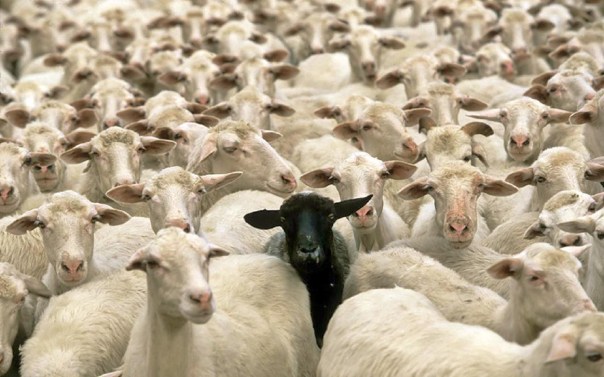
 karma of humanity out. It’s all over the place: it’s conservative Christian parents confronting their prejudice with an LGBT child; a Southern Baptist who falls in love with a Catholic; a strong patriarch with a young daughter wiser than he is; a mother who worked so hard to break into the corporate world whose daughter wants to stay at home with her kids. Over and over again I see situations in which that which we judge, hate or reject is presented to us in an even more intimate way so that we learn to love and accept it. (Image from
  If you value this content, please engage in reciprocity by
  Americans often say, “I went for a walk in nature.” This is crazy, because we are always in nature. A house, a church, an office, a car—these are natural, highly cultivated, environments. A forest, a desert, a seashore, a mountaintop—these are natural, wilderness environments. Think about a spectrum of highly cultivated environments such as New York City, to total wilderness environments such as Alaska, and think about how you feel and behave in different environments. In cities, we tend to cultivate our lives: we carefully groom our faces, clothe our bodies, decorate our houses, cook pre-packaged foods, and schedule our time. In wilderness, we tend to let go and flow more. (Image from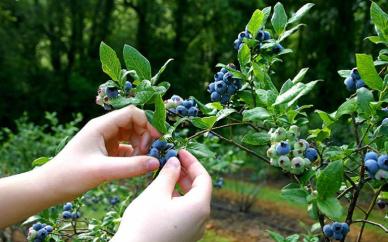
 When we change our perspectives, we change the world. When we recognise value in plants and animals in our environments, we act accordingly. Ten years ago few of us knew what “free range”, “grass fed” or “organic” food was. As an increasing number of people saw the destructive impacts of pesticides and other high-yield agricultural practices, collective modern culture began to change. Today, most of us are more aware of what we’re eating than we were ten or twenty years ago. That gives me hope that as we keep growing, more Earth Ethos changes will occur in our lifetimes. (Image from
  If you value this content, please engage in reciprocity by


 If you value this content, please engage in reciprocity by

 I encourage you to connect with your own cosmology and question rejecting/violent statements/thoughts like “He should have known better”, or “It serves her right.” Such words indicate an internalised denial/judgment and fuel shameful, painful feelings inside you, the person you are speaking/thinking about, and our collective culture. Even when we believe/think something is wrong, we can still hold that aspect of our cosmology with compassion and respect. These words are pointers to places of yourself that could be further explored, unpacked, and transformed. Dangers and fears come in many forms, including physical, emotional, psychological, and spiritual. Watching an interview with someone who has killed another person, for example, may trigger emotion you are carrying and show aspects of your cosmology that could be shifted from judgment or denial/lack into compassion and empathy, and gratitude that you did not need to learn such a lesson the hard way. (Free photo by
  If you value this content, please engage in reciprocity by
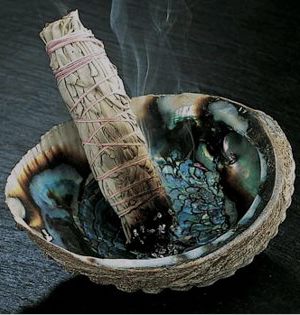
 Before you cleanse the space outside of you, it is important to smudge your body and walk through a spritz of the water you will use so you are as clear as the room! A full body smudge is often done in the shape of a cross going along one arm across the chest to the other, up above the head and down to the feet, and then the same around the back of the body.
 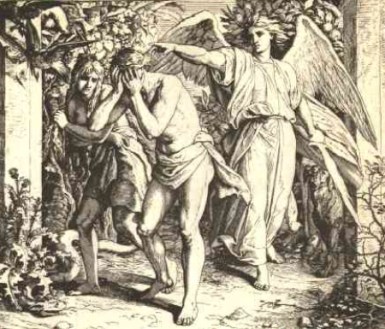 The foundation of Judeo-Christian mythology leaves us unconnected with environments where the vast majority of its followers live. The Biblical creation story of Adam and Eve’s exile from the Garden of Eden is not an embodied story connecting humans with nature inside and outside ourselves within a web of life. In fact, the entire
  (Image from
  This word “sin,” then, was meant to help us humans understand our nature: that we are powerful and able create wonders and also an innate capacity to blunder. What curious creatures we are! We have been believing and embodying an errant, mistaken thought and believing that we are exiled, unworthy, and that our sacred, earthly Mother doesn’t fully love us, and this sin/mistake/confusion has been defining the course of our collective history for multiple millennia, and is still going. If this isn’t
  If you value this content, please engage in reciprocity by

 Earth Ethos