Tag Archives: judgment

Darkness

Blog by Valerie

“Darkness is the purest form of light” is a teaching I deeply honour from Tiwa Elder Joseph Rael – Beautiful Painted Arrow. He says this because out of darkness all colours and possibilities emerge, whereas white light reflects and pushes all colours away. Darkness is a metaphor of the sacred womb where we all begin our lives in our mother’s bodies. And darkness envelops us each night (if we allow it). Within the womb of darkness is the potentiality for anything to be (re)born.

I heard an interview with Gina Chick recently in which she said that she spends most of her time in uncomfortable spaces. That is also my experience of living in a way where I honour darkness, and it aligns with the explanation of the Red Road discussed in a previous post, where we focus the majority of our energy on honouring ancestors, living our core values, and grounding respectfully where we are. (Image: metaphor of a plant that spends most of its energy building strong roots and connecting with other plants underground, and less energy flowering or fruiting above the ground)

I’ve found that when we are committed to a holistic spiritual path of allowing all feelings and thoughts to flow without existential judgment, when others we are in relationship with do not do this too, seeds of destructive energy grow bigger between us, along with pain, judgment, insecurity, and crazy-making cognitive dissonances. If both are willing to confront the resulting mess, come together to listen to each other and take responsibility for choices, behaviours, and resulting impacts (whether intended or not), then the relationship and trust between them can repair and deepen. Unconditional love means no existential judgment.

If one or both do not do this, then the relationship transforms into one with less trust, safety and intimacy, and it can even fracture beyond repair. And broken trust, as most of us have experienced, tends to be harder to rebuild than it is to grow trust and intimacy in the first place.

In a recent blog I shared that I have witnessed numerous people work for years towards something, then turn their backs at a pivotal moment in abandonment and destruction. Some stories and beliefs seem so deep they trick us into crazy-making cognitive dissonances that become hard to contain. Cognitive dissonance is when we feel split by words and stories not aligning with behaviours and actions. For example, if we believe we are a good friend and that means we don’t feel jealous of friends’ successes, yet we do feel jealous when a friend gets a new job and we feel stuck in job rut, then we might push those feelings aside and pretend they’re not there. (Image: let’s feel it all so the negative feelings ground and we grow from them rather than growing into piles of sh*t in our lives!)
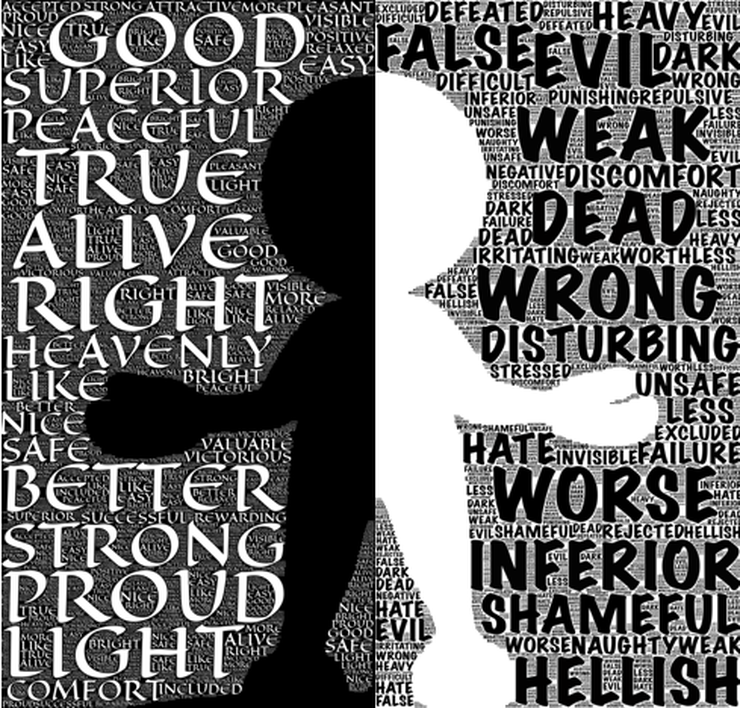
This becomes even more crazy-making when we layer denial on top. If the friend who got the new job is like me, she can feel this jealousy rising and wants to avoid it destroying the relationship. Maybe she practices giving compassion and grace while hoping that her friend processes the hard feelings, and hopefully she processes some of her own hard feelings such as disappointment that her friend couldn’t celebrate her new opportunity with her. If time passes and the hard feelings persist, she might ask her friend to talk so as to clear the air between them. If the jealous friend is too scared, ashamed, unaware or in denial about her hard feelings to be able to take responsibility and process them and instead tells the friend with the new job that she’s crazy, she is happy for her and doesn’t have any jealousy, that becomes crazy-making for both of them.

Crazy-making takes a lot of energy to carry. It spirals us out of our hearts and bodies, creating separation from our truth. We lose integrity and the ability to experience wholeness when we are trying to be two people at once. In the previous example, the jealous friend trying to be ‘a good friend’ isn’t allowing herself to be authentic and a messy human who can both feel happy for her friend and a bit jealous as well. That’s actually making her less of a good friend and growing the seed of jealousy even bigger, creating more destruction in the relationship. To me, the best thing that could happen is that the jealous friend lets go of her judgmental story about identifying and behaving as a ‘good friend’ so as to create an opening for the two of them to have a real and sustainable friendship capable of withstanding pain and hard emotions. (Image)

Exercise: What stories do you tell yourself that limit your openness to darkness? You may wish to close your eyes and meditate on the question: ‘What do I believe about the nature of darkness?

giveheart If you value this content, please engage in reciprocity by living, sharing and giving.

Material Wealth

La antigua Biblos: El bibliomotocarro de Antonio La CavaBlog by Valerie

When I was growing up, I watched my father hoard food, books, even household cleaning items. I remember the pain I felt when he told me the story of realising as a young teenager that he’d read every book in the library van that visited his small town every month. He went to university, the first in his family, so there was no shortage of books to read from the age of 19, but he couldn’t shake those early experiences, he worried he’d have to do without if he didn’t have things on hand. Coming from a home where I had access to multiple libraries, and many used and new book shops that we frequented regularly, I was happy to give away and trade books with trust that if I needed one again I’d find it. I didn’t need to be weighed down by a home library. But I also remember the pain I felt when I went with my dad to our favourite used book store with some boxes of books from cleaning out my room at my parents’ house. He didn’t understand why I wanted to let them go, and kept asking if I was sure. But he didn’t try to stop me. (Image from here)

Growing up, I watched my mother hoard money (and related to that, jewellery); and though it may sound strange, she also hoarded social privilege. But it felt more intense than my father trying to rebalance some pain from childhood. Hers felt existential, as if she hoarded and guarded these things like her life depended on it. The first time I earned money through babysitting, I came home with a twenty dollar bill feeling proud of myself. I had gotten the little girl to sleep despite one of her dogs nonstop fearful bellowing about a thunderstorm. My mother asked how much I made, and when I showed her, she took it, and said that she needed a cut. I couldn’t tell if she was joking. It didn’t feel like it. Then she wouldn’t give it back to me, and taunted me, hiding the bill and waving it out of my reach. That felt scary and deflating, one of many power and control games she played with me. It was as if she needed money more than she needed to be connected with me and would abuse her power and trusted role in my life to get it.

Wealth PNG Transparent Images | PNG AllWhen my father died many years later, that was my experience with her as we entered into estrangement. My mother chose money, lies and trickery over me. I have come to see that as rooted in her Jewish wounding, where through being disconnected from country for milennia, she learned to existentially cling to money, jewellery, and social status to survive. I understand that’s her survival strategy, integrated with identity and culture. I can’t be intimate with those wounds though, it feels too destructive and desolate to me, like I’m spinning in a hopeless vortex of nihilism and materialism, disconnected from the planet and my body. (Image from here)

I don’t yet feel respectful of what I experience as collectively acting out a traumatic and highly destructive wound. I focus most of my energy on deepening compassion and processing grief. I have been feeling this a lot lately with actions in the Middle East. I feel like Palestinian, Lebanese, and Iranian peoples are my spiritual kin. The hatred some of us feel towards ourselves and each other is so intense, it makes my heart feel heavy with grief. The material greed and holding in supremacy certain people and lands while dehumanising and exploiting other peoples and lands pains me deeply. I have been to Jerusalem, which many consider to be the most holy city in the world. I felt its deep and rich history. It also felt very layered in pain and messiness. There was tension, some bombing, and UN vehicles patrolling when I was there. It felt like a powder keg with everyone on edge, and that was fifteen years ago.

Everything is connectedI choose a worldview in which all lives lost, of any culture, of any animal or plant, are existentially equal, though I obviously experience some of those losses with much more intensity than others because of my own identity and connections. As this worldview and my values have solidified over time, I have found myself recently with more material ease than ever before in my adult life. I had gotten used to embodying ordeal, living without enough material wealth, devaluing its importance to rebalance growing up with my mother putting material wealth über Alles, humbly acknowledging that I needed to find ways to be more financially stable and secure, trying things and burning out, growing savings and going through them.

I’m grateful for some material ease and abundance now, and I’m grateful for experiences of lack so these experiences have more meaning to me. I don’t think I’ve now got it all figured out. I do know that weeding by going into trauma and negativity have been more valuable to me than trying to plant positive affirmations. I’ve found healthy beliefs emerge when I clear the way. And, at the moment, some material wealth has emerged. I’m allowing myself to feel more ease when we buy groceries, practicing saving without hoarding, and humbly sharing as we go. I have started to feel lately like for the first time in this life I am living the life I want to and am meant for.

Matthew 11:28 Scripture - Rest from Burden | ChristianQuotes.infoHere’s hoping your relationship with material wealth feels balanced and centred too. Blessings at a season of reflecting on thankfulness. I’m thankful you care enough to read this blog. And if you are able, I humbly ask you to consider leaving a review of my book Healing through Indigenous Wisdom on Amazon, giving a copy to a friend, or otherwise passing on the word. Sacred reciprocity makes the world go round (fodder for a future blog).

giveheart If you value this content, please engage in reciprocity by living, sharing and giving.

Navigating Existential Judgment

Blog by Valerie

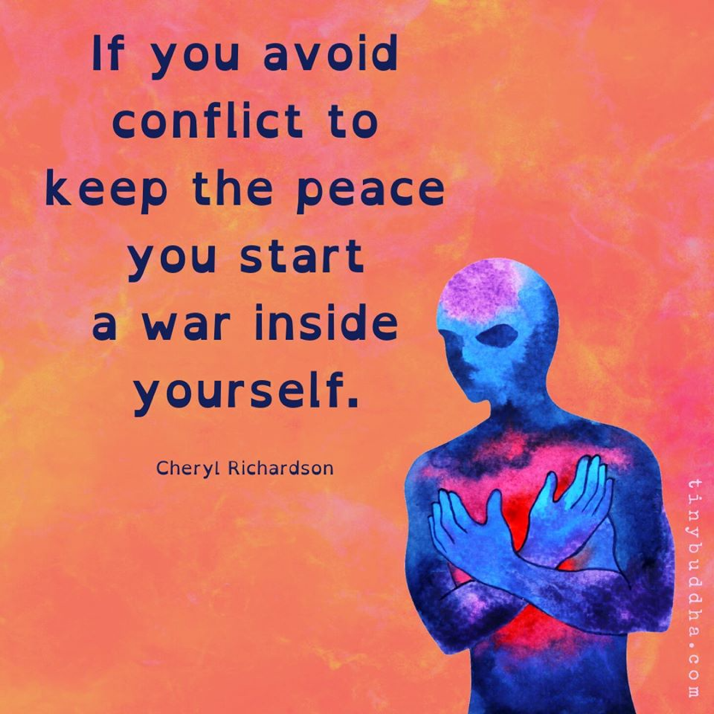
Lately some protracted conflicts have come to the surface in my life at a macro level in the world, and at a micro level in my daily life. I have been praying quite a lot since the war in Ukraine broke out, where my Jewish-Sumerian ancestors spent many generations living, and more recently about the war in the Middle East. It seems to me like there is existential war and rejection going on based in judgment, where one or more parties to a conflict feel they are fighting to exist in the minds and hearts of the other. Difference Between Perception and Judgement | Compare the Difference ...

I find existential judgement incredibly dangerous and damaging and see it as the root of genocide. It feels to me like a hand rejecting its own finger. If we believe in a Creator with wisdom our human minds cannot comprehend, how can we put ourselves in the position of judging what the Creator brought into being? And to say another is allowed to exist elsewhere (NIMBY) is still judgmental, for if we force another to leave their home and live on different lands, we change their and our identities by disconnecting people from their earthly homes and playing the roles of victims and offenders.

On a micro level I’m seeing this thinking play out in some righteous social justice warrior crusades around me. I find the concept of ‘rights’ to be violent, though it has obvious practical value to create baseline standards for society. If we didn’t existentially judge certain struggles and behaviours as deeming people unworthy of housing or health care or food, then rights would simply represent social baselines we collectively agreed upon as minimum standards of care for all of us humans living here. But if a single mother can’t afford housing, or a man with mental illness isn’t at retirement age but can’t hold down a job, we don’t collectively agree how (or sometimes even if) to support their survival. Rights then get used in a forceful way to push a majority social group’s minimum standard of support onto the collective, and thus they often need to be en-forced. And when we are judged and caught up in the rights battles we feel, rightly so, like we are fighting for our survival. (See survival strategies blog)

I agree with Jungian scientist Fred Gustafson that the Western mind is “having a massive collective nervous breakdown” and is going to “war to determine whose anthropocentric [world]view is most valid [while] the earth and all its inhabitants [] suffer.”[1] I have not found sufficient solace for survival in the Western world alone.

Mind PNG Images - PNG All | PNG AllFor me it has been vital to live in two worlds: (1) a social reality that is based on a Western worldview, and (2) an earth-based reality based on an Indigenous worldview. When I’m caught up in a survival struggle in the Western world that’s terrifyingly real, and I’m feeling rejected and judged and shamed and angry, I can spiritually connect with the knowing from the Land and my ancestors that I’m not only allowed to exist but that I am wanted. This powerful medicine is all I have found that alleviates my existential wounds. Without it I feel like I would not still be here on this Earth, as my roots would have rotted and not been able to hold up the rest of my inner tree of life. (Image from here)
conflict

If you’re also feeling some pain and heaviness about existential judgement and its impact, here are a few things that help me keep my spirits strong:

  1. Grieving is a way I like to express angry energy to avoid getting overwhelmed by righteousness and gain clarity which fights, if any, feel right for me to engage in, and what that means practically. You may prefer to yell and scream or throw things or punch a bag instead, so however you express anger to avoid it overwhelming you is helpful.
  2. Connecting with the land and ancestors where I am offers me powerful healing. I may give offerings as simple as feeding a bird or picking up rubbish, or as profound as a placenta burial or smoking/smudging ceremony. I may also cultivate a sit spot on the land, walk barefoot, and tend a tree altar. There are so many more ways to connect with the land where you live, these are but a few. The reverence we bring to the action we choose matters more, I think, than exactly what we do.
  3. Letting go of black-and-white, objective, judgmental thinking is something I am very fierce with myself about. Humility is an important value to me, so I ensure that even when I feel certain or highly confident about something that I carry a little bit of doubt. For example, I feel highly confident that child sex abuse (link) is a damaging act that is wrong to do. Yet my intense journey of seeking to heal that wound has brought me so much wisdom and peace. Spiritual gifts often thrive in grey, paradoxical spaces.
  4. earth ethos drum journeyAltering my consciousness is another survival tool I use daily, primarily through embodied meditations and drum journeys. I do it to heal trauma, connect with ancestors and other spiritual guidance, and seek tools for every day survival such as deeper spaces of compassion or peace. However you are able to sink deeper than your everyday ‘known’ and familiar thought loops can bring you some healing. I do find, however, that embodied practices (such as using sound or dance or breath techniques) are more powerful than mind-based practices (such as meditating through your third eye or simply watching your thoughts).

Thank you for reading this, and may your life be enriched (and even saved) by living in both worlds, as mine is.

[1] Gustafson, F. (1997). Dancing between two worlds: Jung and the Native American soul. Mahwah, NJ: Paulist Press.

giveheart If you value this content, please engage in reciprocity by living, sharing and giving.

Discernment

Here is another chapter from the book I am writing. I hope you enjoy! Blog by Valerie

As Diné (Navajo) historian and lawman Wally Brown says:

You can never conquer fear, it’s always going to be there…Walking in beauty involves encountering fears, physically, emotionally, mentally and spiritually, and getting beyond them, so we can have joy, happiness, confidence and peace in the four areas of our being.

By ‘getting beyond’ our fear, Wally is referring to developing discernment. Fear is a challenging energy to be with, and it’s one of life’s beautiful paradoxes that we can learn to be safe with our fears, creating space and understanding about how and when to act even when we feel terror flowing through us. In Western culture, we talk about emotional intelligence (EQ) and mental intelligence (IQ), but rarely about physical or spiritual intelligence. Physical intelligence is related to our relationship with our environment, as well as our own body. And spiritual intelligence has to do with our capacity to hold paradoxical energies, our ability to access altered states of consciousness, and skilful use of Indigenous science data.

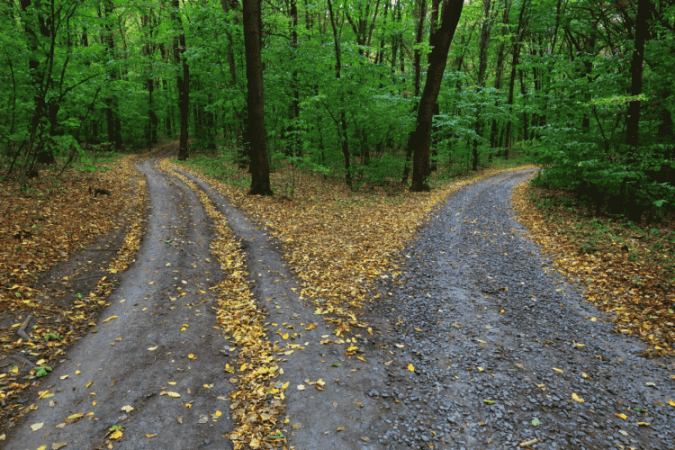
twopathsI am using the word ‘discernment’ instead of ‘judgment’ because ‘judgment’ is often linked with negativity, but ‘sound judgment’ is similar to skilful ‘discernment.’ I think of discernment as a muscle more than a practice, because it inevitably gets regular workouts through our life experience, so we are wise to work out the muscle so it’s in good shape to navigate inevitably testing moments in our lives. Discernment is grounded in our desire to uphold core values, and will help us to strengthen our boundaries. One of the best ways to work out this muscle in everyday life is through the following exercise. It is easiest to do this exercise when you have a conflict, challenging emotion or thought loop to work through. It is most powerful when done in the moment of heightened fear response, if you are able. (Image from here)

Is-it-mine Exercise:

Reflecting on a recent experience of fear and other intense thoughts and/or feelings. When you have an instance to work through, go into that energy and ask yourself ‘Is it mine’? Breathe through any discomfort and await a deep inner response. You may hear an inner voice, or have a feeling or a sense of knowing, or you may see an image that clarifies this question.

If you realise that it isn’t yours, that it is ancestral trauma or projection from someone else, set an intention to let it go, and ask your wise inner self for guidance about how to do that.

If you realise that at least some of it is yours, ask yourself, ‘What percent of this is mine?’ Set an intention to let go of what is not yours, and ask your wise inner self for guidance about how to do that. For what is yours, you may wish to ask your inner wise self what the underlying fear, belief, or myth is, and any guidance about working through it. You may also wish to ask your ancestors for guidance with this or seek wise counsel from people you trust.

In Western culture, black-and-white thinking abounds in terms of apportioning responsibility. We are either guilty or innocent, or we share the blame 50-50. It is very hard for most of us to apportion responsibility outside of that 0-100 or 50-50 framework. Yet most real-world conflicts are complex, involve multiple parties, and each bears some proportion of responsibility. Carrying some responsibility is part of having some power, and taking responsibility for where we have power doesn’t excuse others from destructive behaviour. For example, as young woman, I sometimes wore tight clothes and short skirts. Though I understand the importance of wearing what makes one feel good, I did not feel good nor empowered having to process so many men’s sexual projections (and women’s jealousy projections) while walking around town.Defend Your Back End: Gender, Blame, and the ... I felt deeply uncomfortable, as it triggered wounds of previous sexual violence. So I started modifying my outfits, pairing a tighter top with a longer skirt, and carrying a sweater or wrap to cover up when I felt overly exposed. I still experienced some uncomfortable projections, but those choices helped me feel good about what I was wearing as well as empowered to protect myself from many uncomfortable projections. I did not feel responsible for the projections other people were making, but since I seemed to be triggering people, I felt some responsibility to protect myself. Perhaps in an ideal world we would all be so self-aware that I wouldn’t have needed to deal with such projections, but that was not my reality. I have since grown to more deeply value modesty and to embed that into my values. (Image from here)

Another way to strengthen our discernment muscle is embodied in that story: try something and see how it works, then adjust as need. Years ago, I heard an interview with someone who had been in an abusive relationship for a long time, and he said that one of the most empowering things he did to heal was to give himself no longer than a day to make a big life decision, and no longer than an hour to make a smaller life decision. By holding himself to these timeframes, he limited his anxiety about making the ‘right’ decision, increased his empowerment about making a decision himself, and increased his discernment muscle (as well as his ability to give himself grace) by experiencing how well his decisions turned out. EvenTake the first step | ”.. and your mind will mobilize all ... when something went really poorly and didn’t turn out how he had hoped, he said he felt a sense of pride that it had been his decision and knew he would learn from it. This strategy may not work for you, but the underlying idea is empowering for our discernment muscle. Sometimes we over-think, over-analyse, or over-consult others for advice, and the best thing to do is take a step in a direction and await feedback from the universe, then adjust and await feedback again, through an iterative process that can also strengthen our discernment muscle. (Image from here)

teepeeAll discernment relies on some foundational knowledge. When we are confused, lost, or tricked, we have poor information with which to discern what to do. This is another reason why grounding and centring practices are so vital. If we think about it in terms of intelligence, if I don’t have much physical intelligence about my environment, I won’t have much to go on when trying to discern where to set up camp. I will have to rely on knowledge from other environments, but I may learn the hard way that camping near a stream kept me close to water but that the water level rose more than I expected, or that the trees providing shade had branches that easily snapped in heavy winds. This is where local Indigenous knowledge is so valuable. (My photo from Austin, Texas Pioneer Farms)

Exercise: Do you know how to survive a few nights in the wilderness environment where you now live? Could you find and/or build shelter, get water, make fire and otherwise keep yourself warm, and forage for food? If not, empower yourself with some knowledge and connect with the Indigenous ancestors (living and ancient) of those lands.

giveheart If you value this content, please engage in reciprocity by living, sharing and giving.