Blog by Valerie
Our lives are an endless series of resolving tensions, or reconciling polarities. We navigate this process based on stories, beliefs, and spiritual tools we’ve learned, which differ by culture. Culture arises from the Earth below, and for the majority of us who come from immigrant, slave, refugee, or forced migration lineages, our sense of culture has been disconnected from land(s) of origin. This creates cultural shadows and reflections, which are different things.
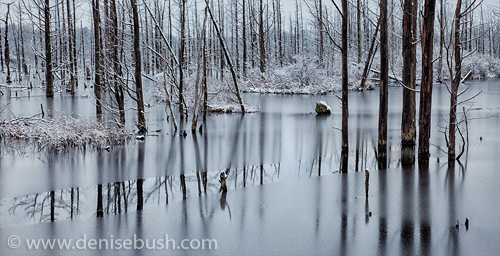
Think about a reflection from a lake: if the surface of the water is clear and still, the reflection maintains its form and colour, but size may be distorted by angle of perspective, uneven water surface, if we are bigger than the body of water reflecting us is able to show., and by warmth of the water – just look at the difference of the reflection of the trees from water and ice.
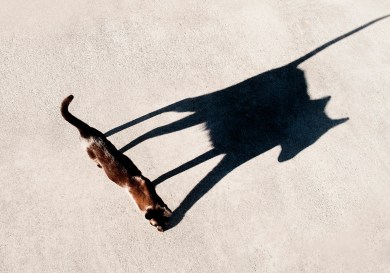
Now think about a shadow: it distorts form, colour, and size. So it is a rather messy reflection of blocked light. The way shadows work, the closer we are to the source of the light, the larger the shadow appears. Placement and perspective have a huge influence on us, from how we see ourselves to how we survive in different environments.
Survival is primitive, root chakra, grounded energy. All Earth environments have a unique nature, which is why I agree with the perspective that Australia always was and always will be Aboriginal land. This is nature; we all know that Earth environments and human cultures are diverse. We would 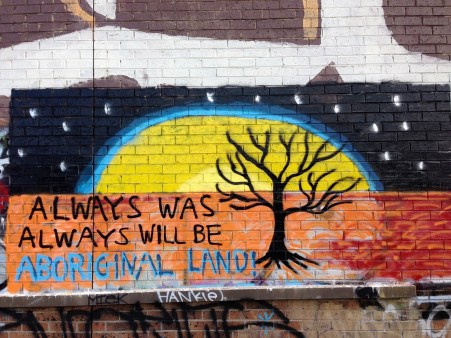 never expect someone from Northern Europe to have the same culture as someone from Australia. But when a bunch of people with Northern European ancestry move here (many unwillingly), what does that mean for the culture of the people and place now living on land we call Australia?
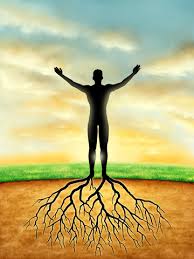
Most of us today are experiencing such a cultural transition. We are reconciling polarities of disorientation and loss as we let go of what does not serve us anymore, and trying to ground ourselves where we are. The lived experiences of our ancestors, the myths and teaching stories our elders have passed down, and collective wisdom that has allowed our lineages and tribes to survive has reached limits. Coming from cultures that are disconnected from the Earth where we live now, unpack a lot of shadows. Some of us fret about sustainability yet cling to old cultural stories and ways of being, while others seek to adapt and grow by learning through diversity, taking risks and trying new things. We seek new cultural forms to ensure the survival of our lineages and tribes, which requires sacrifice and risk. (Image from here.)
 We literally become bridges between the land and cultures of our ancestors and a new land and culture. Our wild and crazy human journeys allow landforms like mountains and lakes, and trees that have been grounded in one place for centuries to travel vicariously through our reflections and learn what we’ve seen and experienced. What rich gifts we bring when we allow ourselves ground in a new environment. (Image from here.)
What drives us onward through the pain? What makes us want to endure the challenges of reconciling such vast polarities of energies in order to survive? It’s an innate, profound joy and gratitude that we are alive and embodied. And if we are open and humble enough, we can learn a lot about how to survive in our current environments from indigenous elders in person and in spirit. See if you can allow the Aboriginal elder’s joy in the video below to spark a memory of never feeling lonely because you are so connected with your environment and nourished by Mother Earth.
If we remain shut down, overwhelmed, and closed to connecting with our new environments, we miss opportunities to ground polarities and transform ourselves, and instead become stories of fallen civilisations or evolutionary dead ends.
 If you value this content, please engage in reciprocity by living, sharing and giving.
 I have witnessed many people experiencing a shaman’s illness. When people reject or resist it, they usually end up dissociating the destructive energy and becoming very challenging externalising personalities (like narcissists or sociopaths), or internalising the destructive energy and creating diseases such as quickly metastasising cancers. I have witnessed multiple people do both of these things. When people accept the calling of the illness, there are different speeds of doing so, which impacts the way the illness plays out in a person’s life. I have seen some people slowly accept that they are experiencing shaman’s illness over many years and bit by bit change their paths so that over time more aspects of their lives are working. Some (including myself) dive directly into the fire and allow our lives to become incredibly chaotic as our identities are re-forged and often become overwhelmed at the amount of emotion that needs to be processed and the whirlwind pace of life changes that occur. (Image from
  It is helpful, but not necessary, to seek support from someone who has been through similar things. Such people can give you compassion and empathy, guiding wisdom, and tools to process wounds and express energy. But it’s vitally important not to delude yourself that any human is a fully healed Jedi-master, all-knowing figure. If someone says they are, then RUN AWAY FROM THEM, because that person is dangerous and delusional and is on a path of becoming a cult leader or something else you don’t want to be involved with. It is important to think of illness and healing as processes, not finite endpoints. When someone says they have “healed” a wound as intense as sexual abuse or parental abandonment, I am suspicious; and when someone plays power games, disrespects, or in any way puts me down, then I know that person is ill and cannot support my healing anymore. I have no tolerance for these behaviours, even when people are unaware. I either change my boundary and create space or make someone aware of their transgression, and if they then don’t own it and work through it, I’m done with the relationship. (Image below from
 If you value this content, please engage in reciprocity by
  A Druid
 Second, “if you don’t have an ancestor altar,
  If you value this content, please engage in reciprocity by
 (Image from
  If you value this content, please engage in reciprocity by

 If you value this content, please engage in reciprocity by
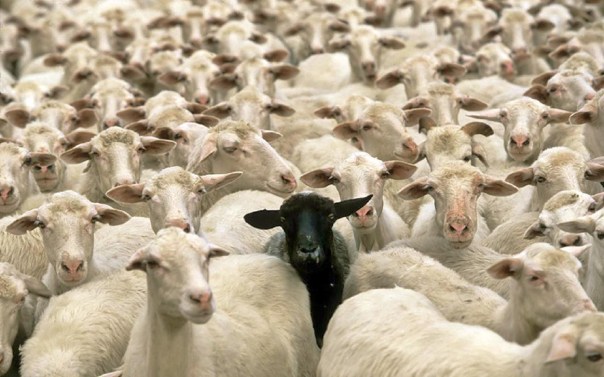
 karma of humanity out. It’s all over the place: it’s conservative Christian parents confronting their prejudice with an LGBT child; a Southern Baptist who falls in love with a Catholic; a strong patriarch with a young daughter wiser than he is; a mother who worked so hard to break into the corporate world whose daughter wants to stay at home with her kids. Over and over again I see situations in which that which we judge, hate or reject is presented to us in an even more intimate way so that we learn to love and accept it. (Image from


 If you value this content, please engage in reciprocity by

 I encourage you to connect with your own cosmology and question rejecting/violent statements/thoughts like “He should have known better”, or “It serves her right.” Such words indicate an internalised denial/judgment and fuel shameful, painful feelings inside you, the person you are speaking/thinking about, and our collective culture. Even when we believe/think something is wrong, we can still hold that aspect of our cosmology with compassion and respect. These words are pointers to places of yourself that could be further explored, unpacked, and transformed. Dangers and fears come in many forms, including physical, emotional, psychological, and spiritual. Watching an interview with someone who has killed another person, for example, may trigger emotion you are carrying and show aspects of your cosmology that could be shifted from judgment or denial/lack into compassion and empathy, and gratitude that you did not need to learn such a lesson the hard way. (Free photo by
  If you value this content, please engage in reciprocity by
 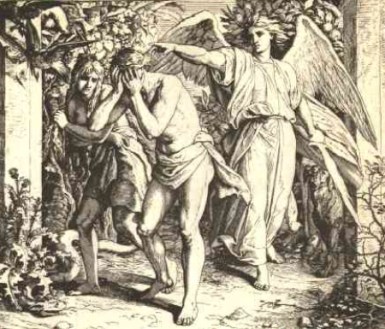 The foundation of Judeo-Christian mythology leaves us unconnected with environments where the vast majority of its followers live. The Biblical creation story of Adam and Eve’s exile from the Garden of Eden is not an embodied story connecting humans with nature inside and outside ourselves within a web of life. In fact, the entire
  (Image from
  This word “sin,” then, was meant to help us humans understand our nature: that we are powerful and able create wonders and also an innate capacity to blunder. What curious creatures we are! We have been believing and embodying an errant, mistaken thought and believing that we are exiled, unworthy, and that our sacred, earthly Mother doesn’t fully love us, and this sin/mistake/confusion has been defining the course of our collective history for multiple millennia, and is still going. If this isn’t
  If you value this content, please engage in reciprocity by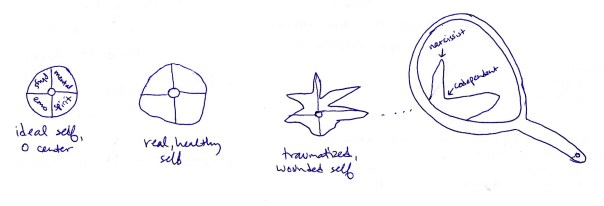


 Earth Ethos