Category Archives: Culture

Altars, Shrines & Power Objects

Blog by Valerie

catholicaltar.jpg

I am delighted to hear from people having success working with ancestral altars and have been asked to write more generally about altar and shrine practices. I will also talk about power objects. Starting with etymology, “altar” is from a Latin word for “on high” (like altitude) and refers to honouring and worshipping great gods through sacrifice, usually by burning something and sending smoke up towards the heavens. “Shrine” is one of those mysterious words of unknown origin that refers to a sacred case or box (like the ark of the covenant) for keeping holy papers or other powerful spiritual objects. Shrines honour the spirit of a person, event, or ideology. The way we tend shrines is by leaving offerings. Altars are interactive, working spaces of worship where we ask for insight and guidance. We often create blended shrine-altars where we both leave offerings, as well as ask for insight and guidance. Most churches and temples are such blended spaces, where people leave incense, flowers, or candles with gratitude to figures like Jesus,

shrineofrememberance.jpgBuddha, and Krishna, and where people also sit in contemplation and pray for insight and guidance from those figures. I find it helpful to be intentional about these differences in my own life, but maybe blended spaces work for you. Ultimately, we build relationships with figures, ideas, events, places, and energies, and those relationships work best when we both give and receive, and do not always ask or give with the expectation of immediately getting back… (Images: Altar of St Michael’s Church in Munich, Shrine of Remembrance for the War Dead in Melbourne)

There are three types of altar practices that I use in my daily life: an ancestral altar, a personal altar, and a body altar. My introduction to a personal altar practice came from the mesa program. The personal altar for me, is medicine wheel-based, because that is my cosmology. It is a cloth on a flat surface next on my night table to represent the medicine wheel and provides a personal reflection for me. My husband who gravitates more towards Buddhism has an altar built on a footstool that is in three vertical layers. Yours might be Christian or Daoist; it depends on where your spirit feels most at home. Out of respect for my privacy and current altar work, I am posting a photo of my altar from 2 years ago to give you an idea of what it looks like and to explain some of the symbolism.

altarmay2017

Following a medicine wheel path, in the centre is the heart, where I have power objects of rocks and crystals representing core beliefs I was working with at the time, including rose quartz for unconditional love and acceptance, a fossil for honouring ancestors, a small glass globe for honouring Mother Earth and right placement, and two clear quartz crystals for clarity and courage. In the north (mental) realm which in my medicine wheel is white, there is a feather and a small angel figure to connect with my personal power animal (egret) and my highest thinking (angel). In the east (spiritual) realm which is yellow is a candle in a glass with UT Austin written on it as I was pouring my spirit into my PhD program at the time. In the south (emotional) realm which is red is a shell that was in my parents’ house growing up where I burned offerings to clear those emotional bonds. And in the west (physical) realm which is black is a young girl to represent my inner child being held by a crystal to represent Grandmother Moon and a salt lamp to represent Grandfather Sun.

All of the items on the altar are power objects, meaning they are imbued with energy and meaning, and I put them on and take them off the altar with care and ceremony. Power objects can be anything that we feel drawn to or has meaning for us, from a candle to a cross to a rock we pick up off the ground. Sometimes the meaning is clear to me when I place an object on the altar, and sometimes the meaning becomes clear over time and begins mysteriously. At times I am moved to break open power objects to free trapped energy (which I find creates ease for my body and relationships that do not need to break instead), and at times I pass the objects on to other people, bury them, burn them…it depends what feels right and what insight comes to me in visions and dreams.

The body altar practice is how I start each day. It was inspired by a practice Cristina Pratt mentioned of using her body as the centrepiece of the medicine wheel, followed by most elements of the body prayer which I learned from kundalini yoga teacher Carolyn Cowan (see below).

https://www.youtube.com/watch?v=f45TKrhGXHs

These days Grandfather Sun and Grandmother Moon are outside of the borders of my personal altar, and Grandmother Moon carries slips of paper I regularly print with inspirational notes and quotes to set my daily intentions. So each morning from my bed I reach for some of Grandmother Moon’s wisdom, take it in, and place the slip of paper on my altar. (I regularly burn the slips of paper when it feels like the right time to ground this wisdom into my life.) Then I get up and do a body altar practice. I stand facing the east and ground my feet by imagining roots extending into Mother Earth. I reach my left arm out to the side and thank Grandfather Sun, and reach out my right arm to thank Grandmother Moon. I raise my arms up to thank Father Sky, and bend to touch the ground to thank Mother Earth, then place my hands on my heart to honour my interconnection with all beings. I then honour each of the four directions with breath, movement, voice, and intention, and then extend my arms out and twirl to honour my boundaries and human limits. I then do a movement to bring energy up from the Earth below and into my life for the day and thank the ancestors of the land where I am and of my lineages and past lands of connection. And I end with an embodied prayer of unconditional love and acceptance through the Body Prayer above (minus lying prostrate on the floor).

Each evening before bed I pray at my personal medicine wheel altar. Behind the altar on the wall are images of my totems, moiety (paternal line) and heart-language (Frisian), so that that I honour them daily. Many days I am moved to leave offerings at my ancestral altar which is more of a shrine for me and a working altar for my husband at the moment. Some days I leave offerings at a tree altar in our garden (such as bits of food with thanks for Mother Earth’s bounty and with awareness that non-human beings in our garden also need to eat!). Some days I bring offerings to a tree grove in a nearby park whom I have asked to support an upcoming ritual. Offerings are a complex subject for a future post, so I hope this has given you plenty of food for thought at the moment!

Exercise: What altars and shrines are in your life? What do you intentionally want to cultivate? To let go of? What meanings do some power objects in your home have? Which ones might be useful to let go of, destroy, bury, flush, or pass on to someone?

giveheart If you value this content, please engage in reciprocity by living, sharing and giving.

Existential Wounds

vol-13-1-coverBlog by Valerie

Existential wounds seem to occur more often for those of us with multi-cultural, immigrant, and colonial heritage. When we are (or our ancestors were) forcibly moved, forced to adopt unfamiliar cultural practices of spiritual worship, live in homes and wear clothes of unfamiliar materials, eat foods unfamiliar to our bodies, or were abused or enslaved in some way, we experienced trauma. This trauma often took the form of existential wounding where the very core of our identities, ways of being, and understandings of the world are shaken. It can take many generations and much work to heal such wounds. I recently had an article about indigenous trauma healing published if you want to dive more deeply into that. (Ignore the abstract; they used the wrong one.)

Through generations of carrying existential wounds, we feel ashamed that what our ancestors taught us about the right ways to live and what we learned to honour has been desecrated. We become ungrounded and disoriented and struggle to trans-form and re-form ourselves and our cultures in new places. We feel lied to and know in our bones that something is wrong. We wonder if we’re crazy, if something is wrong with us; we get angry with our families or society and struggle with mountains of conflicts. (This is structural change; re-claiming the body/mind/spirit as one where we are now.) If you are reading this, chances are you feel a calling to do that work! As an example, I always felt disoriented in the Northern Hemisphere. I struggled to orientate and make sense of directions, and when I got my PhD I had the definitive feeling that I was moving backwards, spiralling inwards to the core so I could get to the essence of the existential wound, go through a spiritual death and be reborn again. Moving to the Southern hemisphere has helped me feel like my life is finally correctly oriented. Yet at the same time, native foods of Australia are unfamiliar to my body. So I gather lily pillies to make jam, eat native figs off of big ficuses when I walk by, and cook up warrigal greens (See images below). I’ve noticed that native foods are unfamiliar to most people here, though, and eating European meats and veggies seems to keep people’s psyches more tied to places across the planet and help them be more willing to mine indigenous land in their own country! (Images from here and here.)

I believe that decolonisation has profoundly positive effects on healing of existential wounds as it helps us feel more whole. While listening to the Mythic Medicine podcast recently I realised a simple way to heal some of our existential wounds is to name and honour the landforms and elementals that raised us, and support us where we now live. Here is mine for where I grew up in Atlanta, Georgia:

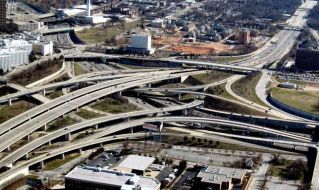
I was raised on the foothills of the Appalachian mountains (earth), hilly land with red clay soil and loads of spindly pine trees. The water (water) that I drank and bathed in came from Lake Lanier, a dammed portion of the Chattahoochee River. The winds (air) were unnamed but predominantly flowed from the southwest towards the northeast. Power (fire) came predominantly from a hydroelectric plant that dammed the river. The main spiritual practice (heart) there was Protestant Christian, and in particular Southern Baptist. The largest landform was Stone Mountain, a granite outcropping that extends underground into five states and has a Confederate Memorial carved into it which is the largest bas relief sculpture in the world. Other memorable landforms are the network of manmade highways, including a circle around the city with an X of two highways that meet at the centre, and incredibly messy interchanges such as one called Spaghetti Junction that looms large in my memory (see below). A local park called Henderson Lake was a safe space for me, and I walked there regularly (see below). The Creek and Cherokee nations existed on the land before English colonists, and before that were nations of mound-builders which we know little about. (Images from here and here.)

atlantahwy hendersonlake

Exercise: I invite you to download this My Ancestry Exercise that came together when preparing for an ancestral healing workshop a couple months ago. I have my answers on there as an example. It will give you a reflection of what you know about where you come from, and your intuition may answer some questions you didn’t realise you knew! You can add to this exercise an honouring of landforms and elementals exemplified above for the land(s) that raised you, and the land that now supports you!

giveheart If you value this content, please engage in reciprocity by living, sharing and giving.

Healing & Cultural Appropriation

Blog by Valerie

In the previous post I wrote about how complex it is to honour multiple cultural identities, ground ourselves where we are now and honour the ancestors of the land, forgive our ancestors’ mistakes and decolonise our everyday lives. This post is a step further, because cultural appropriation is different in the context of spiritual healing. I have learned through experience what cultural appropriation in a healing context is, and the destructiveness it brings. I have also gained valuable insight, lessons, and tools when some cultural appropriation was being done that added a layer of destruction to the person’s offering. We are human, and our healing work is inherently imperfect. (Image from here.)

appropriationappreciation.png

In my experience, once we are out of crisis, healing within a market economy context is limited. There are different power dynamics, feelings and experience when meeting in a therapist’s office for 50 minutes for $100, and when with meeting a caring community member in a home, or while walking and talking with a friend in a park. As I wrote in a previous post, please RUN AWAY FROM people who say they are fully healed or ascended masters or anything like that unless you want to join a cult, because delusions of grandeur and beliefs around exceptionalism and/or superiority are not conducive to healing. Also from a previous post, keep in mind that:

“A common mistake when examining myths of other cultures is to interpret them with symbols and values of our own culture” (Gleiser, 2012). Common values of the dominant Western cosmology such as competition, hierarchy, individualism, and the primacy of the nuclear family greatly limit our ability to embody indigenous wisdom (Thibodeau & Nixon, 2013). When this happens, ceremonies can “become empty of their power” (Rael, 1998). 

Consider the difference between participating in a plant medicine ceremony in the jungles of Peru with a shaman who spent decades apprenticing with a teacher and working with plants and spirits of the jungle deeply connected with the land and its ancestors, versus participating in a plant medicine ceremony in an apartment in a Western city facilitated by someone who got the medicine from such a shaman and perhaps studied with the shaman for a short period of time.

I don’t mean to say we should never participate in a ceremony in an apartment with a medicine from a foreign culture and land. But if we do, let’s do it with awareness and help it be as safe as possible. I ask for my own guidance in a form that resonates with me (either prayer or meditation usually). I acknowledge the limitations of the healing work I am considering participating in and ask if it is right for me. If I get signs and insight to move forward, then I ask what I need to do so that it is in balance. For example, when I offered an ancestral trauma healing workshop earlier this year on land with which I have limited cultural connection, I received guidance to donate participants’ gift economy offerings to an Aboriginal advocacy organisation. I also verbally thanked the ancestors of the land during the workshop for supporting our lives and the healing work.

bodyspirit.png

I will share the following story to offer a contrast of an experience of cultural appropriation with a man who called himself a shaman and worked with indigenous people in the Amazon, Mexico, and the Southwestern U.S. He quit his day job to do healing work full time and did so within a gift economy and invited me to participate in a group healing ceremony supported by the tribe in the Amazon. He gave us all a protocol of how to prepare for for three weeks, which I followed. Two days before the ceremony, he said he had new information and changed some things, which I found strange. My husband said he had a bad feeling, but I still trusted the man. I got a sign there was danger ahead, and I felt shaken but kept going. The ceremony changed again the night it took place. At one point, the so-called shaman stood over me menacingly while I was laying on the floor, yelled at me and called me names. I told him I found the behaviour abusive, but I never heard from him again and did not see him after that. When I wrote the couple running a school for shamans in the Southwestern U.S. who recommended him on their website, they said that he had lost his mind, that he was threatening them and they were scared of him, and that putting his information on their website was not an endorsement. I later realised that the tribe was split in their support for his doing that ceremony within their lineage, with their healing tools, away from their land and culture, and that my own cultural heritage was so filled with conflict that I was able to provide the group with a reflection of this problem he was denying. What a messy, valuable lesson he gave me. Here are some less extreme examples of cultural appropriation I have experienced:

  • People charging money for community healing ceremonies traditionally offered within a gift economy or by donation, and/or facilitating ceremonies without integrity:
    • e.g. for a sweat lodge: charging a fixed fee, failing to configure the fire and lodge correctly, failing to honour the land and lineage ancestors, failing to clear the space and clean up the lodge before doing another ceremony
    • e.g. calling oneself a spiritual counsellor in a modern city and charging $100/hour without any formal counselling training or supervision from another counsellor
  • People of mixed cultural heritage identifying with only one ancestral blood lineage,  denying their own complex wholeness, then projecting that dissociation onto others whom they are supposedly offering healing to:
    • e.g. studying curanderoismo healing with someone from rural Mexico and identifying as an indigenous Aztec healer when the person did not know one of their birth parents, grew up in one U.S. state, and lived in another U.S. state.
    • e.g. identifying only as an oppressed African-American, indigenous or Jewish person without acknowledging other blood lineages and cultural heritages

heartheal.jpegI have a lot of compassion for the messiness of embodying Earth Ethos in modern multicultural cities. This is my life! And it is hard, messy work. It’s important to give ourselves and each other grace and trust that we all do our best. For a beautiful story from someone of mixed cultural heritage about honouring all of her complex heritage, read this by Lyla June. (Image from here.)

Since I have learned much of this stuff the hard way, I offer you the following suggestions of what to consider when seeking spiritual healing:

  • Intention & Identity
    • How do YOU see your role and identity in healing work done within the context of a human relationship? Are you looking for practical tools? Emotional support? Plant medicine? Ceremonial healing? A spiritual elder? Escapism? Adventure? Gratification of curiousity about an ‘other’ culture?
    • How does the other person see their role? Do they call themselves a healer or shaman? Do they say they are healing you? Channeling healing energy? Facilitating healing? Holding space? Offering medicine? Helping you connect with your inner higher self? How does the other person identify themself?
  • Cosmology & Culture
    • What cosmology/cosmologies do you embody? What perspectives and beliefs do you want to learn more about and bring into your life? To let go of? How do you relate safely to people with different cosmologies and/or cultures?
    • Is the other person’s cosmology related to (a) specific culture(s) or lineage(s)? How do you relate to the other person’s cosmology? What ancestry does the person have?
  • Place & Form
    • What physical place supports your healing (e.g. a sweat lodge, therapist’s office, church pew, a home, etc.)? Is the place relevant to the culture or lineage on which the work is based, or has it been adapted to your context in some way? What form supports your healing (e.g. talking and listening, music, dance, energy work, laying of hands, artistic expression, etc.)?
    • Where is the person willing to meet with you, and what forms of support are available? How does the person honour multiculturalism, modern places and forms? What cultural and place-based relationships does the person bring? If the person is working within a specific cultural context, how has the person received those teachings?

giveheart If you value this content, please engage in reciprocity by living, sharing and giving.
Multiculturalism & Cultural Appropriation

Blog by Valerie

You may have grown up, like me, steeped in multiculturalism in your home and city, eating foods from all over the world, making friends with others of totally different cultural heritages, travelling and living overseas, and honouring multiculturalism in your everyday lives. If you go back a few generations, how many of ancestors of your blood lineage spoke your language? Dressed in clothes like yours? Listened to similar music, or did similar dances or art? Were taught similar stories about the right ways to live? Did formal schooling? Worked indoors? Followed a similar faith tradition? Celebrated the same holidays? Lived on the same land where you live? Ate foods native to the land where you live? The hardest thing for most of us to fully accept is that in order to survive, we and our ancestors all appropriated from other cultures, and had our own cultures appropriated from. All earth beings move and trans-plant. For example, potatoes are native to the Andes, yet we often think of them in relation to Ireland. We are in living in a hopelessly multicultural world. Just think about the fact that one box of tea we buy for $3 is made from leaves grown in India, packaged in China from cardboard made in Bangladesh, then is shipped to England in a barge made in Denmark, and then distributed to our local supermarket chain owned by a German company. How complicated! (Image from here.)

multicultural.jpg

How do we practically honour the multicultural complexity of one product in our shopping cart?  How do we honour the complexity of our lineages, in terms of relationships with food, place, land, and spiritual traditions?  At what point does honouring multiculturalism become cultural appropriation? Here’s a perspective from a woman whose lineage was transplanted from the British Isles to North America in the 1700s:

I bring with me–in the very blood that flows through me–the DNA of my ancestors…for good or for ill, that cultural legacy and that history, the choices that they made, and I am living the benefits and consequences of those choices…I simply cannot hope to have the same kind of relationship that a Native person has on this land today–because relationships aren’t just about individuals, they are about cultures and generations of people…[Yet] the land, her spirits…even after all that has happened culturally, welcome relationships with white people…built upon acknowledging and honoring the past, building trust, and about reparations…[that will be] inherently different looking because of our own identities, cultures, and histories.

If we want to build deep, meaningful, and lasting relationships with the land here, we’ve got to do the work from the ground up. If we are appropriating someone else’s culture and spiritual practice, we aren’t doing the hard and necessary work of relationship building for our own tradition–hence, we are perpetuating more colonizing behavior.

I see colonising behaviour all over modern cities today. We talk about ‘gentrification’ when people of traditionally more dominant and resourced cultural groups displace traditionally oppressed groups in the parts of a city where the oppressed groups had been forced to live. I consider this micro-colonisation, akin to the term micro-aggression. What if that’s the only place you can afford to buy a house? Does that mean you ethically shouldn’t? Should people with white skin never move to Oakland, California or to Redfern in Sydney, Australia? I don’t think so. But if you choose to, you have the responsibility to be honest about what is happening, feel the pain of others’ displacement along with the joy of your new placement, make amends and build positive connections with the people and land as best you can.

multicultural2.jpeg

Acknowledging the peoples and lands from which traditions emerge is a way to deeply honour ancestors and keep wisdom alive, and allows you to be a cultural bridge in new lands. The respectful intent and humble, teachable spirit with which you approach such activities is the main difference between honouring multiculturalism in our modern world and a the colonial, oblivious, blind, entitled, and greedy and grabby spirit of cultural appropriation. If you are honest about where you stand today and are able to honour your ancestral journey, however many mistakes and sacrifices you and your ancestors have made, you will have a much easier time honouring others’ cultural traditions.

humanfamily

It also helps to keep in mind how fluid ancestry and identity is. Culture is so much more complicated than just tracing your blood lineage and labelling someone as indigenous or non-indigenous, black or white or brown-skinned. Just because you do not have a known ancestral lineage in Japan, for example, does not mean that you are culturally appropriating if you feel moved to practice aspects of Shintoism, learn to do a traditional tea ceremony, or how to brew your own sake. We multicultural moderns have much more similar journeys to drops of water that are re-cycled around the planet, evaporating from a lake into a cloud and flowing across the sky, falling as rain into a huge ocean, entering a jet stream that crashes as a wave against a rock across the world from where we started, and hanging out in a pool on that rock for a while. I personally think this modern mess we’re in is here to remind us that we’re all one big human family! (Image from here.)

Dreaming, meditation, and mindfulness practices are other great ways to connect with our ancestors, as well as donating time and money, building and tending ancestral altars, spiritual practices to heal unjust power dynamics and colonial wounds, supporting the revitalisation of indigenous languages, connecting with non-human ancestors of land and place, and reconnecting with languages and traditions of your ancestors.

Exercise: Modern people tend to use food and drink as the main tool for connecting with ancestry. Try branching out. If you have Gaelic ancestors, learn a few words and see how you feel speaking them, then put on music and see how your body naturally wants to move to it. You may have some moves burst out that you didn’t know about! Also, imagine how ancestors lived on the land where you are now. Did they used to fish by the river you walk along? Imagine how your ancestors used to live in faraway lands. Did they build a fire in the evening to heat their homes just like you are doing? One study found that just thinking about our ancestors and how they lived is beneficial to us! 

giveheart If you value this content, please engage in reciprocity by living, sharing and giving.
Cultural Shadows & Reflections

Blog by Valerie

Our lives are an endless series of resolving tensions, or reconciling polarities. We navigate this process based on stories, beliefs, and spiritual tools we’ve learned, which differ by culture. Culture arises from the Earth below, and for the majority of us who come from immigrant, slave, refugee, or forced migration lineages, our sense of culture has been disconnected from land(s) of origin. This creates cultural shadows and reflections, which are different things.

d-bush_reflections-on-ice.jpg

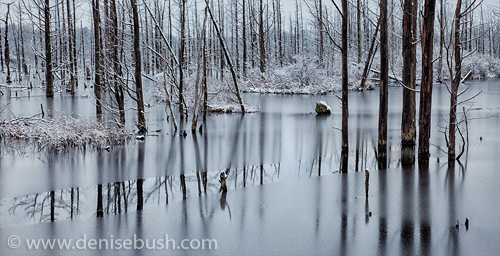
Think about a reflection from a lake: if the surface of the water is clear and still, the reflection maintains its form and colour, but size may be distorted by angle of perspective, uneven water surface, if we are bigger than the body of water reflecting us is able to show., and by warmth of the water – just look at the difference of the reflection of the trees from water and ice.

catshadow.jpg

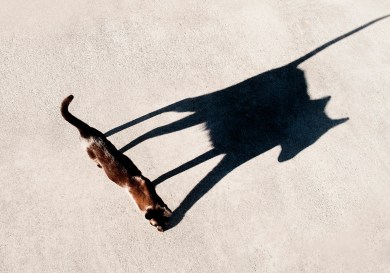
Now think about a shadow: it distorts form, colour, and size. So it is a rather messy reflection of blocked light. The way shadows work, the closer we are to the source of the light, the larger the shadow appears. Placement and perspective have a huge influence on us, from how we see ourselves to how we survive in different environments.

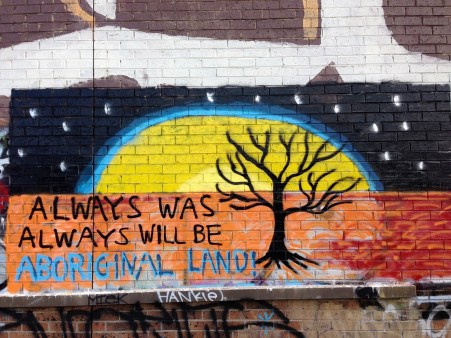
Survival is primitive, root chakra, grounded energy. All Earth environments have a unique nature, which is why I agree with the perspective that Australia always was and always will be Aboriginal land. This is nature; we all know that Earth environments and human cultures are diverse. We would aboriginalland.jpegnever expect someone from Northern Europe to have the same culture as someone from Australia. But when a bunch of people with Northern European ancestry move here (many unwillingly), what does that mean for the culture of the people and place now living on land we call Australia?

Most of us today are experiencing such a cultural transition. We are reconciling polarities of disorientation and loss as we let go of what does not serve us anymore, and trying to ground ourselves where we are. The lived experiences of our ancestors, the myths and teaching stories our elders have passed down, and collective wisdom that has allowed our lineages and tribes to survive has reached limits. Coming from cultures that are disconnected from the Earth where we live now, unpack a lot of shadows. Some of us fret about sustainability yet cling to old cultural stories and ways of being, while others seek to adapt and grow by learning through diversity, taking risks and trying new things. We seek new cultural forms to ensure the survival of our lineages and tribes, which requires sacrifice and risk. (Image from here.)

shadowbookWe literally become bridges between the land and cultures of our ancestors and a new land and culture. Our wild and crazy human journeys allow landforms like mountains and lakes, and trees that have been grounded in one place for centuries to travel vicariously through our reflections and learn what we’ve seen and experienced. What rich gifts we bring when we allow ourselves ground in a new environment. (Image from here.)

What drives us onward through the pain? What makes us want to endure the challenges of reconciling such vast polarities of energies in order to survive? It’s an innate, profound joy and gratitude that we are alive and embodied. And if we are open and humble enough, we can learn a lot about how to survive in our current environments from indigenous elders in person and in spirit. See if you can allow the Aboriginal elder’s joy in the video below to spark a memory of never feeling lonely because you are so connected with your environment and nourished by Mother Earth. 

If we remain shut down, overwhelmed, and closed to connecting with our new environments, we miss opportunities to ground polarities and transform ourselves, and instead become stories of fallen civilisations or evolutionary dead ends.

giveheart If you value this content, please engage in reciprocity by living, sharing and giving.
The Red Road

Blog by Valerie

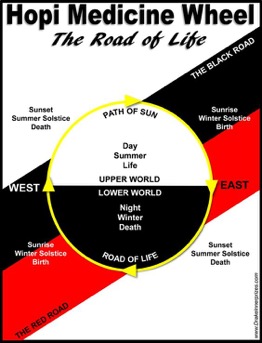
The concept of the Red Road comes from Westerner’s attempting to understand the way indigenous cultures of North America structure their lives and see the world, though I havehopiroadoflife heard people who identify with a North American tribe use the term too. (If you are not familiar with the concept of a medicine wheel, read this post first.) Consider the example of the Red Road from the Hopi who live in the Southwestern U.S. Look at the medicine wheel is in the centre alongside da Vinci’s re-drawing of the Vitruvian man. The belly down to the feet maps onto the lower world coloured in black which represents Mother Earth, the sacred feminine. I estimate the proportion of the Red Road in this lower world is about 80%. This means focusing 80% of our time and energy on standing up for our values, exploring the mystical side of life, and nourishing and expressing our creative energies. 

vitruvian.pngLiterally, this means keeping our hips open, our legs strong, and our bare or grounded feet firmly planted on the Earth. We talk about having our carbon footprints, but what about our physical ones? I practice walking so respectfully and gently that I imagine my feet are kissing Mother Earth with gratitude with each step. My respect is shown through wearing flat, primarily leather-soled shoes, as well as through the act of stepping. Consider how to walk silently and softly with fox walking, and compare those movements with how you normally walk through the world. (Here’s another video to help you practice fox walking.) Aside from yoga or pilates classes, I find most of us pay very little attention to how we physically move through the world. To be honest, I cringe when I see people walk in stiletto-like heels because it looks to me like they are stabbing Mother Earth. I also feel pain when people are very heavy-footed, because it looks like they are punching Mother Earth with each step.

Metaphorically, as one indigenous scholar describes it:

Walking the Red Road is a determined act of living within the Creator’s instructions.  Basically, it is living a life of truth, humbleness, respect, friendship, and spiritually. Those on this road are by no means walking a perfect path, but are in search of self-discovery and instructions.

The path of the Red Road is mostly felt and sensed, and includes the mystery, magic, and miracles that arise through following signs and seeking synchronicities. It is more bottom-up than top-down, more grassroots than executive-led. Someone who walks the Red Road is more likely to be described as determined than headstrong. It reminds me of the Lakota morning prayer ‘Today is a good day to die”, which embodies living fully in the moment. In such a state, we harbour no regrets and are able to even let go into physical death if that is what is asked. It is being so attuned that there’s little to think through, life magically and consistently emerges and we are so allowing that living is like watching beautiful flowers blossom over and over again.Indigenous-Flag-RS.jpg

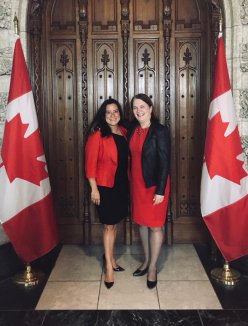
There is wisdom in the colour red, with some universal meanings present across cultures, such as: primal and sexual energy, blood and ancestry, fire and passion, and physical earth or clay. I am reminded of the colours of the Australian Aboriginal flag, with red representing Mother Earth, black representing Aboriginal people walking on Her, and the sun representing the creative life-giving energy connecting the people and the land. (Image from here.) I am similarly reminded of a current affairs story in Canada of an indigenous minister who resigned due to unethical political pressure from the prime minister, and another minister who resigned in solidarity. I find it apt these women chose to dress in black and red together as they took this historical stand. (Article about it and image from here.)

canadianpolitics.jpg

Exercise: Regret is a grief about something left undone. When we are em-bodied there is nothing to re-member because we are living in the moment on the Red Road. Think of a regret. Is that dream still viable and important to you? If so, can you take a step towards fulfilling it and make a commitment to continuing on that path? If not, can you make time to grieve the loss of the dream and let it go, perhaps through some sort of ritual, so you can move on and allow new creative energy to flow?

giveheartIf you value this content, please engage in reciprocity by living, sharing and giving.
Questioning Cosmology

christin-hume-482896-unsplash.jpg

Blog by Valerie

Stories are great teachers. They help us give meaning to events, teach core values, and inform our understandings of social order and individual identity (Engel, 1993). We each carry stories, personal mythologies, that form our core values and beliefs, help us understand our place, and guide us on our path. The concept of empathy, of deep listening and heartfelt storytelling, is central to oral-based cultures, and even in cultures that privilege the written word, such practices are considered deeply sacred, like the Catholic Confessional, or an important part of daily life, like meeting a friend or family member for a chat/yarn. (Free use photo by Christin Hume on Unsplash)

In practice, empathic listening, and the safe sharing stories, is limited by the cosmologies of participants. When we share a story with someone, and that person is in a state of being in denial/judgment about what we are saying, we experience rejection/lack. When we receive this reflection, we tend to feel shamed. And especially as children, or because we feel fear of being exiled from our family/tribe/community, we carry this shame in our own hearts and minds, fuelling feelings of low self-worth. Rejection is a deep pain to process, a lack of feeling whole. And most of us have inherited much of this due to ancestral trauma. An Earth Ethos suggests that those of us who are involved in violent behaviours, in whatever role (victim, offender, or bystander), carry elements of shame in our very senses of identity (Thibodeau & Nixon, 2013; Sawatsky, 2009). This shame, often referred to as “sin” creates feelings of lack of worth and dissociates us from fully being present. We fear social exile, and rightly so, because without connection with other people, it is hard to live. (Image from here)

exclude

When I did research with sex offenders, I heard a lot about the depth of social shame they felt. I heard about some men who were disturbed by sexual thoughts of children and were too terrified to seek help until they acted on it, and others who did seek professional help and were reported for abuse they had not committed. I felt an intensely painful energy in the space of social stigmatisation where so many of these people and their family members and friends, these fellow humans, live.

compromiseI encourage you to connect with your own cosmology and question rejecting/violent statements/thoughts like “He should have known better”, or “It serves her right.” Such words indicate an internalised denial/judgment and fuel shameful, painful feelings inside you, the person you are speaking/thinking about, and our collective culture. Even when we believe/think something is wrong, we can still hold that aspect of our cosmology with compassion and respect. These words are pointers to places of yourself that could be further explored, unpacked, and transformed. Dangers and fears come in many forms, including physical, emotional, psychological, and spiritual. Watching an interview with someone who has killed another person, for example, may trigger emotion you are carrying and show aspects of your cosmology that could be shifted from judgment or denial/lack into compassion and empathy, and gratitude that you did not need to learn such a lesson the hard way. (Free photo by Christin Hume on Unsplash)

Exercise: Reflect on how many compromises you make in the name of “social harmony”/fear of change, and when it is important to you to go against the grain. See if you can connect with an aspect of your own humanity that is unfamiliar, like your “inner prostitute,” “inner abusive parent,” or “inner murderer”, and be with the discomfort that comes up in order to hold people in that space, and yourself, in more compassion and gentleness.

giveheart If you value this content, please engage in reciprocity by living, sharing and giving.

Earth Ethos: an embodied philosophy

Blog by Valerie

An Earth Ethos considers healing to be synonymous with justice. This philosophy is based on indigenous wisdom, where “indigenous” refers to cultures grown in connection to specific places such as aboriginal tribal members, as well as more generally a holistic worldview honouring the interconnection of all beings and viewing life as cyclical (Cervantes & McNeill, 2008). An Earth Ethos is evident in beliefs and practices of cultures around the world, and is being resurrected in modern Western culture through the work of indigenous peoples who share wisdom with non-members, as well as modern people who work to integrate such teachings and ways of being into modern life. Whoever you are, you were born of and on the Earth and are indigenous to some land and lineage(s).

prettytree

Understandings of justice grow out of cultural cosmologies. In indigenous cosmologies, there is no fall from grace in Heaven, no exile from abundance in the Garden of Eden, and no criminal action of eating a forbidden apple that a God has used to punish us humans. Because humans are firmly established in a particular space and time based on cultural mythology and birth, from an indigenous perspective, there is nothing to prove and no nature to discover. It is inherent (Rael, 1997). While feminism has challenged patriarchal perspectives, we still needed to challenge anthropocentric (human-centric) and ethnocentric perspectives in Western culture. We need to experience empathy with our entire human family and with all beings, to remember how to live in reciprocity with the Earth, deeply honouring our source of human life and re-evaluate core aspects of our cultural and individual identities (Ohiyesa, 2001).

The Western concept of authority is out of balance. Former philosopher Alan Bloom said, “The West is defined by its need for self-justification and to discover nature, and both philosophy, whether religious or secular, and science reflect this human quest to know nature (1986). Sharon Venne, a Cree lawyer said of First Nations that: “Our sovereignty is related to our connection to the earth and is inherent” (1999). Former Menominee activist Ingrid Washinawatok agreed that “Europeans relegated sovereignty to only one realm of existence: authority, supremacy and dominion. In the Indigenous realm, sovereignty encompasses responsibility, reciprocity, the land, life and much more” (1999).

cleanearth

In Western culture the Earth is often portrayed as a place to endure, whereas an Earth Ethos sees the Earth as the source of life, not a resource to be used for a period of time. The Earth’s health is intimately connected with and reflective of human health, because the Earth is a living Mother supporting us all. To consider a rock or tree as non-living or non-sentient places humans at the centre of the universe and devalues everyone. This results in “war to determine whose anthropocentric view is most valid” while “the earth and all its inhabitants []suffer” (Gustafson, 1997). Our bodies are made of the soil of this planet, and we are all united in our hearts. An Earth Ethos sees minerals, insects, plants, animals and other beings not only as ancestors, but as wise life forms that can teach us humans how to live in harmony with the rest of nature, since they have successfully survived on Earth a lot longer than we have. We humans are the new species on the block, and an Earth Ethos acknowledges with humility that as a species we are out of balance and in need of healing.

giveheart If you value this content, please engage in reciprocity by living, sharing and giving.