Category Archives: Healing

Social belonging

belonging.jpg

Blog by Valerie

The etymology of the word “belong” is “together with” or “related to.” It’s a tribal concept. Years ago I worked with a shaman who said human nature is tribal, not national, by which he meant, the colonialist social experiment of countries would naturally devolve into tribes. These days I agree with this. Places like the US are too diverse and too big to be governed by anyone but a strongman holding it together through control. Before colonisation, Native Americans had governance structures of inter-tribal councils where power was not concentrated in one person but in a diverse group of elders that needed to reach consensus on contentious issues, and tribes had their own internal governance structures on top of that. But these days, what is a tribe? I like this definition, that in when we’re in our tribe, we feel normal and accepted. A clan is a more tightly bonded sub-group within a tribe, and a family is a more tightly bonded sub-group within a clan. A community is made up different tribal members and is formed either out of necessity (such as living as neighbours), or shared interest (such as attending the same school or church). (Image from here.)

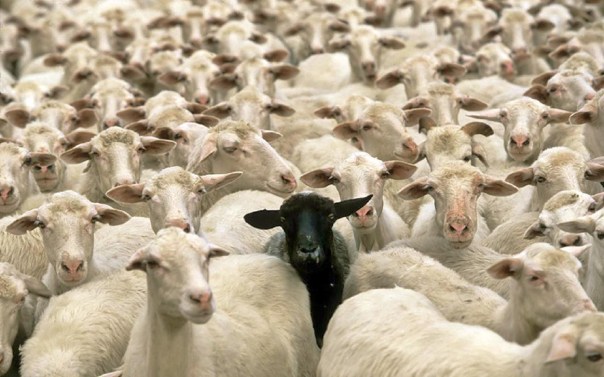
I have been a member of communities my whole life, but experiences with tribe, clan and family have been much more recent. The most memorable time I felt part of a “family” was a few years ago right before an indigenous dance ceremony with a group of people I had never met before. I had an “aha” moment sitting in a kitchen watching people buzz about preparing things for the ceremony and savoured that feeling so it would imprint in me and I would remember it. As a “black sheep” it took me a while to realise that for me family is based on feeling, and that being born out of intertribal conflict literally creates “bad blood” that I’ve needed to reconcile in order to survive. My tribe is scattered across the planet, and that’s okay. And many members of my tribe are invisible, ancestral spirits.
black sheep.jpeg

An experience I have often is “whitewashing,” where people look at me and immediately assume that I am a Christian of Anglo Saxon colonial background (though I have no Anglo Saxon blood that I know of, and I was not raised as nor do I identify as Christian). Growing up in the American South, I had a friend whose parents were Jamaican who similarly grew weary of being referred to as African American. We really project a lot of identities onto people without realising. Someone said if you really want to change the world, be mindful of your own projections, and boy do I agree with that. Even then, a projection and an internal felt sense of belonging are not remotely the same thing. (Image from here.) I am reminded of an experience in a sweat lodge where a Tiwa woman said she had been hoping there was no “white blood” in her family because the karma of that energy was so hard to deal with, but that a DNA test had shown she had some European ancestry. I said a prayer during that lodge: May all our intertribal conflict remind us that we are one big human family. May we celebrate our diversity and enjoy healthy boundaries. Aho. A cactus may appreciate a water lily, but they can’t survive in the same environment, so why would they go against their nature and try? Some of us must be in the wrong place physically, or else we would not have so much conflict in our communities. Sometimes we’re so used to being malnourished, it takes a while to imagine what it would be like to really flourish.

I’ve been reflecting on genocide, where one tribe has an overgrowth of the psycho-spiritual Wetiko virus convincing them that they are existentially better than another tribe so they set about violently trying to prove this by removing the “other.” If energy cannot be created or destroyed, when a tribe is killed, where does that energy go? I realised it emerges as ancestral trauma within the dominating tribe in successive generations in an attempt to reconcile the conflict from the inside out. Many of us who feel we were born into the “wrong” family, tribe, culture, body, etc., are bearing this diversity.pngkarma of humanity out. It’s all over the place: it’s conservative Christian parents confronting their prejudice with an LGBT child; a Southern Baptist who falls in love with a Catholic; a strong patriarch with a young daughter wiser than he is; a mother who worked so hard to break into the corporate world whose daughter wants to stay at home with her kids. Over and over again I see situations in which that which we judge, hate or reject is presented to us in an even more intimate way so that we learn to love and accept it. (Image from here.)

Exercise: Where, when and with whom do you feel belonging? What does it feel like? Next time you feel lonely, isolated or alienated, be with the “longing” for that aspect of yourself and explore why you feel that. What part of you feels rejected and why? What do you need to feel more present and whole in that space?

giveheart If you value this content, please engage in reciprocity by living, sharing and giving.

Nourishment

Blog by Valerie

Like all natural beings, each of us has a unique nature. The word “symbiosis” comes from two Greek roots: to live + together. Biology recognises six types of relationships, but I see the following three:

  • Mutualism (& Commensalism & Neutralism) – mutual benefit (though it may not be clear how)marigoldhiss
    • bees pollinating flowers
    • algae & fungus forming lichen
    • mammals eating fruit and dispersing seeds
    • a squirrel living in a hole in a tree
    • a bird hunting for insects while a hog digs up the ground
  • Parasitism – one benefits, one is harmed
    • kudzu grows up a tree, blocking its light and knocking it down
    • a mosquito, tick, leech or tapeworm takes blood from its host
  • Competition (& Predation) – one benefits, one faces loss (or death)
    • male gorillas fighting for dominance
    • a cat killing a mouse

(Image: Some of you may recognise our former cat Marigold and question whether pet cats are mutualism-based relationships.)

deerbunny1

Relationships nourish us, or not. Sometimes our relationships are based in part on shame. Through trauma-bonding in childhood we may have learned to associate nourishment with aspects of parasitism or competition. It took a long time for me to leave parasitic and predatory relationships involving members of my family of origin, as I kept working to transform them into mutualism ones, and it didn’t work. Sometimes our natures do not align for mutualism relationships. We’re all familiar with stories of someone who had “pet” bear, or snake, or wildcat that turned on them one day. I’m reminded of the Aesop fable of the frog and the scorpion:

aesop

We tend to place value judgments on the categories, but there’s nothing wrong with the nature of a scorpion needing to sting. We have these types of relationships in our lives, and through knowing our nature and being strengths-based and having healthy boundaries, we create conditions where we’re more likely to flourish. For example, I’m not competitive by nature, but occasionally I get caught up wanting to be right. This is a sign that I am not accepting myself, that I am in shame/judgment/punishment and am attempting to prove my worth and fight for my right to survive in that context. It is either an area of transformation, or a place to protect myself from and avoid as it is not healthy space for me. Parasitic relationships I can tolerate in small amounts and need to avoid on a larger scale. It’s one thing for a mosquito to take a drop of blood now and then; it’s another for twenty mosquitoes to be taking blood at once. (It’s one thing for a co-worker to ask you to listen to a sob story once a week, and another thing to be married to someone who plays a victim every day for months on end.)

Exercise: Think about some important relationships and contexts in your life. What nourishes you spiritually? emotionally? psychologically? physically? What do you see as your nature (it may change in different contexts), and how do you accept it?

giveheart If you value this content, please engage in reciprocity by living, sharing and giving.

Space Clearing

smoke

Blog by Valerie

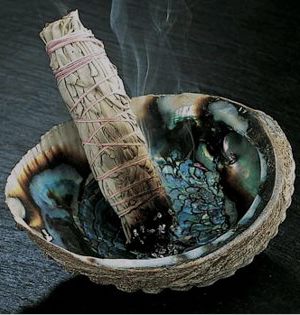
When I have lived in big cities such as Mumbai and L.A. I would come home and wipe visible grime off my skin. But I also picked up a ton of invisible psychological, spiritual, and emotional grime, and we often forget about this. Imagine how many people’s thoughts are projected onto you each day, how many people’s and other animals’ emotions you pick up on, and how much spiritual energy (probably mostly negativity) you pick up too. When a friend asked an indigenous elder how cleansing worked, he said the smoke eats us. What that means to me is that the smoke literally eats away at all the energies we are carrying that are blocking us. These days the only serious cleanses of spaces we tend to do are fumigations with toxic chemicals for pest control. Yet cleansing our space is a simple way to shift our energy, lighten our loads, and literally make space for new blessings to flow into our lives. Hospitals, schools, cars and homes are all very different spaces when we release the myriad of projections and energy patterns that build up in them! (Image from here.)

smudge

In indigenous cultures, purification with smoke is often referred to as smudging. Plants chosen for burning carry symbolism for a culture and are local to a place. Native Americans burn tobacco, cedar, sweetgrass and sage. Palo santo wood is burned in the Amazon. Aboriginals in Australia burn acacia, eucalyptus, paperbark and treefern (Guédon, 2000). Plants are burned to symbolise the purification of a space for healing. This reminds us of the sacredness of life and helps us be in the present moment. In Tiwa language of the American Southwest, the word “nah-meh-nay” refers to land, which means “the self that purifies” (Rael, 1998, p. 29). (Image from here.)

Clearing a space by burning incense, plants, or resin is done for similar reasons in many Christian, Buddhist and other religious and medicinal traditions. Scientific studies investigating herbs used by indigenous cultures suggest that smudging may cleanse bacteria from the air (See e.g. Nautiyal, Chauhan, & Nene, 2007; Mohagheghzadeh, Faridi, Shams-Ardakani & Ghasemi, 2006). In fact, as recently as during WWI, rosemary was burned in hospitals for cleansing a space.

In an Earth Ethos, we clear space by working with the four elements (earth, air, fire, water). To honour the earth element, we use incense, herbs, plants or resin; to honour the fire we light it; to honour the air we allow the smoke to spread throughout the space; and to honour water we spritz it (often mixed with an essential oil or infused with an herb or flower) around the space to finish. When cleansing a space, it is important to set an intention that everything unnecessary/not yours be released. Feel free to use specific prayers if you follow a certain tradition. While plants, trees and flowers have unique strengths that herbalists know, using something you feel intuitively drawn to or that you have a relationship with already (like you have grown it in your garden for a while), will strengthen the cleanse. For example, sage is commonly sold and used to cleanse a space, but it is traditionally used not to cleanse a space, but to create sacred space before a ceremony (Mary Shutan, 2018)

bathBefore you cleanse the space outside of you, it is important to smudge your body and walk through a spritz of the water you will use so you are as clear as the room! A full body smudge is often done in the shape of a cross going along one arm across the chest to the other, up above the head and down to the feet, and then the same around the back of the body. For a more thorough bodily cleanse, consider a mindful bathing/cleansing ritual. Spiritual bathing, whether just in pure water or with additional herbs or minerals, is an ancient practice of purification done across cultures and religious traditions. It takes the form of baths, steams, saunas, hot spring soaks, and sweat lodges. Science has shown that the skin is our largest organ, so it helps keep us healthy on physical, emotional, mental and spiritual levels to cleanse it in an intentional, ritual way. A simple and effective bath you at home is adding salt to bathwater, along with a spoonful of non-piped-in water such as collected rainwater, seawater, or water from a nearby lake or river to strengthen the power of the water. This blog has useful basic information about spiritual bathing. And if you don’t have a bathtub (which I didn’t in my previous apartment), it’s amazing what a weekly saltwater/essential oil intentional foot soak can clear!

Unless you have a lot of stuck energy in your life, or there has been a lot of arguing or pain in your space or your body, a once a month spiritual house cleanse and once a week spiritual body cleanse should be sufficient (Mary Shutan, 2018). It’s a small ask that can deliver big results. 

Exercise: Clear your space and cleanse your body with a spiritual bathing ritual. Even better, do regular rituals for a few months, and see how it improves your life’s flow!

giveheart If you value this content, please engage in reciprocity by living, sharing and giving.

Holiness

Blog by Valerie

Most of you reading this, like me, grew up a Judeo-Christian culture. And like many of you, I experienced conflicts and hypocrisies with aspects of those teachings. One such conflict is with the concept of “The Holy Land.” I have always known deep in my bones that all land is holy land, and that all bodies and beings are holy and sacred and worthy. To elevate a particular place as “Holy” is to demote other places as un-holy or less-holy. Not surprisingly, the etymology of the world “holy” is “healthy” and “whole.” If only one place on Earth is “The Holy Land”, and only about eight million people live there, then by definition, the rest of us 4+ billion people are in exile, cut off from our Motherland, not feeling whole.

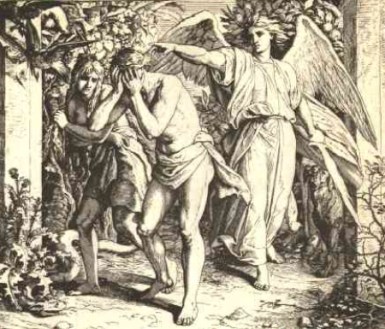
adameveThe foundation of Judeo-Christian mythology leaves us unconnected with environments where the vast majority of its followers live. The Biblical creation story of Adam and Eve’s exile from the Garden of Eden is not an embodied story connecting humans with nature inside and outside ourselves within a web of life. In fact, the entire Earth has not, for some time in Judeo-Christian culture, been portrayed as a home, as much as a place to endure or get through (Gustafson, 1997). Feeling rejected by the Sacred Feminine, we are collectively convinced we are in exile, and so it follows that many of us live in our heads and suffer from mental illness. (Image from here, altered for copyright from this image.)

Indigenous, Earth Ethos thinking challenges this vision. As Lee Standing Bear Moore and Takatoka of the Manataka American Indian Council say** (This is where I originally saw this quote, but that Council no longer exists, and I have since realised it is published verbatim in this book).

If God created the universe and countless universes beyond our own into infinity, it is clear that part of the master plan was to place God’s creatures in a place where everything they see and touch in nature is healing medicine.  What better place to care for the children of Creation?  Therefore, the Garden of Eden is symbolic for the Kingdom of God and it exists as we see it, and live in its midst, both physically and spiritually.   The Mother Earth is part of the Kingdom of God and thus humans and other creatures present in the garden were never expelled, but remain to live and evolve.   Eden is all around us, everything we see in nature and beyond is the garden and Kingdom of God.  We are here and never left. [emphasis added]

So the Christian fundamentalists asking us to repent because the Kingdom of Heaven is here now are onto something. repent(Image from here.) 

I invite you to imagine what your life would look and feel like if every land you walked upon was treated like holy land; if every human body you came into contact with including your own were treated like holy land; if every animal and plant you ate, every mineral and stone mined and built into your smartphone and car and house were treated like holy land. Indigenous thinking sees the Earth as the source of life, not a resource to be used for a period of time. The understanding that all land is holy, that all of us are wanted and held by Mother Earth where we are now regardless of our ancestor’s trauma of leaving their Motherland, is incredibly freeing. I first experienced this healing during an indigenous dance-fast ceremony in Colorado following teachings of Joseph Rael. I remember kneeling in front of a tree during the ceremony and weeping with the realisation of how much Mother Earth wanted and cared for me, how much pain I had been carrying disconnecting me from those feelings, and how much pressure that had been placing on other relationships, especially my birth mother.

Years ago I read a book whose central thesis really stuck with me written by Wilhelm Reich, a controversial former student of Freud. Reich said that more than anything, we are truly afraid of pleasure, joy, and the abundance of gifts always in our midst; that we have collectively, in Judeo-Christian/Western culture, grown used to identifying with a fundamental sense of rejection, so that we shy away from profound opportunities for acceptance. I remember too, years ago, reading about the origin and etymology of the word sin:

[T]he most common word translated as “sin” is chait. The “sin” of Adam and Eve was chait, a mistake. People don’t “sin.” People make mistakes. After all, we are human.

sinThis word “sin,” then, was meant to help us humans understand our nature: that we are powerful and able create wonders and also an innate capacity to blunder. What curious creatures we are! We have been believing and embodying an errant, mistaken thought and believing that we are exiled, unworthy, and that our sacred, earthly Mother doesn’t fully love us, and this sin/mistake/confusion has been defining the course of our collective history for multiple millennia, and is still going. If this isn’t Wetiko energy, I don’t know what is! (Image from here.)

Faced with so many reflections around us of our collective disconnection with Mother Earth, our bodies, fellow beings, and elements of our environment necessary for living like our water and air, it helps to have a sense of humour. Here’s a quote from George Carlin:

The earth doesn’t share our prejudice towards plastic. Plastic came out of the earth. The earth probably sees plastic as just another one of its children. Could be the only reason the earth allowed us to be spawned from it in the first place. It wanted plastic for itself. Didn’t know how to make it. Needed us. Could be the answer to our age-old egocentric philosophical question, “Why are we here?”

Exercise: I invite you to re-think the concept of “holiday” and “other” days, and generally how you carry and embody being holy.

giveheartIf you value this content, please engage in reciprocity by living, sharing and giving.

Bridging identities

Blog by Valerie

There is increasingly a movement for recognising non-binary gender and sexual identities. I see how much relief it brings people to be able to call themselves bisexual, pansexual, gender non-conforming, etc. There is also increasingly a celebration of multi-cultural identities, which primarily means a celebration of people with different ancestral homelands, traditions, foods, clothing, etc. I see how much relief it brings people to be able to call themselves African-American, Greek-Australian, Russian-Jewish, etc. Something that is very dear to me is a recognition of non-dualist cultural identity.

I see how indigenous and non-indigenous identities evolved from separating the colonised from the most recent coloniser, labelling one as wounded victim and the other as wounded offender. It is important to acknowledge historical trauma and the enduring wounds people carry who experienced colonial dispossession, as well as the wounds of those whose ancestors dispossessed others. I appreciate the modern Australian practice of acknowledging “traditional owners” of a place, though I think stewards would be a more apt word. (I do not know where this image is from and will link it if shown.)

earthhands

We are all humans indigenous to the Earth. We are all indigenous to a land of which we were born; we all have ancestors indigenous to at least one known place, often numerous ones; and we are all in a process of becoming indigenous to a place where we are now living and embodying ourselves and crafting our senses of identity. In fact, I venture that every single one of us on this Earth carries ancestral trauma of being dispossessed of or otherwise removed from a sacred homeland. And we all need support healing these wounds. Despite all of this, I see few people willing to identify as indigenous without being aware of their ancestral connection with a known, existing tribal group. And:

According to the UN the most fruitful approach is to identify, rather than define indigenous peoples. This is based on the fundamental criterion of self-identification as underlined in a number of human rights documents.”

If culture emerges from the Earth below, and I, for example, was born of the land we call North America, then my body, and to some extent my identity, is indigenous to that place. I mean no disrespect to people of cultures that have developed more intimate relationships with a place than I; such people, when willing, have much wisdom to share with those of us of born in or living in a place who are still learning how to live in harmony in our environments. If I, for example, live in Australia and am transplanting my body and being in this environment, I am learning how to be indigenous here and to connect with my husband who is of this land. (Image from here.)

Non-Dual-Thinking

I honour spiritual leaders who see people crying out in pain for lack of connection with place and offer basic tools to help us connect. I envision us all remembering that we are one big human family, that we all are indigenous to somewhere and so were our ancestors, and that to claim an exclusive indigenous or non-indigenous identities is to play a social game that perpetuates separation and pain. By all means, claim an identity with a tribe and be proud of it, please. For those of us who cannot do so because such identities were lost touch with long ago in our ancestral lineage, please find a way to hold us in heart and mind as also indigenous, newly learning how to honour the Earth, our collective Mother, where we are placed now and where we have come from. Here is a poem I wrote about the social conflict I experience:

Land bridge

My heart is indigenous
In sync with the seasons
My feet firmly grounded
In Mother Earth below me.

My spirit is indigenous
Interconnected with all that is
Flaming with animist passion
For peaceful coexistence.

My mind is indigenous
Built upon a cosmology
Of communal integrity,
Wholeness and ease.

My soul is indigenous
Ravished with pain
In States of mankind’s
Civilising war games.

My name is indigenous
Given during a spiritual journey
CloudClearer, who helps release
Dis-eased thinking.

I challenge cultural exclusion,
Indigenous and non-indigenous;
Living between identities
I cry out for community.

giveheart If you value this content, please engage in reciprocity by living, sharing and giving.

Relationships & identity

Blog by Valerie

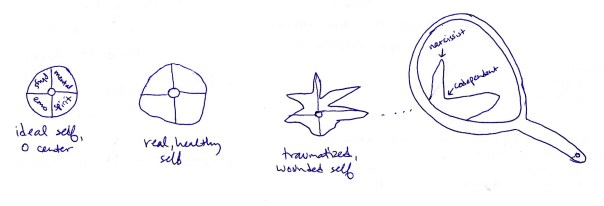
Relationships form our sense of identity; when we are part of relationships that feel fulfilling and wholesome, we feel magnified collaborating with people around us. Life feels like it’s growing constructively, for even when something is ending, it feels like a natural process of decay before a rebirthing. When we feel connected with the plants we eat, air we breathe, and animals that are our companions, we feel grateful for the gifts the Earth gives so we can be here as humans on Earth, and we are moved to express our gifts too, and willing to sacrifice some pleasures and experience some pains for the betterment of the whole. When we know who we are, that we are timeless, small eternal sparks of much bigger-than-us cosmic energies, then we feel connected with our heart centres. When our hearts are open and we are loving and allowing ourselves to be loved, we know that though each being is an individual expression of something unique and beautiful, there is something relating us all to each other and keeping us inter-dependent while we are here. When we are traumatised or wounded, we lose touch with that sense of being whole. Sometimes, for people like me, it happens when we are so young, and the people around us are so deep in that wounded state, that we grow up quite confused about our identity. We think we are daughters, sisters, friends, lovers, teachers, or some other role that we play. Rather than experiencing a clear mind at ease, we are lost in a torrent of psychic burdens that we move through, only to discover again and again a new way we have been confused and our mind has tricked us, losing connection and feeling isolated and broken again. It is becoming increasingly common to label personalities as narcissist or codependent. In an Earth Ethos perspective, it might be visualised through the Medicine Wheel like this:

medicinewheeldrawings1

Parts of ourselves that are over-developed tend to be arrogant, bullying, on insecure ground, larger-than-life, and take on more than our fair share, more than we can hold with integrity; these parts we tend to be term narcissistic. Parts of ourselves that are oppressed or suppressed, bullied, victimised, and survive by seeking approval or taking care of others at our own expense tend to be termed co-dependent. We have both parts in our lives if we are out of balance, and if we identify as the co-dependent/victim and see a number of people playing the role of the narcissist/bully, that is a sign we have dissociated from our own narcissistic behaviour. This does not mean we are necessarily bullying other people without realising it; it may be that we are bullying ourselves, carrying negative self-beliefs, and allowing other people to disrespect us. The relationships in a Medicine Wheel framework might look like these Venn-like diagrams:medicinewheeldrawings2

The middle diagram is human, not ideal, because part of being here is acknowledging that we all have rough edges and boundaries in the way we can connect. I call it “trauma-bonding” when we are in relationships based at least to some extent on our wounds. This means there are dynamics of the relationship that are volatile, painful, and scary, with behaviours feeling explosive or implosive. It is helpful to remember that trauma is “acted in” and “acted out,” meaning when we feel attacked, we can implode, turning inward and developing a negative self-image and/or negative connection with a Higher Power, and/or we can explode, reinforcing a sense of being offensive and unworthy by creating that reflection through our behaviour’s impact on others. Many of us are familiar with this idea through the cycle of violence. (Image from: https://study.com/academy/lesson/cycle-of-violence-theory-diagram.html)

cycle of violence

Another way to visualise this is the victim-offender cycle, another infinite loop of pain. (Color image is a painting I did.)

Enemy'Aggressorcycleofviolence

At their core, these cycles show the same thing: that we do not know who we are, we do not feel whole, we are acting out of and identifying with wounds. When we hurt another being, we hurt ourselves; violence begetting violence is ancient wisdom. Our minds are so good at tricking us, at getting us to forget that all is connected and engaging in us versus them thinking that we have an entire criminal “justice” system based upon it! It is a testament to our ability to experience independence that we have gone so far in this direction. It is a testament to our ability to experience inter-dependence to become increasingly honest about the destructiveness of trauma-bonds and wounded relationships, whether with ourselves, with others, or with our understanding of an exclusive, rather than inclusive, God-head.

I’ve been through a lot of trauma and pain in my life, and harder than healing 15 years of incestuous sexual abuse has been healing the trauma-bond I had with my birth mother. It is a deep grief to realise that one trauma-bonded with one’s mother, and that she did the same with her mother and on up the ancestral chain, and that violence is the foundation of her identity and the basis of at least one foundational relationship, with the sacred feminine, Mother Earth. It can be hard, too, when we experience narcissistic abuse to realise that we are worthy of respect, and the person we experience that with may or may not have a trauma-bond as the foundation of all of their relationships. Sometimes reflections and experiences are so painful, we need a space to come to terms with the “shit” and to turn it into fertiliser. If we do not look for what we are missing, are unwilling to receive hard feedback and examine our own rough edges, we tend to identify as victims, because that is a more socially acceptable role.

Our narcissistic parts tend to attract wake-up calls in the form of humbling experiences, disappointed expectations, and seemingly childish, selfish behaviours and “why-me” picked-on feelings. Our co-dependent parts tend to attract wake-up calls in the form of abuse, disrespect, not feeling good enough, and being oppressed, suppressed, in our heads and disconnected from our bodies. It is a mark of spiritual maturity to hold compassion for all of these parts of ourselves and others we are intimate with, while ongoingly maintaining healthy relational boundaries, even when it triggers others to go around the cycle of violence. It is hard to watch people we care about suffer the pain of the cycle of violence, but we are of no help if we remain there with them reinforcing the confusion in us both. It takes courage, trust and faith to let go and allow ourselves and others to be on a journey of remembering that who we are is undyingly eternal and innately whole.

giveheartIf you value this content, please engage in reciprocity by living, sharing and giving.
Being & Doing

Blog by Valerie

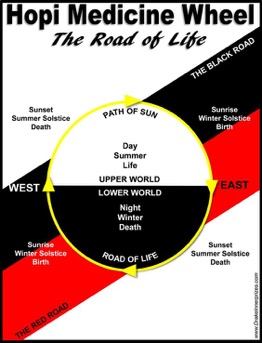
When walking the medicine wheel in everyday life, we choose where to place our focus. The lower world, the invisible, felt world of Mother Earth is a metaphor for our state of being. Out of our state of being arises action in the physical, visible world of Father Sky. By focusing on our deepest values, we feel more solid, like a tree with a strong foundation in the Earth. By focusing on specific actions and situations, we feel more like an individual leaf that may be tossed about by a breeze. treebg

Using the Medicine Wheel as a metaphor for our life path shows us how this works. The concept of the Red Road and Black Road is distilled from numerous traditional tribal teachings of indigenous cultures of North America. The illustration below suggests how to walk the Red Road. Imagining a line drawn across the Medicine Wheel below shows that on the Red Road the majority of our focus is on the lower world of Mother Earth, on letting go. This means we are focusing on embodying our deepest values, such as compassion, empathy, grace, and kindness. It means we are regularly purifying ourselves individually and in community so that we deepen our ability to remain present. It also means that we trust that all of us on this planet are of innate value, that the Earth wants us here because we are being supported to live right now, and that we have gifts to share. Sometimes it takes leaps of faith to be willing to trust that we are valuable. We may get caught up in proving our worth through our intellect or actions. Most of us carry stories from the Old Testament of a God that asked us to do good actions to prove that we are worthy of living another year. When we are behaving this way, we are walking on the Black Road. We are focusing on actions and outcome, often justifying means that conflict with our most cherished values to reach certain ends, because we feel scared, overwhelmed, or confused.

hopiroadoflife

Many indigenous languages focus on action verbs and vowel sounds to embody this Red Road path. In this kind of thinking, there are fewer labels and fixed ways of being. I am not a noun called “Valerie” or “Cloud Clearer,” I am “Valerie-ing” and “Cloud Clearing” in every moment as I flow through the world. The avoidance of labels like “right” or “wrong” gives us space to exist no matter how we behave, or where we place our focus. Yet, if we choose to be on the Black Road, there are consequences. For example, if we don’t tell the truth, we are in a state of being untrustworthy and create shame. In modern Western culture, we often feel an expectation to have an opinion or respond to a question with an answer. We even talk over each other in spirited debates. On the other hand, to show respect for each person’s place, many indigenous cultures traditionally practiced deep listening in silence, only responding after more silence once the person finished speaking, to show that their words were considered first.

To walk the Red Road has much in common with A Course in Miracles. What we can dream up on our own pales in comparison to the miracles that can occur when we truly let go of resistance and allow our lives to flow. Sometimes we are so full of emotion, stories, and unprocessed past experiences, that what we need most is to create space. Crees teach seven ways of releasing negative emotion: crying, yelling, talking, sweating, singing, dancing, and praying (Ross, 1996). We also need practices to help us return to and retain states of being that we prefer. In my life, meditation is an invaluable daily practice in this regard. In meditation, I listen to my inner voices, practice compassion, honesty, and letting go, and create space so that miracles may occur.

bryant-mcgill-heart-broken-expanding-love-9q1m

Exercise: Our hearts are for-giving and for-getting. What are you giving and getting in this moment? If it is painful, remember that you already survived it, and feeling it fully, expressing and releasing the emotion, is a courageous and freeing choice to let it go. May you enjoy the flow.

giveheart If you value this content, please engage in reciprocity by living, sharing and giving.

Flow

Blog by Valerie

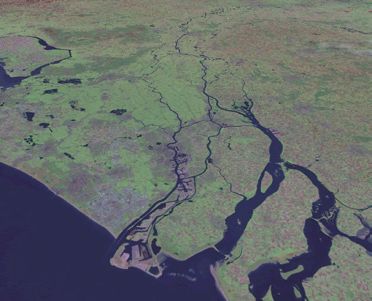
We often say “random” to refer to something unexpected happening. In English, “random” arose from the word “run”, which is related to the Rhein river in Germany, and refers to “flow.” When we have space for the unexpected, miracles flow. When we live in obligations and expectations and keeping up appearances, we feel dead inside. How well life works when let go of our traumas and projections and are able to trust and accept the natural flow of events. Judgment comes from existential black-and-white/right-and-wrong thinking; we dissociate part of life that we do not accept and carry that energy as guilt, shame, or hatred. Then we project these dissociations onto people, events, experience, etc. and judge our own projections. It’s a very destructive game. (Rhein delta image from: http://www.delta-alliance.org/deltas/rhine-meuse-delta)RhineMeuseDelta.jpg

There is a difference between seeing events and experiences as neutral and allowing meaning to emerge, and making meaning out of events and experiences by projecting our wounds (traumas, emotions, beliefs, etc.). There is a difference between carrying a dream, praying/wishing for it to come into being, and taking action to bring it into reality, and of forcing a dream to take form based on our own vision and desire. It’s the difference between being a dictator, and a co-creator or co-dreamer. As a co-creator or co-dreamer, we acknowledge that we are not in charge of the “how.” We may not even know “why” we have a particular dream, “where” it came from, or “who” will support its birth into being. We may only have a vague sense of “what” the dream is, because we know it needs to evolve in a context much bigger than our own mind can know.

For example, we may dream of being a parent, and we may carry a vision of what that looks like, such as: a stable romantic partnership, financial security, a safe home environment, and a caring community. But the events and experiences of our lives may be very different to our vision. We may struggle to become pregnant, lose our job and be unable to afford some things we wanted, or get pregnant in an uncommitted relationship. Why do these things happen? The best answer I have is, I don’t know! And that answer is so freeing. I help my mind be okay with not knowing, because I practice flowing and accepting. I also choose to trust that life is always helping me to awaken, evolve, and become a more authentic and present version of myself. So when I experience unexpected hardship, I feel alive, and I know I will learn something.

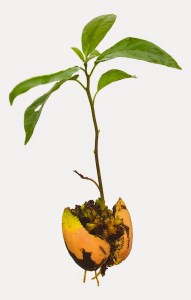
Trauma gets a bad rep. Sure it triggers pain and can be overwhelming. I have experienced a lot of that. But trauma is a powerful birth/death crisis-type of energy that has potential to teach us about ourselves and our world, to help us remember on a Avocado_Seedlingdeeper level who we are, and to offer us new life experiences. You can’t plant a seed in the ground without digging a hole and traumatising a small patch of earth. And a seed can’t begin its journey of growing into a tree without traumatising the seed encasing its energy and expanding into the soil. Trauma is part of the cycle of life, of birth-life-death-and rebirth. We can look at a tree and label it “dead” and forcibly chop it down. Or we can look at it and realise it’s decaying, and that there are numerous insects, animals, fungi and bacteria living in that environment who are helping transform the tree back into earth. It is a witnessing of energy changing form. We may also notice that even tree stumps may be “alive” through the interconnection of their roots with other trees in a forest, to keep a network of support and communication flowing between trees living above ground. Sometimes stumps even sprout new trunks and regrow themselves entirely.  (Image from: http://blog.daleysfruit.com.au/2014/03/grown-by-grafting-cutting-seedling.html)

Sometimes our minds are so full of stories, our lives so full and structured with meeting expectations and fulfilling desires that we lose touch with flowing energy. Rivers rarely flow in straight lines, and so flow energy tends to meander and take us into the unexpected and the unknown. We get surprised by “randomly” running into an old friend, rather than seeing that as a natural experience we could be choosing to make more space in our lives for. When we let go of controlling the “how” of our dreams and visions, and even let go of some of our dreams and visions altogether, we make space for flow to emerge. We experience interconnectedness in an organic way, and through the feelings of pain and pleasure of fulfilled and unfulfilled desires, something more precious starts to emerge: an understanding of a purposefulness to our journey, and a peaceful acceptance of the messy reality of being human.

christmasbush copy

Exercise: A simple practice is to regularly block off some time where you do not schedule anything or have any plans. Keeping some time sacred to allow flow energy to emerge demonstrates a commitment to making space for miracles. You then spend that time relaxing as best you can and doing whatever organically arises. You may be surprised to find yourself getting in the car and seeing where you end up. You may also do things that you do most days, but in a different sequence or at an unexpected time, or in a slightly different way than you’re accustomed to. When we honour flow energy in our lives, traumas that arise may seem less intense, because our psyches become used to the unexpected. Give it a try!

giveheart If you value this content, please engage in reciprocity by living, sharing and giving.
Earthing/Grounding Yourself

Blog by Valerie

For many thousands of years, humans have been sleeping on Mother Earth and walking barefoot or with leather-clad feet that keep us connected with the Earth’s energy. It is only fairly recently in our species’ history that so many of us have moved into high-rise buildings, worn rubber-soled shoes, driven in rubber-tired vehicles, and slept on elevated mattresses. All of these changes have disconnected us from the Earth literally, and elevated our anxiety levels through an increase of ungrounded head-y energy.

circulationgrounding

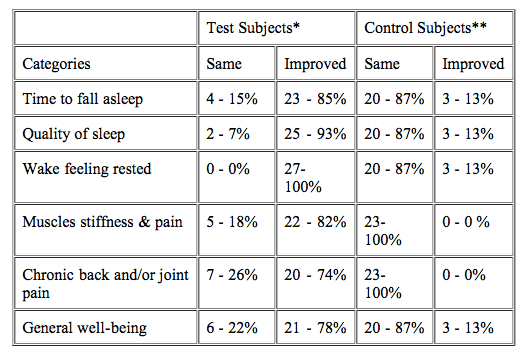
It is not surprising that a number of scientific studies have found evidence for the benefit of earthing/grounding ourselves, though many are small-scale. The figure above shows increased circulation in the face on the right after 20 minutes of grounding. One study of 60 people sleeping for one month with real or control (faulty) earthing/grounding mats in their beds found the following results:

groundingstudy1.png

Another study (with a lot of graphs and figures you could check out) found that inflammation “may be a consequence of lack of grounding, and of a resultant ‘electron deficiency’. Wounds heal very differently when the body is grounded. Healing is much faster, and the cardinal signs of inflammation are reduced or eliminated.” This is because “[a]ntioxidants are electron donors, and the best electron donor, we strongly believe, is right under our feet: the surface of the Earth, with its virtually unlimited storehouse of accessible electrons…Our immune systems work beautifully as long as electrons are available to balance the ROS and reactive nitrogen species (RNS) used when dealing with infection and tissue injury. Our modern lifestyle has taken the body and the immune system by surprise by suddenly depriving it of its primordial electron source. This planetary separation began accelerating in the early 1950s with the advent of shoes made with insulating soles instead of the traditional leather. Lifestyle challenges to our immune systems proceeded faster than evolution could accommodate. The disconnection from the Earth may be an important, insidious, and overlooked contribution to physiological dysfunction and to the alarming global rise in non-communicable, inflammatory-related chronic diseases.”

A study of 12 subjects found that sleeping with a grounding/earthing mat regulated cortisol cycles:cortisol levels grounding.png

The figure above is from a paper cataloguing a number of earthing/grounding studies. Overall, studies are finding that earthing/grounding:

  • Decreases inflammation and chronic pain by releasing excess positive electrons
  • Improves sleep by normalising biological rhythms
  • Improves blood circulation
  • Lowers stress by regulating cortisol
  • Improves menstrual cycle pain symptoms
  • Accelerates wound healing and shortens injury recovery time
  • Relieves muscle tension and headache
  • Supports adrenal health

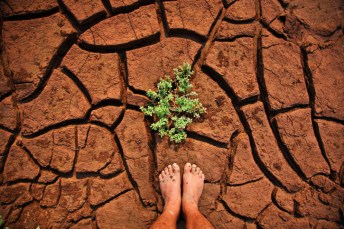
So how do we get grounded? One way to stay connected to the Earth in an office or city is to wear grounding/earthing shoes like traditional leather-soled mocassins, shoes that have carbon grounding you, or to turn any shoes into grounding shoes with a kit. (All of those products I have and receive no compensation from. I’m sure there are many other good ones.) Even better, walk barefoot on sand, grass, soil, concrete, or ceramic tile. You can also walk in saltwater at a beach, or soak your feet in saltwater in your home. (Walking on asphalt, wood, rubber, plastic, vinyl, tar, or tarmac will not ground you.) You can also lie on the ground with your whole body, and if you do this regularly such as on a blanket in a park or your yard or camping, you may notice your stress levels decreasing.

groundingimage.jpg

I have lain on the ground every day for thirty minutes for eight months straight, which did help me. I also started wearing grounding shoes a couple years ago and really noticed a difference in the office. I regularly soak my feet in saltwater. I used to crave going camping, and for a six-month period managed to sleep on the Earth nearly every other weekend. I enjoy walking barefoot when appropriate. But the game-changer for me was to sleep in my bed with a grounding mat. I use this one, but you could make your own by searching for advice online, or buy other products. The first few weeks my husband and I slept with a grounding mat we sometimes felt tired and achy when we woke up, and generally felt a bit discombobulated and had some emotional junk come up. As we settled into it, we felt a lot better, and now I take the mat with us whenever we travel. (As a side note, it’s surprising how often I find outlets in hotels and houses that are ungrounded.) (Image source)

Last week’s post included the concept of the land under our feet being the source of indigenous tribal culture, where cultural wisdom emerges from the Earth below. I have heard indigenous people describe the feet as our eyes to Mother Earth. If we walk around insulated from the Earth, disconnected from our sacred Mother, then our culture is literally ungrounded, and it is not surprising we feel a bit like zombies lost in our heads. So here’s to grounding ourselves. It’s not just part of an Earth Ethos, it’s part of being a healthy human being!

giveheartIf you value this content, please engage in reciprocity by living, sharing and giving.
Confronting Colonialism

Blog by Valerie

Knowing that you love the earth changes you, activates you to defend and protect and celebrate. But when you feel that the earth loves you in return, that feeling transforms the relationship from a one-way street into a sacred bond.–Robin Wall Kimmerer

earthlove

Indigenous writers describe colonialism as “a violation of the psychological womb” and  “a great rupture with the Mother [Earth]” (Cervantes & McNeill, 2008). Colonialism has spiritual roots in our ideas about the meaning of life, our nature and place in the world. In Judeo-Christian culture the Earth is often seen less as our home, and more as a place to endure. An Earth Ethos sees the Earth as the source of life from which resources are continually re-cycled around, not a temporary playground for us to use for a period of time. The Earth’s health is reflective of our human health. In Australian aboriginal languages, “land” means “everlasting spirit” or “source of life” (Atkinson, 2002).  To say “I’m going for a walk in nature” shows our modern Western alienation with the Earth and the place where we live. Cities are highly cultivated environments, and a forest is wilderness, but both are aspects of nature–we cannot escape nature except in our own trickster minds!

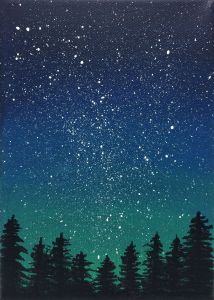
You know how when you walk into a room, and you can feel that people were just arguing in there? You feel some funny energy in the space. Similarly, places carry trauma and violent energy that reflect into our bodies and psyches, though we are not as conscious of this. We may not be aware that 100 years ago there was a massacre on land where a school is today, and we may wonder why that school has such problems, when a school a few blocks away does not. This is why art and ceremony on land of traditional cultural significance are vital to healing. “The land under each tribe’s feet is the [spiritual] source of its culture,” and is we are responsible for giving back to the Earthfrom which we came (Kimmerer, 2016). An aboriginal elder recently taught me that the night sky and the Earth in that place are exact mirrors of each other, and to live intimately with a particular place on Earth, we learn from our ancestors in the sky.

nightsky

Research on trees planted for commercial gain that are of the same species and lack connection with a network of older trees has found that they do not communicate well, and that they compete with each other more and suffer more ill health than when they grow wild in forests (Wohlleben, 2016). In cities full of commercial culture we often similarly experience spiritual lack. We spend a lot of time in rooms and vehicles shaped like rectangles, struggling to feel deeply connected with and nourished by our manufactured environments. We seek distraction (literally un-grounding, a loss of traction) and use substances such as alcohol, caffeine and marijuana that numb uncomfortable feelings or stifle unwanted thoughts in our minds.

According to indigenous thinking, colonisers previously experienced a trauma of disconnection from intimate, reciprocal relationships with their land of origin, and conquering and privatising land is a re-enactment of this trauma (Smith, 2005). Some indigenous cultures describe a psycho-spiritual virus as the root of this trauma. TheAnishinaabe in Canada describe Windingo as a hungry, destructive force that is never satisfied and even eats its own kind (Kimmerer, 2016). The Ojibway refer to Wetiko, “a cannibalistic spirit who embodies greed and excess…an autoimmune disease of the psyche… [in which] the immune system of the organism perversely attacks the very life it is trying to protect” (Levy, 2014). The Zar spiritual disease in northern Africa is described similarly (Monteiro & Wall, 2011). In indigenous Asian cultures, a poison in the mind makes us forget who we are, manifesting as anger, desire and ignorance (Kakar, 1982).

The understanding expressed across the world by such stories is that we humans naturally carry some destructive energy. It is part of nature to create and destroy. Just look at a volcano: it both births new land and destroys existing land. When we regularly purify ourselves, this natural destructive, cannibalistic energy does not grow out of control. But when this destructive energy grows too large, it penetrates our spiritual beliefs. Then we forget who we are, feel disconnected from ourselves, each other and the Earth, and engage in destructive behaviours. I have read an indigenous elder describe that when colonialists first arrived in his ancestor’s community, the amount of such a psycho-spiritual virus that those few men were carrying completely overwhelmed the entire community. We may frame this destructive energy as diseases such as smallpox and syphilis, or behaviours such as raping and pillaging, but the spiritual root of these is considered that destructive, cannibalistic energy.

Purify your Heart(1)Psycho-spiritual purification exercise: Reflect on a relationship where you are trying to make another person see your point of view, or trying to control their behaviour and tell them what to do. What is stopping you from living your own life, and letting them be who they are? What are you avoiding or denying in your life by focusing on them, or on controlling your environment? What do you need to be more nourished right now?

giveheart If you value this content, please engage in reciprocity by living, sharing and giving.