Blog by Valerie
There are four types of calendars:
- A lunisolar calendar follows both the cycles of the moon and sun. Because the days, weeks and months are fixed, holy-days determined by the lunar cycle fall on different calendar days each year. (e.g. Hebrew, Buddhist, Hindu, Chinese, Korean, Tibetan, and pre-Christian Germanic tribes)
- A solar calendar like the Gregorian and Julian ones we are most familiar with follows the cycle of the sun only. It tends to be used by agricultural cultures. (e.g. Christian, Berber, Tamil, Bengali, and the French Republican calendar)
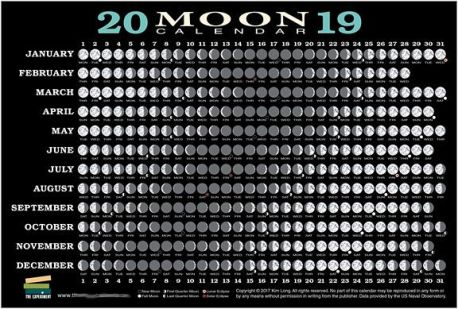 A lunar calendar follows the cycle of the moon only and may have 12 or 13 months in honour of the number of moons in a year. (e.g. Islam, Igbo & Yoruba of Nigeria)
- A seasonal calendar is based on elemental (earth, air, fire, water), floral (plant) and faunal (animal) patterns throughout a year. The number and types of seasons are dependent on specific places, so even tribes near each other may have different seasons if their land has a river that floods during a “wet” time, or if an animal migrates through their land at a specific time of year. (e.g. Aboriginal Australians)
You may think that four seasons a year has been standard in European cultures, but the old Norse calendar had only two: summer began in mid-October, and winter in mid-April. The “Wheel of the Year” is a common calendar used by modern-day pagans of European ancestry and is based on the equinoxes and solstices, and the half-way moments between them to mark changes of a four-season calendar. The images below are of Heathen (modern-day Germanic and Norse pagan) and Celtic pagan calendars. If you are in the Southern hemisphere and wish to honour this calendar, Glenys of Pagaian Cosmology translates it so your celebrations are seasonally appropriate.
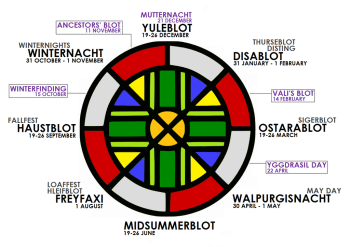

There are many ways of acknowledging seasons and cycles because of the diversity of environments, traditions and beliefs that influence a culture. The term “pagan” may make you think of someone in pre-Christian Europe who worships multiple gods, but it actually refers to people who are “fixed or fastened” to the land, i.e. villagers and country folk. In other words, pagans are people who have not yet experienced cultural genocide and disconnection from their ancestral homelands and whose culture is indigenous to, or rooted in, a specific environment and place. Aboriginal Australians offer us a reminder of how all humans once lived “fastened” in sacred connection with our environments:
(Clip from here.)
Exercise: Wherever you live, consider how to describe a seasonal calendar in your area. You may want to use the image below adapted from this template as a blank canvas, with this complex blended calendar offering some inspiration.
 In the template, cross-quarter days are marked as circles and lines mark equinoxes and solstices. Aspects of your Medicine Wheel may be written in the upper open area, land-based cycles in the next layer, and important dates below the months. Don’t worry if you don’t know some things. You can’t do this wrong; you have a unique ancestry (of land(s), lineage(s) and spirit) and the way you celebrate seasons, solar and/or lunar cycles can be your own.
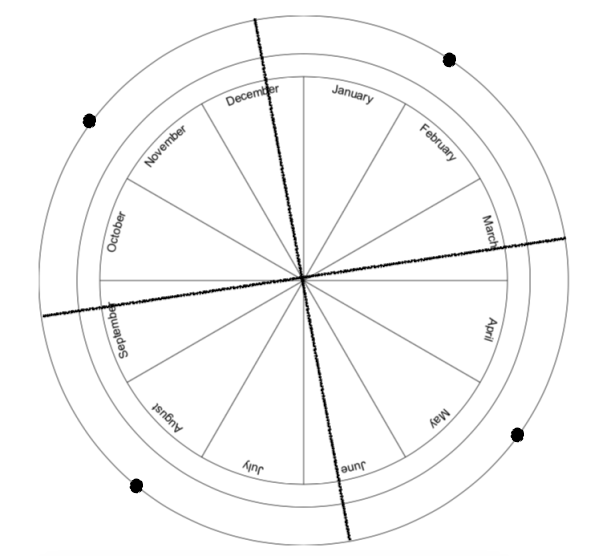
To give you some examples, in my Medicine Wheel / adapted Wheel of the Year calendar, each of the four parts is associated with a season, a colour, an Earthly cycle, an aspect of ancestry, and a totemic plant or animal – so my direction of north represents the mental, the element of air, the season of winter, the colour black, the Earthly cycle of rebirth, my Sumerian (Jewish) blood lineage, and the date palm (a sacred plant). Transposed over the Wheel of the Year, I am developing an understanding of the land-based seasonal calendar for Yuin country on the south-eastern coast of Australia, where for example, humpback and southern right whales migrate north to breed in May, and then back south with their babies in October. Also transposed are a few holy-days I like to honour with others around the world include Earth Day, the International Day of Peace, Indigenous People’s Day, and Martin Luther King Jr.’s and Nelson Mandela’s birthdays. I also honour birthdays and death days, as well as new and full moons and eclipses.
 If you value this content, please engage in reciprocity by living, sharing and giving.
 Blog by Valerie
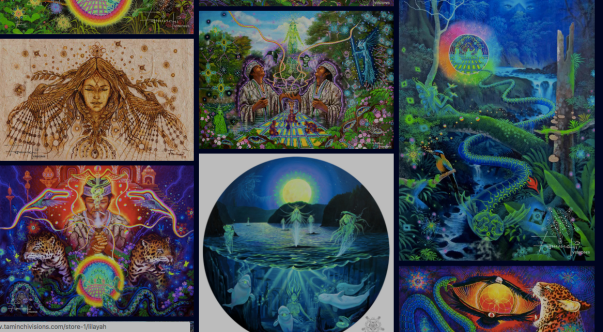 The depth of relationships, and the experiences, feel quite different to participants. Similarly, instead of peace circles as a tool to help control behaviour or improve the way people speak and listen to each other as is common in westernised restorative justice practices based on a Judeo-Christian worldview, an Earth Ethos peace circle is an opportunity for a communal spiritual experience based on an indigenous cultural cosmology. Because of the intentional use of metaphor, it ought to feel different to participants (and certainly does to me) than simply sitting in a circle (or around a table where we are blocked from connecting with each other physically) and passing around a talking piece. Many indigenous peoples use oral traditions to preserve cultural wisdom. Verbal repetition and physical embodiment of teachings keeps them pure (
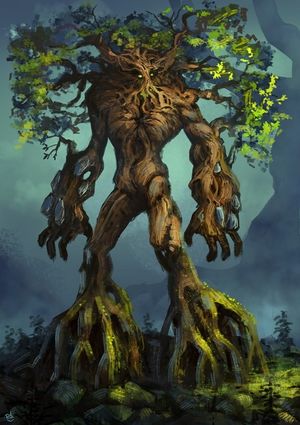 Healing of, and prevention of, dis-ease requires ceremony. Ceremony is an important human practice connecting the visible material/physical world with the invisible, spiritual world. Life feels empty and unsatisfying when we do not do enough ceremony, and ceremonies are most powerful done regularly and intentionally in community (
 If you value this content, please engage in reciprocity by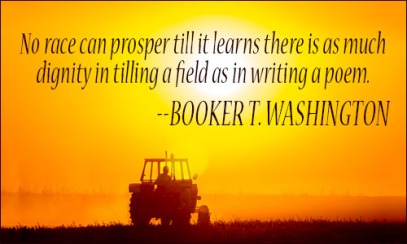


 materialist or a Christian, so I told people close to me I would focus on birthdays and important life events, and I stopped. I don’t want to deprive anyone of the joy of giving, but I don’t want to feel burdened receiving what is intended as a gift, so I told people close to me if they want to give me something, I prefer personal notes, meals, time together, and handmade art. I dislike expectations to behave a certain way on a day that is not especially meaningful to me, so Luke and I take short trips just the two of us over Christmas to enjoy Mother Nature instead. This all make it easier for me to stand in dignity because I am accepting me and not playing a victim by gracefully navigating a situation where my way of being is not socially privileged. Cultivating the discipline to deny ourselves that which brings us pain and suffering helps us stand in dignity and experience more joyful abundance.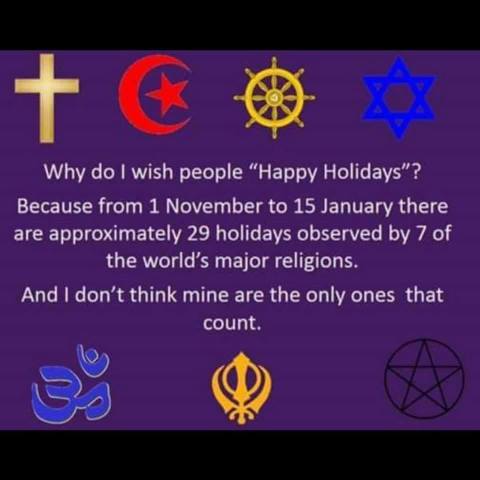
 If you value this content, please engage in reciprocity by

 I encourage you to connect with your own cosmology and question rejecting/violent statements/thoughts like “He should have known better”, or “It serves her right.” Such words indicate an internalised denial/judgment and fuel shameful, painful feelings inside you, the person you are speaking/thinking about, and our collective culture. Even when we believe/think something is wrong, we can still hold that aspect of our cosmology with compassion and respect. These words are pointers to places of yourself that could be further explored, unpacked, and transformed. Dangers and fears come in many forms, including physical, emotional, psychological, and spiritual. Watching an interview with someone who has killed another person, for example, may trigger emotion you are carrying and show aspects of your cosmology that could be shifted from judgment or denial/lack into compassion and empathy, and gratitude that you did not need to learn such a lesson the hard way. (Free photo by
  If you value this content, please engage in reciprocity by
 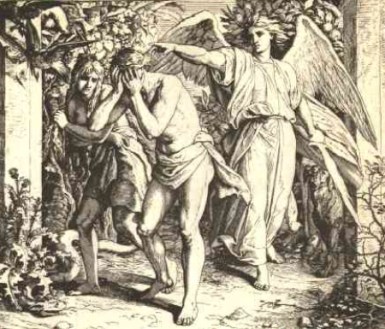 The foundation of Judeo-Christian mythology leaves us unconnected with environments where the vast majority of its followers live. The Biblical creation story of Adam and Eve’s exile from the Garden of Eden is not an embodied story connecting humans with nature inside and outside ourselves within a web of life. In fact, the entire
  (Image from
  This word “sin,” then, was meant to help us humans understand our nature: that we are powerful and able create wonders and also an innate capacity to blunder. What curious creatures we are! We have been believing and embodying an errant, mistaken thought and believing that we are exiled, unworthy, and that our sacred, earthly Mother doesn’t fully love us, and this sin/mistake/confusion has been defining the course of our collective history for multiple millennia, and is still going. If this isn’t

 If you value this content, please engage in reciprocity by
  Earth Ethos