 If you value this content, please engage in reciprocity by living, sharing and giving.
Tag Archives: healing
Upcoming Events – Austin & Waco
Come & join us in Texas!
Austin, Texas, USA – 7pm Wednesday October 9 @ BookWoman

Austin, Texas, USA – 2pm Saturday October 12 @ EyeoftheHeart

Texas, USA – 2pm Sunday October 13 @ ProvidenciaWaco
Vlog 3: Dharraani Peace Centre is Born
If you value this content, please engage in reciprocity by living, sharing and giving.
My initiation into adulthood was evil
Long Blog by Lukas
I suffered brutal bullying in high school. I also acted as a perpetrator. And a bystander. Sitting on all sides of this equation is perhaps the hardest role of all. There are many anecdotes I could tell but one stands out, because it was an encounter with traumatic evil, and perhaps more than any other moment in my adolescence, marked the loss of my childhood innocence.
***Trigger warning: bullying story. To skip the story, scroll below to the next *** for reflections.
It was school camp 1998. Year 8. I was 13. My bullying experience at the hands of my so-called circle of friends had been slowly gathering pace. But there’s only so much that can be done in the hours of a school day. School camp was going to be a different beast.
Sensitivity and my steely sense of fairness and justice are amongst my greatest gifts, but like many such things, are a source of great vulnerability. I used to liken myself to a ripe peach. Not only did I bruise easily, but it showed so very obviously. Yet I never got squashed entirely. At my core I have a rock hard seed that doesn’t break. This gave my tormenters a sense of sport. Even the most sociopathic of people seem to tire of picking on something completely broken and pathetic.
In the days leading up to camp, a number of boys within my ‘friendship’ group had begun to use the word “core” and “non core” to describe members of the group. Core members received privileges, and non-core members were made to feel lesser than and ostracised from certain activities. I was “non core,” and it got to me, and they could tell. By then I had a number of nicknames that I hated too, not because they were particularly harmful, just the condescension of it all. We were meant to be friends. There was also a very dark and (as I experienced it) deeply shameful (though in hindsight, completely innocent) rumour of a sexual nature that had followed me all the way from early primary school that lurked in the background. Such was the power of the shame over me that they only needed to threaten to use it to crush all resistance I might have offered. Call this the nuclear deterrent. (Image from here)
Even at 13 years old, I feel like I had some responsibility for not exiting this group earlier. But even to this day I have a tendency to let things run their course in social dynamics even when it’s clear they’re not healthy. I call this my “crash the plane into the mountain instead of jump out with a parachute” mentality. It’s something to work on. And run its course it did, a crash course with the mountain of school camp.
It didn’t take long. A long bus ride filled with put-downs and taunts was followed by the announcement that only “core” group members could keep their bags inside the tent. There was also the “core” clothes line. I’d had enough. With a barrage of insults fired back in their direction, I announced that I was done with them. I made a deal with another brutally bullied chap who wanted to be in this social group to swap tents. I had no sympathy for him.
It was well and truly on. I had challenged their power publicly. The “nuclear deterrent” was armed and readied for use. Sexually based taunts have a particular sting to them, perhaps because we are so apt to feel shame in that area, such are our deeply socialised taboos. I tried to show my face at the campfire – as one wants to do at a camping trip – but the put downs were unrelenting. I had no defense, no come back. I ran back to my tent, tears streaming down my face. Beaten. Broken.
But worse was to come.
I wrapped myself up tight in my sleeping back and sobbed. It was not performative in the slightest, and was to my knowledge, private. But no.
All of a sudden I felt a deep pain in my back. Someone or multiple someones had followed me back from the campfire and had kicked me, hard, through the tent. I let out a wail and some kind of “f*** you”. Insults given amongst sobs are not that intimidating though. A few seconds went by. I wondered if that indignity would be the end of it. But no. A second kick, even more painful.
This time I let out a guttural howl of rage, and emerged from the tent. I didn’t see my offenders so I ran over to their tent and jumped on it with all my weight. As one of those boys used to just love recounting in the weeks afterwards, it was one of those tents with the springy poles that as soon as I got back to my feet, just popped back into shape as though I was never there. Never there. That was about right.
My chief tormentor – the de facto head of the group – emerged from their tent. I don’t think he was one of my kick attackers, but I didn’t care. I punched him square in the face with all my might – just the thing to fix a bully according to my dad and just about all popular culture. He was briefly startled and began backing away. I shouted at him to fight me. I’ll never forget the way the expression changed on his face: from surprise, to alarm, to a brief flicker of readiness to fight and then..a smirk…and a headshake. He then turned his back on me and walked away. Clever.
With that gesture of profound condescension, he won. Did I proceed to keep beating him, to have my fight whether he was going to show up or not? No I did not. And this haunted me – perhaps I might even say crippled me, though in truth this incident was but one of many – for years. Decades. Perhaps it still does.
I spent the following days feeling and playing dead. There was more to the bullying even on that trip, much more, but I’ll leave it there.
I did not tell an adult, the teachers. But I looked them searchingly in the eye. Perhaps I was asking myself “could, or should, I tell them?”. But no. I got the feeling they didn’t like me. One of them – the Deputy Principal in fact – actually and literally told one of my bullies that he didn’t like me. I don’t remember how I found that out. Perhaps it was because the previous year I’d been in his office for reasons of bullying on the offender side, and thus deserved it? Little did he know how much our thoughts were aligned, and how damaging this was to me.
***
I was never, and could never be, the same person again after this and many other experiences like it around that time. Leaving childhood behind forever is of course a natural and desirable outcome of adolescence. But the vehicle for my passage, my initiation, my ordeal, was evil. This is so far from the intentional, ceremonial, sacred and mediated by responsible elders kind of initiation that is practiced by wise cultures. It was trauma without much meaning beyond developing an intimacy with evil. But it was an evil I could not name, such was my deep belief that it was my deep personal failings that brought it upon myself. (Image from here)
In writing this, my ordeal sounds very alike the relationship between the Church and the people in medieval Europe. Don’t focus on the wrong of having your Indigenous culture genocided, pray for your forgiveness for your innate sinfulness.
Our deep patterns reverberate until something more powerful intervenes. For me, it has been having my adult life and the whole identity I was raised with fall apart. It’s like I’ve had to do my right of passage over again, but scarred, burdened and traumatised by the experience of the first, and, weighted down by the intergenerational trauma of my ancestors that I not only carry personally, but that which is literally built into the social and systemic structure of the society in which I was raised and still live.
Evil is a rather heavy hitting word. So much so that many modern social theorists reject it entirely, instead wanting to focus on pathological or environmental causes of harmful human behaviour. These perspectives are valuable, but to strip evil from our cultural lexicon is to reduce our ability to describe an experience of profound malevolence. (Image from here)
I think the aversion to ‘evil’ has more to do with a modern desire to have a common moral and ethical understanding of the world devoid of the spiritual. This is one of the many bad marriages between Western pluralistic liberalism and logical positivism. This is to say firstly, the belief that single sovereign entities (as opposed to confederations of sovereign entities) can hold and treat equally people with a diversity of spiritual beliefs, and that secondly, the rules and practices that govern such a culture can and should be based in concretely knowable moral and ethical truths that everyone can agree on.
In fairness to this way of thinking, much harm has been done under the guise of eliminating evil. Top down, coercive and dominating control of spiritual knowledge and life from religious institutions deeply abused the idea that there is an existential evil in the universe that should be eliminated at all costs. Attaching ‘existential’ to evil is deeply problematic (more on this later), and obviously even more so when wielded by those deeply beset by Wetiko.
But regardless, in my view, to live fully as humans I believe it essential to experience life at the level of the spiritual. In this I’m talking about that which is experienced outside of rationally expressed conceptual reason; that which gives life a lot of its meaning.
A sense of spiritual awe is never more important than when looking for ways to deal constructively with and making sense of profound suffering, pain and trauma. We need to be able to distinguish between the deeply painful in raw form, the tragic, and evil. I think this is why so many cultures “get out in front of it” so to speak, and intentionally inflict pain and ordeal upon people in the form of initiation. People need discernment in this area of life perhaps as much or more than any other. We need to see and be able to hold and make sense of the light, the dark and everything in between. (Image from here)
So like many, many things that have occurred as societies move on from Judeo-Christianity, the notion of evil is absolutely one of the babies that should not be tossed out with that bathwater.
Most people understand that suffering, pain and trauma are not synonymous with darkness and the shadow (though abusing our almost primal propensity to want to avoid it is a tremendously effective way to enslave people without their knowing it). They have a shadow, and can exist in shadow, but they are not intrinsically so. We experience them, and it is the quality of this experience that gives them their character. So they are definitely not evil, but they certainly can be expressed and experienced as so.
So what is evil?
Controversial Western psychologist Jordan Peterson has written and spoken a lot on the topic, and whatever you may think of his politics, I think what he has to say on this topic is valuable. He draws a very sharp distinction (perhaps overly so) between evil and tragedy.
The truly evil, he says, possesses a “demonically warped aesthetic”. After thinking about this for a while, I came up with my own version: “volitionally malevolent aesthetic”. I had to ruminate on what he means by “aesthetic” here, and I think he’s saying that part of a human action that comes from expression and taste, largely disconnected from practical necessity. When this expression is designed to cause extra suffering, that’s evil. Like a desire to manifest with free will and volition the polar opposite of beauty. It’s like he’s saying evil is almost like a kind of dark artistry.
Some of his examples are very very dark, such as the “work sets you free” sign on the gates of Auschwitz. This was not a work camp, but an expressly designed death camp. It was a deliberate torment. Evil upon evil. Something dark for the tormentors to enjoy.
When I think about my bullies, I think about the choice of things that they could have done to me. They chose things for maximum hurt, yes, a practical wielding of power. But the decision to kick me in the back whilst I lay sobbing in my tent, was an expression of some kind of dark…aesthetic. It was mostly unnecessary in a practical hierarchical sense. I was already beaten. It was about giving the whole affair a certain sadistic panache; an evil cherry on top.
The use of the word “demon” is interesting. Within Christianity it is used existentially. The devil is evil, and will always be thus, as a more or less cosmological fact. And so given his Christian sympathies, I am suspicious of Peterson here. So to me it proved interesting to look up the etymology of demon. (Image of Pazuzu, a Mesopotamian demon Valerie has seen in a number of visions and found to be helpful)
In its earlier usage, Demons were seemingly not originally nor wholly, existentially bad or dark. It was behaviour that was so. In most indigenous cultures, their darker characters or malevolent spirits are more teaching tools that everyone can learn from. Collections of energies that serve to remind all of us of the darker tendencies that we need to watch out for in our own selves. As spirit beings and helpers, there are more shades of gray, and less taboo. Perhaps this is what modern social theorists want to achieve when they focus on the environmental and social factors behind dark acts, rather than the physical or spiritual pathology. But I do believe we need to work with evil as a teaching tool, to help us see what we’re capable of, learn to avoid it, and process its meaning constructively. Because it does exist, like it or not, and if we pretend it doesn’t, I’m with the Christian perspective that “the greatest trick the devil ever pulled was convincing the world he didn’t exist”. I think denying evil’s existence will be to our severe detriment.
For me, deriving constructive meaning from my experience of evil has been largely about breaking my attachment to a culture that fostered and tolerated the behaviour on the one hand, and in other circumstances, punishes those who do evil with more evil. This, I think, was the mentality of the Deputy Principal who thought I “deserved” to be abused. Like jail in most countries, which makes an almost science out of doing evil onto those accused of doing evil (though I suspect jails contain more people whose crimes are better described as more tragic than evil).
With more space from modern Western society, I feel more free to access and develop healthier understandings of myself and the universe that situates evil in a more balanced perspective and context.
Exercise: Reflect when and where you feel you have encountered evil. Have you been able to process it in a way that felt constructive? Consider re-visiting one such encounter using an altered state tool such as meditation with the intention of reframing the meaning of your experience.
If you value this content, please engage in reciprocity by living, sharing and giving.
Living Systems Dialogue
If you value this content, please engage in reciprocity by living, sharing and giving.
Honouring lack
Blog by Valerie
It is autumn here, and at the recent equinox we did a ceremony of thanksgiving. I like to read the Thanksgiving Address of the Haudenosaunee peoples. I find it really beautiful. We also asked for a few things, which later felt wrong to me, like it was the season of giving thanks for what we had, not to plant seeds and ask that they grow; so we did another ceremony expressing gratitude for what is working for us related to the area of life where we asked for change. That felt more balanced.
There are some areas of my life where I feel so deeply in lack that I feel pain and impatience even as I experience them healing. It is as if I’m coming from so far behind what I need that I can’t yet relax and feel at ease that it’ll keep going in a healthy direction. I need to keep it on my radar to pray about and act to improve within my power.
So I have decided that I no longer believe that I always have everything I need. It feels untrue and unkind to carry that belief. I believe my responsibility is to discern my needs as best I can and act within my power to meet them; and that dignity requires me to honour Life by allowing all energies that arise within me to be celebrated. At the moment, that means honouring lack, and so here’s my blog celebrating that. I hope you find value in it.
If you value this content, please engage in reciprocity by living, sharing and giving.Navigating Existential Judgment
Blog by Valerie
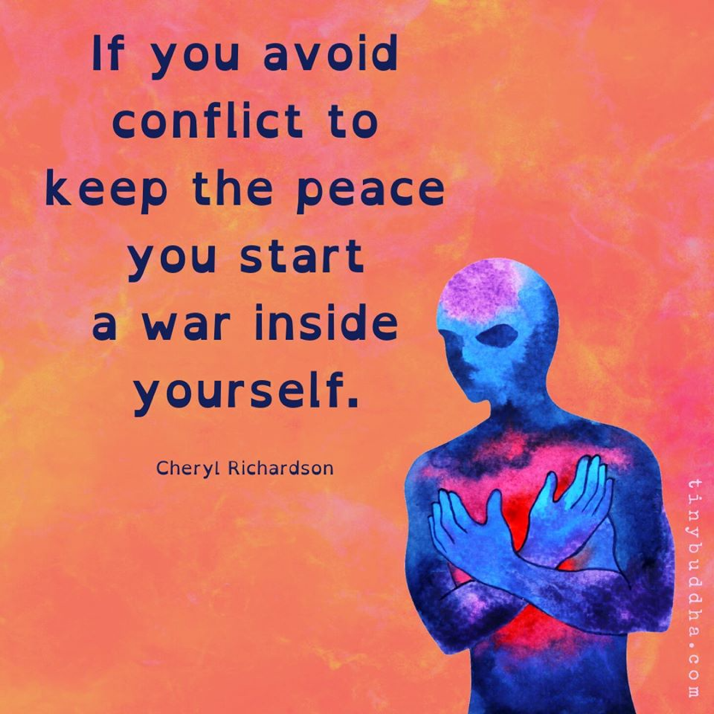
Lately some protracted conflicts have come to the surface in my life at a macro level in the world, and at a micro level in my daily life. I have been praying quite a lot since the war in Ukraine broke out, where my Jewish-Sumerian ancestors spent many generations living, and more recently about the war in the Middle East. It seems to me like there is existential war and rejection going on based in judgment, where one or more parties to a conflict feel they are fighting to exist in the minds and hearts of the other.
I find existential judgement incredibly dangerous and damaging and see it as the root of genocide. It feels to me like a hand rejecting its own finger. If we believe in a Creator with wisdom our human minds cannot comprehend, how can we put ourselves in the position of judging what the Creator brought into being? And to say another is allowed to exist elsewhere (NIMBY) is still judgmental, for if we force another to leave their home and live on different lands, we change their and our identities by disconnecting people from their earthly homes and playing the roles of victims and offenders.
On a micro level I’m seeing this thinking play out in some righteous social justice warrior crusades around me. I find the concept of ‘rights’ to be violent, though it has obvious practical value to create baseline standards for society. If we didn’t existentially judge certain struggles and behaviours as deeming people unworthy of housing or health care or food, then rights would simply represent social baselines we collectively agreed upon as minimum standards of care for all of us humans living here. But if a single mother can’t afford housing, or a man with mental illness isn’t at retirement age but can’t hold down a job, we don’t collectively agree how (or sometimes even if) to support their survival. Rights then get used in a forceful way to push a majority social group’s minimum standard of support onto the collective, and thus they often need to be en-forced. And when we are judged and caught up in the rights battles we feel, rightly so, like we are fighting for our survival. (See survival strategies blog)
I agree with Jungian scientist Fred Gustafson that the Western mind is “having a massive collective nervous breakdown” and is going to “war to determine whose anthropocentric [world]view is most valid [while] the earth and all its inhabitants [] suffer.”[1] I have not found sufficient solace for survival in the Western world alone.
 For me it has been vital to live in two worlds: (1) a social reality that is based on a Western worldview, and (2) an earth-based reality based on an Indigenous worldview. When I’m caught up in a survival struggle in the Western world that’s terrifyingly real, and I’m feeling rejected and judged and shamed and angry, I can spiritually connect with the knowing from the Land and my ancestors that I’m not only allowed to exist but that I am wanted. This powerful medicine is all I have found that alleviates my existential wounds. Without it I feel like I would not still be here on this Earth, as my roots would have rotted and not been able to hold up the rest of my inner tree of life. (Image from here)
If you’re also feeling some pain and heaviness about existential judgement and its impact, here are a few things that help me keep my spirits strong:
- Grieving is a way I like to express angry energy to avoid getting overwhelmed by righteousness and gain clarity which fights, if any, feel right for me to engage in, and what that means practically. You may prefer to yell and scream or throw things or punch a bag instead, so however you express anger to avoid it overwhelming you is helpful.
- Connecting with the land and ancestors where I am offers me powerful healing. I may give offerings as simple as feeding a bird or picking up rubbish, or as profound as a placenta burial or smoking/smudging ceremony. I may also cultivate a sit spot on the land, walk barefoot, and tend a tree altar. There are so many more ways to connect with the land where you live, these are but a few. The reverence we bring to the action we choose matters more, I think, than exactly what we do.
- Letting go of black-and-white, objective, judgmental thinking is something I am very fierce with myself about. Humility is an important value to me, so I ensure that even when I feel certain or highly confident about something that I carry a little bit of doubt. For example, I feel highly confident that child sex abuse (link) is a damaging act that is wrong to do. Yet my intense journey of seeking to heal that wound has brought me so much wisdom and peace. Spiritual gifts often thrive in grey, paradoxical spaces.
 Altering my consciousness is another survival tool I use daily, primarily through embodied meditations and drum journeys. I do it to heal trauma, connect with ancestors and other spiritual guidance, and seek tools for every day survival such as deeper spaces of compassion or peace. However you are able to sink deeper than your everyday ‘known’ and familiar thought loops can bring you some healing. I do find, however, that embodied practices (such as using sound or dance or breath techniques) are more powerful than mind-based practices (such as meditating through your third eye or simply watching your thoughts).
Thank you for reading this, and may your life be enriched (and even saved) by living in both worlds, as mine is.
[1] Gustafson, F. (1997). Dancing between two worlds: Jung and the Native American soul. Mahwah, NJ: Paulist Press.
If you value this content, please engage in reciprocity by living, sharing and giving.
Mothering amidst intergenerational trauma
Blog by Valerie
 ‘We are cycles of time’ stuck in my head after reading a Chinese astrological perspective on the lunar new year before bed. I couldn’t sleep, and my seven month old has been struggling before bed recently too, getting a burst of energy after indicating she’s sleepy. Though neither of us knows quite how to best help her settle, we’re getting there.
I knew in my pregnancy that my nervous system was overloaded. I spent the first few months exhausted and unable to get out of bed, processing a load of grief, only some of which felt like mine. I felt the absence of my mother, grandmothers and wise aunties in a deeper way then. I lost them all to trauma. No one in my family has accepted that I was sexually abused, because no one can handle their own triggers and emotions around that being true. Their paths of denial have, from my perspective, all been painful and tragic.
My dad died from a repeat bout of cancer soon after I told his whole family that one of theirs was my abuser. One grandmother had multiple nervous system disorders, the other lived under such oppression that her back was curved into a C shape from the weight of what she carried on her shoulders. My mother increasingly took so many psychiatric pills to numb her pain that she could no longer be human with me.
Professionally I have done restorative justice with survivors of clergy sex abuse and clergy of integrity who wish to take responsibility on behalf of the Church. I have also chosen to heal some of my own child sex abuse trauma by doing empathic dialogues with sex offenders and their family members as research, to understand their experiences and therefore see my own in a new light. I’ve worked in child welfare and domestic violence, in developed and developing countries.
 So it’s fair to say that I have seen plenty of intergenerational trauma playing out in mine and other people’s lives. It’s particularly humbling to see it play out now, as a mother with my baby. But once I realize that’s what’s happening, I know we will have to ride this cycle of time out. And I feel grateful all the trauma I inherited and grew up with led me to learning how to work with that tough, powerful energy. (Image from here)
Before feeling ready to become a parent, I worked hard over many years to process trauma and heal, to live differently than I was raised. I know from my PhD on indigenous trauma healing that altering consciousness is an important part of healing. And I still meditate throughout the day, with my baby, often when she’s feeding and sleeping on me. I know that I’m not in control of the triggers, and that working with the land to ground my memories eases my load.
This past weekend our landlords, who did some work to baby proof the house we’re renting, shocked us by giving us notice, saying they don’t feel like they can keep our baby safe on their property, and they’re scared about liability should something happen to her. I had no such fear here. We’re living rurally, and both my partner and I grew up in big cities.
This felt like a bait and switch and really surprised me, because as a mother keeping my baby safe is primarily my responsibility. I had just finished baby proofing the house and setting up safe play areas for her to crawl, buying some carpet and even paying to get the floors super clean and ready for the baby to scoot around on.
I didn’t sleep well for a few nights after the notice, wondering if we did something wrong, why this is happening, though the landlords said they have no complaints about us. And then it hit me. My first recovered memory of child sex abuse was my uncle and his wife touching me in a baby bath. I must’ve been about the age my daughter is now. And our landlords seem to be, for reasons of their own that I don’t know, playing out some of this fear and rejection energy with us.
We all attract what we need to grow and heal. Looking through mother’s eyes I’ve been finding it increasingly harder to relate to my family’s choices in caring for me. It’s hard to need support and know not only that they can’t help me, but that I need support because I now have the responsibility of both processing the trauma I carry from my childhood and inheritance, as well as trying to show up differently for my baby.
Childbirth was a clear example of this struggle for me. We planned a home birth with the support of a local doula and a virtual midwife who was on call for us during the birth. She also helped us prepare, mostly emotionally and mentally. I had done birth regression healing previously, yet ninety percent of what I experienced in childbirth was witnessing my own birth and my mother’s lack of consciousness and connection with me – not my connection with my baby, though I could feel their presence and had a knowing that she was okay.
 I have felt a lot of grief that so much of my energy in the pregnancy and birth, and even as a young mother now, is about processing trauma and grief instead of just being in the moment enjoying my baby. Though I feel nervous about looking for housing, packing and moving, I realize we’re all a cycle in time. And though it’s tough, my role now is to process as much trauma and ground as much nervous energy as I can so my baby has more opportunity to be present with their child in the next cycle.
Reflecting on these cycles, I remember that the article about Chinese astrology said that the last year of the water rabbit was 1963, when Dr. Martin Luther King Jr. made his famous I Have a Dream speech. I grew up in Atlanta, and he’s long been a hero to me. Yet this lunar new year cycle started with a lot of violence at it’s celebrations in California, and among African Americans in Memphis, the city where Dr. King was killed.
Intergenerational trauma plays out in so many layers. And we’re all in this together. I’m reminded of other wise words from Dr. King:
“If a man is called to be a street sweeper, he should sweep streets even as a Michaelangelo painted, or Beethoven composed music or Shakespeare wrote poetry. He should sweep streets so well that all the hosts of heaven and earth will pause to say, ‘Here lived a great street sweeper who did his job well.”
I’m holding steady as best I can, bringing compassion, grounding, and unconditional love and acceptance to all the trauma that shows up. And I hope one day when she’s a parent, my baby feels that I swept our street well and gave them tools to survive these trauma cycles of time.
If you value this content, please engage in reciprocity by living, sharing and giving.
Unconscious Sorcery
Blog by Valerie
Often the term ‘sorcery’ is used negatively, but any manifestation of a spirited, emotive thought or prayer can be considered sorcery. As Shaman Chiron Armand says:
“[T]he word sorcery implies control one wields or seeks to wield over life, spirits, or other incarnate beings. That one might be capable of wielding force that yields great consequences in the subtle realms without intending to or even knowing one has collapses the all-too-neat answers that magic and sorcery hand us [about] human agency.”
To answer this, Shaman Christina Pratt says, “The distinction between acts of healing and acts of [negative] sorcery is self-control.” She gives the following examples of “everyday manipulations and unconscious abuses of power that are effectively unconscious sorcery”: telling a child they are stupid, an MD telling a patient they have 6 weeks to live, manipulating a situation for a desired outcome, and blaming others for our pain, and reminds us that “unconscious though this sorcery may be, it is still harmful.” And I would add that spiritually we have some responsibility, and ought to act on that once we become consciously aware.
 I bring this up because I find unconscious sorcery very common. I recently got to the root of a painful thought loop that’s informed my whole life and was quite surprised to find that it wasn’t intergenerational trauma as I expected, but in fact (I’m assuming unconscious) negative sorcery from a former big shot professor who had it in for my mother. I did hear stories growing up about how he had bullied her, like how when she was pregnant with me and asked for afternoon classes due to morning sickness, he gave her 8am classes instead. The belief he cursed me with was “you don’t belong here”. And I do feel it was directed at me, maybe even more than my mother, because he took great issue with a young mother having an academic career. And I made her into a mother.
When you think about curses from negative sorcery, you may think about a more tribal culture. Like a cave Lukas and I were shown in Guatemala where people hired sorcerers to send blessings and curses using different colored candles and incantations. Just going near that cave got us sick, the energy was so intense. But what a curse I’ve lived with all these years because of a mean spirited wish turned into action from an old man. For me the issue is the spirit we bring to things more than self control. That man would have been aware he was angry with my mother, and that his behaviour was hurting her, if not aware of the impact of his psychic attacks. If my mother had been in more integrity she might’ve been protected from his curse, or might’ve become aware of it sooner. Her own conflict and insecurity about being a working mother likely allowed it into my formative psyche.
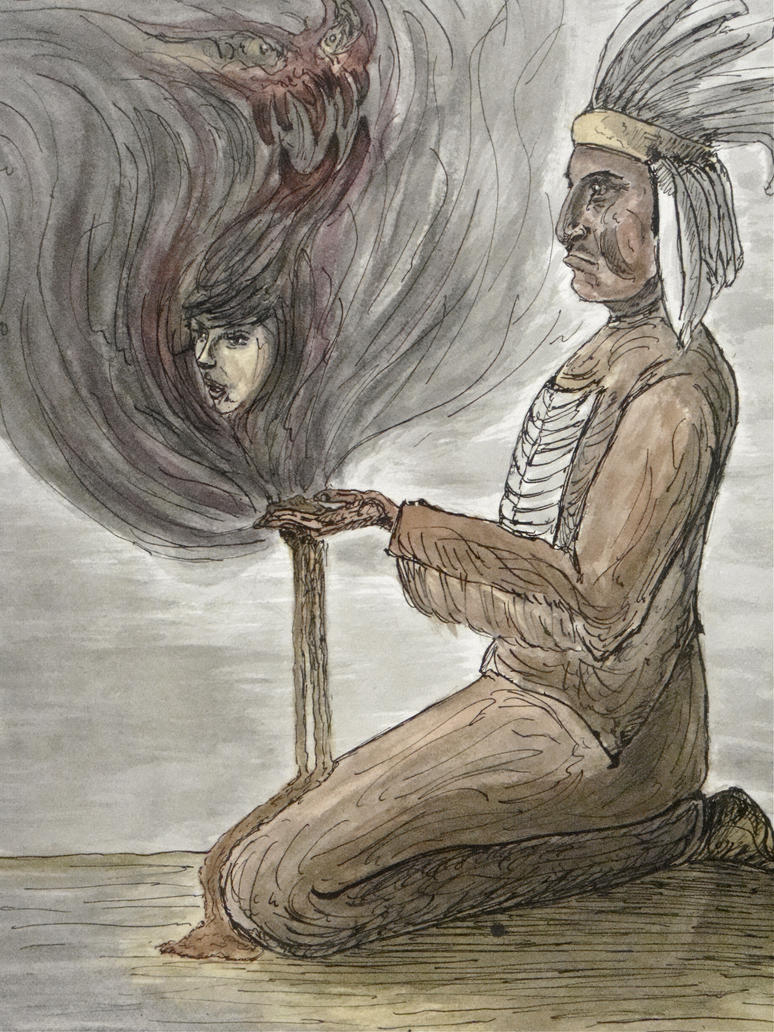 That was his hook. But what about me? As Shaman Chiron Armand explains: “In some instances, such forceful projection by the unconscious sorcerer can lead to displacement of the projected-upon’s internal Self, especially in young children, the habitually marginalized, and those lacking firmly rooted identities, leading to soul theft.” And his curse really did affect my identity in such a way. Each of you reading this likely had something said to you in childhood that affected you greatly that you’re aware of. At some point such things tend to become self fulfilling and we embody them, living the curse (or blessing). I say blessing because unconscious sorcery needn’t be negative in intent to have an impact. For example, ‘you’re a leader’ may have been projected onto a privileged young Anglo man so many times, he has learnt to use that energy and embody it, confidently working his way up in a company, taking risks others wouldn’t dream of. And the more he does, the more people project onto him that he’s a leader, and reinforce that blessing more positive form of unconscious sorcery. (Image entitled Curse of the Wendigo Part 1 from here)
Now you can argue he’s actually been cursed to live out a life that may not be ideal for him, or consciously what he’d choose if he was more self aware. You can also argue that by constantly feeling I didn’t belong wherever I was, that helped spur my inward healing journey so it was a blessing. The point of this writing, though, is to show that the impact of unconscious sorcery is based largely on the spirit or intent of the energy. And my view of that we are responsible for our energy, which includes acts of unconscious sorcery. Being more self aware improves our ability to use our energy, our power, wisely and with integrity. (FYI a previous post on soul theft/wetiko/windingo is here.) So the next time you’re angry at a politician and notice yourself sending them daggered thoughts laced with negative emotion, or find yourself verbally ranting about them, stop and ask yourself how you’re using your power, and if you really intend to be cursing them. Cause what we do to others we invite into our own lives! And if you think you have been cursed, feel free to contact me or someone you trust with shamanic skills for help.
If you value this content, please engage in reciprocity by living, sharing and giving.
Embodiment
Blog by Valerie – a final chapter shared from the book that was just written
Being authentic, centred and grounded means having awareness of our core values and doing our best to en-live-en them through our life choices and forms of expression. Embodiment is a recognition of the universality of our connection with all of Creation as well as our individuality of lived experience. It’s important not to confuse lived experience knowledge with intellectual understanding or awareness, often referred to as ‘knowledge’ in Western science. We all have intellectual under-standing and awareness about life experiences we haven’t had; for example, we may say that -10 is cold, but unless we’ve felt it, we don’t have an embodied knowing of how cold that is.
 There is so much power in lived experience that from an Indigenous science perspective, it is the only way we can ‘know’ something. People with a lot Western theoretical or book ‘knowledge’ are often seen as arrogant, or even dangerous. If you’ve learned some ‘evidence-based’ ways to prevent obesity, you will still have a limited ability to empathise with people who have experienced it themselves or witnessed it through an intimate relationship. Knowing our standing, or positionality, makes a huge difference in how well we embody our values and medicine. Our standing refers to placement – socio-politically, culturally, physically, emotionally, mentally, and spiritually. I’ve included socio-politically and culturally because we live in two worlds as Indigenous scientists and need to be aware of our Western political placement as well as Indigenous cultural placement.
 As an Indigenous scientist living far from ancestral lands, from a socio-political perspective, I am a settler[1] doing my best to be a political ally[2] of Aboriginal peoples of Australia. I can’t experience what’s embodied through their cultural lineages and relationships; they carry a power of intergenerational knowledge that, if shared with me, supports me to build my own relationships with their ancestors and the land where I live (Image from here). Gitksan scientist Dr. Cindy Blackstock explains Indigenous scientific trust in long-tested ancestral wisdom and our collective responsibility for carrying and passing on Indigenous knowledge:
As knowledge trustees, whose job it is to understand and relay knowledge which has been passed down by generations before us, we pay great attention to the detail of the knowledge and the values and spirit embedded in it so that we can pass it on. Because knowledge needs to echo across lifetimes and generations, multidimensional standards of rigor are needed to ensure knowledge is understood within the four dimensions of learning: spiritual, emotional, physical and cognitive and that each teaching is situated within an interconnected knowledge web[3].
It’s natural to speak about things we haven’t experienced at times, but it’s wise to do so with humility in recognition of our standing within that interconnected web of life. For without lived experience (which includes knowledge embedded in our bodies through ancestral inheritance), to some extent we are guessing.
Embodied methods for sharing traditional knowledge have helped ensure its efficacy and accuracy over time and prevented the impact of such human limitations from diluting or distorting it. As Dr. Lynne Kelly explains, “At every level of initiation into knowledge there were memory aids…from hand-held objects to art on bark or rocks, to the landscape itself”[4] in addition to songs and stories that were easy to remember yet cleverly layered with knowledge[5]. This is why changing landscapes and moving Indigenous peoples can be severely disorienting and detrimental to cultural integrity.
Exercise: Reflect on embodied memory aids you have – such as objects in your house, photos, places you go, music, etc. Which ones bring you joy? Which ones feel like clutter that could be let go? Are there any that trigger you into trauma or other difficult emotion? If so, do you wish to let them go or ceremonially cleanse them?
It’s helpful to consider that our bodies themselves ‘speak’ stories, with our bones showing how nourished we are, our body’s ergonomic strain, and even our toxin exposure[6]. Our bodies also arouse stories in others. Shona scientist Dr. Virginia Mapedzahama says when she walks into a room she experiences predetermined socio-political space simply because of her Black body[7], whereas Yuin scientist Shannon Field describes awareness of her socio-political privilege since she can pass as White though she is a Blak Aboriginal woman[8].
To further complicate things, many of us have lived experiences that aren’t fully processed. For example, if someone believes that lying makes them a ‘bad person’, they may subconsciously trick themselves and others into believing an altered story that omits a ‘bad’ thing they did. An acute listener will likely experience cognitive dissonance, a sense that the storyteller’s heart and head were in conflict. This highlights the importance of using discernment with shared knowledge, even when it is embodied.
Exercise: Reflect on what spaces embody, such as a school, a park, or a prison. Reflect on what social structures embody, such as a performer and an audience, or a judge sitting higher than the jury, victim, lawyers, or the accused. Reflect in your own life what you embody and what you intentionally wish to.
If you value this content, please engage in reciprocity by living, sharing and giving.
[1] For a discussion of the settler role, see Settler trauma dialogue: https://www.youtube.com/watch?v=wj5-MTr78V0&t=3s
[2] For a discussion of embodying Indigenous allyship, see Weaving Knowledges dialogue: https://www.youtube.com/watch?v=N9N7UE7UMqY
[3] Blackstock, C. (2007). The breath of life versus the embodiment of life: Indigenous knowledge and western research. World Indigenous Nations Higher Education Consortium Journal, 4(1), 67-79, p. 68.
[4] Kelly, L. (2015). Knowledge and power in prehistoric societies: Orality, memory, and the transmission of culture. Cambridge University Press, p. xvii.
[5] See e.g. Karl-Erik Svieby & Tex Skuthorpe. (2006.) Treading Lightly: The hidden wisdom of the world’s oldest people. Crows Nest, NSW: Allen & Unwin.
[6] See e.g. Krieger, N. (2005). Embodiment: a conceptual glossary for epidemiology. Journal of Epidemiology & Community Health, 59(5), 350-355. https://jech.bmj.com/content/jech/59/5/350.full.pdf
[7] Navigating whiteness dialogue: https://www.youtube.com/watch?v=sYYN-f5m3YI
[8] Identity politics dialogue: https://www.youtube.com/watch?v=SxIJAARiZLo
 Earth Ethos