Category Archives: Decolonising

The power of denial

Denial literally means “saying no” to something, but we tend to think of it in a negative way. We say things like, “He’s in denial” when someone’s not accepting a truth. Here’s a concerning example of Reagan talking about Native Americans:

We’ve done everything we can [stop residential schooling & child removals] to meet their demands…Maybe we should not have humored them in that wanting to stay in that kind of primitive lifestyle. Maybe we should have said no, come join us; be citizens along with the rest of us [they all became citizens by 1924]…Some of them became very wealthy because some of those reservations were overlaying great pools of oil, and you can get very rich pumping oil. And so, I don’t know what their complaint might be.

I wouldn’t be surprised if the current president had said this. What I struggle to see is why so many Americans are surprised about what Trump says when this shit has been going on for ages. It’s not new unless you’ve had your head in the sand! (Image from here.)

Illuminated Living: Burying Your Head In The Sand

But denial can be a positive and empowering act. We can deny a lie and re-claim what is real and true. It’s enlightening to see how often we perform during the day, and to choose consciously when to please people with the status quo (“I’m fine, and you?” and when to deny the expected social dance and be a truthful disrupter (“I’m sad today, my mom’s sick”). When we are flow-ers, our experiences feel embodied and full, and memories are centred in our hearts, without head-spins or image/sound loops, body aches or numbnessPsychedelic flower by HouseofNika on DeviantArt. When notice those, we need to accept the pain/dissonance of the experience and decide how to respond. And our responses can be so inspiring and powerful, like a Lakota woman called Blackowl describing her free birth at Standing Rock:
Having babies is my act of resistance; our reproductive rights as Native women have been taken away from us in so many ways. At one time, we were forcibly sterilized…[We] have become so disconnected from our bodies and our roles as a result of the mainstream colonial culture…[but my daughter] will know where she came from, that she came from very strong women who all stand behind her wherever she goes. I definitely felt those strong spirits near us when she was born.

We are all trying to survive and navigate dehumanising social systems today, and many of my ancestors were complicit in this de-humanisation. I am too sometimes. It seems to me that exceptionalism and greed are foundations of colonisation. So many of our ancestors were tricked or forced into leaving the safety and security of their homelands, and ended up at the mercy of leaders filled with abstract promises and entitlements. If we can decolonise these lies and griefs by seeing through them with compassion and expressing our feelings, how much more centred, peaceful, and grounded will we all be? (Image from here)

One way that I am denying exceptionalism and de-colonising is by creating a calendar that is a mix of Frisian (Germanic), Ashkenazi pagan (Slavic), and modern celebrations that are meaningful to me, my ancestors, and are seasonally appropriate for the land where I live now (no fake snow in the summer for Christmas, please!). Through developing this calendar I learned so much, felt moments of deep resonance in my body, and peace in my mind. For example, I realised that all my ancestors followed lunisolar calendars (I love moon ceremonies), and my Frisian ancestors considered sunset the start of day (I’ve been a lucid dreamer since childhood and find the subconscious space much more powerful for healing and insight than waking life).
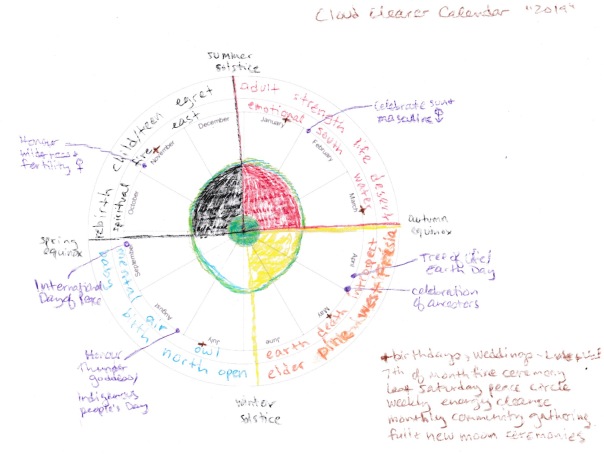
Cloud Clearer Calendar 2019.jpeg

This act of denying the colonial Christian calendar is especially important to me, because the Gregorian calendar has never felt like my calendar, and the years and months and days I write to communicate with others have never made intrinsic sense to me. It’s no wonder, because they don’t come from my culture! (Check out this previous post with about calendars if you want to learn more.)

Wiradjuri language - Wikipedia, the free encyclopediaDenying oppressive cultural stories frees not only you, but your ancestors, the lands, and indigenous people and their ancestors connected to the land where you live.  A few hours outside of Sydney, Australia in Wuradjuri country (green on the map):

When you look across the river you can still see the remains of the Aboriginal camps…all these highways that criss-cross the landscape, they are following Aboriginal trails. It’s not as if an explorer blazed through the wilderness. They just followed a track. Churches — both Catholic and Protestant — were built on Bora Rings which were sacred dance and initiation sites…Goonoo Homestead was a sacred area. It’s a bend in a river and that’s where the Wiradjuri all camped. A squatter came along and built his house there.
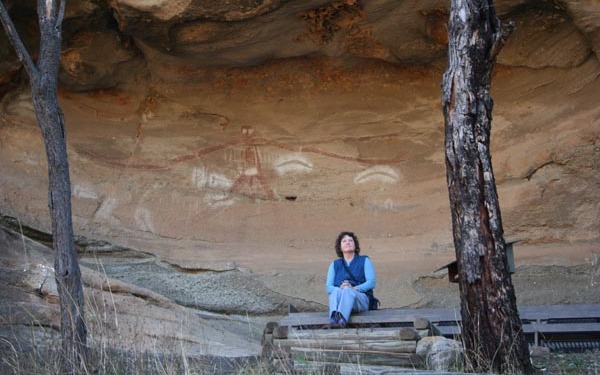
File:Baiame Wiradjuri.jpg - Wikimedia CommonsThough churches and houses were built on their sacred sites were intended as acts of dominance and genocide, they ensured that those sacred places survived as sites of worship. Today Wuradjuri people are going back to those places and re-membering their language and culture:

You have to be in that one spot to actually know the ways of thinking around the naming of that area…All the Aboriginal history has been eradicated, the scar trees have gone. But several waves of white or non-Indigenous history has also been eradicated and that’s what’s really interesting. But the land remains, the trees are coming back. A lot of scrub is coming back — prickly pear and god knows what else — but the beauty of the land remains. And it’s such a beautiful country.

Many people don’t realise that patron saints of cities or groups of people were often people who killed local shamans and sages, desecrated sacred sites, and forcibly converted people. This happened throughout Europe and the Middle East, and spread across the world. I once asked an African American pastor how he had reconciled his faith with the fact that Christianity was forced onto his ancestors during slavery. He hadn’t yet thought about it. It’s no wonder to me that we are filled with so many survival fears! The more we heal these denials, the more powerful our faith will become, and the more peace and truth we will embody. There’s nothing wrong with Christian; there is something wrong with ignorance, intolerance, and avoidance. May reading this inspire you to deny a lie and more fully live in truth tonight.

File:Pink sunset.jpg - Wikimedia Commons

giveheart If you value this content, please engage in reciprocity by living, sharing and giving.
Boundaries & integrity

Blog by Valerie

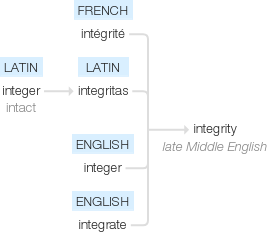
There’s a lot of rhetoric about boundaries, and setting healthy boundaries, and crossing boundaries, but in essence, we’re talking about integrity, or wholeness. From google, the etymology of integrity is:

When we are in integrity, we are boundaried. We do need to assert our boundaries at times, but most of the time they just are and don’t require work or thought. I find asserting boundaries arises quite involuntarily and naturally–if someone stomps on my foot, I say OW! or HEY! without thinking; and if someone is behaving disrespectfully repeatedly (3 times for me), my voice usually rises in volume and the words emerging from my mouth become harsher.

Boundaries and Confidentiality - ppt download

I see a lot of confusion around boundaries, and a lot of misguided effort to “set” them resulting in drama, mind games, and power plays. We can’t bypass healing through intellectual knowing. I see people deny themselves healing opportunities with justifications like “they know better” or they “don’t deserve” the pain they’re feeling.

Deserving has nothing to do with it; that’s a victim mentality that’s totally disempowering. And pretending we know better than to walk through the experiences life is presenting is an arrogant way to avoid reality. If you’re carrying pain or emotional charge, take the opportunity to free yourself by experiencing the pain fully, healing, and embodying its medicine. Boundaries will flow through your healing process the more you trust; you will realise when you are called to walk through an ordeal, which battles are not yours, and ‘yeses’ and ‘nos’ will flow.

In the medicine wheel, it’s easiest to agree on physical boundaries and integrity, though concepts such as consent and personal space differ by individual and culture. Spiritual integrity bounded by our faith, beliefs, and ritual and ceremonial practices, at individual and cultural levels. Emotional integrity has to do with self-knowledge and expressing our feelings fully in honest, healthful ways. Many people find psychological boundaries challenging to maintain, and many of us don’t think about psychological integrity because we are so used to our super busy minds. The more contemplation/meditation, grounding, and ancestral trauma healing work I do, the more integrous and embodied I become, and the lighter and more prescient my thoughts are.

Inspirational Quotes On Boundaries. QuotesGram

Traumas in our lineages, lives, and on our lands disconnect us from integrity, and we carry a lot of that trauma in our minds. Everyday tasks such as buying groceries can feel like minefields. Are we buying organic? local? from exploited workers? plastic packaging? We are all indigenous to this Earth and can experience profound interconnection and belonging with ourselves, other people, plants and animals, and even landforms.

Paul Young, a medicine man in Sydney, suggests a three-step healing model for mental integrity: (1) de-colonise and increase receptivity, (2) culturally strengthen and ground, and (3) alter your state to experience indigenous inter-connection through ceremony, meditation, prayer, etc. Similarly, in a conversation with Dr. Apela Colorado last week she suggested a healing process based on contemplating the following three questions:

  1. What were your traditional cultural ceremonies?
  2. How did you lose them?
  3. What losses do you need to process to stop perpetuating colonisation?

Exercise: What does integrity mean to you (spiritual, emotional, physical & psychological)? How would you start to answer Apela Colorado’s questions? Consider your answers in light of this quote from a Rwandan man:

“We had a lot of trouble with Western mental health workers who came here immediately after the genocide, and we had to ask some of them to leave. They came and their practice did not involve being outside in the sun where you begin to feel better, there was no music or drumming to get your blood flowing again, there was no sense that everyone had taken the day off so that the entire community could come together to try to lift you up and bring you back to joy, there was no acknowledgement of the depression as something invasive and external that could actually be cast out again. Instead they would take people one at a time into these dingy little rooms and have them sit around for an hour or so and talk about bad things that had happened to them. We had to ask them to leave.”

giveheart If you value this content, please engage in reciprocity by living, sharing and giving.

Anglo-Celtic Australian identity

Blog by Lukas

One of the hardest things about being an Anglo-Celtic Australian is not having a culture that gives deep meaning, context, and guidance to the struggles of my life. The stories of Anglo-Celtic Australian resilience I was fed as child just don’t do the job.

I acknowledge the grit, courage and determination of the first settlers and the diggers, but it all seems built on a foundation of lies, denial and disassociation, the best examples being Terra Nullius, the dehumanising British class system, the occupation of Ireland, and the power hoarding structure of the Church.

Subjugation and shame lie at the heart of so much of what makes us who we are as a collective consciousness. We cling to things like our egalitarianism, but elect a Prime Minister who openly espouses ideas like “a fair go for those that have a go”. It’s bullshit. (Image from here.)

Australia_a-fair-go
Don’t get me wrong. I’m fond of Australia, and Australians. More than fond. For all our peccadillos, I love us. And by us I’m speaking most about me, the Anglo-Celtic Australian. My tribe, my people. My connection to a nebulous post-white Australian multicultural identity feels so often forced, and hidden behind euphemism and untruths. It has to be, because what came before it has not healed enough to make space for anything real to replace it. It’s pure aspiration, often based merely on the fleeting winds of social convention and social shaming.

I don’t want any of this to sound like I endorse being ashamed of who we are. For me this can only lead back around to denial and anger. But of course this shame is there whether we like it or not. It’s something we must heal. Perhaps it’s THE place to start our work; unconditional love and grace for all that went before, warts and all.

What is the alternative? ANZACS, the grizzled farmer, a game of beach cricket next to the barbie, or even our supposed egalitarian cosmopolitan multiculturalism? To me, they just don’t cut it. Smoking ceremonies and welcome to country? Window dressing. There’s just so much flagrant bullshit at the heart of it all. We need more truth.

Here’s a truth. I’m envious of people who identify as indigenous. I envy the power of their stories, their connection to this land, and their feeling of belonging to something real and carnal. My material and societal privilege feel like a big bag of shame that I am supposed to pretend isn’t there. I envy those who can talk about their burden openly with dignity and without ridicule.

If I’m honest, when I look around at most Australians, and within myself (I am in this as much as anyone), I see scared, subjugated and exploited children, without a solid cultural foundation, without real connection to the land. I see bullies, and the bullied. I don’t see a deep sense of purpose and meaning. I don’t see unfettered spirit in flow. I’m sorry if his hurts to read. It hurts to say.

Wrapped up in all of this for me personally is an overwhelmed, listless, elderless masculinity, and an absent relationship with unconditional feminine love as embodied by a relationship to the earth. The feminine in us all of us seemingly seeks so much to be just more masculine.

I wish I knew more about my own ancestors, and their personal stories and struggles, where they came from, and what that really meant for who they were. Why is everything that they are largely forgotten, and mostly not talked about in my family? Why is the richness of their cultural heritage and diversity reduced to “whiteness”? How can I possibly heal from wounds my kin have picked up on their journey, like their pain of leaving tribal indigenous land, if I don’t know anything about them?

It seems to me that one of the greatest injustices in the modern world is the labelling of only some people as “indigenous”. Different people are indigenous to different places, but we are all from somewhere, originally. And building from that, everyone needs the opportunity to becomes indigenous to the place that nourishes and shelters them, physically and spiritually. (Image from here.)

INDIGENOUS AUSTRALIA[2]

But we’re here now. We have to be indigenous HERE if we’re going to thrive on any kind of deep level. Fortunately, from what I have seen, the original indigenous Australians have nothing but grace and generosity for us Anglo-Celtic Aussies if we’d but commit to truth, and real healing. And that MUST start inside.

I don’t know why I ought to be, and I know reasons why I ought not to be, but I am an Anglo-Celtic Aussie, and I am choosing to be proud of that. I commit to truth and healing. I commit to grounding myself here on this land. I commit to creating for my future ancestors a rich healthy culture that I never had.

Walking the talk of a commitment to creating a healthy culture, Lukas had an opinion piece published today on gambling addiction.

giveheart If you value this content, please engage in reciprocity by living, sharing and giving.
Existential Wounds

vol-13-1-coverBlog by Valerie

Existential wounds seem to occur more often for those of us with multi-cultural, immigrant, and colonial heritage. When we are (or our ancestors were) forcibly moved, forced to adopt unfamiliar cultural practices of spiritual worship, live in homes and wear clothes of unfamiliar materials, eat foods unfamiliar to our bodies, or were abused or enslaved in some way, we experienced trauma. This trauma often took the form of existential wounding where the very core of our identities, ways of being, and understandings of the world are shaken. It can take many generations and much work to heal such wounds. I recently had an article about indigenous trauma healing published if you want to dive more deeply into that. (Ignore the abstract; they used the wrong one.)

Through generations of carrying existential wounds, we feel ashamed that what our ancestors taught us about the right ways to live and what we learned to honour has been desecrated. We become ungrounded and disoriented and struggle to trans-form and re-form ourselves and our cultures in new places. We feel lied to and know in our bones that something is wrong. We wonder if we’re crazy, if something is wrong with us; we get angry with our families or society and struggle with mountains of conflicts. (This is structural change; re-claiming the body/mind/spirit as one where we are now.) If you are reading this, chances are you feel a calling to do that work! As an example, I always felt disoriented in the Northern Hemisphere. I struggled to orientate and make sense of directions, and when I got my PhD I had the definitive feeling that I was moving backwards, spiralling inwards to the core so I could get to the essence of the existential wound, go through a spiritual death and be reborn again. Moving to the Southern hemisphere has helped me feel like my life is finally correctly oriented. Yet at the same time, native foods of Australia are unfamiliar to my body. So I gather lily pillies to make jam, eat native figs off of big ficuses when I walk by, and cook up warrigal greens (See images below). I’ve noticed that native foods are unfamiliar to most people here, though, and eating European meats and veggies seems to keep people’s psyches more tied to places across the planet and help them be more willing to mine indigenous land in their own country! (Images from here and here.)

I believe that decolonisation has profoundly positive effects on healing of existential wounds as it helps us feel more whole. While listening to the Mythic Medicine podcast recently I realised a simple way to heal some of our existential wounds is to name and honour the landforms and elementals that raised us, and support us where we now live. Here is mine for where I grew up in Atlanta, Georgia:

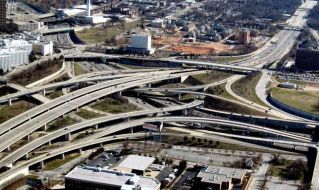
I was raised on the foothills of the Appalachian mountains (earth), hilly land with red clay soil and loads of spindly pine trees. The water (water) that I drank and bathed in came from Lake Lanier, a dammed portion of the Chattahoochee River. The winds (air) were unnamed but predominantly flowed from the southwest towards the northeast. Power (fire) came predominantly from a hydroelectric plant that dammed the river. The main spiritual practice (heart) there was Protestant Christian, and in particular Southern Baptist. The largest landform was Stone Mountain, a granite outcropping that extends underground into five states and has a Confederate Memorial carved into it which is the largest bas relief sculpture in the world. Other memorable landforms are the network of manmade highways, including a circle around the city with an X of two highways that meet at the centre, and incredibly messy interchanges such as one called Spaghetti Junction that looms large in my memory (see below). A local park called Henderson Lake was a safe space for me, and I walked there regularly (see below). The Creek and Cherokee nations existed on the land before English colonists, and before that were nations of mound-builders which we know little about. (Images from here and here.)

atlantahwy hendersonlake

Exercise: I invite you to download this My Ancestry Exercise that came together when preparing for an ancestral healing workshop a couple months ago. I have my answers on there as an example. It will give you a reflection of what you know about where you come from, and your intuition may answer some questions you didn’t realise you knew! You can add to this exercise an honouring of landforms and elementals exemplified above for the land(s) that raised you, and the land that now supports you!

giveheart If you value this content, please engage in reciprocity by living, sharing and giving.

Colonial Disconnection

Blog by Lukas

naturequote.jpg

One of the many MANY things about my life and worldview that has changed since I’ve known my wife Cloud Clearer has been seeing things more clearly from an indigenous perspective. And in this I don’t mean indigenous Australians. A lifetime of my best effort at open hearted learning would be nowhere near enough to truly know their suffering. And I certainly don’t mean nativism, which so often takes the form of destructive, oppressive tribal occupation.

I’m talking about indigenous in the form of a deep, dare I say spiritual, connection to place. A felt and emergent sense of belonging in which one’s existence is symbiotic with, dependent on, and unshakeably connected to the Earth. A oneness that means all that happens to earth, happens to a person, and what happens to a person is also happening to the Earth. This is opposed an egoic mind, floating in desperation and disconnectedness on top of the earth, plotting the ways in which all other things around it can be exploited for its survival, as though one were necessary for the other. An indigenous worldview, or Earth Ethos, understands that the exploitation of the land is ultimately a self-destructive act.

I spent the day driving around Western Sydney today, and it hit me so hard how disconnected, and therefore desperate, we are. Billboards, trucking supply chains, retail superstores, and development. Everything a commodity. And I don’t mean to pick on the West. The older areas of our colonial civilisation are just pretty scars, made so long ago it’s easy to see them as somehow natural, as though European energy has somehow always been here. And herein lies one of many white Australian delusions: It is not that there isn’t something wrong in a felt sense about the tens of thousands of newcomers setting up mini colonies in our big cities. I believe there is. I feel it. But the delusion is that we were, or indeed are, any different. Just ask any indigenous person.

(Images are the first two found for the google search ‘colonialism’, from here and here.)

Exercise: What is one way you can support indigenous well-being? Consider learning which indigenous people have lived where you now call home and how to honour them, such as donating to a non-profit like this, or a local one like this in Australia. Consider integrating Earth Ethos ceremony into your everyday life to feel more deeply what is happening in your body and with Mother Earth. You might try beginning and ending each day with intention through prayer, mindful movement, breath-work, sound, or spiritual reading.

giveheartIf you value this content, please engage in reciprocity by living, sharing and giving.

Cultural Shadows & Reflections

Blog by Valerie

Our lives are an endless series of resolving tensions, or reconciling polarities. We navigate this process based on stories, beliefs, and spiritual tools we’ve learned, which differ by culture. Culture arises from the Earth below, and for the majority of us who come from immigrant, slave, refugee, or forced migration lineages, our sense of culture has been disconnected from land(s) of origin. This creates cultural shadows and reflections, which are different things.

d-bush_reflections-on-ice.jpg

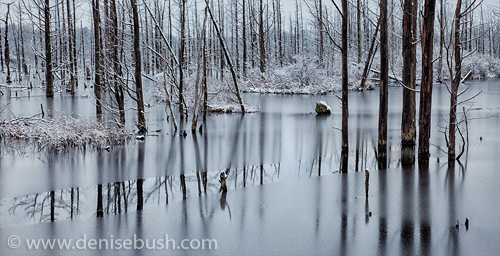
Think about a reflection from a lake: if the surface of the water is clear and still, the reflection maintains its form and colour, but size may be distorted by angle of perspective, uneven water surface, if we are bigger than the body of water reflecting us is able to show., and by warmth of the water – just look at the difference of the reflection of the trees from water and ice.

catshadow.jpg

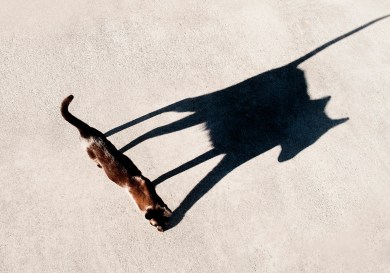
Now think about a shadow: it distorts form, colour, and size. So it is a rather messy reflection of blocked light. The way shadows work, the closer we are to the source of the light, the larger the shadow appears. Placement and perspective have a huge influence on us, from how we see ourselves to how we survive in different environments.

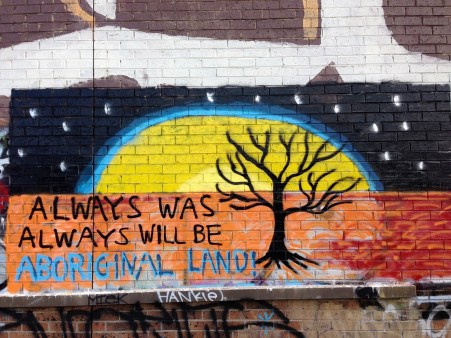
Survival is primitive, root chakra, grounded energy. All Earth environments have a unique nature, which is why I agree with the perspective that Australia always was and always will be Aboriginal land. This is nature; we all know that Earth environments and human cultures are diverse. We would aboriginalland.jpegnever expect someone from Northern Europe to have the same culture as someone from Australia. But when a bunch of people with Northern European ancestry move here (many unwillingly), what does that mean for the culture of the people and place now living on land we call Australia?

Most of us today are experiencing such a cultural transition. We are reconciling polarities of disorientation and loss as we let go of what does not serve us anymore, and trying to ground ourselves where we are. The lived experiences of our ancestors, the myths and teaching stories our elders have passed down, and collective wisdom that has allowed our lineages and tribes to survive has reached limits. Coming from cultures that are disconnected from the Earth where we live now, unpack a lot of shadows. Some of us fret about sustainability yet cling to old cultural stories and ways of being, while others seek to adapt and grow by learning through diversity, taking risks and trying new things. We seek new cultural forms to ensure the survival of our lineages and tribes, which requires sacrifice and risk. (Image from here.)

shadowbookWe literally become bridges between the land and cultures of our ancestors and a new land and culture. Our wild and crazy human journeys allow landforms like mountains and lakes, and trees that have been grounded in one place for centuries to travel vicariously through our reflections and learn what we’ve seen and experienced. What rich gifts we bring when we allow ourselves ground in a new environment. (Image from here.)

What drives us onward through the pain? What makes us want to endure the challenges of reconciling such vast polarities of energies in order to survive? It’s an innate, profound joy and gratitude that we are alive and embodied. And if we are open and humble enough, we can learn a lot about how to survive in our current environments from indigenous elders in person and in spirit. See if you can allow the Aboriginal elder’s joy in the video below to spark a memory of never feeling lonely because you are so connected with your environment and nourished by Mother Earth. 

If we remain shut down, overwhelmed, and closed to connecting with our new environments, we miss opportunities to ground polarities and transform ourselves, and instead become stories of fallen civilisations or evolutionary dead ends.

giveheart If you value this content, please engage in reciprocity by living, sharing and giving.

The Red Road

Blog by Valerie

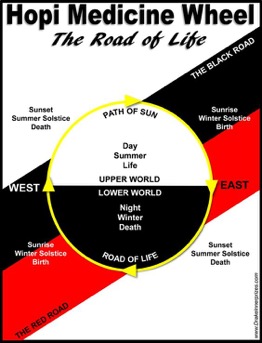
The concept of the Red Road comes from Westerner’s attempting to understand the way indigenous cultures of North America structure their lives and see the world, though I havehopiroadoflife heard people who identify with a North American tribe use the term too. (If you are not familiar with the concept of a medicine wheel, read this post first.) Consider the example of the Red Road from the Hopi who live in the Southwestern U.S. Look at the medicine wheel is in the centre alongside da Vinci’s re-drawing of the Vitruvian man. The belly down to the feet maps onto the lower world coloured in black which represents Mother Earth, the sacred feminine. I estimate the proportion of the Red Road in this lower world is about 80%. This means focusing 80% of our time and energy on standing up for our values, exploring the mystical side of life, and nourishing and expressing our creative energies. 

vitruvian.pngLiterally, this means keeping our hips open, our legs strong, and our bare or grounded feet firmly planted on the Earth. We talk about having our carbon footprints, but what about our physical ones? I practice walking so respectfully and gently that I imagine my feet are kissing Mother Earth with gratitude with each step. My respect is shown through wearing flat, primarily leather-soled shoes, as well as through the act of stepping. Consider how to walk silently and softly with fox walking, and compare those movements with how you normally walk through the world. (Here’s another video to help you practice fox walking.) Aside from yoga or pilates classes, I find most of us pay very little attention to how we physically move through the world. To be honest, I cringe when I see people walk in stiletto-like heels because it looks to me like they are stabbing Mother Earth. I also feel pain when people are very heavy-footed, because it looks like they are punching Mother Earth with each step.

Metaphorically, as one indigenous scholar describes it:

Walking the Red Road is a determined act of living within the Creator’s instructions.  Basically, it is living a life of truth, humbleness, respect, friendship, and spiritually. Those on this road are by no means walking a perfect path, but are in search of self-discovery and instructions.

The path of the Red Road is mostly felt and sensed, and includes the mystery, magic, and miracles that arise through following signs and seeking synchronicities. It is more bottom-up than top-down, more grassroots than executive-led. Someone who walks the Red Road is more likely to be described as determined than headstrong. It reminds me of the Lakota morning prayer ‘Today is a good day to die”, which embodies living fully in the moment. In such a state, we harbour no regrets and are able to even let go into physical death if that is what is asked. It is being so attuned that there’s little to think through, life magically and consistently emerges and we are so allowing that living is like watching beautiful flowers blossom over and over again.Indigenous-Flag-RS.jpg

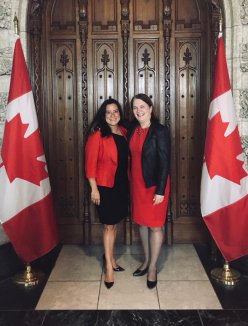
There is wisdom in the colour red, with some universal meanings present across cultures, such as: primal and sexual energy, blood and ancestry, fire and passion, and physical earth or clay. I am reminded of the colours of the Australian Aboriginal flag, with red representing Mother Earth, black representing Aboriginal people walking on Her, and the sun representing the creative life-giving energy connecting the people and the land. (Image from here.) I am similarly reminded of a current affairs story in Canada of an indigenous minister who resigned due to unethical political pressure from the prime minister, and another minister who resigned in solidarity. I find it apt these women chose to dress in black and red together as they took this historical stand. (Article about it and image from here.)

canadianpolitics.jpg

Exercise: Regret is a grief about something left undone. When we are em-bodied there is nothing to re-member because we are living in the moment on the Red Road. Think of a regret. Is that dream still viable and important to you? If so, can you take a step towards fulfilling it and make a commitment to continuing on that path? If not, can you make time to grieve the loss of the dream and let it go, perhaps through some sort of ritual, so you can move on and allow new creative energy to flow?

giveheartIf you value this content, please engage in reciprocity by living, sharing and giving.

Calendars, Seasons & Cycles

Blog by Valerie

There are four types of calendars:

  • A lunisolar calendar follows both the cycles of the moon and sun. Because the days, weeks and months are fixed, holy-days determined by the lunar cycle fall on different calendar days each year. (e.g. Hebrew, Buddhist, Hindu, Chinese, Korean, Tibetan, and pre-Christian Germanic tribes)
  • solar calendar like the Gregorian and Julian ones we are most familiar with follows the cycle of the sun only. It tends to be used by agricultural cultures. (e.g. Christian, Berber, Tamil, Bengali, and the French Republican calendar)
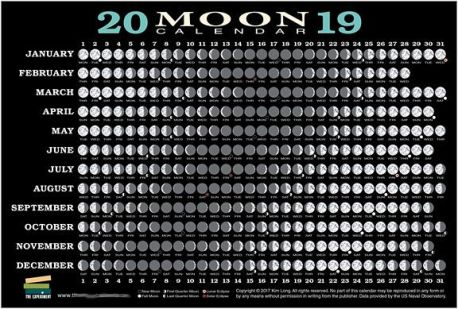
  • mooncalendar.jpgA lunar calendar follows the cycle of the moon only and may have 12 or 13 months in honour of the number of moons in a year. (e.g. Islam, Igbo & Yoruba of Nigeria)
  • A seasonal calendar is based on elemental (earth, air, fire, water), floral (plant) and faunal (animal) patterns throughout a year. The number and types of seasons are dependent on specific places, so even tribes near each other may have different seasons if their land has a river that floods during a “wet” time, or if an animal migrates through their land at a specific time of year. (e.g. Aboriginal Australians)

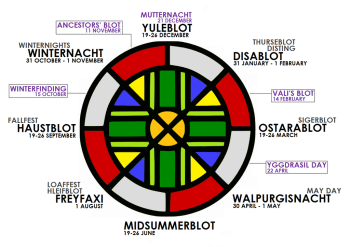
You may think that four seasons a year has been standard in European cultures, but the old Norse calendar had only two: summer began in mid-October, and winter in mid-April. The “Wheel of the Year” is a common calendar used by modern-day pagans of European ancestry and is based on the equinoxes and solstices, and the half-way moments between them to mark changes of a four-season calendar. The images below are of Heathen (modern-day Germanic and Norse pagan) and Celtic pagan calendars. If you are in the Southern hemisphere and wish to honour this calendar, Glenys of Pagaian Cosmology translates it so your celebrations are seasonally appropriate.

1024px-heathen_holidays

wheelofyear

There are many ways of acknowledging seasons and cycles because of the diversity of environments, traditions and beliefs that influence a culture. The term “pagan” may make you think of someone in pre-Christian Europe who worships multiple gods, but it actually refers to people who are “fixed or fastened” to the land, i.e. villagers and country folk. In other words, pagans are people who have not yet experienced cultural genocide and disconnection from their ancestral homelands and whose culture is indigenous to, or rooted in, a specific environment and place. Aboriginal Australians offer us a reminder of how all humans once lived “fastened” in sacred connection with our environments:

(Clip from here.)

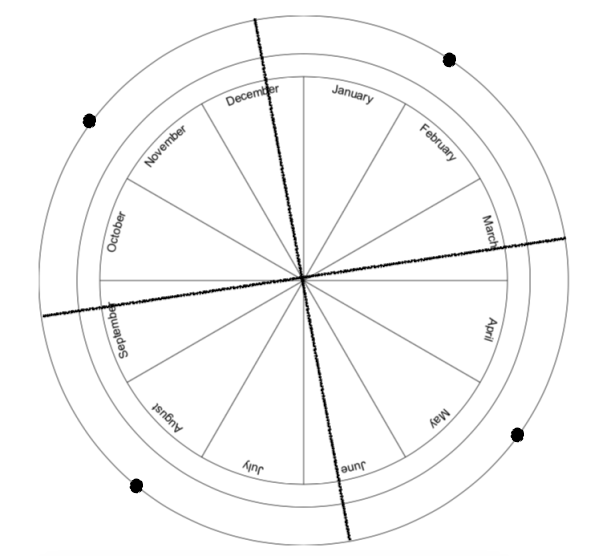
Exercise: Wherever you live, consider how to describe a seasonal calendar in your area. You may want to use the image below adapted from this template as a blank canvas, with this complex blended calendar offering some inspiration.

In the template, cross-quarter days are marked as circles and lines mark equinoxes and solstices. Aspects of your Medicine Wheel may be written in the upper open area, land-based cycles in the next layer, and important dates below the months. Don’t worry if you don’t know some things. You can’t do this wrong; you have a unique ancestry (of land(s), lineage(s) and spirit) and the way you celebrate seasons, solar and/or lunar cycles can be your own.

Calendar Medicine Wheel

To give you some examples, in my Medicine Wheel / adapted Wheel of the Year calendar, each of the four parts is associated with a season, a colour, an Earthly cycle, an aspect of ancestry, and a totemic plant or animal – so my direction of north represents the mental, the element of air, the season of winter, the colour black, the Earthly cycle of rebirth, my Sumerian (Jewish) blood lineage, and the date palm (a sacred plant). Transposed over the Wheel of the Year, I am developing an understanding of the land-based seasonal calendar for Yuin country on the south-eastern coast of Australia, where for example, humpback and southern right whales migrate north to breed in May, and then back south with their babies in October. Also transposed are a few holy-days I like to honour with others around the world include Earth Day, the International Day of Peace, Indigenous People’s Day, and Martin Luther King Jr.’s and Nelson Mandela’s birthdays. I also honour birthdays and death days, as well as new and full moons and eclipses.

giveheart If you value this content, please engage in reciprocity by living, sharing and giving.

Dignity & privilege

Blog by Valerie

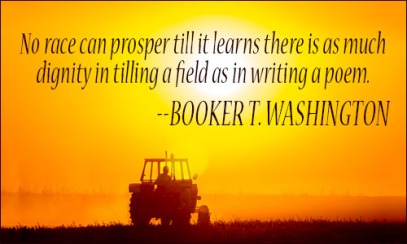
One of the basic premises of an Earth Ethos, and of indigenous teachings generally, is an innate worthiness of being. It does not depend on behaviour or social status or species; all beings on Earth are of worth. This is the foundation of dignity, whose root comes from Latin for “to accept, to take.” In the previous post I wrote about how acceptance keeps us in the present moment. And when we’re in the present moment in a state of worthiness, we are strong and we are dignified, even if behaviour of another person is not. Privilege, on the other

dignityquote1

hand, comes from the Latin words for “private” and “law,” indicating an advantage, right or priority over another person, group, or even species. In social justice circles there has been a lot of discussion in recent years of privilege related to race/ethnicity, gender, sexual orientation, religion, class, age, citizenship, and disability. I know there are real life impacts for many of us because of social privileges, but our focus on these inequities distracts us from the important work of ensuring that we stand in dignity and see others that way regardless of their behaviour or beliefs. It’s our responsibility to remember that regardless of the domination of certain social stories and world views, there is innate dignity in all ways of being. Stories are powerful because we feed them, even if we do so by fighting.

It does not matter if a person has a million dollar home or a high social status job, being in denial and numb to painful feelings is not a privilege, is it disembodiment, disconnection with self, others, and the present moment. It is a disabled and difficult way to navigate the world. I know this because after numerous efforts to ask for help and protect myself from sexual abuse as a child failed, I dissociated, and did not re-member those experiences until my mid-twenties. My life before that was really hard and confusing. It has taken many years and hard work to build a trusting relationship with myself. I have had to let go of and reform numerous unhealthy relationships including my entire family of origin; I have had to ride out decisions based on that denial and numbness and give myself grace in the process; and I have had to dig deep into my psyche to question foundational stories and beliefs that guided me for over 20 years, and replace them with ones that feel and work better. (Image from here. And like skill, you could rank by social privilege as well.)dignity-cartoon.png

Sometimes it feels like we have no choice, because everyone around us is on board; we feel forced to accept global stories like, for instance, capitalism, or countries and borders, or languages we communicate with. These big stories do privilege certain values and world-views. This is Christmas season. How many of us know that Jesus was not born on this day, and that the Catholic Church repurposed indigenous European celebrations for winter solstice over 400 years after Jesus’s death? (Even a Christian site called www.allaboutgod.com knows this. In fact, many of the so-called Christmas traditions have strange histories. It’s okay to celebrate something on another day, like when it’s your birthday on a Tuesday and you have a party the Saturday before, but it’s less powerful than if you celebrated the actual date. It’s the same with solstice. It would be a lot more powerful if we celebrated winter/summer solstice on the actual celestial days instead of the days chosen for Easter/Christmas depending which hemisphere you’re in.Consider connecting with the powerful celestial energy this solstice and doing something to celebrate our planet regardless of what else you celebrate. In the southern hemisphere, Christmas celebrations with fake snowmen, fake pine trees, fake garlands, and sweaty Santas in summer are farcical. (Image from here.)

sandsanta

It is of course possible to be dignified in celebrating Christmas; it is meaningful to many people. It is also important to recognise, whether you celebrate it or not, that in society right now Christmas is privileged, and to consciously decide how you want to behave given that social reality. Most of us get time off of work for Christmas, and some of us have to use our vacation to celebrate days that are meaningful to us which are not socially privileged. If you have not taken the time to reflect on what the elements of the modern Christmas celebration mean to you and whether your participation aligns with your values and world view, I encourage you to. How could I get out of this if I wanted to?you might ask. Everyone buys presents, decorates houses and offices, makes certain foods, plays certain music, and expects me to join in. Didn’t anyone ever ask you as a kid if everyone was jumping off a cliff if you would too when you used that sort of logic? Christmas celebrations started to feel empty to me as my sex abuse memories were integrating. Christmas memories from childhood were joyful because my dad spent time doing creative things with me, not because there was deep meaning in the specific activities. I didn’t know why I was busily making and buying things, as I am not a dignityquote2.jpgmaterialist or a Christian, so I told people close to me I would focus on birthdays and important life events, and I stopped. I don’t want to deprive anyone of the joy of giving, but I don’t want to feel burdened receiving what is intended as a gift, so I told people close to me if they want to give me something, I prefer personal notes, meals, time together, and handmade art. I dislike expectations to behave a certain way on a day that is not especially meaningful to me, so Luke and I take short trips just the two of us over Christmas to enjoy Mother Nature instead. This all make it easier for me to stand in dignity because I am accepting me and not playing a victim by gracefully navigating a situation where my way of being is not socially privileged. Cultivating the discipline to deny ourselves that which brings us pain and suffering helps us stand in dignity and experience more joyful abundance.

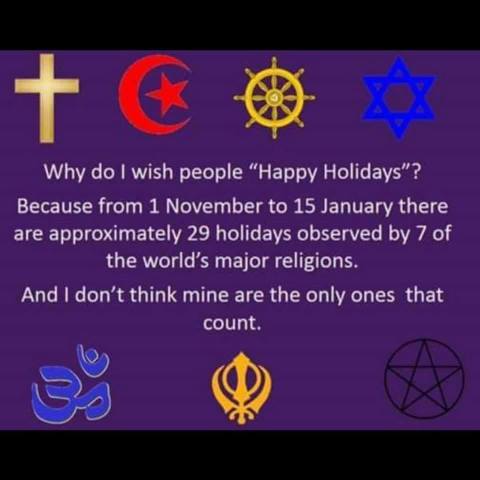
From a pagan friend: Happy Holidays meme.jpg

giveheart If you value this content, please engage in reciprocity by living, sharing and giving.

Governance

Blog by Valerie

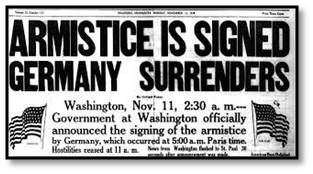
Today is 100 years since the armistice to end the “war of all wars,” which as we know did not do so. The word “armistice” comes from “arm” and “solstice,” where “solstice” means to stand still and firm, referring literally to the movement of the sun. You may wonder like me why the word “arm” refers to the part of our body and also to weapons. The etymology is from an ancient Proto-Indo-European root word meaning “to fit together,” referring to joints (Though that doesn’t explain why we refer to big biceps as “guns.”) The fact that we use the same word for our body and a weapon is interesting, and it is worth reflecting how we are embodying armistice today. A Bible study website says arms are “used to denote power” and “the omnipotence of God”, and a site linking body metaphysically with spirit suggests that arms are about “the ‘social embrace’ or how we reach out to other people.” (Image from here.)

Armistice-Signed

In an Earth Ethos, the way we reach out to others says a lot about how we govern ourselves, and how that is a reflection of our inner space (our capacity to be with and hold complexity), our values, character, and spiritual development. I have been noticing more and more how the Western archetype of “king” as ruler in control manifests in everyday life. To quote from a previous post:

“Europeans relegated sovereignty to only one realm of existence: authority, supremacy and dominion. In the Indigenous realm, sovereignty encompasses responsibility, reciprocity, the land, life and much more” (1999).

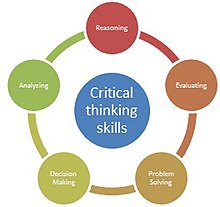
Critical_Thinking_Skills_Diagram

For most of us Westerners, the critical thinking/rational mind (we literally call it “executive functioning”) governs a lot of our actions. This is mirrored in society with complex hierarchies where power is concentrated in people we call “executives” who are higher up the “chain of command” (another military term). An executive is literally executing a vision (another word with a violent double meaning), but what is that vision based on? It’s based on a worldview: how we see ourselves, each other, and how we fit together. This makes up the “dreamtime” as Aboriginal Australians say, or the subconscious as social scientists say. Being governed by rational, executive functioning is destructive, because our human lives are not rational and reasonable. Many of us have faith in a “higher plan”, a destiny or fate to help us make sense of events we can’t understand or otherwise explain. (Image from Wikipedia.)

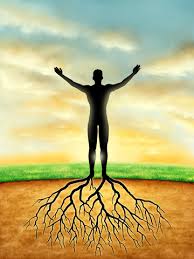
groundingimage2.jpg

We get so caught up in understanding, we lose touch with the ground we’re standing on. We want to know what caused the fire before we put it out and clean up the mess it left. Most of us are taught from a young age to think through our actions and analyse behaviours of others. But if we look at the path a river takes to flow to the sea, we may think it’s crazy and inefficient: it twists and turns, goes over rocks and down waterfalls. Our biggest computers cannot mathematically work out the best path for a river to flow even if we have detailed topographic maps, because our nature is not static enough for to understand. Weather, animals and plants can change topography in an instant, and we might joke about poor meteorology predictions, but it says a lot about science (the study of human knowledge) that we can’t understand the natural flow of earth, air, fire and water. (Image from here.)

carrying

A wise woman friend who has since passed on said to me that “all we humans do is carry things.” We carry ideas, stories, feelings, emotions, spiritual views that frame our worldview, and dreams. Most of us are carrying some stories based on black-and-white, right and wrong, judgmental thinking, which we often refer to as critical thinking. But this critical thinking for many of us has outgrown our ability to remember who we are and remain present in our hearts. How often you “know” what to say, or you have a strong instinct to do something, and you talk yourself out of it, later realising that feeling/knowing was a better path? Our want to know in our heads is plaguing us with doubt for other types of knowing that are really valuable as well. Critical thinking is literally preventing magic and creation from freely flowing in our lives. (Image from Wikipedia.)

Life tested me for many years until I made a commitment to stand for peace. It has cost me a lot of energy emotionally, psychologically, and physically, but spiritually it is my bedrock, and I feel lucky to know that. Each day I learn my limits and practice opening my arms more widely to embrace even more energy with loving compassion and graceful acceptance. Because my dreaming is a world filled with peace where terms for weapons and body parts are very distinctly different.

Exercise: How do you carry armistice? What do you stand for with arms open? What is the bedrock of energy that governs you?

giveheart If you value this content, please engage in reciprocity by living, sharing and giving.