Blog by Valerie
Lately some protracted conflicts have come to the surface in my life at a macro level in the world, and at a micro level in my daily life. I have been praying quite a lot since the war in Ukraine broke out, where my Jewish-Sumerian ancestors spent many generations living, and more recently about the war in the Middle East. It seems to me like there is existential war and rejection going on based in judgment, where one or more parties to a conflict feel they are fighting to exist in the minds and hearts of the other.
I find existential judgement incredibly dangerous and damaging and see it as the root of genocide. It feels to me like a hand rejecting its own finger. If we believe in a Creator with wisdom our human minds cannot comprehend, how can we put ourselves in the position of judging what the Creator brought into being? And to say another is allowed to exist elsewhere (NIMBY) is still judgmental, for if we force another to leave their home and live on different lands, we change their and our identities by disconnecting people from their earthly homes and playing the roles of victims and offenders.
On a micro level I’m seeing this thinking play out in some righteous social justice warrior crusades around me. I find the concept of ‘rights’ to be violent, though it has obvious practical value to create baseline standards for society. If we didn’t existentially judge certain struggles and behaviours as deeming people unworthy of housing or health care or food, then rights would simply represent social baselines we collectively agreed upon as minimum standards of care for all of us humans living here. But if a single mother can’t afford housing, or a man with mental illness isn’t at retirement age but can’t hold down a job, we don’t collectively agree how (or sometimes even if) to support their survival. Rights then get used in a forceful way to push a majority social group’s minimum standard of support onto the collective, and thus they often need to be en-forced. And when we are judged and caught up in the rights battles we feel, rightly so, like we are fighting for our survival. (See survival strategies blog)
I agree with Jungian scientist Fred Gustafson that the Western mind is “having a massive collective nervous breakdown” and is going to “war to determine whose anthropocentric [world]view is most valid [while] the earth and all its inhabitants [] suffer.”[1] I have not found sufficient solace for survival in the Western world alone.
 For me it has been vital to live in two worlds: (1) a social reality that is based on a Western worldview, and (2) an earth-based reality based on an Indigenous worldview. When I’m caught up in a survival struggle in the Western world that’s terrifyingly real, and I’m feeling rejected and judged and shamed and angry, I can spiritually connect with the knowing from the Land and my ancestors that I’m not only allowed to exist but that I am wanted. This powerful medicine is all I have found that alleviates my existential wounds. Without it I feel like I would not still be here on this Earth, as my roots would have rotted and not been able to hold up the rest of my inner tree of life. (Image from here)
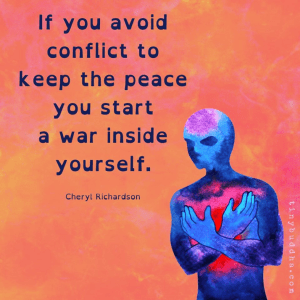
If you’re also feeling some pain and heaviness about existential judgement and its impact, here are a few things that help me keep my spirits strong:
- Grieving is a way I like to express angry energy to avoid getting overwhelmed by righteousness and gain clarity which fights, if any, feel right for me to engage in, and what that means practically. You may prefer to yell and scream or throw things or punch a bag instead, so however you express anger to avoid it overwhelming you is helpful.
- Connecting with the land and ancestors where I am offers me powerful healing. I may give offerings as simple as feeding a bird or picking up rubbish, or as profound as a placenta burial or smoking/smudging ceremony. I may also cultivate a sit spot on the land, walk barefoot, and tend a tree altar. There are so many more ways to connect with the land where you live, these are but a few. The reverence we bring to the action we choose matters more, I think, than exactly what we do.
- Letting go of black-and-white, objective, judgmental thinking is something I am very fierce with myself about. Humility is an important value to me, so I ensure that even when I feel certain or highly confident about something that I carry a little bit of doubt. For example, I feel highly confident that child sex abuse (link) is a damaging act that is wrong to do. Yet my intense journey of seeking to heal that wound has brought me so much wisdom and peace. Spiritual gifts often thrive in grey, paradoxical spaces.
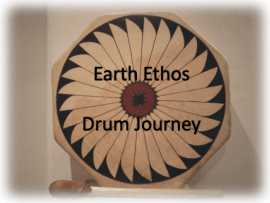 Altering my consciousness is another survival tool I use daily, primarily through embodied meditations and drum journeys. I do it to heal trauma, connect with ancestors and other spiritual guidance, and seek tools for every day survival such as deeper spaces of compassion or peace. However you are able to sink deeper than your everyday ‘known’ and familiar thought loops can bring you some healing. I do find, however, that embodied practices (such as using sound or dance or breath techniques) are more powerful than mind-based practices (such as meditating through your third eye or simply watching your thoughts).
Thank you for reading this, and may your life be enriched (and even saved) by living in both worlds, as mine is.
[1] Gustafson, F. (1997). Dancing between two worlds: Jung and the Native American soul. Mahwah, NJ: Paulist Press.
 If you value this content, please engage in reciprocity by living, sharing and giving.
 There is so much power in
 As an Indigenous scientist living far from ancestral lands, from a socio-political perspective, I am a settler
 Some years ago while working with practicing Jews and Christians, I realised the underlying process many of them were continually going through: judge an act as righteously right or wrong, confront moral failings within oneself and others, then forgive and let go by giving anger to God or Jesus. The depth of potential existential judgment is so intense (e.g. eternal damnation and social ostracisation), that it can be very hard for people to acknowledge ‘wrong’ behaviours. I have experienced numerous instances of trickery of someone intending to forgive and let go (or deciding to avoid an issue), resulting in hurtful and confusing passive-aggressive behaviours. Often the underlying issue emerges years later after so much resentment has built up and trust eroded that the relationship becomes very hard to repair. (Image from
  Though it may at times seem more painful in the moment, I find loving acceptance brings me immeasurably more ease and peace than judging. I then discern what, if anything, I need to say or do when I experience hurt or realise I have caused hurt in another being. I remember Tom saying to me once that even when he doesn’t think he’s done anything wrong, if someone tells him that his actions have hurt them, he chooses to apologise because it is not his intention to hurt anyone. I appreciate the humility in that, and that it also helps hurting hearts to remain open to an ongoing relationship. (Image from
 _-_Bette_and_Joan.png/250px-Feud_(Season_1)_-_Bette_and_Joan.png) Now that the Western justice system has criminalised the payback ceremony, many Aboriginal people in the Northern Territory struggle to reach forgiveness with their Indigenous science of justice. I heard about someone who had been in prison for years as ‘Western justice’ who was released and immediately had to face spearing if he wanted to see his family and community again. I heard about family members of an offender being beaten up until someone agreed to be speared in place of the offender in prison. I heard about decades-long violent feuds involving multiple generations where many people didn’t even know how the feud had started, but no one felt justice had been satisfied. I even heard about someone trying to sue someone else for using sorcery against their family as payback instead of spearing. It’s a mess. (Image from
Now that the Western justice system has criminalised the payback ceremony, many Aboriginal people in the Northern Territory struggle to reach forgiveness with their Indigenous science of justice. I heard about someone who had been in prison for years as ‘Western justice’ who was released and immediately had to face spearing if he wanted to see his family and community again. I heard about family members of an offender being beaten up until someone agreed to be speared in place of the offender in prison. I heard about decades-long violent feuds involving multiple generations where many people didn’t even know how the feud had started, but no one felt justice had been satisfied. I even heard about someone trying to sue someone else for using sorcery against their family as payback instead of spearing. It’s a mess. (Image from  Though we may not be able to ceremonially heal with the people who hurt us or people we have hurt, we can do spiritual ceremonies on our own to change the way we hold people and what we project. Shifting our perspective requires us to hold paradox and avoid binary and judgmental thinking. In traditional Hawaiian culture, people use “Ho’oponopono, the traditional conflict resolution process…[to] create a network between opposing viewpoints…that allows dualistic consciousness to stand while becoming fully embodied by the ecstatic love of Aloha”
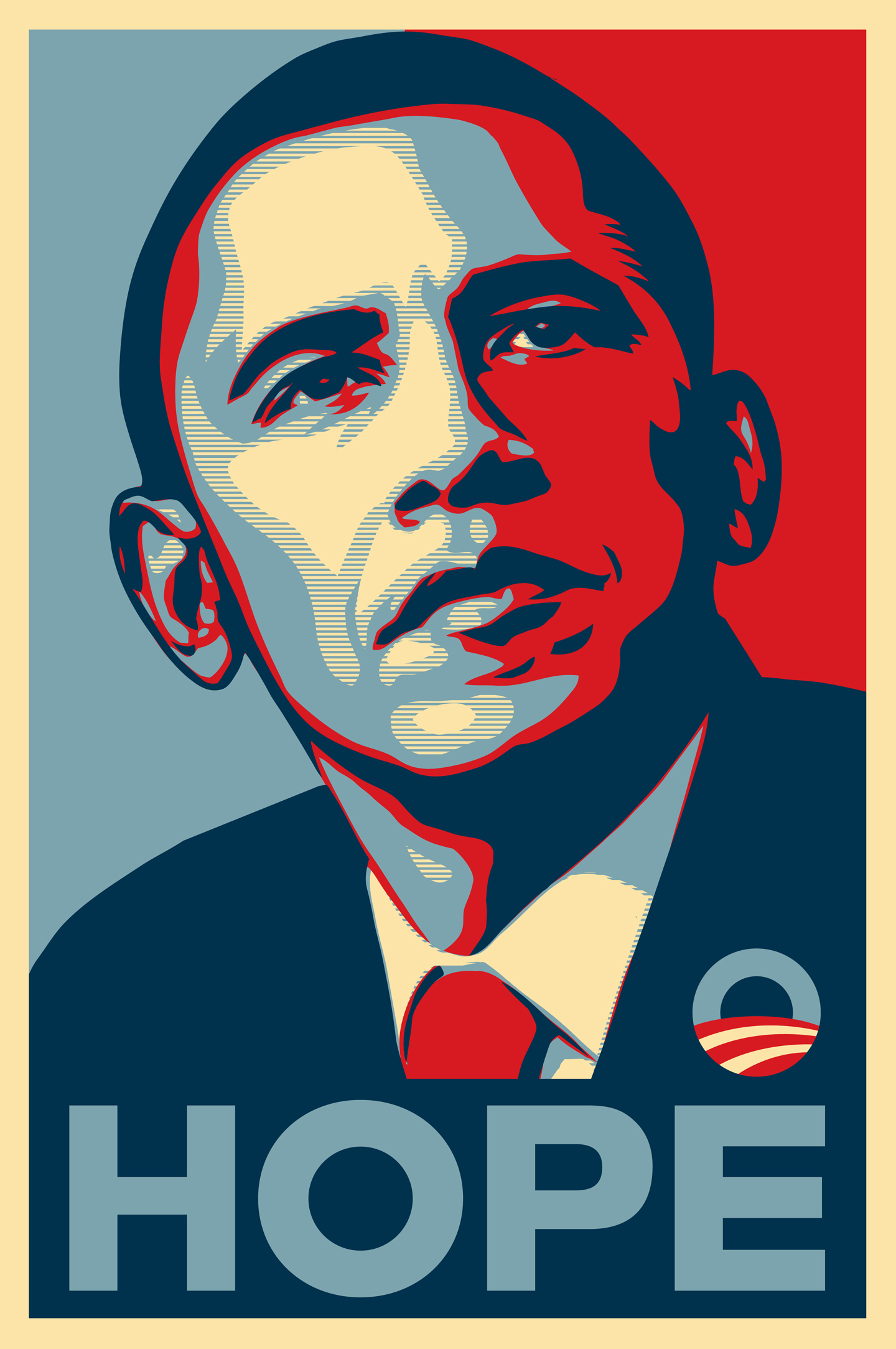 I see hope as a more fleeting, softer and elusive energy laced with personal egoic desires. I might choose to have faith that the right job will come to me at the right time (which will likely require me to do a bit of work putting myself out there), and if I feel excited about a particular job I just interviewed for, I may HOPE that will be the one that comes through. This is why I found the energy of Obama’s Hope & Change campaign less exciting than many people. I feel like many people placed FAITH in his presidency resulting in meaningful change instead of HOPE, and thereby set themselves up for huge disappointment (Image from
 If you value this content, please engage in reciprocity by
 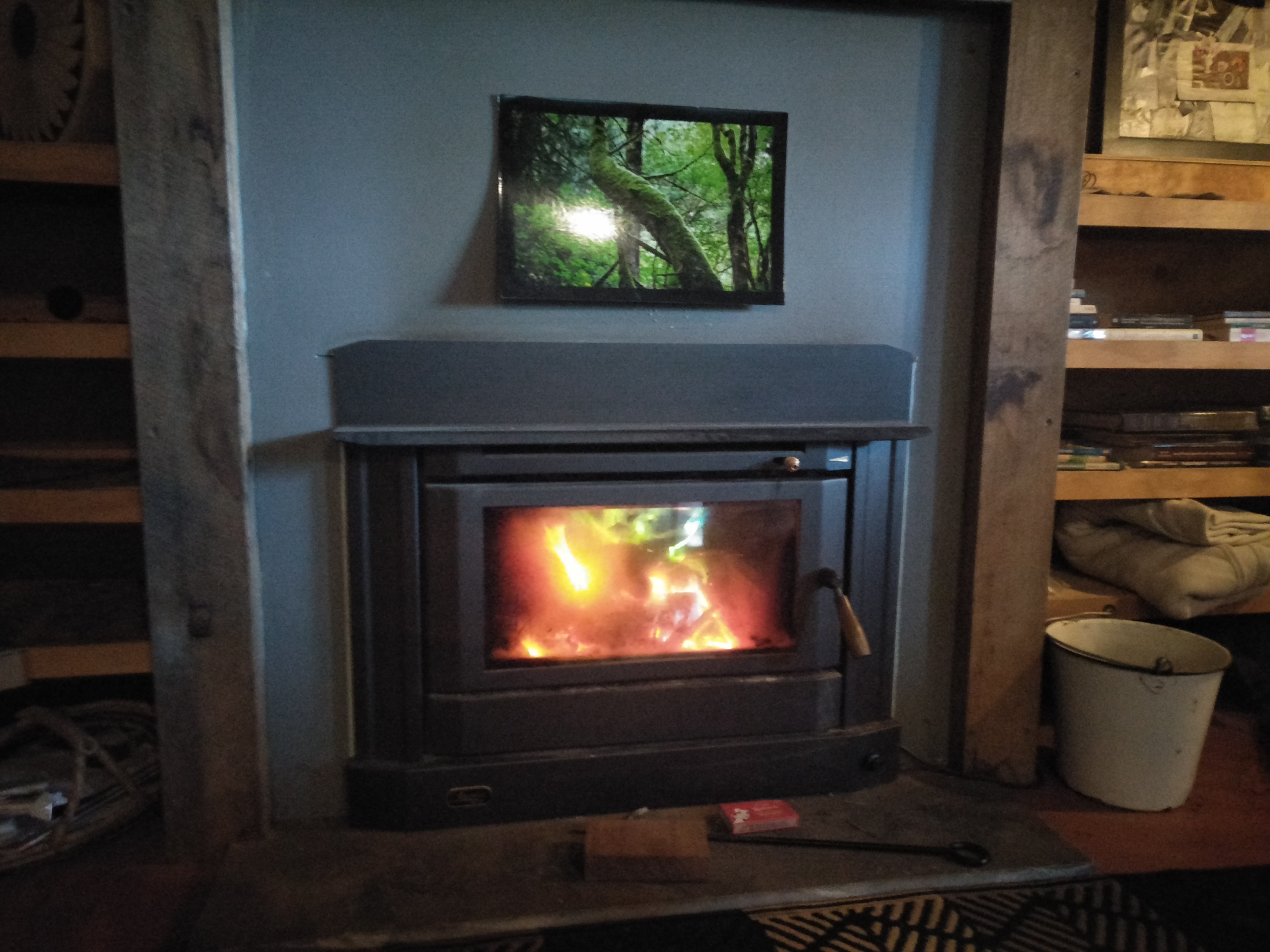 Here’s an example from my life lately. Our new home is being heated by a fireplace (image to the right). The first few weeks we stayed here, I woke up during the night coughing and struggling to breathe. Being unable to breathe properly feels incredibly scary and triggers survival fears very quickly. At first I thought the house was too dusty (it was), and I did deeper and deeper cleanings. That helped a bit, but I was still struggling. Then I realised the fire was emitting such a dry heat that I needed more moisture in the air, especially at night when I’m not drinking much liquid. So I started using a spray bottle to fill up the room with moisture before I went to sleep. That helped, but was not enough. As I kept waking up with coughing fits, I practiced breathing through it and being with the fear, and my mind and body started to feel more peace as the realisation settled that yes, this was scary, but it did not mean I was dying. As a next step, I have put up a DIY humidifier consisting of a wet towel hanging from the ceiling which slowly evaporates over about 24 hours. And now I’m sleeping through the night without a coughing fit. But I noticed today when I swallowed water and it went down the wrong pipe, though my body was dramatically coughing to expel the liquid, my mind was relaxed in the knowing that this was not going to kill me, and my emotions remained steady with just a bit of embarrassment that a friend was visiting and worrying seeing what I was going through.
 It also takes a lot of energy to be in survival mode, to watch your savings drain, and maintain faith and trust that you will settle again at the right time and place. Each time I have been on that journey alone or with Lukas, the eventual landing has been better for me and us, and this is no exception. I feel so much safer for all the fear I have faced over the last year of not having our own space, that now we are resettling into this house, I feel incredibly blessed and grateful to be borrowing this for a while. I know none of these earthly spaces are ‘mine’ in an ownership sense. (Image from
 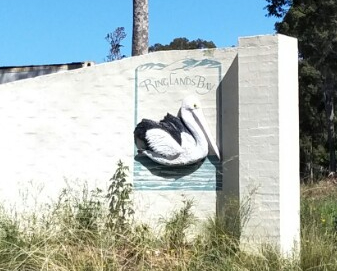 For 7th generation colonial settler Lukas, renouncing ‘owning’ of property is a lifelong path of facing fears and healing from ancestral ‘taking’ of land. When we visit Ringland’s Bay and the other areas around Narooma named after his ancestor, a ship captain buried in style in Bermagui Cemetery, we feel connection with place and pain. When we are with Traditional Owners who are our friends and talk about projects to facilitate healing people and country, it makes our journey into the pain and fear feel very worthwhile.
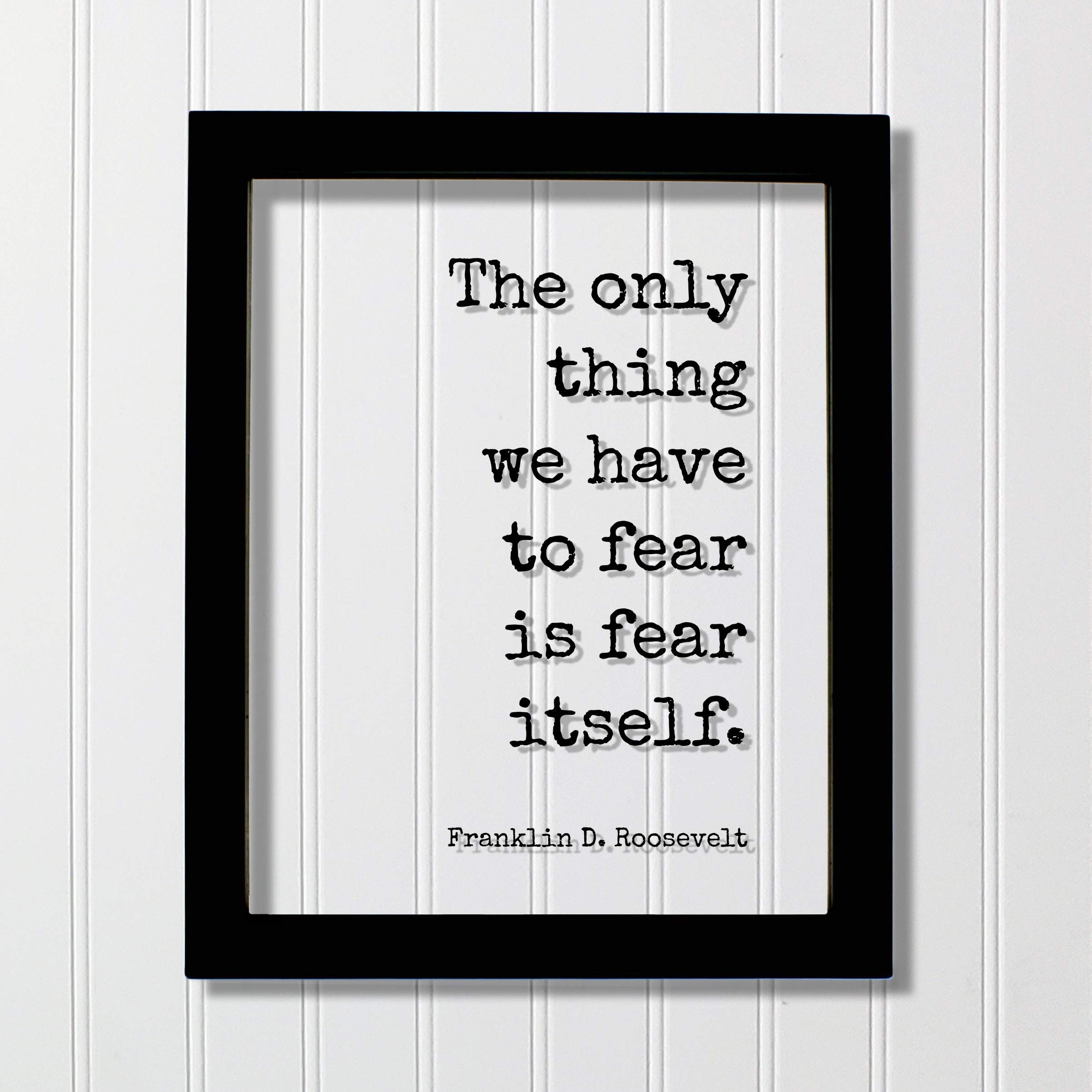 It’s so empowering to have enough space with our fears to act instead of react, and to be able to discern which feelings of fear are life-threatening (there’s a gun, get out of there!) versus which ones may feel life-threatening but can be healed (that person’s judging me, which hurts and feels socially scary, but their judgment isn’t going to kick me out of society, so I need to protect and comfort myself). It makes this famous quote make sense to me, and is inspiration to continue befriending our fears (physically, mentally, emotionally, and spiritually), especially with covid creating limitations in the physical world and opportunities for us to be more intimate with our inner worlds. (Image from
  If you value this content, please engage in reciprocity by
 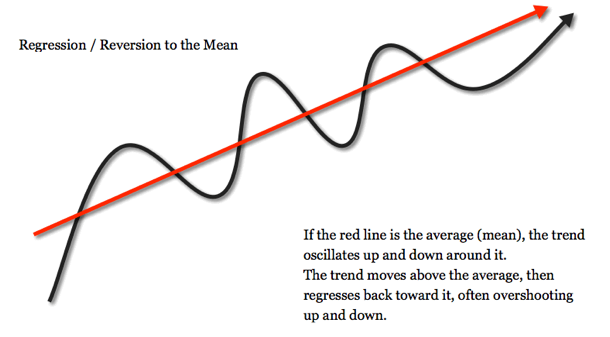 In social environments, it seems to feel proportionally less safe to be oneself the farther we identify from collective norms and ideals. There is a concept in mathematics called ‘regression to the mean’. It is basically the idea that when you put some ice into a glass of water, the ice will tend to melt and take the form of the water; in essence, it is about assimilating into a collective norm. Yet assimilation is a dirty word for many people, because we want to celebrate our uniqueness as well as being part of a peoples. (Image from
  Feeling safe to celebrate our difference depends on culture and context. These social wounds keep us trapped and unable to trust ourselves, each other, non-humans, and Spirit/God/oneness. Our capacities to heal and seek retribution are also based on cultural values and intergenerational traumas. Cultures that are more welcoming of outsiders seem to encourage healing and embracing collective wounds for transformation, whereas cultures that are more exclusionary seem to ‘other’ people and tend towards separation and seeking retribution. Fear of retribution can keep us trapped and unable to trust. It is as if there is a collective trauma belief that says, ‘if we let them in, they will hurt us.’ In my experience with Judaism, and what I am learning are my deeper Sumerian cultural roots, there seems to be a collective belief that ‘we can’t trust anybody.’ My own grandmother told me that as a child, and I asked her incredulously if I couldn’t even trust her. She didn’t answer, just stared at me in silence. Living in this social environment, I never felt safe. In fact, I felt terrified to even take up space. One wrong move could find me terribly punished, kicked out of the group, or worse, judged irredeemable by God. Despite constantly striving to be ‘a good person’, it never felt like what I did was good enough. I got used to feeling terrified that threats of judgment, punishment and retribution were always imminent. I worked hard to learn the rules I might break and the triggers I might set off that would result in my being punished. But I wasn’t in control. My brother had a habit of breaking rules and refusing to admit it, so we would both be punished. This was scary, too, because I didn’t know when the punishment would happen, or how intense it would. It felt safer at times to intensely control and punish myself so that I maintained a sense of autonomy. It also seemed safest to play the part of
  For most of my life I felt terrified to take up space. I felt like no space was ‘mine’ existentially or practically. For example, growing up, I wasn’t allowed to lock my bedroom door. I used to get dressed in my walk-in closet so I had some privacy and warning if my mother was coming into my bedroom. It took many years into adulthood – and practically ending many formational familial relationships that were untrustworthy just as my grandmother had told me – for me to become trustworthy to myself, be authentic and celebrate my difference, and surround myself with trustworthy and authentic people. By trustworthy, I mean people who say what they mean and do what they say, and when they can’t follow through on something, own it, apologise, forgive themselves, and make amends if needed. By authentic, I mean people who know their core values and practice embodying them in everyday life.
 It is still unsafe for me in many spaces where my values conflict with the collective. But I don’t feel a need to constantly strive towards some central ideal, nor do I feel like it’s me against the world at war. I feel peace in myself for accepting who I am and doing my best to navigate the collective morass, and for cultivating spaces where I, and others, are free to be. In this way, I can embody the knowing that we are enough. (Or ‘good enough’, whatever that means.) (Image from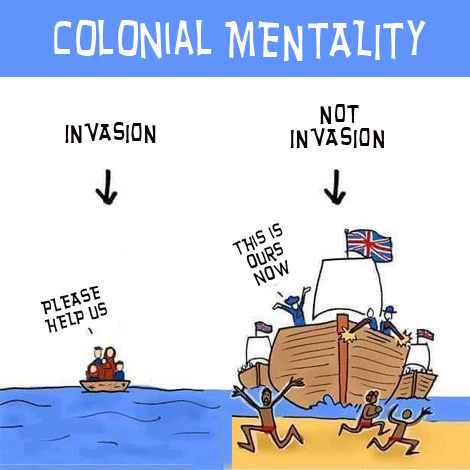


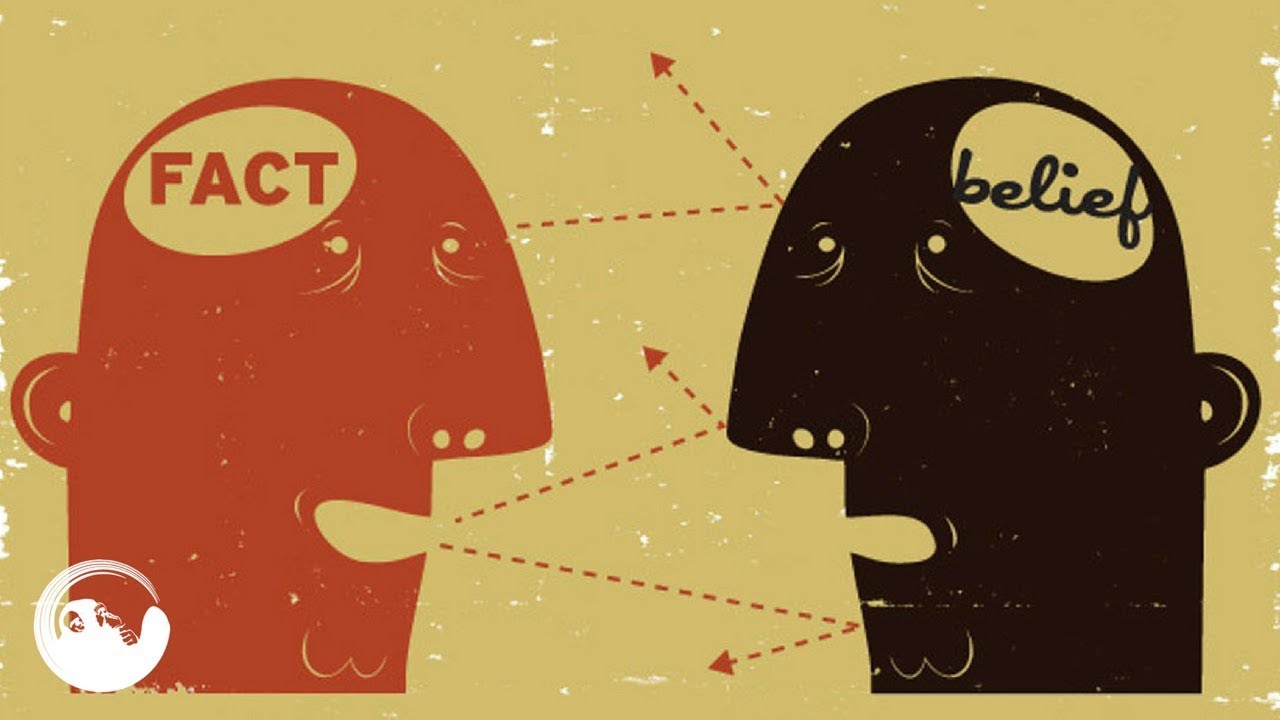 However much one tries to be “objective”, behind all science lies priorities and values, and this affects what ends up being considered real or true. Values inform priorities which help us develop meaningful goals as well as guide us how to err when faced with the inevitable uncertainty of complex systems. And, hard is it can be, values help us remain undistracted and unattached to the vicissitudes of life, and prioritise process over outcomes. By asserting the primacy of process, I am not rejecting consequences in favour of pure deontological “moral” frameworks. Rather, I am stressing that such frameworks are, amongst other things, methods for deciding how we ought err in uncertainty, to be used in combination with thought processes reliant on logic.
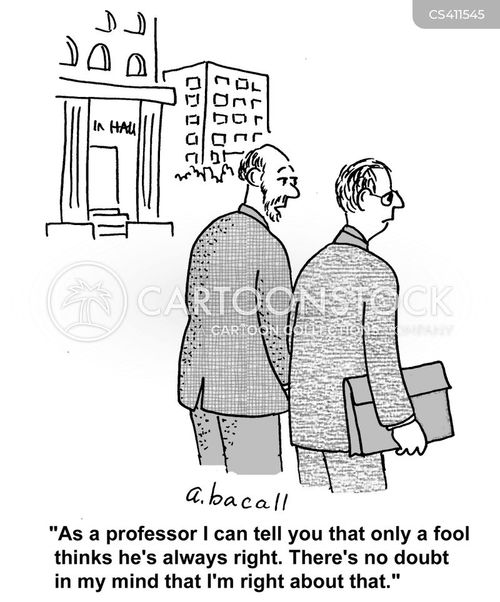 I think the most dangerous application of
 There are numerous errors of logic identifiable in Example 2 without questioning values too deeply, and these should not be ignored. But I think those errors were proximate causes of flawed values. The aeronautical engineering profession must be based on a deeply held commitment to safety above profit. They, and their regulators, should err on the side of safety. I cannot help but think that government backing of the A380 project — considered a public interest project — had something to do with the values underpinning their decision-making. The risk of producing an unprofitable plane is not as catastrophic to the public purse as it might be to a purely private enterprise. But it also has something to do with the physical nature of the wing test showing a “fact” playing into biases in the Western world. Feelings of unease in the pit of Boeing engineers’ stomachs that I am confident was there were too easily rationalised and discounted within a worldview that puts physical knowing — or its poorer cousin, physical modelling — on a pedestal. (Image from
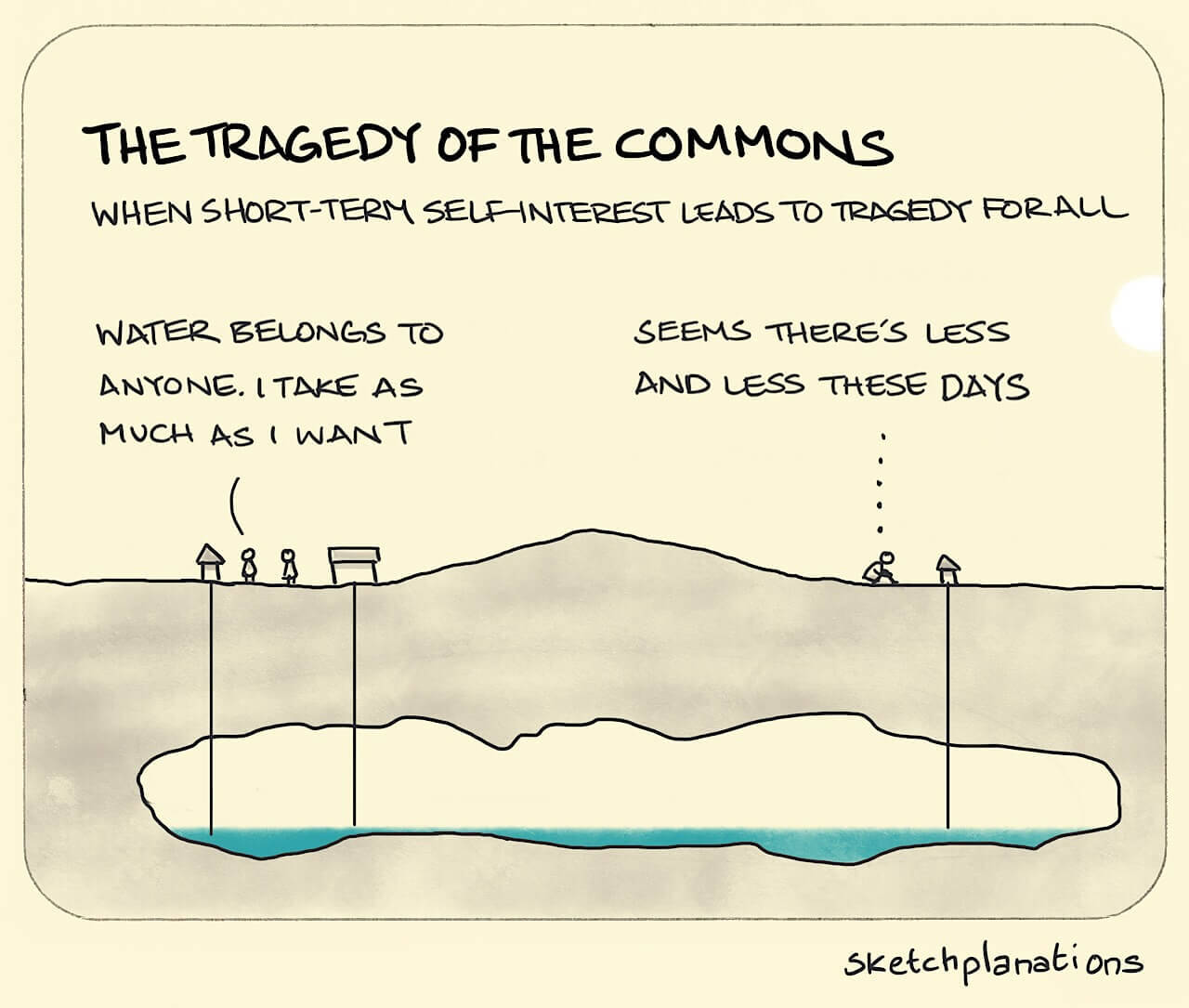 Another famous idea is the “
 A third framework of interest, and perhaps most relevant to our toilet paper dilemma, is the idea of
 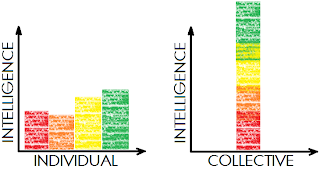 Looking at these articles on Wikipedia, it struck me how much that I think ought be deeply ingrained wisdom and self-evident knowledge has been studied intellectually and quantified as ‘evidence’. This is borne out by people acting like they need this kind authoritative guidance and advice before believing something is true. For example, the Tragedy of the Commons article mentions a

 Earth Ethos
