Roots deeper than whiteness — David Dean: Pithy and succinct history of how “whiteness” erased culturally richer European ethnic identities and allowed for racism and exploitation of non-whites. Very America centric, but captures something essential about the “white” identity that is an important, though non-exhaustive, component of settler trauma.
Empathic dialogue
Topical overviews
Indo-European language family: Lukas is producing a podcast on this, but familiarising yourself with the idea of the Indo-European Language family will give you a sense of the way in which so much of the worldview of the modern Western mind derive from a common ancestors like the Yamnaya peoples of the Eastern European steppes.
Enclosure movement: Critical historical shift in Britain (and by extension, Ireland) in the relationship between people and land, from feudal “rights” (which were of course based in intense hierarchy) to ownership, “rents” and thinking of “output” and productivity above all else.
Books specific to Anglo-Celtic Australian settler trauma
The Fatal Shore — Robert Hughes: Detailed history of the “transportation” system and the abuse experienced by convicts, and life in “Dickensian” England. Note that some of the history as presented in this book is contested, but it nevertheless gets to some deep truths around rejection and dehumanising that still plagues our culture.
The Tall Man – Chloe Hooper: Deep dive into the world of a policeman who worked in outback towns across Queensland before being involved in an Aboriginal death in custody on Palm Island, told as a parallel story alongside the life of the man who was miles. Shows the depth of wounds on both sides and the inability of large colonial institutions like the police to cope.
The Timeless Land – Eleanor Dark: Work of incredible channeling by Eleanor Dark from the 1950s who tries to get into the mindspace of both colonists and Aboriginal people in the early days of the colony at Sydney Cove. Presents the crucial idea in Indigenous Science that how you treat others — for example convict flogging — is a reflection of oneselves because we are all interconnected. The Way of Wyrd – Brian Bates: Rich and thought provoking research informed narrative exploring Anglo-Saxon Paganism. Provides a tantalising insight into another way of being practiced by your relatively recent ancestors.
Honour all ancestors – of land, lineage and spirit. Live in balance. This is a steady life’s mission.
And even after years of this commitment, I can still feel profoundly torn at times, like I’m being called to discard a deeply engrained aspect of identity. Coming up lately have been some foundational traumatic experiences that caused me to feel unsafe in the world. My father, an reliable ancestral helper, recently apologised for being cowardly in not tackling his trauma, and I was reminded/warned to keep honouring (demi) goddesses like Freyja, Inanna and Changing Woman. (Image of Changing Woman from a Diné sand painting)
I have also recently gotten the message that I have been doing well to ground on the land here and honour Mother Gulaga. And I have also been aware that I need to continue to do more to honour my totemic responsibilities with earthly non human kin, including supporting healthy marsh habitats and birds (my middle name is Schwan, swan in German, after all). I recently joined a local wildlife rescue group, and I’m visioning additional plants for our dams as visiting herons and ducks have been asking me to make the ‘ponds’ more comfortable for them, as well as water storage for us.
Similarly, I feel the need to honour food and medicine plants more. I’ve been working in the garden here, and collecting and drying herbs for teas and smudging. I have found that small acts can make a big difference; that plants and animals have pretty endless compassion and low expectations of us humans, and each intentional act of honouring is noticed.
Strengthening social connections honours our ancestors too. I heard someone recently refer to reading the news as a vice. I don’t see it that way. I see it as a social responsibility to the collective to do my best to hold compassion, give grace and send love each morning when I read ‘the news’. I am also in the process of becoming a citizen of Australia to deepen my social commitment where I am now.
We said goodbye to our dear Chloe last year, and welcomed a couple of cute guinea pigs. We are ready to let another dog into our hearts and home.
Nurturing my self, child, partner, and friends, sharing my medicine with community, and stabilising our survival and well-being continue to underlie all of these activities. I look forward to further home schooling and home steading, and Earth Ethos-ing with Jos and all of you reading this.
May you and we all be healthy and well and live even more fully and authentically in this time we refer to as the year 2026.
Reflection: What life’s mission is steadying your journey?
There’s so much parenting advice, and so little I resonate with, so I thought I’d share my perspective.
Parenting is about building relationships through developmentally appropriate leadership (which is related to a previous post on governance and the YouTube video below on sacred leadership/eldership by Tjana Goreng Goreng, PhD). Kids, whether our own, family, or community, challenge us to confront triggers, fears and insecurities, as well as allow us to more clearly see our strengths, values and capacity to connect.
When babies cry out we give them instant attention and soothing, but that is not always a good idea with older kids, much less adults! Often we set patterns into motion because of our own limitations (read about some of mine here). I knew a mother who considered her adult daughter mentally and emotionally fragile (which I didn’t). She martyred herself to avoid her daughter feeling pain and experiencing certain struggles. But some of that seemed to me (and the daughter’s therapist) necessary growing pain for the daughter’s development. And I felt the mother was projecting her own mental and emotional fragility onto her daughter because she felt unable to hold space in certain ways. They both seemed a bit stifled.
I say that with deep compassion, because we all have limits and struggles. Part of the fulfilment of any spiritual work, and certainly parenting, is bringing our deepest challenges to the surface so we can make peace with ourselves (and our ancestors, younger and older!) to become even better leaders — i.e. more powerful, grounded, centred and humble human beings.
When I look at my child, I see some struggles she’s come here with, some that feel linked to her father and that ancestry, some linked to me and mine, and some connected to her context and the land and ancestors where we live. (Ie ancestors of spirit, lineage, and land). When I am able to shift something that she’s also carrying, I expect her to have a big emotional response because we are connected with very open hearts. My shifting innately moves her heart and affects our shared ancestors, and she has to process it too. All of that emotion is likely to also affect my husband, because we’re all very sensitive. So when I feel something shift, I both feel excited and tend to brace myself to be able weather some emotional storms that my leadership has set into motion.
I’m very aware that being committed to deep spiritual work asks a lot of myself and people who choose to be intimate with me. I don’t feel like I have a choice, though, in the way a singer can’t (or ought not!) stop themselves from busting into song throughout the day. To stifle it is to self destruct and snuff out my life force. Parenting feels the same in that it’s not a choice, it’s an honour and responsibility that defines the structure of my life.
I remember a book that made news years ago about parenting being all joy and no fun. To me, that says the parent is overwhelmed and may not know any other way to lead and set up their life. I’ve seen quite a bit of a so-called ‘gentle parenting’ approach, which feels like a reaction to authoritarian parenting and actually seems to me to stress out the children by giving them too much leadership space and not enough containing and consequences to uphold values and norms.
I appreciate some elements of the ‘sturdy parenting‘ approach and agree that there’s a big difference between punishment and consequences (Image from here).
And I add to that an Indigenous worldview in which there’s a huge difference between deeming behaviours as unacceptable and judging a person as unacceptable.
It seems to me in an effort to limit the destructive impact of the existential judgment and punishment wound in the western worldview, there arose a popular idea that yelling at kids destroys their self esteem. I do not agree. I think expressing anger and showing that it’s an intense emotion that we all experience is part of healthy leadership. And after I express anger, I offer a cuddle. I tell my child that I love her no matter what I’m feeling, and that there’s nothing wrong with her. (And if I was angry with someone else, I make sure to tell her it wasn’t about her and still offer a cuddle if she wants.) She now says to us, ‘Sometimes we get angry’ with the same tone as ‘Sometimes we get sad’ or ‘Sometimes we get wrinkles’ (referring to what happens in the bath). It shows me she feels that it’s okay to experience intense emotions within herself and with others in her environment (Image from here).
Recently I sat down and cried before bed and told her that I felt sad because she had been very hard on me that day. It was the highest defiance and worst day of listening yet. I could tell she felt bad. She came over and hugged me and said, “It’s okay, I love you no matter what, Mommy.” That helped fulfil me both as a parent and helped my inner child feel safer than I had with my mother.
Parenting, like other forms of leadership in Indigenous science, is an exercise in unconditional love and existential acceptance, while embodying core values and cultural norms and creating consequences for breaching them. I hope it resonates with you, and thanks for reading!
“Darkness is the purest form of light” is a teaching I deeply honour from Tiwa Elder Joseph Rael – Beautiful Painted Arrow. He says this because out of darkness all colours and possibilities emerge, whereas white light reflects and pushes all colours away. Darkness is a metaphor of the sacred womb where we all begin our lives in our mother’s bodies. And darkness envelops us each night (if we allow it). Within the womb of darkness is the potentiality for anything to be (re)born.
I heard an interview with Gina Chick recently in which she said that she spends most of her time in uncomfortable spaces. That is also my experience of living in a way where I honour darkness, and it aligns with the explanation of the Red Road discussed in a previous post, where we focus the majority of our energy on honouring ancestors, living our core values, and grounding respectfully where we are. (Image: metaphor of a plant that spends most of its energy building strong roots and connecting with other plants underground, and less energy flowering or fruiting above the ground)
I’ve found that when we are committed to a holistic spiritual path of allowing all feelings and thoughts to flow without existential judgment, when others we are in relationship with do not do this too, seeds of destructive energy grow bigger between us, along with pain, judgment, insecurity, and crazy-making cognitive dissonances. If both are willing to confront the resulting mess, come together to listen to each other and take responsibility for choices, behaviours, and resulting impacts (whether intended or not), then the relationship and trust between them can repair and deepen. Unconditional love means no existential judgment.
If one or both do not do this, then the relationship transforms into one with less trust, safety and intimacy, and it can even fracture beyond repair. And broken trust, as most of us have experienced, tends to be harder to rebuild than it is to grow trust and intimacy in the first place.
In a recent blog I shared that I have witnessed numerous people work for years towards something, then turn their backs at a pivotal moment in abandonment and destruction. Some stories and beliefs seem so deep they trick us into crazy-making cognitive dissonances that become hard to contain. Cognitive dissonance is when we feel split by words and stories not aligning with behaviours and actions. For example, if we believe we are a good friend and that means we don’t feel jealous of friends’ successes, yet we do feel jealous when a friend gets a new job and we feel stuck in job rut, then we might push those feelings aside and pretend they’re not there. (Image: let’s feel it all so the negative feelings ground and we grow from them rather than growing into piles of sh*t in our lives!)
This becomes even more crazy-making when we layer denial on top. If the friend who got the new job is like me, she can feel this jealousy rising and wants to avoid it destroying the relationship. Maybe she practices giving compassion and grace while hoping that her friend processes the hard feelings, and hopefully she processes some of her own hard feelings such as disappointment that her friend couldn’t celebrate her new opportunity with her. If time passes and the hard feelings persist, she might ask her friend to talk so as to clear the air between them. If the jealous friend is too scared, ashamed, unaware or in denial about her hard feelings to be able to take responsibility and process them and instead tells the friend with the new job that she’s crazy, she is happy for her and doesn’t have any jealousy, that becomes crazy-making for both of them.
Crazy-making takes a lot of energy to carry. It spirals us out of our hearts and bodies, creating separation from our truth. We lose integrity and the ability to experience wholeness when we are trying to be two people at once. In the previous example, the jealous friend trying to be ‘a good friend’ isn’t allowing herself to be authentic and a messy human who can both feel happy for her friend and a bit jealous as well. That’s actually making her less of a good friend and growing the seed of jealousy even bigger, creating more destruction in the relationship. To me, the best thing that could happen is that the jealous friend lets go of her judgmental story about identifying and behaving as a ‘good friend’ so as to create an opening for the two of them to have a real and sustainable friendship capable of withstanding pain and hard emotions. (Image)
Exercise: What stories do you tell yourself that limit your openness to darkness? You may wish to close your eyes and meditate on the question: ‘What do I believe about the nature of darkness?‘
If you would like to listen to an interview with Valerie about the inspiration behind the Healing through Indigenous Wisdom book, here is the link. =)
There’s also a short article about both Lukas & Valerie on p. 26 of our local paper The Triangle, with three corrections: Lukas was born in Sydney, Valerie was born in Ohio, and William Ringland is buried in Bermagui.
I suffered brutal bullying in high school. I also acted as a perpetrator. And a bystander. Sitting on all sides of this equation is perhaps the hardest role of all. There are many anecdotes I could tell but one stands out, because it was an encounter with traumatic evil, and perhaps more than any other moment in my adolescence, marked the loss of my childhood innocence.
***Trigger warning: bullying story. To skip the story, scroll below to the next *** for reflections. It was school camp 1998. Year 8. I was 13. My bullying experience at the hands of my so-called circle of friends had been slowly gathering pace. But there’s only so much that can be done in the hours of a school day. School camp was going to be a different beast. Sensitivity and my steely sense of fairness and justice are amongst my greatest gifts, but like many such things, are a source of great vulnerability. I used to liken myself to a ripe peach. Not only did I bruise easily, but it showed so very obviously. Yet I never got squashed entirely. At my core I have a rock hard seed that doesn’t break. This gave my tormenters a sense of sport. Even the most sociopathic of people seem to tire of picking on something completely broken and pathetic. In the days leading up to camp, a number of boys within my ‘friendship’ group had begun to use the word “core” and “non core” to describe members of the group. Core members received privileges, and non-core members were made to feel lesser than and ostracised from certain activities. I was “non core,” and it got to me, and they could tell. By then I had a number of nicknames that I hated too, not because they were particularly harmful, just the condescension of it all. We were meant to be friends. There was also a very dark and (as I experienced it) deeply shameful (though in hindsight, completely innocent) rumour of a sexual nature that had followed me all the way from early primary school that lurked in the background. Such was the power of the shame over me that they only needed to threaten to use it to crush all resistance I might have offered. Call this the nuclear deterrent. (Image from here)
Even at 13 years old, I feel like I had some responsibility for not exiting this group earlier. But even to this day I have a tendency to let things run their course in social dynamics even when it’s clear they’re not healthy. I call this my “crash the plane into the mountain instead of jump out with a parachute” mentality. It’s something to work on. And run its course it did, a crash course with the mountain of school camp. It didn’t take long. A long bus ride filled with put-downs and taunts was followed by the announcement that only “core” group members could keep their bags inside the tent. There was also the “core” clothes line. I’d had enough. With a barrage of insults fired back in their direction, I announced that I was done with them. I made a deal with another brutally bullied chap who wanted to be in this social group to swap tents. I had no sympathy for him. It was well and truly on. I had challenged their power publicly. The “nuclear deterrent” was armed and readied for use. Sexually based taunts have a particular sting to them, perhaps because we are so apt to feel shame in that area, such are our deeply socialised taboos. I tried to show my face at the campfire – as one wants to do at a camping trip – but the put downs were unrelenting. I had no defense, no come back. I ran back to my tent, tears streaming down my face. Beaten. Broken. But worse was to come. I wrapped myself up tight in my sleeping back and sobbed. It was not performative in the slightest, and was to my knowledge, private. But no. All of a sudden I felt a deep pain in my back. Someone or multiple someones had followed me back from the campfire and had kicked me, hard, through the tent. I let out a wail and some kind of “f*** you”. Insults given amongst sobs are not that intimidating though. A few seconds went by. I wondered if that indignity would be the end of it. But no. A second kick, even more painful. This time I let out a guttural howl of rage, and emerged from the tent. I didn’t see my offenders so I ran over to their tent and jumped on it with all my weight. As one of those boys used to just love recounting in the weeks afterwards, it was one of those tents with the springy poles that as soon as I got back to my feet, just popped back into shape as though I was never there. Never there. That was about right. My chief tormentor – the de facto head of the group – emerged from their tent. I don’t think he was one of my kick attackers, but I didn’t care. I punched him square in the face with all my might – just the thing to fix a bully according to my dad and just about all popular culture. He was briefly startled and began backing away. I shouted at him to fight me. I’ll never forget the way the expression changed on his face: from surprise, to alarm, to a brief flicker of readiness to fight and then..a smirk…and a headshake. He then turned his back on me and walked away. Clever. With that gesture of profound condescension, he won. Did I proceed to keep beating him, to have my fight whether he was going to show up or not? No I did not. And this haunted me – perhaps I might even say crippled me, though in truth this incident was but one of many – for years. Decades. Perhaps it still does. I spent the following days feeling and playing dead. There was more to the bullying even on that trip, much more, but I’ll leave it there. I did not tell an adult, the teachers. But I looked them searchingly in the eye. Perhaps I was asking myself “could, or should, I tell them?”. But no. I got the feeling they didn’t like me. One of them – the Deputy Principal in fact – actually and literally told one of my bullies that he didn’t like me. I don’t remember how I found that out. Perhaps it was because the previous year I’d been in his office for reasons of bullying on the offender side, and thus deserved it? Little did he know how much our thoughts were aligned, and how damaging this was to me.
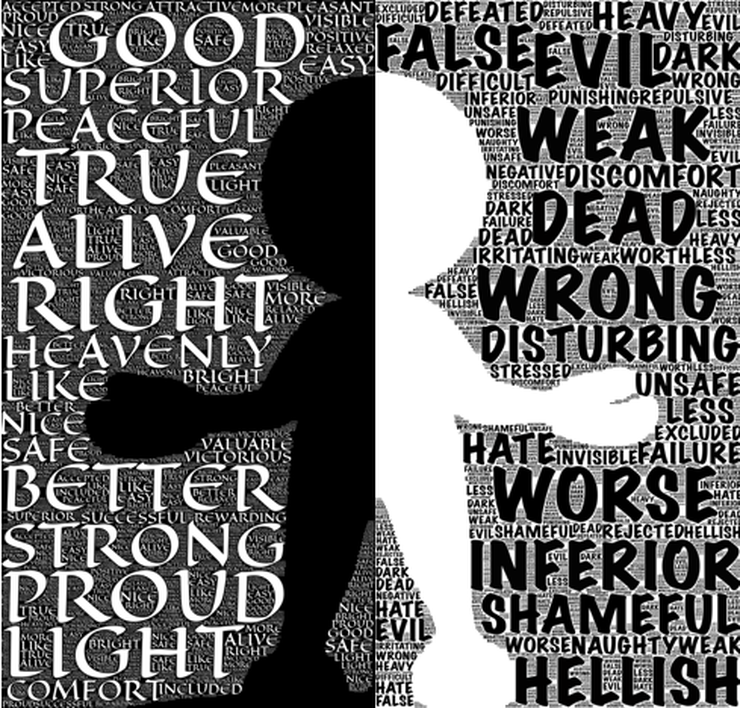
*** I was never, and could never be, the same person again after this and many other experiences like it around that time. Leaving childhood behind forever is of course a natural and desirable outcome of adolescence. But the vehicle for my passage, my initiation, my ordeal, was evil. This is so far from the intentional, ceremonial, sacred and mediated by responsible elders kind of initiation that is practiced by wise cultures. It was trauma without much meaning beyond developing an intimacy with evil. But it was an evil I could not name, such was my deep belief that it was my deep personal failings that brought it upon myself. (Image from here) In writing this, my ordeal sounds very alike the relationship between the Church and the people in medieval Europe. Don’t focus on the wrong of having your Indigenous culture genocided, pray for your forgiveness for your innate sinfulness. Our deep patterns reverberate until something more powerful intervenes. For me, it has been having my adult life and the whole identity I was raised with fall apart. It’s like I’ve had to do my right of passage over again, but scarred, burdened and traumatised by the experience of the first, and, weighted down by the intergenerational trauma of my ancestors that I not only carry personally, but that which is literally built into the social and systemic structure of the society in which I was raised and still live. Evil is a rather heavy hitting word. So much so that many modern social theorists reject it entirely, instead wanting to focus on pathological or environmental causes of harmful human behaviour. These perspectives are valuable, but to strip evil from our cultural lexicon is to reduce our ability to describe an experience of profound malevolence. (Image from here)
I think the aversion to ‘evil’ has more to do with a modern desire to have a common moral and ethical understanding of the world devoid of the spiritual. This is one of the many bad marriages between Western pluralistic liberalism and logical positivism. This is to say firstly, the belief that single sovereign entities (as opposed to confederations of sovereign entities) can hold and treat equally people with a diversity of spiritual beliefs, and that secondly, the rules and practices that govern such a culture can and should be based in concretely knowable moral and ethical truths that everyone can agree on. In fairness to this way of thinking, much harm has been done under the guise of eliminating evil. Top down, coercive and dominating control of spiritual knowledge and life from religious institutions deeply abused the idea that there is an existential evil in the universe that should be eliminated at all costs. Attaching ‘existential’ to evil is deeply problematic (more on this later), and obviously even more so when wielded by those deeply beset by Wetiko. But regardless, in my view, to live fully as humans I believe it essential to experience life at the level of the spiritual. In this I’m talking about that which is experienced outside of rationally expressed conceptual reason; that which gives life a lot of its meaning.
A sense of spiritual awe is never more important than when looking for ways to deal constructively with and making sense of profound suffering, pain and trauma. We need to be able to distinguish between the deeply painful in raw form, the tragic, and evil. I think this is why so many cultures “get out in front of it” so to speak, and intentionally inflict pain and ordeal upon people in the form of initiation. People need discernment in this area of life perhaps as much or more than any other. We need to see and be able to hold and make sense of the light, the dark and everything in between. (Image from here)
So like many, many things that have occurred as societies move on from Judeo-Christianity, the notion of evil is absolutely one of the babies that should not be tossed out with that bathwater. Most people understand that suffering, pain and trauma are not synonymous with darkness and the shadow (though abusing our almost primal propensity to want to avoid it is a tremendously effective way to enslave people without their knowing it). They have a shadow, and can exist in shadow, but they are not intrinsically so. We experience them, and it is the quality of this experience that gives them their character. So they are definitely not evil, but they certainly can be expressed and experienced as so. So what is evil? Controversial Western psychologist Jordan Peterson has written and spoken a lot on the topic, and whatever you may think of his politics, I think what he has to say on this topic is valuable. He draws a very sharp distinction (perhaps overly so) between evil and tragedy. The truly evil, he says, possesses a “demonically warped aesthetic”. After thinking about this for a while, I came up with my own version: “volitionally malevolent aesthetic”. I had to ruminate on what he means by “aesthetic” here, and I think he’s saying that part of a human action that comes from expression and taste, largely disconnected from practical necessity. When this expression is designed to cause extra suffering, that’s evil. Like a desire to manifest with free will and volition the polar opposite of beauty. It’s like he’s saying evil is almost like a kind of dark artistry. Some of his examples are very very dark, such as the “work sets you free” sign on the gates of Auschwitz. This was not a work camp, but an expressly designed death camp. It was a deliberate torment. Evil upon evil. Something dark for the tormentors to enjoy. When I think about my bullies, I think about the choice of things that they could have done to me. They chose things for maximum hurt, yes, a practical wielding of power. But the decision to kick me in the back whilst I lay sobbing in my tent, was an expression of some kind of dark…aesthetic. It was mostly unnecessary in a practical hierarchical sense. I was already beaten. It was about giving the whole affair a certain sadistic panache; an evil cherry on top. The use of the word “demon” is interesting. Within Christianity it is used existentially. The devil is evil, and will always be thus, as a more or less cosmological fact. And so given his Christian sympathies, I am suspicious of Peterson here. So to me it proved interesting to look up the etymology of demon. (Image of Pazuzu, a Mesopotamian demon Valerie has seen in a number of visions and found to be helpful) In its earlier usage, Demons were seemingly not originally nor wholly, existentially bad or dark. It was behaviour that was so. In most indigenous cultures, their darker characters or malevolent spirits are more teaching tools that everyone can learn from. Collections of energies that serve to remind all of us of the darker tendencies that we need to watch out for in our own selves. As spirit beings and helpers, there are more shades of gray, and less taboo. Perhaps this is what modern social theorists want to achieve when they focus on the environmental and social factors behind dark acts, rather than the physical or spiritual pathology. But I do believe we need to work with evil as a teaching tool, to help us see what we’re capable of, learn to avoid it, and process its meaning constructively. Because it does exist, like it or not, and if we pretend it doesn’t, I’m with the Christian perspective that “the greatest trick the devil ever pulled was convincing the world he didn’t exist”. I think denying evil’s existence will be to our severe detriment. For me, deriving constructive meaning from my experience of evil has been largely about breaking my attachment to a culture that fostered and tolerated the behaviour on the one hand, and in other circumstances, punishes those who do evil with more evil. This, I think, was the mentality of the Deputy Principal who thought I “deserved” to be abused. Like jail in most countries, which makes an almost science out of doing evil onto those accused of doing evil (though I suspect jails contain more people whose crimes are better described as more tragic than evil). With more space from modern Western society, I feel more free to access and develop healthier understandings of myself and the universe that situates evil in a more balanced perspective and context. Exercise: Reflect when and where you feel you have encountered evil. Have you been able to process it in a way that felt constructive? Consider re-visiting one such encounter using an altered state tool such as meditation with the intention of reframing the meaning of your experience.
Lately some protracted conflicts have come to the surface in my life at a macro level in the world, and at a micro level in my daily life. I have been praying quite a lot since the war in Ukraine broke out, where my Jewish-Sumerian ancestors spent many generations living, and more recently about the war in the Middle East. It seems to me like there is existential war and rejection going on based in judgment, where one or more parties to a conflict feel they are fighting to exist in the minds and hearts of the other.
I find existential judgement incredibly dangerous and damaging and see it as the root of genocide. It feels to me like a hand rejecting its own finger. If we believe in a Creator with wisdom our human minds cannot comprehend, how can we put ourselves in the position of judging what the Creator brought into being? And to say another is allowed to exist elsewhere (NIMBY) is still judgmental, for if we force another to leave their home and live on different lands, we change their and our identities by disconnecting people from their earthly homes and playing the roles of victims and offenders.
On a micro level I’m seeing this thinking play out in some righteous social justice warrior crusades around me. I find the concept of ‘rights’ to be violent, though it has obvious practical value to create baseline standards for society. If we didn’t existentially judge certain struggles and behaviours as deeming people unworthy of housing or health care or food, then rights would simply represent social baselines we collectively agreed upon as minimum standards of care for all of us humans living here. But if a single mother can’t afford housing, or a man with mental illness isn’t at retirement age but can’t hold down a job, we don’t collectively agree how (or sometimes even if) to support their survival. Rights then get used in a forceful way to push a majority social group’s minimum standard of support onto the collective, and thus they often need to be en-forced. And when we are judged and caught up in the rights battles we feel, rightly so, like we are fighting for our survival. (See survival strategies blog)
I agree with Jungian scientist Fred Gustafson that the Western mind is “having a massive collective nervous breakdown” and is going to “war to determine whose anthropocentric [world]view is most valid [while] the earth and all its inhabitants [] suffer.”[1] I have not found sufficient solace for survival in the Western world alone.
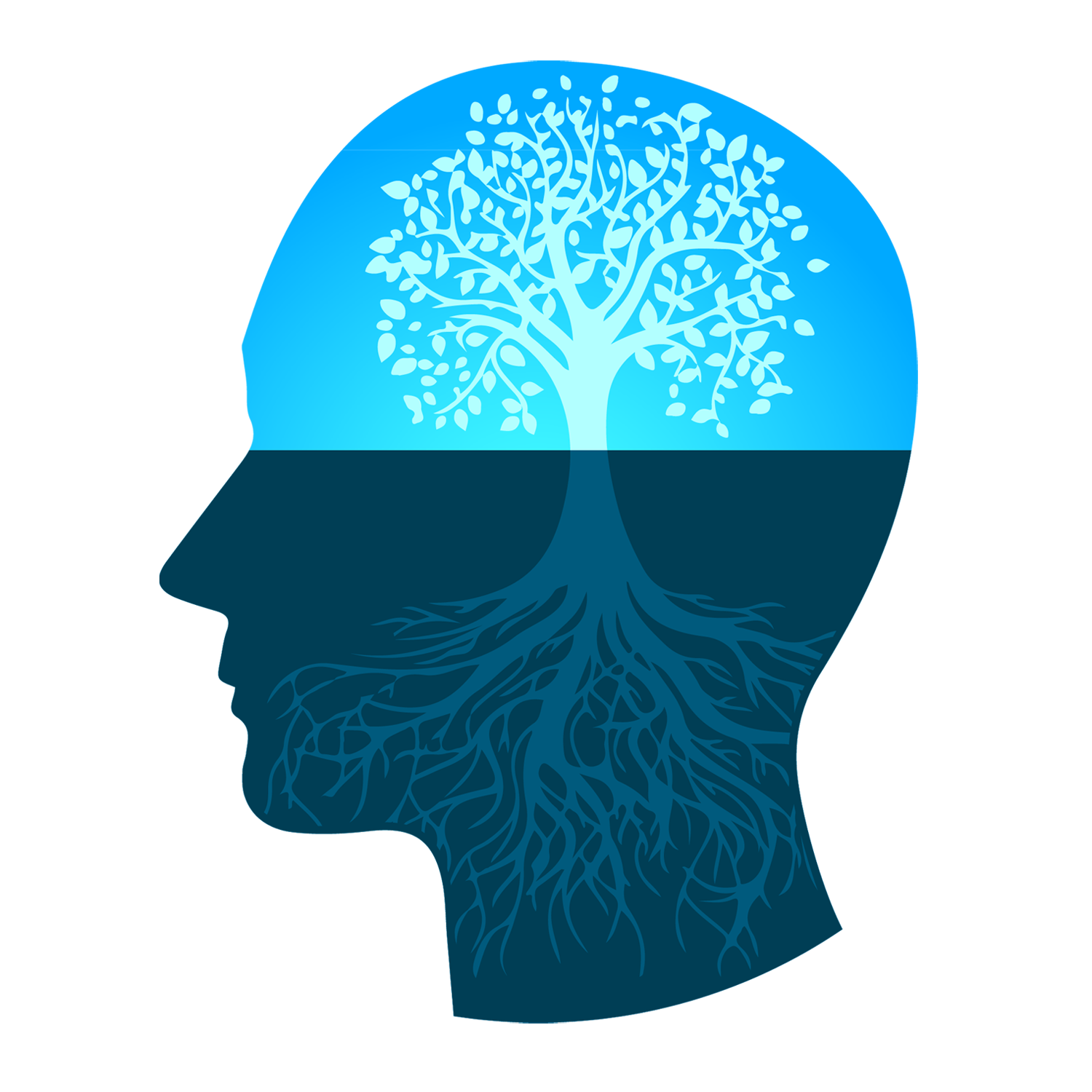
For me it has been vital to live in two worlds: (1) a social reality that is based on a Western worldview, and (2) an earth-based reality based on an Indigenous worldview. When I’m caught up in a survival struggle in the Western world that’s terrifyingly real, and I’m feeling rejected and judged and shamed and angry, I can spiritually connect with the knowing from the Land and my ancestors that I’m not only allowed to exist but that I am wanted. This powerful medicine is all I have found that alleviates my existential wounds. Without it I feel like I would not still be here on this Earth, as my roots would have rotted and not been able to hold up the rest of my inner tree of life. (Image from here)
If you’re also feeling some pain and heaviness about existential judgement and its impact, here are a few things that help me keep my spirits strong:
Grieving is a way I like to express angry energy to avoid getting overwhelmed by righteousness and gain clarity which fights, if any, feel right for me to engage in, and what that means practically. You may prefer to yell and scream or throw things or punch a bag instead, so however you express anger to avoid it overwhelming you is helpful.
Connecting with the land and ancestors where I am offers me powerful healing. I may give offerings as simple as feeding a bird or picking up rubbish, or as profound as a placenta burial or smoking/smudging ceremony. I may also cultivate a sit spot on the land, walk barefoot, and tend a tree altar. There are so many more ways to connect with the land where you live, these are but a few. The reverence we bring to the action we choose matters more, I think, than exactly what we do.
Letting go of black-and-white, objective, judgmental thinking is something I am very fierce with myself about. Humility is an important value to me, so I ensure that even when I feel certain or highly confident about something that I carry a little bit of doubt. For example, I feel highly confident that child sex abuse (link) is a damaging act that is wrong to do. Yet my intense journey of seeking to heal that wound has brought me so much wisdom and peace. Spiritual gifts often thrive in grey, paradoxical spaces.
Altering my consciousness is another survival tool I use daily, primarily through embodied meditations and drum journeys. I do it to heal trauma, connect with ancestors and other spiritual guidance, and seek tools for every day survival such as deeper spaces of compassion or peace. However you are able to sink deeper than your everyday ‘known’ and familiar thought loops can bring you some healing. I do find, however, that embodied practices (such as using sound or dance or breath techniques) are more powerful than mind-based practices (such as meditating through your third eye or simply watching your thoughts).
Thank you for reading this, and may your life be enriched (and even saved) by living in both worlds, as mine is.
[1] Gustafson, F. (1997). Dancing between two worlds: Jung and the Native American soul. Mahwah, NJ: Paulist Press.
Blog by Valerie – hope you enjoy another book chapter!
Initiations are rites of passage ceremonies marking existential life transitions. An important one across Indigenous and Western cultures is the transition from spiritual child into spiritual adult. Abagusii scientist Mircea Eliade describes it thus:
To gain the right to be admitted among adults the adolescent has to pass a series of initiatory ordeals; it is by virtue of these rites, and by the revelations that they entail, that he will be recognised as a responsible member of the society. Initiation introduces the candidate into the human community and into the world of spiritual and cultural values. He learns not only the behaviour patterns, the techniques and the institutions of adults but also the sacred myths and traditions of the tribe, the names of the gods and the history of their works; above all he learns the mystical relations between the tribe and the Supernatural Beings as those relations were established at the beginning of Time[1].
Initiations intentionally lead us through Earth’s cycle from life into death then rebirth with a new identity through a purposefully traumatic process. (Image from here) As one Western psychologist explains:
The initiate, by virtue of encountering ritual trauma, was prepared to meet real-life trauma on terms that were integrative to the tribe’s social system and spiritual beliefs. Rather than encounter trauma as senseless and random, as many tend to do today, the initiate could meet trauma as an opportunity for meaningful participation with the greater spiritual powers[2].
Initiations may be seen as having three distinct phases: separation (from daily reality), ordeal (trauma), and return (rebirth and resolution)[3]. The separation phase tends to include seclusion from family and time in the wilderness to take us out of everyday familiarity into unknown energies and into encounters with the elements, spirits, and our non-human kin. (Image from here)
In many Indigenous cultural traditions, men are put through painful initiation ordeals and women’s initiation is considered to be biologically built into the sacred ordeals of pregnancy and childbirth[4]. In some cultures, though, women are put through ordeals as well[5]. Spiritual initiations are painful because we tend to value what we earn through hard work, and we learn best through lived experiences.
Interestingly, a South Saami creation story[6] teaches that this entire world is the result of our previously taking the Earth’s bounty for granted and needing strong reminders of the value of her resources. This is similar to what I was told by some Mayan people in 2012 when the Western media was reporting that the Mayan calendar said the world was going to end. ‘No’, they told me, ‘our calendar says that in 2012 we are collectively moving out of spiritual childhood as a human species and into adolescence, and into a different calendar. They said overall we will become consciously aware that Mother Earth requires reciprocity, that we cannot just take from her, that there are consequences for our use of the Earth’s resources.
One example of an ordeal is the Sateré-Mawé tradition of adolescent boys enduring the pain of repeatedly putting their hand into a glove filled with bullet ants that inject toxins into them[7] (Image from here). They are called bullet ants because the intensity of the poison they inject is meant to hurt as much as being shot. The boys are expected to endure this willingly, silently and stoically, which teaches them be hunters who can handle the toughest aspects of their Amazonian jungle home; it also affirms values such as courage and strength. It also represents a loss of innocence by teaching that their environment can be dangerous, and even deadly, for after each session of placing a hand into the ant-ridden glove, boys are given medicine that makes them purge. Keeping the ant toxins in their body can have lifelong effects, such as loss of sanity. The myth is that the ants originate from the vagina of an underworld snake woman – an embodiment of the dark side of the sacred feminine and the Earth herself[8].
Initiations thus teach cultural myths and values, and ordeals without sacred spiritual stories attached to them are merely meaningless violence, reinforcing nihilism and lacking re-integration and fulfilment of a new identity along with its social responsibilities. In the example above, boys who complete the initiation are allowed to hunt and marry, which complete their rebirth as adult men in the community. Many of us grew up in cultures with rites of passage that included separation and ordeal phases but lacked full return phases to reintegrate us into a healthy new identity. We may feel called to question our cosmology and find a way to re-birth ourselves with limited collective ceremony or recognition of our hard work. (Image from here)
Exercise: What partial or full initiations have you been through? Were they facilitated by other people, or simply lived experience? If it was a full initiation, how do you celebrate your new identity? If it was a partial initiation, work with your ancestors and reflect how you may complete it to feel whole and celebrate your new identity.
[1] Kenya, S.W. (2002). Rites of Passage, Old and New: The Role of Indigenous Initiation. In Thought and Practice in African Philosophy: Selected Papers from the Sixth Annual Conference of the International Society for African Philosophy and Studies (ISAPS) (Vol. 5, p. 191). Konrad-Adenauer Foundation. citing Mircea, Eliade., (1965) Rites and Symbols of Initiation, translation by W.R. Trask, New York; Harper and Row, pp x.
[2] Morrison, R. A. (2012). Trauma and Transformative Passage. International Journal of Transpersonal Studies, 31(1), p. 40.
[3] Id. citing Eliade, M. (1995). Rites and symbols of initiation: The mysteries of birth and rebirth. Woodstock, CT: Spring. (Original work published 1958)
[4]See e.g. Gonzales, P. (2012). Red medicine: Traditional Indigenous rites of birthing and healing. University of Arizona Press.
[5]See e.g. Dellenborg, L. (2009). From pain to virtue, clitoridectomy and other ordeals in the creation of a female person. Sida Studies, 24, 93-101.
[8] Kapfhammer, W. (2012). Tending the Emperor’s Garden: Modes of Human-Nature Relations in the Cosmology of the Sateré-Mawé Indians of the Lower Amazon. RCC Perspectives, (5), 75-82.
As some of you know, I have been writing a book (or it’s being written through/with me may be more accurate language ), so I have felt less inclined to blog. Today I thought I’d adapt a chapter from the book into a blog, since I haven’t written directly about the Indigenous science of trauma in blog form before. It was my PhD topic (and much of my lived experience), so it has taken many years to be able to succinctly express some of the ideas. I hope it resonates with you.
Trauma’s meaning, causes and methods of healing differ by culture and cosmology. In Western science, trauma is typically defined as profound wounding that damages a person’s ability to trust in life and self, resulting in existential crises[1]. Trauma is encoded in brain pathways rooted in fear/terror and disgust/ aversion. Feeling fear is intended to protect us from life-threatening danger, so our nervous systems rev up and prepare for crisis. Trauma causes our nervous systems to activate stress hormones when danger isn’t present, creating flashbacks, emotional volatility, strained relationships, re-traumatising experiences, and severe stress[2]. Primary trauma occurs for a person who directly experienced it, and secondary trauma for family and friends. There’s also intergenerational trauma. A typical Western healing approach is individual counselling, with some alternative approaches including other family members, or integrating art therapy, body work, or EMDR[3]. The underlying idea is that by surviving trauma, we can become more resilient individuals.
In Indigenous science, all disease including trauma is indicative of “disruption in the natural order of humans’ interactions with the spirit world,” such as failure to honour the spiritual realm, failure to honour one’s ancestors, neglecting cultural rituals or religious ceremonies, or losing faith in the Creator[4]. Where Western scientists seek cures of diseases and treatments for trauma, Indigenous scientists view trauma and diseases as potential gifts of healing that can offer important insights about how to live well and bring new wise leadership into a community. Where Western science views a personality or ego as the centre of an individual being, an Indigenous medicine person or ‘shaman’ views a person’s eternal spirit as the centre of being. That is why the heart is at the centre of a medicine wheel, to remind us that we are connected to ourselves, each other, and all of Creation.
In Indigenous science, to try to make trauma ‘go away’ through suppression, denial, or taking drugs (legal or illegal) is denying an important spiritual initiation needed by an individual and their community[5]. Experiencing and healing trauma includes all our relations, human and non-human. Through my Ph.D. studies on Indigenous scientific approaches to healing trauma (which included Indigenous healing ceremonies and apprenticeships as well as Western scientific research), I found four underlying causes of trauma in Indigenous science:
Disconnection from the Earth;
Unhealed ancestral trauma;
Soul loss; and
Shaman’s illness.
Reconnecting to the Earth, healing ancestral trauma, and Shaman’s illness have been covered in previous blogs, so let’s discuss soul loss. In Indigenous science, traumatic experiences propel us into terror and dissociation, creating “soul loss,” meaning that we are no longer fully present in ordinary reality because parts of our spirit have split off, fled, or gotten lost. “Soul” is understood to mean ‘consciousness’.[6] To live with soul loss means we are not consciously whole in the moment, that parts of us are frozen in an unresolved past, causing us to lose energy and feel disorientated, weak, anxious and depressed, and to exhibit signs of mental and emotional illness. We may have internalised punishment or protectively hidden parts of ourselves that were unsafe to express, or internalised poisonous emotions like anger, bitterness, envy, fear, greed, hate, intolerance, pride, rage, resentment and vanity that need to be released [7].
Our task as healers is to allow alchemy to occur so that sh*t we are carrying in our hearts, minds, bodies and spirits can instead turn into fertiliser for ourselves and others. By consciously choosing to move into terror and aversion/disgust when we are in a safe space, we can reconnect with lost soul parts. In doing so, we gain knowledge that expands our individual and collective understanding of ourselves and our world. This is seen as the sacred calling underlying a ‘shaman’s illness’. Trauma is seen as a spiritual offering of a huge amount of energy that can redirect us into a new identity like a phoenix rising out of ashes. Indigenous healers are called ‘medicine people’ or ‘shamans’ because through healing trauma we embody medicine by living in a wiser way and offering support to others who are struggling through similar wounds.
We heal by consciously going into our traumatic states in a safe space. We are born being able to express few sounds, and similarly much of the traumatic energy of re-birthing ourselves is preverbal. Indigenous traumatic healing requires us to access profound, primal energies, to re-member ourselves by moving through layers of pain, being with and expressing chaotic, violent, pre-conscious and unconscious energies through visions, bodily sensations and movements, and dream-like states of consciousness outside of a Western cosmology.[8] Trauma gives us the ability to enter into altered states of consciousness, and by transforming that gift from sh*tty triggered experiences of traumatic dissociation into a skilful powerful method of connecting with the ethereal, spiritual, sub- and un-conscious realms, we gain access to profound wisdom and aspects of life that others do not experience.
Exercise: Reflect on a traumatic experience you have had. How did it change your understanding of yourself? Your place in the world? Of life itself? See if you can reflect on a deeper level of consciousness through relaxing into a drum journey.
[1]See e.g. Herman, J. (1992). Trauma and recovery. New York, NY: Basic Books.
[2]See e.g. Kirmayer, L., Lemelson, R., & Barad, M. (Eds.). (2007). Understanding trauma: Integrating biological, clinical, and cultural perspectives, pp. 118-141. Cambridge University Press.
[4] Monteiro, N. & Wall, D. (2011). African dance as healing modality throughout the diaspora: the use of ritual and movement to work through trauma. Journal of Pan African Studies, 4(6), 234-52.
[5]See e.g. Kopacz, D. & Rael, J. (2016). Walking the medicine wheel: Healing PTSD. Tulsa, OK: Millchap Books.
[6]See e.g. Cervantes, J. & McNeill, B. (Eds.) Latina/o healing practices: Mestizo and indigenous perspectives, pp. 139-174. New York, NY: Routledge.
[7] Nuñez, S. (2008). Brazil’s ultimate healing resource: The power of spirit. In Cervantes, J. & McNeill, B. (Eds.) Latina/o healing practices: Mestizo and indigenous perspectives, pp. 139-174. New York, NY: Routledge.
[8]See e.g. Culbertson, R. (1995). Embodied memory, transcendence, and telling: Recounting trauma, re-establishing the self. New Literary History, 26(1), 169-195.
 The Timeless Land – Eleanor Dark: Work of incredible channeling by Eleanor Dark from the 1950s who tries to get into the mindspace of both colonists and Aboriginal people in the early days of the colony at Sydney Cove. Presents the crucial idea in Indigenous Science that how you treat others — for example convict flogging — is a reflection of oneselves because we are all interconnected.
 If you value this content, please engage in reciprocity by living, sharing and giving.

 If you value this content, please engage in reciprocity by




 For me it has been vital to live in two worlds: (1) a social reality that is based on a Western worldview, and (2) an earth-based reality based on an Indigenous worldview. When I’m caught up in a survival struggle in the Western world that’s terrifyingly real, and I’m feeling rejected and judged and shamed and angry, I can spiritually connect with the knowing from the Land and my ancestors that I’m not only allowed to exist but that I am wanted. This powerful medicine is all I have found that alleviates my existential wounds. Without it I feel like I would not still be here on this Earth, as my roots would have rotted and not been able to hold up the rest of my inner tree of life. (Image from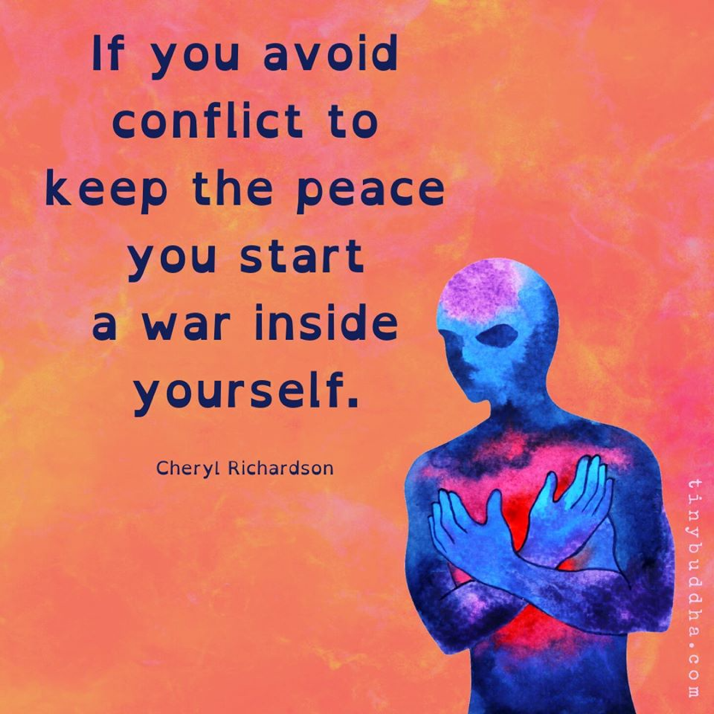
 Altering my consciousness is another survival tool I use daily, primarily through
  Initiations intentionally lead us through Earth’s cycle from life into death then rebirth with a new identity through a purposefully
 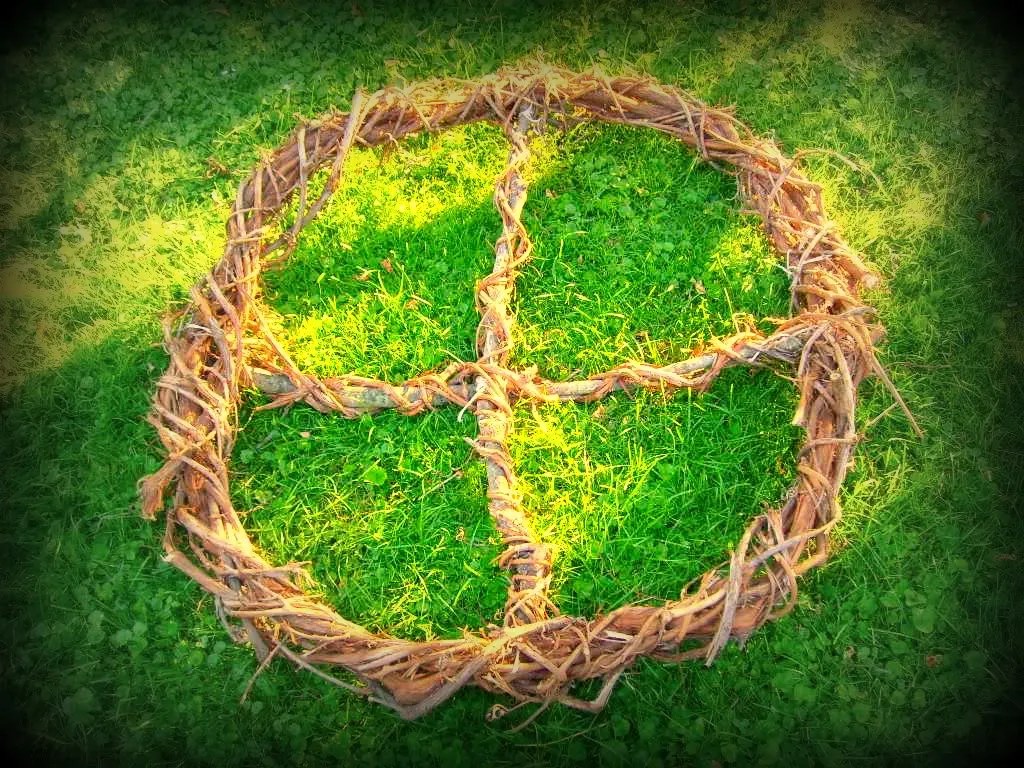 Initiations may be seen as having three distinct phases: separation (from daily reality), ordeal (trauma), and return (rebirth and resolution)
 One example of an ordeal is the Sateré-Mawé tradition of adolescent boys enduring the pain of repeatedly putting their hand into a glove filled with bullet ants that inject toxins into them
 Initiations thus teach cultural myths and values, and ordeals without sacred spiritual stories attached to them are merely meaningless violence, reinforcing nihilism and lacking re-integration and fulfilment of a new identity along with its social responsibilities. In the example above, boys who complete the initiation are allowed to hunt and marry, which complete their rebirth as adult men in the community. Many of us grew up in cultures with rites of passage that included separation and ordeal phases but lacked full return phases to reintegrate us into a healthy new identity. We may feel called to question our
  Trauma’s meaning, causes and methods of healing differ by culture and
  Reconnecting to the Earth
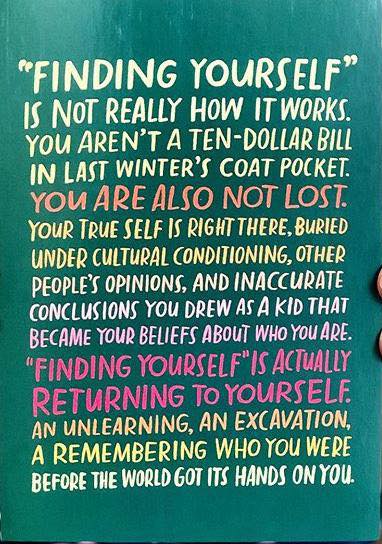 Our task as healers is to allow alchemy to occur so that sh*t we are carrying in our hearts, minds, bodies and spirits can instead turn into fertiliser for ourselves and others. By consciously choosing to move into terror and aversion/disgust when we are in a safe space, we can reconnect with lost soul parts. In doing so, we gain knowledge that expands our individual and collective understanding of ourselves and our world. This is seen as the sacred calling underlying a ‘shaman’s illness’. Trauma is seen as a spiritual offering of a huge amount of energy that can redirect us into a new identity like a phoenix rising out of ashes. Indigenous healers are called ‘medicine people’ or ‘shamans’ because through healing trauma we embody medicine by living in a wiser way and offering support to others who are struggling through similar wounds.
 Earth Ethos