Tag Archives: life

The Paradox of Healing

Blog by Valerie
Years ago when I took a uni course on social psychology my main takeaway was that people who use positive psychology have better mental health than those who don’t. But, if a belief or mantra that has been helping the person is shown to be untrue, their mental health becomes worse than people who have not used positive psychology at all.
That resonated, because years before then when I lived in South Africa, I used positive psychology to survive danger (murder, fire, death threats, riots — if you’re interested you can read about it in my short novel). I drove around repeating to myself, ‘I am safe’. It helped, and it was exhausting to keep up that mindset in such circumstances. When I got back to the US, all I did for three weeks was sleep, walk in the woods and cook. I had a lot to rebalance, and I knew my positive psychology coping strategy was a form of trickery, or sorcery.
I haven’t written much about sorcery because I prefer not to use it much. I think I’m in a minority among spiritual practitioners about this. But when we do sorcery, we’re potentially missing important life lessons, while also opening ourselves up to more powerful sorcery and trickery by others in a cycle of endless power games.
I consider it sorcery to do a ritual for a specific intended outcome, such as keeping myself safe in an unsafe environment, getting a specific job, etc. Note: I consider it a prayer or wish when doubt and openness are intentionally included. And I consider it rebalancing and healing when shifting trauma- based beliefs into life affirming ones, such as moving from “Life overwhelms me” to “Life supports me.” This is healing trauma trickery / destructive sorcery!
Consider the difference between a ritual with the intention of “I call the right job to me now”, and “I receive an offer for the job I just interviewed for within the week”. I like to use the phrase”or something better” at the end of many prayers, with trust that I can’t even imagine at times what would be best for me, and with the acceptance that what’s best will feel unpleasant at times. That’s part of trusting life and embodying a shamanic “I don’t know” mind. If for survival reasons you decide you really do want to just use sorcery to get the job, then I don’t want to lay any existential judgement about that being wrong; I just want to say that there are tricky consequences for that, often which we don’t realise until later.

There’s a common myth that healing can be completed, like we can cross it off a list. A wounded healer is often understood to be someone who’s “finished healing” in many ways and is ongoingly healing deeper layers in their life. There are some lessons that we don’t revisit in our lives, and others we are surprised come up again: “I thought I/he/she was over that by now!” (Image from here)
So much of why this is a myth is because we can’t transcend our circumstances. I can’t heal a wound around capitalism while living in a capitalist economy. I can make changes in my life to limit my relationship with capitalism, but I can’t totally escape it. Even if I went to live alone in the bush, totally naked and without a knife or anything manufactured, I’d still have had my life path and thinking shaped by capitalism to the extent of choosing  extreme rejection of it!
I have been noticing thoughts coming up about a belief in trusting that I have everything I need, so if, for example, my family isn’t around, then I mustn’t need them. I needed to think that way to survive estrangement; it was a balm for a big, painful abandonment wound that I carry. But I don’t need that sorcery, that positive psychology trickery, anymore. The truth is, I do need my family, and I am actively experiencing abandonment every moment of every day we can’t relate. What I can trust is that I need to strengthen my capacity to be with the pain of the wound. My capacity to be truthful and neutral about a wound is my medicine as a Medicine Woman. And embodying my medicine strengthens me and those around me. That allows me to protect myself better, so I don’t play out abandonment games with others in my life. When I have the capacity to accept and hold the truth, that I both need my family and don’t have them in my life, then I feel more empowered and more whole. The wound gives me purpose and defines my medicine. (Image from here)
That’s the paradox of healing: we’re strong and secure in being both wounded and whole at the same time. Sorcery, whether positive or negative, doesn’t give us that. It is by its nature, forceful and charged, not neutral, open, and flowing. Doesn’t mean we shouldn’t ever use it, but it does mean, we are wise to use it carefully.
giveheartIf you value this content, please engage in reciprocity by living, sharing and giving.

Parenting with Indigenous Science

Blog by Valerie
 
There’s so much parenting advice, and so little I resonate with, so I thought I’d share my perspective.
 
Parenting is about building relationships through developmentally appropriate leadership (which is related to a previous post on governance and the YouTube video below on sacred leadership/eldership by Tjana Goreng Goreng, PhD). Kids, whether our own, family, or community, challenge us to confront triggers, fears and insecurities, as well as allow us to more clearly see our strengths, values and capacity to connect. 


When babies cry out we give them instant attention and soothing, but that is not always a good idea with older kids, much less adults! Often we set patterns into motion because of our own limitations (read about some of mine here). I knew a mother who considered her adult daughter mentally and emotionally fragile (which I didn’t). She martyred herself to avoid her daughter feeling pain and experiencing certain struggles. But some of that seemed to me (and the daughter’s therapist) necessary growing pain for the daughter’s development. And I felt the mother was projecting her own mental and emotional fragility onto her daughter because she felt unable to hold space in certain ways. They both seemed a bit stifled. 
 
I say that with deep compassion, because we all have limits and struggles. Part of the fulfilment of any spiritual work, and certainly parenting, is bringing our deepest challenges to the surface so we can make peace with ourselves (and our ancestors, younger and older!) to become even better leaders — i.e. more powerful, grounded, centred and humble human beings.
 
When I look at my child, I see some struggles she’s come here with, some that feel linked to her father and that ancestry, some linked to me and mine, and some connected to her context and the land and ancestors where we live. (Ie ancestors of spirit, lineage, and land). When I am able to shift something that she’s also carrying, I expect her to have a big emotional response because we are connected with very open hearts. My shifting innately moves her heart and affects our shared ancestors, and she has to process it too. All of that emotion is likely to also affect my husband, because we’re all very sensitive. So when I feel something shift, I both feel excited and tend to brace myself to be able weather some emotional storms that my leadership has set into motion. 
 
I’m very aware that being committed to deep spiritual work asks a lot of myself and people who choose to be intimate with me. I don’t feel like I have a choice, though, in the way a singer can’t (or ought not!) stop themselves from busting into song throughout the day. To stifle it is to self destruct and snuff out my life force. Parenting feels the same in that it’s not a choice, it’s an honour and responsibility that defines the structure of my life.
 
I remember a book that made news years ago about parenting being all joy and no fun. To me, that says the parent is overwhelmed and may not know any other way to lead and set up their life. I’ve seen quite a bit of a so-called ‘gentle parenting’ approach, which feels like a reaction to authoritarian parenting and actually seems to me to stress out the children by giving them too much leadership space and not enough containing and consequences to uphold values and norms.
 
I appreciate some elements of the ‘sturdy parenting‘ approach and agree that there’s a big difference between punishment and consequences (Image from here).
 
And I add to that an Indigenous worldview in which there’s a huge difference between deeming behaviours as unacceptable and judging a person as unacceptable.
 
It seems to me in an effort to limit the destructive impact of the existential judgment and punishment wound in the western worldview, there arose a popular idea that yelling at kids destroys their self esteem. I do not agree. I think expressing anger and showing that it’s an intense emotion that we all experience is part of healthy leadership. And after I express anger, I offer a cuddle. I tell my child that I love her no matter what I’m feeling, and that there’s nothing wrong with her. (And if I was angry with someone else, I make sure to tell her it wasn’t about her and still offer a cuddle if she wants.) She now says to us, ‘Sometimes we get angry’ with the same tone as ‘Sometimes we get sad’ or ‘Sometimes we get wrinkles’ (referring to what happens in the bath). It shows me she feels that it’s okay to experience intense emotions within herself and with others in her environment (Image from here).
 
Recently I sat down and cried before bed and told her that I felt sad because she had been very hard on me that day. It was the highest defiance and worst day of listening yet. I could tell she felt bad. She came over and hugged me and said, “It’s okay, I love you no matter what, Mommy.”  That helped fulfil me both as a parent and helped my inner child feel safer than I had with my mother.
 
Parenting, like other forms of leadership in Indigenous science, is an exercise in unconditional love and existential acceptance, while embodying core values and cultural norms and creating consequences for breaching them. I hope it resonates with you, and thanks for reading!
 
giveheartIf you value this content, please engage in reciprocity by living, sharing and giving.

Darkness

Blog by Valerie

“Darkness is the purest form of light” is a teaching I deeply honour from Tiwa Elder Joseph Rael – Beautiful Painted Arrow. He says this because out of darkness all colours and possibilities emerge, whereas white light reflects and pushes all colours away. Darkness is a metaphor of the sacred womb where we all begin our lives in our mother’s bodies. And darkness envelops us each night (if we allow it). Within the womb of darkness is the potentiality for anything to be (re)born.

I heard an interview with Gina Chick recently in which she said that she spends most of her time in uncomfortable spaces. That is also my experience of living in a way where I honour darkness, and it aligns with the explanation of the Red Road discussed in a previous post, where we focus the majority of our energy on honouring ancestors, living our core values, and grounding respectfully where we are. (Image: metaphor of a plant that spends most of its energy building strong roots and connecting with other plants underground, and less energy flowering or fruiting above the ground)

I’ve found that when we are committed to a holistic spiritual path of allowing all feelings and thoughts to flow without existential judgment, when others we are in relationship with do not do this too, seeds of destructive energy grow bigger between us, along with pain, judgment, insecurity, and crazy-making cognitive dissonances. If both are willing to confront the resulting mess, come together to listen to each other and take responsibility for choices, behaviours, and resulting impacts (whether intended or not), then the relationship and trust between them can repair and deepen. Unconditional love means no existential judgment.

If one or both do not do this, then the relationship transforms into one with less trust, safety and intimacy, and it can even fracture beyond repair. And broken trust, as most of us have experienced, tends to be harder to rebuild than it is to grow trust and intimacy in the first place.

In a recent blog I shared that I have witnessed numerous people work for years towards something, then turn their backs at a pivotal moment in abandonment and destruction. Some stories and beliefs seem so deep they trick us into crazy-making cognitive dissonances that become hard to contain. Cognitive dissonance is when we feel split by words and stories not aligning with behaviours and actions. For example, if we believe we are a good friend and that means we don’t feel jealous of friends’ successes, yet we do feel jealous when a friend gets a new job and we feel stuck in job rut, then we might push those feelings aside and pretend they’re not there. (Image: let’s feel it all so the negative feelings ground and we grow from them rather than growing into piles of sh*t in our lives!)

This becomes even more crazy-making when we layer denial on top. If the friend who got the new job is like me, she can feel this jealousy rising and wants to avoid it destroying the relationship. Maybe she practices giving compassion and grace while hoping that her friend processes the hard feelings, and hopefully she processes some of her own hard feelings such as disappointment that her friend couldn’t celebrate her new opportunity with her. If time passes and the hard feelings persist, she might ask her friend to talk so as to clear the air between them. If the jealous friend is too scared, ashamed, unaware or in denial about her hard feelings to be able to take responsibility and process them and instead tells the friend with the new job that she’s crazy, she is happy for her and doesn’t have any jealousy, that becomes crazy-making for both of them.

Crazy-making takes a lot of energy to carry. It spirals us out of our hearts and bodies, creating separation from our truth. We lose integrity and the ability to experience wholeness when we are trying to be two people at once. In the previous example, the jealous friend trying to be ‘a good friend’ isn’t allowing herself to be authentic and a messy human who can both feel happy for her friend and a bit jealous as well. That’s actually making her less of a good friend and growing the seed of jealousy even bigger, creating more destruction in the relationship. To me, the best thing that could happen is that the jealous friend lets go of her judgmental story about identifying and behaving as a ‘good friend’ so as to create an opening for the two of them to have a real and sustainable friendship capable of withstanding pain and hard emotions. (Image)

Exercise: What stories do you tell yourself that limit your openness to darkness? You may wish to close your eyes and meditate on the question: ‘What do I believe about the nature of darkness?

giveheart If you value this content, please engage in reciprocity by living, sharing and giving.
Trickery of heartfelt words

Blog by Valerie

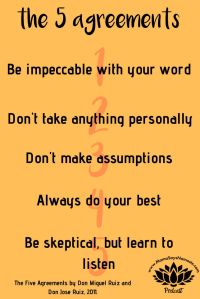
Many of us are familiar with the four (or five) agreements concept of spiritual teachings Miguel Ruiz wrote about based on ancient Toltec wisdom. The first is: Be impeccable with your word. It is much easier to be tricky with our words than our actions. Actions require lack of awareness, sneakiness or even betrayal at times to follow through on a trick, whereas being tricky with our words seems to have become so common that it’s often forgotten a few minutes after we’ve done it.

Unless you are in intimate relationship with someone like me who has an elephant’s memory for words. Growing up, watching how well someone’s words were aligned with their actions helped me judge how safe I was with them, because my home environment was so dangerous and my nervous system so often triggered that I couldn’t rely on feeling safe in my body to discern which people were safe to be around. Even now in my forties after years of estrangement from my family of origin and many healing experiences, I am still uncovering layers of feelings of unsafety and relational dynamics where I was tricked because I loved someone and gave too much benefit of doubt when they told me something I wanted to hear and their actions didn’t quite align…

I had a conversation with a friend about colonisation a few years ago, and she said an elder told her that the British didn’t have superior manpower or military strength when they invaded; they overpowered the people with their words. I have written before about unconscious sorcery, and it continues to be something I experience and witness regularly. But this blog is about the way we use our words, and the tricks our minds play on us and those we love when we believe what we say (at least in the moment).

I have had experiences with people who are in their hearts in a moment, but then dis-ease such as Wetiko takes over and their minds get to work changing the story and tricking them. How many of us say something and mean it in a moment, then think about it later and realise we don’t still feel that way, then go back and correct it with the person? It’s hard to do that. And yet those words sit there, and we may not realise how much of our relationship is built on them and the emotional power they possess.

I see this as one of the greatest tricks playing out right now in the world; on a big scale, there are people saying things like: “[Y]ou always want to go with what’s come out of his mouth rather than look at what’s in his heart” about Donald Trump’s incongruent words and actions. On a small scale how many of us say “I’m good” when asked how we are, when in fact we do not feel good, or at least not wholly so. It took me a few years to work out ways of navigating these interactions gracefully in shops and places where people are meaning to make small talk but I don’t want to smile and lie and build that energy into my day. I find saying something I  like tends to work, e.g.: “How are you today?” “I’m appreciating the sunshine outside.” “Oh yes, it’s a hot one.” (Image from here)

Some friends have told me I expect too much from people. That bums me out, because I don’t expect more than I ask of myself. Others say, just take people at their word and decide if they’re safe or not based on actions, but it feels too harshly black-and-white to me to put people into categories labelled ‘safe’ or ‘unsafe’.

I had a conflict with a friend many years ago, and we talked about it and made up, but I felt insecure with her for years afterwards. When I brought that feeling up a few times she told me I was being crazy; then when another conflict arose and I said I felt hurt by some of her behaviour, she immediately brought up our conflict from five years prior and said she had forgiven me for that so I had no right to bring up something else, I had to just forgive her as well. I certainly didn’t feel forgiven! I felt like my insecure feelings had unfortunately been vindicated. A few months later when she wanted to meet and put everything behind us, I felt like I couldn’t trust her anymore, so there was no point. Without the potential for building trust, I can’t feel safe in a relationship. So even thought it really hurt, I had to let it go.

I do believe that she believed she had forgiven me. And I don’t know if she didn’t know how to or what the block was, but when it became clear she was still upset about the first conflict and was denying it, I lost hope for healing together. And that friend who talked about colonisation being a conquering of words, well, she conquered the doors to my heart with some powerful words that it turns out were not impeccably used. I can accept that we both were tricked in good faith, and I can rebuild trust by talking about it, so the words between us change and we can do our best to be more impeccable this time around. The responsibility of using our word belongs to each of us to co-create a healthy world together! (Image from here)

giveheart If you value this content, please engage in reciprocity by living, sharing and giving.

Clean & Dirty Pain

Blog by Valerie

I recently came across the concepts of clean and dirty pain. This is a well written deep dive if you want to read it before I share my perspective. I’ll describe it as follows:

    • Clean pain is when we accept and move through what life gives us in fullness of emotions and experience; and
    • Dirty pain it when we resist, deny, and layer shame, blame and guilt on top of the pain life has brought us so that we multiply our suffering and so as to punish or even torture ourselves. (Image from here)

It’s been my mission for some years now to honour all energies, feel all feelings, and witness all thoughts with acceptance, love and compassion. It’s been especially important this week as we’ve been a target of some online abuse, as well as rejection from a few people we care about who have become bogged down in shame. I am used to being a presence that some people find it hard to be with, but that doesn’t make it easy! I have purposely been to many dark spaces, and I have honed some fierceness through some soul-wrenching boundary-setting, and I understand that not everyone wants that mirror. Yet more and more of us seem called to move through intense pain, and it seems at times that our only choice is how clean or dirty will the path we take be.

I think about how those who are brave enough to share something soul-led, something real, in a world that is so often about superficial image and illusion, in a world that is so quick to judge, to dismiss, to be outraged and unkind, are those who will save this world…To be able [] to be ourselves, to share of ourselves, to have access to the dark parts of Self to bring forth what we will from our personal Underworld is perhaps the point of the human quest, or at least one of the main bullet points.–Mary Shutan on Facebook

I’ve written a few times about trauma being neurobiologically encoded in our brains at the intersection of disgust/aversion and terror. That Western science knowledge has really helped me to judge when I need to move through something painful and when I’m potentially re-traumatising myself. After many years, I now feel like my instincts and flow are trustworthy. It makes the pain a lot easier to be with when I trust that it’s valuable, and I trust when I feel moved to shy away or go into it directly.

Accepting clean pain might sting for a day or two, but it doesn’t linger or fester.

So, to the people who have been sharing disrespect and rage with us recently, we feel your pain and pray that by grounding your projections and reflecting compassion back as best we can, that you are able to feel something more than overwhelm.

And we want everyone to know that however overwhelmed you feel in a moment, you’re not carrying it alone. With thanks to Shannon of Providencia Waco for sending us this song by Alexandra Blakely, we invite you to close your eyes and receive this musical medicine:

giveheart If you value this content, please engage in reciprocity by living, sharing and giving.

Material Wealth

La antigua Biblos: El bibliomotocarro de Antonio La CavaBlog by Valerie

When I was growing up, I watched my father hoard food, books, even household cleaning items. I remember the pain I felt when he told me the story of realising as a young teenager that he’d read every book in the library van that visited his small town every month. He went to university, the first in his family, so there was no shortage of books to read from the age of 19, but he couldn’t shake those early experiences, he worried he’d have to do without if he didn’t have things on hand. Coming from a home where I had access to multiple libraries, and many used and new book shops that we frequented regularly, I was happy to give away and trade books with trust that if I needed one again I’d find it. I didn’t need to be weighed down by a home library. But I also remember the pain I felt when I went with my dad to our favourite used book store with some boxes of books from cleaning out my room at my parents’ house. He didn’t understand why I wanted to let them go, and kept asking if I was sure. But he didn’t try to stop me. (Image from here)

Growing up, I watched my mother hoard money (and related to that, jewellery); and though it may sound strange, she also hoarded social privilege. But it felt more intense than my father trying to rebalance some pain from childhood. Hers felt existential, as if she hoarded and guarded these things like her life depended on it. The first time I earned money through babysitting, I came home with a twenty dollar bill feeling proud of myself. I had gotten the little girl to sleep despite one of her dogs nonstop fearful bellowing about a thunderstorm. My mother asked how much I made, and when I showed her, she took it, and said that she needed a cut. I couldn’t tell if she was joking. It didn’t feel like it. Then she wouldn’t give it back to me, and taunted me, hiding the bill and waving it out of my reach. That felt scary and deflating, one of many power and control games she played with me. It was as if she needed money more than she needed to be connected with me and would abuse her power and trusted role in my life to get it.

Wealth PNG Transparent Images | PNG AllWhen my father died many years later, that was my experience with her as we entered into estrangement. My mother chose money, lies and trickery over me. I have come to see that as rooted in her Jewish wounding, where through being disconnected from country for milennia, she learned to existentially cling to money, jewellery, and social status to survive. I understand that’s her survival strategy, integrated with identity and culture. I can’t be intimate with those wounds though, it feels too destructive and desolate to me, like I’m spinning in a hopeless vortex of nihilism and materialism, disconnected from the planet and my body. (Image from here)

I don’t yet feel respectful of what I experience as collectively acting out a traumatic and highly destructive wound. I focus most of my energy on deepening compassion and processing grief. I have been feeling this a lot lately with actions in the Middle East. I feel like Palestinian, Lebanese, and Iranian peoples are my spiritual kin. The hatred some of us feel towards ourselves and each other is so intense, it makes my heart feel heavy with grief. The material greed and holding in supremacy certain people and lands while dehumanising and exploiting other peoples and lands pains me deeply. I have been to Jerusalem, which many consider to be the most holy city in the world. I felt its deep and rich history. It also felt very layered in pain and messiness. There was tension, some bombing, and UN vehicles patrolling when I was there. It felt like a powder keg with everyone on edge, and that was fifteen years ago.

Everything is connectedI choose a worldview in which all lives lost, of any culture, of any animal or plant, are existentially equal, though I obviously experience some of those losses with much more intensity than others because of my own identity and connections. As this worldview and my values have solidified over time, I have found myself recently with more material ease than ever before in my adult life. I had gotten used to embodying ordeal, living without enough material wealth, devaluing its importance to rebalance growing up with my mother putting material wealth über Alles, humbly acknowledging that I needed to find ways to be more financially stable and secure, trying things and burning out, growing savings and going through them.

I’m grateful for some material ease and abundance now, and I’m grateful for experiences of lack so these experiences have more meaning to me. I don’t think I’ve now got it all figured out. I do know that weeding by going into trauma and negativity have been more valuable to me than trying to plant positive affirmations. I’ve found healthy beliefs emerge when I clear the way. And, at the moment, some material wealth has emerged. I’m allowing myself to feel more ease when we buy groceries, practicing saving without hoarding, and humbly sharing as we go. I have started to feel lately like for the first time in this life I am living the life I want to and am meant for.

Matthew 11:28 Scripture - Rest from Burden | ChristianQuotes.infoHere’s hoping your relationship with material wealth feels balanced and centred too. Blessings at a season of reflecting on thankfulness. I’m thankful you care enough to read this blog. And if you are able, I humbly ask you to consider leaving a review of my book Healing through Indigenous Wisdom on Amazon, giving a copy to a friend, or otherwise passing on the word. Sacred reciprocity makes the world go round (fodder for a future blog).

giveheart If you value this content, please engage in reciprocity by living, sharing and giving.
Honouring lack

Blog by Valerie
It is autumn here, and at the recent equinox we did a ceremony of thanksgiving. I like to read the Thanksgiving Address of the Haudenosaunee peoples. I find it really beautiful. We also asked for a few things, which later felt wrong to me, like it was the season of giving thanks for what we had, not to plant seeds and ask that they grow; so we did another ceremony expressing gratitude for what is working for us related to the area of life where we asked for change. That felt more balanced.
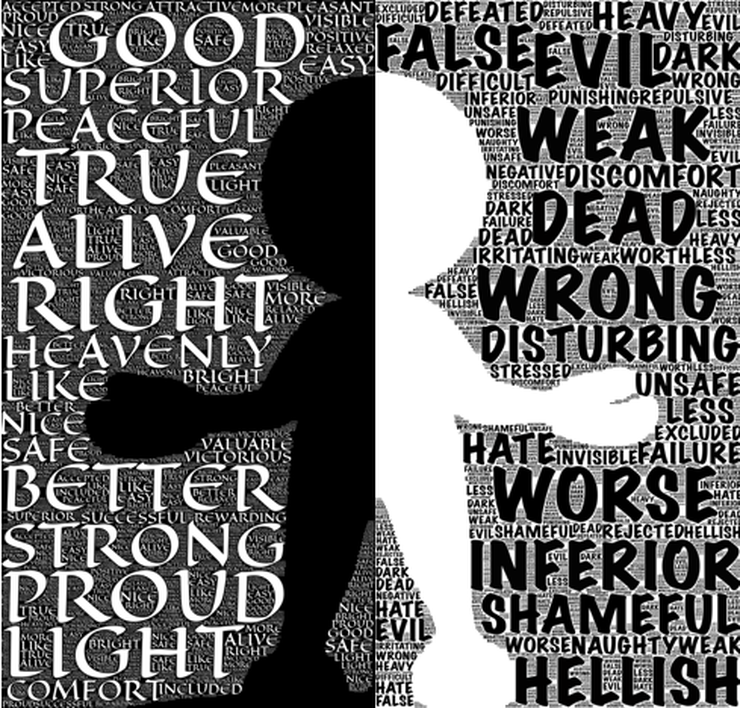
Lack of Support and Destruction of Health and Life - Symbolized by Word ...As much as I have and am truly grateful for, this experience highlighted how much lack is in my life at the moment. I started to reflect on that. I realised that I have had a belief that ‘I always have what I need’, and so if something isn’t present in my life, then I must not need it. But that belief doesn’t feel like it is honouring my life. It feels like trying to reject or mentally trick myself out of being in lack. In new age-y and positive psychology thinking, ‘light’-ness is privileged, and we are pushed to look at the bright side. There is value to that, but not, in my opinion, if it feels forced or rejects our lived experiences. Sometimes life feels heavy and dark, and it’s important to make space for that. (Image from here)
Dams and water supply schemes suffer due to lack of rain | Utility MagazineOn the planet right now, so many plants, human and non-human animals are lacking safety, security, healthy food, clean water, shelter, etc. Why would I be any different? I would expect there to be some lack in my life given our collective environment. Lack teaches me to appreciate what I have, and to cherish what comes into my life when lacks are transformed. (Image from here)
There are some areas of my life where I feel so deeply in lack that I feel pain and impatience even as I experience them healing. It is as if I’m coming from so far behind what I need that I can’t yet relax and feel at ease that it’ll keep going in a healthy direction. I need to keep it on my radar to pray about and act to improve within my power.
lack-of-motivation | Born RealistAs I am still breast-feeding and being a full time carer, Lukas has been looking for employment for a few months. That struggle has brought stress, fear, and lack for both of us, along with moments of finding deeper faith and trust, as well as gratitude and joy for extra family time. Another example: the more I parent my toddler, the mirror of my own childhood continually brings up grief and lack for me to be with, along with the joy and relief of breaking patterns as best I can by giving my child what I didn’t receive. (Image from here)
The love of money. stock image. Image of crumpled, quarter - 76482929In the Jewish family and the secular capitalist culture I was raised in, people believed not in reciprocity and gift economy, but in transactions. As a non-Zionist Jew, my understanding from my family was to place faith and trust in accumulating gold, jewelry and money for survival, not land, because we could carry those things with us if we were forced to move. They saw me as a commodity too, which felt incredibly de-humanising. It confused me for a long time, how I could feel so much love and pain at the same time. It also existentially denied my spiritual gifts and strengths. But that’s how they saw the world and what they believed in. And I’m not in the business of trying to change anyone’s beliefs but my own. Beliefs are very personal things. (Image from here)
So I have decided that I no longer believe that I always have everything I need. It feels untrue and unkind to carry that belief. I believe my responsibility is to discern my needs as best I can and act within my power to meet them; and that dignity requires me to honour Life by allowing all energies that arise within me to be celebrated. At the moment, that means honouring lack, and so here’s my blog celebrating that. I hope you find value in it.
giveheart If you value this content, please engage in reciprocity by living, sharing and giving.