Blog by Valerie
This week I am moving through some grief. I had known that a friendship would end had been observing it fade away for a while, and I was hoping it would just fade and drift gracefully into nothingness, but that was not what occurred. Not only was there a calling out of disrespectful behaviour that resulted in denial, blame, and spite being projected onto me, but following that was additional denial about the state of the relationship. I felt resentment that my former friend was so in denial that she needed me to explicitly spell out that we had already co-created the ending of our relationship, and this resulted in even more blame and spite being projected onto me. What a mess of pain we were in.
It reminded me of Torres Islander writer Nonie Sharp‘s concepts of mateship and in-mateship, where in-mateship creates feelings of worthlessness, self-hate, denial. She says that the very presence of superiority creates shame, and a fear of shame causes people to oscillate between seeking revenge and prestige, resulting in psychic bullying, social violence, and denying reciprocity; if you judge someone as an inmate, you control & define social and existential boundaries. I see this as narcissistic…
 In processing this resentment, I realised that when there is a lack/denial of reciprocity in a relationship, we dance between resentment and denial — resentment within the person who feels stifled/unseen because the other person isn’t holding them in wholeness, and lack/denial/not good enough within the other person who feels cut off from their wholeness (and may or may not want to heal that rift inside themself). Those of us who live with an Earth Ethos embody a knowing that we are all interconnected, and we are not lost playing out myths of superiority and inferiority based on existential judgement.
In some people’s minds I “cut off” this friend, but I have not experienced this. I can no more cut her off than I can cut off the air I breathe; she has become part of me and the space she has in my heart and mind will remain throughout my life in a linear sense of time, and is always there in a nonlinear sense of time. Thoughts and feelings related to her will emerge, and I will pray and send love and feel pain whether we are actively engaged in our relationship or not. It was and it is, and through time and space relationships move through various forms, or trans-form.
Reciprocity is a core Earth Ethos value. As Potowatami writer Robin Wall Kimmerer says:
In the old times, individuals who endangered the community by taking too much for themselves were first counselled, then ostracized, and if the greed continued, they were eventually banished… It is a terrible punishment to be banished from the web of reciprocity, with no one to share with you and no one for you to care for.
My view is that such punishment/banishment on a mass scale underlies the current mainstream Western culture and results in the extreme levels of narcissistic wounding we are witnessing. Aboriginal writer Tyson Yunkaporta explains:
In Dreaming stories, Emu is often a narcissist who damages social relationships. These stories teach us about the protocols for living sustainably, and warn us about unsustainable behaviours. The basic protocols of Aboriginal society, like most societies, include respecting and hearing all points of view…Narcissists demand this right, then refuse to allow other points of view…They destroy the basic social contracts of reciprocity (which allow people to build a reputation of generosity based on sharing to ensure ongoing connectedness and support), shattering these frameworks of harmony with a few words…They apply double standards and break down systems of give and take until every member of a social group becomes isolated, lost in a Darwinian struggle for power and dwindling resources that destroys everything…
 Yet in Aboriginal cultures in Australia, the Emu is so highly regarded that people traditionally organised their lives around following the wisdom of the Dark Emu in the sky, which is the constellation of darkness within the Milky Way. The image is from here and shows the Dark Emu during one season of the year, and corresponding rock carving honouring the Emu in Sydney.
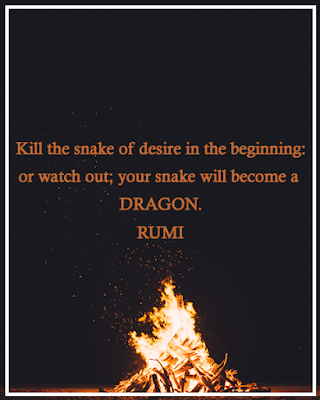
Something that I continually find challenging in embodying reciprocity is moving through a world where so many people around me believe in individuality and are lost in saviour complexes that convince them they are working for the collective good. I live on land my ancestors are not indigenous to, and I do not yet know what lands my mother’s family is interconnected with. And when I move through the dance of denial and resentment in an intimate relationship, it helps to remember that once I fully see the Dark Emu I will be wiser and more capable of orienting myself in my centre; and as this unfolds, it helps to have compassion and keep strong in my convictions of the worthiness of this healing journey, as Rumi reminds me. Wuradjuri healer Randal Ross said that we don’t realise how free we are until we see that freedom disintegrate; and I feel that correspondingly, those of us who have been abused and denied are re-membering how free we are through calling it out with compassion and creating healthy, whole lives in the midst of collective wounding.
Exercise: Consider this Robin Wall Kimmerer quote and how you might apply it in your life: “Restoration is imperative for healing the earth, but reciprocity is imperative for long lasting, successful restoration… We restore the land, and the land restores us…The land is the real teacher. All we need as students is mindfulness. Paying attention is a form of reciprocity with the living world, receiving the gifts with open eyes and open heart…For all of us, becoming indigenous to a place means living as if your children’s future mattered, to take care of the land as if our lives, both material and spiritual, depend[] on it.”
 If you value this content, please engage in reciprocity by living, sharing and giving.

![INDIGENOUS AUSTRALIA[2]](https://earthethos.net/wp-content/uploads/2019/07/indigenous-australia2.jpg?w=604)
 If you value this content, please engage in reciprocity by
 Buddha, and Krishna, and where people also sit in contemplation and pray for insight and guidance from those figures. I find it helpful to be intentional about these differences in my own life, but maybe blended spaces work for you. Ultimately, we build relationships with figures, ideas, events, places, and energies, and those relationships work best when we both give and receive, and do not always ask or give with the expectation of immediately getting back… (Images: Altar of St Michael’s Church in Munich, Shrine of Remembrance for the War Dead in Melbourne)
 If you value this content, please engage in reciprocity by
  Blog by Valerie




 If you value this content, please engage in reciprocity by

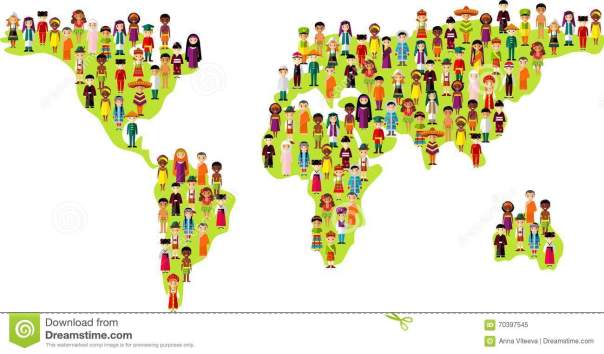
 I have a lot of compassion for the messiness of embodying Earth Ethos in modern multicultural cities. This is my life! And it is hard, messy work. It’s important to give ourselves and each other grace and trust that we all do our best. For a beautiful story from someone of mixed cultural heritage about honouring all of her complex heritage,
  If you value this content, please engage in reciprocity by

 If you value this content, please engage in reciprocity by





 If you value this content, please engage in reciprocity by
  Blog by Valerie
 The depth of relationships, and the experiences, feel quite different to participants. Similarly, instead of peace circles as a tool to help control behaviour or improve the way people speak and listen to each other as is common in westernised restorative justice practices based on a Judeo-Christian worldview, an Earth Ethos peace circle is an opportunity for a communal spiritual experience based on an indigenous cultural cosmology. Because of the intentional use of metaphor, it ought to feel different to participants (and certainly does to me) than simply sitting in a circle (or around a table where we are blocked from connecting with each other physically) and passing around a talking piece. Many indigenous peoples use oral traditions to preserve cultural wisdom. Verbal repetition and physical embodiment of teachings keeps them pure (
 Healing of, and prevention of, dis-ease requires ceremony. Ceremony is an important human practice connecting the visible material/physical world with the invisible, spiritual world. Life feels empty and unsatisfying when we do not do enough ceremony, and ceremonies are most powerful done regularly and intentionally in community (
 In his
  When we are miserable we are rejecting or rebelling against reality, which is destructive and results in existential crisis. When we are accepting we remain in the present moment, however painful. Many of us understandably feel overwhelmed by the depth of pain on the planet right now, so we numb ourselves with substances such as sugar, caffeine or alcohol; run away to our heads to avoid certain feelings; and seek out “light work” or “positive psychology” to create bubbles of security around ourselves. This is so common that a famous social psychology
  Earth Ethos