 Blog by Valerie
Existential wounds seem to occur more often for those of us with multi-cultural, immigrant, and colonial heritage. When we are (or our ancestors were) forcibly moved, forced to adopt unfamiliar cultural practices of spiritual worship, live in homes and wear clothes of unfamiliar materials, eat foods unfamiliar to our bodies, or were abused or enslaved in some way, we experienced trauma. This trauma often took the form of existential wounding where the very core of our identities, ways of being, and understandings of the world are shaken. It can take many generations and much work to heal such wounds. I recently had an article about indigenous trauma healing published if you want to dive more deeply into that. (Ignore the abstract; they used the wrong one.)
Through generations of carrying existential wounds, we feel ashamed that what our ancestors taught us about the right ways to live and what we learned to honour has been desecrated. We become ungrounded and disoriented and struggle to trans-form and re-form ourselves and our cultures in new places. We feel lied to and know in our bones that something is wrong. We wonder if we’re crazy, if something is wrong with us; we get angry with our families or society and struggle with mountains of conflicts. (This is structural change; re-claiming the body/mind/spirit as one where we are now.) If you are reading this, chances are you feel a calling to do that work! As an example, I always felt disoriented in the Northern Hemisphere. I struggled to orientate and make sense of directions, and when I got my PhD I had the definitive feeling that I was moving backwards, spiralling inwards to the core so I could get to the essence of the existential wound, go through a spiritual death and be reborn again. Moving to the Southern hemisphere has helped me feel like my life is finally correctly oriented. Yet at the same time, native foods of Australia are unfamiliar to my body. So I gather lily pillies to make jam, eat native figs off of big ficuses when I walk by, and cook up warrigal greens (See images below). I’ve noticed that native foods are unfamiliar to most people here, though, and eating European meats and veggies seems to keep people’s psyches more tied to places across the planet and help them be more willing to mine indigenous land in their own country! (Images from here and here.)


I believe that decolonisation has profoundly positive effects on healing of existential wounds as it helps us feel more whole. While listening to the Mythic Medicine podcast recently I realised a simple way to heal some of our existential wounds is to name and honour the landforms and elementals that raised us, and support us where we now live. Here is mine for where I grew up in Atlanta, Georgia:
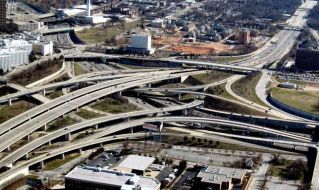
I was raised on the foothills of the Appalachian mountains (earth), hilly land with red clay soil and loads of spindly pine trees. The water (water) that I drank and bathed in came from Lake Lanier, a dammed portion of the Chattahoochee River. The winds (air) were unnamed but predominantly flowed from the southwest towards the northeast. Power (fire) came predominantly from a hydroelectric plant that dammed the river. The main spiritual practice (heart) there was Protestant Christian, and in particular Southern Baptist. The largest landform was Stone Mountain, a granite outcropping that extends underground into five states and has a Confederate Memorial carved into it which is the largest bas relief sculpture in the world. Other memorable landforms are the network of manmade highways, including a circle around the city with an X of two highways that meet at the centre, and incredibly messy interchanges such as one called Spaghetti Junction that looms large in my memory (see below). A local park called Henderson Lake was a safe space for me, and I walked there regularly (see below). The Creek and Cherokee nations existed on the land before English colonists, and before that were nations of mound-builders which we know little about. (Images from here and here.)

Exercise: I invite you to download this My Ancestry Exercise that came together when preparing for an ancestral healing workshop a couple months ago. I have my answers on there as an example. It will give you a reflection of what you know about where you come from, and your intuition may answer some questions you didn’t realise you knew! You can add to this exercise an honouring of landforms and elementals exemplified above for the land(s) that raised you, and the land that now supports you!
 If you value this content, please engage in reciprocity by living, sharing and giving.

 I have a lot of compassion for the messiness of embodying Earth Ethos in modern multicultural cities. This is my life! And it is hard, messy work. It’s important to give ourselves and each other grace and trust that we all do our best. For a beautiful story from someone of mixed cultural heritage about honouring all of her complex heritage,
  If you value this content, please engage in reciprocity by

 If you value this content, please engage in reciprocity by




 If you value this content, please engage in reciprocity by
 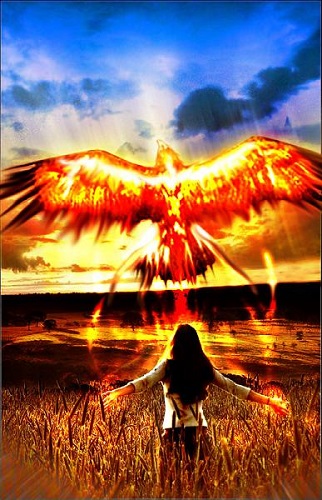 I have witnessed many people experiencing a shaman’s illness. When people reject or resist it, they usually end up dissociating the destructive energy and becoming very challenging externalising personalities (like narcissists or sociopaths), or internalising the destructive energy and creating diseases such as quickly metastasising cancers. I have witnessed multiple people do both of these things. When people accept the calling of the illness, there are different speeds of doing so, which impacts the way the illness plays out in a person’s life. I have seen some people slowly accept that they are experiencing shaman’s illness over many years and bit by bit change their paths so that over time more aspects of their lives are working. Some (including myself) dive directly into the fire and allow our lives to become incredibly chaotic as our identities are re-forged and often become overwhelmed at the amount of emotion that needs to be processed and the whirlwind pace of life changes that occur. (Image from
  It is helpful, but not necessary, to seek support from someone who has been through similar things. Such people can give you compassion and empathy, guiding wisdom, and tools to process wounds and express energy. But it’s vitally important not to delude yourself that any human is a fully healed Jedi-master, all-knowing figure. If someone says they are, then RUN AWAY FROM THEM, because that person is dangerous and delusional and is on a path of becoming a cult leader or something else you don’t want to be involved with. It is important to think of illness and healing as processes, not finite endpoints. When someone says they have “healed” a wound as intense as sexual abuse or parental abandonment, I am suspicious; and when someone plays power games, disrespects, or in any way puts me down, then I know that person is ill and cannot support my healing anymore. I have no tolerance for these behaviours, even when people are unaware. I either change my boundary and create space or make someone aware of their transgression, and if they then don’t own it and work through it, I’m done with the relationship. (Image below from
 A Druid
 Second, “if you don’t have an ancestor altar,
  If you value this content, please engage in reciprocity by
 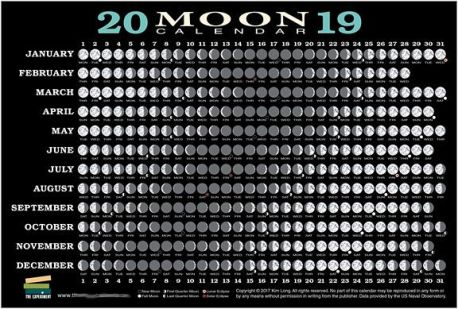 A lunar calendar follows the cycle of the moon only and may have 12 or 13 months in honour of the number of moons in a year. (e.g. Islam, Igbo & Yoruba of Nigeria)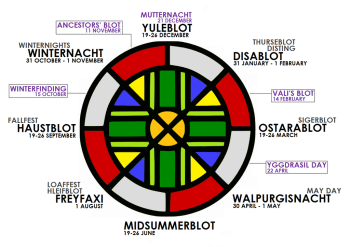

 In the template, cross-quarter days are marked as circles and lines mark equinoxes and solstices. Aspects of your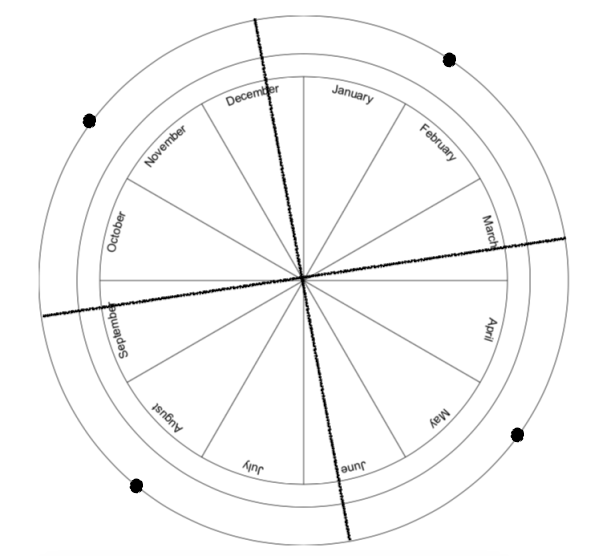
 If you value this content, please engage in reciprocity by
  Blog by Valerie
 The depth of relationships, and the experiences, feel quite different to participants. Similarly, instead of peace circles as a tool to help control behaviour or improve the way people speak and listen to each other as is common in westernised restorative justice practices based on a Judeo-Christian worldview, an Earth Ethos peace circle is an opportunity for a communal spiritual experience based on an indigenous cultural cosmology. Because of the intentional use of metaphor, it ought to feel different to participants (and certainly does to me) than simply sitting in a circle (or around a table where we are blocked from connecting with each other physically) and passing around a talking piece. Many indigenous peoples use oral traditions to preserve cultural wisdom. Verbal repetition and physical embodiment of teachings keeps them pure (
 Healing of, and prevention of, dis-ease requires ceremony. Ceremony is an important human practice connecting the visible material/physical world with the invisible, spiritual world. Life feels empty and unsatisfying when we do not do enough ceremony, and ceremonies are most powerful done regularly and intentionally in community (
 If you value this content, please engage in reciprocity by
  Earth Ethos