Category Archives: Indigenous Science

On Climate Change

Prof. Dan Cziczo discusses Climate Change - Belmont Public ...Blog by Lukas

Dear Greta,

I admire your fire and passion, and your courage to take on so much of the world’s attention. Whether this attention be loving, ambivalent, or hostile, the sheer weight of it is no doubt burdensome, in a way you may not yet even realise.

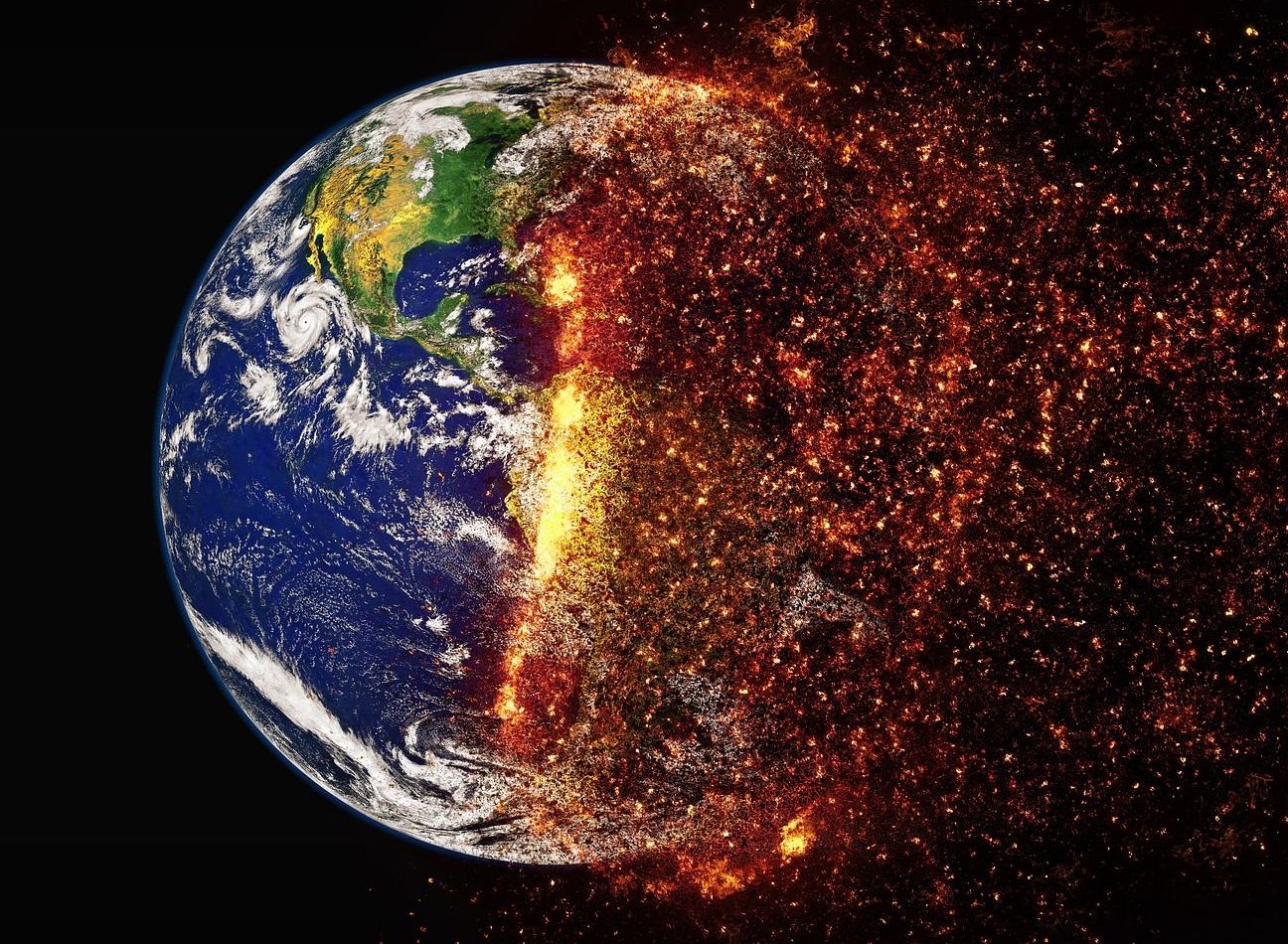
I am writing to suggest that you are missing something profound about life in the modern Western world. You admonished adults, both those of us alive now and our collective ancestors, for stealing your dreams. And indeed this is so. But with respect, the true theft has only peripherally to do with climate change. (Image from here). Here is a quote from Aboriginal Australian scholar Dr. Tyson Yunkaporta:

Every human child is born the same. We are born with innate structures. And those structures all steer us towards living and loving and learning in cooperative groups, and in being profoundly connected to a habitat, and being very curious about that habitat…I believe that every child is born as what we now call indigenous. It just takes quite a rigorous program of indoctrination to twist somebody and turn them into a civilized person.

It is your indigeneity that has been stolen. A life of profound connection with fellow human beings, with spirit, and with the earth. In the world both you and I grew up in “civilised” is seen as an unambiguous virtue. It has given us much in the form of transcendence of material challenges, but destroyed so much more. It has blocked our growth as beings. I see the civilising force of Western modernity as turning the children we were at birth into beings that are unbalanced in the mental, floating above the rest of existence in a state of separation. It has turned us into beings who know only one way to cope with suffering, which is to fix it with our minds. But this idea of “fixing it” is a myth that fails us, born of hard and false boundaries like “self” and “other”, “right” and “wrong”, and “good” and “evil”. As Dr. Yunkaporta says:

The war between good and evil is in reality an imposition of stupidity and simplicity over wisdom and complexity.

And so I put it to you that this applies to the scientific orthodoxy on anthropogenic climate change as much as anything else. To say that it is an unambiguous cataclysm or “evil” requiring our “fix it mind” to go into full swing is potentially just living in the same delusions, and repeating the same fundamental errors of our recent ancestors. The reality requires a deeper wisdom than just the capacity to power the world from renewable energy. Renewable energy in and of itself will not fill the hole inside us, nor reconnect us to the sacred, and to the Earth. For this we need tools that Western science does not know about, but indigenous scientists and mystics of many faiths and traditions around the world have known about for thousands of years. (Image from here)

I do not fix problems. I fix my thinking. Then problems ...We don’t need to fix the world, rather we need to learn to flow in it, and be in deep relationship with it. I have no doubt that from such a stance we’ll look at open pit coal mines and the internal combustion engine, not to mention countless other inventions and lifestyle choices, as being fundamentally out of flow, a desecration of something sacred that severs us from the Earth. Western science will play a role in helping us work out what to do next, but the truth of our modern desecration of the Earth does not need facts and figures, and positivist experimentation for us to experience. If you don’t believe me, go and sit on a chair in a forest near where you were born for a few minutes and watch your mind. If you are anything like me, you will experience a lot of discomfort and dis-ease from being with the craziness of your undistracted modern mind. Can you “fix” that with your mind alone? Can Western science offer you any help? There is as much to learn about why we face climate disasters from that one simple activity as there is from any number of bore holes dug into the Antarctic ice.

Carbon as a building block of life (video) | Khan AcademyWe need to question more than our use of carbon. We need a new and bigger dreaming.  We need a dreaming of lived interconnection to immortal oneness. Such a dreaming is bigger than our daily struggles, and even our comprehension of existence itself. Certainly much bigger than our worries about three degrees of global mean temperature rise. You might say, “Well that is easy for you to say, it is not your daily sustenance under threat, or your island about to be swallowed by the sea”, and this may be true. But my reply is that these ideas I am telling you are not mine. They come from the wisdom of people who did indeed face and transcend such hardships. Islands have disappeared before, and life went on. Regardless of what we do and don’t do, life will go on this time around too. The only real question is what kind of life it will be. (Image from here)

Yours sincerely,

Lukas

giveheartIf you value this content, please engage in reciprocity by living, sharing and giving.

Earthly nourishment

Blog by Valerie

All Law-breaking comes from that first evil thought, “I am greater-than,” that original sin of placing yourself above the land or above other people.

Tyson Yunkaporta

The above quote is the definition of “unsustainable” to me. I see this wisdom enshrined in the biblical story of the Tree of Knowledge that some of our ancestors were advised not to eat from before their curiosity and the trickiness of a snake got the better of them and taught them this lesson. I facilitated a workshop last weekend for healing professionals called “Space for Spaceholders” in order to create space for their nourishment. The embodied metaphor for nourishment that came to me was the placenta. The placenta is responsible for nourishing and protecting babies in the womb. It connects the mother to the baby by supplying blood through the umbilical cord to the developing child, secretes hormones that are required for pregnancy and for preparing the mother’s body for breastfeeding, and provides babies with antibodies of for protection for the first few months of their life.

The placenta is a symbol of a sacred life support system. There are so many cultural beliefs, stories and practices that honour this primal nourisher. Many Aboriginal Australians see the placenta as a person’s hologram that provides a map for their life. It is buried in the Earth to provide direction for the person once they reach puberty. The Navajo (Diné) in the Southwestern US bury the placenta in sacred ancestral ground so the person grows up with a strong cultural identity. Similarly, among the Maori in New Zealand the words for “land” and “placenta” are the same. In Hmong culture in Laos, people believe that a spirit will wander the Earth and not be able to join their ancestors in the spirit world without returning to the place their placenta was buried and collecting it, so it is the same word as “jacket” in their language. In Korea and China, many people burn the placenta and keep the ashes, then sprinkle them into a person’s food when they are sick to provide profound nourishment. In Indonesia the placenta is seen as a person’s older sibling or twin, and in Iceland as a person’s guardian angel. The Ibo of Nigeria and Ghana treat the placenta as the dead twin of the live child and give it full burial rites. And the Baganda of Uganda believe that the placenta is actually a second child. Not only is it the child’s double, but the placenta also has its own spirit that resides in the umbilical cord.

And then there’s modern Western culture that incinerates placentas in hospitals without honouring them whatsoever. This says a lot to me about the depth of desecration and unsustainable thinking that has permeated our lives. Thinking about honouring the tree of life, did you realise the art in the image above was a placenta print?

We miss so much when we are in a space of separation… A couple of months ago I symbolically reclaimed my placenta and its connection to Mother Earth. I used a work of art that symbolised my placenta and ceremonially thanked it and planted it in the Australian bush. It was a simple act and its effects have been gently rippling through my life ever since. About five or six years ago I took a short course in Vedic astrology. Reading the map of the stars and planets for the place and time I was born, the teacher told me that my life was never going to work until I was in my 30s after I went through a huge transition. She showed me a split in certain energies that would not align until then in my life. I felt moved, like she had given me permission not to blame myself for things being so difficult. And after symbolically planting my placenta recently, I came across the following quote that sums up how I see things today:

For many years I sensed my own darkness, my own Otherness, and the many ways in which I am an outlier in this world. I thought this was what was wrong with me. It took me a long time to recognise that this is what I have to bring to this world.

Mary Mueller Shutan

giveheart If you value this content, please engage in reciprocity by living, sharing and giving.
Earth Ethos child development

Blog by Valerie

Some studies of newborns suggest that humans’ most fundamental need is to be part of a culture, to engage with their social environment and try to make sense of their surroundings. It can be helpful to conceptualise culture as a “cognitive orientation” instead of dividing people into racial or ethnic groups (Brubaker et. al, 2004), because “the most significant features of any child’s environment are the humans with whom they establish close relationships” who these days are often multi-cultural (Woodhead, 2005). Raising children is a process by which “we try to achieve cultural goals and well-being for ourselves and our children,” through pathways “determined by cultural activities organised into routines of everyday life” (Weisner, 1998). Children learn cultural models of living through relationships with parents, close kin and social institutions, during which time their young minds develop interdependently within their cultural context. This graphic shows elements of Yolgnu (Australia) child-rearing:

Connections surrounding the child image 11June191

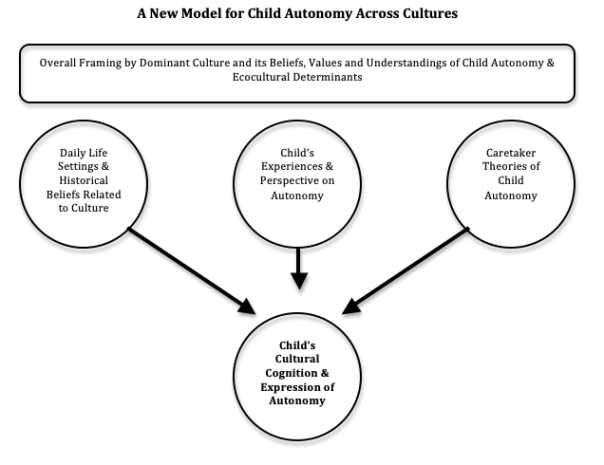
The developmental niche theory provides a framework for connecting culture with childrearing (Super & Harkness, 1994). A child’s physical and social settings, cultural customs of childcare, and psychology of caretakers form a “developmental niche”, and the eco-cultural niche theory identifies five areas of child development: (1) health and mortality; (2) food and shelter; (3) the people likely to be around children and what they are doing; (4) the role of women and mothers as primary caretakers; and (5) available alternatives to cultural norms (Harkness & Super, 1983). Some years ago I worked with social worker Amy Thompson to develop the following model:

childdevelopment.png

In modern Western culture, there’s a lot that is broken, out of balance, and unwell. To intervene in any of the bubbles above will alter a child’s (or inner child’s) cultural identity and autonomy. And there’s a lot of wisdom in Indigenous childrearing.

Unlike the paternalistic culture many of us are familiar with, Earth Ethos parenting respects children’s agency. Autonomy is the freedom “to follow one’s own will” (Oxford English Dictionary). It’s important to note that autonomy is not the same as agency, or a child’s capacity for intentional, self-initiated behaviour. In “central Africa children are trained to be autonomous from infancy. They are taught to throw spears and fend for themselves. By age three they are expected to be able to feed themselves and subsist alone in a forest if need be” (quoted in Rogoff, 2003). Aka Pygmy children in Africa have access to the same resources as adults, whereas in the U.S. there are many adults-only resources that are off-limits to kids, and Among the Martu people of Western Australia, the worst offence is to impose on a child’s will, even if that child is only three years old” (Diamond, 2012). Yet Western children tend lack much autonomy and agency until they turn 18. One scholar suggests that four main ideas have shaped Western civilisation’s parenting practices:

  1. The young child is naturally wild and unregulated, and development is about socialising children to their place within society (e.g. Thomas Hobbes, 1588-1699);
  2. The young child is naturally innocent, development is fostered by protecting the innocence and providing freedom to play, learn and mature (e.g. Jacques Rousseau, 1712-1778);
  3. The young child is a ‘tabula rasa’ or blank slate, development is a critical time for laying the foundations that will enable children to reach their potential (e.g. John Locke, 1632-1704);
  4. The young child is shaped by nurture and nature, development is an interaction between potential and experience (e.g. Emmanuel Kant, 1724-1804) (Woodhead, 2005).

European American (mostly middle class) mothers have been extensively studied, and their parenting practices dominate popular culture and academic literature, yet a study across twelve countries found their beliefs and behaviours abnormal in an international context (Woodhead, 2005).  Common conflicts between Western and other cultures were:

  1. Emphasis on the individual versus emphasis on the family;
  2. Autonomy versus interdependence;
  3. Youth culture versus respect for elders;
  4. Unisex versus gender differences;
  5. Individualism versus communal; and
  6. Competition versus cooperation (Friedman).

In most Indigenous cultures child development is not led by parents but is seen to naturally emerge through a network of kinship care. Children are seen as autonomous and encouraged to learn through experience rather than explicit instruction and rules (Sarche et. al, 2009). Parents avoid coercion and corporeal punishment, instead using storytelling and role modelling to discipline. This teaches natural consequences and allows parents to avoid imposing punishment. For example, this article shares a story of a preventive parenting practice by which an Inuit mother who asks her two-year-old son to throw rocks at her on the beach. He hits her leg, and she says, “Ow! That hurts!” to show him the consequence of hitting someone. And even if he kept throwing rocks after she showed the pain it caused, traditional Inuit still do not yell at children: “yelling at a small child [is seen] as demeaning. It’s as if the adult is having a tantrum; it’s basically stooping to the level of the child.” Child attachment differs from Western culture as well:

It isn’t just about attachment to the mother or the biological parents, but attachment to all of my relations. Practices and ceremonies were meant to build attachments to all parts of the community and the natural world, including the spirit world.–Kim Anderson, Métis (Canada)

Winter Medicine for Rooting Down and Healing Burn Out

An Anishinabe (Canada) woman explains the development of her attachment to Country through bush socialisation:

The absence of fences, neighbors and physical boundaries led way for the natural curiosities of a child to grow and be nurtured…I learnt to search for food, wood, plants, medicines and animals. Trees provided markers; streams, rivers and lakes marked boundaries, plants indicated location, and all this knowledge I developed out of just being in the bush…My bush socialization has taught me to be conscious of my surroundings, to be observant, to listen and discern my actions from what I see and hear. Elements of the earth, air, water and sun have taught me to be aware and move through the bush accordingly. (Image from here)

Ceremony is modelled from a young age. In this video, a Yolgnu (Australia) boy is barely walking and already learning traditional dances to connect with his community and his ancestors, and by the end of the video at age 7 is participating in a funeral dance:

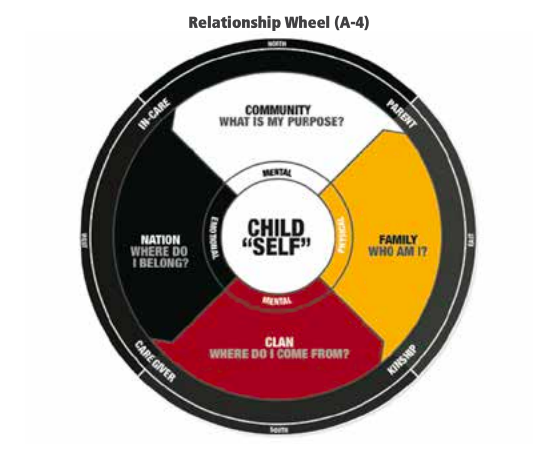
This medicine wheel from a childrearing manual for First Nations Canadians further demonstrates that in an Earth Ethos, children are seen as autonomous and interconnected, and shown how to live in balance with all my relations.

relationshipwheel

Exercise: What parenting perspective or childrearing practice would you like to improve in your life? Using suggestions from this post, researching on your own, or your own insight and intuition, what step could you take today to move further towards balance?

giveheartIf you value this content, please engage in reciprocity by living, sharing and giving.
Boundaries & integrity

Blog by Valerie

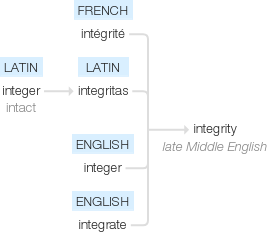
There’s a lot of rhetoric about boundaries, and setting healthy boundaries, and crossing boundaries, but in essence, we’re talking about integrity, or wholeness. From google, the etymology of integrity is:

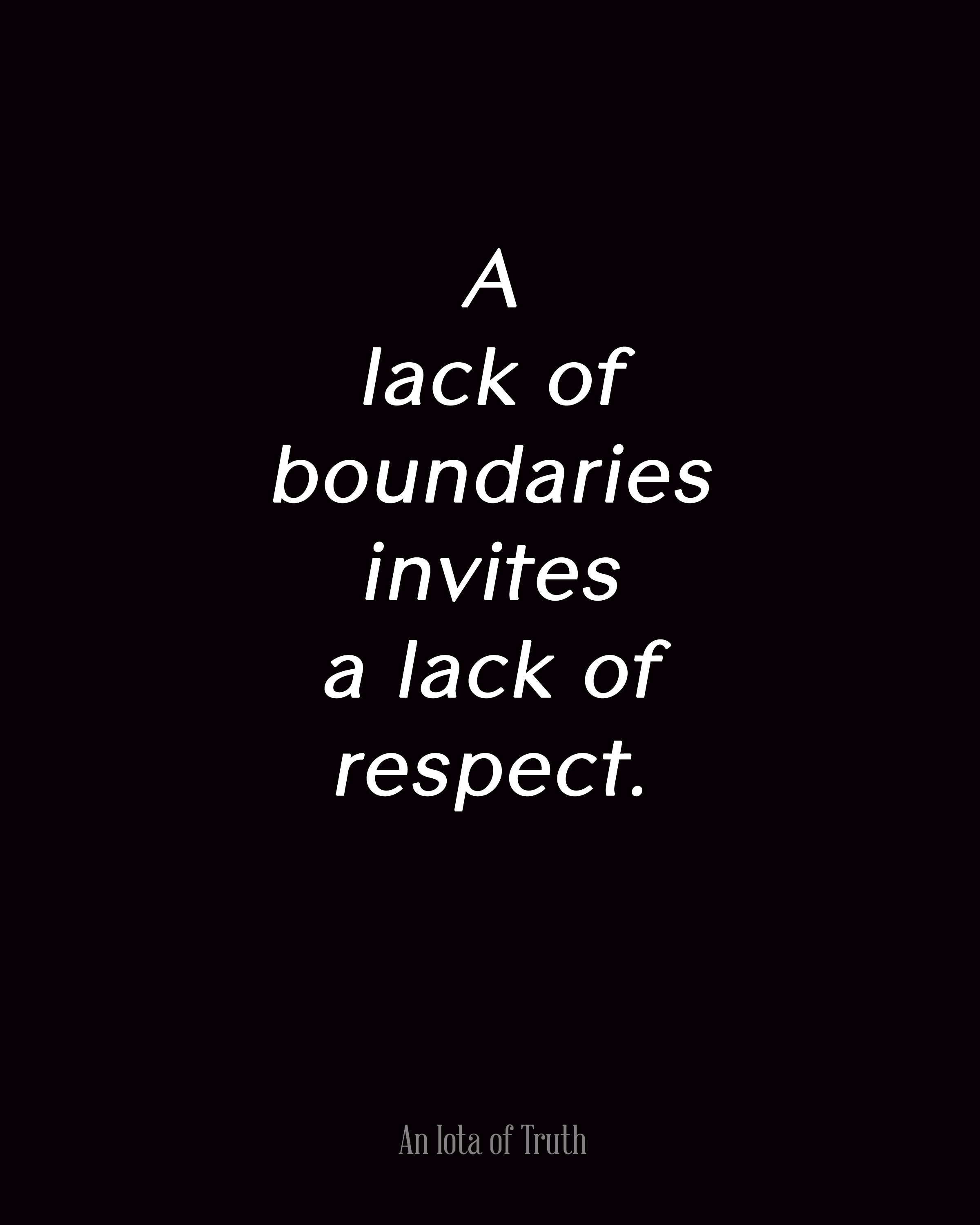
When we are in integrity, we are boundaried. We do need to assert our boundaries at times, but most of the time they just are and don’t require work or thought. I find asserting boundaries arises quite involuntarily and naturally–if someone stomps on my foot, I say OW! or HEY! without thinking; and if someone is behaving disrespectfully repeatedly (3 times for me), my voice usually rises in volume and the words emerging from my mouth become harsher.

Boundaries and Confidentiality - ppt download

I see a lot of confusion around boundaries, and a lot of misguided effort to “set” them resulting in drama, mind games, and power plays. We can’t bypass healing through intellectual knowing. I see people deny themselves healing opportunities with justifications like “they know better” or they “don’t deserve” the pain they’re feeling.

Deserving has nothing to do with it; that’s a victim mentality that’s totally disempowering. And pretending we know better than to walk through the experiences life is presenting is an arrogant way to avoid reality. If you’re carrying pain or emotional charge, take the opportunity to free yourself by experiencing the pain fully, healing, and embodying its medicine. Boundaries will flow through your healing process the more you trust; you will realise when you are called to walk through an ordeal, which battles are not yours, and ‘yeses’ and ‘nos’ will flow.

In the medicine wheel, it’s easiest to agree on physical boundaries and integrity, though concepts such as consent and personal space differ by individual and culture. Spiritual integrity bounded by our faith, beliefs, and ritual and ceremonial practices, at individual and cultural levels. Emotional integrity has to do with self-knowledge and expressing our feelings fully in honest, healthful ways. Many people find psychological boundaries challenging to maintain, and many of us don’t think about psychological integrity because we are so used to our super busy minds. The more contemplation/meditation, grounding, and ancestral trauma healing work I do, the more integrous and embodied I become, and the lighter and more prescient my thoughts are.

Inspirational Quotes On Boundaries. QuotesGram

Traumas in our lineages, lives, and on our lands disconnect us from integrity, and we carry a lot of that trauma in our minds. Everyday tasks such as buying groceries can feel like minefields. Are we buying organic? local? from exploited workers? plastic packaging? We are all indigenous to this Earth and can experience profound interconnection and belonging with ourselves, other people, plants and animals, and even landforms.

Paul Young, a medicine man in Sydney, suggests a three-step healing model for mental integrity: (1) de-colonise and increase receptivity, (2) culturally strengthen and ground, and (3) alter your state to experience indigenous inter-connection through ceremony, meditation, prayer, etc. Similarly, in a conversation with Dr. Apela Colorado last week she suggested a healing process based on contemplating the following three questions:

  1. What were your traditional cultural ceremonies?
  2. How did you lose them?
  3. What losses do you need to process to stop perpetuating colonisation?

Exercise: What does integrity mean to you (spiritual, emotional, physical & psychological)? How would you start to answer Apela Colorado’s questions? Consider your answers in light of this quote from a Rwandan man:

“We had a lot of trouble with Western mental health workers who came here immediately after the genocide, and we had to ask some of them to leave. They came and their practice did not involve being outside in the sun where you begin to feel better, there was no music or drumming to get your blood flowing again, there was no sense that everyone had taken the day off so that the entire community could come together to try to lift you up and bring you back to joy, there was no acknowledgement of the depression as something invasive and external that could actually be cast out again. Instead they would take people one at a time into these dingy little rooms and have them sit around for an hour or so and talk about bad things that had happened to them. We had to ask them to leave.”

giveheart If you value this content, please engage in reciprocity by living, sharing and giving.

Deep Grounding/Earthing

Blog by Valerie

I’ve written about ways to integrate earthing/grounding into everyday life, but what’s come up recently is how to take that to a deeper level through ritual or ceremony. If you are an immigrant, or your ancestors were within the last 7 generations (depending how you define a generation), then your connection with land is energetically split between the land where you live, the land(s) of your blood ancestry, and land(s) where you have lived or otherwise feel a strong connection with. Indigenous people who are deeply connected with specific lands and places have a strength and purity of connection with the land that is quite powerful. As one Anglo-Australian writer put it:

In my own experiences with original Australians who are deeply connected to country, I have felt that they are so grounded it’s almost as if the land itself is listening to you, through them.

For those of us who do not have such a depth of connection with land where we live, we can still drop into spaces of earth energy flowing through us when we’re deeply grounded wherever we are. This work heals the places we live now, as well as places we’re connected with through our ancestry. Given all the wars and violence on land in Europe, for example, we can help heal that land from America or Australia while not asking it to physically support us.

There are many rituals and ceremonies to deepen our relationship with the Earth. Here are a few that I have found to be powerful tools:

  • Create an outdoor altar and leave offerings of gratitude to the Earth, a tree, stream, rock, landform, tree grove, tree stump–the options are endless.
    • You can symbolically bury power objects to represent something you wish to heal or ground an energy in your life. You can also hang prayers on ribbons or flags or with chimes or bells so the wind spreads your prayers far and wide. Buddhist prayer trees use wind in this way. buddhistprayertree
    • Note: A maypole is an outdoor altar, and so is an outdoor Christmas tree, but once you cut or pot it and bring it inside, you are honouring a tree for giving you its life, which is different to you being generous and honouring the Earth. (Images are from uncredited images on pinterest, and from here.) 
  •  Without creating an altar, you can build a relationship with a place, tree, rock, etc.
    • Pick a place you regularly visit and start to build a relationship. Like building a relationship with a person, this requires giving of yourself and takes time.
    • For example, there is a grove of trees in a park near my home that I felt drawn to a couple months ago. Once a week or so, I go say hi. I either literally say hello to each tree, nod and direct my gaze at each one in turn, or stand at each tree and put my hand on the trunk and take a breath. I stay there for a while and meditate to see what messages and insights they want to share with me, and I psychically share some messages or prayers with them. I also leave offerings, such as flowers or crystals at their base or tucked into their bark, or I do a dance or sing a song, or I leave something of myself that is useful such as my urine or or spit, which brings me to the next example.
  • Share of your body with the Earth, a tree, plant, rock, etc.
    • Sharing may involve simply dancing barefoot) outdoors. Your feet drumming into the Earth and your body performing for a place is a beautiful way to do a ritual or ceremony to deepen your connection with a place. You can try deep breathing to start, let go, and see what movements the Earth inspires your feet to do. You can add in chanting or drumming, but I suggest starting simple so you don’t get lost in your head and stick with a state of flow.
    • Your “waste” is literally fertiliser to many earthly beings. Your urine creates nitrogen-rich soil. Giving your spit may sound strange but with intention, it is a way to physically leave a piece of yourself, and can feel like a better energetic exchange if you are, for example, taking a piece of bark or leaves from a plant or tree.
    • bloodroseI have heard of many magick menstrual rituals, but I prefer to honour the Earth by giving my blood to a flowering plant. This is a very powerful ritual women can do to ground menstrual energy as well as connect with the Earth. (Sorry, guys!) I have also heard of some fertility rituals where men ground their semen and symbolically plant their seeds in the Earth, but I have not tried this myself for obvious reasons! (Image from here.)
  • Do a burial ceremony in the Earth.
    • If you want to do something by yourself, or feel like trying a less intense ceremony, do a lower body burial ceremony.
      • First, choose a place for the ceremony, and ask the land if it’s okay to plant yourself there.
      • If it feels okay, then dig a hole big enough to plant your feet, or your feet and lower legs, into the Earth. Make sure you are barefoot so you feel what it is like to be grounded in that way, and pick a spot where you feel comfortable standing for a while like a tree or plant in the soil.
      • Try keeping your eyes open and closed, or do the ceremony at sunrise or sunset so you can experience the difference in natural light.
      • Do the ceremony somewhere with a view in the wilderness, and somewhere more urban like in your backyard, or in wet and sandy soil, and see how you feel being planted in different environments.
        • Last year, I received dream visions and moved to facilitate this ceremony at a sacred site whose traditional custodians welcome non-Aboriginal people to access the place respectfully, and it felt like ceremony to welcome my husband back home to Australia.
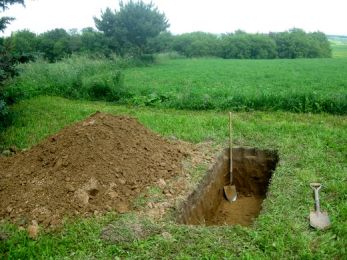
    • If you are called to do some deep body and Earth healing, an incredibly powerful ceremony is a full body burial. This is a death/rebirth ceremony that is timed with the cycle of the moon and ideally takes place at night. For this ceremony, you do need someone to support you. It is physically not possible nor safe to do alone. (Read this for one man’s experience.)burial.jpg
      • First, you and your support person/facilitator choose a place for the ceremony, leave offerings, and ask the land to support your healing. You may get a vision of a place to do the ceremony, or you may do it somewhere practical like a backyard.
      • Once you commit to the ceremony, you and your support person will start to receive guidance around timing and how to prepare yourself and the land. (Image from here.)
      • The day before or the day of the ceremony, you will dig a hole that is almost as big as a grave/cradle for your whole body, piling the dirt to one side.
      • When it is time for the ceremony, you will want to wear clothes that you don’t mind getting dirty and are a bit tight, unless you are okay with insects crawling underneath them! I have done this once wrapped in a blanket lying in the grave/cradle with dirt over me, and I have done it once just in clothes with dirt over me. I prefer the latter, because it feels more intimate.
      • Your support person will sit behind you so you do not see them, but they are able to watch you and hold space, and get you a drink of water, a hat or tissue if you need something like that. There may initially be prayers or music played for you, but most or all of the ceremony will be silent so you can go deep within yourself.
        • The first time I did this ceremony in the U.S., it was a very cold winter night with a waning moon (so emotions could be released/a death ceremony). Initially, I got images of my ancestors from Germany who had been fighting in World Wars, how many people they saw die, and how many of them died on the land. It was painful, and I cried. I then got images of my Jewish ancestors fleeing for their lives while their houses were being burned. It was scary, and my body shook and felt cold. Finally, I got images of Native Americans being slaughtered on the land where I was doing the ceremony. It was sad. My heart was heavy, and I sent them prayers. I lay underground for hours until my whole body was cold and numb and it felt like I was done. It was so deeply healing —  I had no idea I was carrying so much in my body even after years of doing other intense healing ceremonies!

Exercise: Inspired by this post, do something new to deepen your relationship with the Earth and the places around you!

giveheart If you value this content, please engage in reciprocity by living, sharing and giving.
Altars, Shrines & Power Objects

Blog by Valerie

catholicaltar.jpg

I am delighted to hear from people having success working with ancestral altars and have been asked to write more generally about altar and shrine practices. I will also talk about power objects. Starting with etymology, “altar” is from a Latin word for “on high” (like altitude) and refers to honouring and worshipping great gods through sacrifice, usually by burning something and sending smoke up towards the heavens. “Shrine” is one of those mysterious words of unknown origin that refers to a sacred case or box (like the ark of the covenant) for keeping holy papers or other powerful spiritual objects. Shrines honour the spirit of a person, event, or ideology. The way we tend shrines is by leaving offerings. Altars are interactive, working spaces of worship where we ask for insight and guidance. We often create blended shrine-altars where we both leave offerings, as well as ask for insight and guidance. Most churches and temples are such blended spaces, where people leave incense, flowers, or candles with gratitude to figures like Jesus,

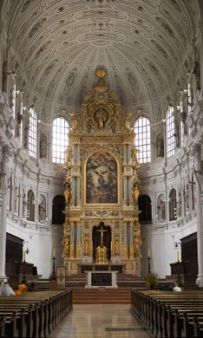
shrineofrememberance.jpgBuddha, and Krishna, and where people also sit in contemplation and pray for insight and guidance from those figures. I find it helpful to be intentional about these differences in my own life, but maybe blended spaces work for you. Ultimately, we build relationships with figures, ideas, events, places, and energies, and those relationships work best when we both give and receive, and do not always ask or give with the expectation of immediately getting back… (Images: Altar of St Michael’s Church in Munich, Shrine of Remembrance for the War Dead in Melbourne)

There are three types of altar practices that I use in my daily life: an ancestral altar, a personal altar, and a body altar. My introduction to a personal altar practice came from the mesa program. The personal altar for me, is medicine wheel-based, because that is my cosmology. It is a cloth on a flat surface next on my night table to represent the medicine wheel and provides a personal reflection for me. My husband who gravitates more towards Buddhism has an altar built on a footstool that is in three vertical layers. Yours might be Christian or Daoist; it depends on where your spirit feels most at home. Out of respect for my privacy and current altar work, I am posting a photo of my altar from 2 years ago to give you an idea of what it looks like and to explain some of the symbolism.

altarmay2017

Following a medicine wheel path, in the centre is the heart, where I have power objects of rocks and crystals representing core beliefs I was working with at the time, including rose quartz for unconditional love and acceptance, a fossil for honouring ancestors, a small glass globe for honouring Mother Earth and right placement, and two clear quartz crystals for clarity and courage. In the north (mental) realm which in my medicine wheel is white, there is a feather and a small angel figure to connect with my personal power animal (egret) and my highest thinking (angel). In the east (spiritual) realm which is yellow is a candle in a glass with UT Austin written on it as I was pouring my spirit into my PhD program at the time. In the south (emotional) realm which is red is a shell that was in my parents’ house growing up where I burned offerings to clear those emotional bonds. And in the west (physical) realm which is black is a young girl to represent my inner child being held by a crystal to represent Grandmother Moon and a salt lamp to represent Grandfather Sun.

All of the items on the altar are power objects, meaning they are imbued with energy and meaning, and I put them on and take them off the altar with care and ceremony. Power objects can be anything that we feel drawn to or has meaning for us, from a candle to a cross to a rock we pick up off the ground. Sometimes the meaning is clear to me when I place an object on the altar, and sometimes the meaning becomes clear over time and begins mysteriously. At times I am moved to break open power objects to free trapped energy (which I find creates ease for my body and relationships that do not need to break instead), and at times I pass the objects on to other people, bury them, burn them…it depends what feels right and what insight comes to me in visions and dreams.

The body altar practice is how I start each day. It was inspired by a practice Cristina Pratt mentioned of using her body as the centrepiece of the medicine wheel, followed by most elements of the body prayer which I learned from kundalini yoga teacher Carolyn Cowan (see below).

https://www.youtube.com/watch?v=f45TKrhGXHs

These days Grandfather Sun and Grandmother Moon are outside of the borders of my personal altar, and Grandmother Moon carries slips of paper I regularly print with inspirational notes and quotes to set my daily intentions. So each morning from my bed I reach for some of Grandmother Moon’s wisdom, take it in, and place the slip of paper on my altar. (I regularly burn the slips of paper when it feels like the right time to ground this wisdom into my life.) Then I get up and do a body altar practice. I stand facing the east and ground my feet by imagining roots extending into Mother Earth. I reach my left arm out to the side and thank Grandfather Sun, and reach out my right arm to thank Grandmother Moon. I raise my arms up to thank Father Sky, and bend to touch the ground to thank Mother Earth, then place my hands on my heart to honour my interconnection with all beings. I then honour each of the four directions with breath, movement, voice, and intention, and then extend my arms out and twirl to honour my boundaries and human limits. I then do a movement to bring energy up from the Earth below and into my life for the day and thank the ancestors of the land where I am and of my lineages and past lands of connection. And I end with an embodied prayer of unconditional love and acceptance through the Body Prayer above (minus lying prostrate on the floor).

Each evening before bed I pray at my personal medicine wheel altar. Behind the altar on the wall are images of my totems, moiety (paternal line) and heart-language (Frisian), so that that I honour them daily. Many days I am moved to leave offerings at my ancestral altar which is more of a shrine for me and a working altar for my husband at the moment. Some days I leave offerings at a tree altar in our garden (such as bits of food with thanks for Mother Earth’s bounty and with awareness that non-human beings in our garden also need to eat!). Some days I bring offerings to a tree grove in a nearby park whom I have asked to support an upcoming ritual. Offerings are a complex subject for a future post, so I hope this has given you plenty of food for thought at the moment!

Exercise: What altars and shrines are in your life? What do you intentionally want to cultivate? To let go of? What meanings do some power objects in your home have? Which ones might be useful to let go of, destroy, bury, flush, or pass on to someone?

giveheart If you value this content, please engage in reciprocity by living, sharing and giving.

Colonial Disconnection

Blog by Lukas

naturequote.jpg

One of the many MANY things about my life and worldview that has changed since I’ve known my wife Cloud Clearer has been seeing things more clearly from an indigenous perspective. And in this I don’t mean indigenous Australians. A lifetime of my best effort at open hearted learning would be nowhere near enough to truly know their suffering. And I certainly don’t mean nativism, which so often takes the form of destructive, oppressive tribal occupation.

I’m talking about indigenous in the form of a deep, dare I say spiritual, connection to place. A felt and emergent sense of belonging in which one’s existence is symbiotic with, dependent on, and unshakeably connected to the Earth. A oneness that means all that happens to earth, happens to a person, and what happens to a person is also happening to the Earth. This is opposed an egoic mind, floating in desperation and disconnectedness on top of the earth, plotting the ways in which all other things around it can be exploited for its survival, as though one were necessary for the other. An indigenous worldview, or Earth Ethos, understands that the exploitation of the land is ultimately a self-destructive act.

I spent the day driving around Western Sydney today, and it hit me so hard how disconnected, and therefore desperate, we are. Billboards, trucking supply chains, retail superstores, and development. Everything a commodity. And I don’t mean to pick on the West. The older areas of our colonial civilisation are just pretty scars, made so long ago it’s easy to see them as somehow natural, as though European energy has somehow always been here. And herein lies one of many white Australian delusions: It is not that there isn’t something wrong in a felt sense about the tens of thousands of newcomers setting up mini colonies in our big cities. I believe there is. I feel it. But the delusion is that we were, or indeed are, any different. Just ask any indigenous person.

(Images are the first two found for the google search ‘colonialism’, from here and here.)

Exercise: What is one way you can support indigenous well-being? Consider learning which indigenous people have lived where you now call home and how to honour them, such as donating to a non-profit like this, or a local one like this in Australia. Consider integrating Earth Ethos ceremony into your everyday life to feel more deeply what is happening in your body and with Mother Earth. You might try beginning and ending each day with intention through prayer, mindful movement, breath-work, sound, or spiritual reading.

giveheartIf you value this content, please engage in reciprocity by living, sharing and giving.
The Red Road

Blog by Valerie

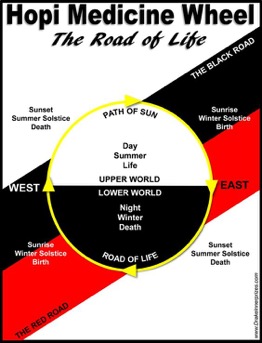
The concept of the Red Road comes from Westerner’s attempting to understand the way indigenous cultures of North America structure their lives and see the world, though I havehopiroadoflife heard people who identify with a North American tribe use the term too. (If you are not familiar with the concept of a medicine wheel, read this post first.) Consider the example of the Red Road from the Hopi who live in the Southwestern U.S. Look at the medicine wheel is in the centre alongside da Vinci’s re-drawing of the Vitruvian man. The belly down to the feet maps onto the lower world coloured in black which represents Mother Earth, the sacred feminine. I estimate the proportion of the Red Road in this lower world is about 80%. This means focusing 80% of our time and energy on standing up for our values, exploring the mystical side of life, and nourishing and expressing our creative energies. 

vitruvian.pngLiterally, this means keeping our hips open, our legs strong, and our bare or grounded feet firmly planted on the Earth. We talk about having our carbon footprints, but what about our physical ones? I practice walking so respectfully and gently that I imagine my feet are kissing Mother Earth with gratitude with each step. My respect is shown through wearing flat, primarily leather-soled shoes, as well as through the act of stepping. Consider how to walk silently and softly with fox walking, and compare those movements with how you normally walk through the world. (Here’s another video to help you practice fox walking.) Aside from yoga or pilates classes, I find most of us pay very little attention to how we physically move through the world. To be honest, I cringe when I see people walk in stiletto-like heels because it looks to me like they are stabbing Mother Earth. I also feel pain when people are very heavy-footed, because it looks like they are punching Mother Earth with each step.

Metaphorically, as one indigenous scholar describes it:

Walking the Red Road is a determined act of living within the Creator’s instructions.  Basically, it is living a life of truth, humbleness, respect, friendship, and spiritually. Those on this road are by no means walking a perfect path, but are in search of self-discovery and instructions.

The path of the Red Road is mostly felt and sensed, and includes the mystery, magic, and miracles that arise through following signs and seeking synchronicities. It is more bottom-up than top-down, more grassroots than executive-led. Someone who walks the Red Road is more likely to be described as determined than headstrong. It reminds me of the Lakota morning prayer ‘Today is a good day to die”, which embodies living fully in the moment. In such a state, we harbour no regrets and are able to even let go into physical death if that is what is asked. It is being so attuned that there’s little to think through, life magically and consistently emerges and we are so allowing that living is like watching beautiful flowers blossom over and over again.Indigenous-Flag-RS.jpg

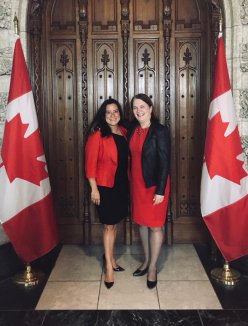
There is wisdom in the colour red, with some universal meanings present across cultures, such as: primal and sexual energy, blood and ancestry, fire and passion, and physical earth or clay. I am reminded of the colours of the Australian Aboriginal flag, with red representing Mother Earth, black representing Aboriginal people walking on Her, and the sun representing the creative life-giving energy connecting the people and the land. (Image from here.) I am similarly reminded of a current affairs story in Canada of an indigenous minister who resigned due to unethical political pressure from the prime minister, and another minister who resigned in solidarity. I find it apt these women chose to dress in black and red together as they took this historical stand. (Article about it and image from here.)

canadianpolitics.jpg

Exercise: Regret is a grief about something left undone. When we are em-bodied there is nothing to re-member because we are living in the moment on the Red Road. Think of a regret. Is that dream still viable and important to you? If so, can you take a step towards fulfilling it and make a commitment to continuing on that path? If not, can you make time to grieve the loss of the dream and let it go, perhaps through some sort of ritual, so you can move on and allow new creative energy to flow?

giveheartIf you value this content, please engage in reciprocity by living, sharing and giving.

Shaman’s Illness

Blog by Valerie

Many indigenous cultures have a concept of a “shaman’s illness,” which is simultaneously a traumatic ego-death and initiation in the form of a spiritual crisis. Modern people experiencing shaman’s illness may have multiple traumatic (often near-death) experiences, which can be physical, mental, and/or psychological, as well as spiritual. Such experiences create opportunities for a person to see the world in a new way. A shaman’s illness brings intense experiences that destroys life as a person knows it and shatters previous identities and ways of being that the person was attached to. The gifts of such a brutal illness are an awakening of a huge amount of energy that can be redirected from being destructive or dissociated into being healing and empowering. As a person heals and allows a new identity to be created, the person rises like a phoenix from ashes of a fire and is reborn into carrying a wound as a medicine for others (Pendleton, 2014).

phoenix-rising-from-the-ashes.jpgI have witnessed many people experiencing a shaman’s illness. When people reject or resist it, they usually end up dissociating the destructive energy and becoming very challenging externalising personalities (like narcissists or sociopaths), or internalising the destructive energy and creating diseases such as quickly metastasising cancers. I have witnessed multiple people do both of these things. When people accept the calling of the illness, there are different speeds of doing so, which impacts the way the illness plays out in a person’s life. I have seen some people slowly accept that they are experiencing shaman’s illness over many years and bit by bit change their paths so that over time more aspects of their lives are working. Some (including myself) dive directly into the fire and allow our lives to become incredibly chaotic as our identities are re-forged and often become overwhelmed at the amount of emotion that needs to be processed and the whirlwind pace of life changes that occur. (Image from here.)

Seeing the world in ways that are outside one’s mainstream culture and being sensitive to feelings and experiences that others are blocking or numb to is a big responsibility and often triggers feelings of rejection, social/cultural alienation, doubt, confusion, fear, shame, deep grief, and anger. Learning to pace oneself is part of the journey, but if you are resisting the illness, your life will keep getting harder. What I see often is that the illness brings up such intense feelings of loss of control that people find it hard to “let go and let God” and are unwilling to allow their lives to flow into mess and chaos required for healing. I have received messages a few times that I will be kicked off the planet if I did not take make certain choices, and I have seen others similarly forced to face primal survival fears. The following are keys I’ve found to accepting a shaman’s illness:

  1. Faith in a guiding force/God/divine intelligence/Higher Power bigger than us;
  2. Trust that whatever comes into our lives is meant to help us;
  3. Willingness to experience death;
  4. Following signs, synchronicities, and symbols in dreams and everyday life; and
  5. Finding tools to ground intense energies and forms to express dark emotions.

angrylovingpeople.jpgIt is helpful, but not necessary, to seek support from someone who has been through similar things. Such people can give you compassion and empathy, guiding wisdom, and tools to process wounds and express energy. But it’s vitally important not to delude yourself that any human is a fully healed Jedi-master, all-knowing figure. If someone says they are, then RUN AWAY FROM THEM, because that person is dangerous and delusional and is on a path of becoming a cult leader or something else you don’t want to be involved with. It is important to think of illness and healing as processes, not finite endpoints. When someone says they have “healed” a wound as intense as sexual abuse or parental abandonment, I am suspicious; and when someone plays power games, disrespects, or in any way puts me down, then I know that person is ill and cannot support my healing anymore. I have no tolerance for these behaviours, even when people are unaware. I either change my boundary and create space or make someone aware of their transgression, and if they then don’t own it and work through it, I’m done with the relationship. (Image below from here.)

rosepalm.jpeg

I do this because I have learned through my own shaman’s illness that setting fierce boundaries shows that I value my life and my energy, and that I do not need to prove my worth by battling (e.g. convincing, power playing, manipulating, etc.) anybody. Most people who justify harmful and dangerous behaviours are carrying unprocessed primal survival fears. I rarely feel afraid of dying, though. In some ways it would be easier than being here and going through all the trauma my body is still carrying. Working with my shaman’s illness so that I become a medicine person instead of sick or dissociated is a journey of experiencing alchemy, of metaphorically turning dirt into gold as my darkest experiences become fertiliser for the growth of beautiful flowers in myself, others, and the environment. Mircea Eliade says a shaman is a “healed madman,” and Rumi says, “In their seeking, wisdom and madness are one and the same.” If you’re reading this, maybe like me, you can relate to these.

giveheart If you value this content, please engage in reciprocity by living, sharing and giving.

Calendars, Seasons & Cycles

Blog by Valerie

There are four types of calendars:

  • A lunisolar calendar follows both the cycles of the moon and sun. Because the days, weeks and months are fixed, holy-days determined by the lunar cycle fall on different calendar days each year. (e.g. Hebrew, Buddhist, Hindu, Chinese, Korean, Tibetan, and pre-Christian Germanic tribes)
  • solar calendar like the Gregorian and Julian ones we are most familiar with follows the cycle of the sun only. It tends to be used by agricultural cultures. (e.g. Christian, Berber, Tamil, Bengali, and the French Republican calendar)
  • mooncalendar.jpgA lunar calendar follows the cycle of the moon only and may have 12 or 13 months in honour of the number of moons in a year. (e.g. Islam, Igbo & Yoruba of Nigeria)
  • A seasonal calendar is based on elemental (earth, air, fire, water), floral (plant) and faunal (animal) patterns throughout a year. The number and types of seasons are dependent on specific places, so even tribes near each other may have different seasons if their land has a river that floods during a “wet” time, or if an animal migrates through their land at a specific time of year. (e.g. Aboriginal Australians)

You may think that four seasons a year has been standard in European cultures, but the old Norse calendar had only two: summer began in mid-October, and winter in mid-April. The “Wheel of the Year” is a common calendar used by modern-day pagans of European ancestry and is based on the equinoxes and solstices, and the half-way moments between them to mark changes of a four-season calendar. The images below are of Heathen (modern-day Germanic and Norse pagan) and Celtic pagan calendars. If you are in the Southern hemisphere and wish to honour this calendar, Glenys of Pagaian Cosmology translates it so your celebrations are seasonally appropriate.

1024px-heathen_holidays

wheelofyear

There are many ways of acknowledging seasons and cycles because of the diversity of environments, traditions and beliefs that influence a culture. The term “pagan” may make you think of someone in pre-Christian Europe who worships multiple gods, but it actually refers to people who are “fixed or fastened” to the land, i.e. villagers and country folk. In other words, pagans are people who have not yet experienced cultural genocide and disconnection from their ancestral homelands and whose culture is indigenous to, or rooted in, a specific environment and place. Aboriginal Australians offer us a reminder of how all humans once lived “fastened” in sacred connection with our environments:

(Clip from here.)

Exercise: Wherever you live, consider how to describe a seasonal calendar in your area. You may want to use the image below adapted from this template as a blank canvas, with this complex blended calendar offering some inspiration.

In the template, cross-quarter days are marked as circles and lines mark equinoxes and solstices. Aspects of your Medicine Wheel may be written in the upper open area, land-based cycles in the next layer, and important dates below the months. Don’t worry if you don’t know some things. You can’t do this wrong; you have a unique ancestry (of land(s), lineage(s) and spirit) and the way you celebrate seasons, solar and/or lunar cycles can be your own.

Calendar Medicine Wheel

To give you some examples, in my Medicine Wheel / adapted Wheel of the Year calendar, each of the four parts is associated with a season, a colour, an Earthly cycle, an aspect of ancestry, and a totemic plant or animal – so my direction of north represents the mental, the element of air, the season of winter, the colour black, the Earthly cycle of rebirth, my Sumerian (Jewish) blood lineage, and the date palm (a sacred plant). Transposed over the Wheel of the Year, I am developing an understanding of the land-based seasonal calendar for Yuin country on the south-eastern coast of Australia, where for example, humpback and southern right whales migrate north to breed in May, and then back south with their babies in October. Also transposed are a few holy-days I like to honour with others around the world include Earth Day, the International Day of Peace, Indigenous People’s Day, and Martin Luther King Jr.’s and Nelson Mandela’s birthdays. I also honour birthdays and death days, as well as new and full moons and eclipses.

giveheart If you value this content, please engage in reciprocity by living, sharing and giving.