Blog by Valerie
“The first step in liquidating a people…is to erase its memory…Before long a nation will begin to forget what it is and what it was. The world around it will forget even faster.”—Milan Kundera
Whether you are considered “white” or not, I feel confident saying you have been impacted by whiteness trauma, and as this quote suggests, that your people/s likely experienced and perpetrated genocide somewhere in your family line/s. Genocide is an intentional act to destroy a people, and whiteness is an intellectual construction based on traumatic social rejection from & disconnection with Mother Earth, self & cultural heritage, and other people. It was used as a tool by the ruling class to divide the working class, and so is also called “the bribe of whiteness.” David Dean gives a clear and compelling history of the creation and rise of the “white” identity in this article, People who have learned to identify as “white” tend to deny their own complex cultural heritage. Some people even study “whiteness theory” and “white fragility” to try to make sense of the shame they carry and the way this history of European identities being whitewashed and replaced by modern, nationalistic ‘Western’ identities still play out today. For example, did you know that assimilationist policies in the U.S. in the late 1800s and early 1900s led to companies like Ford running mandatory English classes and job training programs that finished with ceremonies in which people clad in traditional cultural clothing walked through a huge ‘melting pot’ then emerged in company uniforms? (Image from here)

David Dean cites the success of such policies & programs on two factors:
- The violent displacement of communities from their traditional lands in order to use that land for profit and create a dependent, exploitable workforce, and
- The replacement of traditional cultural identities that valued the welfare of the community and the Earth with a culture of capitalistic, possessive individualism with a social hierarchy divided along racial, gender, religious, and other identities.
As Tyson Yunkaporta points out in his new book, ‘Western’ is not an identity, because by its nature it is in reference to someone or someplace else (presumably ‘Eastern’); it is not inherent. To be ‘American’ or ‘Australian’ is also quite amorphous. I have out of curiousity asked a number of people what it means to them to be ‘Australian,’ and I have gotten one of two answers: (a) I am part of a multi-cultural modern soup, or (b) It means nothing to me, and I am English/Irish/Wiradjuri/Yuin/etc. living on this land we collectively call ‘Australia’.
My view is that whiteness trauma is based on a European history of intergenerational trauma, shame & pain. It was spread by the Romans & other empires dividing and subjugating peoples on their traditional lands; by the violent spread of Christianity through power & force, including the systematic desecration of indigenous & pagan sacred sites; and by horrendously hateful acts such as witch trials, inquisitions, slavery, rapes & genocides. It seems to me that over the last few thousand years, violence, terror & control became normalized as a method of asserting dominant leadership throughout Europe. Multi-generational disconnection with an innately human intimate & reciprocal relationship with the Earth were replaced by a power struggle for whose anthropocentric story is ‘right’, in a might-makes-right model. This led to land ‘discovery’ (i.e. colonisation) and other myths such as when upper class, white-skinned, Christian, land-owning males founded a ‘free’ government for ‘the people’ in the U.S. Ultimately, whitewashing & glomming together of many European peoples and cultures into “Western” expanded to non-‘white’ people, so that today millions of people around the world identify with a colonial nation rather than a traditional culture living within an empire.
Here is a little poem I wrote about my own journey of healing ‘whiteness’ trauma:
Beneath the Roots
Ancestral trauma
Has defined me
But I kept digging
Because I knew
My taproot was deeper
And drinking in peace
Somewhere down there
To heal from whiteness trauma, I have found many helpful approaches, including: honouring ancestors, grounding, re-defining tribe & belonging, bridging multiple identities, healing power dynamics, and healing existential wounds. The following quote is a humbling reminder of what our indigenous minds carry somewhere inside of us from an Australian Aboriginal culture more recently colonised:
“The first peoples of this land don’t need statues of our heroes, we have mountains that remind us of our people. We don’t need painted portraits, we have rivers that flow with the stories of our dreaming. Our songs are filled with culture, our language of the land. So we don’t need books. Our history, our connections, our hearts are true to this country.”–Baker, 2017, quoted in Koori Mail, Oct 23, 2019 p. 24
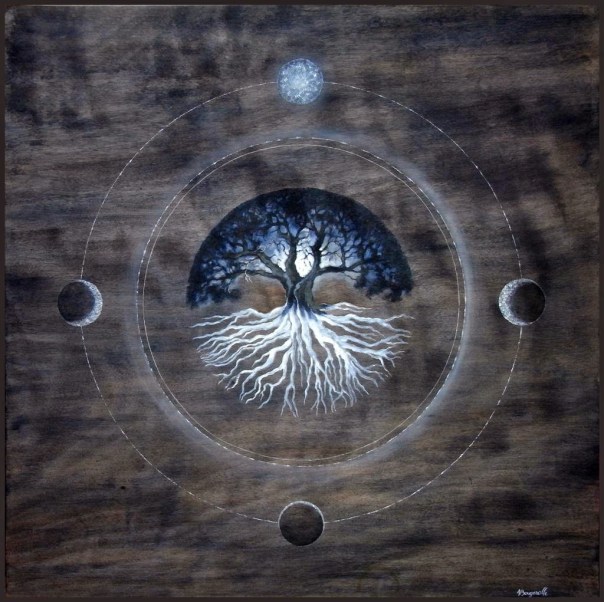
(Image from here, by artist Annick Bougerolle)
 If you value this content, please engage in reciprocity by living, sharing and giving.

 Denying oppressive cultural stories frees not only you, but your ancestors, the lands, and indigenous people and their ancestors connected to the land where you live. A few hours outside of Sydney, Australia in
 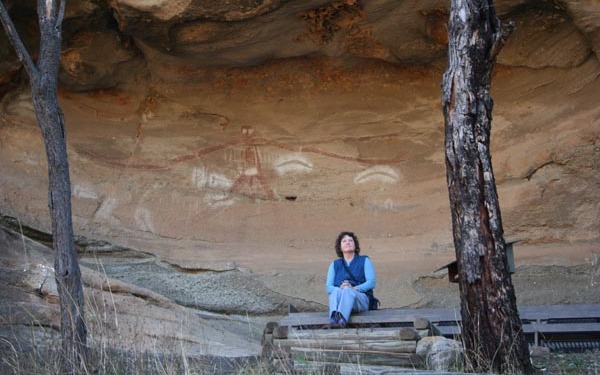 Though churches and houses were built on their sacred sites were intended as acts of dominance and genocide, they ensured that those sacred places survived as sites of worship. Today Wuradjuri people are going back to those places and re-membering their language and culture:
 If you value this content, please engage in reciprocity by
  When energies interact, we get a force, which is a relationship or co-creation. When we think about forces of nature, like a tornado, we can feel awestruck by the immense power of energy the elements of air (wind) and water can co-create. The Force in


 If you value this content, please engage in reciprocity by


 I have heard of many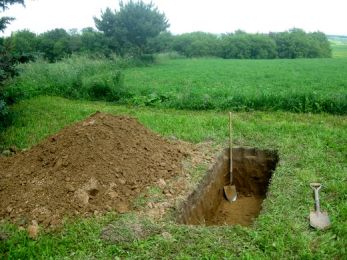
 If you value this content, please engage in reciprocity by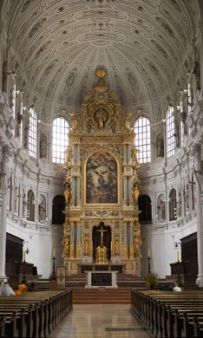
 Buddha, and Krishna, and where people also sit in contemplation and pray for insight and guidance from those figures. I find it helpful to be intentional about these differences in my own life, but maybe blended spaces work for you. Ultimately, we build relationships with figures, ideas, events, places, and energies, and those relationships work best when we both give and receive, and do not always ask or give with the expectation of immediately getting back… (Images: Altar of St Michael’s Church in Munich, Shrine of Remembrance for the War Dead in Melbourne)
 If you value this content, please engage in reciprocity by
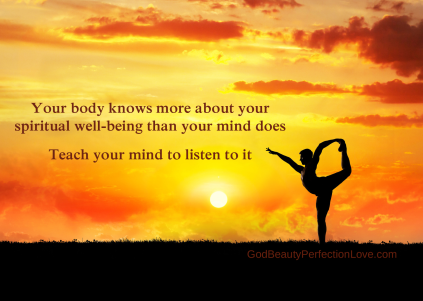
 I have a lot of compassion for the messiness of embodying Earth Ethos in modern multicultural cities. This is my life! And it is hard, messy work. It’s important to give ourselves and each other grace and trust that we all do our best. For a beautiful story from someone of mixed cultural heritage about honouring all of her complex heritage,
  If you value this content, please engage in reciprocity by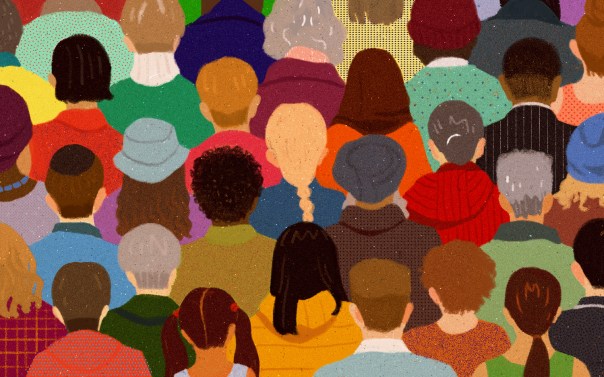

 If you value this content, please engage in reciprocity by


 If you value this content, please engage in reciprocity by
  I have witnessed many people experiencing a shaman’s illness. When people reject or resist it, they usually end up dissociating the destructive energy and becoming very challenging externalising personalities (like narcissists or sociopaths), or internalising the destructive energy and creating diseases such as quickly metastasising cancers. I have witnessed multiple people do both of these things. When people accept the calling of the illness, there are different speeds of doing so, which impacts the way the illness plays out in a person’s life. I have seen some people slowly accept that they are experiencing shaman’s illness over many years and bit by bit change their paths so that over time more aspects of their lives are working. Some (including myself) dive directly into the fire and allow our lives to become incredibly chaotic as our identities are re-forged and often become overwhelmed at the amount of emotion that needs to be processed and the whirlwind pace of life changes that occur. (Image from
  It is helpful, but not necessary, to seek support from someone who has been through similar things. Such people can give you compassion and empathy, guiding wisdom, and tools to process wounds and express energy. But it’s vitally important not to delude yourself that any human is a fully healed Jedi-master, all-knowing figure. If someone says they are, then RUN AWAY FROM THEM, because that person is dangerous and delusional and is on a path of becoming a cult leader or something else you don’t want to be involved with. It is important to think of illness and healing as processes, not finite endpoints. When someone says they have “healed” a wound as intense as sexual abuse or parental abandonment, I am suspicious; and when someone plays power games, disrespects, or in any way puts me down, then I know that person is ill and cannot support my healing anymore. I have no tolerance for these behaviours, even when people are unaware. I either change my boundary and create space or make someone aware of their transgression, and if they then don’t own it and work through it, I’m done with the relationship. (Image below from
 If you value this content, please engage in reciprocity by
  A Druid
 Second, “if you don’t have an ancestor altar,
  If you value this content, please engage in reciprocity by
  Earth Ethos