Roots deeper than whiteness — David Dean: Pithy and succinct history of how “whiteness” erased culturally richer European ethnic identities and allowed for racism and exploitation of non-whites. Very America centric, but captures something essential about the “white” identity that is an important, though non-exhaustive, component of settler trauma.
Empathic dialogue
Topical overviews
Indo-European language family: Lukas is producing a podcast on this, but familiarising yourself with the idea of the Indo-European Language family will give you a sense of the way in which so much of the worldview of the modern Western mind derive from a common ancestors like the Yamnaya peoples of the Eastern European steppes.
Enclosure movement: Critical historical shift in Britain (and by extension, Ireland) in the relationship between people and land, from feudal “rights” (which were of course based in intense hierarchy) to ownership, “rents” and thinking of “output” and productivity above all else.
Books specific to Anglo-Celtic Australian settler trauma
The Fatal Shore — Robert Hughes: Detailed history of the “transportation” system and the abuse experienced by convicts, and life in “Dickensian” England. Note that some of the history as presented in this book is contested, but it nevertheless gets to some deep truths around rejection and dehumanising that still plagues our culture.
The Tall Man – Chloe Hooper: Deep dive into the world of a policeman who worked in outback towns across Queensland before being involved in an Aboriginal death in custody on Palm Island, told as a parallel story alongside the life of the man who was miles. Shows the depth of wounds on both sides and the inability of large colonial institutions like the police to cope.
The Timeless Land – Eleanor Dark: Work of incredible channeling by Eleanor Dark from the 1950s who tries to get into the mindspace of both colonists and Aboriginal people in the early days of the colony at Sydney Cove. Presents the crucial idea in Indigenous Science that how you treat others — for example convict flogging — is a reflection of oneselves because we are all interconnected. The Way of Wyrd – Brian Bates: Rich and thought provoking research informed narrative exploring Anglo-Saxon Paganism. Provides a tantalising insight into another way of being practiced by your relatively recent ancestors.
At Earth Ethos retreats we’ll do our utmost to provide you with nourishing food that aligns with your personal needs. But I thought I’d provide a little more detail to give you a sense of what this means to us practically in terms of values and intention. Food as decolonising and reindigenising
Like everything we do, decolonising and reindigenising is at the heart of our food philosophy. We define it quite simply as: where possible, minimising our reliance on the transactional industrial food system, and where possible, consuming food that has been raised, caught, harvested, gathered, or traded in balance and harmony with nature. Practically, this might mean:
– Growing as much as we can right here on the property including fruit, vegetables, berries and eggs;
– Sourcing meat from animals that are overpopulated and/or feral, like venison, or wild/indigenous, like kangaroo or wallaby; and
– Trading food for other goods and services with local people.
Clean
Clean is another concept that could mean a lot of things to a lot of people, but in our case it means food that is minimally processed, with as few industrial non-food additives (gums, fillers and the like) as possible.
Creative
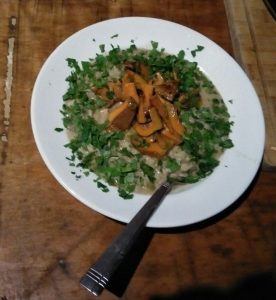
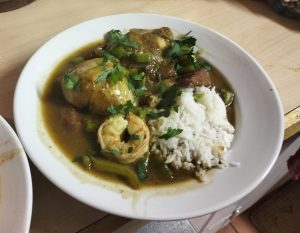
I generally don’t comport to written recipes. I also find it fun to mirror our interconnected and global world (and retreat participants!) by playing with fusion flavours.
On the other hand, being in rural area with often limited access to certain products, being creative can mean being resourceful in cooking culturally authentic food with what’s available.
Hearty
Doing hard spiritual work and ceremony is draining, and our retreats will usually involve a fast of some kind. It is therefore one of our food values to serve meals that I would describe as “hearty”, particularly at night when it’s cold for dinner. Think stews, curries and the like. We need to fill our bellies sometimes to sit back and process things and feel grounded. It is also a way of connecting with ideas of abundance.
A final note on the “middle way” and avoiding neuroticism.
It is a faith and conviction of mine that despite some very clear ethical and practical dilemmas in the world — animal welfare, climate change, biodiversity loss and pollution etc — my best contribution to the world is to show up in my body and heart, and not get lost in grinding “fix-it” thoughts and neuroticism.
In short, this means that if I’m doing the shopping and I get overwhelmed looking for right cut of the most ethical chicken for a reasonable price, I might just grab whatever is there and move on. Whether we like it or not, the collective consciousness or karma is also ours, and putting ourselves into a state of overwhelm and neuroticism won’t change this. In practical terms, I will often default to the “middle way” when the ideal is not available, but as a buddhist lama once said, “the middle way is a 8 lane highway”!
Reach out
Please advise us of any food needs or preferences prior to retreat, and we’ll do everything we can to accomodate you and leave you feeling nourished. =)
Honour all ancestors – of land, lineage and spirit. Live in balance. This is a steady life’s mission.
And even after years of this commitment, I can still feel profoundly torn at times, like I’m being called to discard a deeply engrained aspect of identity. Coming up lately have been some foundational traumatic experiences that caused me to feel unsafe in the world. My father, an reliable ancestral helper, recently apologised for being cowardly in not tackling his trauma, and I was reminded/warned to keep honouring (demi) goddesses like Freyja, Inanna and Changing Woman. (Image of Changing Woman from a Diné sand painting)
I have also recently gotten the message that I have been doing well to ground on the land here and honour Mother Gulaga. And I have also been aware that I need to continue to do more to honour my totemic responsibilities with earthly non human kin, including supporting healthy marsh habitats and birds (my middle name is Schwan, swan in German, after all). I recently joined a local wildlife rescue group, and I’m visioning additional plants for our dams as visiting herons and ducks have been asking me to make the ‘ponds’ more comfortable for them, as well as water storage for us.
Similarly, I feel the need to honour food and medicine plants more. I’ve been working in the garden here, and collecting and drying herbs for teas and smudging. I have found that small acts can make a big difference; that plants and animals have pretty endless compassion and low expectations of us humans, and each intentional act of honouring is noticed.
Strengthening social connections honours our ancestors too. I heard someone recently refer to reading the news as a vice. I don’t see it that way. I see it as a social responsibility to the collective to do my best to hold compassion, give grace and send love each morning when I read ‘the news’. I am also in the process of becoming a citizen of Australia to deepen my social commitment where I am now.
We said goodbye to our dear Chloe last year, and welcomed a couple of cute guinea pigs. We are ready to let another dog into our hearts and home.
Nurturing my self, child, partner, and friends, sharing my medicine with community, and stabilising our survival and well-being continue to underlie all of these activities. I look forward to further home schooling and home steading, and Earth Ethos-ing with Jos and all of you reading this.
May you and we all be healthy and well and live even more fully and authentically in this time we refer to as the year 2026.
Reflection: What life’s mission is steadying your journey?
There’s so much parenting advice, and so little I resonate with, so I thought I’d share my perspective.
Parenting is about building relationships through developmentally appropriate leadership (which is related to a previous post on governance and the YouTube video below on sacred leadership/eldership by Tjana Goreng Goreng, PhD). Kids, whether our own, family, or community, challenge us to confront triggers, fears and insecurities, as well as allow us to more clearly see our strengths, values and capacity to connect.
When babies cry out we give them instant attention and soothing, but that is not always a good idea with older kids, much less adults! Often we set patterns into motion because of our own limitations (read about some of mine here). I knew a mother who considered her adult daughter mentally and emotionally fragile (which I didn’t). She martyred herself to avoid her daughter feeling pain and experiencing certain struggles. But some of that seemed to me (and the daughter’s therapist) necessary growing pain for the daughter’s development. And I felt the mother was projecting her own mental and emotional fragility onto her daughter because she felt unable to hold space in certain ways. They both seemed a bit stifled.
I say that with deep compassion, because we all have limits and struggles. Part of the fulfilment of any spiritual work, and certainly parenting, is bringing our deepest challenges to the surface so we can make peace with ourselves (and our ancestors, younger and older!) to become even better leaders — i.e. more powerful, grounded, centred and humble human beings.
When I look at my child, I see some struggles she’s come here with, some that feel linked to her father and that ancestry, some linked to me and mine, and some connected to her context and the land and ancestors where we live. (Ie ancestors of spirit, lineage, and land). When I am able to shift something that she’s also carrying, I expect her to have a big emotional response because we are connected with very open hearts. My shifting innately moves her heart and affects our shared ancestors, and she has to process it too. All of that emotion is likely to also affect my husband, because we’re all very sensitive. So when I feel something shift, I both feel excited and tend to brace myself to be able weather some emotional storms that my leadership has set into motion.
I’m very aware that being committed to deep spiritual work asks a lot of myself and people who choose to be intimate with me. I don’t feel like I have a choice, though, in the way a singer can’t (or ought not!) stop themselves from busting into song throughout the day. To stifle it is to self destruct and snuff out my life force. Parenting feels the same in that it’s not a choice, it’s an honour and responsibility that defines the structure of my life.
I remember a book that made news years ago about parenting being all joy and no fun. To me, that says the parent is overwhelmed and may not know any other way to lead and set up their life. I’ve seen quite a bit of a so-called ‘gentle parenting’ approach, which feels like a reaction to authoritarian parenting and actually seems to me to stress out the children by giving them too much leadership space and not enough containing and consequences to uphold values and norms.
I appreciate some elements of the ‘sturdy parenting‘ approach and agree that there’s a big difference between punishment and consequences (Image from here).
And I add to that an Indigenous worldview in which there’s a huge difference between deeming behaviours as unacceptable and judging a person as unacceptable.
It seems to me in an effort to limit the destructive impact of the existential judgment and punishment wound in the western worldview, there arose a popular idea that yelling at kids destroys their self esteem. I do not agree. I think expressing anger and showing that it’s an intense emotion that we all experience is part of healthy leadership. And after I express anger, I offer a cuddle. I tell my child that I love her no matter what I’m feeling, and that there’s nothing wrong with her. (And if I was angry with someone else, I make sure to tell her it wasn’t about her and still offer a cuddle if she wants.) She now says to us, ‘Sometimes we get angry’ with the same tone as ‘Sometimes we get sad’ or ‘Sometimes we get wrinkles’ (referring to what happens in the bath). It shows me she feels that it’s okay to experience intense emotions within herself and with others in her environment (Image from here).
Recently I sat down and cried before bed and told her that I felt sad because she had been very hard on me that day. It was the highest defiance and worst day of listening yet. I could tell she felt bad. She came over and hugged me and said, “It’s okay, I love you no matter what, Mommy.” That helped fulfil me both as a parent and helped my inner child feel safer than I had with my mother.
Parenting, like other forms of leadership in Indigenous science, is an exercise in unconditional love and existential acceptance, while embodying core values and cultural norms and creating consequences for breaching them. I hope it resonates with you, and thanks for reading!
“Darkness is the purest form of light” is a teaching I deeply honour from Tiwa Elder Joseph Rael – Beautiful Painted Arrow. He says this because out of darkness all colours and possibilities emerge, whereas white light reflects and pushes all colours away. Darkness is a metaphor of the sacred womb where we all begin our lives in our mother’s bodies. And darkness envelops us each night (if we allow it). Within the womb of darkness is the potentiality for anything to be (re)born.
I heard an interview with Gina Chick recently in which she said that she spends most of her time in uncomfortable spaces. That is also my experience of living in a way where I honour darkness, and it aligns with the explanation of the Red Road discussed in a previous post, where we focus the majority of our energy on honouring ancestors, living our core values, and grounding respectfully where we are. (Image: metaphor of a plant that spends most of its energy building strong roots and connecting with other plants underground, and less energy flowering or fruiting above the ground)
I’ve found that when we are committed to a holistic spiritual path of allowing all feelings and thoughts to flow without existential judgment, when others we are in relationship with do not do this too, seeds of destructive energy grow bigger between us, along with pain, judgment, insecurity, and crazy-making cognitive dissonances. If both are willing to confront the resulting mess, come together to listen to each other and take responsibility for choices, behaviours, and resulting impacts (whether intended or not), then the relationship and trust between them can repair and deepen. Unconditional love means no existential judgment.
If one or both do not do this, then the relationship transforms into one with less trust, safety and intimacy, and it can even fracture beyond repair. And broken trust, as most of us have experienced, tends to be harder to rebuild than it is to grow trust and intimacy in the first place.
In a recent blog I shared that I have witnessed numerous people work for years towards something, then turn their backs at a pivotal moment in abandonment and destruction. Some stories and beliefs seem so deep they trick us into crazy-making cognitive dissonances that become hard to contain. Cognitive dissonance is when we feel split by words and stories not aligning with behaviours and actions. For example, if we believe we are a good friend and that means we don’t feel jealous of friends’ successes, yet we do feel jealous when a friend gets a new job and we feel stuck in job rut, then we might push those feelings aside and pretend they’re not there. (Image: let’s feel it all so the negative feelings ground and we grow from them rather than growing into piles of sh*t in our lives!)
This becomes even more crazy-making when we layer denial on top. If the friend who got the new job is like me, she can feel this jealousy rising and wants to avoid it destroying the relationship. Maybe she practices giving compassion and grace while hoping that her friend processes the hard feelings, and hopefully she processes some of her own hard feelings such as disappointment that her friend couldn’t celebrate her new opportunity with her. If time passes and the hard feelings persist, she might ask her friend to talk so as to clear the air between them. If the jealous friend is too scared, ashamed, unaware or in denial about her hard feelings to be able to take responsibility and process them and instead tells the friend with the new job that she’s crazy, she is happy for her and doesn’t have any jealousy, that becomes crazy-making for both of them.
Crazy-making takes a lot of energy to carry. It spirals us out of our hearts and bodies, creating separation from our truth. We lose integrity and the ability to experience wholeness when we are trying to be two people at once. In the previous example, the jealous friend trying to be ‘a good friend’ isn’t allowing herself to be authentic and a messy human who can both feel happy for her friend and a bit jealous as well. That’s actually making her less of a good friend and growing the seed of jealousy even bigger, creating more destruction in the relationship. To me, the best thing that could happen is that the jealous friend lets go of her judgmental story about identifying and behaving as a ‘good friend’ so as to create an opening for the two of them to have a real and sustainable friendship capable of withstanding pain and hard emotions. (Image)
Exercise: What stories do you tell yourself that limit your openness to darkness? You may wish to close your eyes and meditate on the question: ‘What do I believe about the nature of darkness?‘
If you would like to listen to an interview with Valerie about the inspiration behind the Healing through Indigenous Wisdom book, here is the link. =)
There’s also a short article about both Lukas & Valerie on p. 26 of our local paper The Triangle, with three corrections: Lukas was born in Sydney, Valerie was born in Ohio, and William Ringland is buried in Bermagui.
This blog is for those of us who receive visionary insight through the gift of clairvoyance. Like all spiritual gifts, it can be tricky to work with. We need to discern what are visions and insights, and what is our imagination. We need to learn which visions are due to intergenerational trauma and ancestral wounds needing to be witnessed, and which are warnings of potential future events. It can take time to make peace with and accept some visions when it feels like there is little that we as individuals can do to change the outcomes.
It seems more common for us to have negative experiences when we reconnect with spiritual gifts as adults, which gives us abundant opportunities to practice acceptance, compassion and discernment. We learn a lot from unpacking negative experiences. But that may give us little comfort when we’re trying to process painful visions of natural disasters, traumatic deaths, and abuses. Some of us seem to be called to witness in our mind’s eyes (and some of us also in full embodied lived experiences), some aspects of nature and the earthly reality that are incredibly harsh. Lukas likes reminding me about the nature of lions, that the males try to kill all the cubs of the previous male who was the head of the pride so that the children are all his. If a human did that, we would be appalled, but with lions we accept it as their nature. Aspects of nature are brutal. (Image from JenaRose)
The concept of “All My/Our Relations“, a term commonly used in indigenous cultures in the Americas, is a way to describe an indigenous science concept of interconnectedness where we see ourselves in all aspects of nature. That means that we don’t other ourselves from lion behaviour even if we find it appalling, we hold it in our hearts and minds as part of nature that we do not wish to emulate but which we allow to exist (meaning we let go of any existential judgement and practicing acceptance). (Image from here)
I have found with visionary gifts in particular, we often feel forced to face our deepest fears, witness family secrets, and see society’s shadows with clarity. This isn’t easy. Even if we gain valuable knowledge, others won’t necessarily listen to us or value our insights. This may result in our having to witness and be negatively impacted by others’ poor choices. I used to overly share visions and insights out of hope (or desperation) that someone would listen. But that wasn’t respectful of myself and the gifts I was given. It helps to remember that visions are just that – visions. They may or may not come into being. It’s important to carry a bit of doubt and humility about them, even if we find much of what comes to us does happen. There may be metaphorical meaning in visions too. In visions involving others that we feel moved to share, we need to create space for others to interpret the visions themselves.
In cities, since I started having visions of plants intertwined with buildings (reminding me of a modern co-habitation version of some of the Angkor temples I visited many years ago), I have felt more peace when moving through urban spaces. It is up to you how to honour your visionary gifts. Your expressions may evolve over time from doing personal life and altar work, to sharing them with a few people close to you, to using them to inform your art, direction of work in society, and your everyday life choices. I hope you allow yourself to be creative and give yourself grace to try things and see how they work. And please keep in mind that if you pray for something you envisioned and it doesn’t turn out the way you wanted, your prayers do matter; the people and non-human kin involved in the event can feel your energy and impact on some level, however humble.
Earlier in my ancestral healing journey when I set boundaries, I would tell ancestors who couldn’t support me and my core values to go. I had heard a few people advise to only work with healed ancestors, though I’m still not quite sure what that means. All our human ancestors are somewhat healed and somewhat wounded. Sure, some are wiser and more healed than others, just like people living now. And even ancestors we may refer to as ‘enlightened masters’ have blind spots and things to learn. No one’s infallible.
It felt important for a while to build my strength and skills to take space and even reject some behaviours and values, to avoid certain conflicts. But I find that what we reject tends to comes back to us seeking deeper acceptance. And since I don’t believe in existential judgement, I needed to learn to coexist with all my ancestors. If there’s a crocodile in our environment, we need to learn to live with it, how to protect ourselves and avoid it as best we can. Because that’s where we are living now, and that being has just as much value here as we do, whatever feelings we have about them. (Image from here)
Aboriginal people, through thousands of years of living with crocodiles never have considered that they are dangerous animals. We have always lived with them. They lived their own life and we lived our own ways, as long as there is common respect for each other.
–Gularrwuy Yunupil’u in Living with crocodiles (ABC documentary)
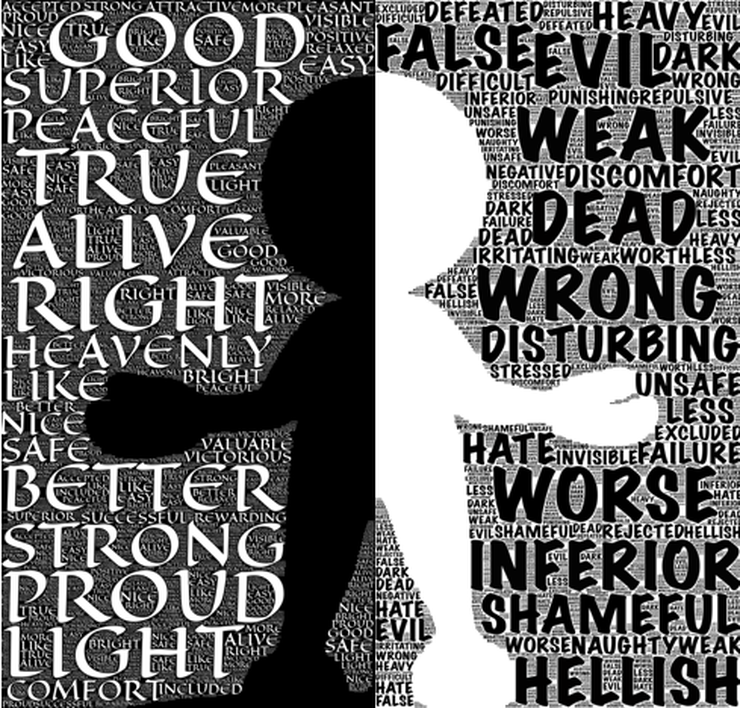
How do we respectfully, even vigorously disagree when we feel that others are acting in ways that are disrespectful and undignified? From arrogant ‘I know better’s to moral judgements, to shameful denials to self serving greed or even something as deplorable as genocide, so many of our behaviours are rooted in existential judgement. Such judgements take us out of the web of life and create existential hierarchies. Wetiko creeps in, and we start to believe stories of supremacy. If we want to embody connection, then we have to make space for really tough stuff like experiences of existential judgment from others and the painful impact of destructive behaviour.
I have written before about estrangement from my family of origin. I still have dreams about many of them and experience connection. Sometimes I feel like we have worked through things in dream states, and other times I feel like the same dynamics that I walked away from are still present.
For a few years I took space from some members of Lukas’s family due to unacknowledged behaviours that had destructive impacts on both me as an individual and us as a couple. We started slowly reconnecting after our little one was born because Lukas wanted her to get to know them, and I respected that. I don’t feel that different than I did before, but I feel like we are better equipped to maintain boundaries and protect ourselves than we used to be.
Interestingly more of Lukas’s ancestors who have rejected me have been coming to me in dream states and telling me how they feel and why they’ve been so hard on us, that I’m not Christian and pull him away from Christianity, I’m not focused solely on his career and have one of my own, I took too long to have a child and am only having one, I ask too much of him around the house–all sorts of criticisms. In another culture (like my Jewish-Sumerian lineage), someone would have yelled at me about all that, but the Anglo Celtic culture struggles to speak directly, and often struggles to speak their truth. I now have more stories for what I’ve been feeling and behaviours that still play out, whether it impacts me directly or helps me witness patterns and struggles in the family with more clarity and compassion. I don’t yet feel like I’ve been welcomed into the family or have social belonging. I feel overall like I’ve been begrudgingly accepted, especially since I’ve had ‘their’ child, so that I’ll always be in the family tree now and there’s no point trying to break our marriage now.
For a while I resisted working with Lukas’s ancestors. I felt like that was his responsibility, and I was pretty full working with my own. As work with mine calmed down and we decided to get pregnant, I figured if some of Lukas’s ancestors would rather work with me that I had capacity. I want to support healing and prevent my child from inheriting intergenerational trauma as best I can. It’s been interesting if pretty unpleasant for the most part. But making space for such experiences feels important in the inner and outer world right now. Grace and compassion are so valuable. There’s a lot of conflict in the world. I think it will be a lot easier to work through it when we collectively accept as a baseline that all of us on the planet, human and nonhuman, are inherently worthy of dignity and respect.
Existential judgment may be the most destructive behaviour we humans engage in. And when we do, we add to our sense of shame. I have been noticing lately how efforts to avoid feeling such shame seem to be linked to an increase ghosting behaviours. So much to make space for and pray for healing about. We can be very spiritually enriched at the moment if we can avoid overwhelm! (Image from here)
 The Timeless Land – Eleanor Dark: Work of incredible channeling by Eleanor Dark from the 1950s who tries to get into the mindspace of both colonists and Aboriginal people in the early days of the colony at Sydney Cove. Presents the crucial idea in Indigenous Science that how you treat others — for example convict flogging — is a reflection of oneselves because we are all interconnected.
 If you value this content, please engage in reciprocity by living, sharing and giving.


 If you value this content, please engage in reciprocity by




 The concept of “
 In cities, since I started having visions of plants intertwined with buildings (reminding me of a modern co-habitation version of some of the Angkor temples I visited many years ago), I have felt more peace when moving through urban spaces. It is up to you how to honour your visionary gifts. Your expressions may evolve over time from doing personal life and


 Earth Ethos