Blog by Valerie
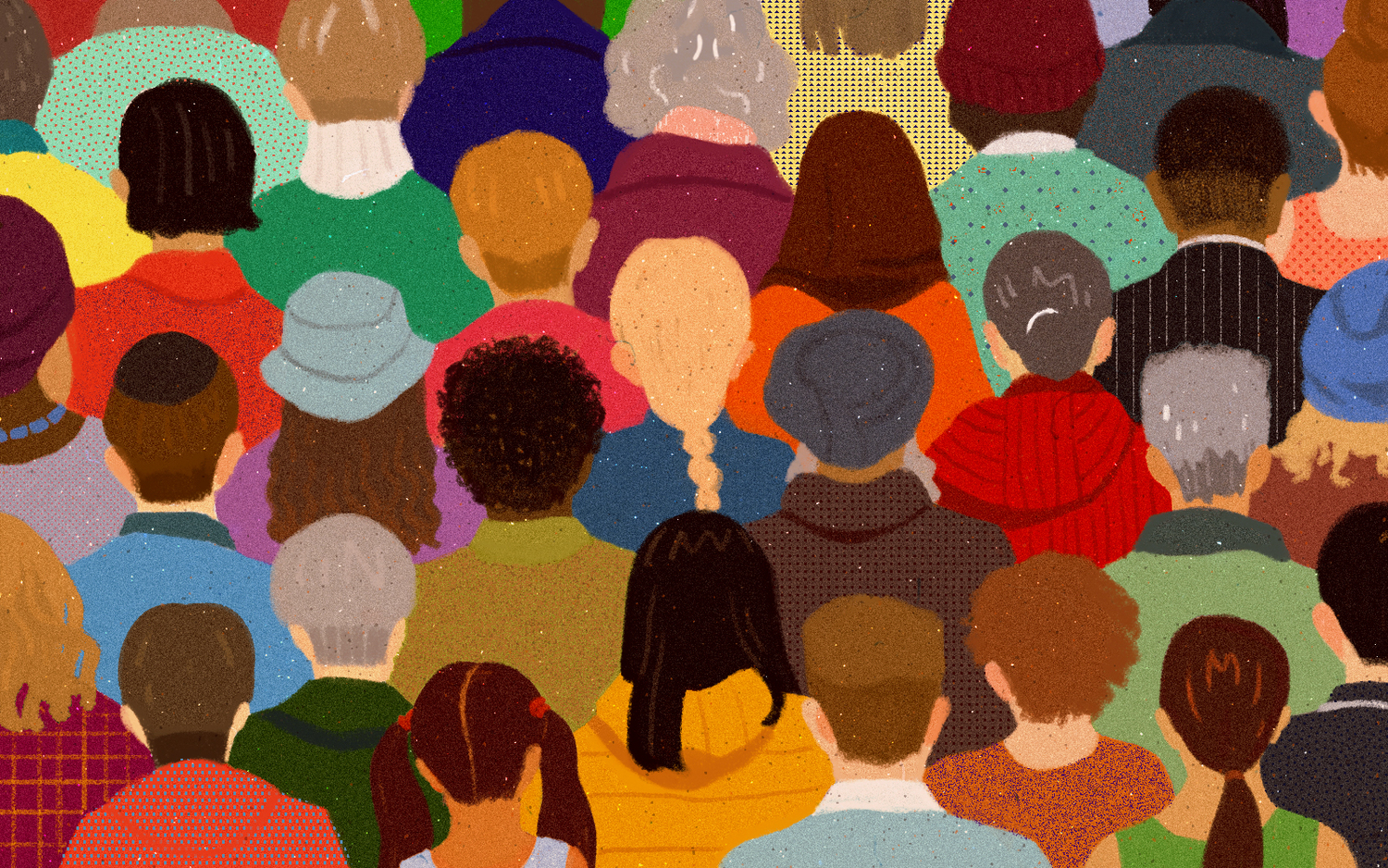
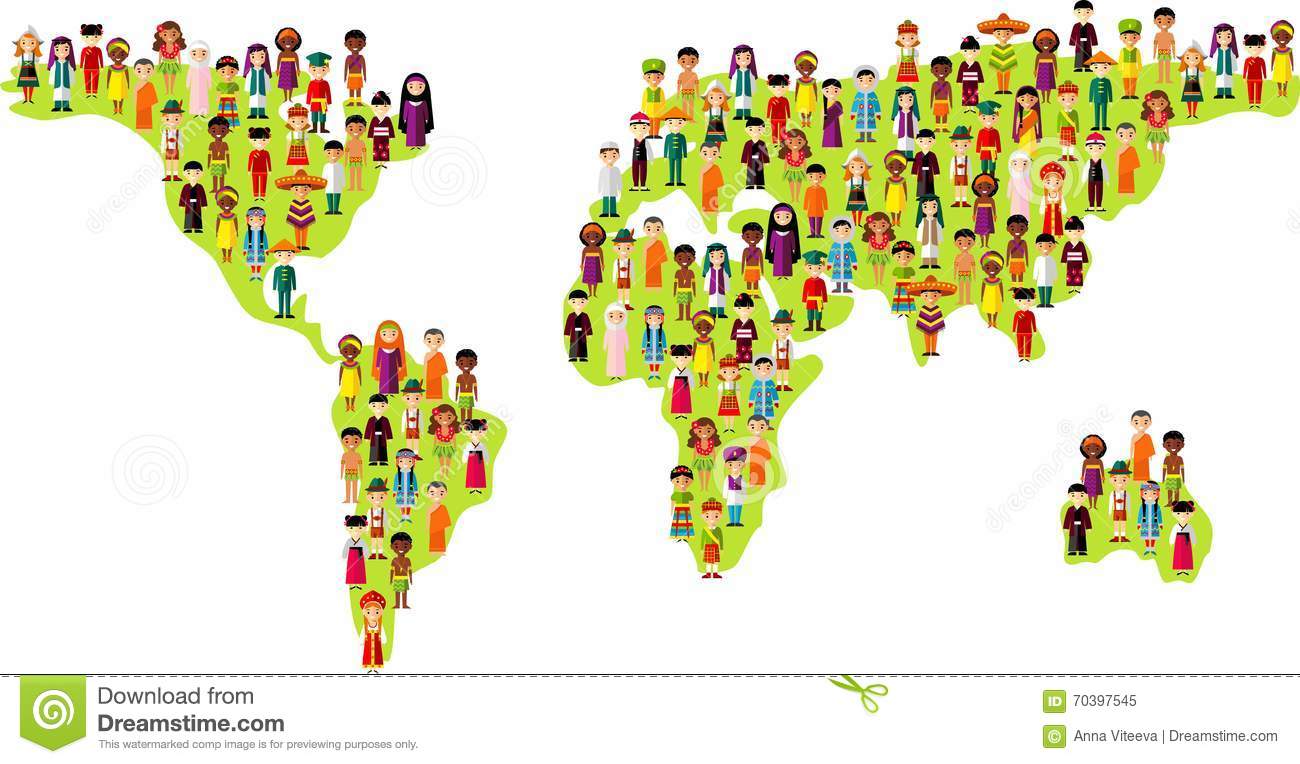
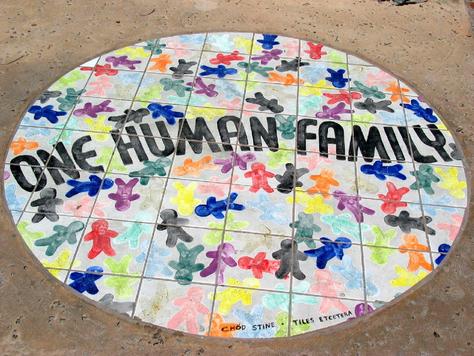
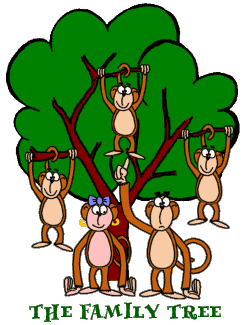
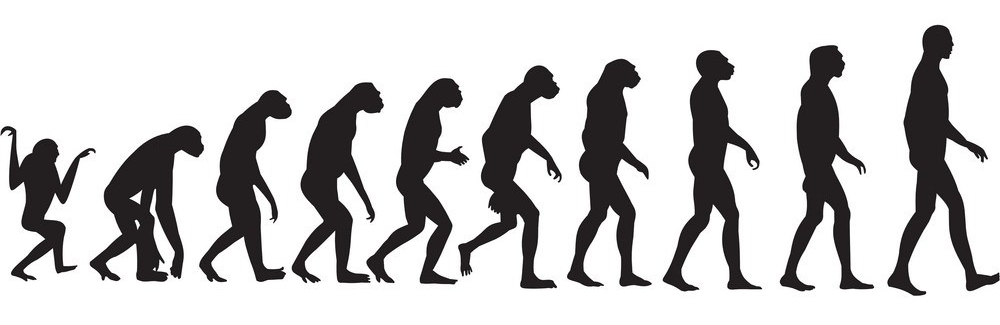
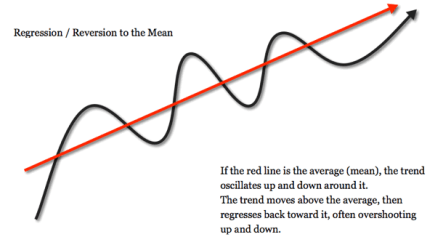 In social environments, it seems to feel proportionally less safe to be oneself the farther we identify from collective norms and ideals. There is a concept in mathematics called ‘regression to the mean’. It is basically the idea that when you put some ice into a glass of water, the ice will tend to melt and take the form of the water; in essence, it is about assimilating into a collective norm. Yet assimilation is a dirty word for many people, because we want to celebrate our uniqueness as well as being part of a peoples. (Image from here)
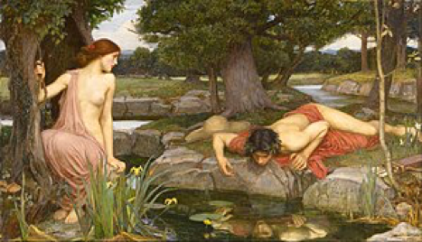
 Feeling safe to celebrate our difference depends on culture and context. These social wounds keep us trapped and unable to trust ourselves, each other, non-humans, and Spirit/God/oneness. Our capacities to heal and seek retribution are also based on cultural values and intergenerational traumas. Cultures that are more welcoming of outsiders seem to encourage healing and embracing collective wounds for transformation, whereas cultures that are more exclusionary seem to ‘other’ people and tend towards separation and seeking retribution. Fear of retribution can keep us trapped and unable to trust. It is as if there is a collective trauma belief that says, ‘if we let them in, they will hurt us.’ In my experience with Judaism, and what I am learning are my deeper Sumerian cultural roots, there seems to be a collective belief that ‘we can’t trust anybody.’ My own grandmother told me that as a child, and I asked her incredulously if I couldn’t even trust her. She didn’t answer, just stared at me in silence. Living in this social environment, I never felt safe. In fact, I felt terrified to even take up space. One wrong move could find me terribly punished, kicked out of the group, or worse, judged irredeemable by God. Despite constantly striving to be ‘a good person’, it never felt like what I did was good enough. I got used to feeling terrified that threats of judgment, punishment and retribution were always imminent. I worked hard to learn the rules I might break and the triggers I might set off that would result in my being punished. But I wasn’t in control. My brother had a habit of breaking rules and refusing to admit it, so we would both be punished. This was scary, too, because I didn’t know when the punishment would happen, or how intense it would. It felt safer at times to intensely control and punish myself so that I maintained a sense of autonomy. It also seemed safest to play the part of Narcissus’s lover Echo, to hide my own voice rather than put myself into danger, because I depended on dangerous people and their approval for my survival. It wasn’t safe to be different, much less to celebrate it. (Image: Echo & Narcissus by painter John William Waterhouse)
 For most of my life I felt terrified to take up space. I felt like no space was ‘mine’ existentially or practically. For example, growing up, I wasn’t allowed to lock my bedroom door. I used to get dressed in my walk-in closet so I had some privacy and warning if my mother was coming into my bedroom. It took many years into adulthood – and practically ending many formational familial relationships that were untrustworthy just as my grandmother had told me – for me to become trustworthy to myself, be authentic and celebrate my difference, and surround myself with trustworthy and authentic people. By trustworthy, I mean people who say what they mean and do what they say, and when they can’t follow through on something, own it, apologise, forgive themselves, and make amends if needed. By authentic, I mean people who know their core values and practice embodying them in everyday life.
 It is still unsafe for me in many spaces where my values conflict with the collective. But I don’t feel a need to constantly strive towards some central ideal, nor do I feel like it’s me against the world at war. I feel peace in myself for accepting who I am and doing my best to navigate the collective morass, and for cultivating spaces where I, and others, are free to be. In this way, I can embody the knowing that we are enough. (Or ‘good enough’, whatever that means.) (Image from here)
If you value this content, please engage in reciprocity by living, sharing and giving.

 If you value this content, please engage in reciprocity by
 Because of an interest in justice and meditation, I was pushed into law school, though the Western legal system is not my idea of justice at all. Determined to be of service, I spent years doing pro bono and low-paid work around the world with a focus on child advocacy, community building, and conflict resolution. In India I drafted a law to criminalise child sexual abuse that passed in 2012; in South Africa I led a small non-profit focused on community building and did conflict resolution with a rural Zulu communities; in Australia I worked with survivors of clergy sexual abuse, which ultimately led to a Royal Commission and systemic reform; and in Peru I worked with an inner-city restorative justice program. During this period of my life though I had already been through a lot of healing, I was still in spiritual crisis and had multiple near death experiences. Something in my life needed to dramatically shift as I was numb to dangerous situations.
 I met my life partner Lukas in Australia in 2011. Our journey to be together has been hard work, which has helped us both to realise our worth. We travelled South America to be together when my Australian visa ended, and I finally felt safe and distant enough from my family of origin for repressed memories of childhood sexual abuse to emerge. It was like a cork full of chaotic energy popped open and challenged my mind’s ‘knowns’. My life started to make more sense as dissociated and lost soul parts emerged in an intensely painful and dramatic awakening process. As I healed, every family of origin relationship and many others with close friends and trusted mentors faded away. The period of most profound grief and loss I weathered was when my father, nanny, and best friend all died within seven months, my husband moved across the country for work, and the professor I moved across the world to do my Ph.D. with behaved abusively and unethically, causing me to change the direction of my work from restorative justice and conflict resolution to Indigenous trauma healing and to founding Earth Ethos.
 If you value this content, please engage in reciprocity by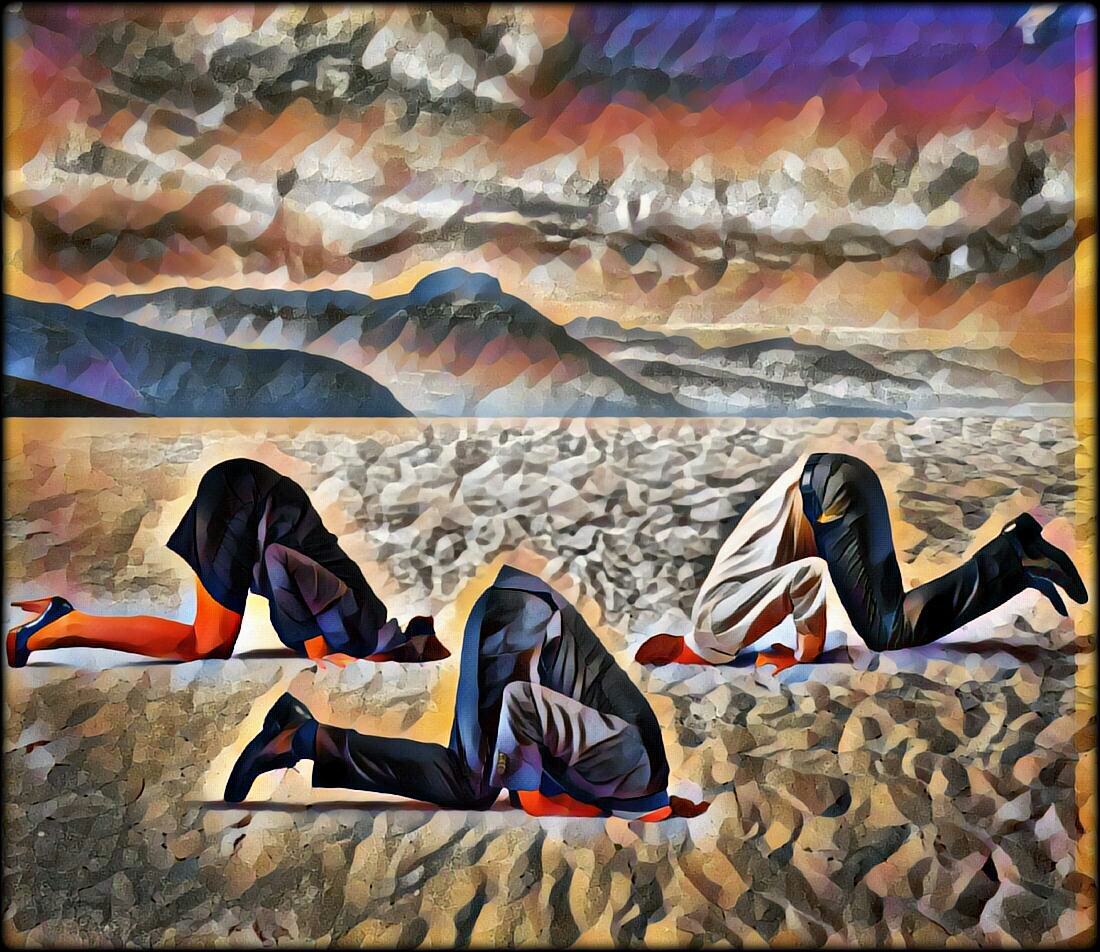
 Denying oppressive cultural stories frees not only you, but your ancestors, the lands, and indigenous people and their ancestors connected to the land where you live. A few hours outside of Sydney, Australia in
 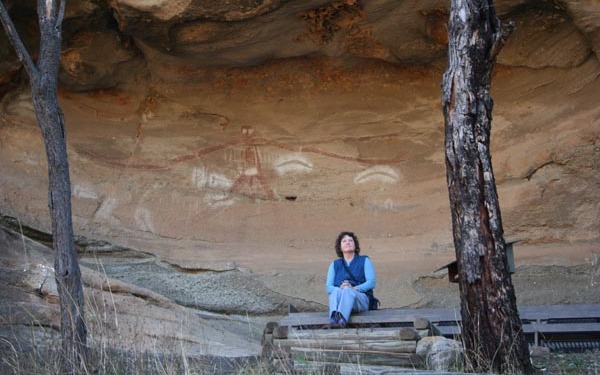 Though churches and houses were built on their sacred sites were intended as acts of dominance and genocide, they ensured that those sacred places survived as sites of worship. Today Wuradjuri people are going back to those places and re-membering their language and culture:
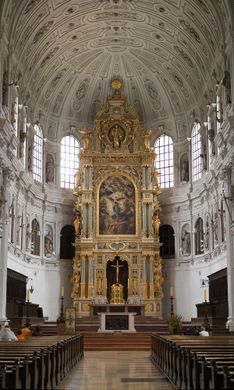
 Buddha, and Krishna, and where people also sit in contemplation and pray for insight and guidance from those figures. I find it helpful to be intentional about these differences in my own life, but maybe blended spaces work for you. Ultimately, we build relationships with figures, ideas, events, places, and energies, and those relationships work best when we both give and receive, and do not always ask or give with the expectation of immediately getting back… (Images: Altar of St Michael’s Church in Munich, Shrine of Remembrance for the War Dead in Melbourne)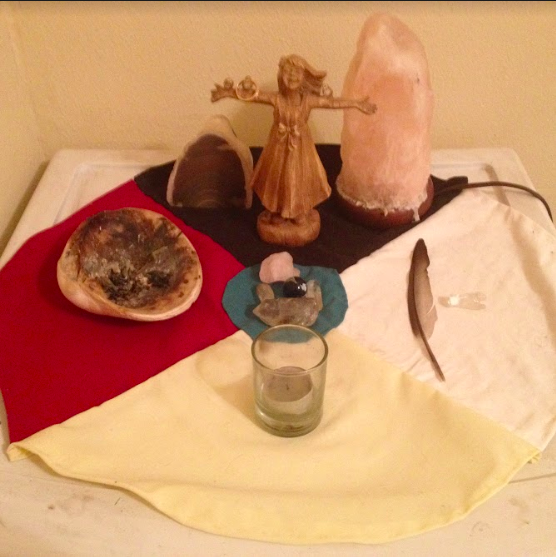

 A Druid
 Second, “if you don’t have an ancestor altar,
 (Image from
  Earth Ethos
