Blog by Lukas
One of the hardest things about being an Anglo-Celtic Australian is not having a culture that gives deep meaning, context, and guidance to the struggles of my life. The stories of Anglo-Celtic Australian resilience I was fed as child just don’t do the job.
I acknowledge the grit, courage and determination of the first settlers and the diggers, but it all seems built on a foundation of lies, denial and disassociation, the best examples being Terra Nullius, the dehumanising British class system, the occupation of Ireland, and the power hoarding structure of the Church.
Subjugation and shame lie at the heart of so much of what makes us who we are as a collective consciousness. We cling to things like our egalitarianism, but elect a Prime Minister who openly espouses ideas like “a fair go for those that have a go”. It’s bullshit. (Image from here.)

Don’t get me wrong. I’m fond of Australia, and Australians. More than fond. For all our peccadillos, I love us. And by us I’m speaking most about me, the Anglo-Celtic Australian. My tribe, my people. My connection to a nebulous post-white Australian multicultural identity feels so often forced, and hidden behind euphemism and untruths. It has to be, because what came before it has not healed enough to make space for anything real to replace it. It’s pure aspiration, often based merely on the fleeting winds of social convention and social shaming.
I don’t want any of this to sound like I endorse being ashamed of who we are. For me this can only lead back around to denial and anger. But of course this shame is there whether we like it or not. It’s something we must heal. Perhaps it’s THE place to start our work; unconditional love and grace for all that went before, warts and all.
What is the alternative? ANZACS, the grizzled farmer, a game of beach cricket next to the barbie, or even our supposed egalitarian cosmopolitan multiculturalism? To me, they just don’t cut it. Smoking ceremonies and welcome to country? Window dressing. There’s just so much flagrant bullshit at the heart of it all. We need more truth.
Here’s a truth. I’m envious of people who identify as indigenous. I envy the power of their stories, their connection to this land, and their feeling of belonging to something real and carnal. My material and societal privilege feel like a big bag of shame that I am supposed to pretend isn’t there. I envy those who can talk about their burden openly with dignity and without ridicule.
If I’m honest, when I look around at most Australians, and within myself (I am in this as much as anyone), I see scared, subjugated and exploited children, without a solid cultural foundation, without real connection to the land. I see bullies, and the bullied. I don’t see a deep sense of purpose and meaning. I don’t see unfettered spirit in flow. I’m sorry if his hurts to read. It hurts to say.
Wrapped up in all of this for me personally is an overwhelmed, listless, elderless masculinity, and an absent relationship with unconditional feminine love as embodied by a relationship to the earth. The feminine in us all of us seemingly seeks so much to be just more masculine.
I wish I knew more about my own ancestors, and their personal stories and struggles, where they came from, and what that really meant for who they were. Why is everything that they are largely forgotten, and mostly not talked about in my family? Why is the richness of their cultural heritage and diversity reduced to “whiteness”? How can I possibly heal from wounds my kin have picked up on their journey, like their pain of leaving tribal indigenous land, if I don’t know anything about them?
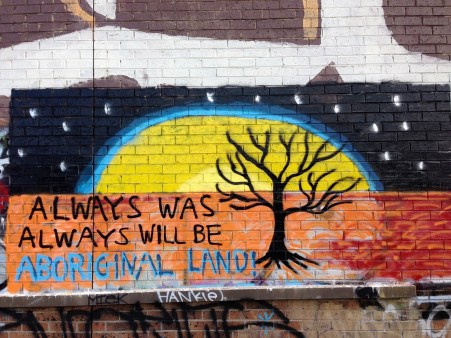
It seems to me that one of the greatest injustices in the modern world is the labelling of only some people as “indigenous”. Different people are indigenous to different places, but we are all from somewhere, originally. And building from that, everyone needs the opportunity to becomes indigenous to the place that nourishes and shelters them, physically and spiritually. (Image from here.)
![INDIGENOUS AUSTRALIA[2]](https://earthethos.net/wp-content/uploads/2019/07/indigenous-australia2.jpg?w=604)
But we’re here now. We have to be indigenous HERE if we’re going to thrive on any kind of deep level. Fortunately, from what I have seen, the original indigenous Australians have nothing but grace and generosity for us Anglo-Celtic Aussies if we’d but commit to truth, and real healing. And that MUST start inside.
I don’t know why I ought to be, and I know reasons why I ought not to be, but I am an Anglo-Celtic Aussie, and I am choosing to be proud of that. I commit to truth and healing. I commit to grounding myself here on this land. I commit to creating for my future ancestors a rich healthy culture that I never had.
Walking the talk of a commitment to creating a healthy culture, Lukas had an opinion piece published today on gambling addiction.
 If you value this content, please engage in reciprocity by living, sharing and giving.
 When energies interact, we get a force, which is a relationship or co-creation. When we think about forces of nature, like a tornado, we can feel awestruck by the immense power of energy the elements of air (wind) and water can co-create. The Force in


 If you value this content, please engage in reciprocity by


 I have heard of many
 If you value this content, please engage in reciprocity by
 I have a lot of compassion for the messiness of embodying Earth Ethos in modern multicultural cities. This is my life! And it is hard, messy work. It’s important to give ourselves and each other grace and trust that we all do our best. For a beautiful story from someone of mixed cultural heritage about honouring all of her complex heritage,
  If you value this content, please engage in reciprocity by




 I have witnessed many people experiencing a shaman’s illness. When people reject or resist it, they usually end up dissociating the destructive energy and becoming very challenging externalising personalities (like narcissists or sociopaths), or internalising the destructive energy and creating diseases such as quickly metastasising cancers. I have witnessed multiple people do both of these things. When people accept the calling of the illness, there are different speeds of doing so, which impacts the way the illness plays out in a person’s life. I have seen some people slowly accept that they are experiencing shaman’s illness over many years and bit by bit change their paths so that over time more aspects of their lives are working. Some (including myself) dive directly into the fire and allow our lives to become incredibly chaotic as our identities are re-forged and often become overwhelmed at the amount of emotion that needs to be processed and the whirlwind pace of life changes that occur. (Image from
  It is helpful, but not necessary, to seek support from someone who has been through similar things. Such people can give you compassion and empathy, guiding wisdom, and tools to process wounds and express energy. But it’s vitally important not to delude yourself that any human is a fully healed Jedi-master, all-knowing figure. If someone says they are, then RUN AWAY FROM THEM, because that person is dangerous and delusional and is on a path of becoming a cult leader or something else you don’t want to be involved with. It is important to think of illness and healing as processes, not finite endpoints. When someone says they have “healed” a wound as intense as sexual abuse or parental abandonment, I am suspicious; and when someone plays power games, disrespects, or in any way puts me down, then I know that person is ill and cannot support my healing anymore. I have no tolerance for these behaviours, even when people are unaware. I either change my boundary and create space or make someone aware of their transgression, and if they then don’t own it and work through it, I’m done with the relationship. (Image below from
 If you value this content, please engage in reciprocity by
  A Druid
 Second, “if you don’t have an ancestor altar,
  If you value this content, please engage in reciprocity by
  Blog by Valerie
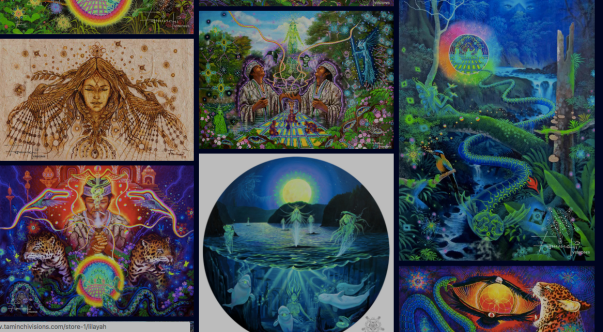 The depth of relationships, and the experiences, feel quite different to participants. Similarly, instead of peace circles as a tool to help control behaviour or improve the way people speak and listen to each other as is common in westernised restorative justice practices based on a Judeo-Christian worldview, an Earth Ethos peace circle is an opportunity for a communal spiritual experience based on an indigenous cultural cosmology. Because of the intentional use of metaphor, it ought to feel different to participants (and certainly does to me) than simply sitting in a circle (or around a table where we are blocked from connecting with each other physically) and passing around a talking piece. Many indigenous peoples use oral traditions to preserve cultural wisdom. Verbal repetition and physical embodiment of teachings keeps them pure (
 Healing of, and prevention of, dis-ease requires ceremony. Ceremony is an important human practice connecting the visible material/physical world with the invisible, spiritual world. Life feels empty and unsatisfying when we do not do enough ceremony, and ceremonies are most powerful done regularly and intentionally in community (
 If you value this content, please engage in reciprocity by

 I encourage you to connect with your own cosmology and question rejecting/violent statements/thoughts like “He should have known better”, or “It serves her right.” Such words indicate an internalised denial/judgment and fuel shameful, painful feelings inside you, the person you are speaking/thinking about, and our collective culture. Even when we believe/think something is wrong, we can still hold that aspect of our cosmology with compassion and respect. These words are pointers to places of yourself that could be further explored, unpacked, and transformed. Dangers and fears come in many forms, including physical, emotional, psychological, and spiritual. Watching an interview with someone who has killed another person, for example, may trigger emotion you are carrying and show aspects of your cosmology that could be shifted from judgment or denial/lack into compassion and empathy, and gratitude that you did not need to learn such a lesson the hard way. (Free photo by
  If you value this content, please engage in reciprocity by
  Earth Ethos