Tag Archives: philosophy

Parenting with Indigenous Science

Blog by Valerie
 
There’s so much parenting advice, and so little I resonate with, so I thought I’d share my perspective.
 
Parenting is about building relationships through developmentally appropriate leadership (which is related to a previous post on governance and the YouTube video below on sacred leadership/eldership by Tjana Goreng Goreng, PhD). Kids, whether our own, family, or community, challenge us to confront triggers, fears and insecurities, as well as allow us to more clearly see our strengths, values and capacity to connect. 


When babies cry out we give them instant attention and soothing, but that is not always a good idea with older kids, much less adults! Often we set patterns into motion because of our own limitations (read about some of mine here). I knew a mother who considered her adult daughter mentally and emotionally fragile (which I didn’t). She martyred herself to avoid her daughter feeling pain and experiencing certain struggles. But some of that seemed to me (and the daughter’s therapist) necessary growing pain for the daughter’s development. And I felt the mother was projecting her own mental and emotional fragility onto her daughter because she felt unable to hold space in certain ways. They both seemed a bit stifled. 
 
I say that with deep compassion, because we all have limits and struggles. Part of the fulfilment of any spiritual work, and certainly parenting, is bringing our deepest challenges to the surface so we can make peace with ourselves (and our ancestors, younger and older!) to become even better leaders — i.e. more powerful, grounded, centred and humble human beings.
 
When I look at my child, I see some struggles she’s come here with, some that feel linked to her father and that ancestry, some linked to me and mine, and some connected to her context and the land and ancestors where we live. (Ie ancestors of spirit, lineage, and land). When I am able to shift something that she’s also carrying, I expect her to have a big emotional response because we are connected with very open hearts. My shifting innately moves her heart and affects our shared ancestors, and she has to process it too. All of that emotion is likely to also affect my husband, because we’re all very sensitive. So when I feel something shift, I both feel excited and tend to brace myself to be able weather some emotional storms that my leadership has set into motion. 
 
I’m very aware that being committed to deep spiritual work asks a lot of myself and people who choose to be intimate with me. I don’t feel like I have a choice, though, in the way a singer can’t (or ought not!) stop themselves from busting into song throughout the day. To stifle it is to self destruct and snuff out my life force. Parenting feels the same in that it’s not a choice, it’s an honour and responsibility that defines the structure of my life.
 
I remember a book that made news years ago about parenting being all joy and no fun. To me, that says the parent is overwhelmed and may not know any other way to lead and set up their life. I’ve seen quite a bit of a so-called ‘gentle parenting’ approach, which feels like a reaction to authoritarian parenting and actually seems to me to stress out the children by giving them too much leadership space and not enough containing and consequences to uphold values and norms.
 
I appreciate some elements of the ‘sturdy parenting‘ approach and agree that there’s a big difference between punishment and consequences (Image from here).
 
And I add to that an Indigenous worldview in which there’s a huge difference between deeming behaviours as unacceptable and judging a person as unacceptable.
 
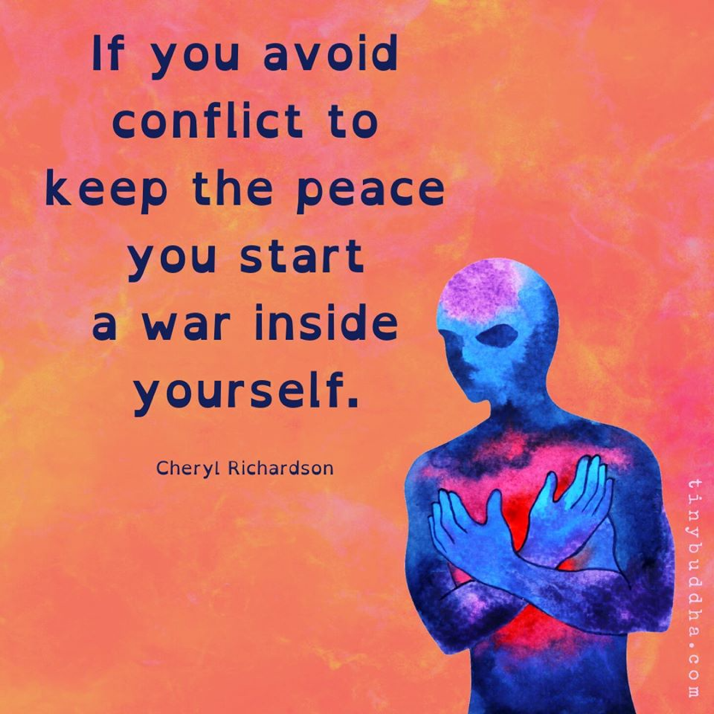
It seems to me in an effort to limit the destructive impact of the existential judgment and punishment wound in the western worldview, there arose a popular idea that yelling at kids destroys their self esteem. I do not agree. I think expressing anger and showing that it’s an intense emotion that we all experience is part of healthy leadership. And after I express anger, I offer a cuddle. I tell my child that I love her no matter what I’m feeling, and that there’s nothing wrong with her. (And if I was angry with someone else, I make sure to tell her it wasn’t about her and still offer a cuddle if she wants.) She now says to us, ‘Sometimes we get angry’ with the same tone as ‘Sometimes we get sad’ or ‘Sometimes we get wrinkles’ (referring to what happens in the bath). It shows me she feels that it’s okay to experience intense emotions within herself and with others in her environment (Image from here).
 
Recently I sat down and cried before bed and told her that I felt sad because she had been very hard on me that day. It was the highest defiance and worst day of listening yet. I could tell she felt bad. She came over and hugged me and said, “It’s okay, I love you no matter what, Mommy.”  That helped fulfil me both as a parent and helped my inner child feel safer than I had with my mother.
 
Parenting, like other forms of leadership in Indigenous science, is an exercise in unconditional love and existential acceptance, while embodying core values and cultural norms and creating consequences for breaching them. I hope it resonates with you, and thanks for reading!
 
giveheartIf you value this content, please engage in reciprocity by living, sharing and giving.

Futuresteading podcast

If you would like to listen to an interview with Valerie about the inspiration behind the Healing through Indigenous Wisdom book, here is the link. =)

There’s also a short article about both Lukas & Valerie on p. 26 of our local paper The Triangle, with three corrections: Lukas was born in Sydney, Valerie was born in Ohio, and William Ringland is buried in Bermagui. 

giveheart If you value this content, please engage in reciprocity by living, sharing and giving.
Honouring lack

Blog by Valerie
It is autumn here, and at the recent equinox we did a ceremony of thanksgiving. I like to read the Thanksgiving Address of the Haudenosaunee peoples. I find it really beautiful. We also asked for a few things, which later felt wrong to me, like it was the season of giving thanks for what we had, not to plant seeds and ask that they grow; so we did another ceremony expressing gratitude for what is working for us related to the area of life where we asked for change. That felt more balanced.
Lack of Support and Destruction of Health and Life - Symbolized by Word ...As much as I have and am truly grateful for, this experience highlighted how much lack is in my life at the moment. I started to reflect on that. I realised that I have had a belief that ‘I always have what I need’, and so if something isn’t present in my life, then I must not need it. But that belief doesn’t feel like it is honouring my life. It feels like trying to reject or mentally trick myself out of being in lack. In new age-y and positive psychology thinking, ‘light’-ness is privileged, and we are pushed to look at the bright side. There is value to that, but not, in my opinion, if it feels forced or rejects our lived experiences. Sometimes life feels heavy and dark, and it’s important to make space for that. (Image from here)
Dams and water supply schemes suffer due to lack of rain | Utility MagazineOn the planet right now, so many plants, human and non-human animals are lacking safety, security, healthy food, clean water, shelter, etc. Why would I be any different? I would expect there to be some lack in my life given our collective environment. Lack teaches me to appreciate what I have, and to cherish what comes into my life when lacks are transformed. (Image from here)
There are some areas of my life where I feel so deeply in lack that I feel pain and impatience even as I experience them healing. It is as if I’m coming from so far behind what I need that I can’t yet relax and feel at ease that it’ll keep going in a healthy direction. I need to keep it on my radar to pray about and act to improve within my power.
lack-of-motivation | Born RealistAs I am still breast-feeding and being a full time carer, Lukas has been looking for employment for a few months. That struggle has brought stress, fear, and lack for both of us, along with moments of finding deeper faith and trust, as well as gratitude and joy for extra family time. Another example: the more I parent my toddler, the mirror of my own childhood continually brings up grief and lack for me to be with, along with the joy and relief of breaking patterns as best I can by giving my child what I didn’t receive. (Image from here)
The love of money. stock image. Image of crumpled, quarter - 76482929In the Jewish family and the secular capitalist culture I was raised in, people believed not in reciprocity and gift economy, but in transactions. As a non-Zionist Jew, my understanding from my family was to place faith and trust in accumulating gold, jewelry and money for survival, not land, because we could carry those things with us if we were forced to move. They saw me as a commodity too, which felt incredibly de-humanising. It confused me for a long time, how I could feel so much love and pain at the same time. It also existentially denied my spiritual gifts and strengths. But that’s how they saw the world and what they believed in. And I’m not in the business of trying to change anyone’s beliefs but my own. Beliefs are very personal things. (Image from here)
So I have decided that I no longer believe that I always have everything I need. It feels untrue and unkind to carry that belief. I believe my responsibility is to discern my needs as best I can and act within my power to meet them; and that dignity requires me to honour Life by allowing all energies that arise within me to be celebrated. At the moment, that means honouring lack, and so here’s my blog celebrating that. I hope you find value in it.
giveheart If you value this content, please engage in reciprocity by living, sharing and giving.

Navigating Existential Judgment

Blog by Valerie

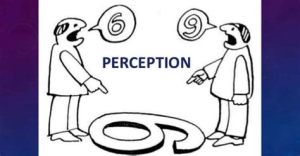
Lately some protracted conflicts have come to the surface in my life at a macro level in the world, and at a micro level in my daily life. I have been praying quite a lot since the war in Ukraine broke out, where my Jewish-Sumerian ancestors spent many generations living, and more recently about the war in the Middle East. It seems to me like there is existential war and rejection going on based in judgment, where one or more parties to a conflict feel they are fighting to exist in the minds and hearts of the other. Difference Between Perception and Judgement | Compare the Difference ...

I find existential judgement incredibly dangerous and damaging and see it as the root of genocide. It feels to me like a hand rejecting its own finger. If we believe in a Creator with wisdom our human minds cannot comprehend, how can we put ourselves in the position of judging what the Creator brought into being? And to say another is allowed to exist elsewhere (NIMBY) is still judgmental, for if we force another to leave their home and live on different lands, we change their and our identities by disconnecting people from their earthly homes and playing the roles of victims and offenders.

On a micro level I’m seeing this thinking play out in some righteous social justice warrior crusades around me. I find the concept of ‘rights’ to be violent, though it has obvious practical value to create baseline standards for society. If we didn’t existentially judge certain struggles and behaviours as deeming people unworthy of housing or health care or food, then rights would simply represent social baselines we collectively agreed upon as minimum standards of care for all of us humans living here. But if a single mother can’t afford housing, or a man with mental illness isn’t at retirement age but can’t hold down a job, we don’t collectively agree how (or sometimes even if) to support their survival. Rights then get used in a forceful way to push a majority social group’s minimum standard of support onto the collective, and thus they often need to be en-forced. And when we are judged and caught up in the rights battles we feel, rightly so, like we are fighting for our survival. (See survival strategies blog)

I agree with Jungian scientist Fred Gustafson that the Western mind is “having a massive collective nervous breakdown” and is going to “war to determine whose anthropocentric [world]view is most valid [while] the earth and all its inhabitants [] suffer.”[1] I have not found sufficient solace for survival in the Western world alone.

Mind PNG Images - PNG All | PNG AllFor me it has been vital to live in two worlds: (1) a social reality that is based on a Western worldview, and (2) an earth-based reality based on an Indigenous worldview. When I’m caught up in a survival struggle in the Western world that’s terrifyingly real, and I’m feeling rejected and judged and shamed and angry, I can spiritually connect with the knowing from the Land and my ancestors that I’m not only allowed to exist but that I am wanted. This powerful medicine is all I have found that alleviates my existential wounds. Without it I feel like I would not still be here on this Earth, as my roots would have rotted and not been able to hold up the rest of my inner tree of life. (Image from here)

conflict

If you’re also feeling some pain and heaviness about existential judgement and its impact, here are a few things that help me keep my spirits strong:

  1. Grieving is a way I like to express angry energy to avoid getting overwhelmed by righteousness and gain clarity which fights, if any, feel right for me to engage in, and what that means practically. You may prefer to yell and scream or throw things or punch a bag instead, so however you express anger to avoid it overwhelming you is helpful.
  2. Connecting with the land and ancestors where I am offers me powerful healing. I may give offerings as simple as feeding a bird or picking up rubbish, or as profound as a placenta burial or smoking/smudging ceremony. I may also cultivate a sit spot on the land, walk barefoot, and tend a tree altar. There are so many more ways to connect with the land where you live, these are but a few. The reverence we bring to the action we choose matters more, I think, than exactly what we do.
  3. Letting go of black-and-white, objective, judgmental thinking is something I am very fierce with myself about. Humility is an important value to me, so I ensure that even when I feel certain or highly confident about something that I carry a little bit of doubt. For example, I feel highly confident that child sex abuse (link) is a damaging act that is wrong to do. Yet my intense journey of seeking to heal that wound has brought me so much wisdom and peace. Spiritual gifts often thrive in grey, paradoxical spaces.
  4. earth ethos drum journeyAltering my consciousness is another survival tool I use daily, primarily through embodied meditations and drum journeys. I do it to heal trauma, connect with ancestors and other spiritual guidance, and seek tools for every day survival such as deeper spaces of compassion or peace. However you are able to sink deeper than your everyday ‘known’ and familiar thought loops can bring you some healing. I do find, however, that embodied practices (such as using sound or dance or breath techniques) are more powerful than mind-based practices (such as meditating through your third eye or simply watching your thoughts).

Thank you for reading this, and may your life be enriched (and even saved) by living in both worlds, as mine is.

[1] Gustafson, F. (1997). Dancing between two worlds: Jung and the Native American soul. Mahwah, NJ: Paulist Press.

giveheart If you value this content, please engage in reciprocity by living, sharing and giving.

Spiritual Traps

Adapting another chapter from the Indigenous Science book I’m writing into a blog.

Blog by Valerie Cloud Clearer

This week we’re going to consider eight common spiritual traps we can fall into that take us away from Indigenous Science, along with suggestions for freeing ourselves.

(1) Spiritual vacations occur when we do something (like take a psychedelic) or go somewhere (like a meditation retreat) that alters our consciousness, then find ourselves unable to integrate what we learned into daily life. Putting ourselves in a group environment allows some of us to access states of being we otherwise can’t, just like some of us find that certain substances help enter altered states of being. Eric D. Schabell: 3 Ways to Empower Employee Vacation ...

Cultivating the self-discipline of a daily practice is a way out of this trap. Another is honest check-ins about our intentions; like: ‘Am I reaching for this plant because I feel called to do sacred ceremony, or because I want to feel a certain way today?’ (Image from here)

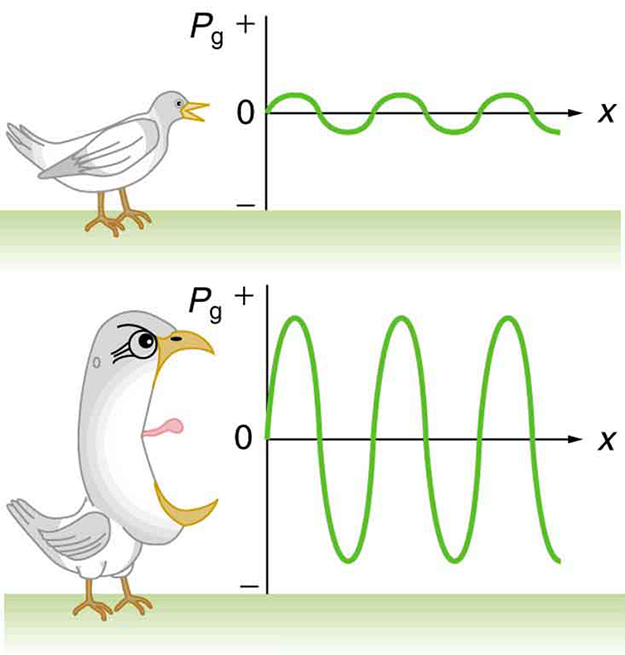
(2) Sometimes we get addicted to intensity. This could look like anything from doing thirty ayahuasca ceremonies to being in relationships with lots of drama. Indigenous Science is about balance, and we need to be able to deeply appreciate a range of experiences (emotionally, physically, mentally, and spiritually).Sound Intensity and Level | Boundless Physics

The main way to break free is to detox by taking a break from the intensity, resetting boundaries, and allowing ourselves to feel numb, grumpy and bored while we reset. With patience and persistence, we regain the ability to enjoy more subtle states of being. For example, if you’re used to hearing city traffic, it’ll take a while of being in the quiet of the country to be able to hear the wings of a butterfly when it flits by. (Image from here)

(3) Spiritual bypass is a “tendency to use spiritual ideas and practices to sidestep or avoid facing unresolved emotional issues, psychological wounds, and unfinished developmental tasks.” Someone may believe that they must remain in an abusive relationship because of karma; or someone might be getting feedback they’re behaving bossy and controlling and excuse it as being a leader with high standards.Route 250 Bypass | Route 250 Bypass Interchange at ...

The first step out is being open to realising that you have been denying or suppressing something. Sometimes it takes multiple experiences, or wise counsel from someone we trust. The next step is facing the denial and seeking support. (Image from here)

(4) Another trap is black and white thinking. In Indigenous science, “Both dark and light are necessary for life.” Unlike New Age ‘go to the light’ thinking, Indigenous scientists see darkness as the purest form of light because it contains all colours, whereas white reflects and rejects. When we find ourselves existentially rejecting or judging (e.g. ‘cancel culture’), being ‘objective’ (e.g. imposing our view onto others) and/or labelling (e.g. a ‘bad’ person), we are engaged in black and white thinking. Black & White Sunflower Photos | Literary Spring Designs

To heal we must make space for grey areas, find the humility to carry a little doubt even when confident. Noticing our and others’ existential crises (i.e. being highly triggered), we can then unpack why we and/or others feel so unsafe and shift beliefs. (Image from here)

(5) Guru worship involves giving our power away to a being who ‘knows better’ on an existential level. When we place someone on a pedestal, we devalue ourselves. That which we honour with our time is what we worship, which may be non-humans such as marijuana, mushrooms, alcohol, etc. Guru worship is the basis of most cults. Beautiful Warm Cloudscape With Man Silhouetted Standing ...

The main way to escape (as a giver or receiver) is to become aware of feeling devalued or pedestalled. And if you are using a substance with the intention of doing ceremony, I suggest stopping regularly to see if you experience any addictive urges, reflect on your relationship with the substance and work to purify it. For example, I know someone who stopped doing Native American tobacco pipe ceremonies the moment he realised he had picked it up to smoke without the intention of praying. (Image from here)

(6) Spiritual ambition is tricky, because ambition is often rewarded in other areas of life. The saying that when the student is ready the teacher appears is wise. With each spiritual teaching comes responsibility. For example, if you do a pipe ceremony, you enter into a sacred relationship with tobacco. If you then smoke a cigarette at a party, it not only won’t be fun but you may even become unwell for desecrating the plant. Collaboration is... taking up as my own common challenges ...

I suggest reflecting where your desires for new learnings are coming from, and taking a small step to see what feedback you get through Indigenous Science data. For example, if you wish to carry your own medicine drum, you might start by placing a power object representing this desire on your ancestral altar and pray for guidance and support on that path. Then see whether a step towards a drum emerges for you. (Image from here)

(7) Spiritual businesses are another tricky aspect of modern life. What is spiritually wise (e.g. telling a student they are not ready for a ceremony) may be very unwise in the business world. And sacred reciprocity isn’t based on a transactional economy. What It Takes to Keep a Small Business Open and Thriving ...

I suggest not making a spiritual business your sole survival strategy financially so it’s easier to maintain integrity. It also helps to be willing to fail while doing what’s right. (Image from here)

(8) Cultural appropriation is using “objects or elements of a non-dominant culture in a way that doesn’t respect their original meaning, give credit to their source, or reinforces stereotypes or contributes to oppression practices.” There’s some nuance here, but it’s important to consider when knowledge-sharing with other cultures. Have you had your identity stolen? Great cartoon from Last ...

It’s important to be honest with yourself about your intentions when learning and using other cultural knowledge, how you may be benefitting (socially, financially, politically etc.), how you are honouring the source of the knowledge, and whether you are the right person to be further sharing another cultures’ knowledge. It is valuable to be an ally, but keep in mind that allies do not lead unless they are asked. (Image from here)

Exercise: Reflect on the eight spiritual traps discussed this week. Which ones have you experienced? Which ones have you witnessed others go through? What helped you and those you know escape and avoid these traps?

giveheart If you value this content, please engage in reciprocity by living, sharing and giving.

Warriorship

Blog by Lukas

Are the most prescient ideas and images that come to mind when you think of the word “warrior” all about physical strength, toughness, and violent conflict? I doubt you’re alone. To borrow a trick from Valerie, if you online image search the word “warrior” the first things that come up are virtually all men and related to physical violence, specifically some new television show that evidently involves a lot of arse kicking. The story is similar if you try “female warrior”.spartan-4016133_1280

The technical definition of a warrior in the English language supports this narrow view, being rooted in a French word guerroieor meaning “one who wages war”. Most definitions of warrior relate to waging armed conflict, specifically those who have some kind of specialised role in doing so. (Image from here)

The etymology of the word “war”, however, is much more interesting, seemingly originating with broader concepts that include difficulty, dispute, and hostility. According to  etymonline.com, if you follow the known Proto-Germanic cognates as far back as they go, you arrive at a word that means “to bring into confusion”.

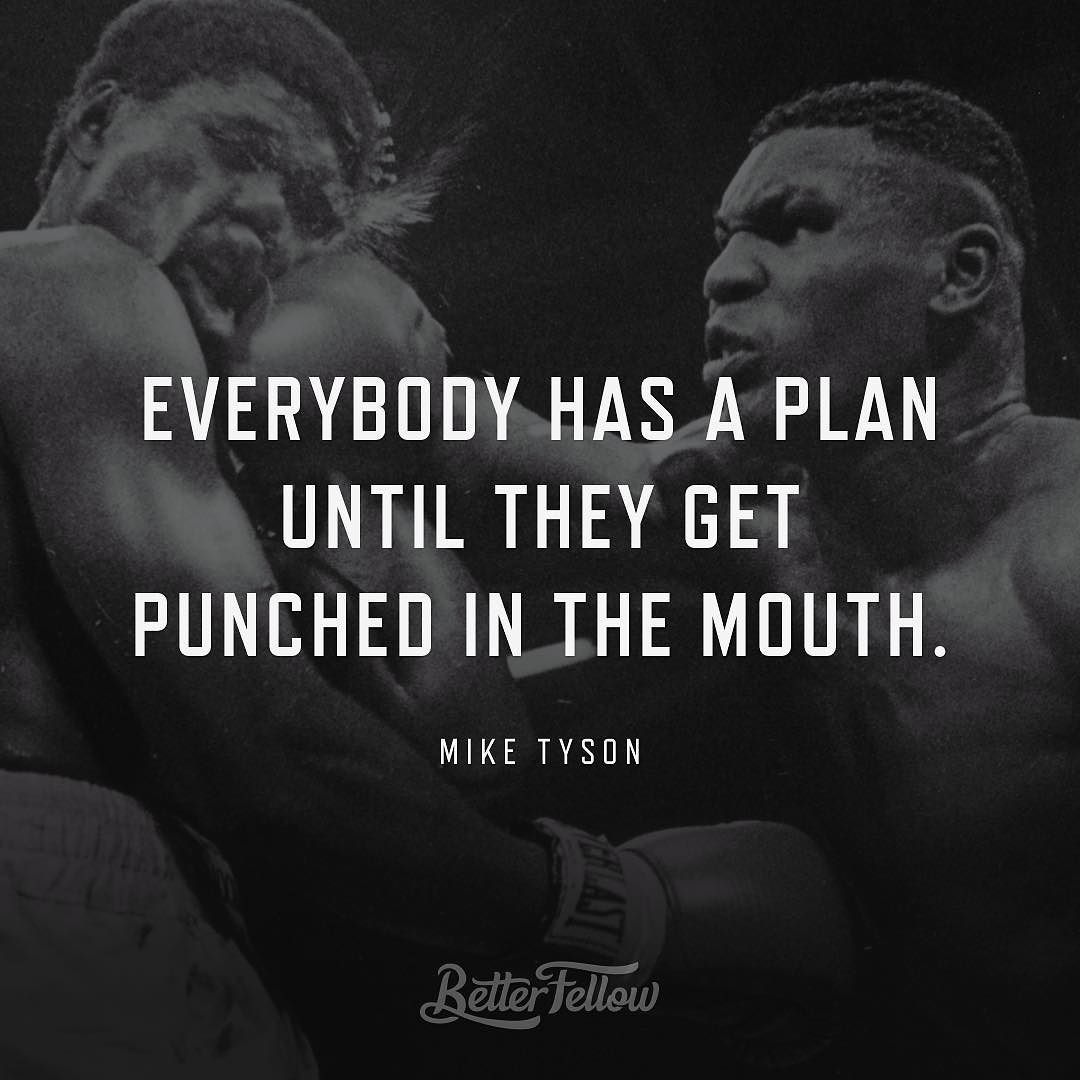
This is fascinating to me on a number of levels. Not least of all because virtually all first-person accounts of war I have read describe some manner of confusion and chaos to a degree that was unexpected to the writer. My flailing fist fights over the years confirm this; and as “Iron” Mike Tyson said: tyson

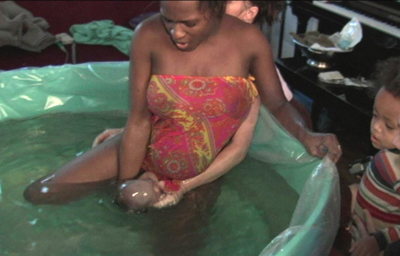
So if war is to some degree about confusion and chaos, perhaps the true warrior is someone who uses their power to bring these things back into a calmer balance? This then is about a warrior responding to and resolving conflict rather than instigating it, even if it is they who strike first. Without doubt there is a rightful place for violence in this, but also many other elements. Sticking to the realm of the physical, another version of the warrior could be a woman in labour finding her strength and power and calmly birthing just when things were at their most chaotic and the pain most intense. (Image from here)

But if we are to use this warrior concept to its fullest extent, literally and metaphorically, perhaps the most important thing is to apply it across the medicine wheel. So this gives us emotional, spiritual, and mental warriors; any and all ways in which a being can use their strength and power to bring conflict and disorder back into balance.

Note that this bigger version of warriorship does NOT just mean these other aspects of warriorship being in service of physical violence, such as mental energy being devoted to better weapons technology, or emotional quieting and centring that improves fighting ability. It means recognising their deep value to our being in and of themselves and together in balance.

This topic came to me when thinking about men and masculinity in the context of healing and reconciliation between Anglo-Celtic Australians and Aboriginal Australians. If we restrict our thinking about and valuing of warriorship to literal, physical combat, this makes such healing hard, such was the intense lopsidedness of the physical contest.

I don’t think it is controversial to say that in the world of Aboriginal Australians, weapons and warfare were just one part of what made men and warriors in those cultures whole and powerful. The weapons they had been using for millennia more than did the job they were needed for. Europeans, on the other hand, were by 1788 riding a wave of centuries of escalating prowess in using violence, supercharged by technology and in service of greed. Warriorship caused more conflict and trauma than it resolved.

With this fuller version of warriorship comes some understanding of what I as an Anglo-Celtic colonist lack, and what I need for healing. I don’t yet value my heart and spiritual warriorship enough.

warrior-body-paint-ritual-scars-Western-Australia-1923

On both the oppressor/colonist side, and the survivor/colonised side of this ledger is ample reason to grow through helping each other to see warriorship more fully. When we do this we’ll need no self-shaming to see the deep value of the balanced warriorship of Aboriginal masculine culture. We colonists can learn what being a whole mature warrior means, and Aboriginal men can learn to value who they are more fully. Then we can do ceremony to bring the conflict and disorder back into balance. (Image from here)

Exercise: Taking a strengths-based stance, think about how your sacred masculine (regardless of your gender) displays warriorship across the Medicine Wheel.

Exercise for Australians: If you are doing an Acknowledgement of Country (especially when there are only men present), try acknowledging the Aboriginal warriors as well as Elders.

giveheart If you value this content, please engage in reciprocity by living, sharing and giving.

The power of communal dreaming

Blog by Lukas

File:Apollo 11 Launch2.jpg - WikipediaValerie recently asked me why space exploration so captivated me as a child and still evokes strong emotion for me today. I’ve realised it’s got something to do with the safety of collective achievement.

Through the eyes of a child, perhaps nothing feels safer and more secure than seeing adults working together in determined harmony and solidarity towards a shared vision. As a child of the 1980s and 90s, few had the grandeur of space exploration. And so it is with deep ambivalence that I experience the individualistic efforts today of Elon Musk and Jeff Bezos, even though I am still brought to tears by ham Hollywood depictions of golden era Space Race events like Apollo 11 and 13. (Image of Apollo 11 from Wikipedia)

There are easy critiques about the merits of investing massive resources in space exploration, such as the need to focus more on addressing climate change, poverty and disease. There are strong counter arguments, such as that solving complex challenges related to space exploration leads to technologies that can be used for overall good, as well as strengthening our collective problem-solving ability. That’s where the refrain to “moonshot it” comes from – that when we put so many resources into something it’s collective by its nature. Lately I’ve been thinking about differences in space exploration during the Apollo age and now, and what this says about our society. For me, Bezos’s and other company’s efforts highlight a disillusionment with and disconnection from collectivist and communal dreaming.

As a former space nerd, File:Hubble 4x61.jpg - Wikimedia CommonsI chuckle at the impotence of today’s individualistic and self-aggrandising efforts. For example, all of the Mercury Program’s flights in the early 1960s travelled higher than Bezos did, and in terms of payload capacity, no recent effort has yet bested the Saturn V rocket that carried the Apollo program astronauts to the moon. Led mainly by Space-X, the commercial payload industry has grown immensely over the last decade, but none of its achievements come close to the complexity and technical difficulty of the Hubble Space Telescope missions of the Space Shuttle from over 20 years ago. This is especially ironic since the Space Shuttle was a fairly weak technological achievement meant to be a “proof of concept” of a reusable space vehicle. (Image of Hubble from Wikipedia)

It can be quite plausibly argued that the last true great leap forward in space technology was the space station SkyLab and related Soviet efforts, with their budgets waning ever since. Author of 2001: A Space Odyssey Arthur C. Clarke’s vision of space travel in the year 2001 now seems so off the mark, but considering the pace of achievements at the time of the Apollo program, they were not that far-fetched. He failed to account for the political reality that having effectively ‘won’ the Space Race, the U.S. appetite for massive collective investment in Space Exploration would drop off so considerably.

Il 4 ottobre di 60 anni fa ci fu il lancio dello Sputnik 1 ...Of course the collective achievements of this era have a massive dark side. The Space Race was just another front in the Cold War. The bedrock of the technology and indeed the scientists who advanced it were from the German rocket program of the Second World War. (If this is new to you, check out Operation Paperclip, the Allied Mission to secretly bring German rocket scientists to America.) I think it is fair to say that the U.S. of the 50s and 60s was not much more collectivist than it is now, but one thing people did know how to do was come together to fight a war. The American “war machine” of WWII is in my opinion one of the most spectacular achievements in the history of industrialised civilisation – just consider the material prosperity of the years since that was built on it. Capitalism was critical, but without the consent, taxes and labour of the people working in a war socialist footing, it could never have happened. This is true of the Space Race as well. (Image from here)

So in no way am I saying the achievements of the likes of Apollo were halcyonic. It was part of a war. The capitalist military industrial complex was supercharged. But on some level it was so massive an effort as to not be possible without some form of communal dreaming. This is what feels important to me.

World News #35 - Evil Empire (Amazon) | David BernieToday Bezos wants us to be impressed with his relatively meagre achievements precisely because he has done it without communal dreaming, though he thanked all Amazon customers for funding his personal vision. Materialist, consumerist individualism put Bezos into space, and he wants us to be wowed and entranced by the power of putting massive amounts of power and resources in the hands of a few. He doesn’t want us to worry about communal dreaming, just keep to following our individualist dreams where we fill our lives with goods and services and very few of us may go on to join him amongst the pantheon of the super-elite. (Image from here)

Por aqui passei eu:There are a number of challenges today waiting for us to approach them communally. I predict that when things get bad enough, the power of collective dreaming will become clearer and more appealing to us. But it is sad if only desperation and an existential war footing can prompt us to recognise what I consider a truth: there is inherent value in collective and communal dreaming, for our internal and external worlds.

giveheart If you value this content, please engage in reciprocity by living, sharing and giving.

Faith, hope & trust

Blog by Valerie

Talking with a few people this week, it seems timely to share my perspective on these concepts and how I work with their energies. Though there can certainly be overlap between them, I hope clarifying the way I think about and hold these is helpful for your own thinking.

  1. Faith

I experience faith as a big, deep energy. Words that relate closely faith for me are ‘reliance’, and ‘belief.’ I experience existential fear to be a flip side of faith. When I have discerned that the fear I feel is existential and not due to being in imminent danger, I lean into faith and practices that support me to maintain and heal it. I am relishing this Michelangelo quote of late, reminding myself to have faith that everything happens at the right time. 

michaelangelo quote

Where we place our faith can have huge consequences for our life experiences. For example, if I place my faith in getting THIS JOB I applied for, that is setting myself up for a big crisis if I don’t get the job, or if the job doesn’t work well for me. If I instead place my faith in something bigger like ‘the right job finds me at the right time’, then if I get the job I may breathe a sigh of relief, and if I don’t, it will likely be easier to accept and wait for something better.

I have found that placing faith blindly leads us to be let down, and even lose faith in faith altogether, leading people towards nihilism. You can live in nihilism if you want, but having spent time there and with people who are choosing to be there, I found it too bleak and painful. If placing faith in certain things supports me to live a more fulfilling life and embody my core values (peace, play & passion), then I will do so. I think the below quote is a good warning sign for loss of faith altogether, and I think it often comes with over-placement of faith into things, then experiencing existential crises, and not knowing how to work with faith in other ways so giving up on it entirely instead.

disbelief in magic

My view is that faith ought to be grown through an iterative process. We place faith in something (I suggest starting with an affirmation that feels good, like ‘Life is always here for me’ or something to that effect), then we see how it feels to live with faith in that space, and when it is challenged whether it would feel better or worse or neutral to place more faith there or elsewhere. Placing faith in life always being for my benefit has been very beneficial for me – so that even when hard things happen, I look for the lesson in letting go and the space for new support and adventure that is seeking to come through. Placing faith in this also ensures that I limit identification as a victim. Even when I AM victimised in some way, I do not take it to an existential level, because I choose to place faith in there being an important teaching (or two or three or twenty) in my experience of victimisation. 

Faith, for me, is something we build through an iterative process over time that supports us to navigate the mysteries of life.

2. Hope

obama-hope-shelter-copyI see hope as a more fleeting, softer and elusive energy laced with personal egoic desires. I might choose to have faith that the right job will come to me at the right time (which will likely require me to do a bit of work putting myself out there), and if I feel excited about a particular job I just interviewed for, I may HOPE that will be the one that comes through. This is why I found the energy of Obama’s Hope & Change campaign less exciting than many people. I feel like many people placed FAITH in his presidency resulting in meaningful change instead of HOPE, and thereby set themselves up for huge disappointment (Image from here.)

Hope is a smaller, lighter, more specific energy that I associate with words like ‘wish’ or ‘desire’. The best way to use of hope is to express more specific desires and wishes without expectation or attachment to results.

3. Trust

Trust, like faith, is a big energy for me. Where faith relates to my interactions with the unknown, trust relates to the constants in life that I can rely on, things ‘I know’. Trust relates to truth for me. I trust that the sun will set tonight and rise tomorrow. Trust for me, is a ‘knowing,’ which can be something we just have or find within ourselves. In Buddhism people refer to ‘transmission’ of certain ‘knowings’, meaning that if you find a ‘truth’ within yourself you can project that into someone else when they are open and receptive to it and awaken that truth in them. 

One of my mother’s favourite phrases was ‘Trust but verify’, which to me means there is no trust at all, by design. When I expect not to be able to trust, there is no room for trust to grow. But if I start by being willing to doubt myself about this, then I am open enough for some hope, and then maybe some faith to come into my life. And faith can become trust as we learn that we can rely on certain things. I grew up feeling that life was hard, and that someone was always out to get me (that was true! I was being abused!). But as I grew up and moved out on my own, I dared to hope life could be better than that. Then I dared to place faith in the idea that life was always for my benefit and there was a positive purpose to all the pain and trauma I’d been through. At first that was an idea, but then I started to see it and experience it more and more. Over time my faith was challenged, and still I kept being able to come back to that idea, and over time it has become a truth for me. I am now able to trust it. And when I met someone who doesn’t have that knowing, I can see  them because of the journey I have been on.

As I stay true to myself – by being authentic and following through on my words with actions (even inside the little agreements I make to myself in my own mind – I am able to build trust with myself and be a trustworthy person. That allows me to build trust with another person, even someone who has struggled to be around trustworthy people. Sometimes I don’t follow through on my word, or my words run away with me and I have to chase them and either apologise and make amends or do things I would rather not or at a pace that is not very smart. But in moments when I  am able to help awaken other people from a myth that they are an eternal victim in their own life, that no one and nothing is trustworthy, then I experience the gift of that journey, which helps makes the painful betrayals I’ve been though feel worthwhile.

4747714-James-Baldwin-Quote-Trust-life-and-it-will-teach-you-in-joy-and

giveheartIf you value this content, please engage in reciprocity by living, sharing and giving.