Category Archives: Relationships

Boundaries & integrity

Blog by Valerie

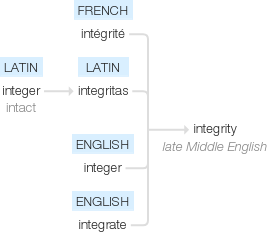
There’s a lot of rhetoric about boundaries, and setting healthy boundaries, and crossing boundaries, but in essence, we’re talking about integrity, or wholeness. From google, the etymology of integrity is:

When we are in integrity, we are boundaried. We do need to assert our boundaries at times, but most of the time they just are and don’t require work or thought. I find asserting boundaries arises quite involuntarily and naturally–if someone stomps on my foot, I say OW! or HEY! without thinking; and if someone is behaving disrespectfully repeatedly (3 times for me), my voice usually rises in volume and the words emerging from my mouth become harsher.

Boundaries and Confidentiality - ppt download

I see a lot of confusion around boundaries, and a lot of misguided effort to “set” them resulting in drama, mind games, and power plays. We can’t bypass healing through intellectual knowing. I see people deny themselves healing opportunities with justifications like “they know better” or they “don’t deserve” the pain they’re feeling.

Deserving has nothing to do with it; that’s a victim mentality that’s totally disempowering. And pretending we know better than to walk through the experiences life is presenting is an arrogant way to avoid reality. If you’re carrying pain or emotional charge, take the opportunity to free yourself by experiencing the pain fully, healing, and embodying its medicine. Boundaries will flow through your healing process the more you trust; you will realise when you are called to walk through an ordeal, which battles are not yours, and ‘yeses’ and ‘nos’ will flow.

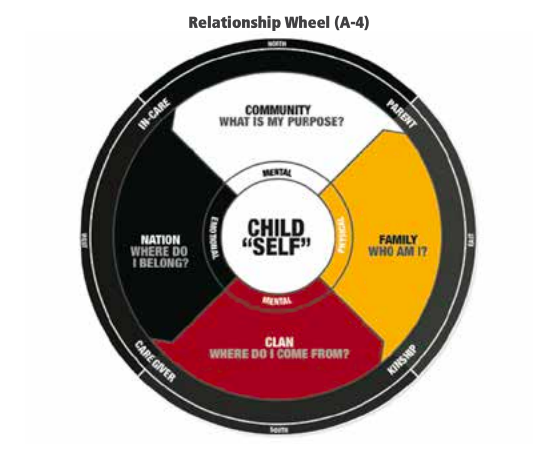
In the medicine wheel, it’s easiest to agree on physical boundaries and integrity, though concepts such as consent and personal space differ by individual and culture. Spiritual integrity bounded by our faith, beliefs, and ritual and ceremonial practices, at individual and cultural levels. Emotional integrity has to do with self-knowledge and expressing our feelings fully in honest, healthful ways. Many people find psychological boundaries challenging to maintain, and many of us don’t think about psychological integrity because we are so used to our super busy minds. The more contemplation/meditation, grounding, and ancestral trauma healing work I do, the more integrous and embodied I become, and the lighter and more prescient my thoughts are.

Inspirational Quotes On Boundaries. QuotesGram

Traumas in our lineages, lives, and on our lands disconnect us from integrity, and we carry a lot of that trauma in our minds. Everyday tasks such as buying groceries can feel like minefields. Are we buying organic? local? from exploited workers? plastic packaging? We are all indigenous to this Earth and can experience profound interconnection and belonging with ourselves, other people, plants and animals, and even landforms.

Paul Young, a medicine man in Sydney, suggests a three-step healing model for mental integrity: (1) de-colonise and increase receptivity, (2) culturally strengthen and ground, and (3) alter your state to experience indigenous inter-connection through ceremony, meditation, prayer, etc. Similarly, in a conversation with Dr. Apela Colorado last week she suggested a healing process based on contemplating the following three questions:

  1. What were your traditional cultural ceremonies?
  2. How did you lose them?
  3. What losses do you need to process to stop perpetuating colonisation?

Exercise: What does integrity mean to you (spiritual, emotional, physical & psychological)? How would you start to answer Apela Colorado’s questions? Consider your answers in light of this quote from a Rwandan man:

“We had a lot of trouble with Western mental health workers who came here immediately after the genocide, and we had to ask some of them to leave. They came and their practice did not involve being outside in the sun where you begin to feel better, there was no music or drumming to get your blood flowing again, there was no sense that everyone had taken the day off so that the entire community could come together to try to lift you up and bring you back to joy, there was no acknowledgement of the depression as something invasive and external that could actually be cast out again. Instead they would take people one at a time into these dingy little rooms and have them sit around for an hour or so and talk about bad things that had happened to them. We had to ask them to leave.”

giveheart If you value this content, please engage in reciprocity by living, sharing and giving.
Healing & Cultural Appropriation

Blog by Valerie

In the previous post I wrote about how complex it is to honour multiple cultural identities, ground ourselves where we are now and honour the ancestors of the land, forgive our ancestors’ mistakes and decolonise our everyday lives. This post is a step further, because cultural appropriation is different in the context of spiritual healing. I have learned through experience what cultural appropriation in a healing context is, and the destructiveness it brings. I have also gained valuable insight, lessons, and tools when some cultural appropriation was being done that added a layer of destruction to the person’s offering. We are human, and our healing work is inherently imperfect. (Image from here.)

appropriationappreciation.png

In my experience, once we are out of crisis, healing within a market economy context is limited. There are different power dynamics, feelings and experience when meeting in a therapist’s office for 50 minutes for $100, and when with meeting a caring community member in a home, or while walking and talking with a friend in a park. As I wrote in a previous post, please RUN AWAY FROM people who say they are fully healed or ascended masters or anything like that unless you want to join a cult, because delusions of grandeur and beliefs around exceptionalism and/or superiority are not conducive to healing. Also from a previous post, keep in mind that:

“A common mistake when examining myths of other cultures is to interpret them with symbols and values of our own culture” (Gleiser, 2012). Common values of the dominant Western cosmology such as competition, hierarchy, individualism, and the primacy of the nuclear family greatly limit our ability to embody indigenous wisdom (Thibodeau & Nixon, 2013). When this happens, ceremonies can “become empty of their power” (Rael, 1998). 

Consider the difference between participating in a plant medicine ceremony in the jungles of Peru with a shaman who spent decades apprenticing with a teacher and working with plants and spirits of the jungle deeply connected with the land and its ancestors, versus participating in a plant medicine ceremony in an apartment in a Western city facilitated by someone who got the medicine from such a shaman and perhaps studied with the shaman for a short period of time.

I don’t mean to say we should never participate in a ceremony in an apartment with a medicine from a foreign culture and land. But if we do, let’s do it with awareness and help it be as safe as possible. I ask for my own guidance in a form that resonates with me (either prayer or meditation usually). I acknowledge the limitations of the healing work I am considering participating in and ask if it is right for me. If I get signs and insight to move forward, then I ask what I need to do so that it is in balance. For example, when I offered an ancestral trauma healing workshop earlier this year on land with which I have limited cultural connection, I received guidance to donate participants’ gift economy offerings to an Aboriginal advocacy organisation. I also verbally thanked the ancestors of the land during the workshop for supporting our lives and the healing work.

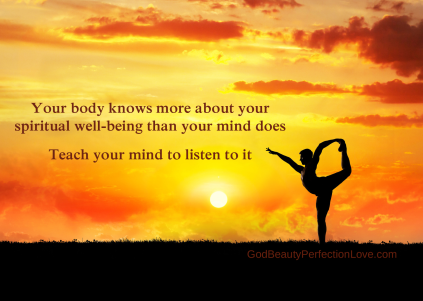
bodyspirit.png

I will share the following story to offer a contrast of an experience of cultural appropriation with a man who called himself a shaman and worked with indigenous people in the Amazon, Mexico, and the Southwestern U.S. He quit his day job to do healing work full time and did so within a gift economy and invited me to participate in a group healing ceremony supported by the tribe in the Amazon. He gave us all a protocol of how to prepare for for three weeks, which I followed. Two days before the ceremony, he said he had new information and changed some things, which I found strange. My husband said he had a bad feeling, but I still trusted the man. I got a sign there was danger ahead, and I felt shaken but kept going. The ceremony changed again the night it took place. At one point, the so-called shaman stood over me menacingly while I was laying on the floor, yelled at me and called me names. I told him I found the behaviour abusive, but I never heard from him again and did not see him after that. When I wrote the couple running a school for shamans in the Southwestern U.S. who recommended him on their website, they said that he had lost his mind, that he was threatening them and they were scared of him, and that putting his information on their website was not an endorsement. I later realised that the tribe was split in their support for his doing that ceremony within their lineage, with their healing tools, away from their land and culture, and that my own cultural heritage was so filled with conflict that I was able to provide the group with a reflection of this problem he was denying. What a messy, valuable lesson he gave me. Here are some less extreme examples of cultural appropriation I have experienced:

  • People charging money for community healing ceremonies traditionally offered within a gift economy or by donation, and/or facilitating ceremonies without integrity:
    • e.g. for a sweat lodge: charging a fixed fee, failing to configure the fire and lodge correctly, failing to honour the land and lineage ancestors, failing to clear the space and clean up the lodge before doing another ceremony
    • e.g. calling oneself a spiritual counsellor in a modern city and charging $100/hour without any formal counselling training or supervision from another counsellor
  • People of mixed cultural heritage identifying with only one ancestral blood lineage,  denying their own complex wholeness, then projecting that dissociation onto others whom they are supposedly offering healing to:
    • e.g. studying curanderoismo healing with someone from rural Mexico and identifying as an indigenous Aztec healer when the person did not know one of their birth parents, grew up in one U.S. state, and lived in another U.S. state.
    • e.g. identifying only as an oppressed African-American, indigenous or Jewish person without acknowledging other blood lineages and cultural heritages

heartheal.jpegI have a lot of compassion for the messiness of embodying Earth Ethos in modern multicultural cities. This is my life! And it is hard, messy work. It’s important to give ourselves and each other grace and trust that we all do our best. For a beautiful story from someone of mixed cultural heritage about honouring all of her complex heritage, read this by Lyla June. (Image from here.)

Since I have learned much of this stuff the hard way, I offer you the following suggestions of what to consider when seeking spiritual healing:

  • Intention & Identity
    • How do YOU see your role and identity in healing work done within the context of a human relationship? Are you looking for practical tools? Emotional support? Plant medicine? Ceremonial healing? A spiritual elder? Escapism? Adventure? Gratification of curiousity about an ‘other’ culture?
    • How does the other person see their role? Do they call themselves a healer or shaman? Do they say they are healing you? Channeling healing energy? Facilitating healing? Holding space? Offering medicine? Helping you connect with your inner higher self? How does the other person identify themself?
  • Cosmology & Culture
    • What cosmology/cosmologies do you embody? What perspectives and beliefs do you want to learn more about and bring into your life? To let go of? How do you relate safely to people with different cosmologies and/or cultures?
    • Is the other person’s cosmology related to (a) specific culture(s) or lineage(s)? How do you relate to the other person’s cosmology? What ancestry does the person have?
  • Place & Form
    • What physical place supports your healing (e.g. a sweat lodge, therapist’s office, church pew, a home, etc.)? Is the place relevant to the culture or lineage on which the work is based, or has it been adapted to your context in some way? What form supports your healing (e.g. talking and listening, music, dance, energy work, laying of hands, artistic expression, etc.)?
    • Where is the person willing to meet with you, and what forms of support are available? How does the person honour multiculturalism, modern places and forms? What cultural and place-based relationships does the person bring? If the person is working within a specific cultural context, how has the person received those teachings?

giveheart If you value this content, please engage in reciprocity by living, sharing and giving.

Multiculturalism & Cultural Appropriation

Blog by Valerie

You may have grown up, like me, steeped in multiculturalism in your home and city, eating foods from all over the world, making friends with others of totally different cultural heritages, travelling and living overseas, and honouring multiculturalism in your everyday lives. If you go back a few generations, how many of ancestors of your blood lineage spoke your language? Dressed in clothes like yours? Listened to similar music, or did similar dances or art? Were taught similar stories about the right ways to live? Did formal schooling? Worked indoors? Followed a similar faith tradition? Celebrated the same holidays? Lived on the same land where you live? Ate foods native to the land where you live? The hardest thing for most of us to fully accept is that in order to survive, we and our ancestors all appropriated from other cultures, and had our own cultures appropriated from. All earth beings move and trans-plant. For example, potatoes are native to the Andes, yet we often think of them in relation to Ireland. We are in living in a hopelessly multicultural world. Just think about the fact that one box of tea we buy for $3 is made from leaves grown in India, packaged in China from cardboard made in Bangladesh, then is shipped to England in a barge made in Denmark, and then distributed to our local supermarket chain owned by a German company. How complicated! (Image from here.)

multicultural.jpg

How do we practically honour the multicultural complexity of one product in our shopping cart?  How do we honour the complexity of our lineages, in terms of relationships with food, place, land, and spiritual traditions?  At what point does honouring multiculturalism become cultural appropriation? Here’s a perspective from a woman whose lineage was transplanted from the British Isles to North America in the 1700s:

I bring with me–in the very blood that flows through me–the DNA of my ancestors…for good or for ill, that cultural legacy and that history, the choices that they made, and I am living the benefits and consequences of those choices…I simply cannot hope to have the same kind of relationship that a Native person has on this land today–because relationships aren’t just about individuals, they are about cultures and generations of people…[Yet] the land, her spirits…even after all that has happened culturally, welcome relationships with white people…built upon acknowledging and honoring the past, building trust, and about reparations…[that will be] inherently different looking because of our own identities, cultures, and histories.

If we want to build deep, meaningful, and lasting relationships with the land here, we’ve got to do the work from the ground up. If we are appropriating someone else’s culture and spiritual practice, we aren’t doing the hard and necessary work of relationship building for our own tradition–hence, we are perpetuating more colonizing behavior.

I see colonising behaviour all over modern cities today. We talk about ‘gentrification’ when people of traditionally more dominant and resourced cultural groups displace traditionally oppressed groups in the parts of a city where the oppressed groups had been forced to live. I consider this micro-colonisation, akin to the term micro-aggression. What if that’s the only place you can afford to buy a house? Does that mean you ethically shouldn’t? Should people with white skin never move to Oakland, California or to Redfern in Sydney, Australia? I don’t think so. But if you choose to, you have the responsibility to be honest about what is happening, feel the pain of others’ displacement along with the joy of your new placement, make amends and build positive connections with the people and land as best you can.

multicultural2.jpeg

Acknowledging the peoples and lands from which traditions emerge is a way to deeply honour ancestors and keep wisdom alive, and allows you to be a cultural bridge in new lands. The respectful intent and humble, teachable spirit with which you approach such activities is the main difference between honouring multiculturalism in our modern world and a the colonial, oblivious, blind, entitled, and greedy and grabby spirit of cultural appropriation. If you are honest about where you stand today and are able to honour your ancestral journey, however many mistakes and sacrifices you and your ancestors have made, you will have a much easier time honouring others’ cultural traditions.

humanfamily

It also helps to keep in mind how fluid ancestry and identity is. Culture is so much more complicated than just tracing your blood lineage and labelling someone as indigenous or non-indigenous, black or white or brown-skinned. Just because you do not have a known ancestral lineage in Japan, for example, does not mean that you are culturally appropriating if you feel moved to practice aspects of Shintoism, learn to do a traditional tea ceremony, or how to brew your own sake. We multicultural moderns have much more similar journeys to drops of water that are re-cycled around the planet, evaporating from a lake into a cloud and flowing across the sky, falling as rain into a huge ocean, entering a jet stream that crashes as a wave against a rock across the world from where we started, and hanging out in a pool on that rock for a while. I personally think this modern mess we’re in is here to remind us that we’re all one big human family! (Image from here.)

Dreaming, meditation, and mindfulness practices are other great ways to connect with our ancestors, as well as donating time and money, building and tending ancestral altars, spiritual practices to heal unjust power dynamics and colonial wounds, supporting the revitalisation of indigenous languages, connecting with non-human ancestors of land and place, and reconnecting with languages and traditions of your ancestors.

Exercise: Modern people tend to use food and drink as the main tool for connecting with ancestry. Try branching out. If you have Gaelic ancestors, learn a few words and see how you feel speaking them, then put on music and see how your body naturally wants to move to it. You may have some moves burst out that you didn’t know about! Also, imagine how ancestors lived on the land where you are now. Did they used to fish by the river you walk along? Imagine how your ancestors used to live in faraway lands. Did they build a fire in the evening to heat their homes just like you are doing? One study found that just thinking about our ancestors and how they lived is beneficial to us! 

giveheart If you value this content, please engage in reciprocity by living, sharing and giving.
Honouring Our Ancestors

Blog by Valerie

If we want to honour our ancestors, who are they? As Dakota Earth Cloud Walker explains, our human ancestors are more than our blood lineage. They also include ancestors of land/place, past/present/future versions of you, and ancestors of traditions that are important to you such as leaders of religious movements or fields of study. Non-human ancestors are abundant too, from minerals that have been here millions of years which nourish our bodies and fuel our vehicles, to plants that feed us and animals that provide us with companionship. When participating in a sweat lodge ceremony, rocks that are heated and brought into the lodge are often referred to as grandfathers and grandmothers. This reverence is a reminder that our bodies are made up of atoms that came from these other beings’ forms and that we are all alive from an animistic Earth Ethos perspective.

Genealogy Clip Art.gifA Druid blogger points out that feeling our non-human ancestral connection during this time of rapid climate change and extinction is a painful opportunity to witness loss and engage in mourning. We all know of painful events that took place on lands near our homes, and we know of ancestors who behaved in ways that don’t align with our values. I grew up on land from which the Cherokee were forcibly removed, on which African Americans worked as slaves, I have known Nazis and rapists in my blood line, and my lifestyle is reliant on resource-rich technologies that disconnect me from the Earth so that I buy most of my food from grocery stores and spend 40 hours a week in an ungrounded office. As a Wiccan blogger said, “If you show me a family that has no problems and no family history of pain, abuse, and all the people in it have been and are kindly saints – I will show you either a fool or a liar.” (Image from here.)

Given this messy reality, how do we practically honour our ancestors in their fullness and complexity?

First, we honour ourselves. An Earth Ethos perspective is to set boundaries but not to completely block energies from our lives, because what we avoid tends to grow bigger and bring in more destructive energy than if we try to turn that “shit” into fertiliser. Keep in mind that you wouldn’t be here if not for your ancestors.flowers2altar.jpgancestral altar.jpg Second, “if you don’t have an ancestor altar, you become the altar.” I spent most of my life in a lot of danger and had multiple near-death experiences. My ancestry is full of trauma, and I wanted to create space to show I was in relationship with my ancestry, rather than things happening to my body and in my everyday life. When I began an ancestral altar practice, I created one human and one non-human (tree) altar outside. Over the first few months, two human ancestral altars were completely destroyed during thunderstorms. I was so grateful that the trauma and violence had left my body! The human ancestors settled down after many offerings and ceremonies to make amends for wrongs they’d done. (Photos: the destroyed human ancestral altars from years ago)

Today I have the human ancestral altar inside, a non-human altar outside, and leave regular offerings at both. Some ancestors I honour directly; for example, last night I burned a candle to honour ancestors who offer me spiritual support, and I left a small glass of beer with gratitude for my Germanic blood lineage. Today at my non-human altar (a fern tree in the garden) I buried some jewelry. I have been doing that for some years, as I have many Jewish ancestors who were jewelers and were quite greedy and ungrounded, so giving jewelry back to the Earth is one way I make amends and heal that ancestral trauma energy. Whether you have an ancestral altar or not, our ancestors receive the intentions of our offerings. Honouring someone through dedicating a work of art or a good deed, or planting a tree on clear-cut land can honour ancestors and heal ancestral trauma. If you are interested in creating an ancestral altar, you can access guidance here.

giveheart If you value this content, please engage in reciprocity by living, sharing and giving.

Kinship

Blog by Valerie

In a previous post I wrote about ancestry:

Through a Shipibo elder of the Amazon I learned that about 90% of the thought-loops that circulate our minds are not based in ego, but in ancestral trauma. I learned through Dakota Earth Cloud Walker that ancestry is defined in three ways: blood lineage, ancestry of place, and personal karma. Personal karma refers to past, present and future versions of ourselves, and all of the complex identities we take on during our lifetime (or multiple lifetimes if you see things like that). Blood lineage is the most common way we think about ancestry, reflected in a family tree. Ancestry of place includes places where the people in our family tree lived, as well as where we have lived and live now.

totem-poles.jpg

This blog and this short lecture about kinship from an Aboriginal Australian perspective are a reminder of the kinship relationship indigenous cultures traditionally have with animals, plants, landforms, and elements of nature. Aboriginal Australians and many First Nations in the northern US and Canada constructed totems (or tokens) as emblems of these relationships. (Image from here.) It’s a stark contrast to modern living, well said in a post of The Druid Garden’s Blog:

One of the great challenges of our age is that humans are radically disconnected from nature; our food comes from somewhere else, our products come from somewhere else; we don’t know the names of plants or animals in our local ecosystem, we don’t know what a healthy ecosystem looks like. We could not survive in our ecosystem without modern conveniences in place, as our ancestors once could. Through learning about nature, through nature study, wisdom, and experience–we learn how to be in nature.  Once you begin seeing nature as sacred, you treat it as sacred.  

Since an Earth Ethos is based on interconnectedness, it is important to honour non-human kinship relationships and ancestors. Most of us do this to some extent every day, through choices such as bringing a bag to the supermarket to be respectful of Mother Earth’s resources, but we could go a lot deeper. We may consider our pet dog or cat a member of our family, but we generally struggle to see non-humans as kin. In one of Peter Wohlleben’s books he asks if we humans are the most intelligent species on the planet, why we work so hard to teach other animals like parrots and chimps to speak our language, rather than learning to chirp or hoot in their languages. This is not as far-fetched as it might sound. For example, many hunters have tools that mimic bird or mammal calls, a few years ago I took a class on bird language in Texas, and Aboriginal Australians traditionally integrate animal calls and movement patterns into their music:

Something that helped me shift my thinking and ways of being was learning sweat lodge. In a sweat lodge, we refer to the rocks we use as our grandfathers, because they have been on Earth much, much longer than any of us. Many have broken off of mountains and been on long journeys before they become small enough for us to pick up. When we build the fire for sweat lodge, we ask which sticks and logs will give their lives for us and thank them for changing forms for our ceremony of purification. We ask which rocks will come into lodge and give their lives to us, meaning their life force energy and the wisdom of their long journeys, so that we can purify our hearts, minds, and bodies during the sweat. Often while we are preparing a bird will circle overhead or a mammal or reptile will visit a while, and we thank them for blessing our ceremony and ask what we may learn from them. This kind of thinking is a refreshing change from seeing ourselves as the pinnacle of evolution, to the humble new species on the block. human-evolution-vector-74195(Image from here.)

Research has shown that plants grow better when humans speak to them. So next time you walk past a tree, why not nod in greeting? Or as you water a bush, thank it for flowering?

Exercise: To connect with our non-human kin, as previously mentioned, a great method is a sit spot. A variation of this is to do a sit in the wilderness (even your garden or a park) blindfolded, or at night, so that you focus on using your non-visual senses. If you have access to a stethoscope, you can use it to listen to the heartbeat of a tree. Another fun way is to greet non-human kin like plants or animals. Finally, check out fun videos like the one below that link plants’ carbon dioxide emissions to sounds we can hear:

giveheart If you value this content, please engage in reciprocity by living, sharing and giving.

Peace Circles

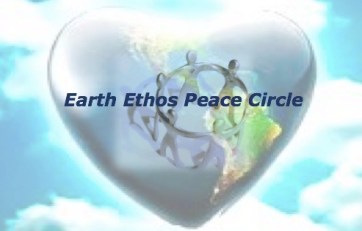
earthethospeacecircleBlog by Valerie

“Stories are medicine…embedded with instructions” that guide us about how to live our lives (Estés, 1997). Practices of talking circles, or peace circles, have emerged within many cultures throughout known human history, though most modern Westerners don’t understand underlying cosmological foundations of these practices, which come from indigenous cultures. The talking circle is a metaphorical life tool of the medicine wheel. Being aware about what we are doing allows metaphor to bring ceremonies like talking circles to life (Rael, 1998). It is no mystery why, in Australia for example, when people with indigenous ancestry facilitate yarning circles, a type of talking circle, it feels different than when Westerners do. I learned why while working for a decade in the field of restorative justice. When we encouraged people to put altars in the middle of their circles, I had quite an aha moment when I saw what people were using to metaphorically represent the heart centre. “A common mistake when examining myths of other cultures is to interpret them with symbols and values of our own culture” (Gleiser, 2012). Common values of the dominant Western cosmology such as competition, hierarchy, individualism, and the primacy of the nuclear family greatly limit our ability to embody indigenous wisdom (Thibodeau & Nixon, 2013). When this happens, ceremonies can “become empty of their power” (Rael, 1998).a

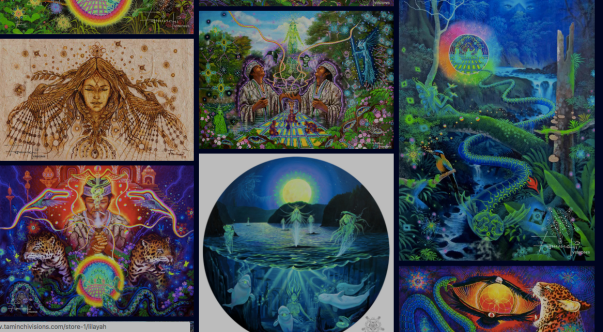
Consider the difference between participating in a plant medicine ceremony in the jungles of Peru with a shaman who spent decades apprenticing with a teacher and working with plants and spirits of the jungle deeply connected with the land and its ancestors, versus participating in a plant medicine ceremony in an apartment in a Western city facilitated by someone who got the medicine from such a shaman and perhaps studied with the shaman for a short period of time. (Image is a screenshot from an online gallery of Amazonian-Andean artist Juan Carlos Taminchi of ayahuasca visions.)taminchiartThe depth of relationships, and the experiences, feel quite different to participants. Similarly, instead of peace circles as a tool to help control behaviour or improve the way people speak and listen to each other as is common in westernised restorative justice practices based on a Judeo-Christian worldview, an Earth Ethos peace circle is an opportunity for a communal spiritual experience based on an indigenous cultural cosmology. Because of the intentional use of metaphor, it ought to feel different to participants (and certainly does to me) than simply sitting in a circle (or around a table where we are blocked from connecting with each other physically) and passing around a talking piece. Many indigenous peoples use oral traditions to preserve cultural wisdom. Verbal repetition and physical embodiment of teachings keeps them pure (Rael, 2015). An important aspect of any medicine wheel ceremony, including a peace circle, is purification or cleansing, opening participants’ hearts for sharing wisdom as a community. Purification is often symbolised through the use of smoke, or smudging.

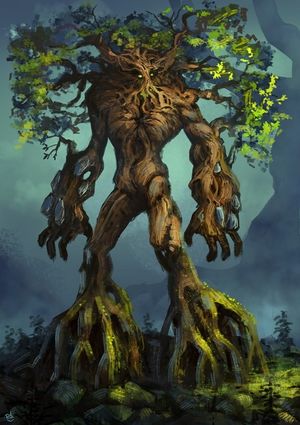
ent.jpgHealing of, and prevention of, dis-ease requires ceremony. Ceremony is an important human practice connecting the visible material/physical world with the invisible, spiritual world. Life feels empty and unsatisfying when we do not do enough ceremony, and ceremonies are most powerful done regularly and intentionally in community (Rael, 1998). Disease in indigenous thinking is caused by natural and supernatural forces, where natural forces include things like cold air, germs, or impurities in food and water, and supernatural forces include things like upset social relations between people, with ancestors, or other beings such as spirits of the traditional custodians of a place (Sussman, 2004). (Image is a depiction of one of J.R.R. Tolkien’s land spirits called the Ent, a tree spirit) Western concepts of unconscious or subconscious drives are similar to indigenous concepts of such spiritual forces (Holliday, 2008). When we focus our energy on cultivating healthy invisible environments based on values such as acceptance, non-judgment, inclusivity, compassion and empathy, we help purify our own hearts and the collective unconscious, or the spiritual realm. Indigenous thinking teaches that our social reality is based on a fundamental understanding of life in which humans are interconnected with all of nature, and by participating in an Earth Ethos peace circle, we literally embody Mother Earth together by sitting in a circle with an altar at the centre honouring the interconnected web of life we are part of. If you want to join an Earth Ethos peace circle, please contact me for more information.

giveheart If you value this content, please engage in reciprocity by living, sharing and giving.
Social belonging

belonging.jpg

Blog by Valerie

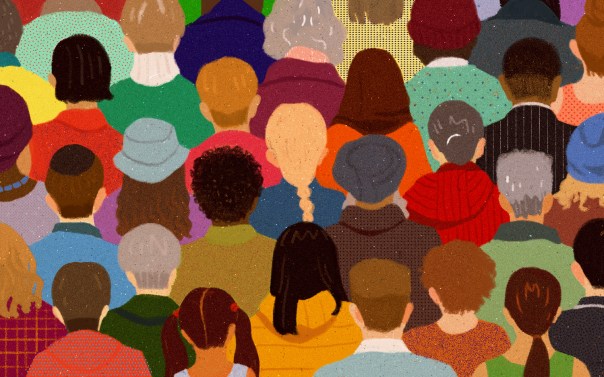
The etymology of the word “belong” is “together with” or “related to.” It’s a tribal concept. Years ago I worked with a shaman who said human nature is tribal, not national, by which he meant, the colonialist social experiment of countries would naturally devolve into tribes. These days I agree with this. Places like the US are too diverse and too big to be governed by anyone but a strongman holding it together through control. Before colonisation, Native Americans had governance structures of inter-tribal councils where power was not concentrated in one person but in a diverse group of elders that needed to reach consensus on contentious issues, and tribes had their own internal governance structures on top of that. But these days, what is a tribe? I like this definition, that in when we’re in our tribe, we feel normal and accepted. A clan is a more tightly bonded sub-group within a tribe, and a family is a more tightly bonded sub-group within a clan. A community is made up different tribal members and is formed either out of necessity (such as living as neighbours), or shared interest (such as attending the same school or church). (Image from here.)

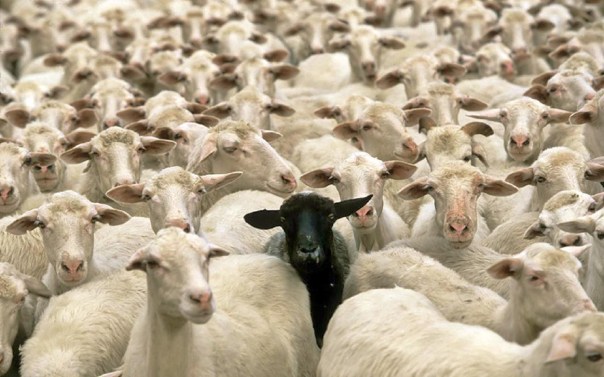
I have been a member of communities my whole life, but experiences with tribe, clan and family have been much more recent. The most memorable time I felt part of a “family” was a few years ago right before an indigenous dance ceremony with a group of people I had never met before. I had an “aha” moment sitting in a kitchen watching people buzz about preparing things for the ceremony and savoured that feeling so it would imprint in me and I would remember it. As a “black sheep” it took me a while to realise that for me family is based on feeling, and that being born out of intertribal conflict literally creates “bad blood” that I’ve needed to reconcile in order to survive. My tribe is scattered across the planet, and that’s okay. And many members of my tribe are invisible, ancestral spirits.

black sheep.jpeg

An experience I have often is “whitewashing,” where people look at me and immediately assume that I am a Christian of Anglo Saxon colonial background (though I have no Anglo Saxon blood that I know of, and I was not raised as nor do I identify as Christian). Growing up in the American South, I had a friend whose parents were Jamaican who similarly grew weary of being referred to as African American. We really project a lot of identities onto people without realising. Someone said if you really want to change the world, be mindful of your own projections, and boy do I agree with that. Even then, a projection and an internal felt sense of belonging are not remotely the same thing. (Image from here.) I am reminded of an experience in a sweat lodge where a Tiwa woman said she had been hoping there was no “white blood” in her family because the karma of that energy was so hard to deal with, but that a DNA test had shown she had some European ancestry. I said a prayer during that lodge: May all our intertribal conflict remind us that we are one big human family. May we celebrate our diversity and enjoy healthy boundaries. Aho. A cactus may appreciate a water lily, but they can’t survive in the same environment, so why would they go against their nature and try? Some of us must be in the wrong place physically, or else we would not have so much conflict in our communities. Sometimes we’re so used to being malnourished, it takes a while to imagine what it would be like to really flourish.

I’ve been reflecting on genocide, where one tribe has an overgrowth of the psycho-spiritual Wetiko virus convincing them that they are existentially better than another tribe so they set about violently trying to prove this by removing the “other.” If energy cannot be created or destroyed, when a tribe is killed, where does that energy go? I realised it emerges as ancestral trauma within the dominating tribe in successive generations in an attempt to reconcile the conflict from the inside out. Many of us who feel we were born into the “wrong” family, tribe, culture, body, etc., are bearing this diversity.pngkarma of humanity out. It’s all over the place: it’s conservative Christian parents confronting their prejudice with an LGBT child; a Southern Baptist who falls in love with a Catholic; a strong patriarch with a young daughter wiser than he is; a mother who worked so hard to break into the corporate world whose daughter wants to stay at home with her kids. Over and over again I see situations in which that which we judge, hate or reject is presented to us in an even more intimate way so that we learn to love and accept it. (Image from here.)

Exercise: Where, when and with whom do you feel belonging? What does it feel like? Next time you feel lonely, isolated or alienated, be with the “longing” for that aspect of yourself and explore why you feel that. What part of you feels rejected and why? What do you need to feel more present and whole in that space?

giveheart If you value this content, please engage in reciprocity by living, sharing and giving.

Hope for Change

Blog by Valerie

In Old English, the word hopa, from which modern-day “hope” emerged, meant “confidence in the future.” For me, this requires trusting in natural forces more powerful than I, and a willingness to venture into unknown territory (inside and outside myself) with an open mind and heart. It requires me to set aside what I think I know in order to see what is and will be. Daily contemplative practices like meditation and prayer purify me so that there is space in my world for miracles to occur. In my experience, where I do such practices makes a difference.

hopeflower.jpgAmericans often say, “I went for a walk in nature.” This is crazy, because we are always in nature. A house, a church, an office, a car—these are natural, highly cultivated, environments. A forest, a desert, a seashore, a mountaintop—these are natural, wilderness environments. Think about a spectrum of highly cultivated environments such as New York City, to total wilderness environments such as Alaska, and think about how you feel and behave in different environments. In cities, we tend to cultivate our lives: we carefully groom our faces, clothe our bodies, decorate our houses, cook pre-packaged foods, and schedule our time. In wilderness, we tend to let go and flow more. (Image from here.)

Many of us think that wilderness is meant to be free from human impact. This is simply not so in indigenous cultures. I have heard indigenous environmental advocates say that once there is stronger cultural consensus about respecting wilderness, they will come into conflict with Western environmentalists who want to keep it pristine and virginal. The lyrebird in Australia is famous for mimicking sounds in its environment. In recent years as its environment has been impacted by us modern humans, it has learned not only to the songs of birds and sounds of other animals, but of chainsaws and car alarms. The lyrebird does not judge some sounds as more or less natural, so why do we?

In an Earth Ethos, we humans need to interact with our environment, and in fact we have a sacred responsibility to do so. Taking a few minutes to meditate, pray, or practice mindfulness is a simple way to give back to our environments and express gratitude for all the gifts the natural world gives us. A “sit spot” is a simple contemplative practice for being in wilderness. All that is involved is sitting still in a wilderness environment and being as present as you can. The best “sit spot” is one that you are easily able to access, such as a park or garden near your home or office. Even sitting for five minutes a day makes a difference in how we feel in our bodies and how connected we feel with our wild Mother Earth.

foraging

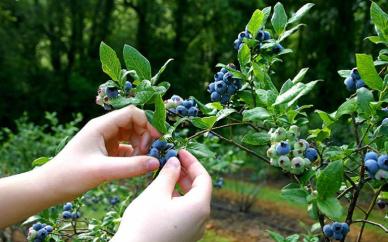
A Potawatomi elder and academic refers to modern humans as “species poor.” Most of us eat foods and use medicines bought in stores, and if we do grow our own, most of those plants originated in other places. Foraging enriches us by improving our connection with our environment and demonstrating our respect for the land. Indigenous wisdom says that plants emerge to offer the medicine and nutrition we need to survive in a specific environment. A simple practice is to learn some edible and medicinal plants in your current environment, gather and use them. (Image from here.)

organicWhen we change our perspectives, we change the world. When we recognise value in plants and animals in our environments, we act accordingly. Ten years ago few of us knew what “free range”, “grass fed” or “organic” food was. As an increasing number of people saw the destructive impacts of pesticides and other high-yield agricultural practices, collective modern culture began to change. Today, most of us are more aware of what we’re eating than we were ten or twenty years ago. That gives me hope that as we keep growing, more Earth Ethos changes will occur in our lifetimes. (Image from here).

Exercises: Start a “sit spot” practice. Learn to forage in your neighborhood.

giveheartIf you value this content, please engage in reciprocity by living, sharing and giving.
Nourishment

Blog by Valerie

Like all natural beings, each of us has a unique nature. The word “symbiosis” comes from two Greek roots: to live + together. Biology recognises six types of relationships, but I see the following three:

  • Mutualism (& Commensalism & Neutralism) – mutual benefit (though it may not be clear how)marigoldhiss
    • bees pollinating flowers
    • algae & fungus forming lichen
    • mammals eating fruit and dispersing seeds
    • a squirrel living in a hole in a tree
    • a bird hunting for insects while a hog digs up the ground
  • Parasitism – one benefits, one is harmed
    • kudzu grows up a tree, blocking its light and knocking it down
    • a mosquito, tick, leech or tapeworm takes blood from its host
  • Competition (& Predation) – one benefits, one faces loss (or death)
    • male gorillas fighting for dominance
    • a cat killing a mouse

(Image: Some of you may recognise our former cat Marigold and question whether pet cats are mutualism-based relationships.)

deerbunny1

Relationships nourish us, or not. Sometimes our relationships are based in part on shame. Through trauma-bonding in childhood we may have learned to associate nourishment with aspects of parasitism or competition. It took a long time for me to leave parasitic and predatory relationships involving members of my family of origin, as I kept working to transform them into mutualism ones, and it didn’t work. Sometimes our natures do not align for mutualism relationships. We’re all familiar with stories of someone who had “pet” bear, or snake, or wildcat that turned on them one day. I’m reminded of the Aesop fable of the frog and the scorpion:

aesop

We tend to place value judgments on the categories, but there’s nothing wrong with the nature of a scorpion needing to sting. We have these types of relationships in our lives, and through knowing our nature and being strengths-based and having healthy boundaries, we create conditions where we’re more likely to flourish. For example, I’m not competitive by nature, but occasionally I get caught up wanting to be right. This is a sign that I am not accepting myself, that I am in shame/judgment/punishment and am attempting to prove my worth and fight for my right to survive in that context. It is either an area of transformation, or a place to protect myself from and avoid as it is not healthy space for me. Parasitic relationships I can tolerate in small amounts and need to avoid on a larger scale. It’s one thing for a mosquito to take a drop of blood now and then; it’s another for twenty mosquitoes to be taking blood at once. (It’s one thing for a co-worker to ask you to listen to a sob story once a week, and another thing to be married to someone who plays a victim every day for months on end.)

Exercise: Think about some important relationships and contexts in your life. What nourishes you spiritually? emotionally? psychologically? physically? What do you see as your nature (it may change in different contexts), and how do you accept it?

giveheart If you value this content, please engage in reciprocity by living, sharing and giving.
Gift Economy

Blog by Valerie

A market economy is based on exchange, how much we owe (based on lack) and are able to earn (based on social judgment). A gift economy is based on faith, how much we share (based on trust) and give away (based on abundance). To me a gift economy has always felt natural. Embodying this Earth Ethos of faith, trust and abundance has been a life-long challenge in a lack-based global market economy. It has taken me many years of barely eking out a living, as well as numerous failed personal and professional relationships, to navigate this philosophical conflict with popular culture. Today, many of the services we call “sharing,” like paying to be in a car pool, are still part of a market economy. Charles Eisenstein is an advocate for a gift economy in modern Western culture, and his description of it is as follows:

Many indigenous cultures embody the philosophy of a gift economy. For the Kwakwaka’wakw people of Canada, the wealthiest people are those who give away resources in a potlatch ceremony, which may be planned a year in advance and last for several days. During the ceremony the host distributes wealth amongst guests, including beaded jewellery, leather clothing, and lavish foods. As Elder Agnes Axu Alfred explains:

“When one’s heart is glad, he gives away gifts. Our Creator gave it to us, to be our way of doing things, to be our way of rejoicing, we who are. Everyone on earth is given something. The potlatch was given to us to be our way of expressing joy.” 

In Papa New Guinea, people work for years to be able to give a moka gift to another person, who then works to gather an even bigger moka gift to give, as explained in the following video:

(The full documentary entitled Ongka’s Big Moka is available here.)

While being part of a market economy is currently compulsory for most of us to survive, there are areas of life where we can embody a gift economy. The first principle of abundant giving is that we have to be filled up ourselves and have extra energy to give. We have all experienced someone brimming with kindness so that we feel it in their presence, and another person clearly intending to be kind only able to offer a sheepish smile. Being honest about what we are capable of abundantly giving helps us avoid being in a space of lack. Whether mentally, spiritually, emotionally, or physically, we can only give to another what we ourselves possess. Once we judge/expect ourselves, saying we “should” embody a certain state of being, we have lost the ability to embody what we intend. A strengths-based perspective is the starting point for a gift economy.

Simple acts of kindness without expectation of anything in return (not even a thank-you) embody a gift economy, as do larger acts like doing pro bono work or volunteer projects. Most spiritual traditions enshrine the philosophy of a gift economy into their teachings, such as Christian tithing or Buddhist dana. Some organisations such as Vipassana meditation centres and Brahma Kumaris talks and retreats operate entirely on participant donation. But I have observed an insidious tendency to create expectations for exchange. A “Suggested Donation” of a specific monetary amount carries an expectation of a specific exchange, and trying to prove you are “a good person”, alleviate guilt, or “create good karma” are lack-based intentions. (The image below is from here.)

abundance

In my experience, embodying a gift economy in modern Western culture requires firm boundaries, strong skills of discernment, compassion and deep self-knowledge. We need to be willing to receive no money or expressions of gratitude from the person we are serving, and to prevent abuse, we need to know when to say no, to stop giving when it is no longer a gift. I call this spiritual social work, and there are an abundance of opportunities for all of us to practice it daily, such as giving compassion to a person criticising our behaviour, empathising with a leader struggling with narcissism, or giving grace to an erratic driver. Instead of judging and placing someone in lack, which then requires us to forgive, we can practice accepting and holding both of us in abundance. In my life, the person in whose presence I felt the most abundance, who was a subsistence farm woman in rural Guatemala who had a condition causing her skin to change colour and peel off her face and body. She had such a strong, vibrant spirit she was emanating light and to be in her presence felt joyful. Though I have had dinner with billionaires, this lady remains the wealthiest woman I have seen.

If you value this content, please engage in reciprocity by living, sharing and giving. giveheart