Denial literally means “saying no” to something, but we tend to think of it in a negative way. We say things like, “He’s in denial” when someone’s not accepting a truth. Here’s a concerning example of Reagan talking about Native Americans:
We’ve done everything we can [stop residential schooling & child removals] to meet their demands…Maybe we should not have humored them in that wanting to stay in that kind of primitive lifestyle. Maybe we should have said no, come join us; be citizens along with the rest of us [they all became citizens by 1924]…Some of them became very wealthy because some of those reservations were overlaying great pools of oil, and you can get very rich pumping oil. And so, I don’t know what their complaint might be.
I wouldn’t be surprised if the current president had said this. What I struggle to see is why so many Americans are surprised about what Trump says when this shit has been going on for ages. It’s not new unless you’ve had your head in the sand! (Image from here.)

But denial can be a positive and empowering act. We can deny a lie and re-claim what is real and true. It’s enlightening to see how often we perform during the day, and to choose consciously when to please people with the status quo (“I’m fine, and you?” and when to deny the expected social dance and be a truthful disrupter (“I’m sad today, my mom’s sick”). When we are flow-ers, our experiences feel embodied and full, and memories are centred in our hearts, without head-spins or image/sound loops, body aches or numbness . When notice those, we need to accept the pain/dissonance of the experience and decide how to respond. And our responses can be so inspiring and powerful, like a Lakota woman called Blackowl describing her free birth at Standing Rock:
Having babies is my act of resistance; our reproductive rights as Native women have been taken away from us in so many ways. At one time, we were forcibly sterilized…[We] have become so disconnected from our bodies and our roles as a result of the mainstream colonial culture…[but my daughter] will know where she came from, that she came from very strong women who all stand behind her wherever she goes. I definitely felt those strong spirits near us when she was born.
We are all trying to survive and navigate dehumanising social systems today, and many of my ancestors were complicit in this de-humanisation. I am too sometimes. It seems to me that exceptionalism and greed are foundations of colonisation. So many of our ancestors were tricked or forced into leaving the safety and security of their homelands, and ended up at the mercy of leaders filled with abstract promises and entitlements. If we can decolonise these lies and griefs by seeing through them with compassion and expressing our feelings, how much more centred, peaceful, and grounded will we all be? (Image from here)
One way that I am denying exceptionalism and de-colonising is by creating a calendar that is a mix of Frisian (Germanic), Ashkenazi pagan (Slavic), and modern celebrations that are meaningful to me, my ancestors, and are seasonally appropriate for the land where I live now (no fake snow in the summer for Christmas, please!). Through developing this calendar I learned so much, felt moments of deep resonance in my body, and peace in my mind. For example, I realised that all my ancestors followed lunisolar calendars (I love moon ceremonies), and my Frisian ancestors considered sunset the start of day (I’ve been a lucid dreamer since childhood and find the subconscious space much more powerful for healing and insight than waking life).
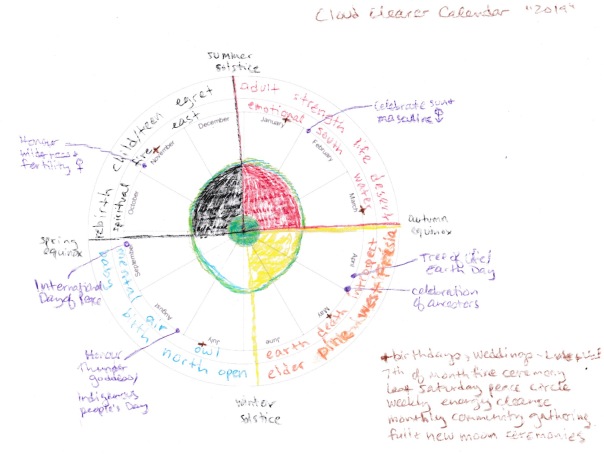
This act of denying the colonial Christian calendar is especially important to me, because the Gregorian calendar has never felt like my calendar, and the years and months and days I write to communicate with others have never made intrinsic sense to me. It’s no wonder, because they don’t come from my culture! (Check out this previous post with about calendars if you want to learn more.)
 Denying oppressive cultural stories frees not only you, but your ancestors, the lands, and indigenous people and their ancestors connected to the land where you live. A few hours outside of Sydney, Australia in Wuradjuri country (green on the map):
When you look across the river you can still see the remains of the Aboriginal camps…all these highways that criss-cross the landscape, they are following Aboriginal trails. It’s not as if an explorer blazed through the wilderness. They just followed a track. Churches — both Catholic and Protestant — were built on Bora Rings which were sacred dance and initiation sites…Goonoo Homestead was a sacred area. It’s a bend in a river and that’s where the Wiradjuri all camped. A squatter came along and built his house there.
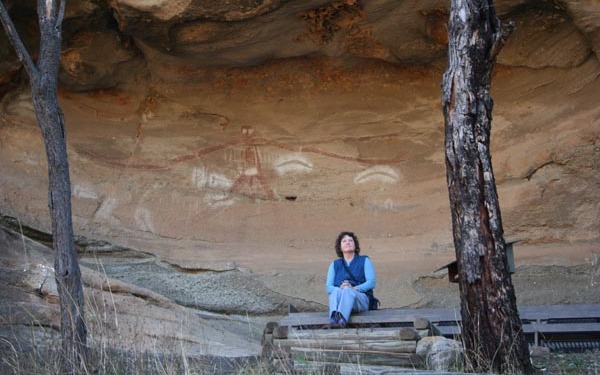 Though churches and houses were built on their sacred sites were intended as acts of dominance and genocide, they ensured that those sacred places survived as sites of worship. Today Wuradjuri people are going back to those places and re-membering their language and culture:
You have to be in that one spot to actually know the ways of thinking around the naming of that area…All the Aboriginal history has been eradicated, the scar trees have gone. But several waves of white or non-Indigenous history has also been eradicated and that’s what’s really interesting. But the land remains, the trees are coming back. A lot of scrub is coming back — prickly pear and god knows what else — but the beauty of the land remains. And it’s such a beautiful country.
Many people don’t realise that patron saints of cities or groups of people were often people who killed local shamans and sages, desecrated sacred sites, and forcibly converted people. This happened throughout Europe and the Middle East, and spread across the world. I once asked an African American pastor how he had reconciled his faith with the fact that Christianity was forced onto his ancestors during slavery. He hadn’t yet thought about it. It’s no wonder to me that we are filled with so many survival fears! The more we heal these denials, the more powerful our faith will become, and the more peace and truth we will embody. There’s nothing wrong with Christian; there is something wrong with ignorance, intolerance, and avoidance. May reading this inspire you to deny a lie and more fully live in truth tonight.

 If you value this content, please engage in reciprocity by living, sharing and giving.

 purposely into trauma or danger, but not to the point of becoming a martyr and building resentment. It can be a challenging line to walk. It requires very high personal standards along with loads of compassion for self and others. It can be isolating and incredibly fulfilling. Instead of being outraged about whatever stupid action Trump did this week, I was in awe to learn that fish underwater sing the water and reefs awake at dawn, just like birds on land.
 If you value this content, please engage in reciprocity by living, sharing and giving.

 If you value this content, please engage in reciprocity by

 If you value this content, please engage in reciprocity by


 If you value this content, please engage in reciprocity by
  Blog by Valerie
 The depth of relationships, and the experiences, feel quite different to participants. Similarly, instead of peace circles as a tool to help control behaviour or improve the way people speak and listen to each other as is common in westernised restorative justice practices based on a Judeo-Christian worldview, an Earth Ethos peace circle is an opportunity for a communal spiritual experience based on an indigenous cultural cosmology. Because of the intentional use of metaphor, it ought to feel different to participants (and certainly does to me) than simply sitting in a circle (or around a table where we are blocked from connecting with each other physically) and passing around a talking piece. Many indigenous peoples use oral traditions to preserve cultural wisdom. Verbal repetition and physical embodiment of teachings keeps them pure (
 Healing of, and prevention of, dis-ease requires ceremony. Ceremony is an important human practice connecting the visible material/physical world with the invisible, spiritual world. Life feels empty and unsatisfying when we do not do enough ceremony, and ceremonies are most powerful done regularly and intentionally in community (
 If you value this content, please engage in reciprocity by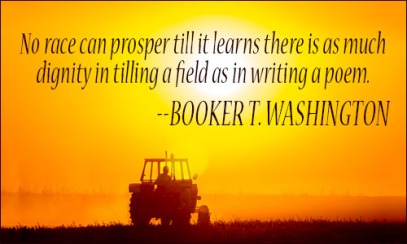


 materialist or a Christian, so I told people close to me I would focus on birthdays and important life events, and I stopped. I don’t want to deprive anyone of the joy of giving, but I don’t want to feel burdened receiving what is intended as a gift, so I told people close to me if they want to give me something, I prefer personal notes, meals, time together, and handmade art. I dislike expectations to behave a certain way on a day that is not especially meaningful to me, so Luke and I take short trips just the two of us over Christmas to enjoy Mother Nature instead. This all make it easier for me to stand in dignity because I am accepting me and not playing a victim by gracefully navigating a situation where my way of being is not socially privileged. Cultivating the discipline to deny ourselves that which brings us pain and suffering helps us stand in dignity and experience more joyful abundance.

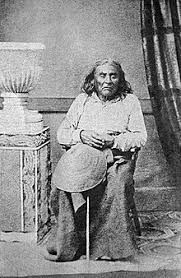 In his
  When we are miserable we are rejecting or rebelling against reality, which is destructive and results in existential crisis. When we are accepting we remain in the present moment, however painful. Many of us understandably feel overwhelmed by the depth of pain on the planet right now, so we numb ourselves with substances such as sugar, caffeine or alcohol; run away to our heads to avoid certain feelings; and seek out “light work” or “positive psychology” to create bubbles of security around ourselves. This is so common that a famous social psychology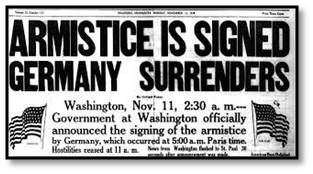

 If you value this content, please engage in reciprocity by
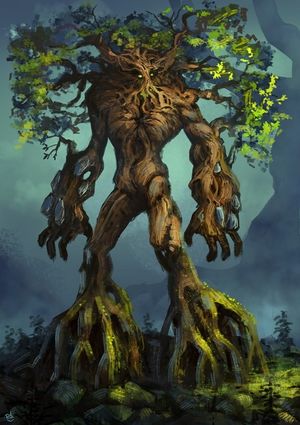
  Americans often say, “I went for a walk in nature.” This is crazy, because we are always in nature. A house, a church, an office, a car—these are natural, highly cultivated, environments. A forest, a desert, a seashore, a mountaintop—these are natural, wilderness environments. Think about a spectrum of highly cultivated environments such as New York City, to total wilderness environments such as Alaska, and think about how you feel and behave in different environments. In cities, we tend to cultivate our lives: we carefully groom our faces, clothe our bodies, decorate our houses, cook pre-packaged foods, and schedule our time. In wilderness, we tend to let go and flow more. (Image from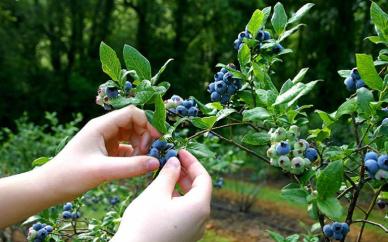
 When we change our perspectives, we change the world. When we recognise value in plants and animals in our environments, we act accordingly. Ten years ago few of us knew what “free range”, “grass fed” or “organic” food was. As an increasing number of people saw the destructive impacts of pesticides and other high-yield agricultural practices, collective modern culture began to change. Today, most of us are more aware of what we’re eating than we were ten or twenty years ago. That gives me hope that as we keep growing, more Earth Ethos changes will occur in our lifetimes. (Image from
  Earth Ethos