 Blog by Valerie
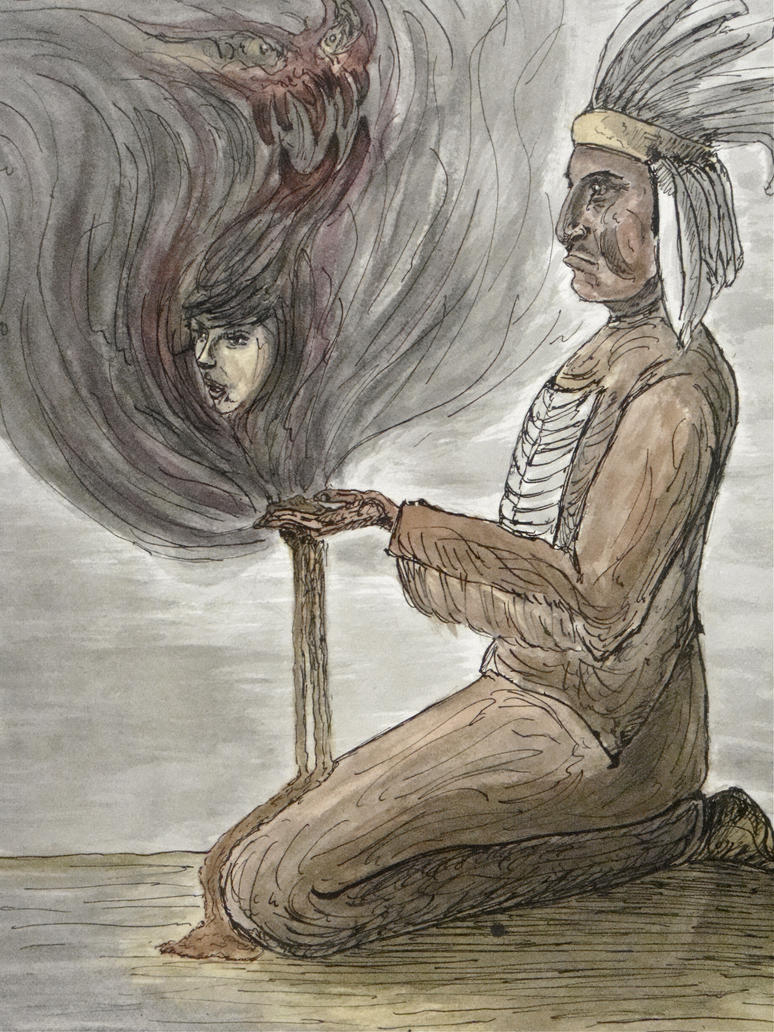
Witnessing is an important method of learning and healing. In a MOOC (massive open online course) I recently completed on indigenous early child development, witnessing was taught as one of the main ways indigenous children learn, to remind western educators to value it and not expect that learning needs to be in a lesson format. It seems to me, witnessing is how we all learn. We have to teach children how to behave in ‘lessons’ and other learning environments. But from when we’re tiny babies and can’t physically do much, we learn by witnessing the world without and our feelings within. (Image from here)
I’ve been doing a lot of witnessing lately with both political and social situations around me. Sometimes I feel grumpy and want to say, ‘Hey, don’t treat me that way!’, but I realise it isn’t about how someone is treating me, and I don’t need a boundary. They’re in pain and asking me for compassion, patience and grace. Other times I want to say, ‘Hey you don’t have to live in your hurt and believe that’s the way life is!’, but that rarely feels constructive with stuck and pained mindsets, and I don’t want to be unkind or lecture.
So I ask myself, what is my responsibility?
 In terms of larger social issues, I understand the appeal of ‘news fasts’, because a lot of what’s reported on is hard to digest and happening physically far away. But I feel it is my responsibility to maintain some awareness of struggles where I have a connection, and devote some of my time to witnessing reports from people there, feeling my feelings, and sending some prayers.
Witnessing can be incredibly healing because the other doesn’t feel invisible or judged. It can also be really hard work. I see it as an art, and part of the power of practices like sacred circles, talk therapy, or confiding in someone. And it extends to our non human kin as well, as anyone who’s ignored their pet can attest. (Lukas and I had a cat called Marigold years ago who did what we referred to as ’statement shits’ outside her litter box to get her message across when she was unhappy with us!)
Sometimes witnessing doesn’t feel like doing enough. I for one can’t take a photo or write a story about someone having a hard time and feel like I’ve done my job (but then I’m not a journalist!). I tend to need to dialogue with someone or send prayers. Others might feel the need to donate money or time. One thing I’m wary about, though, is rescuing. Sometimes we are in crisis and need to be saved from a bad situation. And yet, often the harder thing to do is to witness a struggle, wait to see if there is right timing for us to intervene, and accept that an intervention might just be a few gentle words or a reminder about a boundary. To overstep places us in drama we needn’t take on, and to avoid cuts us off from parts of ourselves and each other.
That’s why witnessing is an art. And to all of you practicing it, I honour your work. Thank you very much for all of your unseen, valuable heart labour. (Image from here)

Exercise: Reflect on how you value witnessing. What do you tend to do when you witness something hard? What do you tend to avoid witnessing? What do you ask others to witness?
 If you value this content, please engage in reciprocity by living, sharing and giving.

 The concept of “
 In cities, since I started having visions of plants intertwined with buildings (reminding me of a modern co-habitation version of some of the Angkor temples I visited many years ago), I have felt more peace when moving through urban spaces. It is up to you how to honour your visionary gifts. Your expressions may evolve over time from doing personal life and
  I bring this up because I find unconscious sorcery very common. I recently got to the root of a painful thought loop that’s informed my whole life and was quite surprised to find that it wasn’t intergenerational trauma as I expected, but in fact (I’m assuming unconscious) negative sorcery from a former big shot professor who had it in for my mother. I did hear stories growing up about how he had bullied her, like how when she was pregnant with me and asked for afternoon classes due to morning sickness, he gave her 8am classes instead. The belief he cursed me with was “you don’t belong here”. And I do feel it was directed at me, maybe even more than my mother, because he took great issue with a young mother having an academic career. And I made her into a mother.
 That was his hook. But what about me? As
  So the next time you’re angry at a politician and notice yourself sending them daggered thoughts laced with negative emotion, or find yourself verbally ranting about them, stop and ask yourself how you’re using your power, and if you really intend to be cursing them. Cause what we do to others we invite into our own lives! And if you think you have been cursed, feel free to
  (Typical image of ‘spirituality’ from
  How do we know the difference between a spiritual experience and our imagination? I have seen a lot of people struggle with this – with their minds tricking them into thinking they have encountered a Spirit, for example. For me the difference is in embodiment. And when in doubt, see if and how changes occur in your everyday life as a result of the insight or guidance you got. (Image from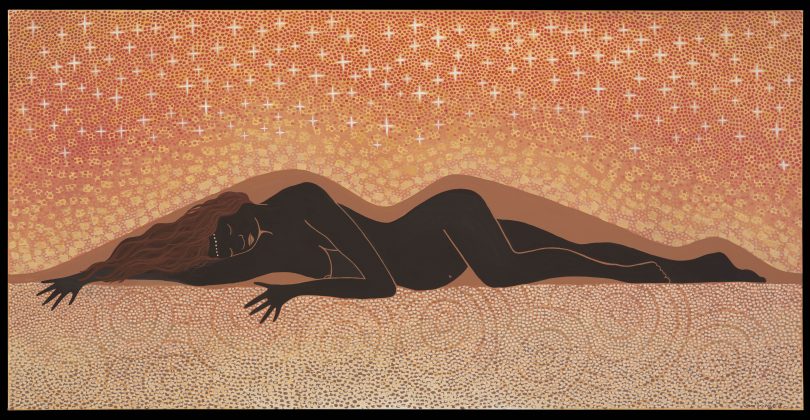

 Initiations intentionally lead us through Earth’s cycle from life into death then rebirth with a new identity through a purposefully
  Initiations may be seen as having three distinct phases: separation (from daily reality), ordeal (trauma), and return (rebirth and resolution)
 One example of an ordeal is the Sateré-Mawé tradition of adolescent boys enduring the pain of repeatedly putting their hand into a glove filled with bullet ants that inject toxins into them
 Initiations thus teach cultural myths and values, and ordeals without sacred spiritual stories attached to them are merely meaningless violence, reinforcing nihilism and lacking re-integration and fulfilment of a new identity along with its social responsibilities. In the example above, boys who complete the initiation are allowed to hunt and marry, which complete their rebirth as adult men in the community. Many of us grew up in cultures with rites of passage that included separation and ordeal phases but lacked full return phases to reintegrate us into a healthy new identity. We may feel called to question our



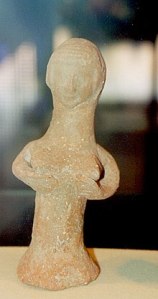 Evidence in written texts at the time and archaeological evidence indicating that for two-thirds of the time the temple in Jerusalem existed (before it was destroyed and re-formed into what is now known as the Wailing Wall), it contained an altar for a male god (Yahweh) and a female goddess (often called Asherah), and that the goddess altar was removed and re-instated repeatedly until ‘the cult of Yahweh’ won out. Then the temple was destroyed. (See e.g.


 Grounding these Jewish myths in context, while also remembering that a lot has been lost in translation – for example, the Hebrew word ‘
 Internally, when we have rejected a part of our ‘self’, we might need to sit with painful feelings such as anger and mistrust and rebuild a relationship, for example, with an aspect of our inner child who was judged as ‘lazy’ and felt ashamed about it. When we become our own parents, we can teach that part of our self that resting and going slowly is something we value and are sorry they were judged and shamed for it. As we can start enjoying resting and being lazy, we accept and move through feelings of shame and thoughts of judgment and whatever else we took onboard as a child, allowing healing to occur for a wounded part of our self. While accepting our ‘self’ and all these feelings, we are rejecting the previous teaching (lazy = shameful, unworthy, etc.). In this way, we can find ourselves on a path of rejecting what we’ve thought of us as our core self – including culture, identity/self, family/blood, sexuality, etc. (Image from
  Earth Ethos