Roots deeper than whiteness — David Dean: Pithy and succinct history of how “whiteness” erased culturally richer European ethnic identities and allowed for racism and exploitation of non-whites. Very America centric, but captures something essential about the “white” identity that is an important, though non-exhaustive, component of settler trauma.
Empathic dialogue
Topical overviews
Indo-European language family: Lukas is producing a podcast on this, but familiarising yourself with the idea of the Indo-European Language family will give you a sense of the way in which so much of the worldview of the modern Western mind derive from a common ancestors like the Yamnaya peoples of the Eastern European steppes.
Enclosure movement: Critical historical shift in Britain (and by extension, Ireland) in the relationship between people and land, from feudal “rights” (which were of course based in intense hierarchy) to ownership, “rents” and thinking of “output” and productivity above all else.
Books specific to Anglo-Celtic Australian settler trauma
The Fatal Shore — Robert Hughes: Detailed history of the “transportation” system and the abuse experienced by convicts, and life in “Dickensian” England. Note that some of the history as presented in this book is contested, but it nevertheless gets to some deep truths around rejection and dehumanising that still plagues our culture.
The Tall Man – Chloe Hooper: Deep dive into the world of a policeman who worked in outback towns across Queensland before being involved in an Aboriginal death in custody on Palm Island, told as a parallel story alongside the life of the man who was miles. Shows the depth of wounds on both sides and the inability of large colonial institutions like the police to cope.
The Timeless Land – Eleanor Dark: Work of incredible channeling by Eleanor Dark from the 1950s who tries to get into the mindspace of both colonists and Aboriginal people in the early days of the colony at Sydney Cove. Presents the crucial idea in Indigenous Science that how you treat others — for example convict flogging — is a reflection of oneselves because we are all interconnected. The Way of Wyrd – Brian Bates: Rich and thought provoking research informed narrative exploring Anglo-Saxon Paganism. Provides a tantalising insight into another way of being practiced by your relatively recent ancestors.
Rage matters. It’s a passionate, spirited emotion. Spirit keeps our inner fires burning and helps us feel alive. We need healthy spirits! I remember spiritual teacher Tom Lake, an Anglo-Celtic medicine man sharing that to try to get rid of one’s anger is to dis-spirit oneself. What we do with that energy makes a difference to our fulfilment, our personal power, and to the people and world around us.
Unfortunately social and political power are often not encouraging of us being our best selves. But we still have to live with who we are being and what we do.
I have noticed a pattern to the hateful messages I receive from other politically Indigenous folks. The person states their cultural affiliation (usually Aboriginal Australian, sometimes Native American), then attacks mine. The comments are about one of my online offerings, but are directed to an unknown reader using othering language. They open with language like “I’m really interested how she can claim…” while expressing no interest in dialogue. Most comments occur on weekend evenings from males. It’s clear the person didn’t read more than a paragraph or two about me and my life’s work.
I feel the person’s rage and see it as a cry for help. I send compassion, care, and a boundary of not engaging directly so as to avoid fueling flames of further divisiveness and violence.
We all get overwhelmed and are unsure how to direct our rage at times. I get that. For all of us who care about Lore and Law, who feel connected with Mother Earth and the ecosystems where we live, there is a lot to be angry about right now. Much about the way we are collectively living feels wrong, yet as individuals we can feel limited power what we can do differently.
Here are some ways that I find constructive to honour rage in the short term:
Primal screams (you might like to add chest beating) and foot stomping;
Big sobbing, raging grief (where you really let go and have a big physical cry);
Physical movement (running or wild dancing are good options); and/or
Musical, artistic or other creative expression (banging drums often helps).
In the medium and long term, I find these helpful:
Practicing unconditional love and acceptance (especially with oneself and with people who have very different values and worldviews);
Reflecting how to more fully live your core values and ways to practice compassion when you can’t (maybe you do some activism or make a small lifestyle change);
Spending time connecting with landforms, animals and plants and attuning to indigenous science messages; and/or
Setting and honouring boundaries to uphold important Lore and Law (like treating yourself and others with respect and dignity).
When I think about people behaving in ways that I fundamentally disagree with and find inherently destructive, it helps me to remember the cycles of the Earth: birth, life, death, and rebirth. Destructive energy leads to death and decay, and following that is an opportunity for rebirth. Death and decay is uncomfortable to be with, but it’s s purposeful part of our life cycle. Deaths of collective dreams and ways of being can feel very big at times, yet reach unexpected tipping points. I find solace in the quotes below, and maybe you will resonate with them also.
Let’s express our deepest passions and rage wisely to keep that energy flowing! Let’s allow toxic divisiveness and existential supremacy to die and decay, making more space for interconnectivity and beautiful rebirths to emerge.
Over the years I have observed a number of spiritual seekers looking for a ‘secret sauce’ solution to their lives – some kind of trick or program that, if they followed it, would lessen their pain and make their lives look more like what they have in mind. I have numerous times had the experience of being ‘tried on’, sometimes for a few months, sometimes even for years. But when one is looking for a secret sauce, spiritual practices from any tradition will inevitably disappoint. Yes, some ceremonies or practices may resonate so deeply, even profoundly altering our life direction with deep healing in a moment or over a short period of time. But if we continue to seek ‘pow’ experiences, we will end up chasing the dragon on a hopeless, addictive journey.
An important spiritual ‘pow’ I experienced when I was trying to move through suppressed childhood trauma that had come up in my late 20s. I did four ayahuasca ceremonies in the Amazon, followed by a 10-day silent Vipassana retreat in Chile (without warm enough clothing!); I felt for weeks afterwards as if my brain had been shaken like a snow globe. I had done that on purpose to move the trauma through my life over years instead of decades. I remember sitting in a hotel room in Peru and painting pictures, then ripping them up and reassembling the pieces to reflect myself. Life was very intense for more than seven years as a result of the pace at which I chose to ride that wave of energy, and miraculously Lukas rode through it with me, often saying he felt like he was barely holding on. I am glad to have moved through much of that trauma. My most recent spiritual ‘pow’ experience was the birth of my daughter. She turns three this year, and I feel like my nervous system is calming down from what the birth brought up.
Last year someone who tried me on started working through my book, and after three weeks said to me they were done doing spiritual work because they weren’t seeing enough changes in their life. I was pretty stunned that this person was expecting such a short ‘pow’ turnaround in their life with so little effort. When I was very unwell in my 20s and finally found a naturopath who diagnosed the pathogenic bacteria in my gut, I remember her saying that with three years of drastic diet limitations and careful, targeted supplements I could expect to feel better. That sounded good to me as I considered how many years had led to my system becoming so sick. And it turned out to be true. (Image from an art installation in Sydney in 2020; sorry I don’t remember the artist!)
These days I like to think about how long it takes a plant to establish its roots underground, all the nourishment required to even make it to the surface, and then the years of growth and renewal and moving through disease. I told that person that some seeds I had planted in my life over a decade ago were only starting to bear fruit for me now, and that I had been doing some of the same daily spiritual practices such as altar work and seasonal ceremonies for longer than that. Unfortunately, that person has become very dis-spirited, and I hope they find a way out of the dark hole they’re in. (Another photo I took at Angkor Wat years ago of an amazingly resilient tree)
It seems to me that a real spiritual ‘secret sauce’ is made up of persistence, patience, a daily practice, trust and faith in something(s) bigger than ourselves who care to help, commitment to core values that are worth living and dying for, grit and determination to stay the course, and a sense of humour.
This blog is for those of us who receive visionary insight through the gift of clairvoyance. Like all spiritual gifts, it can be tricky to work with. We need to discern what are visions and insights, and what is our imagination. We need to learn which visions are due to intergenerational trauma and ancestral wounds needing to be witnessed, and which are warnings of potential future events. It can take time to make peace with and accept some visions when it feels like there is little that we as individuals can do to change the outcomes.
It seems more common for us to have negative experiences when we reconnect with spiritual gifts as adults, which gives us abundant opportunities to practice acceptance, compassion and discernment. We learn a lot from unpacking negative experiences. But that may give us little comfort when we’re trying to process painful visions of natural disasters, traumatic deaths, and abuses. Some of us seem to be called to witness in our mind’s eyes (and some of us also in full embodied lived experiences), some aspects of nature and the earthly reality that are incredibly harsh. Lukas likes reminding me about the nature of lions, that the males try to kill all the cubs of the previous male who was the head of the pride so that the children are all his. If a human did that, we would be appalled, but with lions we accept it as their nature. Aspects of nature are brutal. (Image from JenaRose)
The concept of “All My/Our Relations“, a term commonly used in indigenous cultures in the Americas, is a way to describe an indigenous science concept of interconnectedness where we see ourselves in all aspects of nature. That means that we don’t other ourselves from lion behaviour even if we find it appalling, we hold it in our hearts and minds as part of nature that we do not wish to emulate but which we allow to exist (meaning we let go of any existential judgement and practicing acceptance). (Image from here)
I have found with visionary gifts in particular, we often feel forced to face our deepest fears, witness family secrets, and see society’s shadows with clarity. This isn’t easy. Even if we gain valuable knowledge, others won’t necessarily listen to us or value our insights. This may result in our having to witness and be negatively impacted by others’ poor choices. I used to overly share visions and insights out of hope (or desperation) that someone would listen. But that wasn’t respectful of myself and the gifts I was given. It helps to remember that visions are just that – visions. They may or may not come into being. It’s important to carry a bit of doubt and humility about them, even if we find much of what comes to us does happen. There may be metaphorical meaning in visions too. In visions involving others that we feel moved to share, we need to create space for others to interpret the visions themselves.
In cities, since I started having visions of plants intertwined with buildings (reminding me of a modern co-habitation version of some of the Angkor temples I visited many years ago), I have felt more peace when moving through urban spaces. It is up to you how to honour your visionary gifts. Your expressions may evolve over time from doing personal life and altar work, to sharing them with a few people close to you, to using them to inform your art, direction of work in society, and your everyday life choices. I hope you allow yourself to be creative and give yourself grace to try things and see how they work. And please keep in mind that if you pray for something you envisioned and it doesn’t turn out the way you wanted, your prayers do matter; the people and non-human kin involved in the event can feel your energy and impact on some level, however humble.
Earlier in my ancestral healing journey when I set boundaries, I would tell ancestors who couldn’t support me and my core values to go. I had heard a few people advise to only work with healed ancestors, though I’m still not quite sure what that means. All our human ancestors are somewhat healed and somewhat wounded. Sure, some are wiser and more healed than others, just like people living now. And even ancestors we may refer to as ‘enlightened masters’ have blind spots and things to learn. No one’s infallible.
It felt important for a while to build my strength and skills to take space and even reject some behaviours and values, to avoid certain conflicts. But I find that what we reject tends to comes back to us seeking deeper acceptance. And since I don’t believe in existential judgement, I needed to learn to coexist with all my ancestors. If there’s a crocodile in our environment, we need to learn to live with it, how to protect ourselves and avoid it as best we can. Because that’s where we are living now, and that being has just as much value here as we do, whatever feelings we have about them. (Image from here)
Aboriginal people, through thousands of years of living with crocodiles never have considered that they are dangerous animals. We have always lived with them. They lived their own life and we lived our own ways, as long as there is common respect for each other.
–Gularrwuy Yunupil’u in Living with crocodiles (ABC documentary)
How do we respectfully, even vigorously disagree when we feel that others are acting in ways that are disrespectful and undignified? From arrogant ‘I know better’s to moral judgements, to shameful denials to self serving greed or even something as deplorable as genocide, so many of our behaviours are rooted in existential judgement. Such judgements take us out of the web of life and create existential hierarchies. Wetiko creeps in, and we start to believe stories of supremacy. If we want to embody connection, then we have to make space for really tough stuff like experiences of existential judgment from others and the painful impact of destructive behaviour.
I have written before about estrangement from my family of origin. I still have dreams about many of them and experience connection. Sometimes I feel like we have worked through things in dream states, and other times I feel like the same dynamics that I walked away from are still present.
For a few years I took space from some members of Lukas’s family due to unacknowledged behaviours that had destructive impacts on both me as an individual and us as a couple. We started slowly reconnecting after our little one was born because Lukas wanted her to get to know them, and I respected that. I don’t feel that different than I did before, but I feel like we are better equipped to maintain boundaries and protect ourselves than we used to be.
Interestingly more of Lukas’s ancestors who have rejected me have been coming to me in dream states and telling me how they feel and why they’ve been so hard on us, that I’m not Christian and pull him away from Christianity, I’m not focused solely on his career and have one of my own, I took too long to have a child and am only having one, I ask too much of him around the house–all sorts of criticisms. In another culture (like my Jewish-Sumerian lineage), someone would have yelled at me about all that, but the Anglo Celtic culture struggles to speak directly, and often struggles to speak their truth. I now have more stories for what I’ve been feeling and behaviours that still play out, whether it impacts me directly or helps me witness patterns and struggles in the family with more clarity and compassion. I don’t yet feel like I’ve been welcomed into the family or have social belonging. I feel overall like I’ve been begrudgingly accepted, especially since I’ve had ‘their’ child, so that I’ll always be in the family tree now and there’s no point trying to break our marriage now.
For a while I resisted working with Lukas’s ancestors. I felt like that was his responsibility, and I was pretty full working with my own. As work with mine calmed down and we decided to get pregnant, I figured if some of Lukas’s ancestors would rather work with me that I had capacity. I want to support healing and prevent my child from inheriting intergenerational trauma as best I can. It’s been interesting if pretty unpleasant for the most part. But making space for such experiences feels important in the inner and outer world right now. Grace and compassion are so valuable. There’s a lot of conflict in the world. I think it will be a lot easier to work through it when we collectively accept as a baseline that all of us on the planet, human and nonhuman, are inherently worthy of dignity and respect.
Existential judgment may be the most destructive behaviour we humans engage in. And when we do, we add to our sense of shame. I have been noticing lately how efforts to avoid feeling such shame seem to be linked to an increase ghosting behaviours. So much to make space for and pray for healing about. We can be very spiritually enriched at the moment if we can avoid overwhelm! (Image from here)
It is autumn here, and at the recent equinox we did a ceremony of thanksgiving. I like to read the Thanksgiving Address of the Haudenosaunee peoples. I find it really beautiful. We also asked for a few things, which later felt wrong to me, like it was the season of giving thanks for what we had, not to plant seeds and ask that they grow; so we did another ceremony expressing gratitude for what is working for us related to the area of life where we asked for change. That felt more balanced.
As much as I have and am truly grateful for, this experience highlighted how much lack is in my life at the moment. I started to reflect on that. I realised that I have had a belief that ‘I always have what I need’, and so if something isn’t present in my life, then I must not need it. But that belief doesn’t feel like it is honouring my life. It feels like trying to reject or mentally trick myself out of being in lack. In new age-y and positive psychology thinking, ‘light’-ness is privileged, and we are pushed to look at the bright side. There is value to that, but not, in my opinion, if it feels forced or rejects our lived experiences. Sometimes life feels heavy and dark, and it’s important to make space for that. (Image from here)
On the planet right now, so many plants, human and non-human animals are lacking safety, security, healthy food, clean water, shelter, etc. Why would I be any different? I would expect there to be some lack in my life given our collective environment. Lack teaches me to appreciate what I have, and to cherish what comes into my life when lacks are transformed. (Image from here)
There are some areas of my life where I feel so deeply in lack that I feel pain and impatience even as I experience them healing. It is as if I’m coming from so far behind what I need that I can’t yet relax and feel at ease that it’ll keep going in a healthy direction. I need to keep it on my radar to pray about and act to improve within my power.
As I am still breast-feeding and being a full time carer, Lukas has been looking for employment for a few months. That struggle has brought stress, fear, and lack for both of us, along with moments of finding deeper faith and trust, as well as gratitude and joy for extra family time. Another example: the more I parent my toddler, the mirror of my own childhood continually brings up grief and lack for me to be with, along with the joy and relief of breaking patterns as best I can by giving my child what I didn’t receive. (Image from here)
In the Jewish family and the secular capitalist culture I was raised in, people believed not in reciprocity and gift economy, but in transactions. As a non-Zionist Jew, my understanding from my family was to place faith and trust in accumulating gold, jewelry and money for survival, not land, because we could carry those things with us if we were forced to move. They saw me as a commodity too, which felt incredibly de-humanising. It confused me for a long time, how I could feel so much love and pain at the same time. It also existentially denied my spiritual gifts and strengths. But that’s how they saw the world and what they believed in. And I’m not in the business of trying to change anyone’s beliefs but my own. Beliefs are very personal things. (Image from here)
So I have decided that I no longer believe that I always have everything I need. It feels untrue and unkind to carry that belief. I believe my responsibility is to discern my needs as best I can and act within my power to meet them; and that dignity requires me to honour Life by allowing all energies that arise within me to be celebrated. At the moment, that means honouring lack, and so here’s my blog celebrating that. I hope you find value in it.
“The Filipinos of today are the happiest people I know. Why revisit the past and why does it matter now?” She told me with an unsure smile. I only just met her for the first time five minutes ago and somehow, our conversation took an unexpected dip into the stories rarely told territory.
When two strangers realise they’re both Pinoys because curiosity has prompted either of them to ask “Are you Filipino?”, there’s typically a surge of excitement when it’s a match. Usually, I reply by either talking about how long since I’ve been back in the Philippines or how much fun I had in my most recent trip. In this case, I had just returned from a trip to my homeland after a 5 year drought.
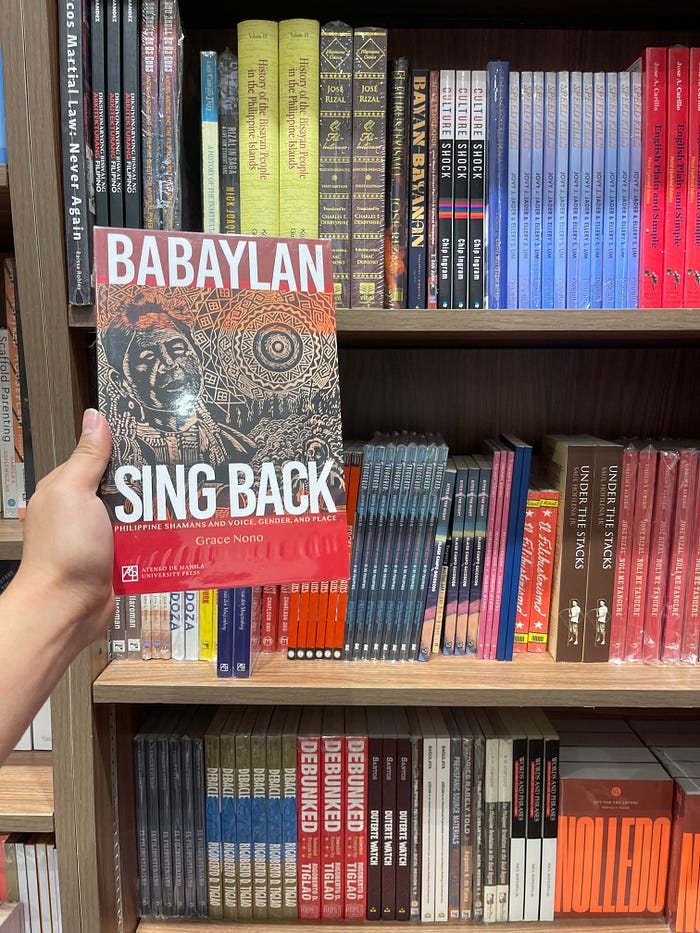
I casually recounted that while my trip was short and sweet, I was also on a mission to discover some local books on Filipino History. A quest that took me at least 9 book stores until a kind soul directed me to a shelf filled of said books on the second last day of my trip. It was a welcome relief after being repeatedly directed to the Filipino cookbooks section in my prior search.
Back to our unplanned discourse, I couldn’t possibly not share a tidbit or two about how aghast I was at what I’ve learned so far. Especially how our distant relatives have been wrecklessly jostled about from the Spanish to the Americans in deeply degrading (and staged) circumstances.
“…why does it matter now?” she recoiled back.
The shelves of wonder. Thank you Fully Booked, Grand Central.
The sound of my name being called broke my reverie as I mulled her question. I was in an animal shelter and fortunately, it was my time in the queue to be attended to.
Being a Filipino-Australian who has been living in Australia since I was eight years old, I have also felt a gnawing inkling that now would be a great time in my life to rediscover my Filipino roots.
How does one start though? Scholarly articles and the very limited Filipino history ebooks on Amazon points to the fact that the colonial legacy of the Philippine’s past has left deep scars in the Filipino psyche, including “internalised oppression, self-hatred and colonial mentality” (David & Okazaki, 2006).
Hang on. Colonial Mentality? What does that actually mean?
Colonial Mentality
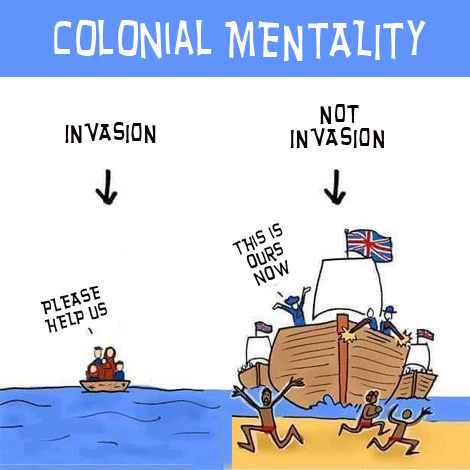
According to Nadal et al. (2016), colonial mentality refers to the internalisation of colonial values, beliefs and practices that devalue Filipino culture, language and identity. This can manifest as embarassment or feelings of inferiority over Filipino tradition and practices.
I recall when I first moved here in Sydney, Australia on several occassions, how several of my Filipino peers more often than not, proclaimed they were Fillipino-Spanish (even if that was 1/32th in bloodline). (Image from here)
“It just makes me sound more interesting you know. I’m not just another flip (Inner West Sydney slang for Filipino back in that time) who’s also a fob (fresh off the boat)”, I vividly recall an acquaintance disclosing.
David and Okazaki (2006, p.335) defines colonial mentality as “the conscious or unconscious acceptance of the belief that traits, values and practices associated with the coloniser are inherently superior to those associated with the colonised”.
To dive a little deeper, the authors developed the Colonial Mentality Scale to measure colonial mentality, which includes the following dimensions:
1. Belief in the superiority of Western physical features (e.g., light skin, straight hair)
2. Belief in the superiority of Western cultural values (e.g., individualism, direct communication)
3. Belief in the superiority of Western education and credentials
4. Belief in the superiority of Western technology and innovation
5. Belief in the superiority of Western religion and morality
The authors found that colonial mentality was significantly associated with lower self-esteem, higher acculturative stress, and lower levels of Filipino cultural values and practices among Filipino Americans.
So basically, colonial mentality has negative consequences for our mental health and well-being.
Decolonizing the Filipino Spirituality
Mention the word spirit or espiritu to a Filipino and you’ll either be discussing about perceived ghost sightings/apparitions (which stems from one of the Philippines’ pre-colonial belief systems referred to as animism — the belief that objects, places or creatures all possess a distinct spiritual essence) or, you’d be discussing the divine power of the Holy Spirit (through the lens of the Romantic Catholic faith).
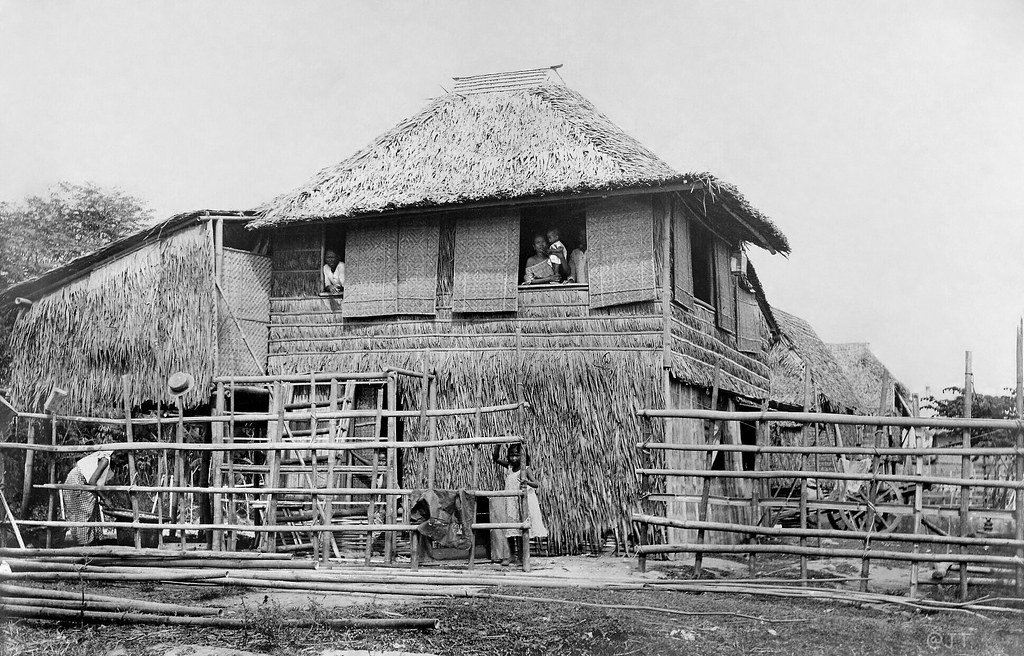
Constantino (1975) argued that Spanish colonialism and Catholicism had a profound impact on the Philippines, including the suppression of indigenous spirituality and cultural practices (which were largely based on animism), leading to the creation of a colonial and clerical elite. It also strongly impacted Filipino values and beliefs, how Filipino society is organised and the perpetuation of patriarchal and authoritarian structures of power, gender inequality and resistance to social and political change. (Image of pre-colonial Philippines house from here)
Let’s look at the typical Filipino family unit. Respecting and obeying Filipino parents and elders are deeply ingrained value and practice that is often associated with the way Catholicism has spread in the Philippines. These values and practices are based on the belief that Filipino parents and elders have the ultimate authority and control over their children and younger family members, and that their decisions and actions should not be questioned or challenged.
However, this value and practice can also perpetuate toxic and abusive dynamics in the Filipino family unit, particularly in relation to the reinforcement of authoritarian structures of power. For example, Filipino parents and elders may use their authority and control to enforce strict and oppressive rules and expectations, such as the control of their children’s education, career, and relationships; the restriction of their freedom and autonomy and the perpetuation of gender stereotypes and roles.
These dynamics can lead to unknowingly abusing that power, such as the emotional, physical, and sexual abuse of children and younger family members; the neglect and marginalization of their needs and rights, and the undermining of their agency and participation.
In light of the above, I’m not saying that Catholicism was all doom and gloom. I acknowledge that it also helped develop the Philippines through education and healthcare, as well as a sense of community and solidarity (which appears to still hold strongly today). However, it has caused issues still pervasive today. Problems that manifest in everyday life and I would imagine, most Filipino family units. Problems that I’ve seen myself and maybe, you have too. It’s possible that you have also considered, in the grand scheme of things, how did we get here and what can I do about it?
So… is it worth decolonizing my Filipino spirituality and mentality?
Considering the complex, multifaceted and evolving nature of the process of decolonisation, I don’t think I can reach a point and say, yeah, I’ve become decolonized now. Far from it.
But I am interested in improving my mental health and well-being, and this aspect of decolinization is a part of that process.
Despite this being in the making in the past few years, I’ve really only just taken my first few steps. My goal is to share this ever-evolving journey with others who may have had this spark lit within them. I’m curious to hear from you.
References
Constantino, R., & Constantino, L. R. (1975). The Philippines: A past revisited (Vol. 1). Quezon City: Renato Constantino.
David, E. J. R., & Okazaki, S. (2006). Colonial mentality: a review and recommendation for Filipino American psychology. Cultural Diversity and Ethnic Minority Psychology, 12(1), 1.
Nadal, K. L. (2020). Filipino American psychology: A handbook of theory, research, and clinical practice. John Wiley & Sons.
Lately some protracted conflicts have come to the surface in my life at a macro level in the world, and at a micro level in my daily life. I have been praying quite a lot since the war in Ukraine broke out, where my Jewish-Sumerian ancestors spent many generations living, and more recently about the war in the Middle East. It seems to me like there is existential war and rejection going on based in judgment, where one or more parties to a conflict feel they are fighting to exist in the minds and hearts of the other.
I find existential judgement incredibly dangerous and damaging and see it as the root of genocide. It feels to me like a hand rejecting its own finger. If we believe in a Creator with wisdom our human minds cannot comprehend, how can we put ourselves in the position of judging what the Creator brought into being? And to say another is allowed to exist elsewhere (NIMBY) is still judgmental, for if we force another to leave their home and live on different lands, we change their and our identities by disconnecting people from their earthly homes and playing the roles of victims and offenders.
On a micro level I’m seeing this thinking play out in some righteous social justice warrior crusades around me. I find the concept of ‘rights’ to be violent, though it has obvious practical value to create baseline standards for society. If we didn’t existentially judge certain struggles and behaviours as deeming people unworthy of housing or health care or food, then rights would simply represent social baselines we collectively agreed upon as minimum standards of care for all of us humans living here. But if a single mother can’t afford housing, or a man with mental illness isn’t at retirement age but can’t hold down a job, we don’t collectively agree how (or sometimes even if) to support their survival. Rights then get used in a forceful way to push a majority social group’s minimum standard of support onto the collective, and thus they often need to be en-forced. And when we are judged and caught up in the rights battles we feel, rightly so, like we are fighting for our survival. (See survival strategies blog)
I agree with Jungian scientist Fred Gustafson that the Western mind is “having a massive collective nervous breakdown” and is going to “war to determine whose anthropocentric [world]view is most valid [while] the earth and all its inhabitants [] suffer.”[1] I have not found sufficient solace for survival in the Western world alone.
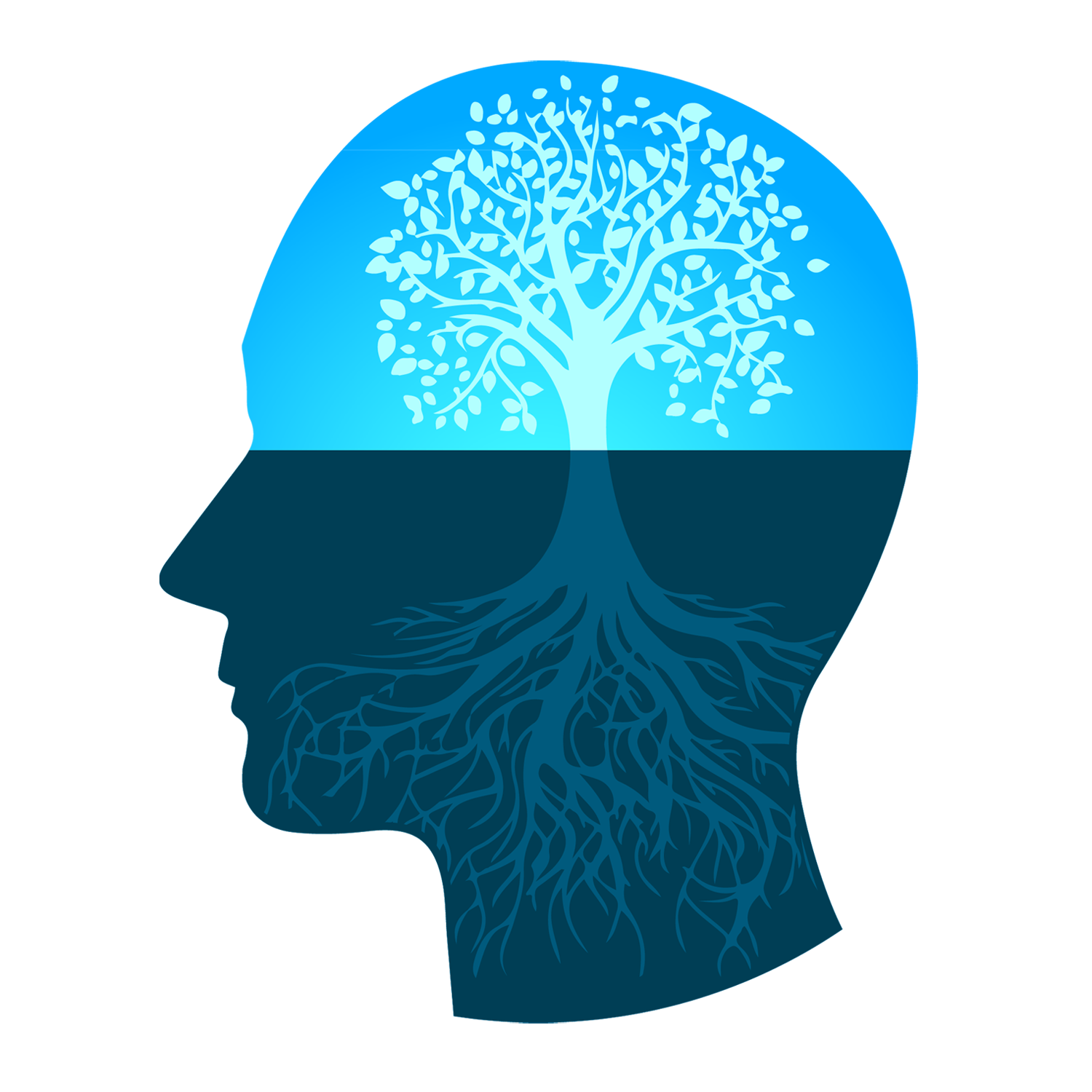
For me it has been vital to live in two worlds: (1) a social reality that is based on a Western worldview, and (2) an earth-based reality based on an Indigenous worldview. When I’m caught up in a survival struggle in the Western world that’s terrifyingly real, and I’m feeling rejected and judged and shamed and angry, I can spiritually connect with the knowing from the Land and my ancestors that I’m not only allowed to exist but that I am wanted. This powerful medicine is all I have found that alleviates my existential wounds. Without it I feel like I would not still be here on this Earth, as my roots would have rotted and not been able to hold up the rest of my inner tree of life. (Image from here)
If you’re also feeling some pain and heaviness about existential judgement and its impact, here are a few things that help me keep my spirits strong:
Grieving is a way I like to express angry energy to avoid getting overwhelmed by righteousness and gain clarity which fights, if any, feel right for me to engage in, and what that means practically. You may prefer to yell and scream or throw things or punch a bag instead, so however you express anger to avoid it overwhelming you is helpful.
Connecting with the land and ancestors where I am offers me powerful healing. I may give offerings as simple as feeding a bird or picking up rubbish, or as profound as a placenta burial or smoking/smudging ceremony. I may also cultivate a sit spot on the land, walk barefoot, and tend a tree altar. There are so many more ways to connect with the land where you live, these are but a few. The reverence we bring to the action we choose matters more, I think, than exactly what we do.
Letting go of black-and-white, objective, judgmental thinking is something I am very fierce with myself about. Humility is an important value to me, so I ensure that even when I feel certain or highly confident about something that I carry a little bit of doubt. For example, I feel highly confident that child sex abuse (link) is a damaging act that is wrong to do. Yet my intense journey of seeking to heal that wound has brought me so much wisdom and peace. Spiritual gifts often thrive in grey, paradoxical spaces.
Altering my consciousness is another survival tool I use daily, primarily through embodied meditations and drum journeys. I do it to heal trauma, connect with ancestors and other spiritual guidance, and seek tools for every day survival such as deeper spaces of compassion or peace. However you are able to sink deeper than your everyday ‘known’ and familiar thought loops can bring you some healing. I do find, however, that embodied practices (such as using sound or dance or breath techniques) are more powerful than mind-based practices (such as meditating through your third eye or simply watching your thoughts).
Thank you for reading this, and may your life be enriched (and even saved) by living in both worlds, as mine is.
[1] Gustafson, F. (1997). Dancing between two worlds: Jung and the Native American soul. Mahwah, NJ: Paulist Press.
 The Timeless Land – Eleanor Dark: Work of incredible channeling by Eleanor Dark from the 1950s who tries to get into the mindspace of both colonists and Aboriginal people in the early days of the colony at Sydney Cove. Presents the crucial idea in Indigenous Science that how you treat others — for example convict flogging — is a reflection of oneselves because we are all interconnected.
 If you value this content, please engage in reciprocity by living, sharing and giving.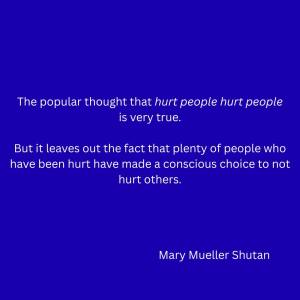


 If you value this content, please engage in reciprocity by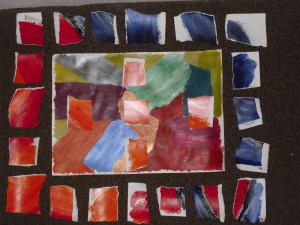
 Last year someone who tried me on started working through my book, and after three weeks said to me they were done doing spiritual work because they weren’t seeing enough changes in their life. I was pretty stunned that this person was expecting such a short ‘pow’ turnaround in their life with so little effort. When I was very unwell in my 20s and finally found a naturopath who diagnosed the pathogenic bacteria in my gut, I remember her saying that with three years of drastic diet limitations and careful, targeted supplements I could expect to feel better. That sounded good to me as I considered how many years had led to my system becoming so sick. And it turned out to be true.
  These days I like to think about how long it takes a plant to establish its roots underground, all the nourishment required to even make it to the surface, and then the years of growth and renewal and moving through disease. I told that person that some seeds I had planted in my life over a decade ago were only starting to bear fruit for me now, and that I had been doing some of the same daily spiritual practices such as

 The concept of “
 In cities, since I started having visions of plants intertwined with buildings (reminding me of a modern co-habitation version of some of the Angkor temples I visited many years ago), I have felt more peace when moving through urban spaces. It is up to you how to honour your visionary gifts. Your expressions may evolve over time from doing personal life and


 According to Nadal et al. (2016), colonial mentality refers to the internalisation of colonial values, beliefs and practices that devalue Filipino culture, language and identity. This can manifest as embarassment or feelings of inferiority over Filipino tradition and practices.
 Constantino (1975) argued that Spanish colonialism and Catholicism had a profound impact on the Philippines, including the suppression of indigenous spirituality and cultural practices (which were largely based on animism), leading to the creation of a colonial and clerical elite. It also strongly impacted Filipino values and beliefs, how Filipino society is organised and the perpetuation of patriarchal and authoritarian structures of power, gender inequality and resistance to social and political change. (Image of pre-colonial Philippines house from
  For me it has been vital to live in two worlds: (1) a social reality that is based on a Western worldview, and (2) an earth-based reality based on an Indigenous worldview. When I’m caught up in a survival struggle in the Western world that’s terrifyingly real, and I’m feeling rejected and judged and shamed and angry, I can spiritually connect with the knowing from the Land and my ancestors that I’m not only allowed to exist but that I am wanted. This powerful medicine is all I have found that alleviates my existential wounds. Without it I feel like I would not still be here on this Earth, as my roots would have rotted and not been able to hold up the rest of my inner tree of life. (Image from
 Altering my consciousness is another survival tool I use daily, primarily through
  Earth Ethos