Category Archives: Culture

Alienation & Judgment

Blog by Valerie

I was perhaps one of Earth’s most alienated of beings, and by that I mean that I did not sense belonging here. My cultural context was such that I had no sense of relationship with my earthly and cosmic habitat…Earth/Nature itself was devoid of real consequence; it was human activity upon it that was of consequence…but even then they had to control its waywardness with sprays and fertilizers. It was a big dead ball of dirt…from which we would be saved by ‘God’ eventually…Here in the South Land, the supernatural Christian drama of God and Jesus was completely unrelated to place. It was a particularly cerebral religion, and in that sense barren – devoid of ceremonial recognition of the fertile Earthbody.–Dr. Glenys Livingstone

She goes on to describe how when she was growing up in Queensland, Australia, her schoolbooks from the northern hemisphere showed the moon phases in mirror image to the moon here, the path of the sun was described as clockwise from east to west which is not how it travels here, and the seasonal celebrations were out of whack with fake snow in the middle of summer for Christmas (that still happens and weirds me out!).

Dispelling Wetiko: Breaking the Curse of Evil by Paul Levy

I see this on individual and societal levels. It seems to be a common form of wetiko, the psycho-spiritual virus of supremacy common in colonialism, some cultures and religions. In our bodies and by our nature, it’s SO much easier to live in sync with the seasons, be present in our environments, accept experiences without judgment. So why don’t we? I feel that as a whole we have become alienated with aspects of ourselves and our environments. Because this is so painful, rather than face those wounds and work through them, we deny, avoid, and dissociate. When we feel hurt we: (1) say we forgive but carry resentment around instead, which becomes an emotional bomb that detonates at an unexpected time, (2) don’t say anything, resulting in resentments, passive-aggressive behaviours, and ‘faking it’, and (3) take some space to try to manage our own emotions without confronting the conflict, but the conflict keeps occurring in a painful holding pattern.

5 Most Effective Conflict Management Styles (+When To Use ...

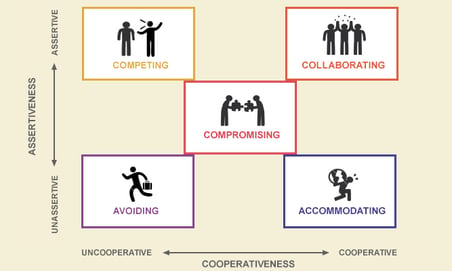
If I try to let something painful go and can’t, or if I feel like I need to address something in the moment so it doesn’t get bigger, my approach is to directly, honestly, bring it up with the person. I don’t ever intend to judge, and if someone does experience me as judging, I want to be told. If someone does something that hurts my feelings and I care about the relationship, I will either let it go or tell them. And if I do something that hurts someone, I need them to let it go or tell me so we have the opportunity to work through the pain and maintain integrity. Conflict creates opportunities to deepen intimacy, to heal, and to learn about ourself and someone else. I accept that navigating conflicts is part of being human. (Fodder for another post: Do you know your conflict style(s) ala the image above from here?)

What I find, though, is that we can know someone for a while, even a few years, and the first time we express annoyance, or say we feel disrespected or hurt, and directly, respectfully, confront a conflict, the other person does (1), (2), and/or (3) to avoid being honest. This prohibits intimacy and integrity and destroy relationships. I saw this behaviour in a new light this weekend through a relationship with a friend. I realised the way she identified as Christian is grounded in her human family, not the Earth, which placed humans hierarchically above the rest of nature. Even though she talked with me about my cosmology, expressed interest in indigenous healing, and was struggling with painful and deep patterns of narcissistic abuse. In my experience, narcissism can only heal through re-orienting ourselves into a holistic worldview.

holistic

There is a pattern to the universe and everything in it, and there are knowledge systems and traditions that follow this pattern to maintain balance, to keep the temptations of narcissism in check. But recent traditions have emerged that break down creation systems like a virus, infecting complex patterns with artificial simplicity, exercising a civilising control over what some see as chaos. The Sumerians started it. The Romans perfected it. The Anglosphere inherited it. The world is now mired in it.–Dr. Tyson Yunkaporta

He goes on to say:

Narcissism is not incurable…Entire cultures and populations recovering from this plague have been left like orphan children with no memories of who they are, longing for a pattern they know is there but can’t see…There are so many adolescent cultures in the world right now, reaching for the stars without really knowing what they are. Adolescent cultures always ask the same three questions. Why are we here? How should we live? What will happen when we die?

But if everyone around you sees the world through the lens of human supremacy except for one person (like your weird friend Valerie), are you willing to believe that person? In my experience, it takes a courageous person who’s ready for a new form of freedom, and even when we ask for something and it’s handed to us, sometimes we can’t see it and still reject it. I find it really painful watching people get so close only to give up and destroy their relationship with me through disrespect and existential judgment. I know they’ll get another opportunity, or two, or three, to heal the wound, but not with me. I use honesty and directness to maintain fierce protective boundaries…

giveheartIf you value this content, please engage in reciprocity by living, sharing and giving.
Reciprocity & the Resentment-Denial Dance

Blog by Valerie

This week I am moving through some grief. I had known that a friendship would end had been observing it fade away for a while, and I was hoping it would just fade and drift gracefully into nothingness, but that was not what occurred. Not only was there a calling out of disrespectful behaviour that resulted in denial, blame, and spite being projected onto me, but following that was additional denial about the state of the relationship. I felt resentment that my former friend was so in denial that she needed me to explicitly spell out that we had already co-created the ending of our relationship, and this resulted in even more blame and spite being projected onto me. What a mess of pain we were in.

It reminded me of Torres Islander writer Nonie Sharp‘s concepts of mateship and in-mateship, where in-mateship creates feelings of worthlessness, self-hate, denial. She says that the very presence of superiority creates shame, and a fear of shame causes people to oscillate between seeking revenge and prestige, resulting in psychic bullying, social violence, and denying reciprocity; if you judge someone as an inmate, you control & define social and existential boundaries. I see this as narcissistic…

lotusIn processing this resentment, I realised that when there is a lack/denial of reciprocity in a relationship, we dance between resentment and denial — resentment within the person who feels stifled/unseen because the other person isn’t holding them in wholeness, and lack/denial/not good enough within the other person who feels cut off from their wholeness (and may or may not want to heal that rift inside themself). Those of us who live with an Earth Ethos embody a knowing that we are all interconnected, and we are not lost playing out myths of superiority and inferiority based on existential judgement.

In some people’s minds I “cut off” this friend, but I have not experienced this. I can no more cut her off than I can cut off the air I breathe; she has become part of me and the space she has in my heart and mind will remain throughout my life in a linear sense of time, and is always there in a nonlinear sense of time. Thoughts and feelings related to her will emerge, and I will pray and send love and feel pain whether we are actively engaged in our relationship or not. It was and it is, and through time and space relationships move through various forms, or trans-form.

Reciprocity is a core Earth Ethos value. As Potowatami writer Robin Wall Kimmerer says:

In the old times, individuals who endangered the community by taking too much for themselves were first counselled, then ostracized, and if the greed continued, they were eventually banished… It is a terrible punishment to be banished from the web of reciprocity, with no one to share with you and no one for you to care for.

My view is that such punishment/banishment on a mass scale underlies the current mainstream Western culture and results in the extreme levels of narcissistic wounding we are witnessing. Aboriginal writer Tyson Yunkaporta explains:

In Dreaming stories, Emu is often a narcissist who damages social relationships. These stories teach us about the protocols for living sustainably, and warn us about unsustainable behaviours. The basic protocols of Aboriginal society, like most societies, include respecting and hearing all points of view…Narcissists demand this right, then refuse to allow other points of view…They destroy the basic social contracts of reciprocity (which allow people to build a reputation of generosity based on sharing to ensure ongoing connectedness and support), shattering these frameworks of harmony with a few words…They apply double standards and break down systems of give and take until every member of a social group becomes isolated, lost in a Darwinian struggle for power and dwindling resources that destroys everything…

Australian Indigenous Astronomy: July 2011Yet in Aboriginal cultures in Australia, the Emu is so highly regarded that people traditionally organised their lives around following the wisdom of the Dark Emu in the sky, which is the constellation of darkness within the Milky Way. The image is from here and shows the Dark Emu during one season of the year, and corresponding rock carving honouring the Emu in Sydney.

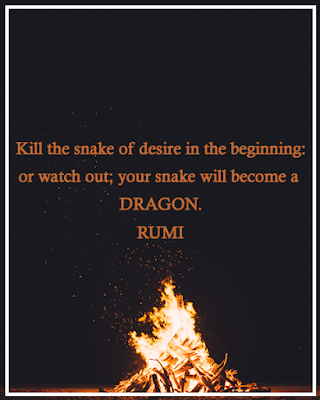
Something that I continually find challenging in embodying reciprocity is moving through a world where so many people around me believe in individuality and are lost in saviour complexes that convince them they are working for the collective good. I live on land my ancestors are not indigenous to, and I do not yet know what lands my mother’s family is interconnected with. And when I move through the dance of denial and resentment in an intimate relationship, it helps to remember that once I fully see the Dark Emu I will be wiser and more capable of orienting myself in my centre; and as this unfolds, it helps to have compassion and keep strong in my convictions of the worthiness of this healing journey, as Rumi reminds me. Wuradjuri healer Randal Ross said that we don’t realise how free we are until we see that freedom disintegrate; and I feel that correspondingly, those of us who have been abused and denied are re-membering how free we are through calling it out with compassion and creating healthy, whole lives in the midst of collective wounding.

Exercise: Consider this Robin Wall Kimmerer quote and how you might apply it in your life: “Restoration is imperative for healing the earth, but reciprocity is imperative for long lasting, successful restoration… We restore the land, and the land restores us…The land is the real teacher. All we need as students is mindfulness. Paying attention is a form of reciprocity with the living world, receiving the gifts with open eyes and open heart…For all of us, becoming indigenous to a place means living as if your children’s future mattered, to take care of the land as if our lives, both material and spiritual, depend[] on it.”

giveheart If you value this content, please engage in reciprocity by living, sharing and giving.
Healing Whiteness Trauma

Blog by Valerie

“The first step in liquidating a people…is to erase its memory…Before long a nation will begin to forget what it is and what it was. The world around it will forget even faster.”—Milan Kundera

Whether you are considered “white” or not, I feel confident saying you have been impacted by whiteness trauma, and as this quote suggests, that your people/s likely experienced and perpetrated genocide somewhere in your family line/s. Genocide is an intentional act to destroy a people, and whiteness is an intellectual construction based on traumatic social rejection from & disconnection with Mother Earth, self & cultural heritage, and other people. It was used as a tool by the ruling class to divide the working class, and so is also called “the bribe of whiteness.” David Dean gives a clear and compelling history of the creation and rise of the “white” identity in this article, People who have learned to identify as “white” tend to deny their own complex cultural heritage. Some people even study “whiteness theory” and “white fragility” to try to make sense of the shame they carry and the way this history of European identities being whitewashed and replaced by modern, nationalistic ‘Western’ identities still play out today. For example, did you know that assimilationist policies in the U.S. in the late 1800s and early 1900s led to companies like Ford running mandatory English classes and job training programs that finished with ceremonies in which people clad in traditional cultural clothing walked through a huge ‘melting pot’ then emerged in company uniforms? (Image from here)

fordschoolmeltingpot

David Dean cites the success of such policies & programs on two factors:

  1. The violent displacement of communities from their traditional lands in order to use that land for profit and create a dependent, exploitable workforce, and
  2. The replacement of traditional cultural identities that valued the welfare of the community and the Earth with a culture of capitalistic, possessive individualism with a social hierarchy divided along racial, gender, religious, and other identities.

As Tyson Yunkaporta points out in his new book, ‘Western’ is not an identity, because by its nature it is in reference to someone or someplace else (presumably ‘Eastern’); it is not inherent. To be ‘American’ or ‘Australian’ is also quite amorphous. I have out of curiousity asked a number of people what it means to them to be ‘Australian,’ and I have gotten one of two answers: (a) I am part of a multi-cultural modern soup, or (b) It means nothing to me, and I am English/Irish/Wiradjuri/Yuin/etc. living on this land we collectively call ‘Australia’.

My view is that whiteness trauma is based on a European history of intergenerational trauma, shame & pain. It was spread by the Romans & other empires dividing and subjugating peoples on their traditional lands; by the violent spread of Christianity through power & force, including the systematic desecration of indigenous & pagan sacred sites; and by horrendously hateful acts such as witch trials, inquisitions, slavery, rapes & genocides. It seems to me that over the last few thousand years, violence, terror & control became normalized as a method of asserting dominant leadership throughout Europe. Multi-generational disconnection with an innately human intimate & reciprocal relationship with the Earth were replaced by a power struggle for whose anthropocentric story is ‘right’, in a might-makes-right model. This led to land ‘discovery’ (i.e. colonisation) and other myths such as when upper class, white-skinned, Christian, land-owning males founded a ‘free’ government for ‘the people’ in the U.S. Ultimately, whitewashing & glomming together of many European peoples and cultures into “Western” expanded to non-‘white’ people, so that today millions of people around the world identify with a colonial nation rather than a traditional culture living within an empire.

Here is a little poem I wrote about my own journey of healing ‘whiteness’ trauma:treechakras

Beneath the Roots

Ancestral trauma 
Has defined me
But I kept digging
Because I knew
My taproot was deeper
And drinking in peace
Somewhere down there

To heal from whiteness trauma, I have found many helpful approaches, including: honouring ancestors, grounding, re-defining tribe & belonging, bridging multiple identities, healing power dynamics, and healing existential wounds. The following quote is a humbling reminder of what our indigenous minds carry somewhere inside of us from an Australian Aboriginal culture more recently colonised:

“The first peoples of this land don’t need statues of our heroes, we have mountains that remind us of our people. We don’t need painted portraits, we have rivers that flow with the stories of our dreaming. Our songs are filled with culture, our language of the land. So we don’t need books. Our history, our connections, our hearts are true to this country.”–Baker, 2017, quoted in Koori Mail, Oct 23, 2019 p. 24

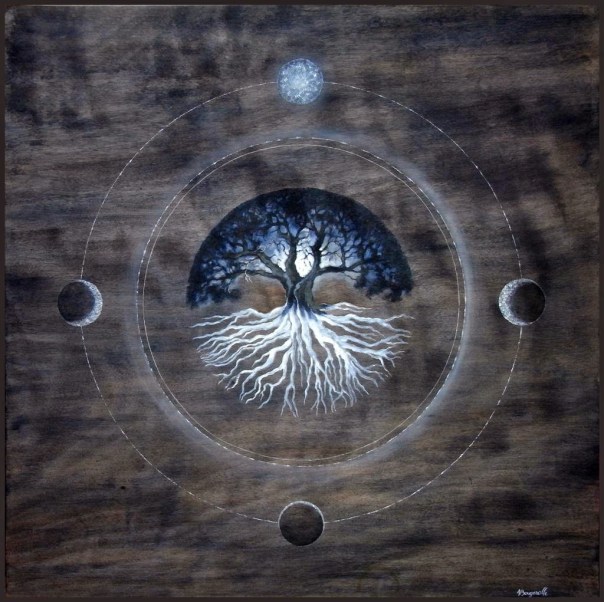
- Tree Annick Racines du Ciel

(Image from here, by artist Annick Bougerolle)

giveheartIf you value this content, please engage in reciprocity by living, sharing and giving.

Thanks-Giving at Solstice

Blog by Valerie

A few months ago somewhere in the outback around Broken Hill, I experienced a spiritual lightning strike inside. Something in me died, an old dream (maybe it was always a lie), and its energy has been emerging from my body in incredibly itchy rashes across my chest, back, face, and shoulders, and grief-laden tears. Sometimes I know certain things aren’t working but am reluctant to call them out or make a change, sitting in doubt and denial and dumbly hoping they’ll work out without conflict. I started to feel, for the first time in my life, like I could fully exist somewhere, and a community started to gently invite me in. Though it was not practical to join them, I can still see some smiles and hope and hear someone asking me to invite her to my housewarming when I move out there next year. It is possible. I’m sure I don’t know. All I know is the sand is shifting under my feet again, and some people and aspects of life I’ve been counting on are disappearing. I’ve been through this many times, and I know my role is to stay centred, be patient, accept the gifts I’m given, let go of that which is not working, and freefall into the unknown with as much grace as I can.

quote.jpgThough much trauma is being acted out in the world right now that is sometimes referred to as ‘white privilege,’ no one is merely ‘white’, and I cringe when I am referred to as such. We all have cultural heritage with gifts to unpack and celebrate. My modern, multi-cultural self includes a body born of Shawnee land carrying earth ethos teachings from my East Frisian roots as well as teachings about existential destruction from my Ashkenazi Jewish lineage, as well as wisdom from Native American, Anglo-Celtic Australian, Anglo-Saxon American, Irish-American, Hispanic-American, African-American, Asian-American, Peruvian, Indian, South African, Buddhist, Christian, Hindi, Aboriginal, and many other beautiful cultures. I saw a quote a few months ago that really resonated and went something like this:

Life was better before colonisation and mass migration, but now it is more beautiful.

I think there is much truth in that, as well as the inset quote a friend sent me. We each have much to celebrate and reconcile within our individual cultural mix. So on December 24, I finished baking some Stollen, sang Godewind songs in German and Platt, told stories and looked at photos to honour my East Frisian paternal ancestors and country.

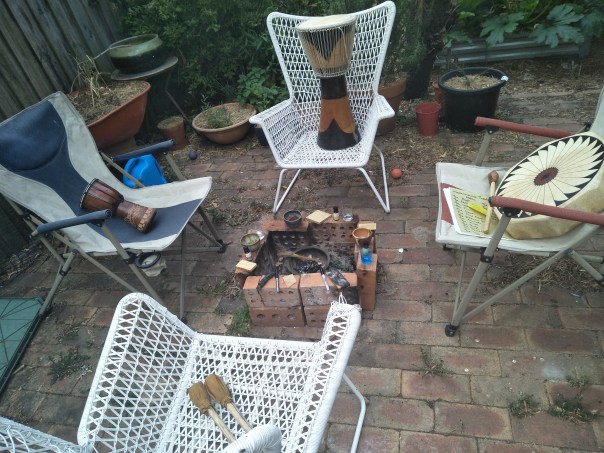
solstice.jpgTo honour my earth ethos, I celebrated a fiery summer solstice in ceremony with loved ones. (Literally, there were, and are, many fires burning this country.) Sitting around a fire pit in the four directions, we embodied some of my heart’s favourite forms of expression: music, meditation, poetry, and art. Part of our ceremony was a poetic prayer in words & drumming to the Thanksgiving Address gifted to us all by the Haudenosaunee, which brings our minds together as one in thanks for: The people, The Earth Mother, The Waters, The Fish and Other Water Creatures, the Plants, The Food Plants, The Medicine Herbs, The Animals and Insects, The Trees, The Birds and Other Air Creatures, The Winds, The Thunder Beings, Grandfather Sun, Grandmother Moon, The Stars, The Wise Teachers, The Creator, and All Others Who Have Not Been Named. (Image from here of the People thanking Grandmother Moon)

May you enjoy the blessings of the season from Father Sun and Mother Earth whether you have just been through Summer or Winter Solstice.

giveheart If you value this content, please engage in reciprocity by living, sharing and giving.

My Jewish experience

Blog by Valerie

A few weeks ago I was watching a couple of rabbis and their wives driving around Australia looking for Jewish people. They said throughout history Jews have been hunted down by persecutors, so now they’re hunting down Jews to bring them back into the religious community. When they came across a few young men at Uluru who said they were Jewish, they outfitted them with yarmulkes and tefillin, prayed with them, danced the hora, and said, “Be proud to be Jewish.” That remark stung, because I rarely feel that. I’m deeply disgusted that since its inception, the largest number of UN resolutions on an issue has been against the Israeli occupation of Palestine. I’m deeply disgusted by how many Jewish people identify as victims while remaining in denial about their own offending. I’m deeply disgusted how little regard many Jewish people have for Mother Earth, and how often this results in over-the-top consumerism. And I’m deeply disgusted that in the name of belief, people mutilate their baby boys a few days after birth through circumcision while rarely reflecting on modern knowledge of the neurological consequences that sets into motion. (I have a short article on that coming out soon.)

Best 25+ Jewish humor ideas on Pinterest | Passover ...

I have spent over 30 years wrestling with my Jewish identity, trying to understand it and what it means to me. I have studied Eastern European Jewish folklore, the Yiddish language, the mitzvot, and sacred stories in the Bible. I have celebrated holy days, braided challah for Shabbat and charoset for Passover, done a bat mitzvah, adopted a religious name, and even visited Israel on a birthright trip that resulted in a stalker showing up across the country at my door afterwards which the rabbis leading the trip denied was an issue. At its core, my Jewish experience has involved studying and then freeing myself from a cult of belief forced upon me that embodies profound harshness and righteous judgment along with coping through humour. This judgment has been a tough way for people to uphold morals and values, some of which I agree with. And living nearly 6000 years waiting for a messiah is a long time to keep hoping and stubbornly stick to the same story that he’s coming, and he wasn’t Jesus. You need a strong sense of humour to uphold that cosmic joke!

But the way I’ve been taught to embody Jewishness feels fundamentally faulty. Rather than try to prove I’m a worthy person and feel like a failure, I’ve decided to think that worthy as I am. Rather than shame others’ behaviours, I focus on accepting what I feel ashamed about and speaking out with passion when I also have compassion. Rather than guiltily force myself to follow Jewish norms that feel wrong or abusive to me, I’ve set boundaries with people in my family that have resulted in my being socially shamed and having to abandon people I care about to avoid being abused.

My Jewishness has been so profoundly painful and dysfunctional that it required me to learn how to engage in practices of purification. I celebrate my ancestral resilience; we’ve collectively suffered and survived a lot of shit. And while I have compassion for acting quickly to survive traumatising situations, when we’re no longer desperate I believe we’re responsible for reflecting on our past actions and making amends for ourselves and our ancestors. Jesus, the Jew, definitely preached this. I’m proud of many Jewish people I know for being heart warriors, standing with those who are downtrodden and keeping cultural beliefs and practices alive that matter to them. But mostly I’m profoundly disgusted by and even ashamed of my Jewishness, and it’s been quite hard to be honest about that. So many of the beliefs and stories given to me I’ve found to be based in fears, lies, and mind games. I think there must be something more to the Jewish identity than being a people whose story begins with slavery and involves worship of a judgmental masculine sky god. I visited Israel and did not feel a Pachamama presence there, nor do I feel that biblical stories reflect my creator or people’s story fully. 

23 of the Funniest Religious Memes/Cartoons | Cartoon, God ...Resilience is especially necessary when one’s path is based on existential judgment and conditional love. Without an earth ethos grounding us in our bodies, environments, and communities, we can’t experience unconditional love. And the Jewish identity I inherited is completely ungrounded–it is not even connected to Israel. Outsiders may laugh at Jewish neuroticism in a Woody Allen film, but I grew up with such people failing to take care of themselves or me, convinced there was something wrong with them that doctors’ pills could fix, and never satisfied no matter what they achieved. Having lived intimately with this addiction, abuse, and neuroticism, I’ve come to see it as based in self-betrayal, self-hatred and self-abandonment. I don’t know what set my ancestors on Jewish paths many generations ago. I know some of the traumas they and I have been through, and I feel that staying on the Jewish diaspora path has served to make our traumas bigger. For example, my grandmother told me as a child that I can’t trust anyone, and I asked with surprise, What about you?! It’s a much harder road to judge, confront, and forgive than to just accept in the first instance. I thank my Jewishness for this hard learned lesson. My current path is one of accepting unconditionally. I don’t feel this aligns with my Jewishness, so I seek to uncover what lies underneath that for me. I’m moved to close with this quote from someone else who has dug beneath the roots of her inherited identity:

Freedom is uncomfortably unknowing yourself and a willingness to keep coming undone — Zen Buddhist nun and queer African American, angel Kyodo williams

giveheart If you value this content, please engage in reciprocity by living, sharing and giving.

On Climate Change

Prof. Dan Cziczo discusses Climate Change - Belmont Public ...Blog by Lukas

Dear Greta,

I admire your fire and passion, and your courage to take on so much of the world’s attention. Whether this attention be loving, ambivalent, or hostile, the sheer weight of it is no doubt burdensome, in a way you may not yet even realise.

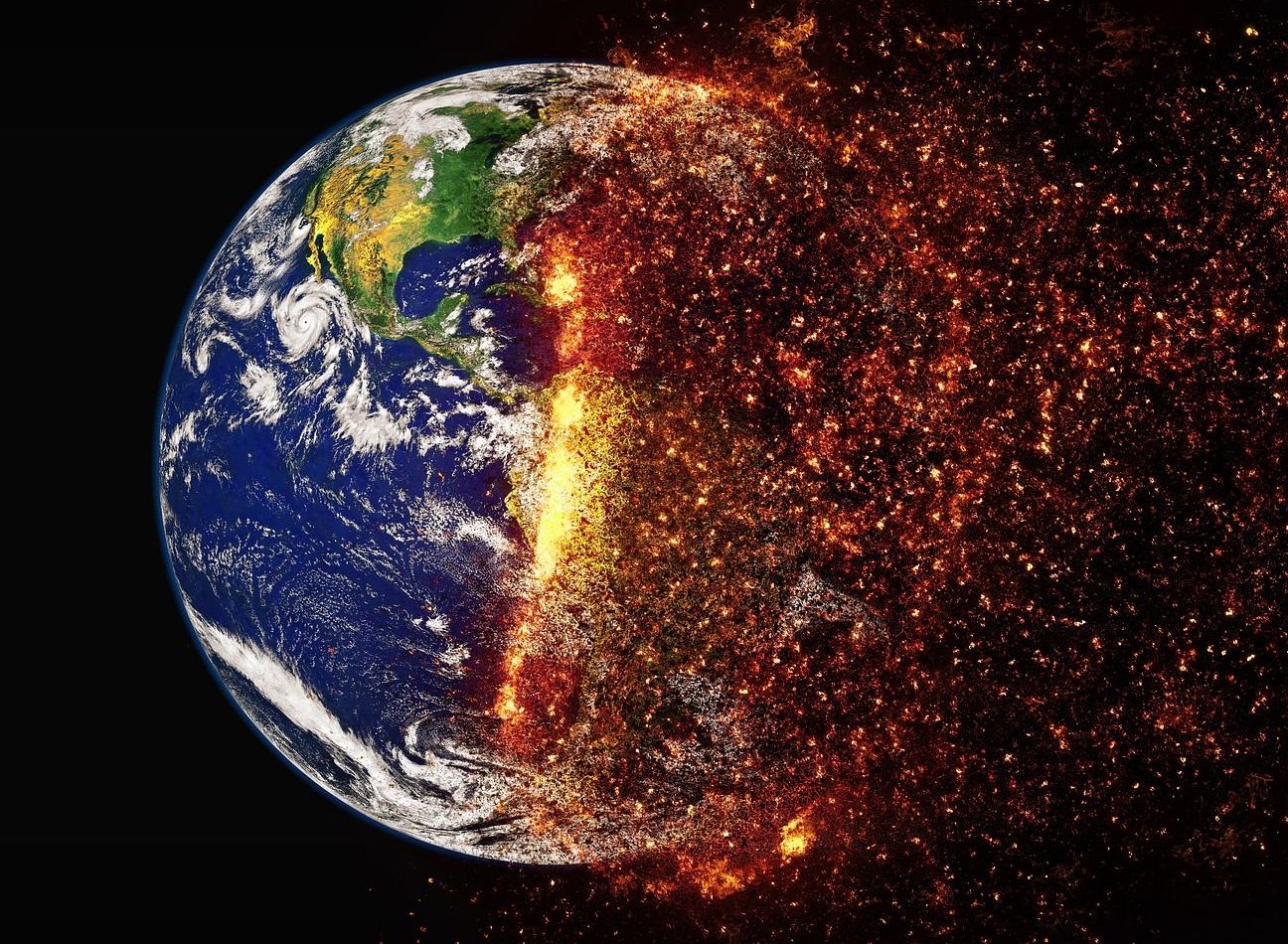
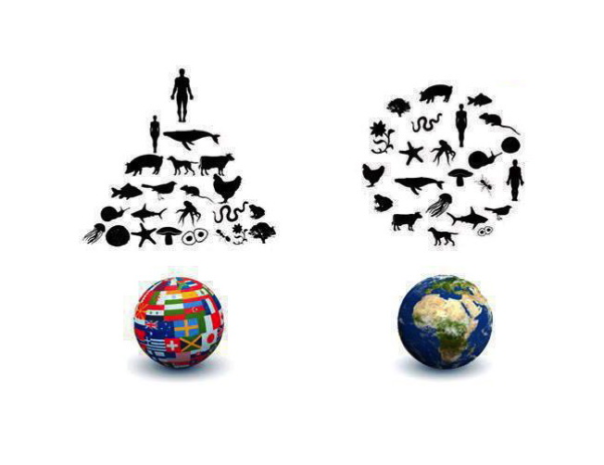
I am writing to suggest that you are missing something profound about life in the modern Western world. You admonished adults, both those of us alive now and our collective ancestors, for stealing your dreams. And indeed this is so. But with respect, the true theft has only peripherally to do with climate change. (Image from here). Here is a quote from Aboriginal Australian scholar Dr. Tyson Yunkaporta:

Every human child is born the same. We are born with innate structures. And those structures all steer us towards living and loving and learning in cooperative groups, and in being profoundly connected to a habitat, and being very curious about that habitat…I believe that every child is born as what we now call indigenous. It just takes quite a rigorous program of indoctrination to twist somebody and turn them into a civilized person.

It is your indigeneity that has been stolen. A life of profound connection with fellow human beings, with spirit, and with the earth. In the world both you and I grew up in “civilised” is seen as an unambiguous virtue. It has given us much in the form of transcendence of material challenges, but destroyed so much more. It has blocked our growth as beings. I see the civilising force of Western modernity as turning the children we were at birth into beings that are unbalanced in the mental, floating above the rest of existence in a state of separation. It has turned us into beings who know only one way to cope with suffering, which is to fix it with our minds. But this idea of “fixing it” is a myth that fails us, born of hard and false boundaries like “self” and “other”, “right” and “wrong”, and “good” and “evil”. As Dr. Yunkaporta says:

The war between good and evil is in reality an imposition of stupidity and simplicity over wisdom and complexity.

And so I put it to you that this applies to the scientific orthodoxy on anthropogenic climate change as much as anything else. To say that it is an unambiguous cataclysm or “evil” requiring our “fix it mind” to go into full swing is potentially just living in the same delusions, and repeating the same fundamental errors of our recent ancestors. The reality requires a deeper wisdom than just the capacity to power the world from renewable energy. Renewable energy in and of itself will not fill the hole inside us, nor reconnect us to the sacred, and to the Earth. For this we need tools that Western science does not know about, but indigenous scientists and mystics of many faiths and traditions around the world have known about for thousands of years. (Image from here)

I do not fix problems. I fix my thinking. Then problems ...We don’t need to fix the world, rather we need to learn to flow in it, and be in deep relationship with it. I have no doubt that from such a stance we’ll look at open pit coal mines and the internal combustion engine, not to mention countless other inventions and lifestyle choices, as being fundamentally out of flow, a desecration of something sacred that severs us from the Earth. Western science will play a role in helping us work out what to do next, but the truth of our modern desecration of the Earth does not need facts and figures, and positivist experimentation for us to experience. If you don’t believe me, go and sit on a chair in a forest near where you were born for a few minutes and watch your mind. If you are anything like me, you will experience a lot of discomfort and dis-ease from being with the craziness of your undistracted modern mind. Can you “fix” that with your mind alone? Can Western science offer you any help? There is as much to learn about why we face climate disasters from that one simple activity as there is from any number of bore holes dug into the Antarctic ice.

Carbon as a building block of life (video) | Khan AcademyWe need to question more than our use of carbon. We need a new and bigger dreaming.  We need a dreaming of lived interconnection to immortal oneness. Such a dreaming is bigger than our daily struggles, and even our comprehension of existence itself. Certainly much bigger than our worries about three degrees of global mean temperature rise. You might say, “Well that is easy for you to say, it is not your daily sustenance under threat, or your island about to be swallowed by the sea”, and this may be true. But my reply is that these ideas I am telling you are not mine. They come from the wisdom of people who did indeed face and transcend such hardships. Islands have disappeared before, and life went on. Regardless of what we do and don’t do, life will go on this time around too. The only real question is what kind of life it will be. (Image from here)

Yours sincerely,

Lukas

giveheartIf you value this content, please engage in reciprocity by living, sharing and giving.

Earthly nourishment

Blog by Valerie

All Law-breaking comes from that first evil thought, “I am greater-than,” that original sin of placing yourself above the land or above other people.

Tyson Yunkaporta

The above quote is the definition of “unsustainable” to me. I see this wisdom enshrined in the biblical story of the Tree of Knowledge that some of our ancestors were advised not to eat from before their curiosity and the trickiness of a snake got the better of them and taught them this lesson. I facilitated a workshop last weekend for healing professionals called “Space for Spaceholders” in order to create space for their nourishment. The embodied metaphor for nourishment that came to me was the placenta. The placenta is responsible for nourishing and protecting babies in the womb. It connects the mother to the baby by supplying blood through the umbilical cord to the developing child, secretes hormones that are required for pregnancy and for preparing the mother’s body for breastfeeding, and provides babies with antibodies of for protection for the first few months of their life.

The placenta is a symbol of a sacred life support system. There are so many cultural beliefs, stories and practices that honour this primal nourisher. Many Aboriginal Australians see the placenta as a person’s hologram that provides a map for their life. It is buried in the Earth to provide direction for the person once they reach puberty. The Navajo (Diné) in the Southwestern US bury the placenta in sacred ancestral ground so the person grows up with a strong cultural identity. Similarly, among the Maori in New Zealand the words for “land” and “placenta” are the same. In Hmong culture in Laos, people believe that a spirit will wander the Earth and not be able to join their ancestors in the spirit world without returning to the place their placenta was buried and collecting it, so it is the same word as “jacket” in their language. In Korea and China, many people burn the placenta and keep the ashes, then sprinkle them into a person’s food when they are sick to provide profound nourishment. In Indonesia the placenta is seen as a person’s older sibling or twin, and in Iceland as a person’s guardian angel. The Ibo of Nigeria and Ghana treat the placenta as the dead twin of the live child and give it full burial rites. And the Baganda of Uganda believe that the placenta is actually a second child. Not only is it the child’s double, but the placenta also has its own spirit that resides in the umbilical cord.

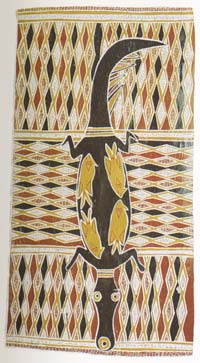
And then there’s modern Western culture that incinerates placentas in hospitals without honouring them whatsoever. This says a lot to me about the depth of desecration and unsustainable thinking that has permeated our lives. Thinking about honouring the tree of life, did you realise the art in the image above was a placenta print?

We miss so much when we are in a space of separation… A couple of months ago I symbolically reclaimed my placenta and its connection to Mother Earth. I used a work of art that symbolised my placenta and ceremonially thanked it and planted it in the Australian bush. It was a simple act and its effects have been gently rippling through my life ever since. About five or six years ago I took a short course in Vedic astrology. Reading the map of the stars and planets for the place and time I was born, the teacher told me that my life was never going to work until I was in my 30s after I went through a huge transition. She showed me a split in certain energies that would not align until then in my life. I felt moved, like she had given me permission not to blame myself for things being so difficult. And after symbolically planting my placenta recently, I came across the following quote that sums up how I see things today:

For many years I sensed my own darkness, my own Otherness, and the many ways in which I am an outlier in this world. I thought this was what was wrong with me. It took me a long time to recognise that this is what I have to bring to this world.

Mary Mueller Shutan

giveheart If you value this content, please engage in reciprocity by living, sharing and giving.
Earth Ethos child development

Blog by Valerie

Some studies of newborns suggest that humans’ most fundamental need is to be part of a culture, to engage with their social environment and try to make sense of their surroundings. It can be helpful to conceptualise culture as a “cognitive orientation” instead of dividing people into racial or ethnic groups (Brubaker et. al, 2004), because “the most significant features of any child’s environment are the humans with whom they establish close relationships” who these days are often multi-cultural (Woodhead, 2005). Raising children is a process by which “we try to achieve cultural goals and well-being for ourselves and our children,” through pathways “determined by cultural activities organised into routines of everyday life” (Weisner, 1998). Children learn cultural models of living through relationships with parents, close kin and social institutions, during which time their young minds develop interdependently within their cultural context. This graphic shows elements of Yolgnu (Australia) child-rearing:

Connections surrounding the child image 11June191

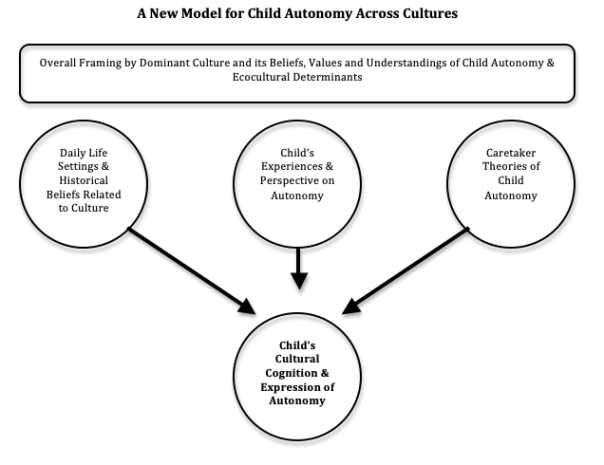
The developmental niche theory provides a framework for connecting culture with childrearing (Super & Harkness, 1994). A child’s physical and social settings, cultural customs of childcare, and psychology of caretakers form a “developmental niche”, and the eco-cultural niche theory identifies five areas of child development: (1) health and mortality; (2) food and shelter; (3) the people likely to be around children and what they are doing; (4) the role of women and mothers as primary caretakers; and (5) available alternatives to cultural norms (Harkness & Super, 1983). Some years ago I worked with social worker Amy Thompson to develop the following model:

childdevelopment.png

In modern Western culture, there’s a lot that is broken, out of balance, and unwell. To intervene in any of the bubbles above will alter a child’s (or inner child’s) cultural identity and autonomy. And there’s a lot of wisdom in Indigenous childrearing.

Unlike the paternalistic culture many of us are familiar with, Earth Ethos parenting respects children’s agency. Autonomy is the freedom “to follow one’s own will” (Oxford English Dictionary). It’s important to note that autonomy is not the same as agency, or a child’s capacity for intentional, self-initiated behaviour. In “central Africa children are trained to be autonomous from infancy. They are taught to throw spears and fend for themselves. By age three they are expected to be able to feed themselves and subsist alone in a forest if need be” (quoted in Rogoff, 2003). Aka Pygmy children in Africa have access to the same resources as adults, whereas in the U.S. there are many adults-only resources that are off-limits to kids, and Among the Martu people of Western Australia, the worst offence is to impose on a child’s will, even if that child is only three years old” (Diamond, 2012). Yet Western children tend lack much autonomy and agency until they turn 18. One scholar suggests that four main ideas have shaped Western civilisation’s parenting practices:

  1. The young child is naturally wild and unregulated, and development is about socialising children to their place within society (e.g. Thomas Hobbes, 1588-1699);
  2. The young child is naturally innocent, development is fostered by protecting the innocence and providing freedom to play, learn and mature (e.g. Jacques Rousseau, 1712-1778);
  3. The young child is a ‘tabula rasa’ or blank slate, development is a critical time for laying the foundations that will enable children to reach their potential (e.g. John Locke, 1632-1704);
  4. The young child is shaped by nurture and nature, development is an interaction between potential and experience (e.g. Emmanuel Kant, 1724-1804) (Woodhead, 2005).

European American (mostly middle class) mothers have been extensively studied, and their parenting practices dominate popular culture and academic literature, yet a study across twelve countries found their beliefs and behaviours abnormal in an international context (Woodhead, 2005).  Common conflicts between Western and other cultures were:

  1. Emphasis on the individual versus emphasis on the family;
  2. Autonomy versus interdependence;
  3. Youth culture versus respect for elders;
  4. Unisex versus gender differences;
  5. Individualism versus communal; and
  6. Competition versus cooperation (Friedman).

In most Indigenous cultures child development is not led by parents but is seen to naturally emerge through a network of kinship care. Children are seen as autonomous and encouraged to learn through experience rather than explicit instruction and rules (Sarche et. al, 2009). Parents avoid coercion and corporeal punishment, instead using storytelling and role modelling to discipline. This teaches natural consequences and allows parents to avoid imposing punishment. For example, this article shares a story of a preventive parenting practice by which an Inuit mother who asks her two-year-old son to throw rocks at her on the beach. He hits her leg, and she says, “Ow! That hurts!” to show him the consequence of hitting someone. And even if he kept throwing rocks after she showed the pain it caused, traditional Inuit still do not yell at children: “yelling at a small child [is seen] as demeaning. It’s as if the adult is having a tantrum; it’s basically stooping to the level of the child.” Child attachment differs from Western culture as well:

It isn’t just about attachment to the mother or the biological parents, but attachment to all of my relations. Practices and ceremonies were meant to build attachments to all parts of the community and the natural world, including the spirit world.–Kim Anderson, Métis (Canada)

Winter Medicine for Rooting Down and Healing Burn Out

An Anishinabe (Canada) woman explains the development of her attachment to Country through bush socialisation:

The absence of fences, neighbors and physical boundaries led way for the natural curiosities of a child to grow and be nurtured…I learnt to search for food, wood, plants, medicines and animals. Trees provided markers; streams, rivers and lakes marked boundaries, plants indicated location, and all this knowledge I developed out of just being in the bush…My bush socialization has taught me to be conscious of my surroundings, to be observant, to listen and discern my actions from what I see and hear. Elements of the earth, air, water and sun have taught me to be aware and move through the bush accordingly. (Image from here)

Ceremony is modelled from a young age. In this video, a Yolgnu (Australia) boy is barely walking and already learning traditional dances to connect with his community and his ancestors, and by the end of the video at age 7 is participating in a funeral dance:

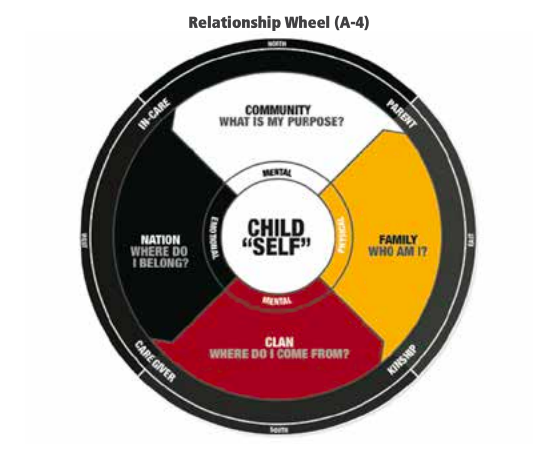
This medicine wheel from a childrearing manual for First Nations Canadians further demonstrates that in an Earth Ethos, children are seen as autonomous and interconnected, and shown how to live in balance with all my relations.

relationshipwheel

Exercise: What parenting perspective or childrearing practice would you like to improve in your life? Using suggestions from this post, researching on your own, or your own insight and intuition, what step could you take today to move further towards balance?

giveheartIf you value this content, please engage in reciprocity by living, sharing and giving.

Anglo-Celtic Australian identity

Blog by Lukas

One of the hardest things about being an Anglo-Celtic Australian is not having a culture that gives deep meaning, context, and guidance to the struggles of my life. The stories of Anglo-Celtic Australian resilience I was fed as child just don’t do the job.

I acknowledge the grit, courage and determination of the first settlers and the diggers, but it all seems built on a foundation of lies, denial and disassociation, the best examples being Terra Nullius, the dehumanising British class system, the occupation of Ireland, and the power hoarding structure of the Church.

Subjugation and shame lie at the heart of so much of what makes us who we are as a collective consciousness. We cling to things like our egalitarianism, but elect a Prime Minister who openly espouses ideas like “a fair go for those that have a go”. It’s bullshit. (Image from here.)

Australia_a-fair-go
Don’t get me wrong. I’m fond of Australia, and Australians. More than fond. For all our peccadillos, I love us. And by us I’m speaking most about me, the Anglo-Celtic Australian. My tribe, my people. My connection to a nebulous post-white Australian multicultural identity feels so often forced, and hidden behind euphemism and untruths. It has to be, because what came before it has not healed enough to make space for anything real to replace it. It’s pure aspiration, often based merely on the fleeting winds of social convention and social shaming.

I don’t want any of this to sound like I endorse being ashamed of who we are. For me this can only lead back around to denial and anger. But of course this shame is there whether we like it or not. It’s something we must heal. Perhaps it’s THE place to start our work; unconditional love and grace for all that went before, warts and all.

What is the alternative? ANZACS, the grizzled farmer, a game of beach cricket next to the barbie, or even our supposed egalitarian cosmopolitan multiculturalism? To me, they just don’t cut it. Smoking ceremonies and welcome to country? Window dressing. There’s just so much flagrant bullshit at the heart of it all. We need more truth.

Here’s a truth. I’m envious of people who identify as indigenous. I envy the power of their stories, their connection to this land, and their feeling of belonging to something real and carnal. My material and societal privilege feel like a big bag of shame that I am supposed to pretend isn’t there. I envy those who can talk about their burden openly with dignity and without ridicule.

If I’m honest, when I look around at most Australians, and within myself (I am in this as much as anyone), I see scared, subjugated and exploited children, without a solid cultural foundation, without real connection to the land. I see bullies, and the bullied. I don’t see a deep sense of purpose and meaning. I don’t see unfettered spirit in flow. I’m sorry if his hurts to read. It hurts to say.

Wrapped up in all of this for me personally is an overwhelmed, listless, elderless masculinity, and an absent relationship with unconditional feminine love as embodied by a relationship to the earth. The feminine in us all of us seemingly seeks so much to be just more masculine.

I wish I knew more about my own ancestors, and their personal stories and struggles, where they came from, and what that really meant for who they were. Why is everything that they are largely forgotten, and mostly not talked about in my family? Why is the richness of their cultural heritage and diversity reduced to “whiteness”? How can I possibly heal from wounds my kin have picked up on their journey, like their pain of leaving tribal indigenous land, if I don’t know anything about them?

It seems to me that one of the greatest injustices in the modern world is the labelling of only some people as “indigenous”. Different people are indigenous to different places, but we are all from somewhere, originally. And building from that, everyone needs the opportunity to becomes indigenous to the place that nourishes and shelters them, physically and spiritually. (Image from here.)

INDIGENOUS AUSTRALIA[2]

But we’re here now. We have to be indigenous HERE if we’re going to thrive on any kind of deep level. Fortunately, from what I have seen, the original indigenous Australians have nothing but grace and generosity for us Anglo-Celtic Aussies if we’d but commit to truth, and real healing. And that MUST start inside.

I don’t know why I ought to be, and I know reasons why I ought not to be, but I am an Anglo-Celtic Aussie, and I am choosing to be proud of that. I commit to truth and healing. I commit to grounding myself here on this land. I commit to creating for my future ancestors a rich healthy culture that I never had.

Walking the talk of a commitment to creating a healthy culture, Lukas had an opinion piece published today on gambling addiction.

giveheart If you value this content, please engage in reciprocity by living, sharing and giving.

Altars, Shrines & Power Objects

Blog by Valerie

catholicaltar.jpg

I am delighted to hear from people having success working with ancestral altars and have been asked to write more generally about altar and shrine practices. I will also talk about power objects. Starting with etymology, “altar” is from a Latin word for “on high” (like altitude) and refers to honouring and worshipping great gods through sacrifice, usually by burning something and sending smoke up towards the heavens. “Shrine” is one of those mysterious words of unknown origin that refers to a sacred case or box (like the ark of the covenant) for keeping holy papers or other powerful spiritual objects. Shrines honour the spirit of a person, event, or ideology. The way we tend shrines is by leaving offerings. Altars are interactive, working spaces of worship where we ask for insight and guidance. We often create blended shrine-altars where we both leave offerings, as well as ask for insight and guidance. Most churches and temples are such blended spaces, where people leave incense, flowers, or candles with gratitude to figures like Jesus,

shrineofrememberance.jpgBuddha, and Krishna, and where people also sit in contemplation and pray for insight and guidance from those figures. I find it helpful to be intentional about these differences in my own life, but maybe blended spaces work for you. Ultimately, we build relationships with figures, ideas, events, places, and energies, and those relationships work best when we both give and receive, and do not always ask or give with the expectation of immediately getting back… (Images: Altar of St Michael’s Church in Munich, Shrine of Remembrance for the War Dead in Melbourne)

There are three types of altar practices that I use in my daily life: an ancestral altar, a personal altar, and a body altar. My introduction to a personal altar practice came from the mesa program. The personal altar for me, is medicine wheel-based, because that is my cosmology. It is a cloth on a flat surface next on my night table to represent the medicine wheel and provides a personal reflection for me. My husband who gravitates more towards Buddhism has an altar built on a footstool that is in three vertical layers. Yours might be Christian or Daoist; it depends on where your spirit feels most at home. Out of respect for my privacy and current altar work, I am posting a photo of my altar from 2 years ago to give you an idea of what it looks like and to explain some of the symbolism.

altarmay2017

Following a medicine wheel path, in the centre is the heart, where I have power objects of rocks and crystals representing core beliefs I was working with at the time, including rose quartz for unconditional love and acceptance, a fossil for honouring ancestors, a small glass globe for honouring Mother Earth and right placement, and two clear quartz crystals for clarity and courage. In the north (mental) realm which in my medicine wheel is white, there is a feather and a small angel figure to connect with my personal power animal (egret) and my highest thinking (angel). In the east (spiritual) realm which is yellow is a candle in a glass with UT Austin written on it as I was pouring my spirit into my PhD program at the time. In the south (emotional) realm which is red is a shell that was in my parents’ house growing up where I burned offerings to clear those emotional bonds. And in the west (physical) realm which is black is a young girl to represent my inner child being held by a crystal to represent Grandmother Moon and a salt lamp to represent Grandfather Sun.

All of the items on the altar are power objects, meaning they are imbued with energy and meaning, and I put them on and take them off the altar with care and ceremony. Power objects can be anything that we feel drawn to or has meaning for us, from a candle to a cross to a rock we pick up off the ground. Sometimes the meaning is clear to me when I place an object on the altar, and sometimes the meaning becomes clear over time and begins mysteriously. At times I am moved to break open power objects to free trapped energy (which I find creates ease for my body and relationships that do not need to break instead), and at times I pass the objects on to other people, bury them, burn them…it depends what feels right and what insight comes to me in visions and dreams.

The body altar practice is how I start each day. It was inspired by a practice Cristina Pratt mentioned of using her body as the centrepiece of the medicine wheel, followed by most elements of the body prayer which I learned from kundalini yoga teacher Carolyn Cowan (see below).

https://www.youtube.com/watch?v=f45TKrhGXHs

These days Grandfather Sun and Grandmother Moon are outside of the borders of my personal altar, and Grandmother Moon carries slips of paper I regularly print with inspirational notes and quotes to set my daily intentions. So each morning from my bed I reach for some of Grandmother Moon’s wisdom, take it in, and place the slip of paper on my altar. (I regularly burn the slips of paper when it feels like the right time to ground this wisdom into my life.) Then I get up and do a body altar practice. I stand facing the east and ground my feet by imagining roots extending into Mother Earth. I reach my left arm out to the side and thank Grandfather Sun, and reach out my right arm to thank Grandmother Moon. I raise my arms up to thank Father Sky, and bend to touch the ground to thank Mother Earth, then place my hands on my heart to honour my interconnection with all beings. I then honour each of the four directions with breath, movement, voice, and intention, and then extend my arms out and twirl to honour my boundaries and human limits. I then do a movement to bring energy up from the Earth below and into my life for the day and thank the ancestors of the land where I am and of my lineages and past lands of connection. And I end with an embodied prayer of unconditional love and acceptance through the Body Prayer above (minus lying prostrate on the floor).

Each evening before bed I pray at my personal medicine wheel altar. Behind the altar on the wall are images of my totems, moiety (paternal line) and heart-language (Frisian), so that that I honour them daily. Many days I am moved to leave offerings at my ancestral altar which is more of a shrine for me and a working altar for my husband at the moment. Some days I leave offerings at a tree altar in our garden (such as bits of food with thanks for Mother Earth’s bounty and with awareness that non-human beings in our garden also need to eat!). Some days I bring offerings to a tree grove in a nearby park whom I have asked to support an upcoming ritual. Offerings are a complex subject for a future post, so I hope this has given you plenty of food for thought at the moment!

Exercise: What altars and shrines are in your life? What do you intentionally want to cultivate? To let go of? What meanings do some power objects in your home have? Which ones might be useful to let go of, destroy, bury, flush, or pass on to someone?

giveheart If you value this content, please engage in reciprocity by living, sharing and giving.