Here is another chapter from the book I am writing. I hope you enjoy! Blog by Valerie
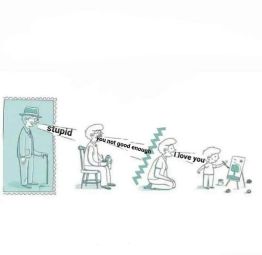
 Some years ago while working with practicing Jews and Christians, I realised the underlying process many of them were continually going through: judge an act as righteously right or wrong, confront moral failings within oneself and others, then forgive and let go by giving anger to God or Jesus. The depth of potential existential judgment is so intense (e.g. eternal damnation and social ostracisation), that it can be very hard for people to acknowledge ‘wrong’ behaviours. I have experienced numerous instances of trickery of someone intending to forgive and let go (or deciding to avoid an issue), resulting in hurtful and confusing passive-aggressive behaviours. Often the underlying issue emerges years later after so much resentment has built up and trust eroded that the relationship becomes very hard to repair. (Image from here)
I was taught this judgmental process by Jewish family members, and had it reinforced by community members while growing up. I am thankful that another process was also taught to me by some Frisian ancestors: the process of accepting. I became consciously aware of this process as an adult when I worked with Tom Lake (now retired), who founded the International School of Shamanism on the foundational process of ‘unconditional love and acceptance.’  Though it may at times seem more painful in the moment, I find loving acceptance brings me immeasurably more ease and peace than judging. I then discern what, if anything, I need to say or do when I experience hurt or realise I have caused hurt in another being. I remember Tom saying to me once that even when he doesn’t think he’s done anything wrong, if someone tells him that his actions have hurt them, he chooses to apologise because it is not his intention to hurt anyone. I appreciate the humility in that, and that it also helps hurting hearts to remain open to an ongoing relationship. (Image from here)
A common misconception is that a process grounded in acceptance means we make excuses for concerning behaviours. That is not my experience at all. In fact, working among Aboriginal Australians in the Northern Territory, I heard lamenting from many community members about how Western ways have eroded their traditional forms of justice and created more intense and seemingly never-ending conflicts. In many Indigenous Australian cultures, when someone broke a traditional law, a member of the aggrieved family would ceremonially spear a member of the offender’s family. This ceremony created an opportunity for everyone to accept what happened, because the aggrieved party could admit wrongdoing and face a consequence that would then restore their social place in the community, and the offended party could act as a channel for spiritual retribution. This is referred to in English as ‘payback.’ The spearing could hurt or kill someone, or it could miss them altogether, and the outcome was accepted as the will of the spiritual realm. Once the ceremony was done, the issue was let go, and relationships were restored.
_-_Bette_and_Joan.png/250px-Feud_(Season_1)_-_Bette_and_Joan.png) Now that the Western justice system has criminalised the payback ceremony, many Aboriginal people in the Northern Territory struggle to reach forgiveness with their Indigenous science of justice. I heard about someone who had been in prison for years as ‘Western justice’ who was released and immediately had to face spearing if he wanted to see his family and community again. I heard about family members of an offender being beaten up until someone agreed to be speared in place of the offender in prison. I heard about decades-long violent feuds involving multiple generations where many people didn’t even know how the feud had started, but no one felt justice had been satisfied. I even heard about someone trying to sue someone else for using sorcery against their family as payback instead of spearing. It’s a mess. (Image from here)
Now that the Western justice system has criminalised the payback ceremony, many Aboriginal people in the Northern Territory struggle to reach forgiveness with their Indigenous science of justice. I heard about someone who had been in prison for years as ‘Western justice’ who was released and immediately had to face spearing if he wanted to see his family and community again. I heard about family members of an offender being beaten up until someone agreed to be speared in place of the offender in prison. I heard about decades-long violent feuds involving multiple generations where many people didn’t even know how the feud had started, but no one felt justice had been satisfied. I even heard about someone trying to sue someone else for using sorcery against their family as payback instead of spearing. It’s a mess. (Image from here)
Whether a spearing ceremony resonates with you or not isn’t the point; the point is, it was working for these peoples for many thousands of years. Their shared understanding of the world, its laws, and the intervention of the spirit realm supported people to admit and face consequences for ‘wrong’ acts and then reach a space of collective forgiveness and letting go of the issue. For me, such a justice process accepts that being human inevitably includes engaging in some ‘wrong’ acts. In traditional Indigenous justice processes, it was very rare that anyone was seen as unredeemable, and even if they were, it tended to be seen as someone’s spirit being overcome by a disease such as Wetiko rather than a failure of their individual moral character. We are all influenced in our sense of self by stories and projections from others, and I encourage you to consider how you feed this in the following exercise.
Exercise: Reflect on someone you dislike and feel some aversion towards, whether it is someone you know or a historical figure like Hitler and fill in the blank: He/She is _________. Consider the meaning of saying someone ‘is’ a trait such as ‘evil’, or ‘too selfish’. Is that their identity in your eyes? Do you judge it? How might you be hurting them, and yourself, by holding these stories and projecting that onto them?
 Though we may not be able to ceremonially heal with the people who hurt us or people we have hurt, we can do spiritual ceremonies on our own to change the way we hold people and what we project. Shifting our perspective requires us to hold paradox and avoid binary and judgmental thinking. In traditional Hawaiian culture, people use “Ho’oponopono, the traditional conflict resolution process…[to] create a network between opposing viewpoints…that allows dualistic consciousness to stand while becoming fully embodied by the ecstatic love of Aloha”[1]. In Hawaiian science, illness is caused by breaking spiritual law and requires the offender, aggrieved, and their entire families to forgive themselves, each other, and seek forgiveness from the spirit realm before the illness can heal[2]. The traditional Ho’oponopono ceremony has been adapted for outsiders to practice forgiveness by Hawaiian kahuna Morrhah Simeona and her student Ihaleakala Hew Len[3]. Though these teachings have been criticised as being New Age-y and deviating from traditional teachings, I find one of the basic elements useful and include it as part of the exercise below. (Image from here)
Forgiveness exercise
Ground and centre yourself and create sacred space. Bring to mind someone who has hurt you. Imagine that person’s face and see them saying the following to you in your mind’s eye: “I love you. I am sorry. Please forgive me. Thank you.” If it feels okay, imagine saying the same phrase back to them. Be with any feelings that arise.
Next time you feel hurt by someone, take some time alone and then do some eye-gazing and say these four sentences to each other. Notice how you feel.
[1] Colorado, A. (2021). Woman Between the Worlds: A call to your ancestral wisdom. Hay House, p. 128.
[2] Veary, N. (1989). Change we must: My spiritual journey. Institute of Zen Studies.
[3] Vitale, J., & Len, I. H. (2007). Zero limits: The secret Hawaiian system for wealth, health, peace, and more. John Wiley & Sons.
 If you value this content, please engage in reciprocity by living, sharing and giving.

 I am using the word ‘discernment’ instead of ‘judgment’ because ‘judgment’ is often linked with negativity, but ‘sound judgment’ is similar to skilful ‘discernment.’ I think of discernment as a muscle more than a practice, because it inevitably gets regular workouts through our life experience, so we are wise to work out the muscle so it’s in good shape to navigate inevitably testing moments in our lives. Discernment is grounded in our desire to uphold core values, and will help us to strengthen our
  I felt deeply uncomfortable, as it triggered wounds of previous sexual violence. So I started modifying my outfits, pairing a tighter top with a longer skirt, and carrying a sweater or wrap to cover up when I felt overly exposed. I still experienced some uncomfortable projections, but those choices helped me feel good about what I was wearing as well as empowered to protect myself from many uncomfortable projections. I did not feel responsible for the projections other people were making, but since I seemed to be triggering people, I felt some responsibility to protect myself. Perhaps in an ideal world we would all be so self-aware that I wouldn’t have needed to deal with such projections, but that was not my reality. I have since grown to more deeply value modesty and to embed that into my values. (Image from
  when something went really poorly and didn’t turn out how he had hoped, he said he felt a sense of pride that it had been his decision and knew he would learn from it. This strategy may not work for you, but the underlying idea is empowering for our discernment muscle. Sometimes we over-think, over-analyse, or over-consult others for advice, and the best thing to do is take a step in a direction and await feedback from the universe, then adjust and await feedback again, through an iterative process that can also strengthen our discernment muscle. (Image from
 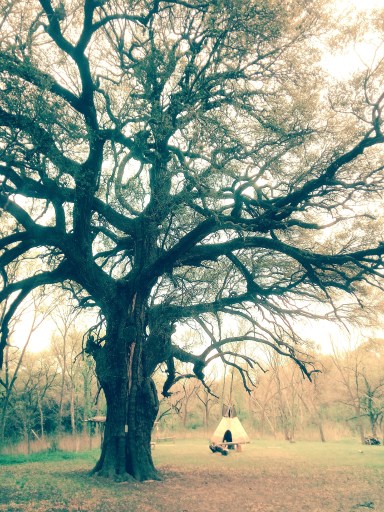 All discernment relies on some foundational knowledge. When we are confused, lost, or tricked, we have poor information with which to discern what to do. This is another reason why grounding and centring practices are so vital. If we think about it in terms of intelligence, if I don’t have much physical intelligence about my environment, I won’t have much to go on when trying to discern where to set up camp. I will have to rely on knowledge from other environments, but I may learn the hard way that camping near a stream kept me close to water but that the water level rose more than I expected, or that the trees providing shade had branches that easily snapped in heavy winds. This is where local Indigenous knowledge is so valuable. (My photo from
  Trauma’s meaning, causes and methods of healing differ by culture and
  Reconnecting to the Earth
 Our task as healers is to allow alchemy to occur so that sh*t we are carrying in our hearts, minds, bodies and spirits can instead turn into fertiliser for ourselves and others. By consciously choosing to move into terror and aversion/disgust when we are in a safe space, we can reconnect with lost soul parts. In doing so, we gain knowledge that expands our individual and collective understanding of ourselves and our world. This is seen as the sacred calling underlying a ‘shaman’s illness’. Trauma is seen as a spiritual offering of a huge amount of energy that can redirect us into a new identity like a phoenix rising out of ashes. Indigenous healers are called ‘medicine people’ or ‘shamans’ because through healing trauma we embody medicine by living in a wiser way and offering support to others who are struggling through similar wounds.
 I was raised to hold family sacred, and so processing the initial childhood betrayals, followed by the adult estrangements, has been incredibly painful. It felt like a sudden orphaning that was out of my control, a genocidal loss of everyone I deeply knew, had learned to rely on and share my life with. I am still in touch with one friend from childhood, one from middle school, and my nanny’s daughter who knew me as a baby. Though I am not close with them, it feels quite precious to me that they are still in my life and knew me when I was young. My husband and a few friends have walked with me through my estrangement and have met some of my family members, but hearing stories and seeing photos isn’t the same as having witnessed me as a child in the context of my family and seeing how far I’ve come as an adult.
 In every culture there are structures of
  It is a big deal to estrange, and I have counselled people who have told me they were considering it that it’s like the guy who got stuck in a crevice while rock-climbing and had to saw off his arm to survive – it’s drastic and changes your life forever, and sometimes just has to be done. There’s little accurate Western scientific research about estrangement, with
  As with any loss, my experience of estrangement has created opportunities for a lot of self-knowledge and spiritual growth. It has given me the time and desire to do gift economy work supporting people’s healing, as well as community-building, knowledge-sharing, and our other humble activities through Earth Ethos. If I had family obligations and relationships taking up my time and energy, I would not be able to serve in this way. So you can thank my family for estranging from me, as it has gifted these insights to you today. And if you know anyone who is estranged, don’t assume that their situation can, will, or should change.
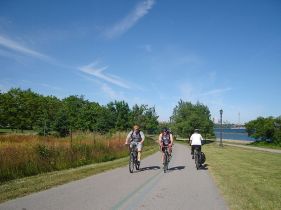 Three cyclists were riding down a neighbourhood road when an older guy in sports car drove by and yelled, “Get off the road, assholes!”. Of course, cyclists are legally allowed to be on the road. The female in the group gave him the middle finger, angering the driver more and he turned his car towards her, then veered onto another street and into a carpark of a private club. She almost fell off her bike, scared and filled with rage. She blasted through the private club gate past the security guard while her fellow cyclists followed and called the police. You might be thinking that she was trying to get the driver’s plates, but she already got a photo of that. When he stepped out of his car she screamed in his face how wrong his actions were and how terrified she felt. He pushed her out of his way, and she raged even more and threatened to press charges for touching her. By this time her companions had gotten through the security gate. The security guard initially threatened to call the police and report the cyclists for trespass, but changed his mind when he saw the scene. Police arrived and explained to the driver that cyclists are allowed on the roads as much as he is, and told the cyclists they can’t charge the driver with anything but simple battery for pushing her because he veered his car away and didn’t hurt anyone. No one was happy with this outcome.
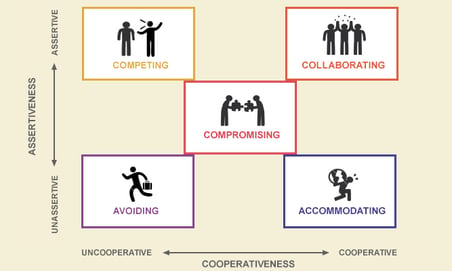
 think about a lion competing to be king of the hill
  The security guard started out competing but then accommodated the cyclists, represented by a chameleon changing its colours to fit the situation. The other two cyclists are collaborating with their friend, like a school of fish sticking together, and the police officer is
  compromising by offering to charge the driver with something since the cyclists want him to be punished. Compromise is represented well by a zebra with its dual-coloured stripes.

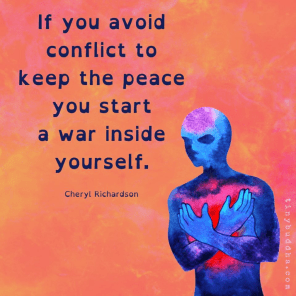 When we do choose to avoid a conflict, it helps to be aware of the Cycle of Indecision: ‘I feel bad. I should do something. Nothing will change. I gotta let it go. But I feel bad…’ I find when I avoid a conflict but over time it keeps coming up inside me, then I do need to do something to address it. That may involve talking to someone, creating art to express my emotions and tell my story, doing something ceremonial to keep the energy flowing without endangering myself, or finding a passion to advocate out in the world. For example, if I have a conflict with someone close to me, I tend to try to collaborate and talk it through when we are both less emotionally charged. But when I have a conflict with someone I don’t trust to collaborate with, I often write them a letter, leave it on my altar, and burn it so that the energy gets sent out in spirit.
 The driver’s interest is (likely) not being criminally charged and being able to express anger that cyclists are not riding single file (which they don’t have to). Maybe he has an interest in trying to change that law or have cycling lanes built on the road so he doesn’t have to share, or maybe he’s just interested in expressing anger, but his position seems to be ‘get out of my way’. We’d need to talk to everyone to unpack their underlying interests and potentially resolve the conflict in a more mutually beneficial way, but that’s not the job of the police officer. That’s something we could do through an Earth Ethos
  We all have different perspectives. It helps to find space and respect for another whose view strongly conflicts with ours by carrying a bit of doubt about what we ‘know’. For example, if we ‘know for a fact’ that Covid exists and others deny this, we can avoid placing ourselves into judgment and remind ourselves of things we didn’t believe until we experienced them for ourselves or trusted something that didn’t work out well for us.
 We all have blind spots and project things that aren’t there. Awareness of blind spots and wounds allows us to better protect ourselves and know when we need wise counsel. When one songbird spots a predatory bird in the forest, their outcry helps birds, mice, and others know to duck under cover. Knowing whom to listen to, why and when is helpful. I’ll take on western medical advice from a doctor, but I will not take on advice about my spiritual life (such as a statement like ‘that wound will never heal’).
 We all see things unclearly and with a distorted lens sometimes too. Awareness of these limitations can be empowering. Our greyhound Chloe has such a strong prey drive she projects potential prey onto wind lifting up a blanket. Hope can be a powerful trickster.
 Minimising or maximising – distorting reality into being bigger or smaller than it is. Some people tend towards one or the other, and others swing between catastrophising and bravado. Maximising can help us notice hidden emotion we may have not been aware of, and minimising can be helpful to get through danger or pain but isn’t sustainable. Swinging creates drama and is often quite painful.
 Bypassing or avoiding – actively or passively choosing to evade something or someone. This can be wise especially if there is danger to protect ourselves from, but may be a trick that comes back to bite us and can limit opportunities for intimacy and growth.
 Problem-solving or fix-it mode – this may be practically helpful but risks being emotionally damaging as it tends to come from rejection or lack, of not accepting our pain in the moment and judging someone or something as inherently wrong or broken.
 Empathise or validate – affirming our shared humanity and showing care can be helpful, but may not be fully honest and not build trust or allow us to learn tough lessons.
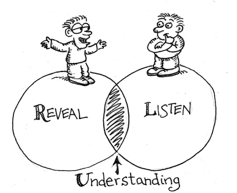 Inquire or try to understand – curiousity helps us learn and see each other more clearly, but it risks inflaming someone in crisis. When a house is burning, we first need to put out the fire and then investigate why it happened. Focusing on why first can be damaging.
 Acknowledge or reflect – Similar to validating but more passive, can be useful when we are not emotionally charged to provide a more neutral mirror to someone or go within and look at what we can learn from the situation. Repeatedly going within to do our own reflecting can limit our intimacy with others who may feel like we keep running away.
 If you value this content, please engage in reciprocity by
 If you value this content, please engage in reciprocity by
 This is the person with the most social power, both within their group and across groups. The Ringleader commonly lacks classic “excuses” for their behaviour, and usually comes from a relatively “
 The Henchmen are the bane of any true bullying victim’s life, dishing out most of the torment at the behest or with the support of the Ringleader. They are often quite dissociated emotionally and act without shame, which is both part of their resilience, and what makes them very dangerous.



 In processing this resentment, I realised that when there is a lack/denial of reciprocity in a relationship, we dance between resentment and denial — resentment within the person who feels stifled/unseen because the other person isn’t holding them in wholeness, and lack/denial/not good enough within the other person who feels cut off from their wholeness (and may or may not want to heal that rift inside themself). Those of us who live with an Earth Ethos embody a knowing that we are all interconnected, and we are not lost playing out myths of superiority and inferiority based on existential judgement.
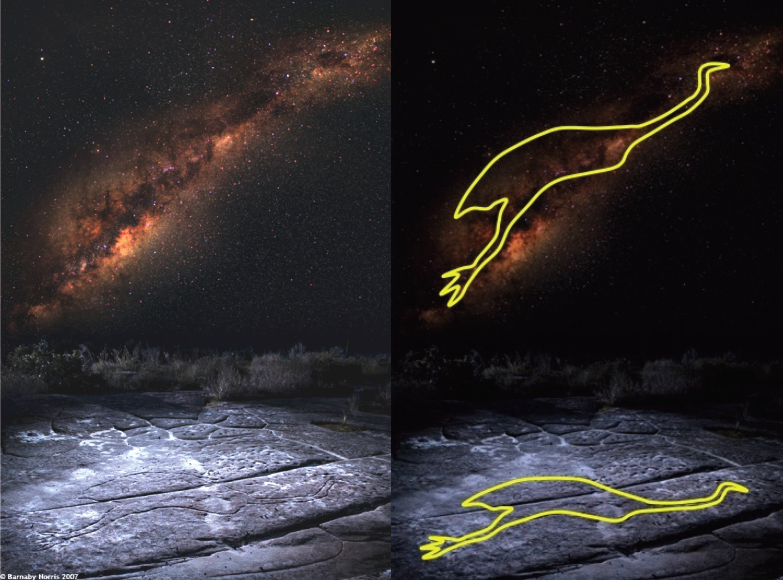 Yet in Aboriginal cultures in Australia, the Emu is so highly regarded that people traditionally organised their lives around following the wisdom of the Dark Emu in the sky, which is the constellation of darkness within the Milky Way. The image is from
 Earth Ethos