Blog by Lukas
In her PhD Justice is Healing: An Indigenous Approach to Sexual Trauma, Valerie describes three main roles in violence: victim, offender, and bystander. In my view, it is vital for us to look at where we play these roles in various aspects of our life, with special attention given to looking at how these energies manifest internally. Internal versions of these energies may manifest in concert with each other, for examples as our psyche offends against itself in its own presence as a bystander.
Often, too, there are pairs of internal-external energies, for example one’s internal bully manifesting as a tendency to blame others externally, or a tendency to blame oneself internally manifesting as a tendency to offend against others. In this way I would see the bystander role as a dissociative state internally, that could manifest as any one of the three on the outside with dissociation from the impact.
These roles are also evident across social strata, where whole groups of people play different roles, internally and externally, resulting in cultural forms of violence like oppression, domination, submissiveness, and lateral-violence, which is when an oppressed group turns against itself.
This blog came together by thinking about what we can learn from looking at victim-offender-bystander triad on an individual or small group level that might be useful for some of the larger and more intractable societal and cultural issues.
Through lived experience I am deeply familiar with the dynamics of schoolyard bullying so I chose this the small group context to explore. In this case the victim/offender/bystander triad are a substrate — kind of like building blocks but without defined boundaries — from which the archetypical personas emerge.
The archetypes are as follows:
1. The Ringleader.
 This is the person with the most social power, both within their group and across groups. The Ringleader commonly lacks classic “excuses” for their behaviour, and usually comes from a relatively “good” and “stable” home. They often evade punishment if teachers don’t go for a full root and branch investigation of bullying, as they are masters at having others do the dirty work. They are primarily driven by a deep-seated greed for power and control, their inner victim being the delusion that this brings fulfilling or lasting joy to life. (Image from here.)
2. The Casual Bully
The Casual Bully has a fairly safe (on the surface!) social existence that enables them to live above the fray most of the time. They’ll participate in the bullying sporadically, usually on those more “zero sum” occasions when to not do so would be testament to supporting the victim. They are usually friends with the Ringleader and have a fear driven desire to remain that way, as it makes them “cool”. Their inner world is similar to the Ringleader, but for whatever reason they are not as desirous for that level of power, or don’t posses the social skills to get it.
3. The Bystanders
Similar to the Casual Bully but they aren’t necessarily friends with the Ringleader, or anywhere near as greedy. They are content with a degree of social safety that puts them above the fray, and will stand back almost all of the time. They’ll seldom harass the victims overtly, but may do so in more subtle and insidious ways when it suits them. They won’t support victims (which of course contributes to the victim’s sense of isolation) because this would risk their social standing.
Their inner world can be highly varied, possessing varying degrees of envy of Ringleaders, contempt for Bully Victims, and perhaps even some shame at their own passive support of the social hierarchy.
4. The Henchman
Henchmen are critical to the Ringleader’s power. They are often recognisably disadvantaged. Maybe they came from a struggling home and wear tattered clothing, or maybe they are a bit overweight or have acne. The Henchman will receive an almost constant mild, though carefully executed, stream of bullying from Ringleaders and Casual Bullies. The “carefully executed” part is because a good Henchman will usually posses a weapon even the Ringleader wants to avoid. Maybe they are big and capable of violence, or maybe they just generally have a crazy streak to them that needs careful taming.
 The Henchmen are the bane of any true bullying victim’s life, dishing out most of the torment at the behest or with the support of the Ringleader. They are often quite dissociated emotionally and act without shame, which is both part of their resilience, and what makes them very dangerous.
Sometimes there is a sense of the Ringleader archetype being totally absent, leaving a hierarchy of Henchmen, where you might have a chief Henchman acting as a Ringleader of sorts. In this case you might think of the true Ringleader being forces outside the school. (Image from here.)
5. The Bully Victim
This archetype has a lot of overlap with the Henchman, but there are some key differences. Henchman are outwardly tougher than Bully Victims, often because their early childhood years or home life were rough. A Bully Victim on the other hand does not have this kind of resilience, weapons, or obvious “excuses”. They often feel intense shame about their predicament.
Bully Victims are often the group those higher up the chain take the most joy from belittling and humiliating. It does not come with the guilt of bullying a Victim, as the Bully Victim is often seen as “having it coming”.
It can be hard not to see the Bully/Victim as the most pathetic specimen of all. Most people have trouble having compassion for them, including the teachers. They get bullied almost constantly, but have this delusion that there might be a way for them to get on the good side of the Ringleader and rise back up the social
ladder. Unfortunately this delusion has them humiliating themselves in various ways for the sadistic entertainment of Ringleaders and co. or by bullying someone else, either another Bully Victim or a Victim (see below). The balance of offender and victim energies will often vary over time, giving them moments of seemingly more power and intense falls from social graces. (Image from here.)
6. The Victim
The true Victim has little social power (within the hierarchy) and knows it. They are under few delusions. In your typical school the Victim might come from a minority group or have some kind of obvious physical disability or hardship. Life is hard for the Victim, but on the flip side, their clear-eyed appraisal of their situation means they are likely to form protective bonds with other Victims. With just a little support from teachers (increasingly the case in the modern world), they can be protected, which most schools these days at least have the intention to do. The flip side of a Victim accepting their fate of course can be a willingness to put off the fight when perhaps it was needed, or rely on Helpers (see below) too much for protection.
The Ringleaders are increasingly careful in a modern school yard not to give Victims direct attention as it is riskier (teachers notice more), and besides, the Victim’s acceptance of their situation means they don’t provide much entertainment. Instead it is the social dynamic setup below the Ringleader that does the job for them.
On some occasions and perhaps increasingly so, a canny Ringleader will publicly shame a Henchmen or Bully Victim for bullying a Victim as a means of virtue signalling, and deflect attention away from their own sadistic behaviour.
Victims usually have the most contempt and/or pity for Bully Victims, and fear of Henchmen. Wiser victims do know that the root of their ills are people higher up the ladder, but they often don’t know what do about that. Seeing a Bully Victim or Henchman get punished can quench that thirst and give a sense of justice but leave long term insidious patterns inherent within the hierarchy unaddressed.
7. The Helpers
The Helpers are the school yard saviours and are an increasingly common archetype. The Helpers make it their mission to defend Victims from Henchman and love to pick on Bully Victims, who due to their relatively privileged background compared to a Henchman, are low hanging fruit for punishment. Bully Victims are susceptible to intense shame, and often clash with Helpers.

A Helper likes to convert Casual Bullies and recruit people they see as Bystanders, and it is usually from the ranks of these groups that they emerge. They might even poke the bear of the Ringleader once in while though not often, as even this can be beyond their fear threshold. Helpers are often blind to the hierarchies within their ranks, and to the ways in which their righteous defense of Victims can be a form of bullying. They are hard on themselves inside, which is of course one of their main motivations for doing what they do. (Image from here.)
8. The Forgotten
Very similar to a Victim, but not as visible. Their predicament often goes unnoticed by everyone, and manifests more as isolation and invisibling.
I spent most of my early high-school years between the age of 12 and 15 primarily as a Bully Victim. I have learnt a lot about my internal world by reflecting on the fact that I can so clearly recall the times when I bullied people, whereas much of the time I spent on the receiving end disappears into a minimising morass. This tells me that I have tended to bully myself inside, terribly, and thus take some of this out on others, but also accept my being bullied as somehow being what I deserve. The more I bullied others, the more I felt “deserving” of punishment, which reinforced my internal bullying, and round and round it went/goes. What I did have was a natural inclination to look holistically at things, which has been both a blessing and an incredible burden in my life. And whilst it did lead to my Ringleaders-in-Chief getting a few literal black eyes, I always received a lot of attention. I was never quiet, whether bullying or being bullied.
Many research papers over the years have sought to understand the impact of school yard bullying on mental health. Some more recent ones showed clearly that compared with people who are more purely offenders and victims, the Bully Victim has the highest correlation with depression, anxiety and ADHD[1] (me on all counts), as well as suicidal ideation[2]. Bullies (Ringleaders, Casual Bullies and Henchmen) and victims also had poorer mental health than people considered “not involved”, but not as bad a Bully Victims. Bystanders, or witnesses to bullying also fared worse than those who supposedly had not witnessed anything, showing that even peripheral exposure to violence can be traumatizing. It also shows me again the extent to which the Helper persona is a self—protection mechanism as much as it is something that comes from deep inner power and benevolence.
The conclusion of the papers was of course for anti-bullying efforts to ensure they give attention to the wellbeing of bullies as well as victims. When it comes to compassion for “offenders”, this is part of a trend where society seems to be starting with the low hanging fruit of children even if we can’t yet manage it for adults.

In closing, I have found it really enlightening, and indeed fun to apply these archetypes to the various groups and social strata in society, particularly a modern Western colonial one. It is critical to remember that people can embody more than one of these different archetypes as well as the substrate energies (victim, offender bystander) both internally and externally, both visibly and invisibly. (Image from here.)
Exercise: What do you think? Did I miss any school bullying archetypes? What societal groups would you align with which school yard bullying archetypes?
[1] https://pubmed.ncbi.nlm.nih.gov/24920001/
[2] https://pubmed.ncbi.nlm.nih.gov/23790197/
If you value this content, please engage in reciprocity by living, sharing and giving. 


 If you value this content, please engage in reciprocity by
  In processing this resentment, I realised that when there is a lack/denial of reciprocity in a relationship, we dance between resentment and denial — resentment within the person who feels stifled/unseen because the other person isn’t holding them in wholeness, and lack/denial/not good enough within the other person who feels cut off from their wholeness (and may or may not want to heal that rift inside themself). Those of us who live with an Earth Ethos embody a knowing that we are all interconnected, and we are not lost playing out myths of superiority and inferiority based on existential judgement.
 Yet in Aboriginal cultures in Australia, the Emu is so highly regarded that people traditionally organised their lives around following the wisdom of the Dark Emu in the sky, which is the constellation of darkness within the Milky Way. The image is from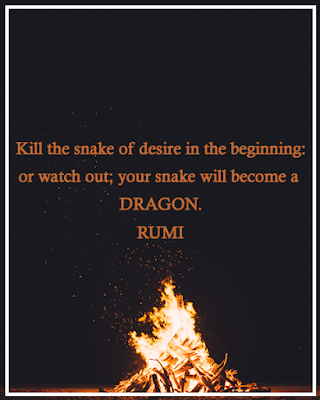
 If you value this content, please engage in reciprocity by
 purposely into trauma or danger, but not to the point of becoming a martyr and building resentment. It can be a challenging line to walk. It requires very high personal standards along with loads of compassion for self and others. It can be isolating and incredibly fulfilling. Instead of being outraged about whatever stupid action Trump did this week, I was in awe to learn that fish underwater
 Blog by Lukas
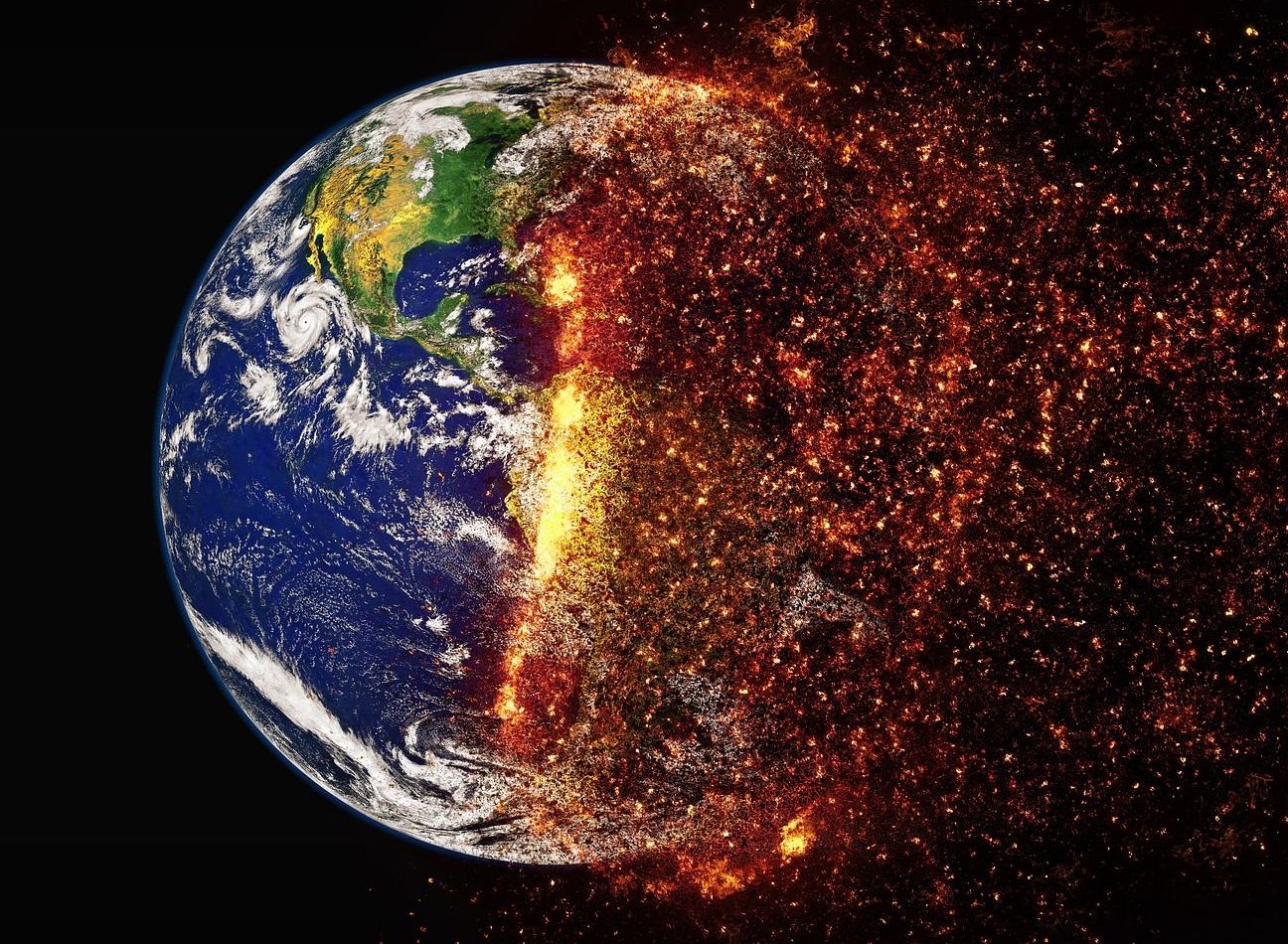
 We don’t need to fix the world, rather we need to learn to flow in it, and be in deep relationship with it. I have no doubt that from such a stance we’ll look at open pit coal mines and the internal combustion engine, not to mention countless other inventions and lifestyle choices, as being fundamentally out of flow, a desecration of something sacred that severs us from the Earth. Western science will play a role in helping us work out what to do next, but the truth of our modern desecration of the Earth does not need facts and figures, and positivist experimentation for us to experience. If you don’t believe me, go and sit on a chair in a forest near where you were born for a few minutes and watch your mind. If you are anything like me, you will experience a lot of discomfort and dis-ease from being with the craziness of your undistracted modern mind. Can you “fix” that with your mind alone? Can Western science offer you any help? There is as much to learn about why we face climate disasters from that one simple activity as there is from any number of bore holes dug into the Antarctic ice.
 We need to question more than our use of carbon. We need a new and bigger dreaming. We need a dreaming of lived interconnection to immortal oneness. Such a dreaming is bigger than our daily struggles, and even our comprehension of existence itself. Certainly much bigger than our worries about three degrees of global mean temperature rise. You might say, “Well that is easy for you to say, it is not your daily sustenance under threat, or your island about to be swallowed by the sea”, and this may be true. But my reply is that these ideas I am telling you are not mine. They come from the wisdom of people who did indeed face and transcend such hardships. Islands have disappeared before, and life went on. Regardless of what we do and don’t do, life will go on this time around too. The only real question is what kind of life it will be. (Image from
  If you value this content, please engage in reciprocity by
  The above quote is the definition of “unsustainable” to me. I see this wisdom enshrined in the biblical story of the Tree of Knowledge that some of our ancestors were advised not to eat from before their curiosity and the trickiness of a snake got the better of them and taught them this lesson. I facilitated a workshop last weekend for healing professionals called “Space for Spaceholders” in order to create space for their nourishment. The embodied metaphor for nourishment that came to me was the placenta.


 If you value this content, please engage in reciprocity by

 If you value this content, please engage in reciprocity by
![INDIGENOUS AUSTRALIA[2]](https://earthethos.net/wp-content/uploads/2019/07/indigenous-australia2.jpg?w=604)
 When energies interact, we get a force, which is a relationship or co-creation. When we think about forces of nature, like a tornado, we can feel awestruck by the immense power of energy the elements of air (wind) and water can co-create. The Force in


 If you value this content, please engage in reciprocity by
  Earth Ethos