Tag Archives: trauma

Clean & Dirty Pain

Blog by Valerie

I recently came across the concepts of clean and dirty pain. This is a well written deep dive if you want to read it before I share my perspective. I’ll describe it as follows:

    • Clean pain is when we accept and move through what life gives us in fullness of emotions and experience; and
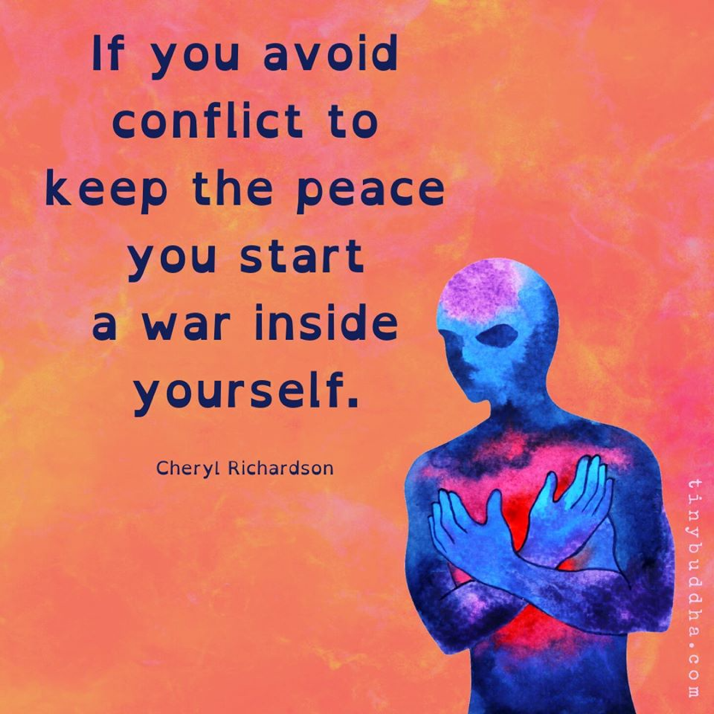
    • Dirty pain it when we resist, deny, and layer shame, blame and guilt on top of the pain life has brought us so that we multiply our suffering and so as to punish or even torture ourselves. (Image from here)

It’s been my mission for some years now to honour all energies, feel all feelings, and witness all thoughts with acceptance, love and compassion. It’s been especially important this week as we’ve been a target of some online abuse, as well as rejection from a few people we care about who have become bogged down in shame. I am used to being a presence that some people find it hard to be with, but that doesn’t make it easy! I have purposely been to many dark spaces, and I have honed some fierceness through some soul-wrenching boundary-setting, and I understand that not everyone wants that mirror. Yet more and more of us seem called to move through intense pain, and it seems at times that our only choice is how clean or dirty will the path we take be.

I think about how those who are brave enough to share something soul-led, something real, in a world that is so often about superficial image and illusion, in a world that is so quick to judge, to dismiss, to be outraged and unkind, are those who will save this world…To be able [] to be ourselves, to share of ourselves, to have access to the dark parts of Self to bring forth what we will from our personal Underworld is perhaps the point of the human quest, or at least one of the main bullet points.–Mary Shutan on Facebook

I’ve written a few times about trauma being neurobiologically encoded in our brains at the intersection of disgust/aversion and terror. That Western science knowledge has really helped me to judge when I need to move through something painful and when I’m potentially re-traumatising myself. After many years, I now feel like my instincts and flow are trustworthy. It makes the pain a lot easier to be with when I trust that it’s valuable, and I trust when I feel moved to shy away or go into it directly.

Accepting clean pain might sting for a day or two, but it doesn’t linger or fester.

So, to the people who have been sharing disrespect and rage with us recently, we feel your pain and pray that by grounding your projections and reflecting compassion back as best we can, that you are able to feel something more than overwhelm.

And we want everyone to know that however overwhelmed you feel in a moment, you’re not carrying it alone. With thanks to Shannon of Providencia Waco for sending us this song by Alexandra Blakely, we invite you to close your eyes and receive this musical medicine:

giveheart If you value this content, please engage in reciprocity by living, sharing and giving.

Visionary Struggles

Blog by Valerie

This blog is for those of us who receive visionary insight through the gift of clairvoyance. Like all spiritual gifts, it can be tricky to work with. We need to discern what are visions and insights, and what is our imagination. We need to learn which visions are due to intergenerational trauma and ancestral wounds needing to be witnessed, and which are warnings of potential future events. It can take time to make peace with and accept some visions when it feels like there is little that we as individuals can do to change the outcomes.

visionary by jenarose on DeviantArt

It seems more common for us to have negative experiences when we reconnect with spiritual gifts as adults, which gives us abundant opportunities to practice acceptance, compassion and discernment. We learn a lot from unpacking negative experiences. But that may give us little comfort when we’re trying to process painful visions of natural disasters, traumatic deaths, and abuses. Some of us seem to be called to witness in our mind’s eyes (and some of us also in full embodied lived experiences), some aspects of nature and the earthly reality that are incredibly harsh. Lukas likes reminding me about the nature of lions, that the males try to kill all the cubs of the previous male who was the head of the pride so that the children are all his. If a human did that, we would be appalled, but with lions we accept it as their nature. Aspects of nature are brutal. (Image from JenaRose)

In Awe of All Our Relations - MindfulThe concept of “All My/Our Relations“, a term commonly used in indigenous cultures in the Americas, is a way to describe an indigenous science concept of interconnectedness where we see ourselves in all aspects of nature. That means that we don’t other ourselves from lion behaviour even if we find it appalling, we hold it in our hearts and minds as part of nature that we do not wish to emulate but which we allow to exist (meaning we let go of any existential judgement and practicing acceptance). (Image from here)

I have found with visionary gifts in particular, we often feel forced to face our deepest fears, witness family secrets, and see society’s shadows with clarity. This isn’t easy. Even if we gain valuable knowledge, others won’t necessarily listen to us or value our insights. This may result in our having to witness and be negatively impacted by others’ poor choices. I used to overly share visions and insights out of hope (or desperation) that someone would listen. But that wasn’t respectful of myself and the gifts I was given. It helps to remember that visions are just that – visions. They may or may not come into being. It’s important to carry a bit of doubt and humility about them, even if we find much of what comes to us does happen. There may be metaphorical meaning in visions too. In visions involving others that we feel moved to share, we need to create space for others to interpret the visions themselves.

IMG_3576In cities, since I started having visions of plants intertwined with buildings (reminding me of a modern co-habitation version of some of the Angkor temples I visited many years ago), I have felt more peace when moving through urban spaces. It is up to you how to honour your visionary gifts. Your expressions may evolve over time from doing personal life and altar work, to sharing them with a few people close to you, to using them to inform your art, direction of work in society, and your everyday life choices. I hope you allow yourself to be creative and give yourself grace to try things and see how they work. And please keep in mind that if you pray for something you envisioned and it doesn’t turn out the way you wanted, your prayers do matter; the people and non-human kin involved in the event can feel your energy and impact on some level, however humble.

giveheart If you value this content, please engage in reciprocity by living, sharing and giving.

With Dignity and Respect for All

Blog by Valerie

Earlier in my ancestral healing journey when I set boundaries, I would tell ancestors who couldn’t support me and my core values to go. I had heard a few people advise to only work with healed ancestors, though I’m still not quite sure what that means. All our human ancestors are somewhat healed and somewhat wounded. Sure, some are wiser and more healed than others, just like people living now. And even ancestors we may refer to as ‘enlightened masters’ have blind spots and things to learn. No one’s infallible.

It felt important for a while to build my strength and skills to take space and even reject some behaviours and values, to avoid certain conflicts. But I find that what we reject tends to comes back to us seeking deeper acceptance. And since I don’t believe in existential judgement, I needed to learn to coexist with all my ancestors. If there’s a crocodile in our environment, we need to learn to live with it, how to protect ourselves and avoid it as best we can. Because that’s where we are living now, and that being has just as much value here as we do, whatever feelings we have about them. (Image from here)

Aboriginal people, through thousands of years of living with crocodiles never have considered that they are dangerous animals. We have always lived with them. They lived their own life and we lived our own ways, as long as there is common respect for each other.

–Gularrwuy Yunupil’u in Living with crocodiles (ABC documentary)

How do we respectfully, even vigorously disagree when we feel that others are acting in ways that are disrespectful and undignified? From arrogant ‘I know better’s to moral judgements, to shameful denials to self serving greed or even something as deplorable as genocide, so many of our behaviours are rooted in existential judgement. Such judgements take us out of the web of life and create existential hierarchies. Wetiko creeps in, and we start to believe stories of supremacy. If we want to embody connection, then we have to make space for really tough stuff like experiences of existential judgment from others and the painful impact of destructive behaviour.

I have written before about estrangement from my family of origin. I still have dreams about many of them and experience connection. Sometimes I feel like we have worked through things in dream states, and other times I feel like the same dynamics that I walked away from are still present. 

For a few years I took space from some members of Lukas’s family due to unacknowledged behaviours that had destructive impacts on both me as an individual and us as a couple. We started slowly reconnecting after our little one was born because Lukas wanted her to get to know them, and I respected that. I don’t feel that different than I did before, but I feel like we are better equipped to maintain boundaries and protect ourselves than we used to be. 

Interestingly more of Lukas’s ancestors who have rejected me have been coming to me in dream states and telling me how they feel and why they’ve been so hard on us, that I’m not Christian and pull him away from Christianity, I’m not focused solely on his career and have one of my own, I took too long to have a child and am only having one, I ask too much of him around the house–all sorts of criticisms. In another culture (like my Jewish-Sumerian lineage), someone would have yelled at me about all that, but the Anglo Celtic culture struggles to speak directly, and often struggles to speak their truth. I now have more stories for what I’ve been feeling and behaviours that still play out, whether it impacts me directly or helps me witness patterns and struggles in the family with more clarity and compassion. I don’t yet feel like I’ve been welcomed into the family or have social belonging. I feel overall like I’ve been begrudgingly accepted, especially since I’ve had ‘their’ child, so that I’ll always be in the family tree now and there’s no point trying to break our marriage now.

For a while I resisted working with Lukas’s ancestors. I felt like that was his responsibility, and I was pretty full working with my own. As work with mine calmed down and we decided to get pregnant, I figured if some of Lukas’s ancestors would rather work with me that I had capacity. I want to support healing and prevent my child from inheriting intergenerational trauma as best I can. It’s been interesting if pretty unpleasant for the most part. But making space for such experiences feels important in the inner and outer world right now. Grace and compassion are so valuable. There’s a lot of conflict in the world. I think it will be a lot easier to work through it when we collectively accept as a baseline that all of us on the planet, human and nonhuman, are inherently worthy of dignity and respect.

Existential judgment may be the most destructive behaviour we humans engage in. And when we do, we add to our sense of shame. I have been noticing lately how efforts to avoid feeling such shame seem to be linked to an increase ghosting behaviours. So much to make space for and pray for healing about. We can be very spiritually enriched at the moment if we can avoid overwhelm! (Image from here)

giveheart If you value this content, please engage in reciprocity by living, sharing and giving.

Navigating Existential Judgment

Blog by Valerie

Lately some protracted conflicts have come to the surface in my life at a macro level in the world, and at a micro level in my daily life. I have been praying quite a lot since the war in Ukraine broke out, where my Jewish-Sumerian ancestors spent many generations living, and more recently about the war in the Middle East. It seems to me like there is existential war and rejection going on based in judgment, where one or more parties to a conflict feel they are fighting to exist in the minds and hearts of the other. Difference Between Perception and Judgement | Compare the Difference ...

I find existential judgement incredibly dangerous and damaging and see it as the root of genocide. It feels to me like a hand rejecting its own finger. If we believe in a Creator with wisdom our human minds cannot comprehend, how can we put ourselves in the position of judging what the Creator brought into being? And to say another is allowed to exist elsewhere (NIMBY) is still judgmental, for if we force another to leave their home and live on different lands, we change their and our identities by disconnecting people from their earthly homes and playing the roles of victims and offenders.

On a micro level I’m seeing this thinking play out in some righteous social justice warrior crusades around me. I find the concept of ‘rights’ to be violent, though it has obvious practical value to create baseline standards for society. If we didn’t existentially judge certain struggles and behaviours as deeming people unworthy of housing or health care or food, then rights would simply represent social baselines we collectively agreed upon as minimum standards of care for all of us humans living here. But if a single mother can’t afford housing, or a man with mental illness isn’t at retirement age but can’t hold down a job, we don’t collectively agree how (or sometimes even if) to support their survival. Rights then get used in a forceful way to push a majority social group’s minimum standard of support onto the collective, and thus they often need to be en-forced. And when we are judged and caught up in the rights battles we feel, rightly so, like we are fighting for our survival. (See survival strategies blog)

I agree with Jungian scientist Fred Gustafson that the Western mind is “having a massive collective nervous breakdown” and is going to “war to determine whose anthropocentric [world]view is most valid [while] the earth and all its inhabitants [] suffer.”[1] I have not found sufficient solace for survival in the Western world alone.

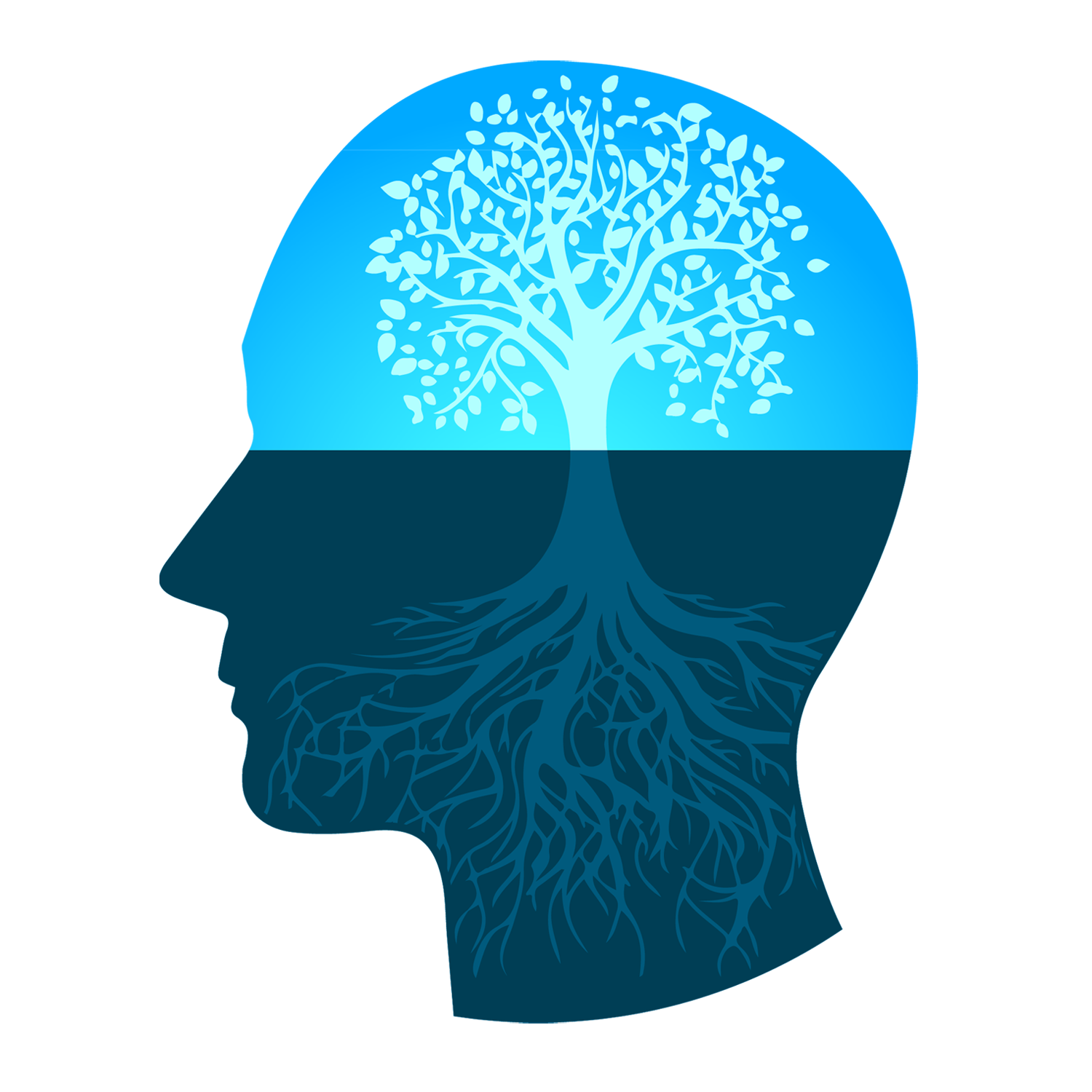
Mind PNG Images - PNG All | PNG AllFor me it has been vital to live in two worlds: (1) a social reality that is based on a Western worldview, and (2) an earth-based reality based on an Indigenous worldview. When I’m caught up in a survival struggle in the Western world that’s terrifyingly real, and I’m feeling rejected and judged and shamed and angry, I can spiritually connect with the knowing from the Land and my ancestors that I’m not only allowed to exist but that I am wanted. This powerful medicine is all I have found that alleviates my existential wounds. Without it I feel like I would not still be here on this Earth, as my roots would have rotted and not been able to hold up the rest of my inner tree of life. (Image from here)

conflict

If you’re also feeling some pain and heaviness about existential judgement and its impact, here are a few things that help me keep my spirits strong:

  1. Grieving is a way I like to express angry energy to avoid getting overwhelmed by righteousness and gain clarity which fights, if any, feel right for me to engage in, and what that means practically. You may prefer to yell and scream or throw things or punch a bag instead, so however you express anger to avoid it overwhelming you is helpful.
  2. Connecting with the land and ancestors where I am offers me powerful healing. I may give offerings as simple as feeding a bird or picking up rubbish, or as profound as a placenta burial or smoking/smudging ceremony. I may also cultivate a sit spot on the land, walk barefoot, and tend a tree altar. There are so many more ways to connect with the land where you live, these are but a few. The reverence we bring to the action we choose matters more, I think, than exactly what we do.
  3. Letting go of black-and-white, objective, judgmental thinking is something I am very fierce with myself about. Humility is an important value to me, so I ensure that even when I feel certain or highly confident about something that I carry a little bit of doubt. For example, I feel highly confident that child sex abuse (link) is a damaging act that is wrong to do. Yet my intense journey of seeking to heal that wound has brought me so much wisdom and peace. Spiritual gifts often thrive in grey, paradoxical spaces.
  4. earth ethos drum journeyAltering my consciousness is another survival tool I use daily, primarily through embodied meditations and drum journeys. I do it to heal trauma, connect with ancestors and other spiritual guidance, and seek tools for every day survival such as deeper spaces of compassion or peace. However you are able to sink deeper than your everyday ‘known’ and familiar thought loops can bring you some healing. I do find, however, that embodied practices (such as using sound or dance or breath techniques) are more powerful than mind-based practices (such as meditating through your third eye or simply watching your thoughts).

Thank you for reading this, and may your life be enriched (and even saved) by living in both worlds, as mine is.

[1] Gustafson, F. (1997). Dancing between two worlds: Jung and the Native American soul. Mahwah, NJ: Paulist Press.

giveheart If you value this content, please engage in reciprocity by living, sharing and giving.

Mothering amidst intergenerational trauma

Blog by Valerie

Breastfeeding art . mom and baby . motherhood illustration . | Etsy in ...‘We are cycles of time’ stuck in my head after reading a Chinese astrological perspective on the lunar new year before bed. I couldn’t sleep, and my seven month old has been struggling before bed recently too, getting a burst of energy after indicating she’s sleepy. Though neither of us knows quite how to best help her settle, we’re getting there.

I knew in my pregnancy that my nervous system was overloaded. I spent the first few months exhausted and unable to get out of bed, processing a load of grief, only some of which felt like mine. I felt the absence of my mother, grandmothers and wise aunties in a deeper way then. I lost them all to trauma. No one in my family has accepted that I was sexually abused, because no one can handle their own triggers and emotions around that being true. Their paths of denial have, from my perspective, all been painful and tragic.

My dad died from a repeat bout of cancer soon after I told his whole family that one of theirs was my abuser. One grandmother had multiple nervous system disorders, the other lived under such oppression that her back was curved into a C shape from the weight of what she carried on her shoulders. My mother increasingly took so many psychiatric pills to numb her pain that she could no longer be human with me.

Professionally I have done restorative justice with survivors of clergy sex abuse and clergy of integrity who wish to take responsibility on behalf of the Church. I have also chosen to heal some of my own child sex abuse trauma by doing empathic dialogues with sex offenders and their family members as research, to understand their experiences and therefore see my own in a new light. I’ve worked in child welfare and domestic violence, in developed and developing countries.

Calculating Cycle Time for Manufacturing Processes - Latest QualitySo it’s fair to say that I have seen plenty of intergenerational trauma playing out in mine and other people’s lives. It’s particularly humbling to see it play out now, as a mother with my baby. But once I realize that’s what’s happening, I know we will have to ride this cycle of time out. And I feel grateful all the trauma I inherited and grew up with led me to learning how to work with that tough, powerful energy. (Image from here)

Before feeling ready to become a parent, I worked hard over many years to process trauma and heal, to live differently than I was raised. I know from my PhD on indigenous trauma healing that altering consciousness is an important part of healing. And I still meditate throughout the day, with my baby, often when she’s feeding and sleeping on me. I know that I’m not in control of the triggers, and that working with the land to ground my memories eases my load.

This past weekend our landlords, who did some work to baby proof the house we’re renting, shocked us by giving us notice, saying they don’t feel like they can keep our baby safe on their property, and they’re scared about liability should something happen to her. I had no such fear here. We’re living rurally, and both my partner and I grew up in big cities.

This felt like a bait and switch and really surprised me, because as a mother keeping my baby safe is primarily my responsibility. I had just finished baby proofing the house and setting up safe play areas for her to crawl, buying some carpet and even paying to get the floors super clean and ready for the baby to scoot around on.

I didn’t sleep well for a few nights after the notice, wondering if we did something wrong, why this is happening, though the landlords said they have no complaints about us. And then it hit me. My first recovered memory of child sex abuse was my uncle and his wife touching me in a baby bath. I must’ve been about the age my daughter is now. And our landlords seem to be, for reasons of their own that I don’t know, playing out some of this fear and rejection energy with us.

We all attract what we need to grow and heal. Looking through mother’s eyes I’ve been finding it increasingly harder to relate to my family’s choices in caring for me. It’s hard to need support and know not only that they can’t help me, but that I need support because I now have the responsibility of both processing the trauma I carry from my childhood and inheritance, as well as trying to show up differently for my baby.

Childbirth was a clear example of this struggle for me. We planned a home birth with the support of a local doula and a virtual midwife who was on call for us during the birth. She also helped us prepare, mostly emotionally and mentally. I had done birth regression healing previously, yet ninety percent of what I experienced in childbirth was witnessing my own birth and my mother’s lack of consciousness and connection with me – not my connection with my baby, though I could feel their presence and had a knowing that she was okay.

free clip art mother and child 10 free Cliparts | Download images on ...I have felt a lot of grief that so much of my energy in the pregnancy and birth, and even as a young mother now, is about processing trauma and grief instead of just being in the moment enjoying my baby. Though I feel nervous about looking for housing, packing and moving, I realize we’re all a cycle in time. And though it’s tough, my role now is to process as much trauma and ground as much nervous energy as I can so my baby has more opportunity to be present with their child in the next cycle.

Reflecting on these cycles, I remember that the article about Chinese astrology said that the last year of the water rabbit was 1963, when Dr. Martin Luther King Jr. made his famous I Have a Dream speech. I grew up in Atlanta, and he’s long been a hero to me. Yet this lunar new year cycle started with a lot of violence at it’s celebrations in California, and among African Americans in Memphis, the city where Dr. King was killed.

Intergenerational trauma plays out in so many layers. And we’re all in this together. I’m reminded of other wise words from Dr. King:

“If a man is called to be a street sweeper, he should sweep streets even as a Michaelangelo painted, or Beethoven composed music or Shakespeare wrote poetry. He should sweep streets so well that all the hosts of heaven and earth will pause to say, ‘Here lived a great street sweeper who did his job well.”

I’m holding steady as best I can, bringing compassion, grounding, and unconditional love and acceptance to all the trauma that shows up. And I hope one day when she’s a parent, my baby feels that I swept our street well and gave them tools to survive these trauma cycles of time.

giveheart If you value this content, please engage in reciprocity by living, sharing and giving.

Initiation

Blog by Valerie – hope you enjoy another book chapter!

Initiations are rites of passage ceremonies marking existential life transitions. An important one across Indigenous and Western cultures is the transition from spiritual child into spiritual adult. Abagusii scientist Mircea Eliade describes it thus:

To gain the right to be admitted among adults the adolescent has to pass a series of initiatory ordeals; it is by virtue of these rites, and by the revelations that they entail, that he will be recognised as a responsible member of the society. Initiation introduces the candidate into the human community and into the world of spiritual and cultural values. He learns not only the behaviour patterns, the techniques and the institutions of adults but also the sacred myths and traditions of the tribe, the names of the gods and the history of their works; above all he learns the mystical relations between the tribe and the Supernatural Beings as those relations were established at the beginning of Time[1].

transitionInitiations intentionally lead us through Earth’s cycle from life into death then rebirth with a new identity through a purposefully traumatic process. (Image from here) As one Western psychologist explains:

The initiate, by virtue of encountering ritual trauma, was prepared to meet real-life trauma on terms that were integrative to the tribe’s social system and spiritual beliefs. Rather than encounter trauma as senseless and random, as many tend to do today, the initiate could meet trauma as an opportunity for meaningful participation with the greater spiritual powers[2].
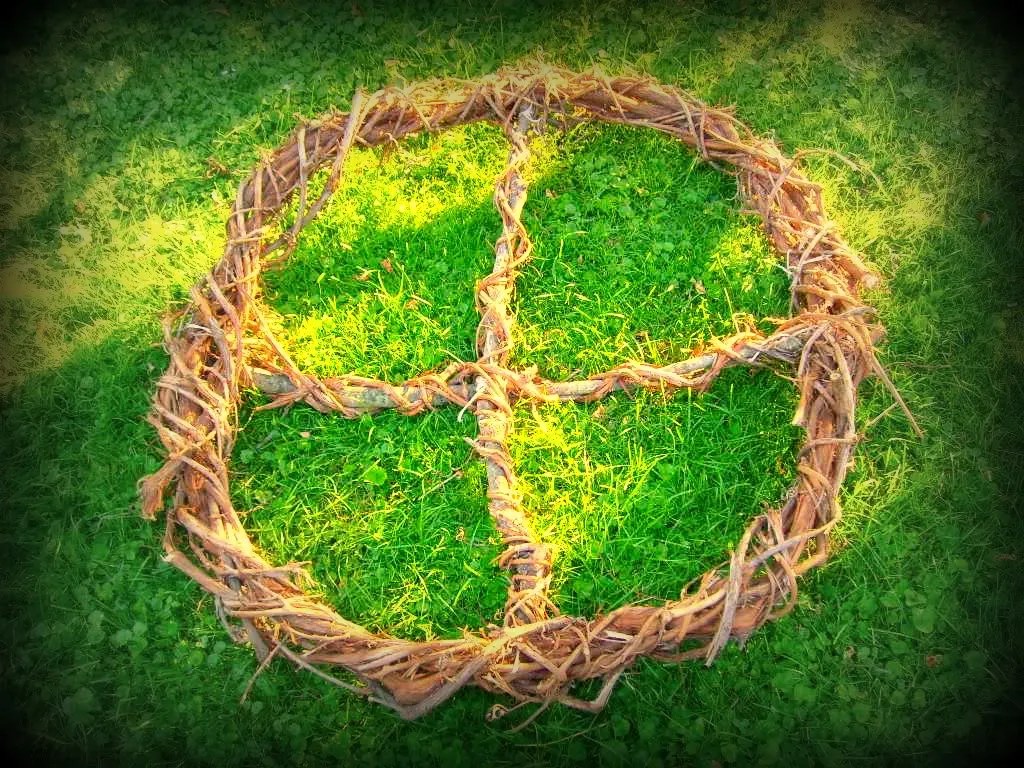
SunwheelbyRyanSpellmanenhancedInitiations may be seen as having three distinct phases: separation (from daily reality), ordeal (trauma), and return (rebirth and resolution)[3]. The separation phase tends to include seclusion from family and time in the wilderness to take us out of everyday familiarity into unknown energies and into encounters with the elements, spirits, and our non-human kin. (Image from here)

In many Indigenous cultural traditions, men are put through painful initiation ordeals and women’s initiation is considered to be biologically built into the sacred ordeals of pregnancy and childbirth[4]. In some cultures, though, women are put through ordeals as well[5]. Spiritual initiations are painful because we tend to value what we earn through hard work, and we learn best through lived experiences.

Interestingly, a South Saami creation story[6] teaches that this entire world is the result of our previously taking the Earth’s bounty for granted and needing strong reminders of the value of her resources. This is similar to what I was told by some Mayan people in 2012 when the Western media was reporting that the Mayan calendar said the world was going to end. ‘No’, they told me, ‘our calendar says that in 2012 we are collectively moving out of spiritual childhood as a human species and into adolescence, and into a different calendar. They said overall we will become consciously aware that Mother Earth requires reciprocity, that we cannot just take from her, that there are consequences for our use of the Earth’s resources.

an_amazon_boy_needs_to_pass_through_these_painful_rituals_to_prove_his_adulthood_20171127120918One example of an ordeal is the Sateré-Mawé tradition of adolescent boys enduring the pain of repeatedly putting their hand into a glove filled with bullet ants that inject toxins into them[7] (Image from here). They are called bullet ants because the intensity of the poison they inject is meant to hurt as much as being shot. The boys are expected to endure this willingly, silently and stoically, which teaches them be hunters who can handle the toughest aspects of their Amazonian jungle home; it also affirms values such as courage and strength. It also represents a loss of innocence by teaching that their environment can be dangerous, and even deadly, for after each session of placing a hand into the ant-ridden glove, boys are given medicine that makes them purge. Keeping the ant toxins in their body can have lifelong effects, such as loss of sanity. The myth is that the ants originate from the vagina of an underworld snake woman – an embodiment of the dark side of the sacred feminine and the Earth herself[8].

AboriginalStoneArrangements1Initiations thus teach cultural myths and values, and ordeals without sacred spiritual stories attached to them are merely meaningless violence, reinforcing nihilism and lacking re-integration and fulfilment of a new identity along with its social responsibilities. In the example above, boys who complete the initiation are allowed to hunt and marry, which complete their rebirth as adult men in the community. Many of us grew up in cultures with rites of passage that included separation and ordeal phases but lacked full return phases to reintegrate us into a healthy new identity. We may feel called to question our cosmology and find a way to re-birth ourselves with limited collective ceremony or recognition of our hard work. (Image from here)

Exercise: What partial or full initiations have you been through? Were they facilitated by other people, or simply lived experience? If it was a full initiation, how do you celebrate your new identity? If it was a partial initiation, work with your ancestors and reflect how you may complete it to feel whole and celebrate your new identity.

giveheart If you value this content, please engage in reciprocity by living, sharing and giving.

[1] Kenya, S.W. (2002). Rites of Passage, Old and New: The Role of Indigenous Initiation. In Thought and Practice in African Philosophy: Selected Papers from the Sixth Annual Conference of the International Society for African Philosophy and Studies (ISAPS) (Vol. 5, p. 191). Konrad-Adenauer Foundation. citing Mircea, Eliade., (1965) Rites and Symbols of Initiation, translation by W.R. Trask, New York; Harper and Row, pp x.

[2] Morrison, R. A. (2012). Trauma and Transformative Passage. International Journal of Transpersonal Studies31(1), p. 40.

[3] Id. citing Eliade, M. (1995). Rites and symbols of initiation: The mysteries of birth and rebirth. Woodstock, CT: Spring. (Original work published 1958)

[4] See e.g. Gonzales, P. (2012). Red medicine: Traditional Indigenous rites of birthing and healing. University of Arizona Press.

[5] See e.g. Dellenborg, L. (2009). From pain to virtue, clitoridectomy and other ordeals in the creation of a female person. Sida Studies24, 93-101.

[6] See Nordic Story Time: A South Sami Saami Creation Story, https://www.youtube.com/watch?v=UTDKeZB7rnM&list=WL&index=16&t=474s

[7] See e.g https://sites.google.com/fsmail.bradley.edu/buanthro/satere-mawe-ceremony

[8] Kapfhammer, W. (2012). Tending the Emperor’s Garden: Modes of Human-Nature Relations in the Cosmology of the Sateré-Mawé Indians of the Lower Amazon. RCC Perspectives, (5), 75-82.

Identity politics

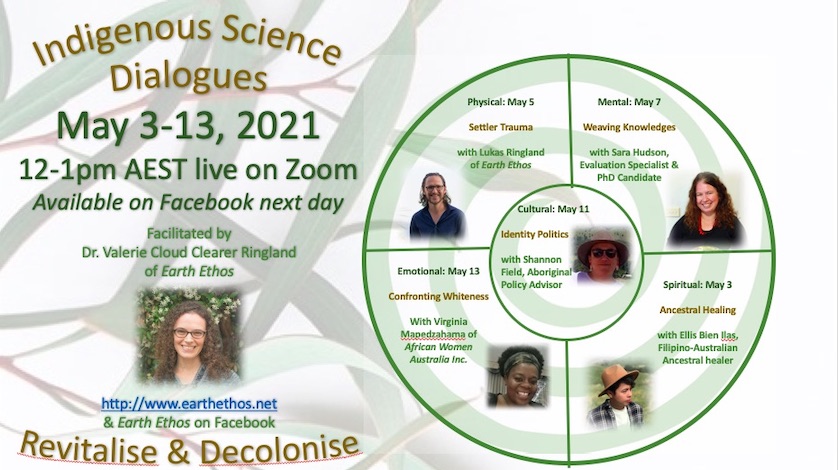
At the heart of the Earth Ethos Indigenous Science Dialogues earlier this year was the issue of identity politics. dialogues.5.2021-1The dialogue of that name was with my friend Shannon Field, a Walbunja woman of the Yuin nation, a traditional owner of the land where Lukas and I currently live, the land his first settler ancestor claimed for himself through the crown of England and in whose name the Australian government is still run today.

photo

With identity politics at the centre, all dialogues touched on that issue. Anglo-Celtic Australian man Lukas Ringland spoke for the PHYSICAL, sharing his experiences of settler trauma, including the pain of being part of a corrupt social majority. On the Crown’s genocidal survival strategy for ex-convicts, he explained: “The more wild the land was, the more likely it was to be given to an ex-convict, like, ‘you go to war against the Indigenous people.’ So you had this battle for life being fought between newly freed convicts and Indigenous people, and then closer to the centre of the colony you had the higher-ups who didn’t have to participate in that.” (Image from here)

Filipino Australian Ellis Bien Ilas spoke for the SPIRITUAL about the trauma of leaving the Philippines for Australia as a child, and his subsequent complex journey of ancestral healing: “I was literally shaken by an event on July 2, 2015…in the ER with an undiagnosed cardiac condition…I was having symptoms medical professionals can’t explain, and…it was looking back…[realising the date of my event] was my grandfather’s death anniversary, and I [] carry his name…That event was a huge catalyst for my spiritual awakening which occurred here in Sydney, Australia.”

Jewish Pakeha (non-Maori New Zealander) woman Sara Hudson spoke for the MENTAL about the close-mindedness in Aboriginal governmental policy: “When [the government] could verify [some Indigenous knowledge], they were like ‘Ooh! Okay, maybe there is something to this, because it matched what we found ‘scientifically,’ so therefore maybe we will listen now to these Indigenous knowledge-holders around water.’ This is the crazy stuff –  ‘I only listen to you once we have it verified by our Western scientific methods.'” (Image from the ABC, link unknown)

beautiful handsShona (Zimbabwean) Australian woman Dr. Virginia Mapedzahama spoke for the EMOTIONAL, about her experiences navigating whiteness trauma as an African migrant, the absurdity of Australia’s racial labels (Anglo-Celtic, Indigenous, and CALD – culturally and linguistically diverse), and how invisible she feels because “we have never dealt with the race issue with our Indigenous Australians…[but] the WHOLE THING is based on a system of whiteness…[and] we’re not looking at ourselves and the system that led us to do these things…[and now the definition of CALD is] so broad that the only people not captured by that category are Indigenous Australians!”

At the HEART centre, Walbunja Australian woman Shannon Field spoke about “cultural mining”, how “non-Aboriginal people mine our knowledge, mine our experiences in order to form up views, opinions, politics, positions…but in doing so, not providing us with a legitimate and/or authentic opportunity to have influence on what those outcomes actually are….So basically taking the authority and control of our knowledge into White hands.” She also explained, “For me, what identity politics is, that isn’t always a comfortable topic…as an Aboriginal person with fairer skin…I don’t know if it is called a colour privilege, but certainly there are some biases that are applied in terms of palatability of lived experience for White people taking on a Blak story or Blak history…that fits a narrative of what White people want to see….That’s something as I’ve gotten older I’ve become more aware of…[And] while I feel like I personally have had a fairly benign experience as an Aboriginal person, your life as an Aboriginal person is not unpoliticised…your mere existence [is under constant political scrutiny and attack].”

always was always will be aboriginal land | Aboriginal ...This “mere existence” of Aboriginal people as humans worthy of dignity collapses the entire ‘legal’ foundation of the Australian nation. The High Court overturned terra nullius and declared that the Australian lands were inhabited at colonisation, but no treaties have been signed, and the Native Title system designed to return Crown land to Aboriginal control (which often takes decades to do so) is fatally flawed. My heart bled last week when I read these words from Gamilaroi-Irish woman Aimee Mehan: “[O]ur Native Title Act does not give Indigenous Australians the right to refuse development on our ancestral lands…imagine that you are told about the impending trauma to a relative [your land/home]. Now you, together with your extended family, must ‘negotiate’ [the] event. You cannot prevent [it]…you must not only endure the trauma…you must sit month after month at the table to negotiate the future occurrence of it with a tribunal. [Then] imagine watching your close relative’s perpetrator being promoted by the Australian government on the world stage in Glasgow.” Gamiliroi Man Wollumbi Waters added: “All of which triggers the trauma and pain we carry as Aboriginal people, the true caretakers of our sacred lands. We walk with our ancestors every day, as the earth is our body and the water is our blood, and the trees and rocks our brothers and sisters, and this is what we hold on to.” Aimee describes this trauma as part of the #metoo movement from an Indigenous science perspective, with non-consensual boundary-breaking rapes and related actions that violate the vitality of the Sacred Mother, the land. (Image source)

Indigenous Justice & Restorative JusticeWhen I hear transhumanists like Jeff Bezos talk about ‘using up’ the resources of Mother Earth (i.e. destroying our home and source of life) necessitating the colonising of Mars, I cannot understand how we continue to give that insane and destructive a person so much power and control over so many resources. I pray for transformation of our rotting, greedy and destructive collective psychosis towards fulfilling the wisdom of Sioux scholar Vine Deloria Jr. instead: “The future of humankind lies waiting for those who will come to understand their lives and take up their responsibilities to all living things. Who will listen to the trees, the animals and birds, the voices of the places of the land? As the long forgotten peoples of the respective continents rise and begin to reclaim their ancient heritage, they will discover the meaning of the lands of their ancestors” (Quote source, Image source).

Exercise: Reflect on your own lived experience of Identity politics. You may want to listen to the Indigenous Science Dialogues and share to inspire rich, healing conversations with loved ones.

giveheart If you value this content, please engage in reciprocity by living, sharing and giving.

Indigenous Science Dialogues

Update: All dialogues are now available online on the Earth Ethos YouTube Channel.

You are invited to join Earth Ethos in honouring each element of the medicine wheel (earth/physical, air/mental, fire/spiritual, water/emotional) and the heart centre through five dialogues between Indigenous scientists this May.

All dialogues will be facilitated by Dr Valerie Cloud Clearer Ringland, an East Frisian (Indigenous to northern Germany) and Jewish-American woman living of Yuin country with lived experience and a PhD in Indigenous trauma healing.

May 3, Fire/Spiritual: Ancestral Healing with Ellis Bien Ilas, a Filipino-Australian ancestral healer living of Eora country.

May 5, Earth/Physical: Settler Trauma with Lukas Ringland, an Anglo-Celtic Australian (and Valerie’s life partner) healing and living of Yuin country.

May 7, Air/Mental: Weaving Knowledges with Sara Hudson, a Jewish-Pākehā woman living of Darug country using Indigenous and Western knowledges in evaluation and academic work.

May 11, Heart/Cultural: Identity Politics with Shannon Field, a Yuin woman living on country and working in Aboriginal policy.

May 13, Water/Emotional: Confronting Whiteness with Dr Virginia Mapedzahama, a Shona (Indigenous to Zimbabwe) with African Women Australia Inc. living of Wangal land.

Sign up at the Eventbrite page to get the Zoom link or use the Earth Ethos Calendar to click on the Zoom link to participate. All dialogues will be available next day on the Earth Ethos Facebook page.

Please pass on information about this dialogue series with others who may be interested!

giveheart If you value this content, please engage in reciprocity by living, sharing and giving.

Central Myths

Blog by Valerie

The human mind is a story-creating meaning-making machine, and as we get to know our minds better, we uncover beliefs, values, and stories underlying our thoughts and behaviours, and ultimately defining our paths in life. We may be well aware of certain stories or beliefs have impacted us deeply, such as the story of Jesus in the Bible, or paradoxical sayings like “time is money” and “money is the root of all evil”. Yet we may wonder why certain things happen to us, why certain large-scale patterns seem to recur in our lives again and again and be bound up with our sense of identity and our understanding of our placement in the world.

sterntalerIn this section of Mary Shutan’s Body Deva book, she has an exercise called Releasing a Central Myth. When I did it years ago, I uncovered a story from Germanic mythology called Sterntaler (in English, Star Money) that basically amounts to: if you are good-hearted and give generously, life will reward you and ultimately have your back. The dark side to this myth, which resonated with me in childhood and took me a long time to balance as an adult, is the importance of boundaries and discernment about when and how to live this way, otherwise one becomes a martyr. I painted the picture on the left at the time, hung it on my wall a while, then ceremonially burned it to heal any wounds from carrying it in an unsustainable/imbalanced way. As Mary says in a blog post about the concept,
[A]t the base of our being, we have a central myth that propels us into being. We may have many myths regarding ourselves, and although they can in some regard motivate us, they are restrictive energies because such myths tie us to expected behavior and an expected trajectory… Loops primarily come from trauma.

I have found (so far) that I have been carrying two central myths, which are in conflict. This is no surprise given my blood lines, and the fact that in traditional Jewish culture that because my birth mother identifies as Jewish that defines me as Jewish, yet in traditional Germanic cultures, I inherit cultural identity through my father as a woman, and if I were a man I would inherit from my mother. I feel intuitively in my being as though I inherit from my father, and I have had Indigenous elders from other cultures also confirm that they see my moeity as patriarchal. Yet as I wrote in this post, I’ve been unpacking Indigenous roots of Jewishness, which after nearly 6000 years of Biblical beliefs has been a challenge to say the least and involves lots of work in the root chakra. I am doing this shadow work because my inheritance from my mother’s lineage feels destructive and forced upon me, and I want to heal and take responsibility for that part of my life. And, not surprisingly, the central myth that has emerged from my Jewish lineage is a traumatic pre-Biblical Mesopotamian story about intergenerational incest and familial distrust. story

I encourage you, if you haven’t already explored this within yourself, to consider reading Mary’s blog and looking at the exercise linked above in her book. Some common central myths to consider that cut across cultures include: the hero’s journey, the damsel in distress, the martyr, might makes right, the American dream, individualism, and any religious or folk/fairy tale stories that resonate deeply with you or that you identify with. This isn’t to say you shouldn’t identify with certain stories; it is to say that it’s empowering to be consciously aware of our central myths so we can hold them fully with their pros and cons/dark and light aspects. This frees us from acting our infinite trauma loops in which we project our central myth(s) onto people and places around us in an attempt to see ourselves. In my experience for myself and witnessing others’ healing, it feels freeing, humbling, and ultimately brings peace as we more deeply understand the influence of ancestral stories on our life’s struggles… (Image from here)

If you value this content, please engage in reciprocity by living, sharing and giving. giveheart

Addressing addiction

Trauma and addiction are interrelated. I was listening to a talk yesterday by Dr Gabor Mate, a western medical doctor and wounded healer I have a lot of respect for. He said simply, if you can’t fight, flee, or ask for help, your brain dissociates – you freeze to survive. Freezing is meant to be a temporary state we heal from to regain integrity and peace when the survival threat has gone. But what if it isn’t temporary? (Isn’t there a reason Frozen resonates with so many people? Image from here.)

A few years ago, I chose to traumatise myself by going through a PhD program to change my career path. It’s better for me to be a researcher than connected with the legal profession, because I find it easier to work in ways that are aligned with my values. And while I do spend time listening to people and their stories still, but I also still spend quite a bit of time staring at a screens. I do this to maintain relationships with loved ones, to watch something with my partner, or to use US late night TV to process current events with some humour. I don’t feel I can practically avoid these screens. It’s part of my survival, and though I’m working with some people who know how to live off their lands and could teach me things, they can’t even survive fully living that way today. But I feel an addictive quality to my relationship with these screens sometimes. I feel pulled to be on the phone or computer instead of doing creative tasks with my hands or doing something less stimulating like sitting outside and listening to birds. With a father who was a pioneering computer scientist, I started staring at screens in infancy. Watching people in the US cross a busy street staring at their screens without even checking for cars scared me. I used to call out to them out of concern, and a few thanked me and realised the danger but most yelled at me to mind my own business. Thankfully, I’m not in that space with screen addiction, but I still want to work through some compulsive feelings. (Image from here. Why don’t we talk to people around us anymore, or observe the space and relax?)

Digital media use and mental health - Wikipedia


In the talk I watched yesterday, Dr Mate reminded us that “infants and children are narcissistic, no matter how old they are.” We’ve been witnessing this daily with the behaviour of supposed social leaders in the media, our workplaces, and communities. I agree with Dr Mate that it’s often as simple as this: when we as children feel unwanted, we naturally, narcissistically, think we’re ‘not good enough’, because we are in a phase of life where we are forming an identity. Just one unprocessed trauma that causes a frozen dissociation can persist, even intergenerationally, with layers of addictive behaviours, emotional disregulation, and attachment disorders around it until someone digs into those thoughts, feelings, and beliefs and reaches into that core wound to heal. That is my journey, and perhaps yours too if you’re reading this. So how do we heal? And what if we’re still not in safe environments? Some dangerous, unstable people have a lot of social power right now.

“You want to make people grow? Make it safe for them to be vulnerable.”

-Dr Gabor Mate

Some people seem to spend a lifetime feeling little safety (physically, emotionally, mentally, spiritually, and culturally). I count myself among them, though over time that’s been slowly changing for me. Here are three interrelated approaches that work for me:

  1. Acceptance + infinite patience approach – space making for mess, focusing on compassion and accepting the moment without judgement. Lukas and others I know find Buddhist practices helpful with this, and I like to meditate and express myself through art. This is really hard when we’re passionate about something that doesn’t feel okay to accept, like ongoing abuse or something else that goes against our values. (Image from here. I actually meditate lying down but this is such a common image.)
  2. Choose any survival strategy to avoid the freeze – even if that means fighting a big battle or fleeing intimate relationships or familiar environments that will bring great pain and grief into your life and may require you to seek help to process. This can be costly in time and energy and may feel at times like ‘picking your poison’, but it will enable you to be more in integrity and feel more alive. I choose the pain of being alive to the numbness of living without passion. And I choose fighting for change and experiencing isolation over accepting abuse or neglect.
  3. Create safe space – for yourself and others to be vulnerable. Be honest and change what you can, even small things like taking a minute a day to meditate or pray can make a huge difference. Changing our environments, boundaries, jobs, etc can increase our sense of safety. And supporting others to heal and work through things helps us mature and make meaning from our own trauma, addiction, and pain. A third grader may be better at supporting a first grader in learning some things because he’s closer to those lessons. And an adult teacher may be better at other lessons because she embodies more wisdom of lived experiences. Being self aware and honest about our own healing journeys (including seeking wise advice at times) helps us know what space we can safely hold. 

That’s survival, isn’t it? Striking a balance between serving our human and non-human kin and keeping alive and well ourselves. And allowing addictions to emerge and heal frees us to be more fully here.

giveheart If you value this content, please engage in reciprocity by living, sharing and giving.