
Here is another chapter from the book I am writing. I hope you enjoy! Blog by Valerie
As Diné (Navajo) historian and lawman Wally Brown says:
You can never conquer fear, it’s always going to be there…Walking in beauty involves encountering fears, physically, emotionally, mentally and spiritually, and getting beyond them, so we can have joy, happiness, confidence and peace in the four areas of our being.
By ‘getting beyond’ our fear, Wally is referring to developing discernment. Fear is a challenging energy to be with, and it’s one of life’s beautiful paradoxes that we can learn to be safe with our fears, creating space and understanding about how and when to act even when we feel terror flowing through us. In Western culture, we talk about emotional intelligence (EQ) and mental intelligence (IQ), but rarely about physical or spiritual intelligence. Physical intelligence is related to our relationship with our environment, as well as our own body. And spiritual intelligence has to do with our capacity to hold paradoxical energies, our ability to access altered states of consciousness, and skilful use of Indigenous science data.
 I am using the word ‘discernment’ instead of ‘judgment’ because ‘judgment’ is often linked with negativity, but ‘sound judgment’ is similar to skilful ‘discernment.’ I think of discernment as a muscle more than a practice, because it inevitably gets regular workouts through our life experience, so we are wise to work out the muscle so it’s in good shape to navigate inevitably testing moments in our lives. Discernment is grounded in our desire to uphold core values, and will help us to strengthen our boundaries. One of the best ways to work out this muscle in everyday life is through the following exercise. It is easiest to do this exercise when you have a conflict, challenging emotion or thought loop to work through. It is most powerful when done in the moment of heightened fear response, if you are able. (Image from here)
Is-it-mine Exercise:
Reflecting on a recent experience of fear and other intense thoughts and/or feelings. When you have an instance to work through, go into that energy and ask yourself ‘Is it mine’? Breathe through any discomfort and await a deep inner response. You may hear an inner voice, or have a feeling or a sense of knowing, or you may see an image that clarifies this question.
If you realise that it isn’t yours, that it is ancestral trauma or projection from someone else, set an intention to let it go, and ask your wise inner self for guidance about how to do that.
If you realise that at least some of it is yours, ask yourself, ‘What percent of this is mine?’ Set an intention to let go of what is not yours, and ask your wise inner self for guidance about how to do that. For what is yours, you may wish to ask your inner wise self what the underlying fear, belief, or myth is, and any guidance about working through it. You may also wish to ask your ancestors for guidance with this or seek wise counsel from people you trust.
In Western culture, black-and-white thinking abounds in terms of apportioning responsibility. We are either guilty or innocent, or we share the blame 50-50. It is very hard for most of us to apportion responsibility outside of that 0-100 or 50-50 framework. Yet most real-world conflicts are complex, involve multiple parties, and each bears some proportion of responsibility. Carrying some responsibility is part of having some power, and taking responsibility for where we have power doesn’t excuse others from destructive behaviour. For example, as young woman, I sometimes wore tight clothes and short skirts. Though I understand the importance of wearing what makes one feel good, I did not feel good nor empowered having to process so many men’s sexual projections (and women’s jealousy projections) while walking around town. I felt deeply uncomfortable, as it triggered wounds of previous sexual violence. So I started modifying my outfits, pairing a tighter top with a longer skirt, and carrying a sweater or wrap to cover up when I felt overly exposed. I still experienced some uncomfortable projections, but those choices helped me feel good about what I was wearing as well as empowered to protect myself from many uncomfortable projections. I did not feel responsible for the projections other people were making, but since I seemed to be triggering people, I felt some responsibility to protect myself. Perhaps in an ideal world we would all be so self-aware that I wouldn’t have needed to deal with such projections, but that was not my reality. I have since grown to more deeply value modesty and to embed that into my values. (Image from here)
Another way to strengthen our discernment muscle is embodied in that story: try something and see how it works, then adjust as need. Years ago, I heard an interview with someone who had been in an abusive relationship for a long time, and he said that one of the most empowering things he did to heal was to give himself no longer than a day to make a big life decision, and no longer than an hour to make a smaller life decision. By holding himself to these timeframes, he limited his anxiety about making the ‘right’ decision, increased his empowerment about making a decision himself, and increased his discernment muscle (as well as his ability to give himself grace) by experiencing how well his decisions turned out. Even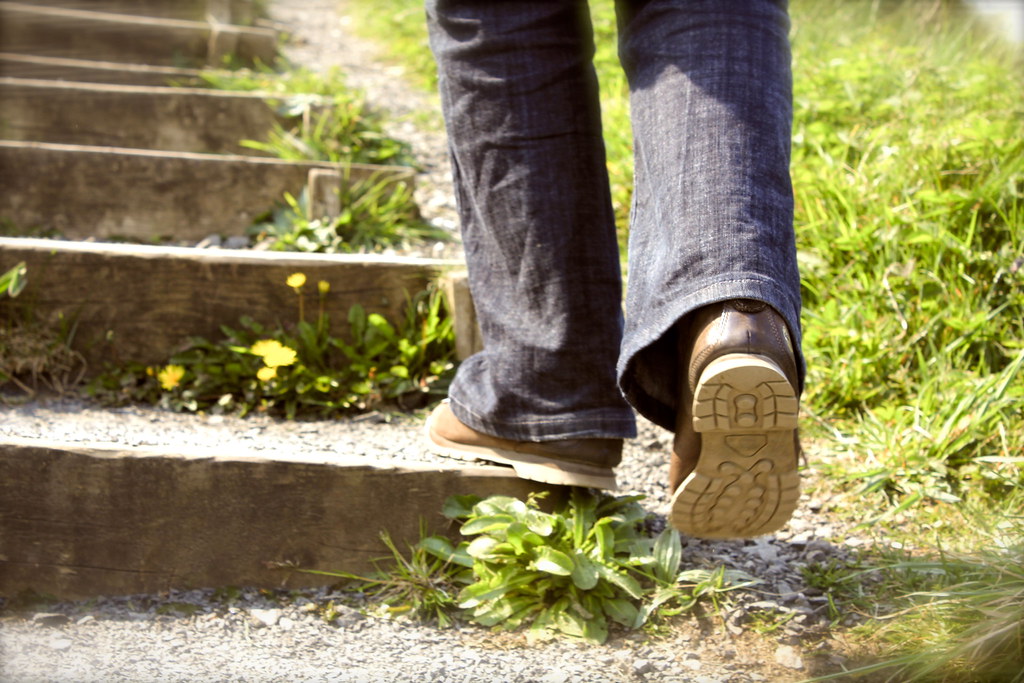 when something went really poorly and didn’t turn out how he had hoped, he said he felt a sense of pride that it had been his decision and knew he would learn from it. This strategy may not work for you, but the underlying idea is empowering for our discernment muscle. Sometimes we over-think, over-analyse, or over-consult others for advice, and the best thing to do is take a step in a direction and await feedback from the universe, then adjust and await feedback again, through an iterative process that can also strengthen our discernment muscle. (Image from here)
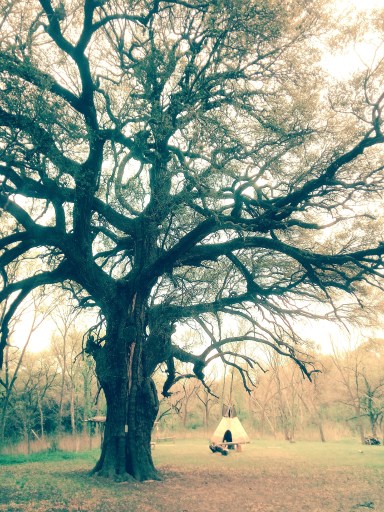 All discernment relies on some foundational knowledge. When we are confused, lost, or tricked, we have poor information with which to discern what to do. This is another reason why grounding and centring practices are so vital. If we think about it in terms of intelligence, if I don’t have much physical intelligence about my environment, I won’t have much to go on when trying to discern where to set up camp. I will have to rely on knowledge from other environments, but I may learn the hard way that camping near a stream kept me close to water but that the water level rose more than I expected, or that the trees providing shade had branches that easily snapped in heavy winds. This is where local Indigenous knowledge is so valuable. (My photo from Austin, Texas Pioneer Farms)
Exercise: Do you know how to survive a few nights in the wilderness environment where you now live? Could you find and/or build shelter, get water, make fire and otherwise keep yourself warm, and forage for food? If not, empower yourself with some knowledge and connect with the Indigenous ancestors (living and ancient) of those lands.
 If you value this content, please engage in reciprocity by living, sharing and giving.
 Trauma’s meaning, causes and methods of healing differ by culture and
  Reconnecting to the Earth
 Our task as healers is to allow alchemy to occur so that sh*t we are carrying in our hearts, minds, bodies and spirits can instead turn into fertiliser for ourselves and others. By consciously choosing to move into terror and aversion/disgust when we are in a safe space, we can reconnect with lost soul parts. In doing so, we gain knowledge that expands our individual and collective understanding of ourselves and our world. This is seen as the sacred calling underlying a ‘shaman’s illness’. Trauma is seen as a spiritual offering of a huge amount of energy that can redirect us into a new identity like a phoenix rising out of ashes. Indigenous healers are called ‘medicine people’ or ‘shamans’ because through healing trauma we embody medicine by living in a wiser way and offering support to others who are struggling through similar wounds.
 I was raised to hold family sacred, and so processing the initial childhood betrayals, followed by the adult estrangements, has been incredibly painful. It felt like a sudden orphaning that was out of my control, a genocidal loss of everyone I deeply knew, had learned to rely on and share my life with. I am still in touch with one friend from childhood, one from middle school, and my nanny’s daughter who knew me as a baby. Though I am not close with them, it feels quite precious to me that they are still in my life and knew me when I was young. My husband and a few friends have walked with me through my estrangement and have met some of my family members, but hearing stories and seeing photos isn’t the same as having witnessed me as a child in the context of my family and seeing how far I’ve come as an adult.
 In every culture there are structures of
  It is a big deal to estrange, and I have counselled people who have told me they were considering it that it’s like the guy who got stuck in a crevice while rock-climbing and had to saw off his arm to survive – it’s drastic and changes your life forever, and sometimes just has to be done. There’s little accurate Western scientific research about estrangement, with
  As with any loss, my experience of estrangement has created opportunities for a lot of self-knowledge and spiritual growth. It has given me the time and desire to do gift economy work supporting people’s healing, as well as community-building, knowledge-sharing, and our other humble activities through Earth Ethos. If I had family obligations and relationships taking up my time and energy, I would not be able to serve in this way. So you can thank my family for estranging from me, as it has gifted these insights to you today. And if you know anyone who is estranged, don’t assume that their situation can, will, or should change.
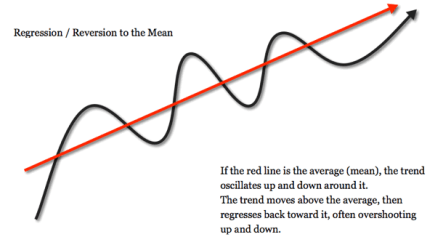 In social environments, it seems to feel proportionally less safe to be oneself the farther we identify from collective norms and ideals. There is a concept in mathematics called ‘regression to the mean’. It is basically the idea that when you put some ice into a glass of water, the ice will tend to melt and take the form of the water; in essence, it is about assimilating into a collective norm. Yet assimilation is a dirty word for many people, because we want to celebrate our uniqueness as well as being part of a peoples. (Image from
  Feeling safe to celebrate our difference depends on culture and context. These social wounds keep us trapped and unable to trust ourselves, each other, non-humans, and Spirit/God/oneness. Our capacities to heal and seek retribution are also based on cultural values and intergenerational traumas. Cultures that are more welcoming of outsiders seem to encourage healing and embracing collective wounds for transformation, whereas cultures that are more exclusionary seem to ‘other’ people and tend towards separation and seeking retribution. Fear of retribution can keep us trapped and unable to trust. It is as if there is a collective trauma belief that says, ‘if we let them in, they will hurt us.’ In my experience with Judaism, and what I am learning are my deeper Sumerian cultural roots, there seems to be a collective belief that ‘we can’t trust anybody.’ My own grandmother told me that as a child, and I asked her incredulously if I couldn’t even trust her. She didn’t answer, just stared at me in silence. Living in this social environment, I never felt safe. In fact, I felt terrified to even take up space. One wrong move could find me terribly punished, kicked out of the group, or worse, judged irredeemable by God. Despite constantly striving to be ‘a good person’, it never felt like what I did was good enough. I got used to feeling terrified that threats of judgment, punishment and retribution were always imminent. I worked hard to learn the rules I might break and the triggers I might set off that would result in my being punished. But I wasn’t in control. My brother had a habit of breaking rules and refusing to admit it, so we would both be punished. This was scary, too, because I didn’t know when the punishment would happen, or how intense it would. It felt safer at times to intensely control and punish myself so that I maintained a sense of autonomy. It also seemed safest to play the part of
 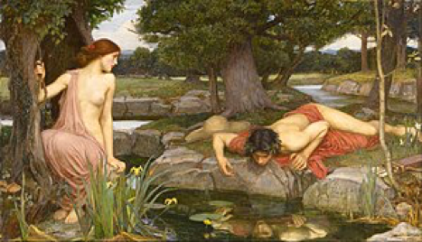 For most of my life I felt terrified to take up space. I felt like no space was ‘mine’ existentially or practically. For example, growing up, I wasn’t allowed to lock my bedroom door. I used to get dressed in my walk-in closet so I had some privacy and warning if my mother was coming into my bedroom. It took many years into adulthood – and practically ending many formational familial relationships that were untrustworthy just as my grandmother had told me – for me to become trustworthy to myself, be authentic and celebrate my difference, and surround myself with trustworthy and authentic people. By trustworthy, I mean people who say what they mean and do what they say, and when they can’t follow through on something, own it, apologise, forgive themselves, and make amends if needed. By authentic, I mean people who know their core values and practice embodying them in everyday life.
 It is still unsafe for me in many spaces where my values conflict with the collective. But I don’t feel a need to constantly strive towards some central ideal, nor do I feel like it’s me against the world at war. I feel peace in myself for accepting who I am and doing my best to navigate the collective morass, and for cultivating spaces where I, and others, are free to be. In this way, I can embody the knowing that we are enough. (Or ‘good enough’, whatever that means.) (Image from
 Because of an interest in justice and meditation, I was pushed into law school, though the Western legal system is not my idea of justice at all. Determined to be of service, I spent years doing pro bono and low-paid work around the world with a focus on child advocacy, community building, and conflict resolution. In India I drafted a law to criminalise child sexual abuse that passed in 2012; in South Africa I led a small non-profit focused on community building and did conflict resolution with a rural Zulu communities; in Australia I worked with survivors of clergy sexual abuse, which ultimately led to a Royal Commission and systemic reform; and in Peru I worked with an inner-city restorative justice program. During this period of my life though I had already been through a lot of healing, I was still in spiritual crisis and had multiple near death experiences. Something in my life needed to dramatically shift as I was numb to dangerous situations.
 I met my life partner Lukas in Australia in 2011. Our journey to be together has been hard work, which has helped us both to realise our worth. We travelled South America to be together when my Australian visa ended, and I finally felt safe and distant enough from my family of origin for repressed memories of childhood sexual abuse to emerge. It was like a cork full of chaotic energy popped open and challenged my mind’s ‘knowns’. My life started to make more sense as dissociated and lost soul parts emerged in an intensely painful and dramatic awakening process. As I healed, every family of origin relationship and many others with close friends and trusted mentors faded away. The period of most profound grief and loss I weathered was when my father, nanny, and best friend all died within seven months, my husband moved across the country for work, and the professor I moved across the world to do my Ph.D. with behaved abusively and unethically, causing me to change the direction of my work from restorative justice and conflict resolution to Indigenous trauma healing and to founding Earth Ethos.
 If you value this content, please engage in reciprocity by
 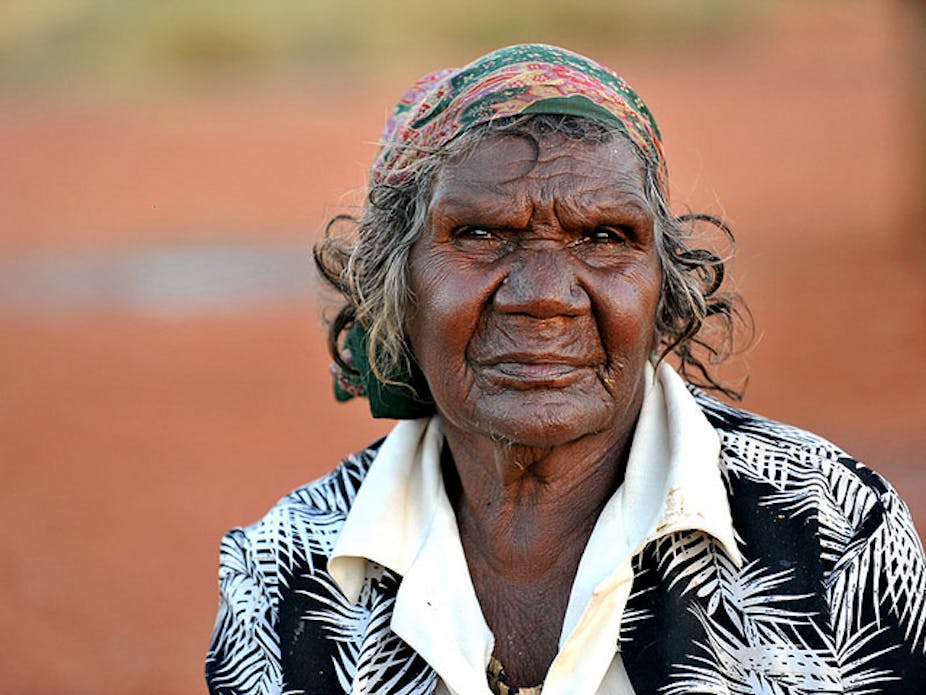 Today I was reminded of that document and moved to write this piece. For me, this is the essence of being alive and embodying an earth ethos, for in
  But right now I am still experiencing a lot of thoughts, emotions, dreams, and earthly energies. Autumn is a time of harvesting. Fulfilling a wish from years ago, in imagining synchronicity as a lifestyle, I am currently living as a nomad and flowing where I feel called, connecting with places and people of Yuin country (south coast NSW). And I have faith that I will emerge from my current cocoon at the right time with the desire to expose my beauty to the world by flitting about as a butterfly for a while. Until that “I” dies and the cycle continues with my being reborn from a little egg once more… (Image from
 In this section of Mary Shutan’s Body Deva book, she has an exercise called
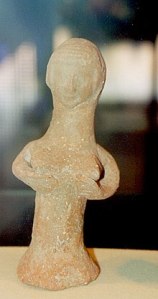 Evidence in written texts at the time and archaeological evidence indicating that for two-thirds of the time the temple in Jerusalem existed (before it was destroyed and re-formed into what is now known as the Wailing Wall), it contained an altar for a male god (Yahweh) and a female goddess (often called Asherah), and that the goddess altar was removed and re-instated repeatedly until ‘the cult of Yahweh’ won out. Then the temple was destroyed. (See e.g.


 Grounding these Jewish myths in context, while also remembering that a lot has been lost in translation – for example, the Hebrew word ‘
 I see us all suffering under the weight of unbridled intellect, greed and injustice. I see us all suffering from this ungrounded world we’ve created, oppressor and oppressed alike. The surface powerful and the surface powerless. And the other types of power, more hidden, mysterious.
 Earth Ethos
