Blog by Valerie
A friend brought this question to me, and I thought it a good one to take on. For some, being ‘spiritual’ is like the U.S. Supreme Court decision about porn – ‘I know it when I see it’. For some it’s intertwined with religious rites. For me, spirit is an animating energy exhibited through an act or a relational dynamic that connects all of us beings on Earth. For example, the spirit of my relationship with my daughter is characterised by a lot of joy, and the spirit of my relationship with my dog is primarily one of companionship. Spirituality is cultural, and mine is Indigenous, based on an animistic understanding of the world. I see all beings on Earth, including rocks and even manmade plastic toys, as having spirit, some kind of animating energy.
 (Typical image of ‘spirituality’ from here)
Spirit with a capital S to me refers to a big creative and destructive energy that is more than any identity I can hold, of which I am a small part. Some say Great Spirit, some say God. Spirits plural to me refers to beings that I see in dreams or visions, or experience through the four invisible clair-senses (clairvoyance – seeing, clairsentience – feeling, clairaudience – hearing, claircognisance – knowing – described by Diné Elder Wally Brown as the counterparts to our five physical senses represented by our five fingers and the four spaces between them.)
So if this is what spiritual, Spirit, and spirits mean to me, what does it mean to ‘be spiritual’? First, it means acknowledging some energies/forces/beings that are too vast to be encompassed by an individual, or even our collective, human identity. Second, it means openness and awareness of the invisible clair-senses, and to experiences that are not explainable, or sometimes even experienceable, in materialist, physical terms.
My view is that children naturally see the world in an animistic way, and that through teachings begin to close their mind (and obscure their clair-senses) to other inputs. Recently a four year old asked me to read her a story about werewolves, then asked me if they were real. I said, I don’t know, what do you think? Have you seen one before? But her mother quickly jumped in to say that no, they’re not real. Of course she is entitled to teach her daughter that and presumably she believes that to be true. I have not personally encountered a werewolf in my dreams or visions (or the material world) but I tend to think that if such beings loom large in our collective human psyche, and even across cultures, that there is likely something to it.
 How do we know the difference between a spiritual experience and our imagination? I have seen a lot of people struggle with this – with their minds tricking them into thinking they have encountered a Spirit, for example. For me the difference is in embodiment. And when in doubt, see if and how changes occur in your everyday life as a result of the insight or guidance you got. (Image from here)
That spiritual experiences are grounded in the land and embodied in everyday life is a foundation of Indigenous spirituality. In an Indigenous worldview, an identity is commonly seen as a collection of relational dynamics, including relationships with humans and non-humans. This interdependence is often honoured through totemic relationships and responsibilities to do rituals and ceremonies. If I see my identity and my very existence as tied to the water in a river nearby and the fish in it, then it makes sense to fight for their survival and even put my own life on the line. See this recent example from California regarding the centrality of salmon to Yurok, Karuk, and Hoopa Valley tribes.
This may seem extreme to Westerners, even environmentalists willing to put their lives on the line for Mother Earth, because it’s not just about how humans need water or fish to survive, it’s the particular patch of earth (or sea or sky) and relational responsibilities there that matter to your very existence. If those fish die, you die; there is no supermarket to run to for other food. If you have to leave your land, you may get killed by others when you go onto their lands, or you may die not knowing how to survive there and live in a sustainable healthy way there.
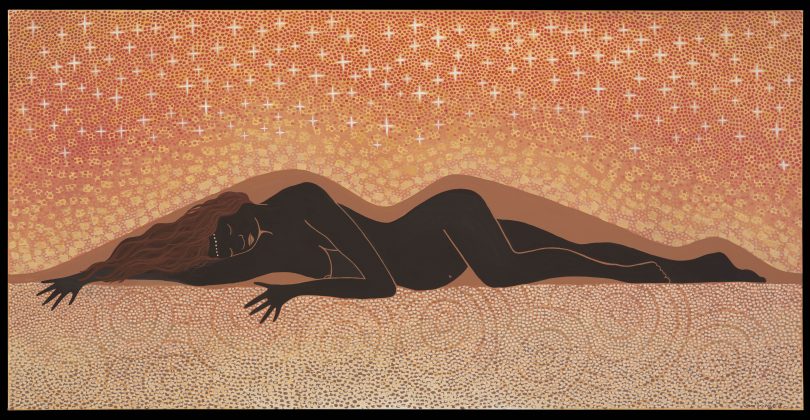
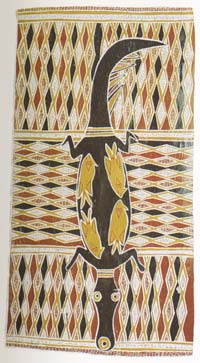
(Art by Cheryl Davison, Yuin woman, of the pregnant mother spirit of Gulaga mountain, protector of the land we are now grateful to call home, from this site)

(A photo of me in front of Gulaga taken a few years ago by Lukas before we knew we would be moving onto her country)
Western counsellors talk a lot about attachment theory. Right now when my baby cries (or is about to cry) I feel such pain inside, and such an urge to help her, I have to respond. Imagine feeling pain like that when a sacred site you’re responsible for is threatened with mining, and the urge to prevent it. Imagine the pain when it’s blown up and doesn’t exist in physical form anymore, just spirit and memory. Maybe you don’t need to imagine that – maybe you have tapped into that well of pain most of us are carrying in our ancestral roots. Maybe on your traditional lands, or like me, on lands you are spiritually adopting and feel are adopting you and your family too.
 If you value this content, please engage in reciprocity by living, sharing and giving.
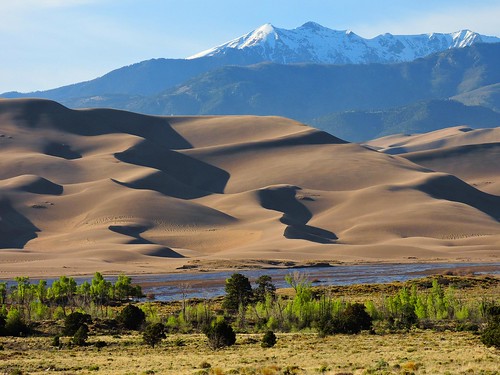


 The desert strips away all that isn’t necessary, and like the bones of the sweat lodge, shows us what we are made of. During the ceremony I witnessed layer upon layer of trauma and grief being stripped from me. This was not new, but something I had been going through for some years. But when I found myself falling to my knees at tree in the centre of the arbour, I felt something different. I felt how deeply that tree, that country and those people loved me, and how very wanted I was by Mother Earth. I hadn’t realised how disconnected from my inherent worthiness I had been, and I cried tears of gratitude for the gift of knowledge reminding me of this. I felt quite weak at that point and soon after completed the dance, breaking my fast with a cup of mint iced tea. The next couple of days were filled with play, including hiking the sand dunes and finding oases to swim in the desert, such as an icy cold waterfall (Image of Zapata Falls from


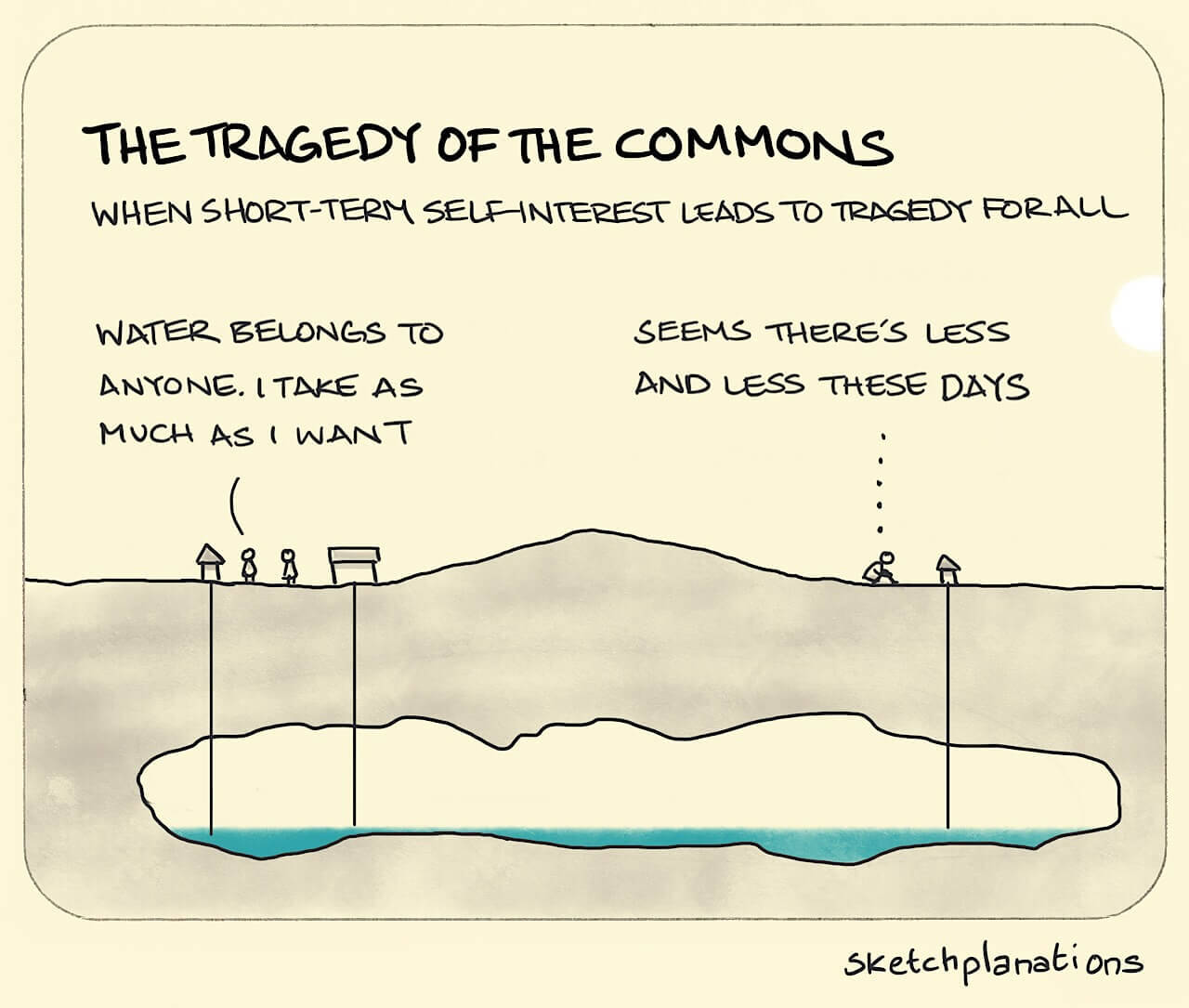 Another famous idea is the “
 A third framework of interest, and perhaps most relevant to our toilet paper dilemma, is the idea of
 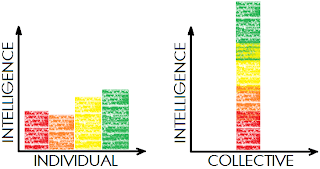 Looking at these articles on Wikipedia, it struck me how much that I think ought be deeply ingrained wisdom and self-evident knowledge has been studied intellectually and quantified as ‘evidence’. This is borne out by people acting like they need this kind authoritative guidance and advice before believing something is true. For example, the Tragedy of the Commons article mentions a


 If you value this content, please engage in reciprocity by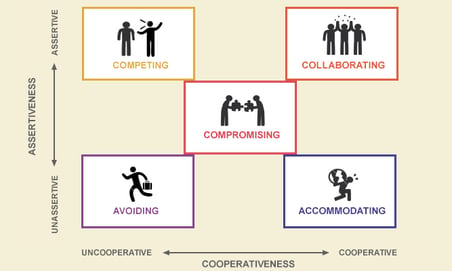
 If you value this content, please engage in reciprocity by
 purposely into trauma or danger, but not to the point of becoming a martyr and building resentment. It can be a challenging line to walk. It requires very high personal standards along with loads of compassion for self and others. It can be isolating and incredibly fulfilling. Instead of being outraged about whatever stupid action Trump did this week, I was in awe to learn that fish underwater
 If you value this content, please engage in reciprocity by
  Blog by Lukas
 We don’t need to fix the world, rather we need to learn to flow in it, and be in deep relationship with it. I have no doubt that from such a stance we’ll look at open pit coal mines and the internal combustion engine, not to mention countless other inventions and lifestyle choices, as being fundamentally out of flow, a desecration of something sacred that severs us from the Earth. Western science will play a role in helping us work out what to do next, but the truth of our modern desecration of the Earth does not need facts and figures, and positivist experimentation for us to experience. If you don’t believe me, go and sit on a chair in a forest near where you were born for a few minutes and watch your mind. If you are anything like me, you will experience a lot of discomfort and dis-ease from being with the craziness of your undistracted modern mind. Can you “fix” that with your mind alone? Can Western science offer you any help? There is as much to learn about why we face climate disasters from that one simple activity as there is from any number of bore holes dug into the Antarctic ice.
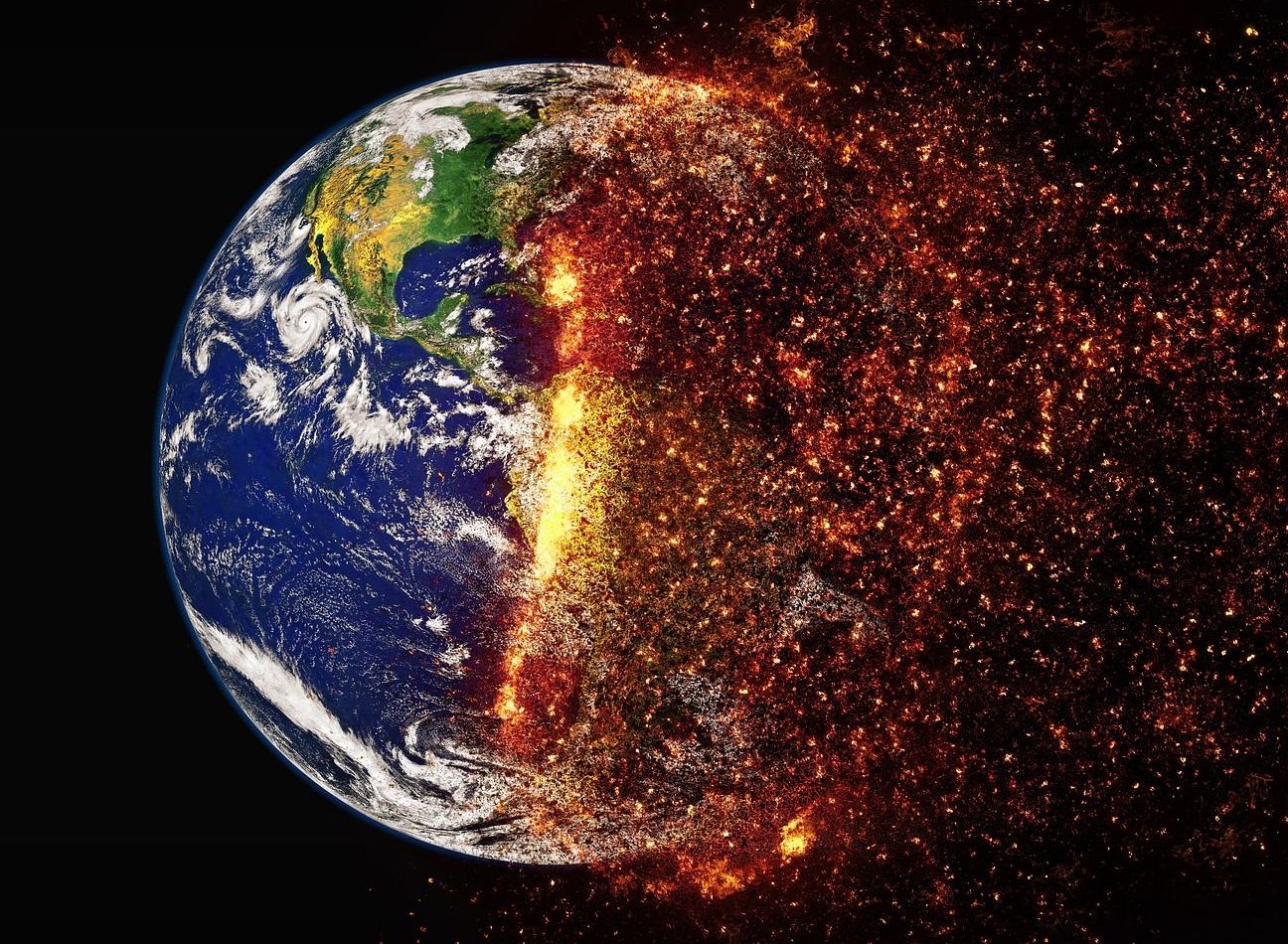
 We need to question more than our use of carbon. We need a new and bigger dreaming. We need a dreaming of lived interconnection to immortal oneness. Such a dreaming is bigger than our daily struggles, and even our comprehension of existence itself. Certainly much bigger than our worries about three degrees of global mean temperature rise. You might say, “Well that is easy for you to say, it is not your daily sustenance under threat, or your island about to be swallowed by the sea”, and this may be true. But my reply is that these ideas I am telling you are not mine. They come from the wisdom of people who did indeed face and transcend such hardships. Islands have disappeared before, and life went on. Regardless of what we do and don’t do, life will go on this time around too. The only real question is what kind of life it will be. (Image from
  If you value this content, please engage in reciprocity by
  The above quote is the definition of “unsustainable” to me. I see this wisdom enshrined in the biblical story of the Tree of Knowledge that some of our ancestors were advised not to eat from before their curiosity and the trickiness of a snake got the better of them and taught them this lesson. I facilitated a workshop last weekend for healing professionals called “Space for Spaceholders” in order to create space for their nourishment. The embodied metaphor for nourishment that came to me was the placenta.
 If you value this content, please engage in reciprocity by


 I have heard of many

 Buddha, and Krishna, and where people also sit in contemplation and pray for insight and guidance from those figures. I find it helpful to be intentional about these differences in my own life, but maybe blended spaces work for you. Ultimately, we build relationships with figures, ideas, events, places, and energies, and those relationships work best when we both give and receive, and do not always ask or give with the expectation of immediately getting back… (Images: Altar of St Michael’s Church in Munich, Shrine of Remembrance for the War Dead in Melbourne)
 If you value this content, please engage in reciprocity by
  Earth Ethos