Blog by Valerie
Lately some protracted conflicts have come to the surface in my life at a macro level in the world, and at a micro level in my daily life. I have been praying quite a lot since the war in Ukraine broke out, where my Jewish-Sumerian ancestors spent many generations living, and more recently about the war in the Middle East. It seems to me like there is existential war and rejection going on based in judgment, where one or more parties to a conflict feel they are fighting to exist in the minds and hearts of the other.
I find existential judgement incredibly dangerous and damaging and see it as the root of genocide. It feels to me like a hand rejecting its own finger. If we believe in a Creator with wisdom our human minds cannot comprehend, how can we put ourselves in the position of judging what the Creator brought into being? And to say another is allowed to exist elsewhere (NIMBY) is still judgmental, for if we force another to leave their home and live on different lands, we change their and our identities by disconnecting people from their earthly homes and playing the roles of victims and offenders.
On a micro level I’m seeing this thinking play out in some righteous social justice warrior crusades around me. I find the concept of ‘rights’ to be violent, though it has obvious practical value to create baseline standards for society. If we didn’t existentially judge certain struggles and behaviours as deeming people unworthy of housing or health care or food, then rights would simply represent social baselines we collectively agreed upon as minimum standards of care for all of us humans living here. But if a single mother can’t afford housing, or a man with mental illness isn’t at retirement age but can’t hold down a job, we don’t collectively agree how (or sometimes even if) to support their survival. Rights then get used in a forceful way to push a majority social group’s minimum standard of support onto the collective, and thus they often need to be en-forced. And when we are judged and caught up in the rights battles we feel, rightly so, like we are fighting for our survival. (See survival strategies blog)
I agree with Jungian scientist Fred Gustafson that the Western mind is “having a massive collective nervous breakdown” and is going to “war to determine whose anthropocentric [world]view is most valid [while] the earth and all its inhabitants [] suffer.”[1] I have not found sufficient solace for survival in the Western world alone.
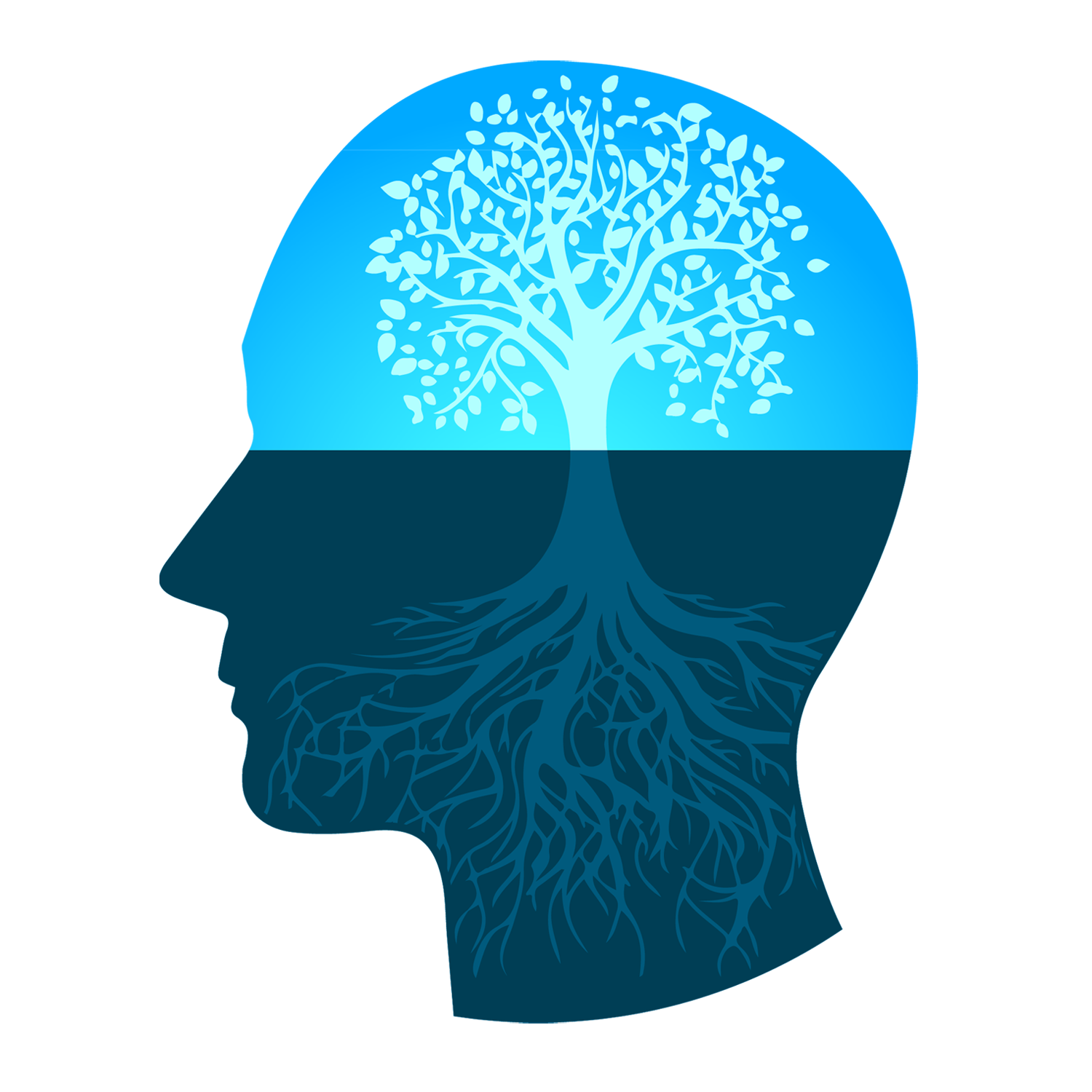 For me it has been vital to live in two worlds: (1) a social reality that is based on a Western worldview, and (2) an earth-based reality based on an Indigenous worldview. When I’m caught up in a survival struggle in the Western world that’s terrifyingly real, and I’m feeling rejected and judged and shamed and angry, I can spiritually connect with the knowing from the Land and my ancestors that I’m not only allowed to exist but that I am wanted. This powerful medicine is all I have found that alleviates my existential wounds. Without it I feel like I would not still be here on this Earth, as my roots would have rotted and not been able to hold up the rest of my inner tree of life. (Image from here)
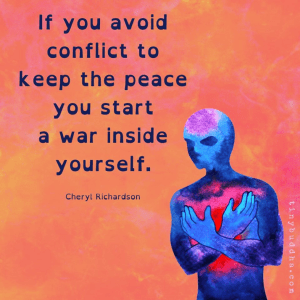
If you’re also feeling some pain and heaviness about existential judgement and its impact, here are a few things that help me keep my spirits strong:
- Grieving is a way I like to express angry energy to avoid getting overwhelmed by righteousness and gain clarity which fights, if any, feel right for me to engage in, and what that means practically. You may prefer to yell and scream or throw things or punch a bag instead, so however you express anger to avoid it overwhelming you is helpful.
- Connecting with the land and ancestors where I am offers me powerful healing. I may give offerings as simple as feeding a bird or picking up rubbish, or as profound as a placenta burial or smoking/smudging ceremony. I may also cultivate a sit spot on the land, walk barefoot, and tend a tree altar. There are so many more ways to connect with the land where you live, these are but a few. The reverence we bring to the action we choose matters more, I think, than exactly what we do.
- Letting go of black-and-white, objective, judgmental thinking is something I am very fierce with myself about. Humility is an important value to me, so I ensure that even when I feel certain or highly confident about something that I carry a little bit of doubt. For example, I feel highly confident that child sex abuse (link) is a damaging act that is wrong to do. Yet my intense journey of seeking to heal that wound has brought me so much wisdom and peace. Spiritual gifts often thrive in grey, paradoxical spaces.
 Altering my consciousness is another survival tool I use daily, primarily through embodied meditations and drum journeys. I do it to heal trauma, connect with ancestors and other spiritual guidance, and seek tools for every day survival such as deeper spaces of compassion or peace. However you are able to sink deeper than your everyday ‘known’ and familiar thought loops can bring you some healing. I do find, however, that embodied practices (such as using sound or dance or breath techniques) are more powerful than mind-based practices (such as meditating through your third eye or simply watching your thoughts).
Thank you for reading this, and may your life be enriched (and even saved) by living in both worlds, as mine is.
[1] Gustafson, F. (1997). Dancing between two worlds: Jung and the Native American soul. Mahwah, NJ: Paulist Press.
 If you value this content, please engage in reciprocity by living, sharing and giving.
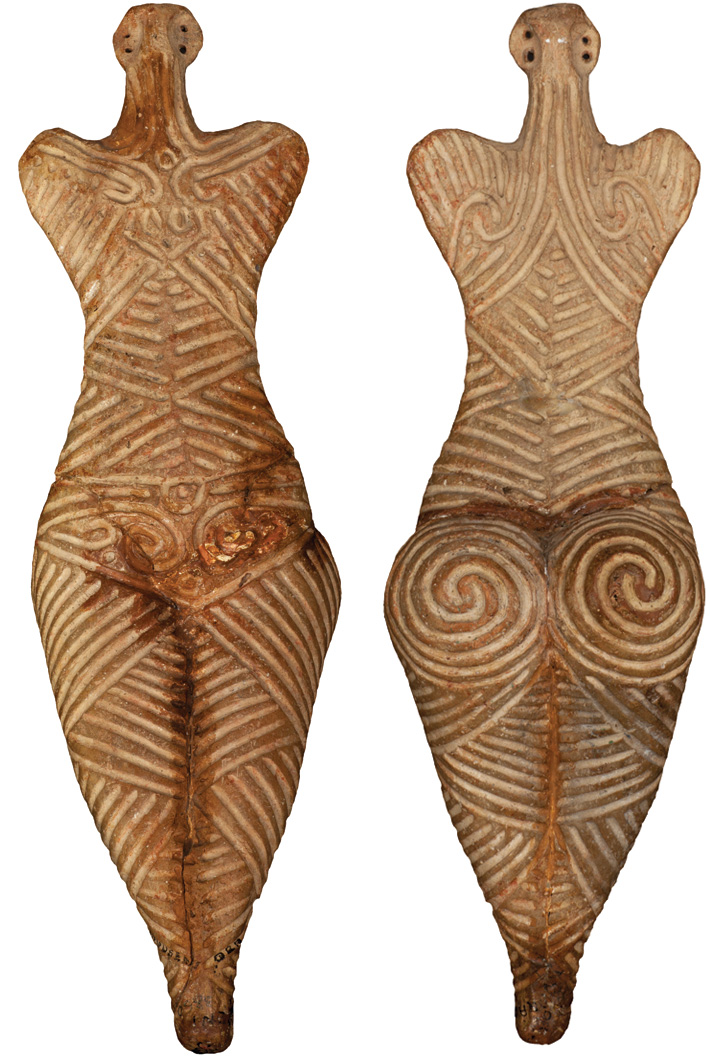 modern day Ukraine and Romania, and a 5000 year old mummy found preserved in ice in the Italian Alps who appears to have therapeutic tattoos in places on his body that look similar to a practice in traditional Asian cultural medicines. Such tattoos tend to be at joints and in the lower back. Tattooed mummies have also been found from Egypt to Siberia to Peru, and tattooed earthenwares of human or spirit figures have been found across the world from ancient Mississippi to Japan to the Philippines.
  The word ‘tattoo’ was brought into English from James Cook’s 1770s journey to New Zealand and Tahiti, and supposedly inspired Western sailors to start a tradition of tattooing themselves to remember where they had traveled and people they missed at home. (Image of a Ta`avaha (headdress) with tattoos, Marquesas Islands, 1800s, via Te Papa from
  And while I can’t speak for how locals feel about Angelina’s tattoos (she was given
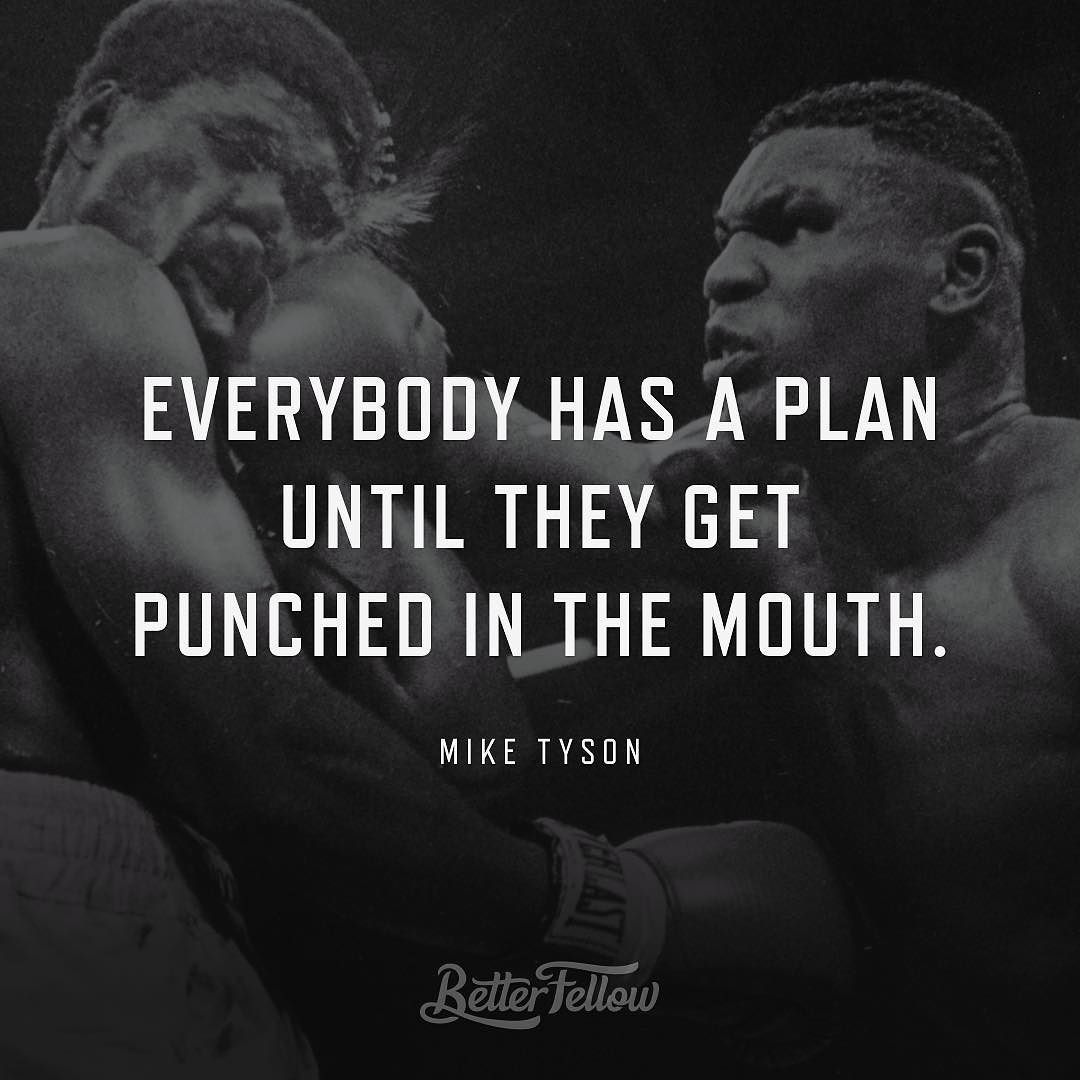
 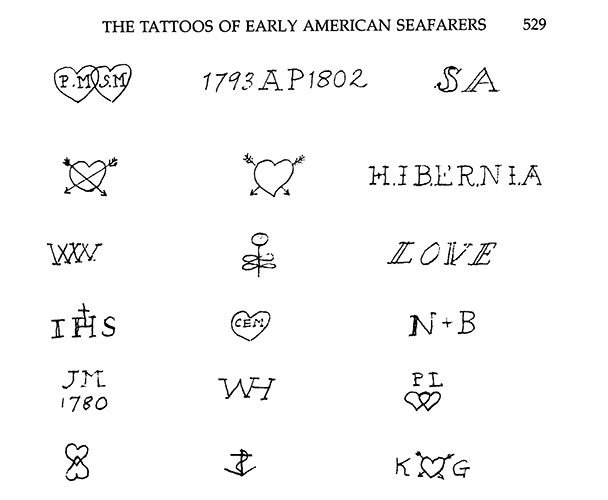 Western culture. I remember a trend some years ago of getting Chinese characters tattooed without many people even knowing or speaking the language. (I used to wonder how people weren’t scared they were lied to about what their tattoo said!) And many modern designs in Western culture have originated from those early sailors’ tattoos in the 1700s and 1800s. However, many have not, and where some celebrities like Dwayne “The Rock” Johnson express Samoan heritage through tattoos, others like Mike Tyson who is not of Maori descent has a ta moko design on his face (See
  I bring this up because I find unconscious sorcery very common. I recently got to the root of a painful thought loop that’s informed my whole life and was quite surprised to find that it wasn’t intergenerational trauma as I expected, but in fact (I’m assuming unconscious) negative sorcery from a former big shot professor who had it in for my mother. I did hear stories growing up about how he had bullied her, like how when she was pregnant with me and asked for afternoon classes due to morning sickness, he gave her 8am classes instead. The belief he cursed me with was “you don’t belong here”. And I do feel it was directed at me, maybe even more than my mother, because he took great issue with a young mother having an academic career. And I made her into a mother.
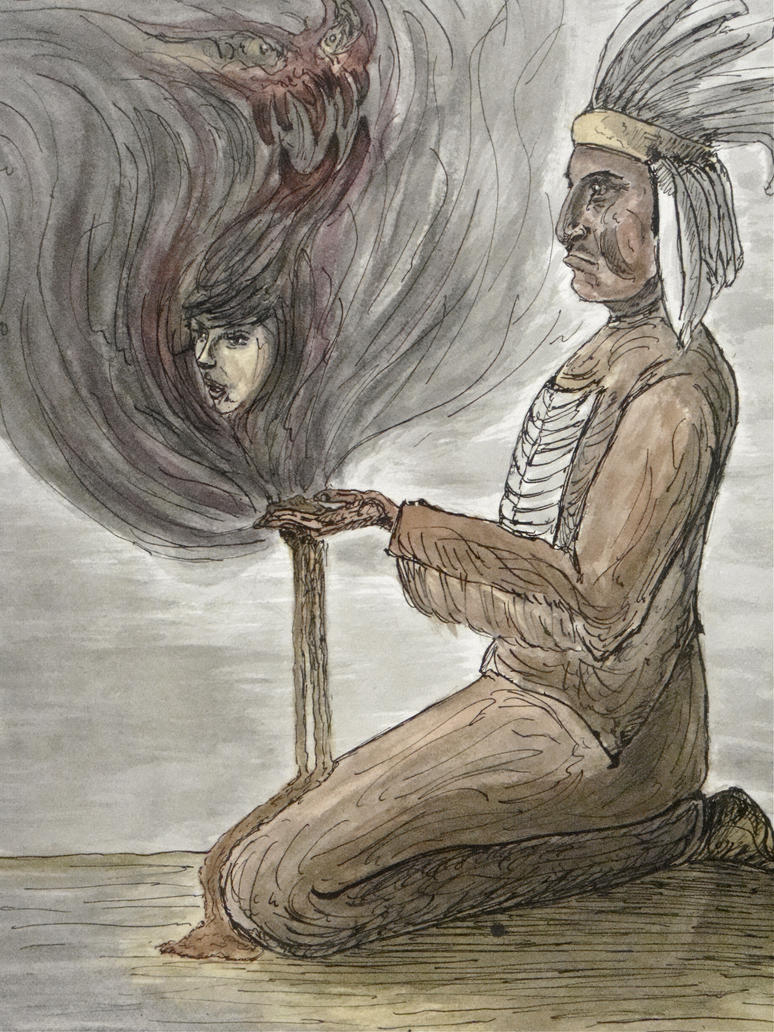 That was his hook. But what about me? As
  So the next time you’re angry at a politician and notice yourself sending them daggered thoughts laced with negative emotion, or find yourself verbally ranting about them, stop and ask yourself how you’re using your power, and if you really intend to be cursing them. Cause what we do to others we invite into our own lives! And if you think you have been cursed, feel free to
  (Typical image of ‘spirituality’ from
 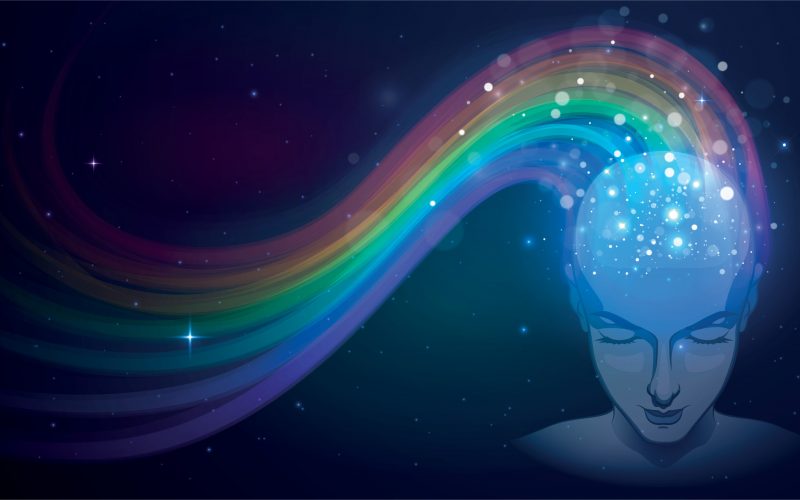 How do we know the difference between a spiritual experience and our imagination? I have seen a lot of people struggle with this – with their minds tricking them into thinking they have encountered a Spirit, for example. For me the difference is in embodiment. And when in doubt, see if and how changes occur in your everyday life as a result of the insight or guidance you got. (Image from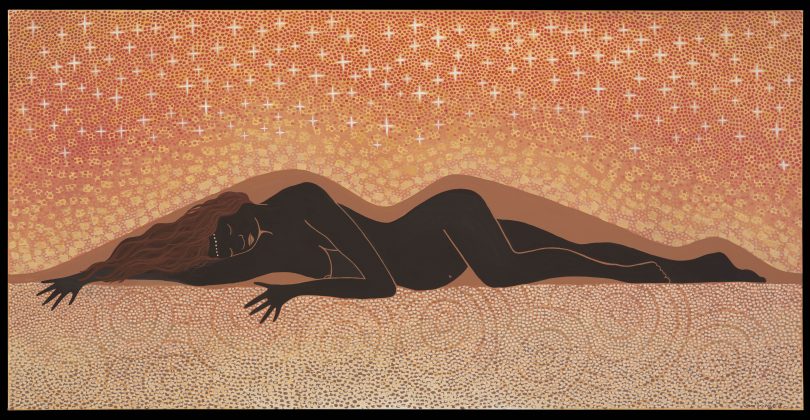


 Trauma’s meaning, causes and methods of healing differ by culture and
  Reconnecting to the Earth
 Our task as healers is to allow alchemy to occur so that sh*t we are carrying in our hearts, minds, bodies and spirits can instead turn into fertiliser for ourselves and others. By consciously choosing to move into terror and aversion/disgust when we are in a safe space, we can reconnect with lost soul parts. In doing so, we gain knowledge that expands our individual and collective understanding of ourselves and our world. This is seen as the sacred calling underlying a ‘shaman’s illness’. Trauma is seen as a spiritual offering of a huge amount of energy that can redirect us into a new identity like a phoenix rising out of ashes. Indigenous healers are called ‘medicine people’ or ‘shamans’ because through healing trauma we embody medicine by living in a wiser way and offering support to others who are struggling through similar wounds.
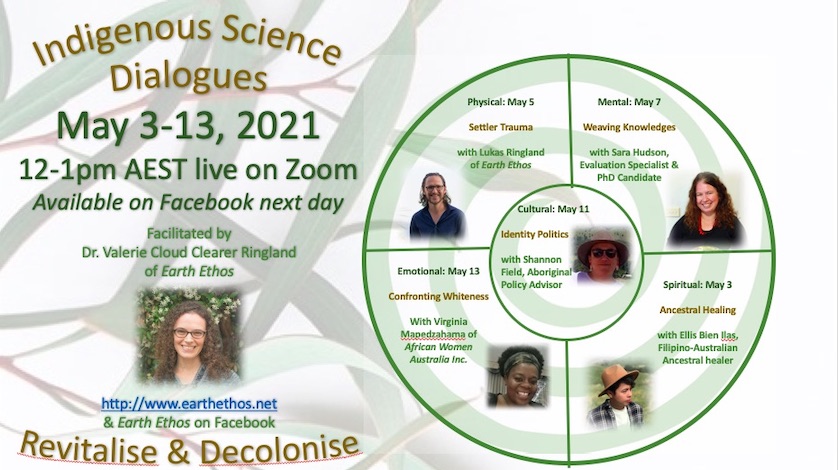 The dialogue of that name was with my friend
 Shona (Zimbabwean) Australian woman
  This “mere existence” of Aboriginal people as humans worthy of dignity collapses the entire ‘legal’ foundation of the Australian nation. The High Court overturned
  When I hear
  I was raised to hold family sacred, and so processing the initial childhood betrayals, followed by the adult estrangements, has been incredibly painful. It felt like a sudden orphaning that was out of my control, a genocidal loss of everyone I deeply knew, had learned to rely on and share my life with. I am still in touch with one friend from childhood, one from middle school, and my nanny’s daughter who knew me as a baby. Though I am not close with them, it feels quite precious to me that they are still in my life and knew me when I was young. My husband and a few friends have walked with me through my estrangement and have met some of my family members, but hearing stories and seeing photos isn’t the same as having witnessed me as a child in the context of my family and seeing how far I’ve come as an adult.
 In every culture there are structures of
  It is a big deal to estrange, and I have counselled people who have told me they were considering it that it’s like the guy who got stuck in a crevice while rock-climbing and had to saw off his arm to survive – it’s drastic and changes your life forever, and sometimes just has to be done. There’s little accurate Western scientific research about estrangement, with
  As with any loss, my experience of estrangement has created opportunities for a lot of self-knowledge and spiritual growth. It has given me the time and desire to do gift economy work supporting people’s healing, as well as community-building, knowledge-sharing, and our other humble activities through Earth Ethos. If I had family obligations and relationships taking up my time and energy, I would not be able to serve in this way. So you can thank my family for estranging from me, as it has gifted these insights to you today. And if you know anyone who is estranged, don’t assume that their situation can, will, or should change.
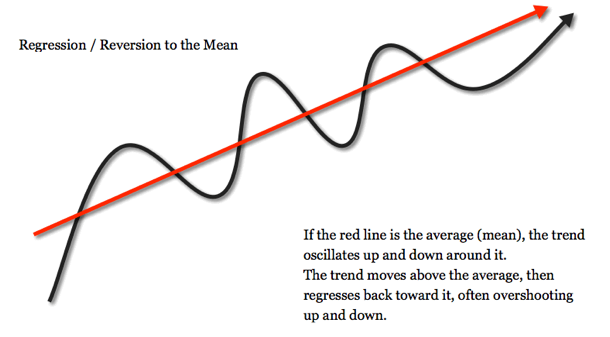 In social environments, it seems to feel proportionally less safe to be oneself the farther we identify from collective norms and ideals. There is a concept in mathematics called ‘regression to the mean’. It is basically the idea that when you put some ice into a glass of water, the ice will tend to melt and take the form of the water; in essence, it is about assimilating into a collective norm. Yet assimilation is a dirty word for many people, because we want to celebrate our uniqueness as well as being part of a peoples. (Image from
  Feeling safe to celebrate our difference depends on culture and context. These social wounds keep us trapped and unable to trust ourselves, each other, non-humans, and Spirit/God/oneness. Our capacities to heal and seek retribution are also based on cultural values and intergenerational traumas. Cultures that are more welcoming of outsiders seem to encourage healing and embracing collective wounds for transformation, whereas cultures that are more exclusionary seem to ‘other’ people and tend towards separation and seeking retribution. Fear of retribution can keep us trapped and unable to trust. It is as if there is a collective trauma belief that says, ‘if we let them in, they will hurt us.’ In my experience with Judaism, and what I am learning are my deeper Sumerian cultural roots, there seems to be a collective belief that ‘we can’t trust anybody.’ My own grandmother told me that as a child, and I asked her incredulously if I couldn’t even trust her. She didn’t answer, just stared at me in silence. Living in this social environment, I never felt safe. In fact, I felt terrified to even take up space. One wrong move could find me terribly punished, kicked out of the group, or worse, judged irredeemable by God. Despite constantly striving to be ‘a good person’, it never felt like what I did was good enough. I got used to feeling terrified that threats of judgment, punishment and retribution were always imminent. I worked hard to learn the rules I might break and the triggers I might set off that would result in my being punished. But I wasn’t in control. My brother had a habit of breaking rules and refusing to admit it, so we would both be punished. This was scary, too, because I didn’t know when the punishment would happen, or how intense it would. It felt safer at times to intensely control and punish myself so that I maintained a sense of autonomy. It also seemed safest to play the part of
  For most of my life I felt terrified to take up space. I felt like no space was ‘mine’ existentially or practically. For example, growing up, I wasn’t allowed to lock my bedroom door. I used to get dressed in my walk-in closet so I had some privacy and warning if my mother was coming into my bedroom. It took many years into adulthood – and practically ending many formational familial relationships that were untrustworthy just as my grandmother had told me – for me to become trustworthy to myself, be authentic and celebrate my difference, and surround myself with trustworthy and authentic people. By trustworthy, I mean people who say what they mean and do what they say, and when they can’t follow through on something, own it, apologise, forgive themselves, and make amends if needed. By authentic, I mean people who know their core values and practice embodying them in everyday life.
 It is still unsafe for me in many spaces where my values conflict with the collective. But I don’t feel a need to constantly strive towards some central ideal, nor do I feel like it’s me against the world at war. I feel peace in myself for accepting who I am and doing my best to navigate the collective morass, and for cultivating spaces where I, and others, are free to be. In this way, I can embody the knowing that we are enough. (Or ‘good enough’, whatever that means.) (Image from
 If you value this content, please engage in reciprocity by
  Earth Ethos
