Tag Archives: relationships

Warriorship

Blog by Lukas

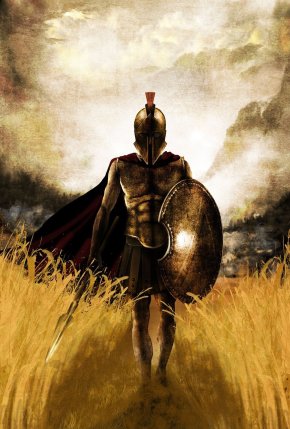
Are the most prescient ideas and images that come to mind when you think of the word “warrior” all about physical strength, toughness, and violent conflict? I doubt you’re alone. To borrow a trick from Valerie, if you online image search the word “warrior” the first things that come up are virtually all men and related to physical violence, specifically some new television show that evidently involves a lot of arse kicking. The story is similar if you try “female warrior”.spartan-4016133_1280

The technical definition of a warrior in the English language supports this narrow view, being rooted in a French word guerroieor meaning “one who wages war”. Most definitions of warrior relate to waging armed conflict, specifically those who have some kind of specialised role in doing so. (Image from here)

The etymology of the word “war”, however, is much more interesting, seemingly originating with broader concepts that include difficulty, dispute, and hostility. According to  etymonline.com, if you follow the known Proto-Germanic cognates as far back as they go, you arrive at a word that means “to bring into confusion”.

This is fascinating to me on a number of levels. Not least of all because virtually all first-person accounts of war I have read describe some manner of confusion and chaos to a degree that was unexpected to the writer. My flailing fist fights over the years confirm this; and as “Iron” Mike Tyson said: tyson

So if war is to some degree about confusion and chaos, perhaps the true warrior is someone who uses their power to bring these things back into a calmer balance? This then is about a warrior responding to and resolving conflict rather than instigating it, even if it is they who strike first. Without doubt there is a rightful place for violence in this, but also many other elements. Sticking to the realm of the physical, another version of the warrior could be a woman in labour finding her strength and power and calmly birthing just when things were at their most chaotic and the pain most intense. (Image from here)

But if we are to use this warrior concept to its fullest extent, literally and metaphorically, perhaps the most important thing is to apply it across the medicine wheel. So this gives us emotional, spiritual, and mental warriors; any and all ways in which a being can use their strength and power to bring conflict and disorder back into balance.

Note that this bigger version of warriorship does NOT just mean these other aspects of warriorship being in service of physical violence, such as mental energy being devoted to better weapons technology, or emotional quieting and centring that improves fighting ability. It means recognising their deep value to our being in and of themselves and together in balance.

This topic came to me when thinking about men and masculinity in the context of healing and reconciliation between Anglo-Celtic Australians and Aboriginal Australians. If we restrict our thinking about and valuing of warriorship to literal, physical combat, this makes such healing hard, such was the intense lopsidedness of the physical contest.

I don’t think it is controversial to say that in the world of Aboriginal Australians, weapons and warfare were just one part of what made men and warriors in those cultures whole and powerful. The weapons they had been using for millennia more than did the job they were needed for. Europeans, on the other hand, were by 1788 riding a wave of centuries of escalating prowess in using violence, supercharged by technology and in service of greed. Warriorship caused more conflict and trauma than it resolved.

With this fuller version of warriorship comes some understanding of what I as an Anglo-Celtic colonist lack, and what I need for healing. I don’t yet value my heart and spiritual warriorship enough.

warrior-body-paint-ritual-scars-Western-Australia-1923

On both the oppressor/colonist side, and the survivor/colonised side of this ledger is ample reason to grow through helping each other to see warriorship more fully. When we do this we’ll need no self-shaming to see the deep value of the balanced warriorship of Aboriginal masculine culture. We colonists can learn what being a whole mature warrior means, and Aboriginal men can learn to value who they are more fully. Then we can do ceremony to bring the conflict and disorder back into balance. (Image from here)

Exercise: Taking a strengths-based stance, think about how your sacred masculine (regardless of your gender) displays warriorship across the Medicine Wheel.

Exercise for Australians: If you are doing an Acknowledgement of Country (especially when there are only men present), try acknowledging the Aboriginal warriors as well as Elders.

giveheart If you value this content, please engage in reciprocity by living, sharing and giving.

Identity politics

At the heart of the Earth Ethos Indigenous Science Dialogues earlier this year was the issue of identity politics. dialogues.5.2021-1The dialogue of that name was with my friend Shannon Field, a Walbunja woman of the Yuin nation, a traditional owner of the land where Lukas and I currently live, the land his first settler ancestor claimed for himself through the crown of England and in whose name the Australian government is still run today.

photo

With identity politics at the centre, all dialogues touched on that issue. Anglo-Celtic Australian man Lukas Ringland spoke for the PHYSICAL, sharing his experiences of settler trauma, including the pain of being part of a corrupt social majority. On the Crown’s genocidal survival strategy for ex-convicts, he explained: “The more wild the land was, the more likely it was to be given to an ex-convict, like, ‘you go to war against the Indigenous people.’ So you had this battle for life being fought between newly freed convicts and Indigenous people, and then closer to the centre of the colony you had the higher-ups who didn’t have to participate in that.” (Image from here)

Filipino Australian Ellis Bien Ilas spoke for the SPIRITUAL about the trauma of leaving the Philippines for Australia as a child, and his subsequent complex journey of ancestral healing: “I was literally shaken by an event on July 2, 2015…in the ER with an undiagnosed cardiac condition…I was having symptoms medical professionals can’t explain, and…it was looking back…[realising the date of my event] was my grandfather’s death anniversary, and I [] carry his name…That event was a huge catalyst for my spiritual awakening which occurred here in Sydney, Australia.”

Jewish Pakeha (non-Maori New Zealander) woman Sara Hudson spoke for the MENTAL about the close-mindedness in Aboriginal governmental policy: “When [the government] could verify [some Indigenous knowledge], they were like ‘Ooh! Okay, maybe there is something to this, because it matched what we found ‘scientifically,’ so therefore maybe we will listen now to these Indigenous knowledge-holders around water.’ This is the crazy stuff –  ‘I only listen to you once we have it verified by our Western scientific methods.'” (Image from the ABC, link unknown)

beautiful handsShona (Zimbabwean) Australian woman Dr. Virginia Mapedzahama spoke for the EMOTIONAL, about her experiences navigating whiteness trauma as an African migrant, the absurdity of Australia’s racial labels (Anglo-Celtic, Indigenous, and CALD – culturally and linguistically diverse), and how invisible she feels because “we have never dealt with the race issue with our Indigenous Australians…[but] the WHOLE THING is based on a system of whiteness…[and] we’re not looking at ourselves and the system that led us to do these things…[and now the definition of CALD is] so broad that the only people not captured by that category are Indigenous Australians!”

At the HEART centre, Walbunja Australian woman Shannon Field spoke about “cultural mining”, how “non-Aboriginal people mine our knowledge, mine our experiences in order to form up views, opinions, politics, positions…but in doing so, not providing us with a legitimate and/or authentic opportunity to have influence on what those outcomes actually are….So basically taking the authority and control of our knowledge into White hands.” She also explained, “For me, what identity politics is, that isn’t always a comfortable topic…as an Aboriginal person with fairer skin…I don’t know if it is called a colour privilege, but certainly there are some biases that are applied in terms of palatability of lived experience for White people taking on a Blak story or Blak history…that fits a narrative of what White people want to see….That’s something as I’ve gotten older I’ve become more aware of…[And] while I feel like I personally have had a fairly benign experience as an Aboriginal person, your life as an Aboriginal person is not unpoliticised…your mere existence [is under constant political scrutiny and attack].”

always was always will be aboriginal land | Aboriginal ...This “mere existence” of Aboriginal people as humans worthy of dignity collapses the entire ‘legal’ foundation of the Australian nation. The High Court overturned terra nullius and declared that the Australian lands were inhabited at colonisation, but no treaties have been signed, and the Native Title system designed to return Crown land to Aboriginal control (which often takes decades to do so) is fatally flawed. My heart bled last week when I read these words from Gamilaroi-Irish woman Aimee Mehan: “[O]ur Native Title Act does not give Indigenous Australians the right to refuse development on our ancestral lands…imagine that you are told about the impending trauma to a relative [your land/home]. Now you, together with your extended family, must ‘negotiate’ [the] event. You cannot prevent [it]…you must not only endure the trauma…you must sit month after month at the table to negotiate the future occurrence of it with a tribunal. [Then] imagine watching your close relative’s perpetrator being promoted by the Australian government on the world stage in Glasgow.” Gamiliroi Man Wollumbi Waters added: “All of which triggers the trauma and pain we carry as Aboriginal people, the true caretakers of our sacred lands. We walk with our ancestors every day, as the earth is our body and the water is our blood, and the trees and rocks our brothers and sisters, and this is what we hold on to.” Aimee describes this trauma as part of the #metoo movement from an Indigenous science perspective, with non-consensual boundary-breaking rapes and related actions that violate the vitality of the Sacred Mother, the land. (Image source)

Indigenous Justice & Restorative JusticeWhen I hear transhumanists like Jeff Bezos talk about ‘using up’ the resources of Mother Earth (i.e. destroying our home and source of life) necessitating the colonising of Mars, I cannot understand how we continue to give that insane and destructive a person so much power and control over so many resources. I pray for transformation of our rotting, greedy and destructive collective psychosis towards fulfilling the wisdom of Sioux scholar Vine Deloria Jr. instead: “The future of humankind lies waiting for those who will come to understand their lives and take up their responsibilities to all living things. Who will listen to the trees, the animals and birds, the voices of the places of the land? As the long forgotten peoples of the respective continents rise and begin to reclaim their ancient heritage, they will discover the meaning of the lands of their ancestors” (Quote source, Image source).

Exercise: Reflect on your own lived experience of Identity politics. You may want to listen to the Indigenous Science Dialogues and share to inspire rich, healing conversations with loved ones.

giveheart If you value this content, please engage in reciprocity by living, sharing and giving.

Estrangement

Blog by Valerie

Estrangement is something we rarely talk about, and to be out of active relationship with one’s family of origin feels very stigmatised and taboo. Even after many years of accepting this reality for myself, I still feel vulnerable to social judgment and shaming about it. It’s a common and innocent question to ask someone about their family, and it’s often easier for me to say a little about them and not mention I’m estranged if I don’t know the person well. But it hurts, and it contributes to feeling the absence of my family constantly, which is especially hard during holidays and important life events.

How family members cope with estrangement - Chicago TribuneIt may help if I share a bit about my experience. When I came out to my family as an adult about being sexually abused by an uncle, that entire side of my family rallied around him. Some stopped speaking to me, others sent me nasty messages saying that I must be mentally ill, one tried to act like I hadn’t said anything then lost touch when I wasn’t willing to be invisibled anymore, and after five years of silence one wrote me to say the family had treated me unfairly, then didn’t respond to my reply and request for a relationship. The other side of my family was already very fractured before I came out about the abuse. A couple tried to pretend nothing had happened, one told me they’d be there for me on my healing journey but instead distanced themselves and one eventually admitted that it was too painful to be in relationship with me and ended it. Another blamed someone outside the family for abusing me, and when I wasn’t having that, started denying that I had been abused, lying to me and behaving increasingly hostile and aggressively, causing me to end things. That was the only relationship I ended myself, and even though it was an abusive lost cause, it still felt devastating and wrong to walk away from the last remaining family member in my life. (Image from here)

#estrangement | Simple reminders quotes, Betrayal quotes ...I was raised to hold family sacred, and so processing the initial childhood betrayals, followed by the adult estrangements, has been incredibly painful. It felt like a sudden orphaning that was out of my control, a genocidal loss of everyone I deeply knew, had learned to rely on and share my life with. I am still in touch with one friend from childhood, one from middle school, and my nanny’s daughter who knew me as a baby. Though I am not close with them, it feels quite precious to me that they are still in my life and knew me when I was young. My husband and a few friends have walked with me through my estrangement and have met some of my family members, but hearing stories and seeing photos isn’t the same as having witnessed me as a child in the context of my family and seeing how far I’ve come as an adult.

estrangementhealingIn every culture there are structures of kinship linking us with an extended family, and in Indigenous cultures, our kinship networks include humans and non-humans. Western kinship networks were severely weakened after the fall of the Roman empire when the Catholic Church greedily: (1) expanded the definition of incest marriage prohibitions to include even your sixth cousins (!), (2) criminalised polygamy, and (3) discouraged remarriage and adoption – all of which resulted in redirecting property and inheritance away from families and into the Church’s coffers. This devolution of kinship and focus on the nuclear family arguably created the foundation for individualism, civil society, and democracy (reference). European languages changed as well, so that separate terms for paternal and maternal relatives disappeared, as did different ways of referring to blood relatives,  in-laws, and ‘spiritual kinship’ created by baptisms and sacraments (e.g. godparents) (reference). My understanding is that Indigenous pagan Germanic cultures like the Frisians encouraged cousin marriages, which wove families together within a tribe – a group of people connected by kinship through marriage and interbreeding (reference). It is also my understanding that a man’s brother was meant to be a second father to a man’s daughter in pagan Germanic cultures, and so on a spiritual level, that man abusing me feels even more devastating. In most cultures there is a sacred reciprocity within the cycle of a parent raising a child, and then a child supporting a parent in their old age. I feel I have been denied this experience, and I feel a loss and grief about it, which I put into spiritually supporting my family in a way that feels okay to me. (Image from here)

#estranged, #estrangement (With images) | Toxic family ...It is a big deal to estrange, and I have counselled people who have told me they were considering it that it’s like the guy who got stuck in a crevice while rock-climbing and had to saw off his arm to survive – it’s drastic and changes your life forever, and sometimes just has to be done. There’s little accurate Western scientific research about estrangement, with studies in the US citing 10-40% of people having experienced it. Estrangement has certainly given me a lot of resilience, space, strength, independence, fierce boundaries and some humility. In terms of humility, I have a limited threshold for projections of family expectations and game-playing, which has resulted in separating myself from my husband’s family. I don’t expect people who know and care about me much less than my own family to dig as deeply into themselves and reflect on their behaviours as I need in order for them to be ‘family’ to me.

strengthtoletgoAs with any loss, my experience of estrangement has created opportunities for a lot of self-knowledge and spiritual growth. It has given me the time and desire to do gift economy work supporting people’s healing, as well as community-building, knowledge-sharing, and our other humble activities through Earth Ethos. If I had family obligations and relationships taking up my time and energy, I would not be able to serve in this way. So you can thank my family for estranging from me, as it has gifted these insights to you today. And if you know anyone who is estranged, don’t assume that their situation can, will, or should change.

giveheart If you value this content, please engage in reciprocity by living, sharing and giving.

Conflict resolution & animism, part 2

This blog builds on part 1 from a few weeks ago, which started by reminding you that in animism, it’s not only not expected, but against our own nature to play nice with certain beings and energies. Earlier today I heard the following story:

cyclistsThree cyclists were riding down a neighbourhood road when an older guy in sports car drove by and yelled, “Get off the road, assholes!”. Of course, cyclists are legally allowed to be on the road. The female in the group gave him the middle finger, angering the driver more and he turned his car towards her, then veered onto another street and into a carpark of a private club. She almost fell off her bike, scared and filled with rage. She blasted through the private club gate past the security guard while her fellow cyclists followed and called the police. You might be thinking that she was trying to get the driver’s plates, but she already got a photo of that. When he stepped out of his car she screamed in his face how wrong his actions were and how terrified she felt. He pushed her out of his way, and she raged even more and threatened to press charges for touching her. By this time her companions had gotten through the security gate. The security guard initially threatened to call the police and report the cyclists for trespass, but changed his mind when he saw the scene. Police arrived and explained to the driver that cyclists are allowed on the roads as much as he is, and told the cyclists they can’t charge the driver with anything but simple battery for pushing her because he veered his car away and didn’t hurt anyone. No one was happy with this outcome.

What a mess. Something to keep in mind with animism, and indigenous understandings of justice in general, is that they don’t necessarily align with Judeo-Christian morality. This may be the heart of why so often people feel things that happen are unfair or that ‘nice guys finish last’, because we are mentally programmed to expect rewards when we are ‘good’, whatever that means (often obedience to social norms it seems).

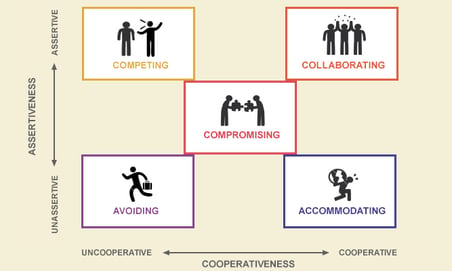
Five basic approaches to conflict resolution are: collaborating, compromising, accomodating, avoiding, and competing. In the story above, the woman and the driver are both competing. I lionthink about a lion competing to be king of the hill – they’re getting their fight on. chameleonThe security guard started out competing but then accommodated the cyclists, represented by a chameleon changing its colours to fit the situation. The other two cyclists are collaborating with their friend, like a school of fish sticking together, and the police officer is fishcompromising by offering to charge the driver with something since the cyclists want him to be punished. Compromise is represented well by a zebra with its dual-coloured stripes. zebra

What we don’t have in this scenario is anyone avoiding conflict, which I think would have been the wisest option. There were many missed opportunities for the cyclists to avoid escalating the conflict and potentially endangering themselves further. Let’s represent avoiding with a turtle who can stick its head in its shell. turtle

If the cyclists had been growled at by an actual lion, they likely would not have tried to compete but would have done their best to avoid escalating the conflict. And if one of the cyclists had decided to angrily provoke the lion further, the other cyclists would have been less likely to collaborate and more likely if she got hurt to tell her that she had asked for it. Other than a sense of moral outrage and upholding of social norms, why do we behave so differently with people who exhibit threatening lion energy than with actual lions? One reason is when something is really important to us, we feel called to be warriors and stand up and fight. Some things – like protecting our family – feel worth dying for, and it can be too hard to live with the guilt and shame of knowing we didn’t try to stand up for our values. Another reason is that we are reacting in autopilot and have a tendency to compete when we feel threatened. If the reason is the latter, we can work on creating self-awareness and space to make more intentional decisions about addressing conflicts.

conflictWhen we do choose to avoid a conflict, it helps to be aware of the Cycle of Indecision: ‘I feel bad. I should do something. Nothing will change. I gotta let it go. But I feel bad…’ I find when I avoid a conflict but over time it keeps coming up inside me, then I do need to do something to address it. That may involve talking to someone, creating art to express my emotions and tell my story, doing something ceremonial to keep the energy flowing without endangering myself, or finding a passion to advocate out in the world. For example, if I have a conflict with someone close to me, I tend to try to collaborate and talk it through when we are both less emotionally charged. But when I have a conflict with someone I don’t trust to collaborate with, I often write them a letter, leave it on my altar, and burn it so that the energy gets sent out in spirit.

Notice that no one in the story above was happy with what the police officer offered as a compromise to try to appease everyone and follow the law he’s working with. This is because of a common conflict resolution issue – people conflating positions with interests. The cyclists’ interests are (likely) being safe and respected while on the road, but their position is they want the driver to be punished for yelling at them and veering his car at the woman, but they may also have an interest in revenge. positioninterestThe driver’s interest is (likely) not being criminally charged and being able to express anger that cyclists are not riding single file (which they don’t have to). Maybe he has an interest in trying to change that law or have cycling lanes built on the road so he doesn’t have to share, or maybe he’s just interested in expressing anger, but his position seems to be ‘get out of my way’. We’d need to talk to everyone to unpack their underlying interests and potentially resolve the conflict in a more mutually beneficial way, but that’s not the job of the police officer. That’s something we could do through an Earth Ethos peace circle if everyone was open to collaborating and had been prepared to come together with open hearts and minds. In peace circle processes we use deep listening, open questions, I-statements, reframing emotionally charged language, and other tools to make it easier for people in competitive positions to feel safe to open up and connect with others. Because lions tend to be lonely, dangerous creatures – with only one male on top of the pride, he’s always scared of being bested by another and losing everything. Sometimes conflicts in our lives are like that, are all or nothing, but usually they needn’t be. We just can’t see another way. (Image from here.)

Exercise: Reflect on how you tend to approach conflicts. Maybe you tend towards different approaches at home or at work or with your kids or partner. Think about a recent conflict you were in with someone. How did you want to approach that conflict? What was your position in the conflict, and your underlying interest(s)? What about the person you were in conflict with? 

giveheart If you value this content, please engage in reciprocity by living, sharing and giving.

Flailing into freedom

Poem by Lukas

All around me

And inside me

Flailing

Flailing across the medicine wheel

But only the fix-it mental mind in charge of change
Leading our growth.
Ideas, always ideas.
Never just isness

Always the changing sky with its fast moving clouds

Never the rock, or the mountain or the tree.
Never the deep time of timeless ancestors
Or the inherently clear sky
The all, oneness.
Unknown to us.

IMG20210622090000

Our recent generations so scarred
The very notion of old, grounded wisdom
Gone, abandoned and unknown
Admonished
Disrespected
“Primitive”
Always new ideas.
Evidence based ra ra ra.
Ideas that must fit together like bricks
A shape absent in nature
For sale.

Sometimes we need a wall.
A mentally engineered structure.

Sometimes this kind of thinking is a gift.
But most often our very logic is our prison.
Don’t try and trick me with your rationality
Don’t tell me about your evidence
Don’t scale-up, export and expand
Don’t show me a widget for saving the world.
Don’t try to sell me anything.

Please just connect with me
Connect with the earth.
Connect with your heart.
Connect with spirit.

Be with things as they are. IMG_20210610_091412
Messy.
Painful.
Joyful.
Blissful.
Dark as well as light together.
Alive.

Where could we go and flow if this was our way of being?
Of course I can’t tell you rationally.
There’s no map.
No blueprint.

These building blocks are not square.
But just letting this mystery wash over me feels like peace.
Freedom.
(Photos by Valerie)
giveheart If you value this content, please engage in reciprocity by living, sharing and giving.

Conflict resolution & animism, Part 1

“One of the things that I notice quite a bit is that people who tend to be attracted to Animism (and Shamanism) are often good-hearted people who wish to be kind to everyone and everything…Part of an Animistic practice would be reclaiming that wild within ourselves– the parts of ourselves that can defend ourselves and our homes, that can take action, that can pounce and prey and track and growl. And can do those things without guilt and without the type of moral apprehension that modern spiritual circles tend to be so riddled with. It is easy to be shamed into being a really, really good person that everyone and everything can run over and treat like a doormat [as] ‘nice’ or ‘spiritual’ or ‘being the better person’. This has little to do with nature, or with Animism, and more to do with a spiritual culture that is out of touch with its inner and outer wildness, animalistic instincts, and darkness.”–Mary Shutan

I have been seeking lately to more fully embody a balance between the sacred feminine and masculine. To me this means the following: sacred masculine energy is the individual aspect of my identity. This energy is seeking to celebrate diversity and is willing to say hey, I am here and ought to be treated well, and I am allowed to take up space. Sacred feminine energy is the universal aspect of my identity. This energy is seeking places of connection and is willing to give generously to facilitate intimacy. Whether my characterisations as sacred masculine and feminine energies resonates with you or not, hopefully the importance of these energies being honoured and in balance is relatable.

I have done a lot of training, professional and personal work in conflict resolution. It has been important for my survival, and I learn a lot through conflict. When our relationships enter into conflict, we either grow closer or farther apart as a resolution unfolds, sometimes dramatically so. Relationships that have been built over years may end in an instant when a lie emerges.

I find it helpful to keep the following in mind: 

  • perspectiveWe all have different perspectives. It helps to find space and respect for another whose view strongly conflicts with ours by carrying a bit of doubt about what we ‘know’. For example, if we ‘know for a fact’ that Covid exists and others deny this, we can avoid placing ourselves into judgment and remind ourselves of things we didn’t believe until we experienced them for ourselves or trusted something that didn’t work out well for us.
  • We are not meant to closely collaborate and connect with everyone and everything. It is dangerous for a frog to be intimate with a snake. The same goes for us with certain people, places, etc. We are responsible for setting boundaries and protecting ourselves.
  • notthereWe all have blind spots and project things that aren’t there. Awareness of blind spots and wounds allows us to better protect ourselves and know when we need wise counsel. When one songbird spots a predatory bird in the forest, their outcry helps birds, mice, and others know to duck under cover. Knowing whom to listen to, why and when is helpful. I’ll take on western medical advice from a doctor, but I will not take on advice about my spiritual life (such as a statement like ‘that wound will never heal’).
  • unclearWe all see things unclearly and with a distorted lens sometimes too. Awareness of these limitations can be empowering. Our greyhound Chloe has such a strong prey drive she projects potential prey onto wind lifting up a blanket. Hope can be a powerful trickster.

When dealing with intense emotions, we tend to have go-to strategies. Knowing our tendencies empowers us to choose which ones to use in when. This, like anything, takes practice. Common approaches with some of their pros and cons include:

  • minimisemaxMinimising or maximising – distorting reality into being bigger or smaller than it is. Some people tend towards one or the other, and others swing between catastrophising and bravado. Maximising can help us notice hidden emotion we may have not been aware of, and minimising can be helpful to get through danger or pain but isn’t sustainable. Swinging creates drama and is often quite painful.
  • bypassBypassing or avoiding – actively or passively choosing to evade something or someone. This can be wise especially if there is danger to protect ourselves from, but may be a trick that comes back to bite us and can limit opportunities for intimacy and growth.
  • fixitProblem-solving or fix-it mode – this may be practically helpful but risks being emotionally damaging as it tends to come from rejection or lack, of not accepting our pain in the moment and judging someone or something as inherently wrong or broken.
  • validateEmpathise or validate – affirming our shared humanity and showing care can be helpful, but may not be fully honest and not build trust or allow us to learn tough lessons.
  • inquireInquire or try to understand – curiousity helps us learn and see each other more clearly, but it risks inflaming someone in crisis. When a house is burning, we first need to put out the fire and then investigate why it happened. Focusing on why first can be damaging.
  • reflectAcknowledge or reflect – Similar to validating but more passive, can be useful when we are not emotionally charged to provide a more neutral mirror to someone or go within and look at what we can learn from the situation. Repeatedly going within to do our own reflecting can limit our intimacy with others who may feel like we keep running away.

Exercise: Which strategies for dealing with intense emotions do you tend to use for yourself? With others? Do you use different ones at home and at work? Which strategies do people close to you use, and which ones work best for you?

giveheart If you value this content, please engage in reciprocity by living, sharing and giving.

Stories, beliefs & their shadows

Blog by Valerie

“The story owns the storyteller.”–Traditional wisdom shared by the Nhunggabarra people (western NSW, Australia)

Like all biased humans, I am predisposed to see certain things whether they are strongly there or not. For example, I was raised with a deep belief that ‘people are good’ which came into conflict with evil/inhumane, abusive/betraying and neglectful/denial behaviours I experienced from adults around me. I turned ‘seeing the good’ into an art form of magnification of certain elements of someone’s character and minimisation of others so my life could fit that story, because the story was so foundational to my sense of self, safety, path in life, etc. A related one was ‘Family is always there for each other’, referring to family by blood or marriage, and it too proved very destructive for me.

In general, stories grounded in absolutes are dangerous. They can create self-hating fanatics like me who feel worthless and resentful and get abused and mistreated again and again because I was convinced that the ‘good’ was there if only I worked harder to see it and it was my family so I couldn’t leave anyway. What a trick to intertwine my existence with stories keeping me stuck in situations trying to teach me the shadow of the story and show me that it wasn’t true. And what a trick it would’ve been to convince myself of the opposite in reaction – that people are untrustworthy and you can’t have faith in anything good ever happening. Thankfully I didn’t oscillate into a cynicism trap, but many of us do. (Image from here.)

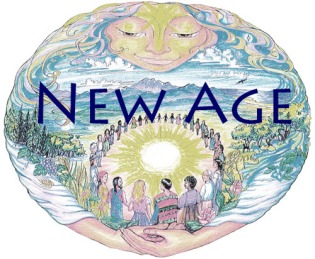
new-age

What I find to be New Age trickery is the idea that if a character trait isn’t present you can just ‘see it anyway’ and manifest it, and what I find to be Western scientific/atheistic trickery is the idea that if it isn’t there it never will be and you better accept that and take a pill to replace it or become dependent on some kind of therapy for the rest of your life. For example, I was told by Western doctors that I would need to be on thyroid hormone all my life (I was on a swine substitute for 3 years) and that I’d never be able to eat gluten again (I was off it 15 years until I woke up one day knowing my body had healed). But my mother, brother, aunt, cousin, grandmother, etc. have all been taking thyroid replacement hormone for many years. Of course we are each unique, but a belief that we need a pill can prevent something from healing that might shift our need for the medicine. It’s important to discern when we are and aren’t helpless, and in my opinion it’s rarely wise to believe in Western medicine, though using its tools may be a wise option. (Image from here.)

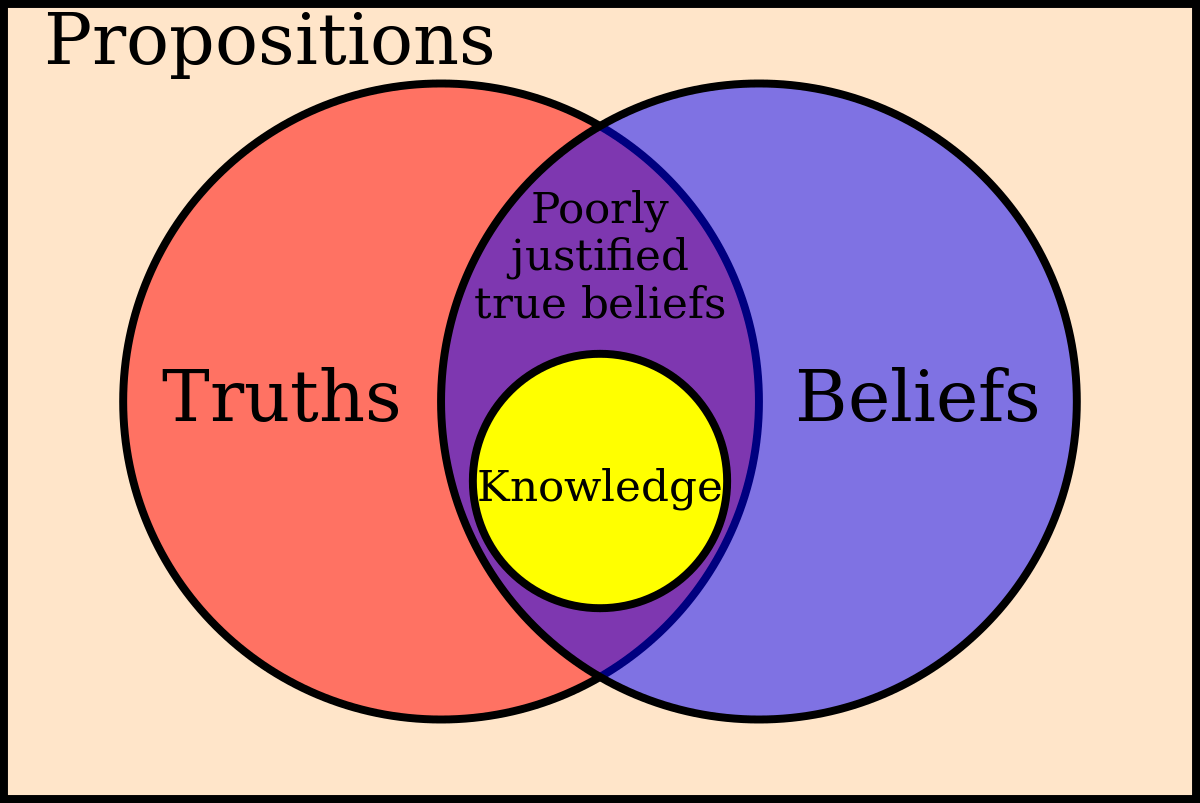
Maybe you know of Louise Hay’s famous book You Can Heal Your Life. Her diagnosis for stomach pain, which I used to have a lot of in my life, is: Holds nourishment. Digests ideas. Dread. Fear of the new. Inability to assimilate the new. I definitely got some value in approaching underlying beliefs that were creating psychological, spiritual and emotional blocks connected with my stomach; the metaphor of digesting ideas and feeling nourished resonated with me at a time I was deep in pain and seeking non-physical empowering approaches to healing. However, I also used her positive psychology ‘self-love’ approach to try to brainwash myself into believing I could manifest my own safety when I actually was in a lot of physical danger. I remember driving around repeating the phrases she suggested in her book for hours, how much work it was to keep up the story and its resulting facade of safety, and how the facade ultimately cracked and I really crashed. (Image below from wikipedia page on belief).

Belief - Wikipedia

When such stories have owned me, I’ve often suffered accordingly. But that isn’t to say that we should give up our beliefs. Beliefs can be incredibly enriching, create cultures and communities, and bring deep meaning into our lives. I think we need self-awareness of our beliefs to help us carry wise ones and to let go of those based in trauma and denial/lies. Today I listened to a story of a woman who felt deep shame about her grandfather’s actions during WWII which no one in her family would discuss. She went to Germany and read archives to learn he had been an S.S. officer and what he had done. She made a list of people he’d hurt and went into the Polish countryside to visit some of the places and people, and said:

A turning point in the work arrived when one of my grandfather’s victims, a ten-year-old child back then, looked me in the eye and told me that it wasn’t my fault, I hadn’t done anything. In that moment, the door of my room of shame opened a crack to let in a slim ray of light that showed me the way out…Survivors have sometimes told me about the enduring shame that comes from continuing to live when close family perished in the Nazi death machine. In turn, their descendants relate the impact of silence generated by the previous generation’s feeling of shame.

She said confronting the shame of her grandfather’s past and her families’ denial of wrongdoing has transformed her into carrying the past with honour and compassion as a responsibility instead of with shame and guilt as a burden. She also said it helped her heal an eating disorder. This woman’s experience aligns well with my own. What she didn’t say was that it probably also helped her eating disorder to heal by eating foods that felt better in her body or something else more physical and pragmatic as well.

When we consider our beliefs and how they create biases, blind spots and shadows, we are wise to reflect on the entire medicine wheel, seek wise counsel in material, spirit and visionary forms, and be self-aware. These days I carry a belief that ‘life is always here for me’. This came to me some years ago and I choose to continue to believe it because of the trust, faith, safety, and security it gives me. I realise it biases me towards moving into traumas, pains, etc that I might try to avoid if I had a different belief, but I feel that such experiences are inevitable and that this belief is highly protective and predisposes me to resilience rather than feeling victimised or hard done by. I find it helps me avoid the ‘why me?’ question many of us ask when ‘something bad happens’.

I find the trick of being able to heal one’s life is resolved by allowing healing thorough brutal self-honesty and fierce embodiment of one’s truth so as to release conflicting relationships; then, from a space of self-acceptance when I perceive others to be sitting in denial, for example, compassion naturally emerges in me. Ultimately I don’t think that we’re not nearly as helpless nor as powerful as we are often led to believe…

giveheart If you value this content, please engage in reciprocity by living, sharing and giving.

The Archetypes of Bullying

Blog by Lukas

In her PhD Justice is Healing: An Indigenous Approach to Sexual Trauma, Valerie describes three main roles in violence: victim, offender, and bystander. In my view, it is vital for us to look at where we play these roles in various aspects of our life, with special attention given to looking at how these energies manifest internally. Internal versions of these energies may manifest in concert with each other, for examples as our psyche offends against itself in its own presence as a bystander.Triad

Often, too, there are pairs of internal-external energies, for example one’s internal bully manifesting as a tendency to blame others externally, or a tendency to blame oneself internally manifesting as a tendency to offend against others. In this way I would see the bystander role as a dissociative state internally, that could manifest as any one of the three on the outside with dissociation from the impact. 

These roles are also evident across social strata, where whole groups of people play different roles, internally and externally, resulting in cultural forms of violence like oppression, domination, submissiveness, and lateral-violence, which is when an oppressed group turns against itself.

This blog came together by thinking about what we can learn from looking at victim-offender-bystander triad on an individual or small group level that might be useful for some of the larger and more intractable societal and cultural issues.

Through lived experience I am deeply familiar with the dynamics of schoolyard bullying so I chose this the small group context to explore. In this case the victim/offender/bystander triad are a substrate — kind of like building blocks but without defined boundaries — from which the archetypical personas emerge. 

The archetypes are as follows:

1. The Ringleader.

ヴェネチアはくらんかい! - 願わくば 背中合わせに 音楽を。【旧館】This is the person with the most social power, both within their group and across groups. The Ringleader commonly lacks classic “excuses” for their behaviour, and usually comes from a relatively “good” and “stable” home. They often evade punishment if teachers don’t go for a full root and branch investigation of bullying, as they are masters at having others do the dirty work. They are primarily driven by a deep-seated greed for power and control, their inner victim being the delusion that this brings fulfilling or lasting joy to life. (Image from here.)

2. The Casual Bully

The Casual Bully has a fairly safe (on the surface!) social existence that enables them to live above the fray most of the time. They’ll participate in the bullying sporadically, usually on those more “zero sum” occasions when to not do so would be testament to supporting the victim. They are usually friends with the Ringleader and have a fear driven desire to remain that way, as it makes them “cool”.  Their inner world is similar to the Ringleader, but for whatever reason they are not as desirous for that level of power, or don’t posses the social skills to get it.  

3. The Bystanders

Similar to the Casual Bully but they aren’t necessarily friends with the Ringleader, or anywhere near as greedy. They are content with a degree of social safety that puts them above the fray, and will stand back almost all of the time. They’ll seldom harass the victims overtly, but may do so in more subtle and insidious ways when it suits them. They won’t support victims (which of course contributes to the victim’s sense of isolation) because this would risk their social standing.

Their inner world can be highly varied, possessing varying degrees of envy of Ringleaders, contempt for Bully Victims, and perhaps even some shame at their own passive support of the social hierarchy.

4. The Henchman

Henchmen are critical to the Ringleader’s power. They are often recognisably disadvantaged. Maybe they came from a struggling home and wear tattered clothing, or maybe they are a bit overweight or have acne. The Henchman will receive an almost constant mild, though carefully executed, stream of bullying from Ringleaders and Casual Bullies. The “carefully executed” part is because a good Henchman will usually posses a weapon even the Ringleader wants to avoid. Maybe they are big and capable of violence, or maybe they just generally have a crazy streak to them that needs careful taming.

J's henchmen - Bulbapedia, the community-driven Pokémon ...The Henchmen are the bane of any true bullying victim’s life, dishing out most of the torment at the behest or with the support of the Ringleader. They are often quite dissociated emotionally and act without shame, which is both part of their resilience, and what makes them very dangerous.

Sometimes there is a sense of the Ringleader archetype being totally absent, leaving a hierarchy of Henchmen, where you might have a chief Henchman acting as a Ringleader of sorts. In this case you might think of the true Ringleader being forces outside the school. (Image from here.)

5. The Bully Victim

This archetype has a lot of overlap with the Henchman, but there are some key differences. Henchman are outwardly tougher than Bully Victims, often because their early childhood years or home life were rough. A Bully Victim on the other hand does not have this kind of resilience, weapons, or obvious “excuses”. They often feel intense shame about their predicament.

Bully Victims are often the group those higher up the chain take the most joy from belittling and humiliating. It does not come with the guilt of bullying a Victim, as the Bully Victim is often seen as “having it coming”. 

Pathetic

It can be hard not to see the Bully/Victim as the most pathetic specimen of all. Most people have trouble having compassion for them, including the teachers. They get bullied almost constantly, but have this delusion that there might be a way for them to get on the good side of the Ringleader and rise back up the social 

ladder. Unfortunately this delusion has them humiliating themselves in various ways for the sadistic entertainment of Ringleaders and co. or by bullying someone else, either another Bully Victim or a Victim (see below). The balance of offender and victim energies will often vary over time, giving them moments of seemingly more power and intense falls from social graces. (Image from here.)

6. The Victim

The true Victim has little social power (within the hierarchy) and knows it. They are under few delusions. In your typical school the Victim might come from a minority group or have some kind of obvious physical disability or hardship. Life is hard for the Victim, but on the flip side, their clear-eyed appraisal of their situation means they are likely to form protective bonds with other Victims. With just a little support from teachers (increasingly the case in the modern world), they can be protected, which most schools these days at least have the intention to do. The flip side of a Victim accepting their fate of course can be a willingness to put off the fight when perhaps it was needed, or rely on Helpers (see below) too much for protection. 

The Ringleaders are increasingly careful in a modern school yard not to give Victims direct attention as it is riskier (teachers notice more), and besides, the Victim’s acceptance of their situation means they don’t provide much entertainment. Instead it is the social dynamic setup below the Ringleader that does the job for them. 

On some occasions and perhaps increasingly so, a canny Ringleader will publicly shame a Henchmen or Bully Victim for bullying a Victim as a means of virtue signalling, and deflect attention away from their own sadistic behaviour.

Victims usually have the most contempt and/or pity for Bully Victims, and fear of Henchmen. Wiser victims do know that the root of their ills are people higher up the ladder, but they often don’t know what do about that. Seeing a Bully Victim or Henchman get punished can quench that thirst and give a sense of justice but leave long term insidious patterns inherent within the hierarchy unaddressed.

7. The Helpers

The Helpers are the school yard saviours and are an increasingly common archetype. The Helpers make it their mission to defend Victims from Henchman and love to pick on Bully Victims, who due to their relatively privileged background compared to a Henchman, are low hanging fruit for punishment. Bully Victims are susceptible to intense shame, and often clash with Helpers.
Saviour

A Helper likes to convert Casual Bullies and recruit people they see as Bystanders, and it is usually from the ranks of these groups that they emerge. They might even poke the bear of the Ringleader once in while though not often, as even this can be beyond their fear threshold. Helpers are often blind to the hierarchies within their ranks, and to the ways in which their righteous defense of Victims can be a form of bullying. They are hard on themselves inside, which is of course one of their main motivations for doing what they do. (Image from here.)

8. The Forgotten

Very similar to a Victim, but not as visible. Their predicament often goes unnoticed by everyone, and manifests more as isolation and invisibling.

I spent most of my early high-school years between the age of 12 and 15 primarily as a Bully Victim. I have learnt a lot about my internal world by reflecting on the fact that I can so clearly recall the times when I bullied people, whereas much of the time I spent on the receiving end disappears into a minimising morass. This tells me that I have tended to bully myself inside, terribly, and thus take some of this out on others, but also accept my being bullied as somehow being what I deserve. The more I bullied others, the more I felt “deserving” of punishment, which reinforced my internal bullying, and round and round it went/goes. What I did have was a natural inclination to look holistically at things, which has been both a blessing and an incredible burden in my life. And whilst it did lead to my Ringleaders-in-Chief getting a few literal black eyes, I always received a lot of attention. I was never quiet, whether bullying or being bullied.

Many research papers over the years have sought to understand the impact of school yard bullying on mental health. Some more recent ones showed clearly that compared with people who are more purely offenders and victims, the Bully Victim has the highest correlation with depression, anxiety and ADHD[1] (me on all counts), as well as suicidal ideation[2]. Bullies (Ringleaders, Casual Bullies and Henchmen) and victims also had poorer mental health than people considered “not involved”, but not as bad a Bully Victims. Bystanders, or witnesses to bullying also fared worse than those who supposedly had not witnessed anything, showing that even peripheral exposure to violence can be traumatizing. It also shows me again the extent to which the Helper persona is a self—protection mechanism as much as it is something that comes from deep inner power and benevolence.

The conclusion of the papers was of course for anti-bullying efforts to ensure they give attention to the wellbeing of bullies as well as victims.  When it comes to compassion for “offenders”, this is part of a trend where society seems to be starting with the low hanging fruit of children even if we can’t yet manage it for adults.

Shadow - Wikipedia
In closing, I have found it really enlightening, and indeed fun to apply these archetypes to the various groups and social strata in society, particularly a modern Western colonial one. It is critical to remember that people can embody more than one of these different archetypes as well as the substrate energies (victim, offender bystander) both internally and externally, both visibly and invisibly. (Image from here.)

Exercise: What do you think? Did I miss any school bullying archetypes? What societal groups would you align with which school yard bullying archetypes?

[1] https://pubmed.ncbi.nlm.nih.gov/24920001/

[2] https://pubmed.ncbi.nlm.nih.gov/23790197/

If you value this content, please engage in reciprocity by living, sharing and giving. giveheart

Facts in Right Relationship

Blog by Lukas

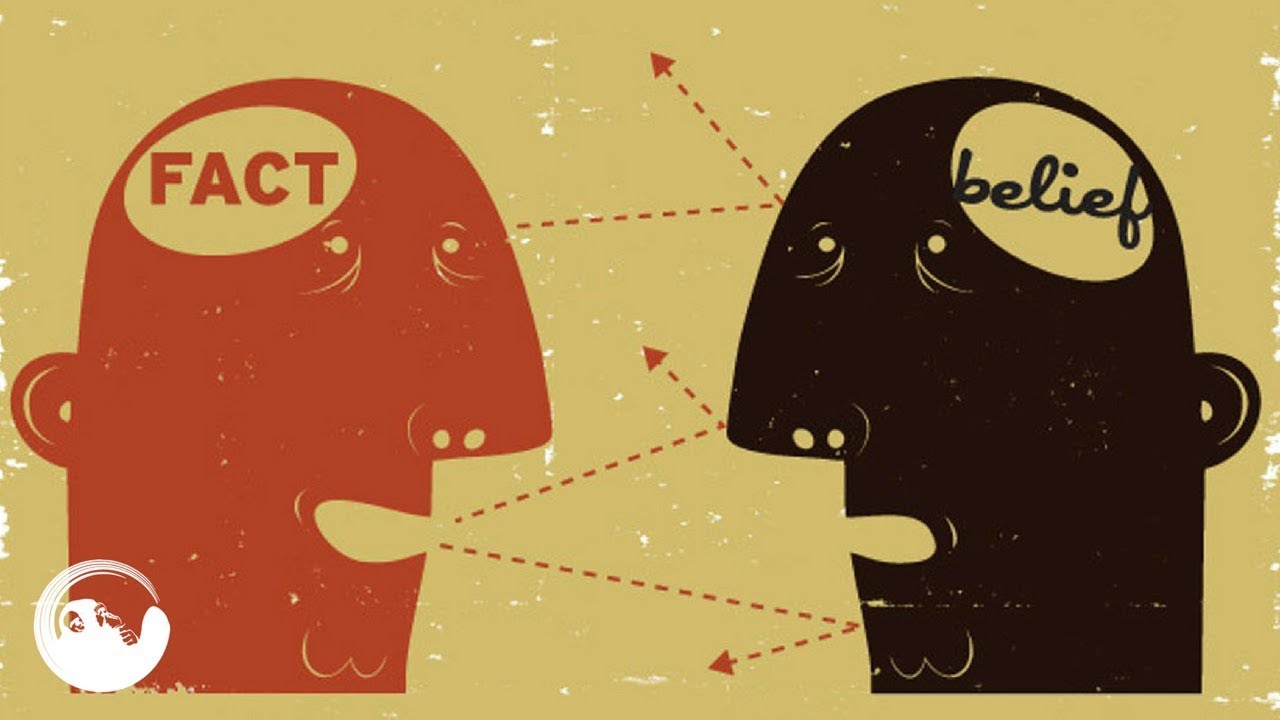
Across the globe an increasingly dominant worldview sees reality as ultimately physical. There are various expressions of this worldview in Western philosophy, including:  logical positivismempiricismphysicalismscientismnaturalism and causal closure. I would sum them up as follows: the only true reality is physical and material, and direct observation using the scientific method arranged into cohesive logic is the only way we can “know” and thus make statements about what is meaningfully and objectively “true.” The highest form of expressing a true statements is one that results in a “fact”, something that is “proven” true by evidence.

There are some been some big dissenters. Pragmatist philosopher William James, popular with a lot of Western Buddhists, asserted that something can only be said to be objectively true if there is subjective value to that being so. This is often misunderstood as saying something is true if it is subjectively valuable to someone, which is not the same. Commenting on the subjective value of truth itself, his idea of “radical empiricism” asserts that any philosophical worldview is flawed if it stops at the physical level and fails to explain how meaning, values and intentionality can arise from that.

There is no doubt that Western science is physically powerful, and this power seems to validate the worldview underpinning it. On a social level, Western science delivers great physical control into the hands of they who dominate physical resources. What we are left with is a very powerful confirmation bias that minimises the importance of other ways of being, and of experiencing and knowing reality. Far from seeing this kind of thinking as our saviour, I consider it responsible for much of the deepest suffering in the world today. Considering the medicine wheel, we have traded a lot of physical comfort and knowledge for much greater insecurity in emotional, psychological and spiritual realms. To me, the very existence of facts, and Western scientific epistemologies more broadly, can only ever be tools that exist in a complex relationship with subjective experiences that defy physical description. Core to understanding our experiences is an understanding of that which is meaningful in our lives, including how we materialise that meaning, both of which are based in values and worldview. Wise application of values can help us place logic and objectivity into proper relationship with our experiences.

Confirmation Bias in 5 Minutes - YouTubeHowever much one tries to be “objective”, behind all science lies priorities and values, and this affects what ends up being considered real or true. Values inform priorities which help us develop meaningful goals as well as guide us how to err when faced with the inevitable uncertainty of complex systems. And, hard is it can be, values help us remain undistracted and unattached to the vicissitudes of life, and prioritise process over outcomes. By asserting the primacy of process, I am not rejecting consequences in favour of pure deontological “moral” frameworks. Rather, I am stressing that such frameworks are, amongst other things, methods for deciding how we ought err in uncertainty, to be used in combination with thought processes reliant on logic.

The wisdom, or dare I say the “truth”, of our values can be observed pragmatically over time and space in ways that are supra-rational as well as rational, relational and subjective as well as objective. Such dualities and the potential for them to be paradoxical are, I believe, intrinsic to the human experience. Their relationship to one another does not need to “make sense” intellectually. Subjectivity and supra-rationality are not antithetical to science or empiricism. Buddhist science is based on experience-based enquiries into the nature of mind and consciousness, and Indigenous science is based on people learning themselves and their land through subjective and relational ways of being. Whom would you rather ask questions about the nature of mind, a Buddhist lama or a cognitive scientist? And whom would you rather ask questions about sustainable land management, a Western-educated ecologist or a local Indigenous Elder? Your answers to these questions says a lot about you and your worldview.

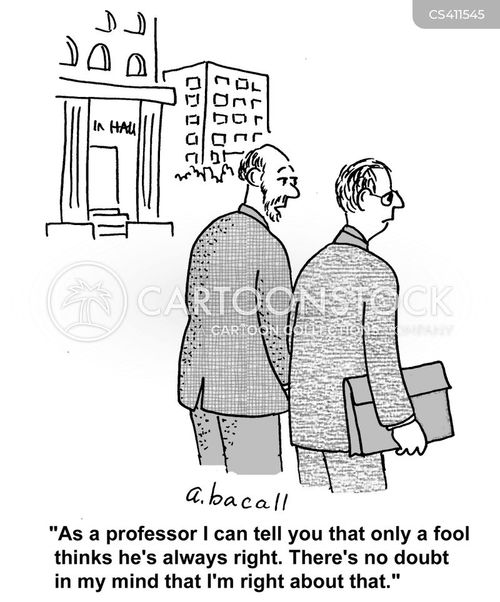
Positivism Cartoons and Comics - funny pictures from ...I think the most dangerous application of logical positivism, particularly when applied to complex social and ecological systems, is the predictive theoretical model. In modern society, it is often used instead of intuitive wisdom, Buddhist science, or Indigenous science to complement or replace Western scientific observation. A model, like anything, is ultimately uncertain, and decisions have to be made about what to assume and how to err. To demonstrate my point I am going to use to examples that come from a relatively closed and simple system, aeronautical engineering. I say “relatively”, because despite the ability of physical science to predict things like aerodynamics and metallurgy with a high degree of accuracy, when building an aircraft there is no “best” design, only “best effort” at matching design and engineering to values and priorities such as safety, fuel economy, speed, capacity, manufacturing cost, etc. The advantage of this field is that theoretical models can usually be tested, preferably before people fly on the plane! But not always. (Image from here)

Example 1.
A380 engineers used theoretical models to ascertain the wing strutting they hoped would meet wing strength certification regulations. Models were tested with wing stress tests (weights literally placed onto the wings), which determined that they needed to improve the struts. They added extra struts, thus increasing the weight of the aircraft and reducing fuel economy. This, along with incorrect modelling of the aviation market, led to a beautiful, safe, unprofitable plane. But the value of placing safety before profits shone through, and not a single person has died on an A380. (Image from here.)

Example 2.
Boeing wanted an updated fuel-efficient 737 model to compete with Airbus’s A320 NEO. The 737 has slightly shorter landing gear than the A320, and thus could not accommodate the latest generation of super fuel efficient turbo fan engines, which have a large diameter. To create a whole new airframe (the core of an aircraft) is a lot more expensive and time consuming than an incrementally new model, so the engineers were asked to “make it work.”

They ruled out re-designing the landing gear because it would be too heavy, bad for fuel economy. They changed the way the engine was positioned on the wing, but this altered aerodynamics and made the plane prone to stalling in certain circumstances (when close to the ground). To compensate, they installed software that would take control of the plane’s elevators and aggressively point the nose of the plane down in the event of a low altitude stall. This system took its cue from a single sensor.

You might think that such a system would require extra pilot training, but this would have raised the effective price of the plane, and Boeing were keen to sell it to budget airlines in the developing world, and besides, the system would only run in the background, and in the event of a failure could be disabled the same way pilots had been trained with other Boeing planes. The American regulators, by now more or less run by ex-industry workers with vested interest, approved the plane to fly.

We know what happened next. Two sets of pilots were so scared that their plane was trying to crash them into the ground that they were unable to work out that the problem was an automated system they knew how to shut down. A lot of people died as a consequence.

Disregard for consumer safety and the law - Product Safety ...There are numerous errors of logic identifiable in Example 2 without questioning values too deeply, and these should not be ignored. But I think those errors were proximate causes of flawed values. The aeronautical engineering profession must be based on a deeply held commitment to safety above profit. They, and their regulators, should err on the side of safety. I cannot help but think that government backing of the A380 project — considered a public interest project — had something to do with the values underpinning their decision-making. The risk of producing an unprofitable plane is not as catastrophic to the public purse as it might be to a purely private enterprise. But it also has something to do with the physical nature of the wing test showing a “fact” playing into biases in the Western world. Feelings of unease in the pit of Boeing engineers’ stomachs that I am confident was there were too easily rationalised and discounted within a worldview that puts physical knowing — or its poorer cousin, physical modelling — on a pedestal. (Image from here.)

My commitment to living a process- and values-driven life is why the Australian government’s response to the Corona virus did not align with my values, even if I am grateful for the outcomes we have had so far. In March I saw them erring based on certain values and priorities, but that was not at the centre of societal dialogues. Discussions about values seem increasingly missing in favour of myopic searches for evidence of “fact” or inter-group conflict. What I seek is dialogue based in values that utilise facts once people see and trust where each other is coming from. When we see someone like Trump acting the way he does, it is tempting to malign his refusal to listen to “facts.” But this is only part of the story. The problem for most of us is that we do not like Trump’s values. As physical “facts” continue to gain power both in terms of physical change in the world and as a dominant worldview, dialoguing on values will only become increasingly important. Facts are not the solution to bad leadership, and an increased emphasis on evidence-based “facts” can quickly become a vehicle for even greater trickery and corruption.

If you value this content, please engage in reciprocity by living, sharing and giving. giveheart
Alienation & Judgment

Blog by Valerie

I was perhaps one of Earth’s most alienated of beings, and by that I mean that I did not sense belonging here. My cultural context was such that I had no sense of relationship with my earthly and cosmic habitat…Earth/Nature itself was devoid of real consequence; it was human activity upon it that was of consequence…but even then they had to control its waywardness with sprays and fertilizers. It was a big dead ball of dirt…from which we would be saved by ‘God’ eventually…Here in the South Land, the supernatural Christian drama of God and Jesus was completely unrelated to place. It was a particularly cerebral religion, and in that sense barren – devoid of ceremonial recognition of the fertile Earthbody.–Dr. Glenys Livingstone

She goes on to describe how when she was growing up in Queensland, Australia, her schoolbooks from the northern hemisphere showed the moon phases in mirror image to the moon here, the path of the sun was described as clockwise from east to west which is not how it travels here, and the seasonal celebrations were out of whack with fake snow in the middle of summer for Christmas (that still happens and weirds me out!).

Dispelling Wetiko: Breaking the Curse of Evil by Paul Levy

I see this on individual and societal levels. It seems to be a common form of wetiko, the psycho-spiritual virus of supremacy common in colonialism, some cultures and religions. In our bodies and by our nature, it’s SO much easier to live in sync with the seasons, be present in our environments, accept experiences without judgment. So why don’t we? I feel that as a whole we have become alienated with aspects of ourselves and our environments. Because this is so painful, rather than face those wounds and work through them, we deny, avoid, and dissociate. When we feel hurt we: (1) say we forgive but carry resentment around instead, which becomes an emotional bomb that detonates at an unexpected time, (2) don’t say anything, resulting in resentments, passive-aggressive behaviours, and ‘faking it’, and (3) take some space to try to manage our own emotions without confronting the conflict, but the conflict keeps occurring in a painful holding pattern.

5 Most Effective Conflict Management Styles (+When To Use ...

If I try to let something painful go and can’t, or if I feel like I need to address something in the moment so it doesn’t get bigger, my approach is to directly, honestly, bring it up with the person. I don’t ever intend to judge, and if someone does experience me as judging, I want to be told. If someone does something that hurts my feelings and I care about the relationship, I will either let it go or tell them. And if I do something that hurts someone, I need them to let it go or tell me so we have the opportunity to work through the pain and maintain integrity. Conflict creates opportunities to deepen intimacy, to heal, and to learn about ourself and someone else. I accept that navigating conflicts is part of being human. (Fodder for another post: Do you know your conflict style(s) ala the image above from here?)

What I find, though, is that we can know someone for a while, even a few years, and the first time we express annoyance, or say we feel disrespected or hurt, and directly, respectfully, confront a conflict, the other person does (1), (2), and/or (3) to avoid being honest. This prohibits intimacy and integrity and destroy relationships. I saw this behaviour in a new light this weekend through a relationship with a friend. I realised the way she identified as Christian is grounded in her human family, not the Earth, which placed humans hierarchically above the rest of nature. Even though she talked with me about my cosmology, expressed interest in indigenous healing, and was struggling with painful and deep patterns of narcissistic abuse. In my experience, narcissism can only heal through re-orienting ourselves into a holistic worldview.

holistic

There is a pattern to the universe and everything in it, and there are knowledge systems and traditions that follow this pattern to maintain balance, to keep the temptations of narcissism in check. But recent traditions have emerged that break down creation systems like a virus, infecting complex patterns with artificial simplicity, exercising a civilising control over what some see as chaos. The Sumerians started it. The Romans perfected it. The Anglosphere inherited it. The world is now mired in it.–Dr. Tyson Yunkaporta

He goes on to say:

Narcissism is not incurable…Entire cultures and populations recovering from this plague have been left like orphan children with no memories of who they are, longing for a pattern they know is there but can’t see…There are so many adolescent cultures in the world right now, reaching for the stars without really knowing what they are. Adolescent cultures always ask the same three questions. Why are we here? How should we live? What will happen when we die?

But if everyone around you sees the world through the lens of human supremacy except for one person (like your weird friend Valerie), are you willing to believe that person? In my experience, it takes a courageous person who’s ready for a new form of freedom, and even when we ask for something and it’s handed to us, sometimes we can’t see it and still reject it. I find it really painful watching people get so close only to give up and destroy their relationship with me through disrespect and existential judgment. I know they’ll get another opportunity, or two, or three, to heal the wound, but not with me. I use honesty and directness to maintain fierce protective boundaries…

giveheartIf you value this content, please engage in reciprocity by living, sharing and giving.