Blog by Ellis Bien Ilas
“The Filipinos of today are the happiest people I know. Why revisit the past and why does it matter now?” She told me with an unsure smile. I only just met her for the first time five minutes ago and somehow, our conversation took an unexpected dip into the stories rarely told territory.
When two strangers realise they’re both Pinoys because curiosity has prompted either of them to ask “Are you Filipino?”, there’s typically a surge of excitement when it’s a match. Usually, I reply by either talking about how long since I’ve been back in the Philippines or how much fun I had in my most recent trip. In this case, I had just returned from a trip to my homeland after a 5 year drought.
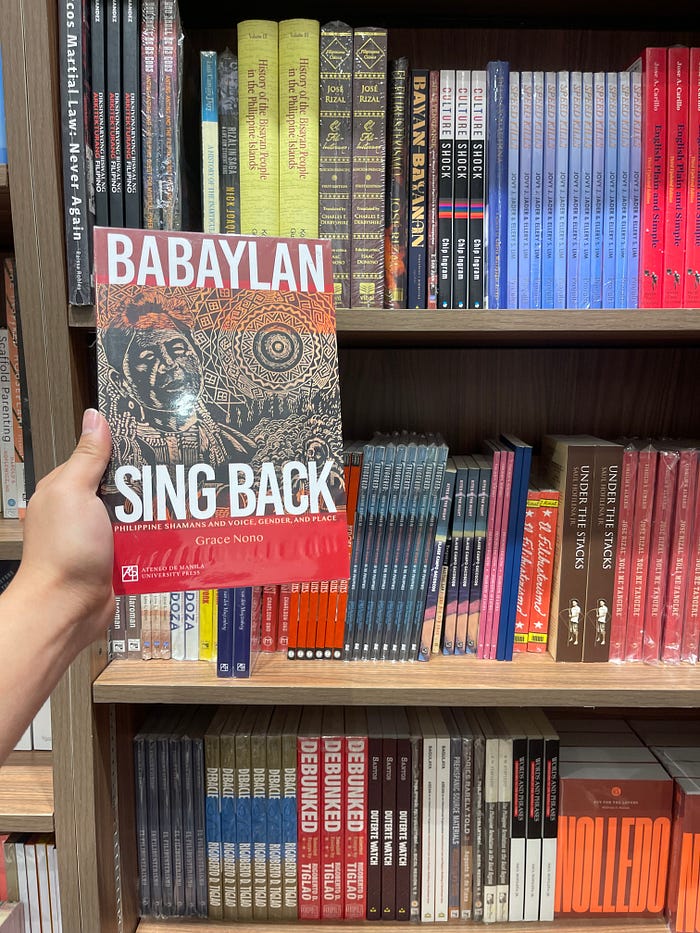
I casually recounted that while my trip was short and sweet, I was also on a mission to discover some local books on Filipino History. A quest that took me at least 9 book stores until a kind soul directed me to a shelf filled of said books on the second last day of my trip. It was a welcome relief after being repeatedly directed to the Filipino cookbooks section in my prior search.
Back to our unplanned discourse, I couldn’t possibly not share a tidbit or two about how aghast I was at what I’ve learned so far. Especially how our distant relatives have been wrecklessly jostled about from the Spanish to the Americans in deeply degrading (and staged) circumstances.
“…why does it matter now?” she recoiled back.
The sound of my name being called broke my reverie as I mulled her question. I was in an animal shelter and fortunately, it was my time in the queue to be attended to.
Being a Filipino-Australian who has been living in Australia since I was eight years old, I have also felt a gnawing inkling that now would be a great time in my life to rediscover my Filipino roots.
How does one start though? Scholarly articles and the very limited Filipino history ebooks on Amazon points to the fact that the colonial legacy of the Philippine’s past has left deep scars in the Filipino psyche, including “internalised oppression, self-hatred and colonial mentality” (David & Okazaki, 2006).
Hang on. Colonial Mentality? What does that actually mean?
Colonial Mentality
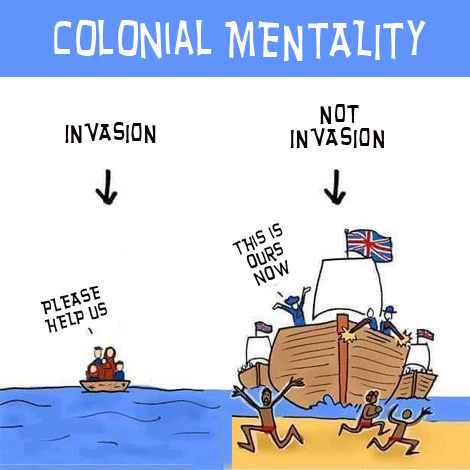 According to Nadal et al. (2016), colonial mentality refers to the internalisation of colonial values, beliefs and practices that devalue Filipino culture, language and identity. This can manifest as embarassment or feelings of inferiority over Filipino tradition and practices.
I recall when I first moved here in Sydney, Australia on several occassions, how several of my Filipino peers more often than not, proclaimed they were Fillipino-Spanish (even if that was 1/32th in bloodline). (Image from here)
“It just makes me sound more interesting you know. I’m not just another flip (Inner West Sydney slang for Filipino back in that time) who’s also a fob (fresh off the boat)”, I vividly recall an acquaintance disclosing.
David and Okazaki (2006, p.335) defines colonial mentality as “the conscious or unconscious acceptance of the belief that traits, values and practices associated with the coloniser are inherently superior to those associated with the colonised”.
To dive a little deeper, the authors developed the Colonial Mentality Scale to measure colonial mentality, which includes the following dimensions:
1. Belief in the superiority of Western physical features (e.g., light skin, straight hair)
2. Belief in the superiority of Western cultural values (e.g., individualism, direct communication)
3. Belief in the superiority of Western education and credentials
4. Belief in the superiority of Western technology and innovation
5. Belief in the superiority of Western religion and morality
The authors found that colonial mentality was significantly associated with lower self-esteem, higher acculturative stress, and lower levels of Filipino cultural values and practices among Filipino Americans.
So basically, colonial mentality has negative consequences for our mental health and well-being.
Decolonizing the Filipino Spirituality
Mention the word spirit or espiritu to a Filipino and you’ll either be discussing about perceived ghost sightings/apparitions (which stems from one of the Philippines’ pre-colonial belief systems referred to as animism — the belief that objects, places or creatures all possess a distinct spiritual essence) or, you’d be discussing the divine power of the Holy Spirit (through the lens of the Romantic Catholic faith).
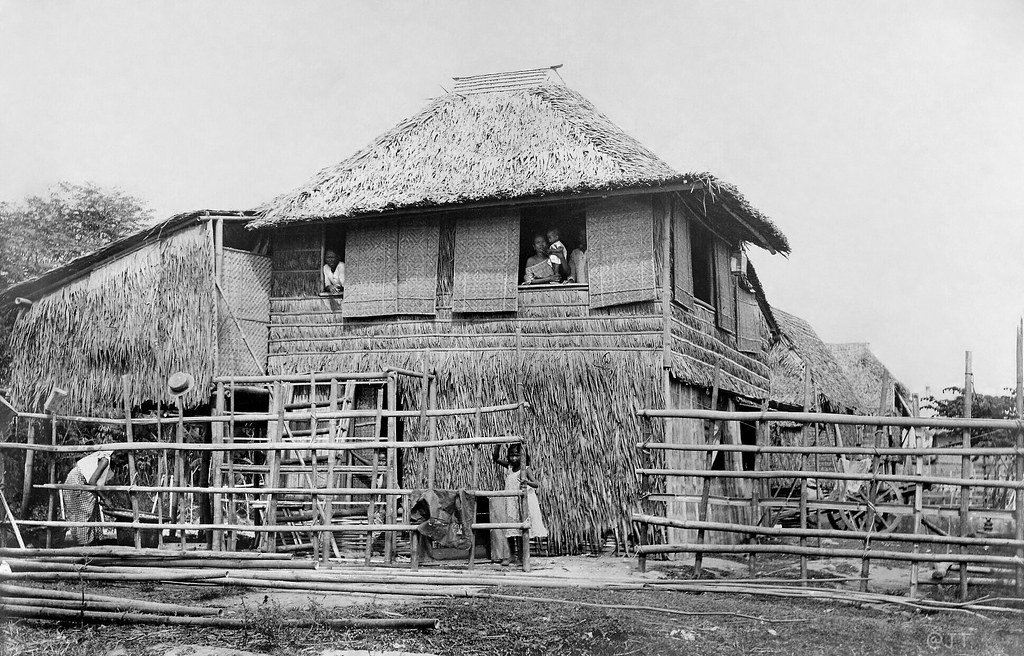 Constantino (1975) argued that Spanish colonialism and Catholicism had a profound impact on the Philippines, including the suppression of indigenous spirituality and cultural practices (which were largely based on animism), leading to the creation of a colonial and clerical elite. It also strongly impacted Filipino values and beliefs, how Filipino society is organised and the perpetuation of patriarchal and authoritarian structures of power, gender inequality and resistance to social and political change. (Image of pre-colonial Philippines house from here)
Let’s look at the typical Filipino family unit. Respecting and obeying Filipino parents and elders are deeply ingrained value and practice that is often associated with the way Catholicism has spread in the Philippines. These values and practices are based on the belief that Filipino parents and elders have the ultimate authority and control over their children and younger family members, and that their decisions and actions should not be questioned or challenged.
However, this value and practice can also perpetuate toxic and abusive dynamics in the Filipino family unit, particularly in relation to the reinforcement of authoritarian structures of power. For example, Filipino parents and elders may use their authority and control to enforce strict and oppressive rules and expectations, such as the control of their children’s education, career, and relationships; the restriction of their freedom and autonomy and the perpetuation of gender stereotypes and roles.
These dynamics can lead to unknowingly abusing that power, such as the emotional, physical, and sexual abuse of children and younger family members; the neglect and marginalization of their needs and rights, and the undermining of their agency and participation.
In light of the above, I’m not saying that Catholicism was all doom and gloom. I acknowledge that it also helped develop the Philippines through education and healthcare, as well as a sense of community and solidarity (which appears to still hold strongly today). However, it has caused issues still pervasive today. Problems that manifest in everyday life and I would imagine, most Filipino family units. Problems that I’ve seen myself and maybe, you have too. It’s possible that you have also considered, in the grand scheme of things, how did we get here and what can I do about it?
So… is it worth decolonizing my Filipino spirituality and mentality?
Considering the complex, multifaceted and evolving nature of the process of decolonisation, I don’t think I can reach a point and say, yeah, I’ve become decolonized now. Far from it.
But I am interested in improving my mental health and well-being, and this aspect of decolinization is a part of that process.
Despite this being in the making in the past few years, I’ve really only just taken my first few steps. My goal is to share this ever-evolving journey with others who may have had this spark lit within them. I’m curious to hear from you.
References
Constantino, R., & Constantino, L. R. (1975). The Philippines: A past revisited (Vol. 1). Quezon City: Renato Constantino.
David, E. J. R., & Okazaki, S. (2006). Colonial mentality: a review and recommendation for Filipino American psychology. Cultural Diversity and Ethnic Minority Psychology, 12(1), 1.
Nadal, K. L. (2020). Filipino American psychology: A handbook of theory, research, and clinical practice. John Wiley & Sons.
 If you value this content, please engage in reciprocity by living, sharing and giving.
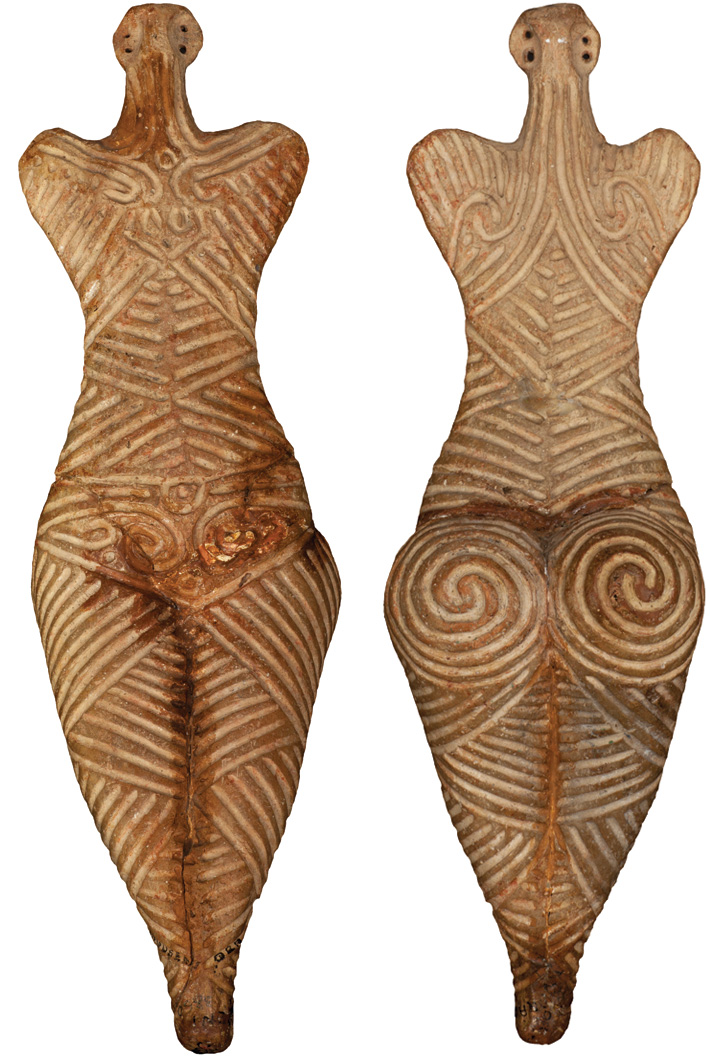 modern day Ukraine and Romania, and a 5000 year old mummy found preserved in ice in the Italian Alps who appears to have therapeutic tattoos in places on his body that look similar to a practice in traditional Asian cultural medicines. Such tattoos tend to be at joints and in the lower back. Tattooed mummies have also been found from Egypt to Siberia to Peru, and tattooed earthenwares of human or spirit figures have been found across the world from ancient Mississippi to Japan to the Philippines.
  The word ‘tattoo’ was brought into English from James Cook’s 1770s journey to New Zealand and Tahiti, and supposedly inspired Western sailors to start a tradition of tattooing themselves to remember where they had traveled and people they missed at home. (Image of a Ta`avaha (headdress) with tattoos, Marquesas Islands, 1800s, via Te Papa from
  And while I can’t speak for how locals feel about Angelina’s tattoos (she was given
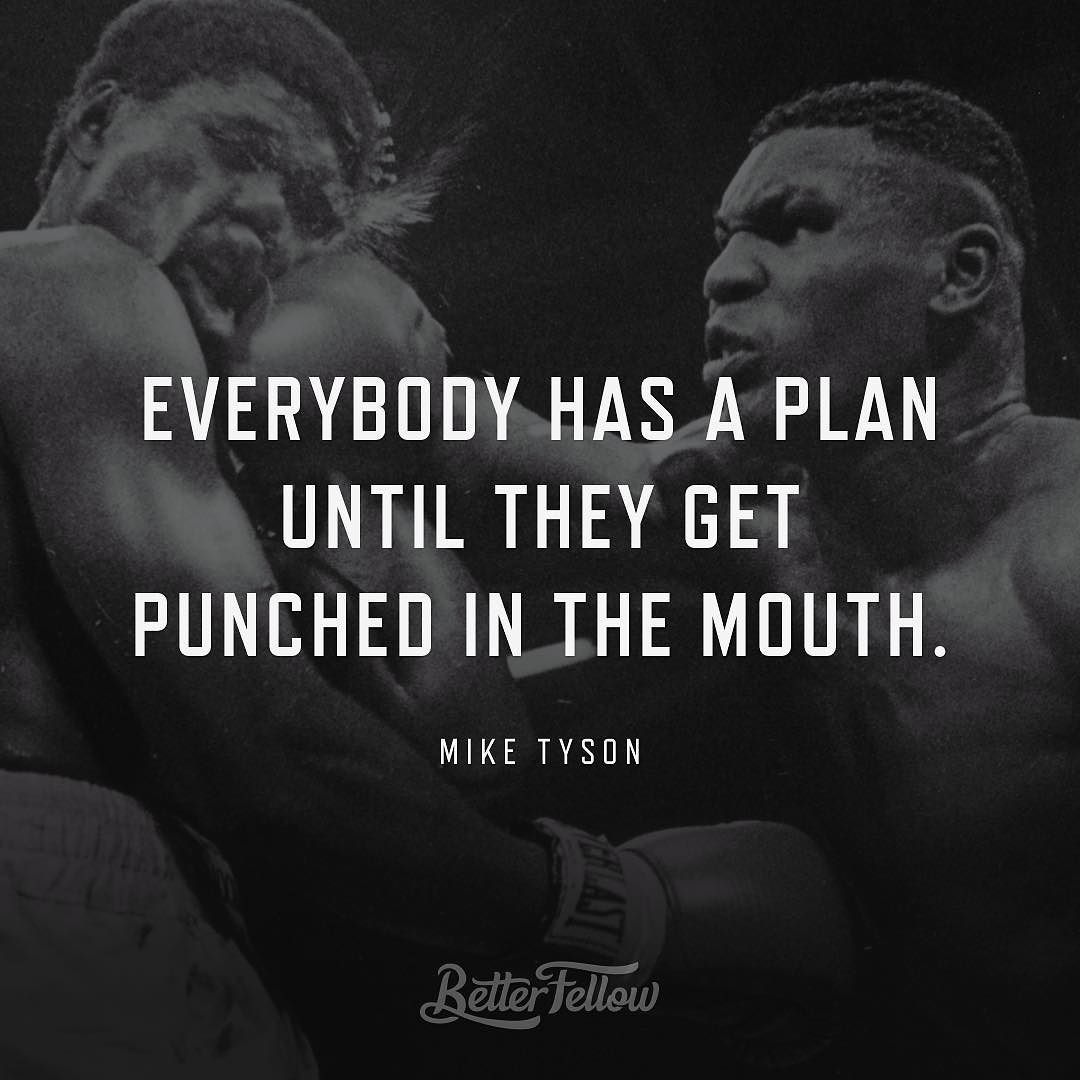
 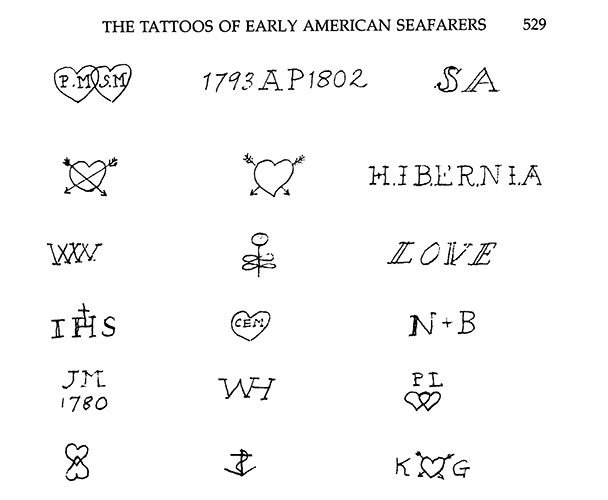 Western culture. I remember a trend some years ago of getting Chinese characters tattooed without many people even knowing or speaking the language. (I used to wonder how people weren’t scared they were lied to about what their tattoo said!) And many modern designs in Western culture have originated from those early sailors’ tattoos in the 1700s and 1800s. However, many have not, and where some celebrities like Dwayne “The Rock” Johnson express Samoan heritage through tattoos, others like Mike Tyson who is not of Maori descent has a ta moko design on his face (See
  (Typical image of ‘spirituality’ from
  How do we know the difference between a spiritual experience and our imagination? I have seen a lot of people struggle with this – with their minds tricking them into thinking they have encountered a Spirit, for example. For me the difference is in embodiment. And when in doubt, see if and how changes occur in your everyday life as a result of the insight or guidance you got. (Image from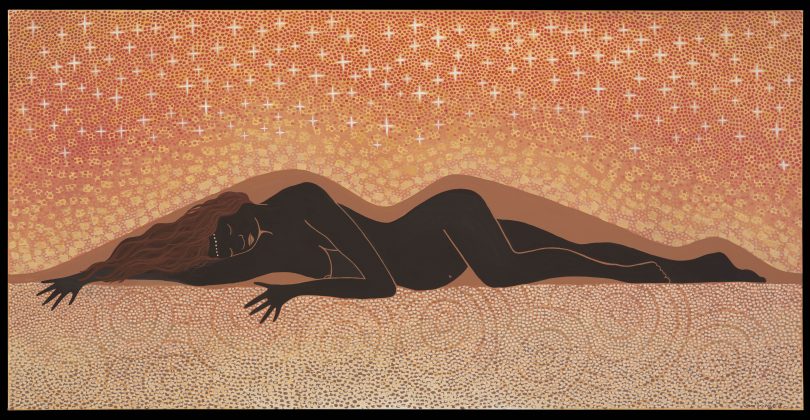
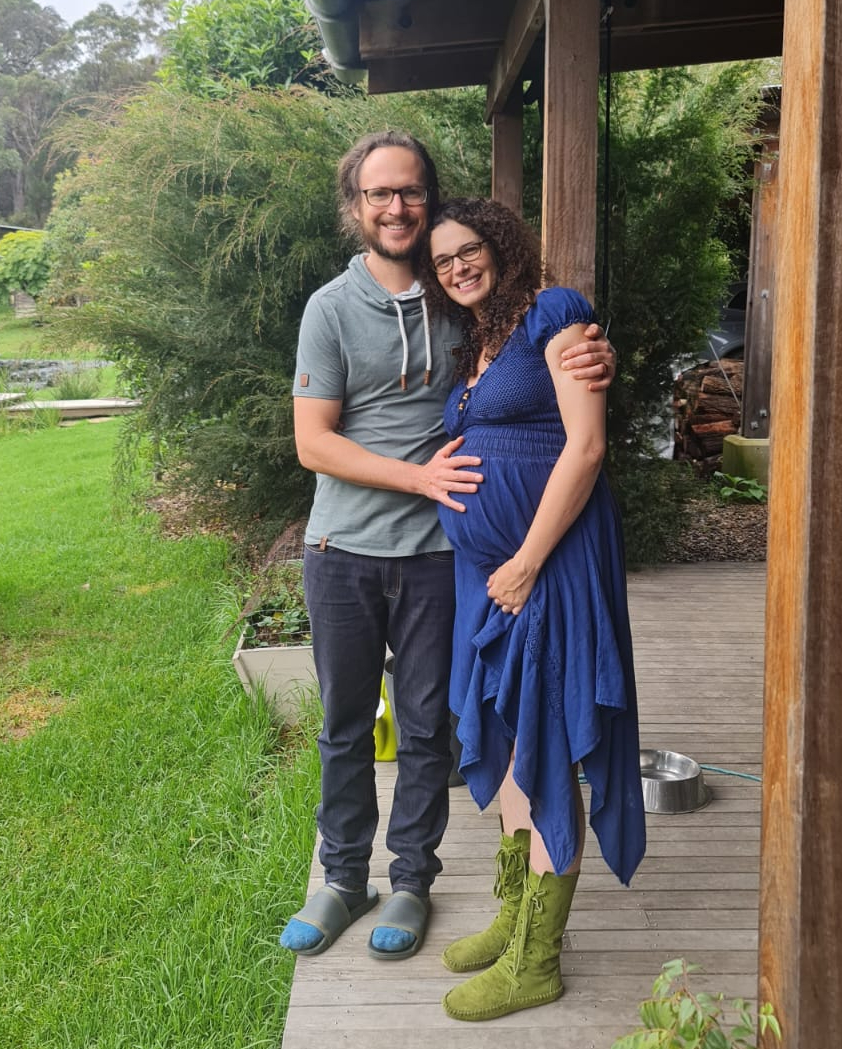 Recently Lukas and I welcomed our daughter into this wild world. We won’t be posting any photos of her to protect her privacy, but here is one of us with her in my womb. More people are becoming familiar with the concept of a spirit baby (often through
  And I got messages from her throughout the pregnancy; for example, I knew to
  Sometimes it’s tough to accept that the best gift we can give is to prevent the passing on of painful experiences and confused projections – and not by withholding or denying, which just buries the energy – but by expressing,
  Some years ago while working with practicing Jews and Christians, I realised the underlying process many of them were continually going through: judge an act as righteously right or wrong, confront moral failings within oneself and others, then forgive and let go by giving anger to God or Jesus. The depth of potential existential judgment is so intense (e.g. eternal damnation and social ostracisation), that it can be very hard for people to acknowledge ‘wrong’ behaviours. I have experienced numerous instances of trickery of someone intending to forgive and let go (or deciding to avoid an issue), resulting in hurtful and confusing passive-aggressive behaviours. Often the underlying issue emerges years later after so much resentment has built up and trust eroded that the relationship becomes very hard to repair. (Image from
 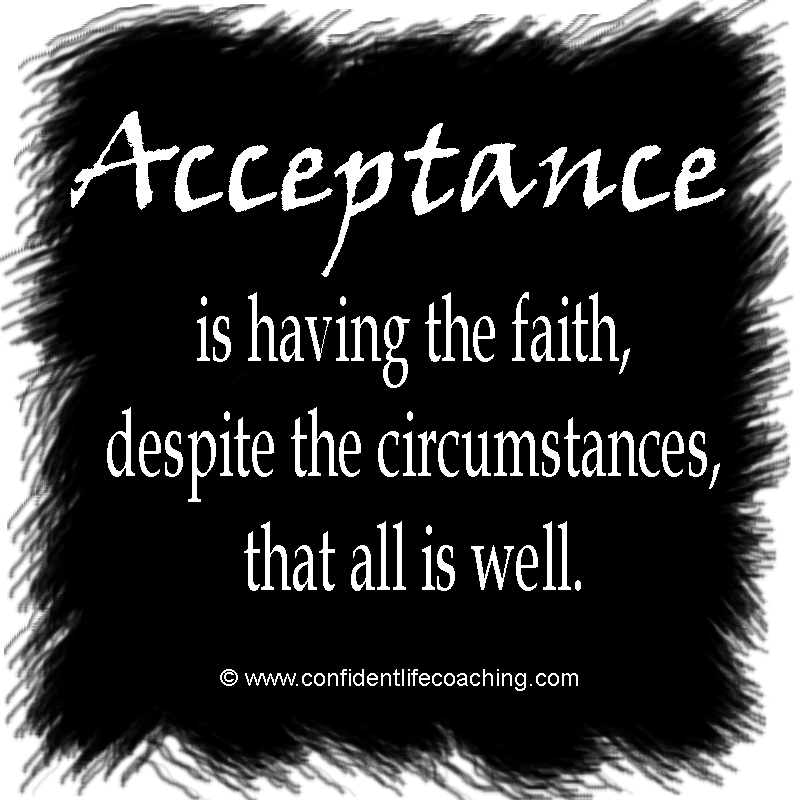 Though it may at times seem more painful in the moment, I find loving acceptance brings me immeasurably more ease and peace than judging. I then discern what, if anything, I need to say or do when I experience hurt or realise I have caused hurt in another being. I remember Tom saying to me once that even when he doesn’t think he’s done anything wrong, if someone tells him that his actions have hurt them, he chooses to apologise because it is not his intention to hurt anyone. I appreciate the humility in that, and that it also helps hurting hearts to remain open to an ongoing relationship. (Image from
 _-_Bette_and_Joan.png/250px-Feud_(Season_1)_-_Bette_and_Joan.png) Now that the Western justice system has criminalised the payback ceremony, many Aboriginal people in the Northern Territory struggle to reach forgiveness with their Indigenous science of justice. I heard about someone who had been in prison for years as ‘Western justice’ who was released and immediately had to face spearing if he wanted to see his family and community again. I heard about family members of an offender being beaten up until someone agreed to be speared in place of the offender in prison. I heard about decades-long violent feuds involving multiple generations where many people didn’t even know how the feud had started, but no one felt justice had been satisfied. I even heard about someone trying to sue someone else for using sorcery against their family as payback instead of spearing. It’s a mess. (Image from
Now that the Western justice system has criminalised the payback ceremony, many Aboriginal people in the Northern Territory struggle to reach forgiveness with their Indigenous science of justice. I heard about someone who had been in prison for years as ‘Western justice’ who was released and immediately had to face spearing if he wanted to see his family and community again. I heard about family members of an offender being beaten up until someone agreed to be speared in place of the offender in prison. I heard about decades-long violent feuds involving multiple generations where many people didn’t even know how the feud had started, but no one felt justice had been satisfied. I even heard about someone trying to sue someone else for using sorcery against their family as payback instead of spearing. It’s a mess. (Image from 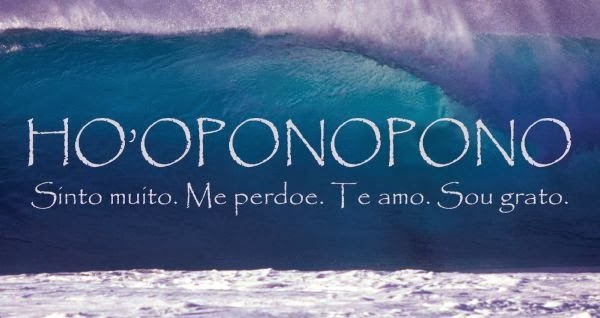 Though we may not be able to ceremonially heal with the people who hurt us or people we have hurt, we can do spiritual ceremonies on our own to change the way we hold people and what we project. Shifting our perspective requires us to hold paradox and avoid binary and judgmental thinking. In traditional Hawaiian culture, people use “Ho’oponopono, the traditional conflict resolution process…[to] create a network between opposing viewpoints…that allows dualistic consciousness to stand while becoming fully embodied by the ecstatic love of Aloha”


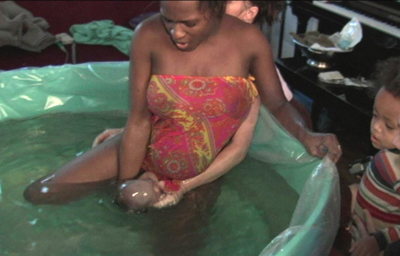

 Trauma’s meaning, causes and methods of healing differ by culture and
  Reconnecting to the Earth
 Our task as healers is to allow alchemy to occur so that sh*t we are carrying in our hearts, minds, bodies and spirits can instead turn into fertiliser for ourselves and others. By consciously choosing to move into terror and aversion/disgust when we are in a safe space, we can reconnect with lost soul parts. In doing so, we gain knowledge that expands our individual and collective understanding of ourselves and our world. This is seen as the sacred calling underlying a ‘shaman’s illness’. Trauma is seen as a spiritual offering of a huge amount of energy that can redirect us into a new identity like a phoenix rising out of ashes. Indigenous healers are called ‘medicine people’ or ‘shamans’ because through healing trauma we embody medicine by living in a wiser way and offering support to others who are struggling through similar wounds.
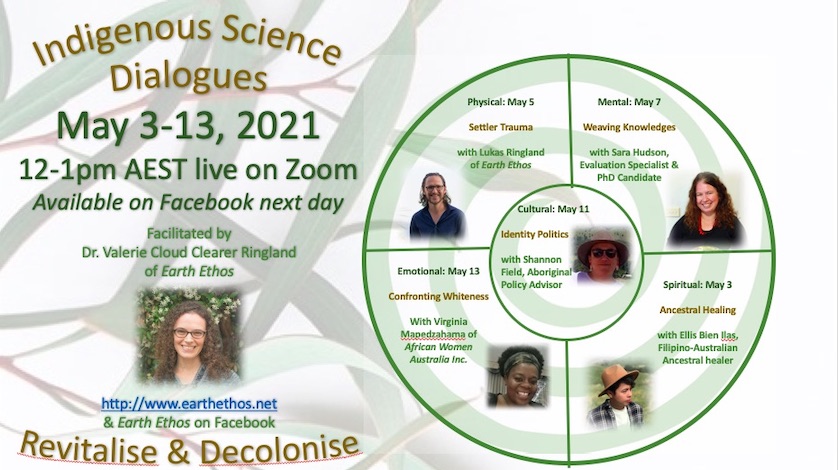 The dialogue of that name was with my friend
 Shona (Zimbabwean) Australian woman
  This “mere existence” of Aboriginal people as humans worthy of dignity collapses the entire ‘legal’ foundation of the Australian nation. The High Court overturned
  When I hear
  I was raised to hold family sacred, and so processing the initial childhood betrayals, followed by the adult estrangements, has been incredibly painful. It felt like a sudden orphaning that was out of my control, a genocidal loss of everyone I deeply knew, had learned to rely on and share my life with. I am still in touch with one friend from childhood, one from middle school, and my nanny’s daughter who knew me as a baby. Though I am not close with them, it feels quite precious to me that they are still in my life and knew me when I was young. My husband and a few friends have walked with me through my estrangement and have met some of my family members, but hearing stories and seeing photos isn’t the same as having witnessed me as a child in the context of my family and seeing how far I’ve come as an adult.
 In every culture there are structures of
  It is a big deal to estrange, and I have counselled people who have told me they were considering it that it’s like the guy who got stuck in a crevice while rock-climbing and had to saw off his arm to survive – it’s drastic and changes your life forever, and sometimes just has to be done. There’s little accurate Western scientific research about estrangement, with
  As with any loss, my experience of estrangement has created opportunities for a lot of self-knowledge and spiritual growth. It has given me the time and desire to do gift economy work supporting people’s healing, as well as community-building, knowledge-sharing, and our other humble activities through Earth Ethos. If I had family obligations and relationships taking up my time and energy, I would not be able to serve in this way. So you can thank my family for estranging from me, as it has gifted these insights to you today. And if you know anyone who is estranged, don’t assume that their situation can, will, or should change.
 Earth Ethos