Tag Archives: Wetiko

Trickery of heartfelt words

Blog by Valerie

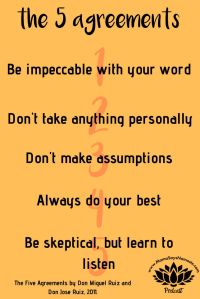
Many of us are familiar with the four (or five) agreements concept of spiritual teachings Miguel Ruiz wrote about based on ancient Toltec wisdom. The first is: Be impeccable with your word. It is much easier to be tricky with our words than our actions. Actions require lack of awareness, sneakiness or even betrayal at times to follow through on a trick, whereas being tricky with our words seems to have become so common that it’s often forgotten a few minutes after we’ve done it.

Unless you are in intimate relationship with someone like me who has an elephant’s memory for words. Growing up, watching how well someone’s words were aligned with their actions helped me judge how safe I was with them, because my home environment was so dangerous and my nervous system so often triggered that I couldn’t rely on feeling safe in my body to discern which people were safe to be around. Even now in my forties after years of estrangement from my family of origin and many healing experiences, I am still uncovering layers of feelings of unsafety and relational dynamics where I was tricked because I loved someone and gave too much benefit of doubt when they told me something I wanted to hear and their actions didn’t quite align…

I had a conversation with a friend about colonisation a few years ago, and she said an elder told her that the British didn’t have superior manpower or military strength when they invaded; they overpowered the people with their words. I have written before about unconscious sorcery, and it continues to be something I experience and witness regularly. But this blog is about the way we use our words, and the tricks our minds play on us and those we love when we believe what we say (at least in the moment).

I have had experiences with people who are in their hearts in a moment, but then dis-ease such as Wetiko takes over and their minds get to work changing the story and tricking them. How many of us say something and mean it in a moment, then think about it later and realise we don’t still feel that way, then go back and correct it with the person? It’s hard to do that. And yet those words sit there, and we may not realise how much of our relationship is built on them and the emotional power they possess.

I see this as one of the greatest tricks playing out right now in the world; on a big scale, there are people saying things like: “[Y]ou always want to go with what’s come out of his mouth rather than look at what’s in his heart” about Donald Trump’s incongruent words and actions. On a small scale how many of us say “I’m good” when asked how we are, when in fact we do not feel good, or at least not wholly so. It took me a few years to work out ways of navigating these interactions gracefully in shops and places where people are meaning to make small talk but I don’t want to smile and lie and build that energy into my day. I find saying something I  like tends to work, e.g.: “How are you today?” “I’m appreciating the sunshine outside.” “Oh yes, it’s a hot one.” (Image from here)

Some friends have told me I expect too much from people. That bums me out, because I don’t expect more than I ask of myself. Others say, just take people at their word and decide if they’re safe or not based on actions, but it feels too harshly black-and-white to me to put people into categories labelled ‘safe’ or ‘unsafe’.

I had a conflict with a friend many years ago, and we talked about it and made up, but I felt insecure with her for years afterwards. When I brought that feeling up a few times she told me I was being crazy; then when another conflict arose and I said I felt hurt by some of her behaviour, she immediately brought up our conflict from five years prior and said she had forgiven me for that so I had no right to bring up something else, I had to just forgive her as well. I certainly didn’t feel forgiven! I felt like my insecure feelings had unfortunately been vindicated. A few months later when she wanted to meet and put everything behind us, I felt like I couldn’t trust her anymore, so there was no point. Without the potential for building trust, I can’t feel safe in a relationship. So even thought it really hurt, I had to let it go.

I do believe that she believed she had forgiven me. And I don’t know if she didn’t know how to or what the block was, but when it became clear she was still upset about the first conflict and was denying it, I lost hope for healing together. And that friend who talked about colonisation being a conquering of words, well, she conquered the doors to my heart with some powerful words that it turns out were not impeccably used. I can accept that we both were tricked in good faith, and I can rebuild trust by talking about it, so the words between us change and we can do our best to be more impeccable this time around. The responsibility of using our word belongs to each of us to co-create a healthy world together! (Image from here)

giveheart If you value this content, please engage in reciprocity by living, sharing and giving.
Material Wealth

La antigua Biblos: El bibliomotocarro de Antonio La CavaBlog by Valerie

When I was growing up, I watched my father hoard food, books, even household cleaning items. I remember the pain I felt when he told me the story of realising as a young teenager that he’d read every book in the library van that visited his small town every month. He went to university, the first in his family, so there was no shortage of books to read from the age of 19, but he couldn’t shake those early experiences, he worried he’d have to do without if he didn’t have things on hand. Coming from a home where I had access to multiple libraries, and many used and new book shops that we frequented regularly, I was happy to give away and trade books with trust that if I needed one again I’d find it. I didn’t need to be weighed down by a home library. But I also remember the pain I felt when I went with my dad to our favourite used book store with some boxes of books from cleaning out my room at my parents’ house. He didn’t understand why I wanted to let them go, and kept asking if I was sure. But he didn’t try to stop me. (Image from here)

Growing up, I watched my mother hoard money (and related to that, jewellery); and though it may sound strange, she also hoarded social privilege. But it felt more intense than my father trying to rebalance some pain from childhood. Hers felt existential, as if she hoarded and guarded these things like her life depended on it. The first time I earned money through babysitting, I came home with a twenty dollar bill feeling proud of myself. I had gotten the little girl to sleep despite one of her dogs nonstop fearful bellowing about a thunderstorm. My mother asked how much I made, and when I showed her, she took it, and said that she needed a cut. I couldn’t tell if she was joking. It didn’t feel like it. Then she wouldn’t give it back to me, and taunted me, hiding the bill and waving it out of my reach. That felt scary and deflating, one of many power and control games she played with me. It was as if she needed money more than she needed to be connected with me and would abuse her power and trusted role in my life to get it.

Wealth PNG Transparent Images | PNG AllWhen my father died many years later, that was my experience with her as we entered into estrangement. My mother chose money, lies and trickery over me. I have come to see that as rooted in her Jewish wounding, where through being disconnected from country for milennia, she learned to existentially cling to money, jewellery, and social status to survive. I understand that’s her survival strategy, integrated with identity and culture. I can’t be intimate with those wounds though, it feels too destructive and desolate to me, like I’m spinning in a hopeless vortex of nihilism and materialism, disconnected from the planet and my body. (Image from here)

I don’t yet feel respectful of what I experience as collectively acting out a traumatic and highly destructive wound. I focus most of my energy on deepening compassion and processing grief. I have been feeling this a lot lately with actions in the Middle East. I feel like Palestinian, Lebanese, and Iranian peoples are my spiritual kin. The hatred some of us feel towards ourselves and each other is so intense, it makes my heart feel heavy with grief. The material greed and holding in supremacy certain people and lands while dehumanising and exploiting other peoples and lands pains me deeply. I have been to Jerusalem, which many consider to be the most holy city in the world. I felt its deep and rich history. It also felt very layered in pain and messiness. There was tension, some bombing, and UN vehicles patrolling when I was there. It felt like a powder keg with everyone on edge, and that was fifteen years ago.

Everything is connectedI choose a worldview in which all lives lost, of any culture, of any animal or plant, are existentially equal, though I obviously experience some of those losses with much more intensity than others because of my own identity and connections. As this worldview and my values have solidified over time, I have found myself recently with more material ease than ever before in my adult life. I had gotten used to embodying ordeal, living without enough material wealth, devaluing its importance to rebalance growing up with my mother putting material wealth über Alles, humbly acknowledging that I needed to find ways to be more financially stable and secure, trying things and burning out, growing savings and going through them.

I’m grateful for some material ease and abundance now, and I’m grateful for experiences of lack so these experiences have more meaning to me. I don’t think I’ve now got it all figured out. I do know that weeding by going into trauma and negativity have been more valuable to me than trying to plant positive affirmations. I’ve found healthy beliefs emerge when I clear the way. And, at the moment, some material wealth has emerged. I’m allowing myself to feel more ease when we buy groceries, practicing saving without hoarding, and humbly sharing as we go. I have started to feel lately like for the first time in this life I am living the life I want to and am meant for.

Matthew 11:28 Scripture - Rest from Burden | ChristianQuotes.infoHere’s hoping your relationship with material wealth feels balanced and centred too. Blessings at a season of reflecting on thankfulness. I’m thankful you care enough to read this blog. And if you are able, I humbly ask you to consider leaving a review of my book Healing through Indigenous Wisdom on Amazon, giving a copy to a friend, or otherwise passing on the word. Sacred reciprocity makes the world go round (fodder for a future blog).

giveheart If you value this content, please engage in reciprocity by living, sharing and giving.

With Dignity and Respect for All

Blog by Valerie

Earlier in my ancestral healing journey when I set boundaries, I would tell ancestors who couldn’t support me and my core values to go. I had heard a few people advise to only work with healed ancestors, though I’m still not quite sure what that means. All our human ancestors are somewhat healed and somewhat wounded. Sure, some are wiser and more healed than others, just like people living now. And even ancestors we may refer to as ‘enlightened masters’ have blind spots and things to learn. No one’s infallible.

It felt important for a while to build my strength and skills to take space and even reject some behaviours and values, to avoid certain conflicts. But I find that what we reject tends to comes back to us seeking deeper acceptance. And since I don’t believe in existential judgement, I needed to learn to coexist with all my ancestors. If there’s a crocodile in our environment, we need to learn to live with it, how to protect ourselves and avoid it as best we can. Because that’s where we are living now, and that being has just as much value here as we do, whatever feelings we have about them. (Image from here)

Aboriginal people, through thousands of years of living with crocodiles never have considered that they are dangerous animals. We have always lived with them. They lived their own life and we lived our own ways, as long as there is common respect for each other.

–Gularrwuy Yunupil’u in Living with crocodiles (ABC documentary)

How do we respectfully, even vigorously disagree when we feel that others are acting in ways that are disrespectful and undignified? From arrogant ‘I know better’s to moral judgements, to shameful denials to self serving greed or even something as deplorable as genocide, so many of our behaviours are rooted in existential judgement. Such judgements take us out of the web of life and create existential hierarchies. Wetiko creeps in, and we start to believe stories of supremacy. If we want to embody connection, then we have to make space for really tough stuff like experiences of existential judgment from others and the painful impact of destructive behaviour.

I have written before about estrangement from my family of origin. I still have dreams about many of them and experience connection. Sometimes I feel like we have worked through things in dream states, and other times I feel like the same dynamics that I walked away from are still present. 

For a few years I took space from some members of Lukas’s family due to unacknowledged behaviours that had destructive impacts on both me as an individual and us as a couple. We started slowly reconnecting after our little one was born because Lukas wanted her to get to know them, and I respected that. I don’t feel that different than I did before, but I feel like we are better equipped to maintain boundaries and protect ourselves than we used to be. 

Interestingly more of Lukas’s ancestors who have rejected me have been coming to me in dream states and telling me how they feel and why they’ve been so hard on us, that I’m not Christian and pull him away from Christianity, I’m not focused solely on his career and have one of my own, I took too long to have a child and am only having one, I ask too much of him around the house–all sorts of criticisms. In another culture (like my Jewish-Sumerian lineage), someone would have yelled at me about all that, but the Anglo Celtic culture struggles to speak directly, and often struggles to speak their truth. I now have more stories for what I’ve been feeling and behaviours that still play out, whether it impacts me directly or helps me witness patterns and struggles in the family with more clarity and compassion. I don’t yet feel like I’ve been welcomed into the family or have social belonging. I feel overall like I’ve been begrudgingly accepted, especially since I’ve had ‘their’ child, so that I’ll always be in the family tree now and there’s no point trying to break our marriage now.

For a while I resisted working with Lukas’s ancestors. I felt like that was his responsibility, and I was pretty full working with my own. As work with mine calmed down and we decided to get pregnant, I figured if some of Lukas’s ancestors would rather work with me that I had capacity. I want to support healing and prevent my child from inheriting intergenerational trauma as best I can. It’s been interesting if pretty unpleasant for the most part. But making space for such experiences feels important in the inner and outer world right now. Grace and compassion are so valuable. There’s a lot of conflict in the world. I think it will be a lot easier to work through it when we collectively accept as a baseline that all of us on the planet, human and nonhuman, are inherently worthy of dignity and respect.

Existential judgment may be the most destructive behaviour we humans engage in. And when we do, we add to our sense of shame. I have been noticing lately how efforts to avoid feeling such shame seem to be linked to an increase ghosting behaviours. So much to make space for and pray for healing about. We can be very spiritually enriched at the moment if we can avoid overwhelm! (Image from here)

giveheart If you value this content, please engage in reciprocity by living, sharing and giving.

Unconscious Sorcery

Blog by Valerie

Often the term ‘sorcery’ is used negatively, but any manifestation of a spirited, emotive thought or prayer can be considered sorcery. As Shaman Chiron Armand says:

“[T]he word sorcery implies control one wields or seeks to wield over life, spirits, or other incarnate beings. That one might be capable of wielding force that yields great consequences in the subtle realms without intending to or even knowing one has collapses the all-too-neat answers that magic and sorcery hand us [about] human agency.”

To answer this, Shaman Christina Pratt says, “The distinction between acts of healing and acts of [negative] sorcery is self-control.” She gives the following examples of “everyday manipulations and unconscious abuses of power that are effectively unconscious sorcery”: telling a child they are stupid, an MD telling a patient they have 6 weeks to live, manipulating a situation for a desired outcome, and blaming others for our pain, and reminds us that “unconscious though this sorcery may be, it is still harmful.” And I would add that spiritually we have some responsibility, and ought to act on that once we become consciously aware.

FB Mystic Magic. Native American | Native american prayers, Native ...I bring this up because I find unconscious sorcery very common. I recently got to the root of a painful thought loop that’s informed my whole life and was quite surprised to find that it wasn’t intergenerational trauma as I expected, but in fact (I’m assuming unconscious) negative sorcery from a former big shot professor who had it in for my mother. I did hear stories growing up about how he had bullied her, like how when she was pregnant with me and asked for afternoon classes due to morning sickness, he gave her 8am classes instead. The belief he cursed me with was “you don’t belong here”. And I do feel it was directed at me, maybe even more than my mother, because he took great issue with a young mother having an academic career. And I made her into a mother.

When you think about curses from negative sorcery, you may think about a more tribal culture. Like a cave Lukas and I were shown in Guatemala where people hired sorcerers to send blessings and curses using different colored candles and incantations. Just going near that cave got us sick, the energy was so intense. But what a curse I’ve lived with all these years because of a mean spirited wish turned into action from an old man. For me the issue is the spirit we bring to things more than self control. That man would have been aware he was angry with my mother, and that his behaviour was hurting her, if not aware of the impact of his psychic attacks. If my mother had been in more integrity she might’ve been protected from his curse, or might’ve become aware of it sooner. Her own conflict and insecurity about being a working mother likely allowed it into my formative psyche.

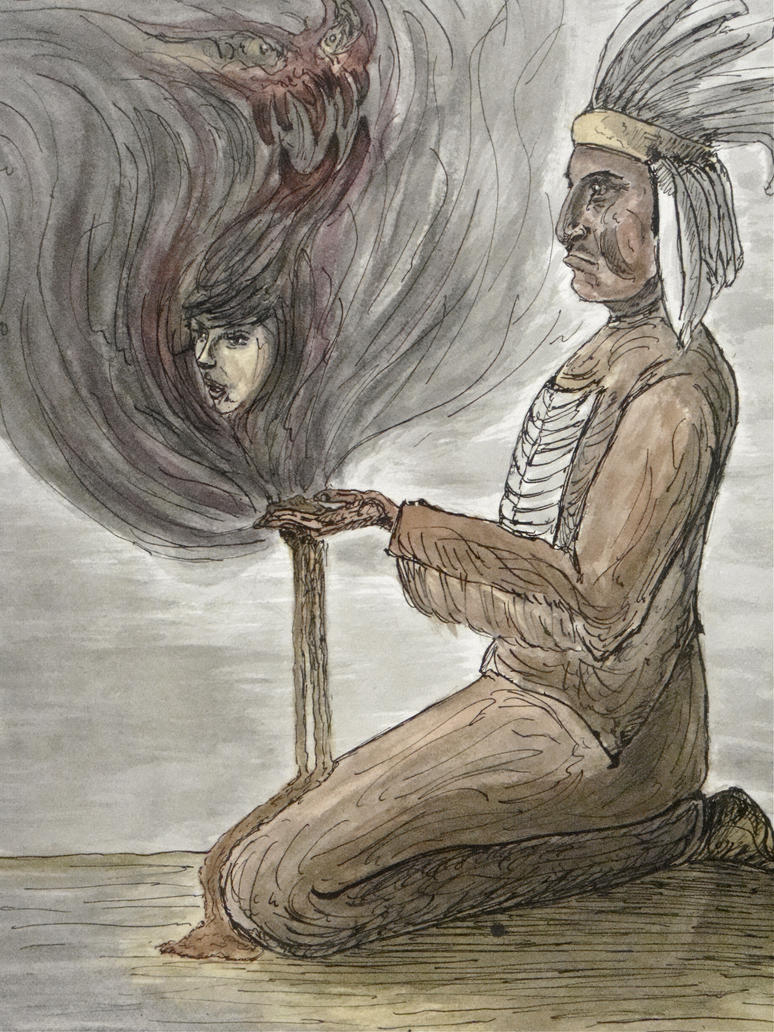
Curse of the Wendigo Part 1 by McEvanSandwich on DeviantArtThat was his hook. But what about me? As Shaman Chiron Armand explains: “In some instances, such forceful projection by the unconscious sorcerer can lead to displacement of the projected-upon’s internal Self, especially in young children, the habitually marginalized, and those lacking firmly rooted identities, leading to soul theft.” And his curse really did affect my identity in such a way. Each of you reading this likely had something said to you in childhood that affected you greatly that you’re aware of. At some point such things tend to become self fulfilling and we embody them, living the curse (or blessing). I say blessing because unconscious sorcery needn’t be negative in intent to have an impact. For example, ‘you’re a leader’ may have been projected onto a privileged young Anglo man so many times, he has learnt to use that energy and embody it, confidently working his way up in a company, taking risks others wouldn’t dream of. And the more he does, the more people project onto him that he’s a leader, and reinforce that blessing more positive form of unconscious sorcery. (Image entitled Curse of the Wendigo Part 1 from here)

Now you can argue he’s actually been cursed to live out a life that may not be ideal for him, or consciously what he’d choose if he was more self aware. You can also argue that by constantly feeling I didn’t belong wherever I was, that helped spur my inward healing journey so it was a blessing. The point of this writing, though, is to show that the impact of unconscious sorcery is based largely on the spirit or intent of the energy. And my view of that we are responsible for our energy, which includes acts of unconscious sorcery. Being more self aware improves our ability to use our energy, our power, wisely and with integrity. (FYI a previous post on soul theft/wetiko/windingo is here.)Magic Moon | Native american art, Native art, Native american paintingsSo the next time you’re angry at a politician and notice yourself sending them daggered thoughts laced with negative emotion, or find yourself verbally ranting about them, stop and ask yourself how you’re using your power, and if you really intend to be cursing them. Cause what we do to others we invite into our own lives! And if you think you have been cursed, feel free to contact me or someone you trust with shamanic skills for help.

giveheart If you value this content, please engage in reciprocity by living, sharing and giving.

Alienation & Judgment

Blog by Valerie

I was perhaps one of Earth’s most alienated of beings, and by that I mean that I did not sense belonging here. My cultural context was such that I had no sense of relationship with my earthly and cosmic habitat…Earth/Nature itself was devoid of real consequence; it was human activity upon it that was of consequence…but even then they had to control its waywardness with sprays and fertilizers. It was a big dead ball of dirt…from which we would be saved by ‘God’ eventually…Here in the South Land, the supernatural Christian drama of God and Jesus was completely unrelated to place. It was a particularly cerebral religion, and in that sense barren – devoid of ceremonial recognition of the fertile Earthbody.–Dr. Glenys Livingstone

She goes on to describe how when she was growing up in Queensland, Australia, her schoolbooks from the northern hemisphere showed the moon phases in mirror image to the moon here, the path of the sun was described as clockwise from east to west which is not how it travels here, and the seasonal celebrations were out of whack with fake snow in the middle of summer for Christmas (that still happens and weirds me out!).

Dispelling Wetiko: Breaking the Curse of Evil by Paul Levy

I see this on individual and societal levels. It seems to be a common form of wetiko, the psycho-spiritual virus of supremacy common in colonialism, some cultures and religions. In our bodies and by our nature, it’s SO much easier to live in sync with the seasons, be present in our environments, accept experiences without judgment. So why don’t we? I feel that as a whole we have become alienated with aspects of ourselves and our environments. Because this is so painful, rather than face those wounds and work through them, we deny, avoid, and dissociate. When we feel hurt we: (1) say we forgive but carry resentment around instead, which becomes an emotional bomb that detonates at an unexpected time, (2) don’t say anything, resulting in resentments, passive-aggressive behaviours, and ‘faking it’, and (3) take some space to try to manage our own emotions without confronting the conflict, but the conflict keeps occurring in a painful holding pattern.

5 Most Effective Conflict Management Styles (+When To Use ...

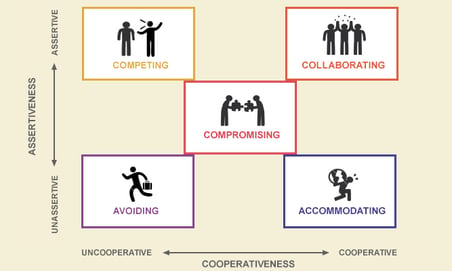
If I try to let something painful go and can’t, or if I feel like I need to address something in the moment so it doesn’t get bigger, my approach is to directly, honestly, bring it up with the person. I don’t ever intend to judge, and if someone does experience me as judging, I want to be told. If someone does something that hurts my feelings and I care about the relationship, I will either let it go or tell them. And if I do something that hurts someone, I need them to let it go or tell me so we have the opportunity to work through the pain and maintain integrity. Conflict creates opportunities to deepen intimacy, to heal, and to learn about ourself and someone else. I accept that navigating conflicts is part of being human. (Fodder for another post: Do you know your conflict style(s) ala the image above from here?)

What I find, though, is that we can know someone for a while, even a few years, and the first time we express annoyance, or say we feel disrespected or hurt, and directly, respectfully, confront a conflict, the other person does (1), (2), and/or (3) to avoid being honest. This prohibits intimacy and integrity and destroy relationships. I saw this behaviour in a new light this weekend through a relationship with a friend. I realised the way she identified as Christian is grounded in her human family, not the Earth, which placed humans hierarchically above the rest of nature. Even though she talked with me about my cosmology, expressed interest in indigenous healing, and was struggling with painful and deep patterns of narcissistic abuse. In my experience, narcissism can only heal through re-orienting ourselves into a holistic worldview.

holistic

There is a pattern to the universe and everything in it, and there are knowledge systems and traditions that follow this pattern to maintain balance, to keep the temptations of narcissism in check. But recent traditions have emerged that break down creation systems like a virus, infecting complex patterns with artificial simplicity, exercising a civilising control over what some see as chaos. The Sumerians started it. The Romans perfected it. The Anglosphere inherited it. The world is now mired in it.–Dr. Tyson Yunkaporta

He goes on to say:

Narcissism is not incurable…Entire cultures and populations recovering from this plague have been left like orphan children with no memories of who they are, longing for a pattern they know is there but can’t see…There are so many adolescent cultures in the world right now, reaching for the stars without really knowing what they are. Adolescent cultures always ask the same three questions. Why are we here? How should we live? What will happen when we die?

But if everyone around you sees the world through the lens of human supremacy except for one person (like your weird friend Valerie), are you willing to believe that person? In my experience, it takes a courageous person who’s ready for a new form of freedom, and even when we ask for something and it’s handed to us, sometimes we can’t see it and still reject it. I find it really painful watching people get so close only to give up and destroy their relationship with me through disrespect and existential judgment. I know they’ll get another opportunity, or two, or three, to heal the wound, but not with me. I use honesty and directness to maintain fierce protective boundaries…

giveheartIf you value this content, please engage in reciprocity by living, sharing and giving.

Holiness

Blog by Valerie

Most of you reading this, like me, grew up a Judeo-Christian culture. And like many of you, I experienced conflicts and hypocrisies with aspects of those teachings. One such conflict is with the concept of “The Holy Land.” I have always known deep in my bones that all land is holy land, and that all bodies and beings are holy and sacred and worthy. To elevate a particular place as “Holy” is to demote other places as un-holy or less-holy. Not surprisingly, the etymology of the world “holy” is “healthy” and “whole.” If only one place on Earth is “The Holy Land”, and only about eight million people live there, then by definition, the rest of us 4+ billion people are in exile, cut off from our Motherland, not feeling whole.

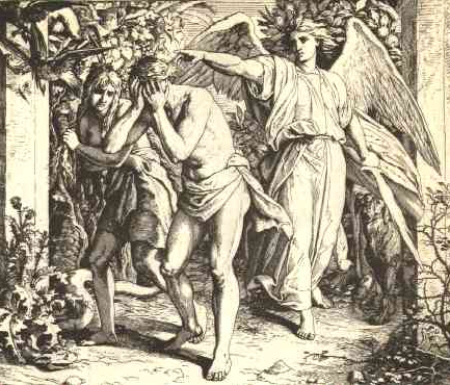
adameveThe foundation of Judeo-Christian mythology leaves us unconnected with environments where the vast majority of its followers live. The Biblical creation story of Adam and Eve’s exile from the Garden of Eden is not an embodied story connecting humans with nature inside and outside ourselves within a web of life. In fact, the entire Earth has not, for some time in Judeo-Christian culture, been portrayed as a home, as much as a place to endure or get through (Gustafson, 1997). Feeling rejected by the Sacred Feminine, we are collectively convinced we are in exile, and so it follows that many of us live in our heads and suffer from mental illness. (Image from here, altered for copyright from this image.)

Indigenous, Earth Ethos thinking challenges this vision. As Lee Standing Bear Moore and Takatoka of the Manataka American Indian Council say** (This is where I originally saw this quote, but that Council no longer exists, and I have since realised it is published verbatim in this book).

If God created the universe and countless universes beyond our own into infinity, it is clear that part of the master plan was to place God’s creatures in a place where everything they see and touch in nature is healing medicine.  What better place to care for the children of Creation?  Therefore, the Garden of Eden is symbolic for the Kingdom of God and it exists as we see it, and live in its midst, both physically and spiritually.   The Mother Earth is part of the Kingdom of God and thus humans and other creatures present in the garden were never expelled, but remain to live and evolve.   Eden is all around us, everything we see in nature and beyond is the garden and Kingdom of God.  We are here and never left. [emphasis added]

So the Christian fundamentalists asking us to repent because the Kingdom of Heaven is here now are onto something. repent(Image from here.) 

I invite you to imagine what your life would look and feel like if every land you walked upon was treated like holy land; if every human body you came into contact with including your own were treated like holy land; if every animal and plant you ate, every mineral and stone mined and built into your smartphone and car and house were treated like holy land. Indigenous thinking sees the Earth as the source of life, not a resource to be used for a period of time. The understanding that all land is holy, that all of us are wanted and held by Mother Earth where we are now regardless of our ancestor’s trauma of leaving their Motherland, is incredibly freeing. I first experienced this healing during an indigenous dance-fast ceremony in Colorado following teachings of Joseph Rael. I remember kneeling in front of a tree during the ceremony and weeping with the realisation of how much Mother Earth wanted and cared for me, how much pain I had been carrying disconnecting me from those feelings, and how much pressure that had been placing on other relationships, especially my birth mother.

Years ago I read a book whose central thesis really stuck with me written by Wilhelm Reich, a controversial former student of Freud. Reich said that more than anything, we are truly afraid of pleasure, joy, and the abundance of gifts always in our midst; that we have collectively, in Judeo-Christian/Western culture, grown used to identifying with a fundamental sense of rejection, so that we shy away from profound opportunities for acceptance. I remember too, years ago, reading about the origin and etymology of the word sin:

[T]he most common word translated as “sin” is chait. The “sin” of Adam and Eve was chait, a mistake. People don’t “sin.” People make mistakes. After all, we are human.

sinThis word “sin,” then, was meant to help us humans understand our nature: that we are powerful and able create wonders and also an innate capacity to blunder. What curious creatures we are! We have been believing and embodying an errant, mistaken thought and believing that we are exiled, unworthy, and that our sacred, earthly Mother doesn’t fully love us, and this sin/mistake/confusion has been defining the course of our collective history for multiple millennia, and is still going. If this isn’t Wetiko energy, I don’t know what is! (Image from here.)

Faced with so many reflections around us of our collective disconnection with Mother Earth, our bodies, fellow beings, and elements of our environment necessary for living like our water and air, it helps to have a sense of humour. Here’s a quote from George Carlin:

The earth doesn’t share our prejudice towards plastic. Plastic came out of the earth. The earth probably sees plastic as just another one of its children. Could be the only reason the earth allowed us to be spawned from it in the first place. It wanted plastic for itself. Didn’t know how to make it. Needed us. Could be the answer to our age-old egocentric philosophical question, “Why are we here?”

Exercise: I invite you to re-think the concept of “holiday” and “other” days, and generally how you carry and embody being holy.

giveheartIf you value this content, please engage in reciprocity by living, sharing and giving.

Confronting Colonialism

Blog by Valerie

Knowing that you love the earth changes you, activates you to defend and protect and celebrate. But when you feel that the earth loves you in return, that feeling transforms the relationship from a one-way street into a sacred bond.–Robin Wall Kimmerer

earthlove

Indigenous writers describe colonialism as “a violation of the psychological womb” and  “a great rupture with the Mother [Earth]” (Cervantes & McNeill, 2008). Colonialism has spiritual roots in our ideas about the meaning of life, our nature and place in the world. In Judeo-Christian culture the Earth is often seen less as our home, and more as a place to endure. An Earth Ethos sees the Earth as the source of life from which resources are continually re-cycled around, not a temporary playground for us to use for a period of time. The Earth’s health is reflective of our human health. In Australian aboriginal languages, “land” means “everlasting spirit” or “source of life” (Atkinson, 2002).  To say “I’m going for a walk in nature” shows our modern Western alienation with the Earth and the place where we live. Cities are highly cultivated environments, and a forest is wilderness, but both are aspects of nature–we cannot escape nature except in our own trickster minds!

You know how when you walk into a room, and you can feel that people were just arguing in there? You feel some funny energy in the space. Similarly, places carry trauma and violent energy that reflect into our bodies and psyches, though we are not as conscious of this. We may not be aware that 100 years ago there was a massacre on land where a school is today, and we may wonder why that school has such problems, when a school a few blocks away does not. This is why art and ceremony on land of traditional cultural significance are vital to healing. “The land under each tribe’s feet is the [spiritual] source of its culture,” and is we are responsible for giving back to the Earthfrom which we came (Kimmerer, 2016). An aboriginal elder recently taught me that the night sky and the Earth in that place are exact mirrors of each other, and to live intimately with a particular place on Earth, we learn from our ancestors in the sky.

nightsky

Research on trees planted for commercial gain that are of the same species and lack connection with a network of older trees has found that they do not communicate well, and that they compete with each other more and suffer more ill health than when they grow wild in forests (Wohlleben, 2016). In cities full of commercial culture we often similarly experience spiritual lack. We spend a lot of time in rooms and vehicles shaped like rectangles, struggling to feel deeply connected with and nourished by our manufactured environments. We seek distraction (literally un-grounding, a loss of traction) and use substances such as alcohol, caffeine and marijuana that numb uncomfortable feelings or stifle unwanted thoughts in our minds.

According to indigenous thinking, colonisers previously experienced a trauma of disconnection from intimate, reciprocal relationships with their land of origin, and conquering and privatising land is a re-enactment of this trauma (Smith, 2005). Some indigenous cultures describe a psycho-spiritual virus as the root of this trauma. TheAnishinaabe in Canada describe Windingo as a hungry, destructive force that is never satisfied and even eats its own kind (Kimmerer, 2016). The Ojibway refer to Wetiko, “a cannibalistic spirit who embodies greed and excess…an autoimmune disease of the psyche… [in which] the immune system of the organism perversely attacks the very life it is trying to protect” (Levy, 2014). The Zar spiritual disease in northern Africa is described similarly (Monteiro & Wall, 2011). In indigenous Asian cultures, a poison in the mind makes us forget who we are, manifesting as anger, desire and ignorance (Kakar, 1982).

The understanding expressed across the world by such stories is that we humans naturally carry some destructive energy. It is part of nature to create and destroy. Just look at a volcano: it both births new land and destroys existing land. When we regularly purify ourselves, this natural destructive, cannibalistic energy does not grow out of control. But when this destructive energy grows too large, it penetrates our spiritual beliefs. Then we forget who we are, feel disconnected from ourselves, each other and the Earth, and engage in destructive behaviours. I have read an indigenous elder describe that when colonialists first arrived in his ancestor’s community, the amount of such a psycho-spiritual virus that those few men were carrying completely overwhelmed the entire community. We may frame this destructive energy as diseases such as smallpox and syphilis, or behaviours such as raping and pillaging, but the spiritual root of these is considered that destructive, cannibalistic energy.

Purify your Heart(1)Psycho-spiritual purification exercise: Reflect on a relationship where you are trying to make another person see your point of view, or trying to control their behaviour and tell them what to do. What is stopping you from living your own life, and letting them be who they are? What are you avoiding or denying in your life by focusing on them, or on controlling your environment? What do you need to be more nourished right now?

giveheart If you value this content, please engage in reciprocity by living, sharing and giving.